
Reviewed · SANTIAGO DE COMPOSTELA TOURS
Santiago de Compostela: Finisterre, Muxia & Costa da Morte
Finisterre is where the Camino de Santiago meets the Atlantic, and this full-day outing lets you reach that old end of the world without arranging several buses or renting a car. You will also see Muxía, Ézaro waterfall, Muros, Carnota’s coast, and the medieval bridge at Ponte Maceira.
I like the variety of stops and the way the day mixes Camino lore, fishing towns, sea views, and Galician traditions. I also like the comfortable, air-conditioned coach and guides such as Andrea, Pablo, Christian, and Ruben, who have been praised for clear explanations and friendly help.
The trade-off is time. Nine hours sounds generous, but the coast is spread out, and some stops are brief. If Cape Finisterre is your main goal, you may wish for more than its 45 minutes, while the 1.5-hour lunch stop can feel long to some people.
In This Review
- Key points at a glance
- Why this Costa da Morte day trip works
- Ponte Maceira and the Tambre River
- Muros and the road along the estuary
- Carnota, Lira, and the Atlantic views
- Ézaro waterfall where the river meets the sea
- Cape Fisterra and the end of the Camino
- Muxía and the sacred stones
- The guide and coach experience
- Timing, food, and what to bring
- Who should book this tour
- Should you book the Costa da Morte tour?
- FAQ
- Where does the tour start?
- How long does the experience last?
- What places does the tour visit?
- Is lunch included?
- Is transportation included?
- What languages can the live guide speak?
- Is an audio guide available?
- How much free time do I get at Finisterre?
- How long is the stop in Muxía?
- Can I cancel the booking?
Key points at a glance
- Ponte Maceira opens with medieval Galicia: Cross the 14th-century bridge over the Tambre River and see old mills in a village linked to the Camino.
- Ézaro has a rare coastal waterfall: The Xallas River drops into the sea at one of Galicia’s best-known natural sights.
- Finisterre brings the Camino to the Atlantic: Visit Cape Fisterra, its lighthouse, and kilometer zero of the Camino de Santiago.
- Muxía adds sacred coastal tradition: See the sanctuary beside the sea and three stones regarded as sacred by Galicians.
- The coach makes a scattered route practical: Muros, Carnota, Ézaro, Finisterre, and Muxía are much easier to connect in one day by organized transport.
- The strongest praise goes to the guides: Andrea, Pablo, Christian, Dani, and Ruben are noted for useful context, humor, care, and keeping the group on schedule.
Why this Costa da Morte day trip works
The Costa da Morte is not one compact attraction. It is a long stretch of Atlantic shore, with villages, beaches, headlands, river valleys, and religious sites spread across western Galicia. Public transport can make a one-day visit awkward, especially if you want both Finisterre and Muxía.
That is the main value of this tour. For $58 per person, you receive transportation in an air-conditioned vehicle and a guide for roughly nine hours. Food and drinks are extra, but the price is still attractive if you would otherwise pay for car rental, fuel, parking, and navigation.
You should think of the day as a scenic regional circuit, not a slow visit to one town. You will spend plenty of time on the road, but the stops break up the journey well. Several people found the coach clean and comfortable, and departures and returns were reported as punctual.
The atmosphere also suits Camino pilgrims. Finisterre and Muxía are important extensions for people who have walked to Santiago, and the guide can connect the coastal sites with the legends and traditions surrounding the pilgrimage. You do not need to have walked the Camino to enjoy the trip, but the symbolism will mean more if you have.
Other Santiago De Compostela days travellers weigh against this one:
- Santiago: Cathedral & Museum Tour + Pórtico of Glory Option
★ 4.7 · 2,116 reviews - From Santiago: Finisterre, Muxia & Costa da Morte Excursion
★ 4.7 · 1,481 reviews - Excursion to Finisterre + Muxia + Costa da Morte (7 stops)
★ 5.0 · 1,367 reviews
Ponte Maceira and the Tambre River
The day begins from the Toxo Travel office at Rúa dos Bautizados, 12, then reaches Ponte Maceira. This small village is an excellent first stop because it gives you a taste of old Galicia before the open Atlantic takes over.
The 14th-century bridge crosses the Tambre River, and you can walk across it while looking back at the village and the surrounding river scenery. Ponte Maceira is also connected with pilgrims heading toward Finisterre, traditionally understood as the journey’s western end after Santiago.
The old medieval mills add another point of interest. They are picturesque, but the real pleasure here is the scale of the place. This is not a grand monument that takes hours to understand. It is a short, atmospheric stop where stonework, water, and pilgrimage routes come together.
You receive about 25 minutes here according to the planned timing. That is enough for a walk, photographs, and a quick look around, but not a long village visit. Wear shoes with a good grip, especially if the stones are wet.
Muros and the road along the estuary
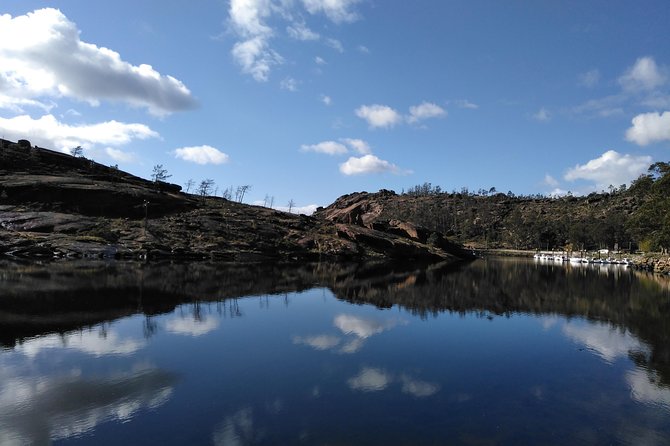
The route continues along the Muros e Noia estuary to Muros, a historic coastal town. The drive itself is part of the attraction, with changing views across the water and the road edging through Galicia’s coastal countryside.
At Muros, you have around 30 minutes for a short visit, scenic views, and a coffee tasting. This is a useful early pause, especially after leaving Santiago, though it is also the stop most likely to feel short if you want a detailed look at the town.
One practical point: the tour covers a lot of ground, so you should not expect a full guided exploration of Muros. You will have time to get your bearings and enjoy the setting, but the schedule gives greater weight to Finisterre, Muxía, and the natural sights farther west.
One past participant felt that Muros offered less than the other stops and suggested giving its time to Cape Finisterre instead. I can understand that view, particularly for Camino pilgrims focused on the western pilgrimage route. Still, the stop breaks up the drive and gives you a first look at the region’s fishing-town character.
Carnota, Lira, and the Atlantic views
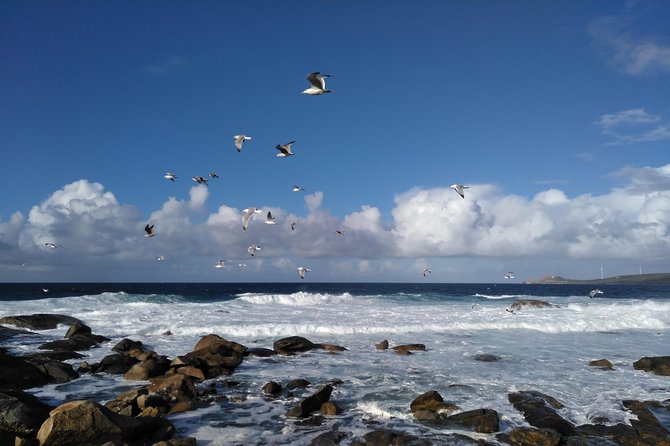
After Muros, the coach follows the coast toward Carnota. The route passes landmarks associated with Lira, Carnota Beach, Boca do Río, Mount Pindo, and Cape Fisterra.
You may not stop at every one of these places, but the views from the road help explain why this day is more than a transfer to Finisterre. The coast shifts between beaches, rocky headlands, estuary views, and open Atlantic horizons. Keep your camera ready, but also listen to the guide, who may explain the local geography and stories as you go.
This section is where the tour’s format matters most. Driving lets you see a wide slice of the coast in a single day, but it also means you cannot linger at every viewpoint. If you want long beach walks or time to explore small villages on foot, a rental car or several days in the area would suit you better.
For a first visit from Santiago, though, the route gives you a useful overview. You get a sense of how large and varied the Costa da Morte is before arriving at its best-known sites.
A different way to spend the day, same corner of Spain:
- Ría de Arousa: Boat Ride to Mussel Farm with Tasting
★ 4.7 · 845 reviews - From Santiago: Finisterre, Muxia, Ézaro – 7 stops day tour
★ 4.6 · 553 reviews - Santiago de Compostela Cathedral and Museum Guided Tour
★ 4.6 · 511 reviews - From Santiago: Tour to Rias Baixas with Boat Trip and Winery
★ 4.7 · 400 reviews
Ézaro waterfall where the river meets the sea
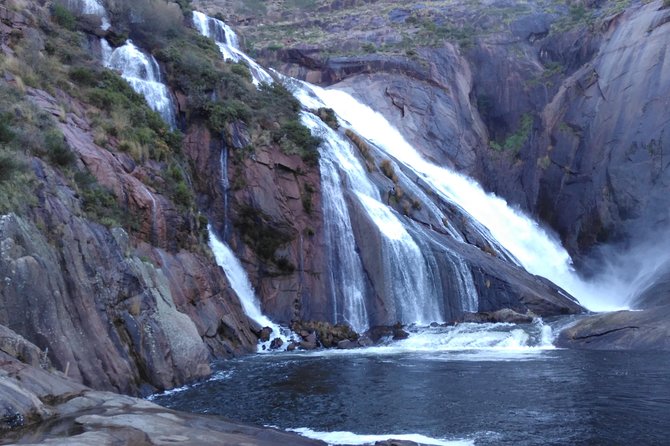
The stop at Fervenza do Xallas, usually called Ézaro waterfall, lasts about 35 minutes. Here the Xallas River falls directly into the sea, a striking meeting of freshwater and Atlantic coast.
Ézaro is often described as one of Galicia’s most famous waterfalls and a rare example in continental Europe of a river reaching the sea in this way. The appeal is immediate: you do not need a long hike or a difficult outing to see it. The tour brings you close enough for sightseeing, photographs, and a short pause beside the water.
The waterfall stop can be affected by road conditions. One person reported missing Ézaro because of problems on the road, so I would not treat this sight as absolutely guaranteed on every departure. That is a small but important reminder that a day covering remote coastal roads can change slightly.
If the waterfall is open on your visit, 35 minutes should give you enough time to see the main sight. You will not have an afternoon here, but the stop fits the overall rhythm of the trip: a focused look, then back on the coach toward Finisterre.
Cape Fisterra and the end of the Camino
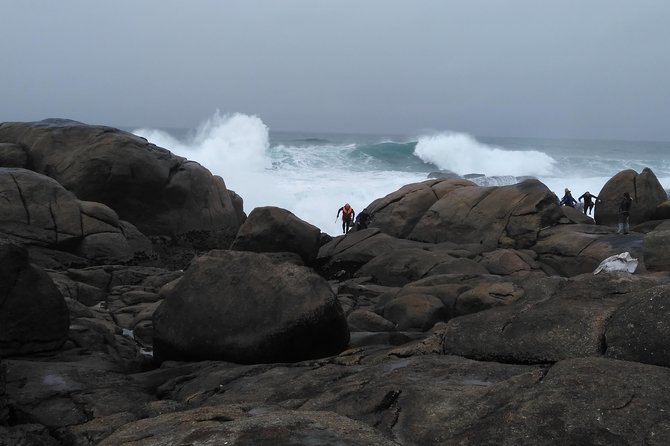
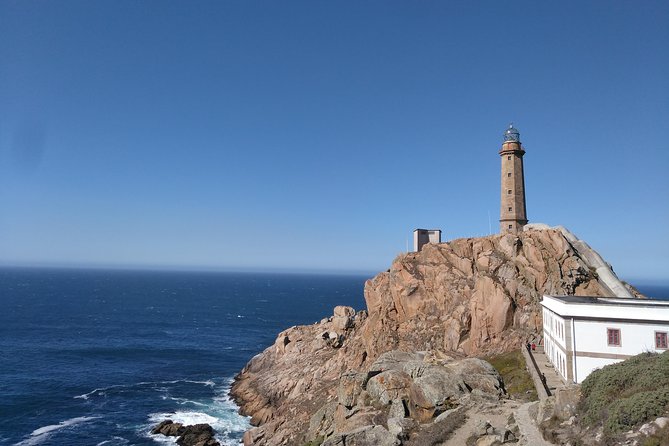
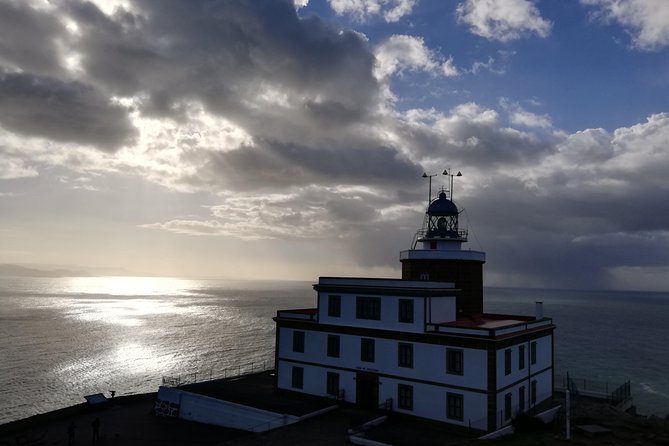
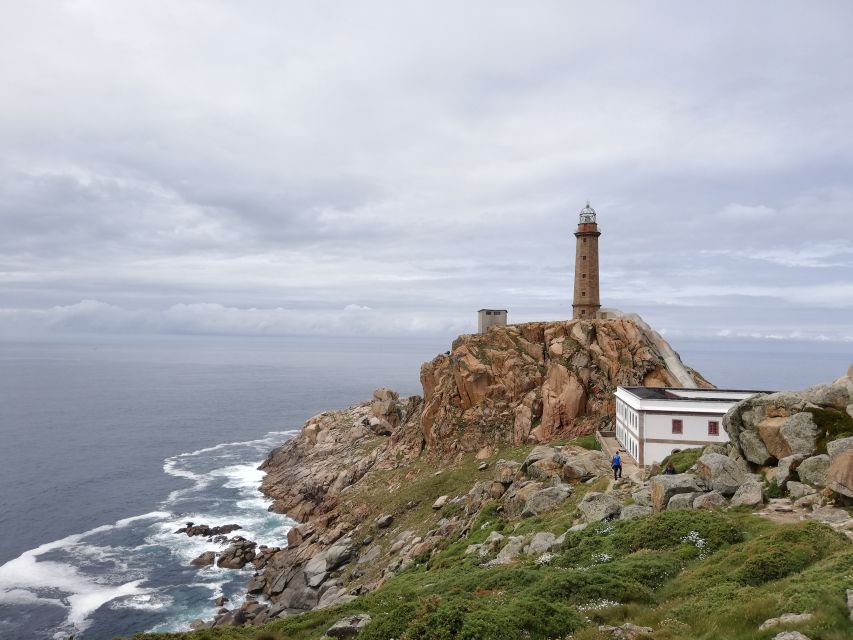
Cape Finisterre is the emotional center of the day. The Romans once believed this western point marked the end of the known world, and pilgrims later adopted it as a symbolic continuation of the Camino de Santiago.
The tour allows about 45 minutes at Cape Fisterre. You can see the lighthouse, look out over the Atlantic, and visit kilometer zero of the Camino de Santiago. For anyone who has just completed a pilgrimage, this can be a powerful moment. Even without that connection, the exposed headland and sea horizon make the stop memorable.
Here is the main timing concern. Several people found the time well managed overall, but one Camino pilgrim wanted a longer visit at the cape and Muxía. If you want an unhurried walk, a long period beside the lighthouse, or plenty of time for photographs, 45 minutes may pass quickly.
The coach then continues to the town of Fisterra, where you have about 1.5 hours for lunch, the fishing port, and free time. This distinction matters: Cape Finisterre and the town of Fisterra are separate parts of the visit. The cape is for the lighthouse and views. The town is where you eat and stroll.
Lunch is not included, so plan to pay separately. The long break gives you room to choose a meal and explore without rushing back from the headland. On the other hand, if you prefer more time at the scenic sites, 90 minutes can feel generous. I would use the pause to enjoy a relaxed Galician meal rather than treating it as dead time.
Muxía and the sacred stones
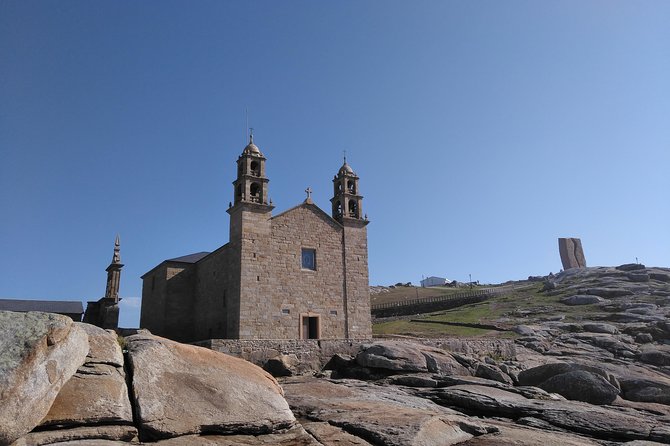
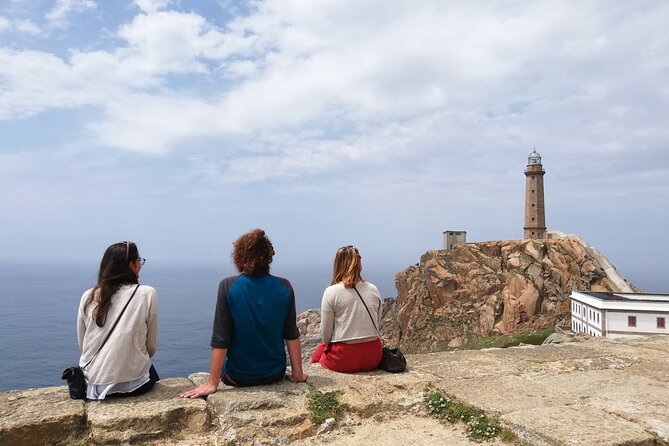
Muxía follows Finisterre and gives the day a different mood. The town is linked with the Atlantic, pilgrimage tradition, and local beliefs centered on the Sanctuary of the Virgin of the Barca.
The sanctuary sits at the foot of the sea, with the ocean forming a dramatic backdrop. The stop also introduces three stones considered sacred by Galicians. Your guide can explain the stories and customs tied to this place, which adds meaning beyond simply photographing a church beside the water.
You receive roughly 40 minutes in Muxía, including a guided visit and free time. That is enough to see the sanctuary area and take in the shore, though again, it is not a long independent exploration.
Muxía was a favorite stop for some people, and I can see why. Finisterre carries the big Camino symbol, while Muxía feels more connected to local devotion and coastal tradition. If the schedule changes and Muxía becomes the final major stop, that can be a fitting way to end the sightseeing before returning to Santiago.
The guide and coach experience
The guide can lead in Spanish, English, or Galician, and audio commentary is listed in French, Korean, and German. On multilingual departures, explanations may be repeated in more than one language, so expect the pace to vary.
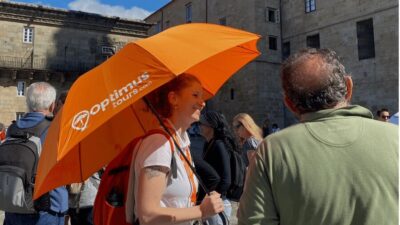
Guides named in the feedback include Andrea, Pablo, Christian, Dani Lati Valinho, and Ruben. Andrea was praised for explaining history, geography, culture, and traditions, while Pablo was described as both informative and good-humored. Christian received similar praise for clear explanations, and Dani was noted for staying engaged with the group and offering guidance at each stop.
Small practical touches matter on a long day. One guide checked that everyone was back on the bus before leaving, and even called after a delayed participant who had not yet returned from a bathroom break. That kind of attention is reassuring when the group is moving between several places.
The coach is air-conditioned, clean, and comfortable according to the information available. One person found the audio less clear toward the back, so sitting nearer the guide may help if commentary is important to you. The driver also receives repeated praise for smooth, safe, and punctual service.
Timing, food, and what to bring
The tour lasts nine hours, commonly running from around 9 a.m. to 6 p.m., though you should check the departure time for your date. It is a full day, but the stops are spaced out well enough that the journey does not feel like one continuous bus ride.
Food and drinks are not included. You will have lunch in Fisterra, and the 1.5-hour pause gives you time to choose and pay for your own meal. Bring water and perhaps a small snack for the coach, since the route is long and the day includes several outdoor stops.
Comfortable shoes are the one stated packing requirement, and that is sensible. You will cross an old bridge, walk around town streets, visit coastal viewpoints, and move around the sanctuary area. Galicia can also be rainy, so a light waterproof layer is a useful practical choice, though weather conditions are not guaranteed.
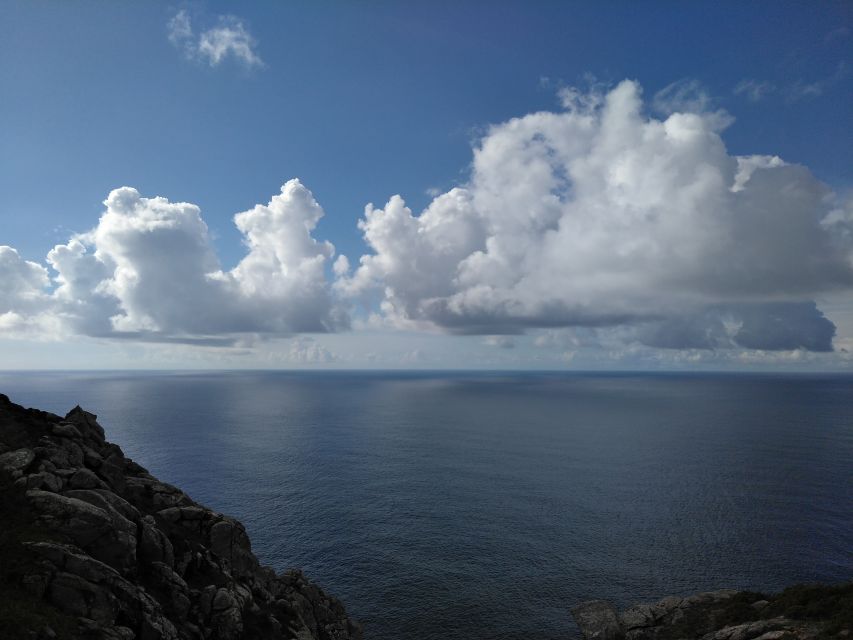
The tour runs in changing conditions. A rainy day will not erase the views, and the coach gives you a warm, dry base between stops. Still, wind and rain can make the coastal portions less comfortable, so dress for the Atlantic rather than assuming a sunny beach day.
Who should book this tour
I would choose this tour if you have one day in Santiago and want to see the western coast without handling a complicated route yourself. It is especially suitable after the Camino, when you want to reach Finisterre and Muxía but would rather rest than walk or drive.
It also works for first-time visitors who want context as they go. The guide’s stories about pilgrimage, local traditions, geography, and legends turn a series of viewpoints into a connected day.
You may want another plan if you dislike coach travel, need long walks at each site, or have already visited Finisterre and want a slow exploration of one coastal town. The route is busy, and the time at the cape and Muxía is limited.
At $58, I consider it good value for a nine-hour outing with transport, a guide, and several major sights. The price does not cover lunch or drinks, but it remains reasonable for a route that would take more planning and driving to reproduce independently.
Should you book the Costa da Morte tour?
Book it if your priority is seeing Finisterre, Muxía, and Ézaro in one day from Santiago, with a guide to explain the myths and Camino connections. The organized route, comfortable coach, and attentive guides make a complicated coastal area simple to visit.
Go in with the right expectations. You are sampling a broad region, not spending half a day at each attraction. If you can accept some road time and short visits, Toxo Travel’s tour offers a well-priced, varied introduction to Galicia’s Atlantic edge.
FAQ
Where does the tour start?
The meeting point is the Toxo Travel office at Rúa dos Bautizados, 12.
How long does the experience last?
The tour lasts nine hours. The stated schedule commonly runs from about 9 a.m. to 6 p.m., but you should check availability for the exact starting time.
What places does the tour visit?
The route includes Muros, Ézaro waterfall, Cape Finisterre, the town of Fisterra, Muxía, and Ponte Maceira.
Is lunch included?
No. Food and drinks are not included. You have free time for lunch in Fisterra.
Is transportation included?
Yes. Transportation in an air-conditioned vehicle is included.
What languages can the live guide speak?
The live guide operates in Spanish, English, and Galician.
Is an audio guide available?
Yes. Audio guide service is listed in French, Korean, and German.
How much free time do I get at Finisterre?
The planned visit to Cape Finisterre lasts about 45 minutes. The separate stop in Fisterra, where lunch and more free time take place, lasts about 1.5 hours.
How long is the stop in Muxía?
The Muxía visit lasts about 40 minutes and includes a guided tour and free time.
Can I cancel the booking?
You can cancel up to 24 hours in advance for a full refund. The activity also offers reserve now and pay later booking.
Recently reviewed around Santiago De Compostela
- Guided Visit to the Estrella Galicia Museum with Beer Tasting★ 5.0 · 382 reviews
- Visit Coastal Vineyard★ 5.0 · 195 reviews
- Santiago: Guided Foodie Tour with Drinks, Tapas & Live Music★ 4.7 · 153 reviews
- Santiago de Compostela: Cathedral, Museum, and Old Town Tour★ 4.8 · 382 reviews
- Santiago de Compostela: Massage Treatment★ 4.8 · 170 reviews
- Santiago Complete Tour: City, Portico and Cathedral Tickets★ 4.7 · 108 reviews
- Santiago de Compostela Cathedral and Museum Guided Tour★ 4.6 · 511 reviews
- From Santiago: Rías Baixas Galicia Seafood & Wine Day Tour★ 4.6 · 209 reviews
Santiago de Compostela Tours, compared.
Santiago: Cathedral & Museum Tour + Pórtico of Glory Option
Read our review →
From Santiago: Finisterre, Muxia & Costa da Morte Excursion
Read our review →
Excursion to Finisterre + Muxia + Costa da Morte (7 stops)
Read our review →
Ría de Arousa: Boat Ride to Mussel Farm with Tasting
Read our review →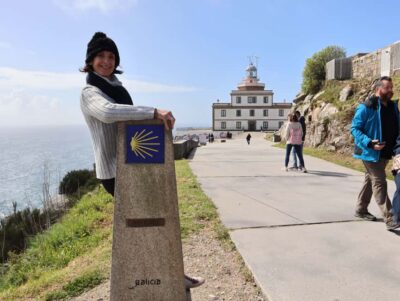
From Santiago: Finisterre, Muxia, Ézaro – 7 stops day tour
Read our review →
Santiago de Compostela Cathedral and Museum Guided Tour
Read our review →
From Santiago: Tour to Rias Baixas with Boat Trip and Winery
Read our review →
Browse the lists this tour appears in