
Reviewed · SANTIAGO DE COMPOSTELA TOURS
From Santiago: Finisterre, Muxia, Ézaro – 7 stops day tour
The best part of this day is the mix. In a single outing, you cross a medieval Camino bridge, watch the Xallas River tumble into the Atlantic, stand at the end-of-the-world cape, and eat beside fishing boats in Fisterra. I especially like the variety of stops and the chance to reach places that are awkward to connect by public bus.
I also like the comfortable coach, the clear schedule, and the guides who bring real character to the day. Maria, Alexis, Ana, Paloma, and Joanna are among the guides praised for clear explanations and friendly help, though your guide will depend on the departure. The main drawback is time: seven stops in 9.5 hours means some visits are brisk, and one guide noted that the shipwreck coast could not fit into the schedule.
In This Review
- Key points at a glance
- Why this Costa da Morte day trip works
- Muros begins the day with working-port charm
- Carnota’s hórreo explains rural Galicia
- Ézaro Waterfall meets the Atlantic
- Cape Finisterre reaches beyond Santiago
- Fisterra gives you time to eat by the harbor
- Muxía adds myth, faith, and Atlantic force
- Ponte Maceira closes with a Camino bridge
- Guides, languages, and the coach experience
- Who should book this day trip
- Is the $56 price good value?
- Should you book it?
- FAQ
- How long does the tour last?
- Where can I join the tour in Santiago?
- Is lunch included?
- Which languages are available?
- What should I bring?
- Can I cancel the booking?
Key points at a glance
- Seven very different stops: Fishing towns, a sacred coastal site, a waterfall, a lighthouse, a traditional granary, and a Camino village.
- Ézaro is the natural star: The Xallas River drops directly into the Atlantic, a rare sight with a short walk to viewing areas.
- Fisterra includes 1.5 hours of free time: Enough for lunch, harbor views, shopping, and a relaxed walk.
- A strong choice after the Camino: You can visit Finisterre and Muxía without walking the route or arranging several buses.
- Four Santiago pickup points: Rúa do Hórreo 23, Hotel Hesperia Peregrino, Continental Aparcadoiro La Salle, and Capela do Pilar.
- Plan for Atlantic weather: Comfortable shoes, a jacket, sunglasses, a sun hat, and a raincoat are sensible.
Why this Costa da Morte day trip works
Galicia’s Costa da Morte is not a single attraction. It is a long stretch of rough Atlantic shore, small ports, religious sites, rural villages, and stories shaped by the sea. Trying to see the main places independently in one day can mean awkward connections and long waits.
This tour solves that problem with a single air-conditioned coach and a guide who handles the route. The day lasts about 9.5 hours, with departure times changing by date. You meet at one of four Santiago pickup points and return to the same general set of locations.
The value is good at $56 per person. That price includes transport, a guide, commentary, and insurance, but not lunch or drinks. If you tried to connect Muros, Carnota, Ézaro, Finisterre, Muxía, and Ponte Maceira by public transport, the time and planning would quickly outweigh the savings.
This is not a tiny private outing. The group can include roughly 30 to 40 people, according to one account, so expect a standard coach-tour rhythm. The tradeoff is simple: you give up some flexibility, but you cover a remarkable amount of western Galicia without driving.
Other Santiago De Compostela days travellers weigh against this one:
- Santiago: Cathedral & Museum Tour + Pórtico of Glory Option
★ 4.7 · 2,116 reviews - From Santiago: Finisterre, Muxia & Costa da Morte Excursion
★ 4.7 · 1,481 reviews - Excursion to Finisterre + Muxia + Costa da Morte (7 stops)
★ 5.0 · 1,367 reviews
Muros begins the day with working-port charm
The first stop is Muros, about 30 minutes from the start of the route after the initial drive. You have about 30 minutes here, which is enough to walk through the seaside center, look at the harbor, and get a first taste of Galician coastal architecture.
Muros feels different from a grand resort town. Its appeal comes from everyday details: stone buildings, narrow streets, fishing activity, and the close relationship between the town and the water. Your guide may explain how fishing and shellfish shaped local life, giving the stop more meaning than a quick photo break.
The limitation is obvious. Thirty minutes is a short introduction, not enough for a full town visit or a leisurely café stop. I would use this time for a focused walk rather than trying to see everything. Stay near the center, keep an eye on the meeting time, and save your longer meal break for Fisterra.
Carnota’s hórreo explains rural Galicia
After Muros, the bus continues to Carnota, where you stop for about 30 minutes to see a large traditional hórreo. These stone granaries are one of Galicia’s most recognizable rural structures.
A hórreo was used to store and protect crops, and its raised design helped keep food dry and away from animals. The size and stone construction of the example here give you a useful glimpse into the work and priorities of farming communities. It is easy to pass such a building as a decorative oddity, but the guide’s explanation helps you understand why it mattered.
This stop is more about cultural context than spectacle. If you want only dramatic cliffs and ocean views, it may feel less exciting than Ézaro or Finisterre. I like its place in the route because it adds balance. The day is not just a greatest-hits tour of viewpoints. You also see a practical symbol of Galician village life.
Ézaro Waterfall meets the Atlantic
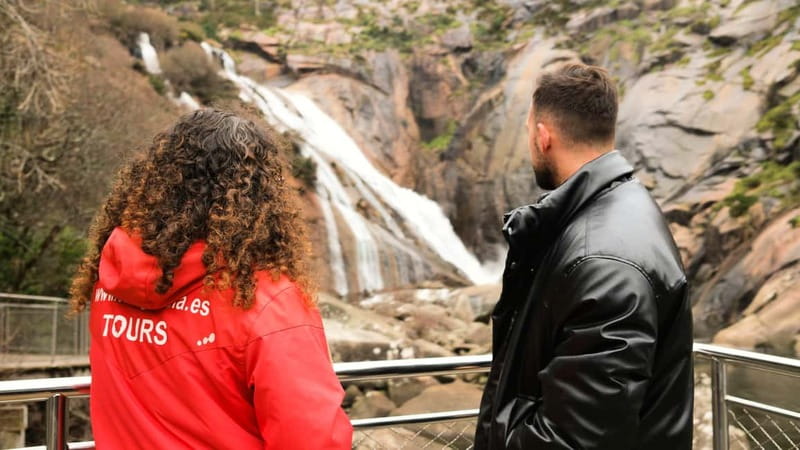
The next major stop is Xallas, better known for Ézaro Waterfall. You have around 45 minutes, usually enough to walk to the viewing area and take in the unusual meeting of fresh water and sea.
The Xallas River plunges directly into the Atlantic here. The experience is especially striking because the waterfall is not tucked away in a forest or mountain valley. It reaches the coast, making this one of the tour’s most memorable natural sights.
Use the time for photographs, but do not rush through the short walk. The combination of spray, rock, water, and open sea changes with the weather, and a gray Galician day can suit the setting perfectly. You may also find that wind makes the viewpoint feel cooler than Santiago, even when the city is mild.
A raincoat is worth carrying. The tour runs in all weather, and coastal conditions can change quickly. Wear shoes with a firm sole, since you will be walking rather than simply stepping off the bus for a roadside photograph.
A different way to spend the day, same corner of Spain:
- Ría de Arousa: Boat Ride to Mussel Farm with Tasting
★ 4.7 · 845 reviews - Santiago de Compostela: Finisterre, Muxia & Costa da Morte
★ 4.7 · 526 reviews - Santiago de Compostela Cathedral and Museum Guided Tour
★ 4.6 · 511 reviews - From Santiago: Tour to Rias Baixas with Boat Trip and Winery
★ 4.7 · 400 reviews
Cape Finisterre reaches beyond Santiago
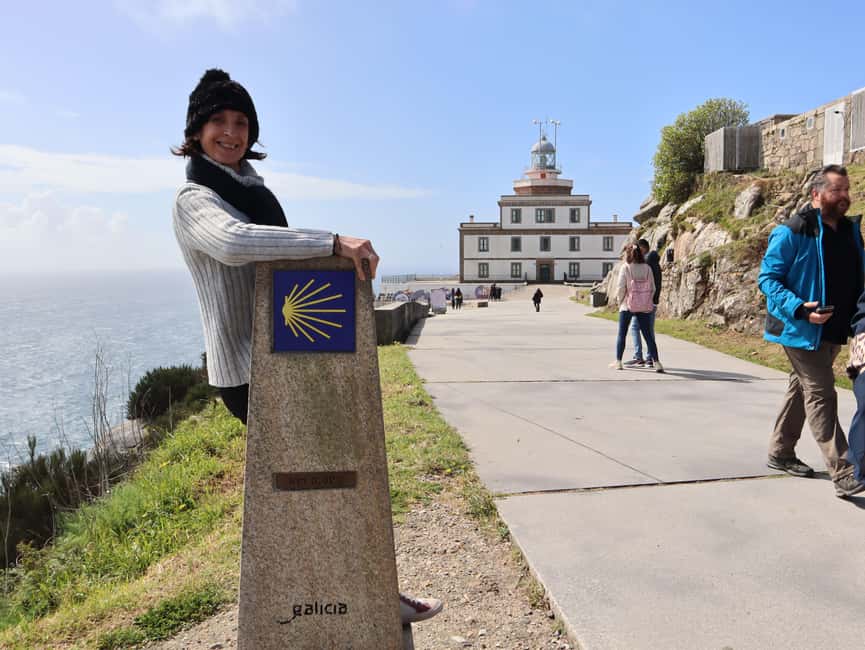
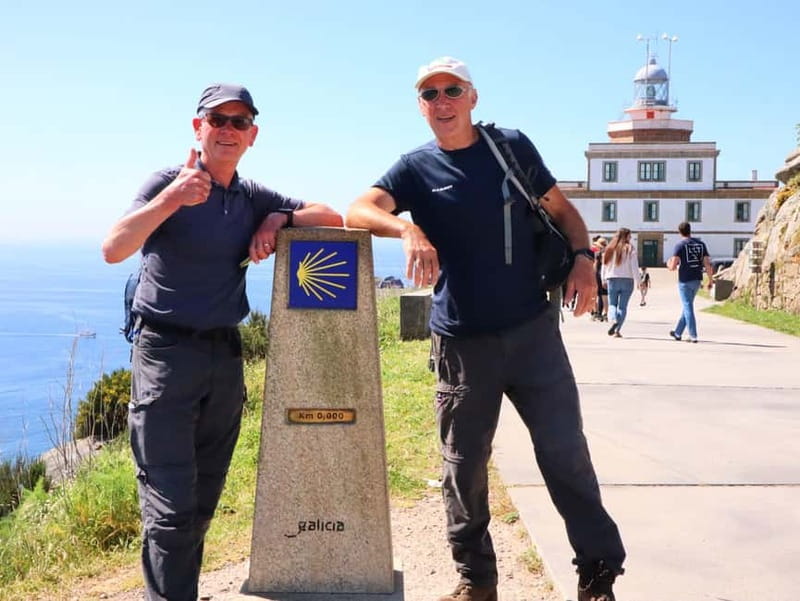
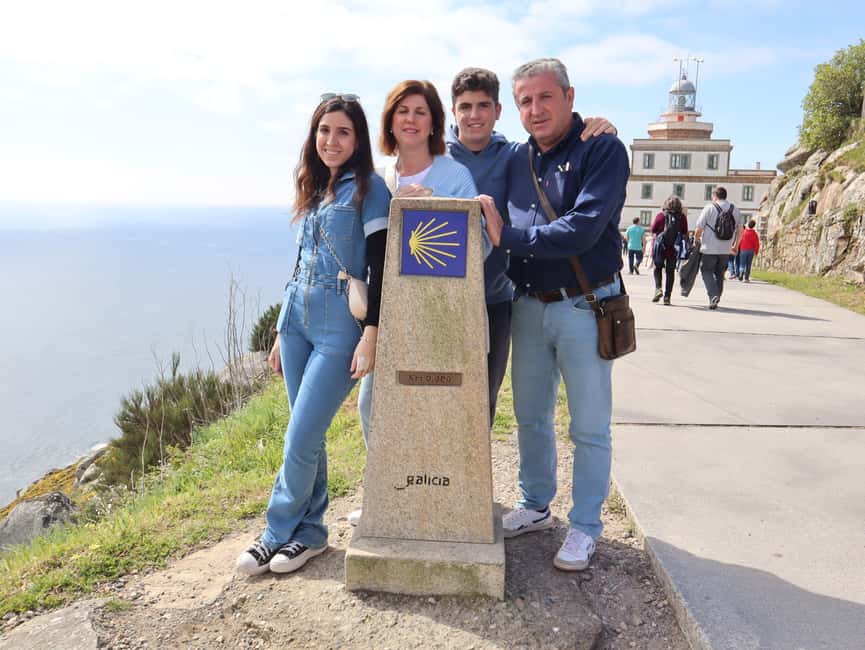
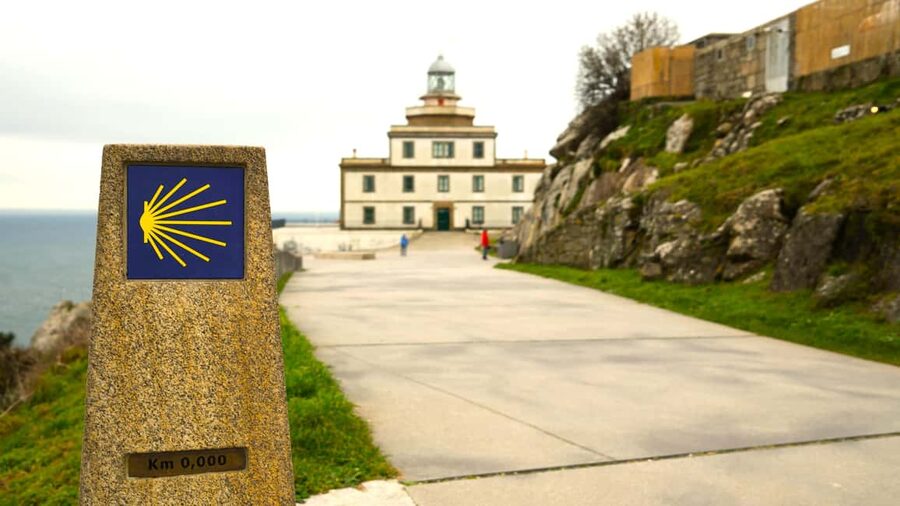
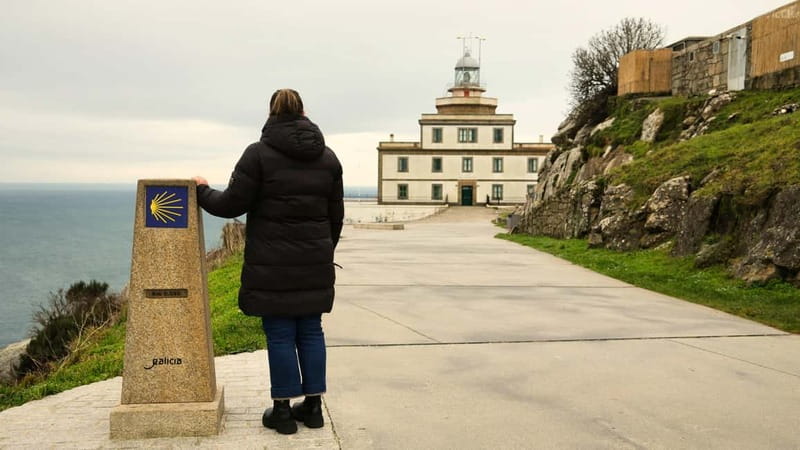
From Ézaro, the coach continues to Cape Finisterre, with about 50 minutes at the cape itself. This is the point many people have been waiting for.
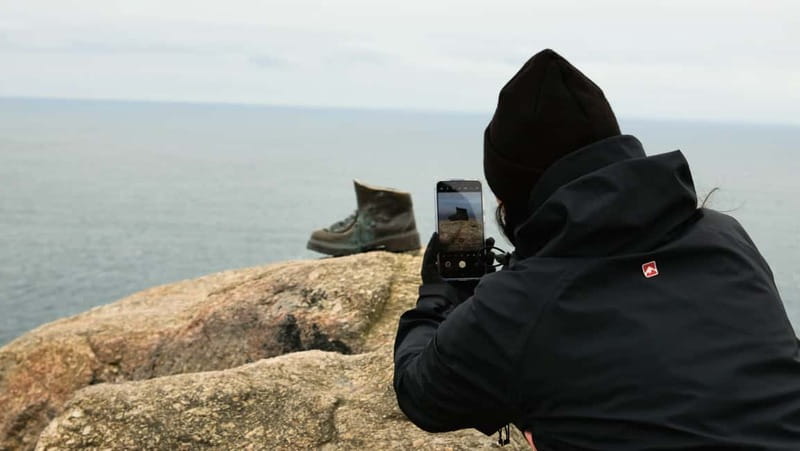
For centuries, Finisterre was treated as the western edge of the known world. Its name comes from the idea of the end of the earth, and the place still has that dramatic pull. Pilgrims who have completed the Camino de Santiago often continue here, turning the cape into a personal closing point for their walk.
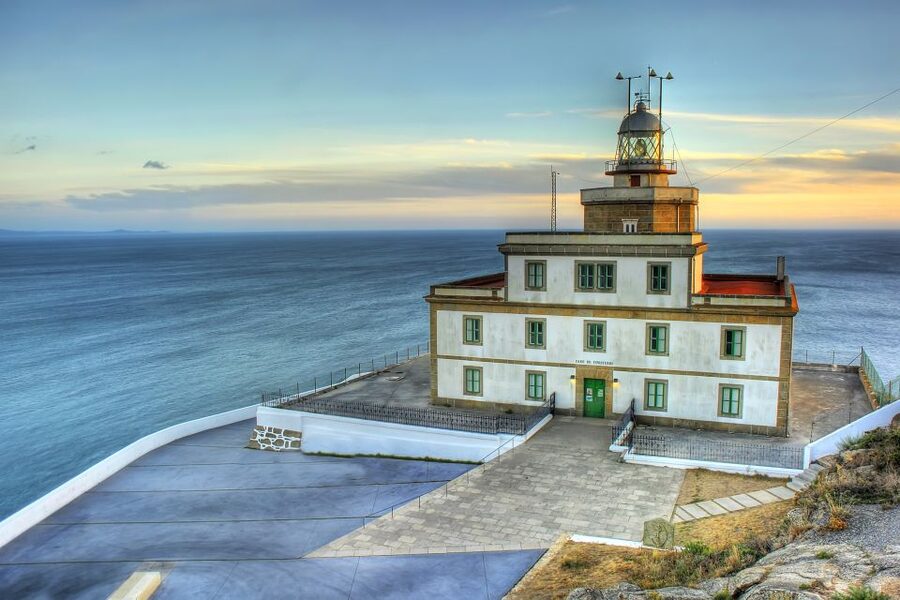
The lighthouse and open ocean provide the main focus. Your guide can add the stories and symbolism, but allow yourself time to simply look outward. This is one of those places where the scale of the sea does much of the work.
Do not confuse Cape Finisterre with Fisterra village. The cape is the scenic headland and lighthouse area. The village comes five minutes later and provides the longer free period for food and wandering.
The 50-minute stop is enough to enjoy the cape, but it is not an invitation to explore every path. Keep the group schedule in mind. The road continues to Muxía and Ponte Maceira, so a little discipline here prevents a rushed return to the bus.
Fisterra gives you time to eat by the harbor

Fisterra village is the most useful pause of the day. You have about 1.5 hours of free time, which is longer than the guided visits elsewhere.
This is where I would plan lunch. The tour does not include food or drinks, so you choose how to spend your money and time. The harbor setting makes seafood the natural choice, and the village also has local shops, cobbled streets, and places to sit with a view of the water.
One of the tour’s strengths is that lunch is not forced into a fixed menu or a rushed roadside stop. You can choose a restaurant, eat simply, or use the time for a walk if you already had a large breakfast. Ask your guide for practical advice if you want help choosing where to eat.
There is a small risk with free time: a popular restaurant can take longer than expected. I would not order an elaborate meal if service looks slow. Keep enough time to return to the meeting point, since the coach leaves on schedule.
This stop also helps the overall pace. After several short visits, you get a chance to sit, eat, and process the day. The fishing village is not merely a lunch location. It gives you a more ordinary, human view of the coast after the grand setting of the cape.
Muxía adds myth, faith, and Atlantic force
After Fisterra, the coach takes roughly 40 minutes to Muxía. The visit lasts about 45 minutes and centers on the Sanctuary of the Virgin of the Boat.
The sanctuary sits beside a powerful stretch of coast where waves strike the rocks. Galicia’s religious traditions and Atlantic legends meet here, and the site has long been linked with pilgrims, miracles, and stories connected to the Virgin of the Boat.
You do not need to be religious to appreciate the setting. The sanctuary’s importance comes from the way it fits the coast. Stone, open water, wind, and local belief all share the same space. Your guide can explain the legends, helping you see why Muxía feels different from a simple church visit.
The stop is fairly short, so focus on the sanctuary and the shore immediately around it. This is not the place for a long independent walk. The rocks can also be slippery, especially after rain, so stay sensible near the water and follow your guide’s timing.
Muxía is one of the reasons this tour is particularly useful for pilgrims. Reaching both Muxía and Finisterre independently takes more planning than simply visiting one of them from Santiago.
Ponte Maceira closes with a Camino bridge
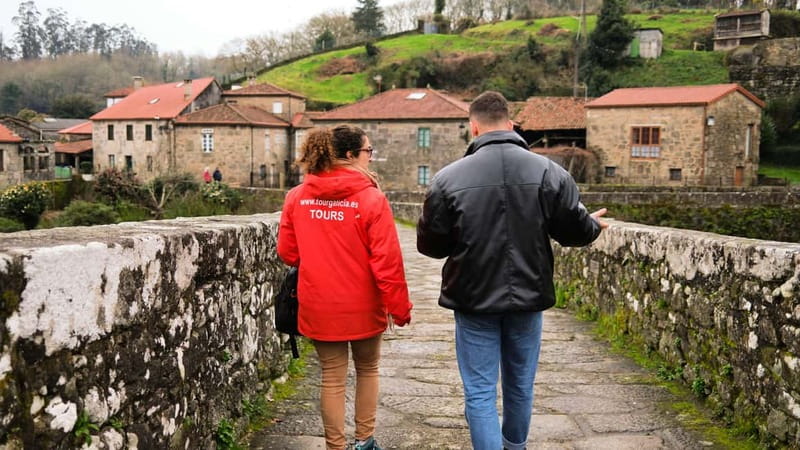
The final sightseeing stop is Ponte Maceira, about 30 minutes after Muxía. You have around 30 minutes to walk across its medieval stone bridge and see the village beside the Tambre River.
This is a gentler ending than the exposed coast. The bridge carries the Camino atmosphere into a quiet rural setting, with stonework, water, and a slower village rhythm. Crossing it gives you a small physical connection to the pilgrimage route, even if you are not walking the full distance yourself.
The short visit is enough for the bridge and nearby views. It is not enough for a long village exploration, but that is fine after a full day of stops. I like the order because the tour ends with a calm place rather than another crowded viewpoint.
After Ponte Maceira, the return drive to Santiago takes about 30 minutes. Drop-offs are available at Rúa do Hórreo 23, Capela do Pilar, Hotel Hesperia Peregrino, and Continental Aparcadoiro La Salle.
Guides, languages, and the coach experience
The live guide operates in Spanish and English. Multilingual audio is available in Italian, French, German, Korean, and Chinese, while the activity information also lists Portuguese support in the broader commentary options. Confirm what you need at booking, especially if following spoken explanations is difficult.
The strongest part of the guiding is the local storytelling. Guides such as Maria, Alexis, Ana, Paloma, and Joanna have been praised for clear explanations, fluent language skills, and friendly assistance. You may not have one of those particular guides, but the experience depends heavily on who leads your departure.
The coach is air-conditioned and described as clean, modern, and comfortable. That matters here. The route includes long stretches between stops, and the total day would be tiring in an uncomfortable vehicle.
Morning pickup can be slightly confusing. Several tour groups may gather near the meeting area, and one person arrived early but found no obvious sign or staff member at first. Go to the exact pickup point, arrive with time to spare, and ask staff if you are unsure which bus is yours. One departure was reported as nearly an hour late without notification, though other departures left on time, so a little patience at the start is sensible.
Who should book this day trip
I would choose this tour if you are based in Santiago and want the broadest possible look at the western coast in one day. It is especially useful if you have finished the Camino, do not want to walk to Finisterre or Muxía, or prefer not to rent a car.
It also suits anyone who values scenery but wants cultural stops mixed in. You see a hórreo, a fishing village, a medieval bridge, a sanctuary, a waterfall, and a lighthouse rather than repeating the same type of viewpoint.
It is less suitable if you want long walks, quiet time at each site, or a flexible photography schedule. The group moves according to a fixed timetable, and several stops last only 30 to 45 minutes. One person wished for about 20 extra minutes at many locations, which is a fair description of the compromise.
Bring a jacket even in good weather. Add sunglasses, a sun hat, comfortable shoes, and a raincoat. Alcoholic drinks are not allowed in the vehicle, and the tour does not accept unaccompanied minors. The trip runs rain or shine.
Is the $56 price good value?
At $56, the tour offers strong value if you want to see all seven locations. Transport alone would be useful, but the guide’s explanations give the stops shape and context. Insurance is included, and the coach removes the stress of coastal roads and parking.
The main extra cost is lunch in Fisterra, plus any drinks or purchases. Since you have 1.5 hours there, budget for a meal if you want one. The flexible lunch arrangement is a benefit, since you are not paying for food you may not want.
The price is less compelling for someone who has several days and enjoys planning public transport or renting a car. With more time, you could spend a full morning in one town and take longer walks along the coast. For a single day from Santiago, though, the route covers a lot for the money.
Should you book it?
Book this tour if you want maximum coverage with minimum transport hassle. The best parts are Ézaro Waterfall, Cape Finisterre, Muxía, and the relaxed Fisterra lunch break, while Muros, Carnota, and Ponte Maceira add welcome local context.
Skip it if your priority is solitude or slow exploration. You will follow a timetable and share the day with a sizeable group. For most visitors with only one free day, I think the balance works: good scenery, real villages, Camino connections, and a price that leaves room in the budget for seafood.
FAQ
How long does the tour last?
The tour lasts approximately 9.5 hours. Starting times vary, so check availability for the date you want.
Where can I join the tour in Santiago?
Pickup is available at Rúa do Hórreo 23, Hotel Hesperia Peregrino, Continental Aparcadoiro La Salle, and Capela do Pilar.
Is lunch included?
No. Food and drinks are not included. You have about 1.5 hours of free time in Fisterra, which you can use for lunch by the harbor or for exploring the village.
Which languages are available?
The live guide speaks Spanish and English. Audio guides are available in German, Italian, French, Korean, and Chinese. Portuguese is also listed among the commentary language options.
What should I bring?
Bring comfortable shoes, sunglasses, a sun hat, and a jacket. A raincoat is sensible because the tour runs in all weather and coastal winds can be strong.
Can I cancel the booking?
You can cancel up to 24 hours in advance for a full refund. A reserve now and pay later option is also available.
Recently reviewed around Santiago De Compostela
- Guided Visit to the Estrella Galicia Museum with Beer Tasting★ 5.0 · 382 reviews
- Visit Coastal Vineyard★ 5.0 · 195 reviews
- Santiago: Guided Foodie Tour with Drinks, Tapas & Live Music★ 4.7 · 153 reviews
- Santiago de Compostela: Cathedral, Museum, and Old Town Tour★ 4.8 · 382 reviews
- Santiago de Compostela: Massage Treatment★ 4.8 · 170 reviews
- Santiago de Compostela: Finisterre, Muxia & Costa da Morte★ 4.7 · 526 reviews
- Santiago Complete Tour: City, Portico and Cathedral Tickets★ 4.7 · 108 reviews
- Santiago de Compostela Cathedral and Museum Guided Tour★ 4.6 · 511 reviews
Santiago de Compostela Tours, compared.

Santiago: Cathedral & Museum Tour + Pórtico of Glory Option
Read our review →
From Santiago: Finisterre, Muxia & Costa da Morte Excursion
Read our review →
Excursion to Finisterre + Muxia + Costa da Morte (7 stops)
Read our review →
Ría de Arousa: Boat Ride to Mussel Farm with Tasting
Read our review →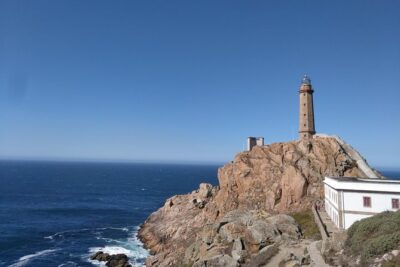
Santiago de Compostela Cathedral and Museum Guided Tour
Read our review →
From Santiago: Tour to Rias Baixas with Boat Trip and Winery
Read our review →
Browse the lists this tour appears in