
Reviewed · PAELLA COOKING CLASSES
Madrid: 10 Tapas 2.5-Hour Cooking Class
Madrid’s tapas tradition gets a useful, hands-on introduction in this 2.5-hour class. You’ll prepare 10 small dishes from around Spain, from Basque gilda skewers to Catalan pan tumaca, then sit down to eat what the class has made. Gustavo, Homer, Omero, and other A Punto chefs have led sessions praised for their humor, clear teaching, and easy way with a mixed international group.
I like the regional variety and the fact that the food becomes a full meal, not just a cooking demonstration. I also like the recipe booklet and apron, which give you something practical to take home. The main consideration is that you work in teams of three or four, so you will not personally prepare every one of the 10 tapas. In a larger class, it can also be hard to follow every task at once.
In This Review
- Key points at a glance
- Ten tapas, ten corners of Spain
- What the 2.5 hours actually feel like
- The chefs make the difference
- Working in teams of three or four
- From cooking lesson to shared dinner
- What the recipes and apron add
- Price, timing, and practical value
- Who should book this cooking class?
- Should you book the A Punto tapas class?
- FAQ
- How long does the Madrid tapas cooking class last?
- How many tapas will I prepare?
- Will I cook every tapa myself?
- Is the class suitable for beginners?
- Is a vegetarian option available?
- What is included in the price?
Key points at a glance
- Ten tapas in one class: Prepare small dishes linked to different regions of Spain, including gilda, pan tumaca, and Spanish omelet.
- A full dinner is included: Sit down with the group to eat the finished food and enjoy Spanish sangría.
- English instruction: The class is taught in English by a professional chef, with no previous cooking experience required.
- Team cooking: You’ll work in groups of three or four, sharing jobs across the recipes rather than making all 10 dishes alone.
- Useful keepsakes: Take home the recipes and a souvenir apron.
- Good for adults and teens: Children under 14 are not permitted, and the menu includes a substantial vegetarian portion.
Ten tapas, ten corners of Spain
The clever idea here is range. Instead of spending two and a half hours perfecting one elaborate dish, you get a quick tour of Spain through small plates. Each recipe helps show how Spanish cooking shifts from one region to another, while the whole menu adds up to dinner.
You might prepare gilda, the Basque Country’s sharp little skewer of pepper and anchovy. It is a fine teaching dish because it shows how a few strong ingredients can work together without much fuss. You will also make pan tumaca from Catalonia, the simple bread preparation rubbed or topped with tomato that turns good produce into a satisfying bite.
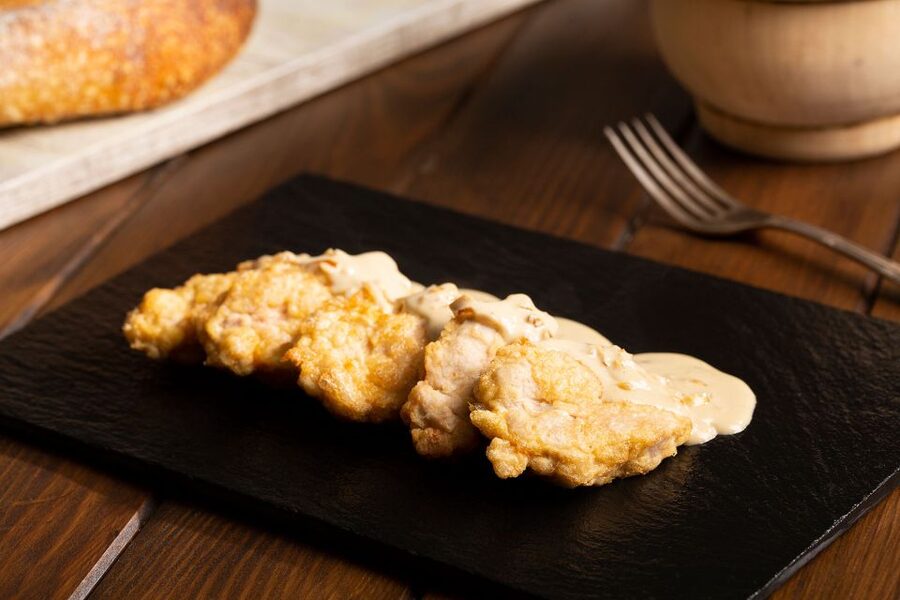
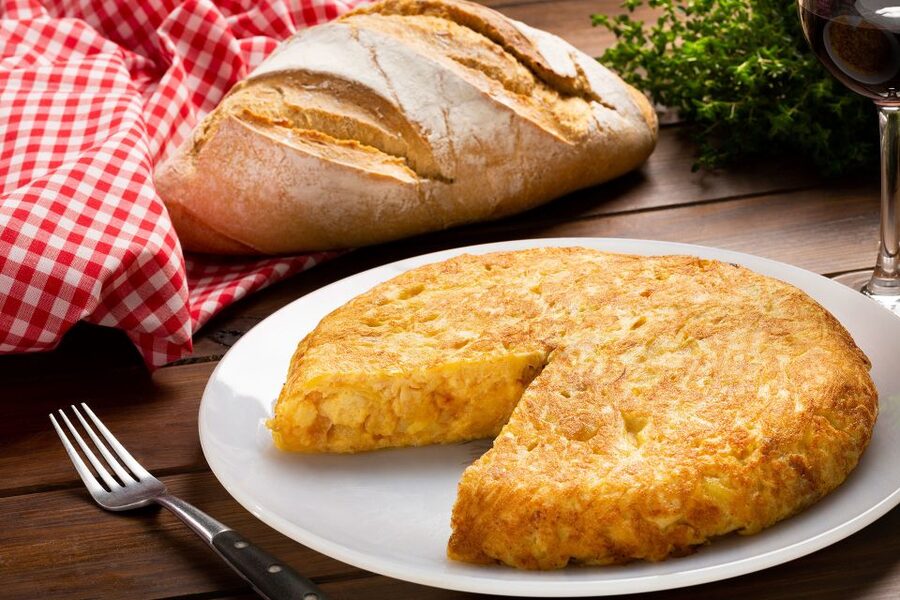
The menu also includes Spanish omelet, a dish several participants singled out as a class highlight. This is more useful than it may sound. Tortilla española looks simple, but the texture and timing matter, and a chef can show you details that a recipe card often skips.
The full list of 10 dishes can vary, so you should think of the class as a regional sampler rather than a fixed cooking course built around one cuisine. The point is breadth: small plates, different ingredients, and the cultural background behind them.
More Cooking Classes in Madrid
- Spanish Cooking Class Paella Tapas and Sangria in Madrid
★ 5.0 · 1,340 reviews - Madrid: Paella and Sangria Workshop in the City Center
★ 4.9 · 1,264 reviews - Paella Cooking Class in Madrid with Bottomless Wine Pairing
★ 5.0 · 985 reviews
What the 2.5 hours actually feel like
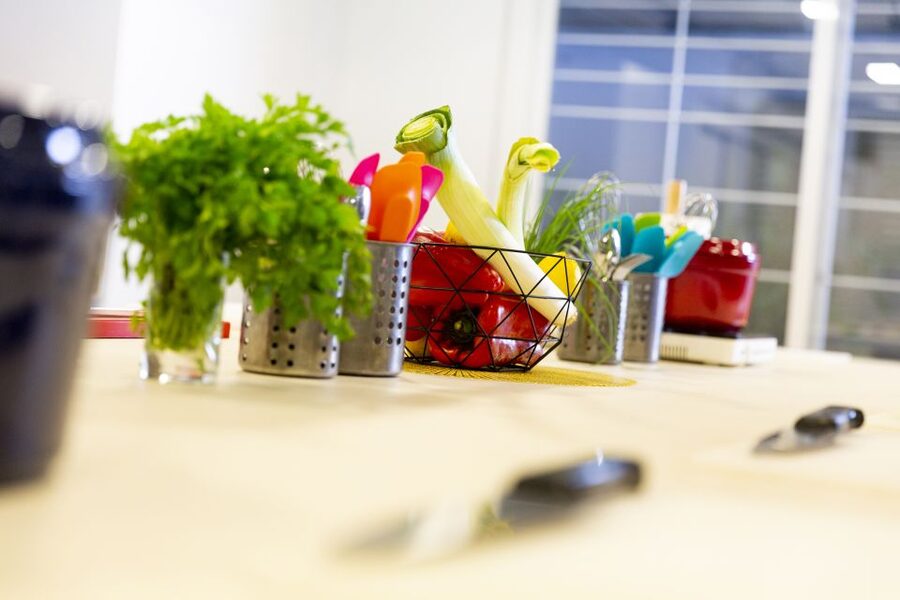
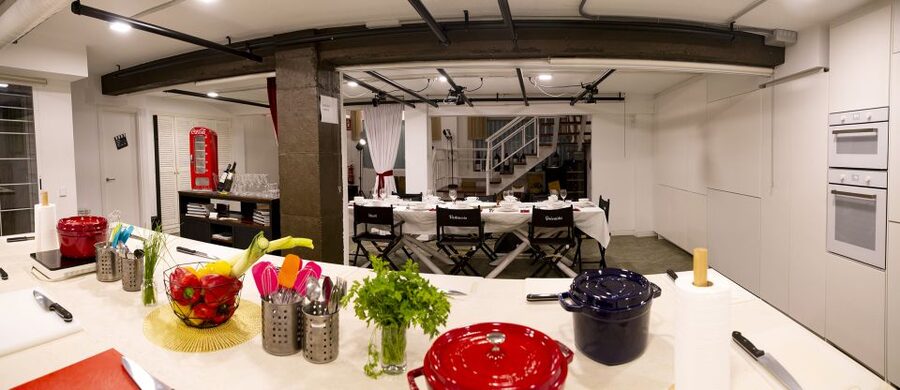
The class takes place in a fully equipped kitchen at A Punto Cooking School. You meet outside the shop at Calle de la Farmacia, 6, at street level. Do not go inside the building looking for the meeting point. The instructions specifically say to meet outside the shop.
Once inside, the chef introduces the recipes and divides the work among small teams. The cooking is active, but it is not a private lesson. You may chop, assemble, stir, or handle one part of a recipe while another team works on a different tapa.
That arrangement helps the class move at a good pace. Ten dishes in 150 minutes requires organization, and the best part of the format is that you are always doing something. The chefs have been praised for keeping the order clear, answering questions, remembering names, and making it easy for people from different countries to talk with one another.
Still, you should set your expectations correctly. You will not personally cook every dish from start to finish. One team may be handling a skewer while another works on the tortilla, and the recipes come together at roughly the same time. If you want a detailed lesson in every single tapa, this may feel rushed.
A larger group can add to that problem. One class had around 16 people, while another was described as a group of 12. Some participants found the size comfortable, but others felt that attention became spread thinly. You’ll get the most from the class if you are happy to share the work and listen closely when the chef gathers everyone for an explanation.
The chefs make the difference
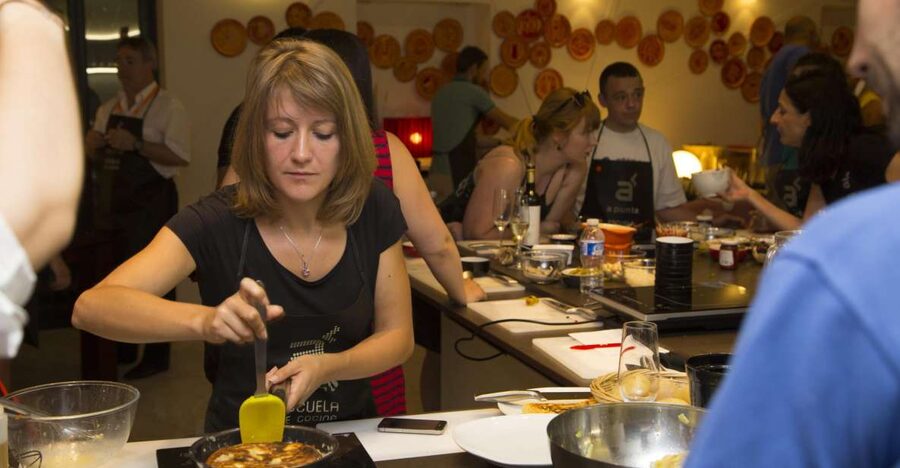
The instructor is an important part of this class. Gustavo receives repeated praise for his warm, funny, and engaging teaching style. Other sessions have been led by Homer, Omero, Diego, Eosa, and Anette, with strong comments about their humor, organization, and care with questions.
The teaching seems to combine practical instruction with stories about Spanish food. You can expect explanations of local ingredients, traditional techniques, and the place food holds in Spanish culture. One participant particularly valued family cooking tips, while another appreciated learning the historical origins of several tapas.
That cultural layer is worth your time. You can find recipes online, but a chef can explain why a dish is made a certain way and how it fits into daily life in Spain. The class is not just a list of instructions. It gives you a better sense of why tapas work as a social meal and why simple ingredients often do the heavy lifting.
The instruction is in English, which makes the class accessible if you do not speak Spanish. You should still expect a group lesson, not constant one-on-one coaching. One participant wished there had been another instructor circulating while people worked. If close personal attention is your top priority, a private class would likely suit you better, though this activity is specifically designed around shared cooking.
Working in teams of three or four
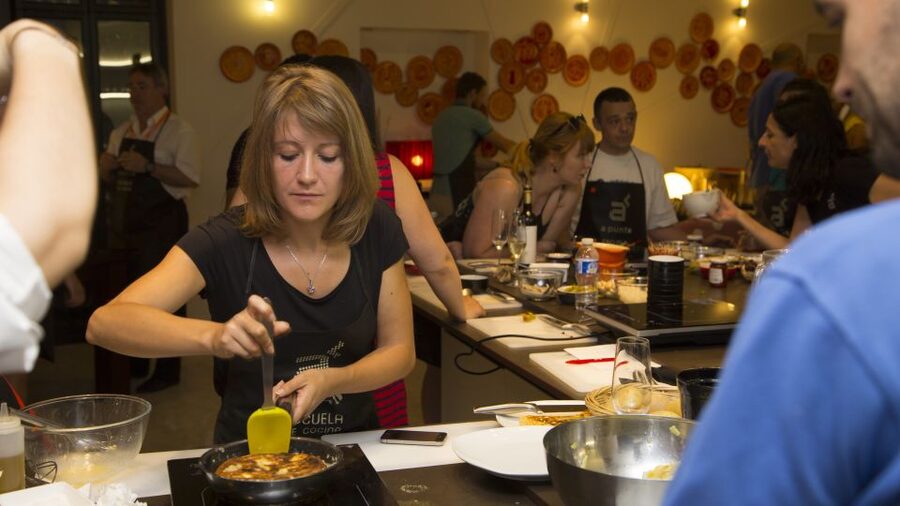
The small-team setup is both the charm and the compromise. You cook alongside people from different countries, divide up the jobs, and later share the results at one table. The class has been praised as a good way to meet people, break the ice, and spend an evening doing something more social than sitting in a restaurant.
This format also keeps the food moving. Nobody has to prepare all 10 tapas alone, which would be unrealistic in the time allowed. Instead, the class works as a group kitchen. You contribute to selected tasks, watch other preparations, and see how the whole menu comes together.
If you want to get as much practical value as possible, ask questions when the chef is nearby and pay attention during group demonstrations. Keep track of the techniques that interest you, since the pace may not allow you to watch every step in detail.
There is a small learning tradeoff. When several dishes are underway at once, you can miss what another group is doing. One participant found it difficult to follow the details of every preparation while concentrating on an assigned task. That is not a flaw for someone seeking a fun introduction, but it matters if you want a full lesson on each recipe.
More Tapas Tours in Madrid
- Madrid: Small Group of Prado Museum Tour & Optional Tapas
★ 4.6 · 2,437 reviews - Madrid: Tapas & Wine Tasting Tour with Local Guide
★ 4.8 · 2,171 reviews - Madrid Tapas & Wine Tour with Rooftop Views and Local Guide
★ 5.0 · 2,047 reviews - Madrid by Night Small Group Tour: Stories, Sights and Tapas Bites
★ 5.0 · 1,956 reviews
From cooking lesson to shared dinner
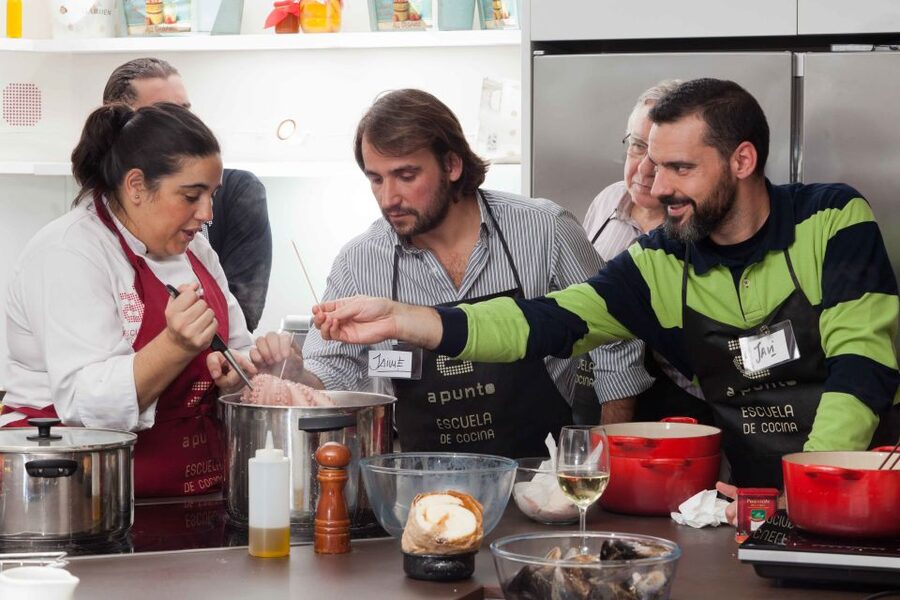
The payoff arrives when the work stops and everyone sits down to eat. The meal is made from the dishes prepared by the class, so you get a real sense of how the recipes function together. Several participants described the food as delicious, plentiful, and enough to make the class feel like a complete evening meal.
Spanish sangría is included. It adds to the social mood and gives you a familiar local drink to enjoy with the food. Wine is not included, however, and one participant suggested buying a bottle separately if you want wine with dinner. Transportation is also not included, so you’ll need to make your own way to Calle de la Farmacia.
The shared table is one of the strongest parts of the format. Cooking gives you a reason to talk, and the meal gives everyone time to relax after the work is done. Some groups became friendly enough to exchange contact details at the end, though that naturally depends on the people in your session.
You should also know that the menu is fixed. A vegetarian option is available because about half of the dishes are vegetarian, but the plates cannot be changed. If you avoid meat or shellfish, tell the staff in advance and explain your needs clearly. A participant with dietary restrictions found the team attentive, but the stated policy means you should not expect a fully customized menu.
What the recipes and apron add
The recipe copy is more valuable than a generic souvenir. It gives you a way to repeat the dishes at home, and the recipes are practical enough for people who want to cook Spanish food after returning from Madrid. Several participants specifically looked forward to making the tapas for family and friends.
The apron is a simple keepsake, but it fits the activity. You are not only watching a chef cook. You are handling food in a working kitchen, and the apron marks the class as something you took part in.
The class does not promise advanced culinary training, and you should not expect restaurant-level technique in every recipe. Its strength is confidence and variety. You learn several approachable Spanish dishes, understand more about their regional roots, and leave with a meal you helped create.
Price, timing, and practical value
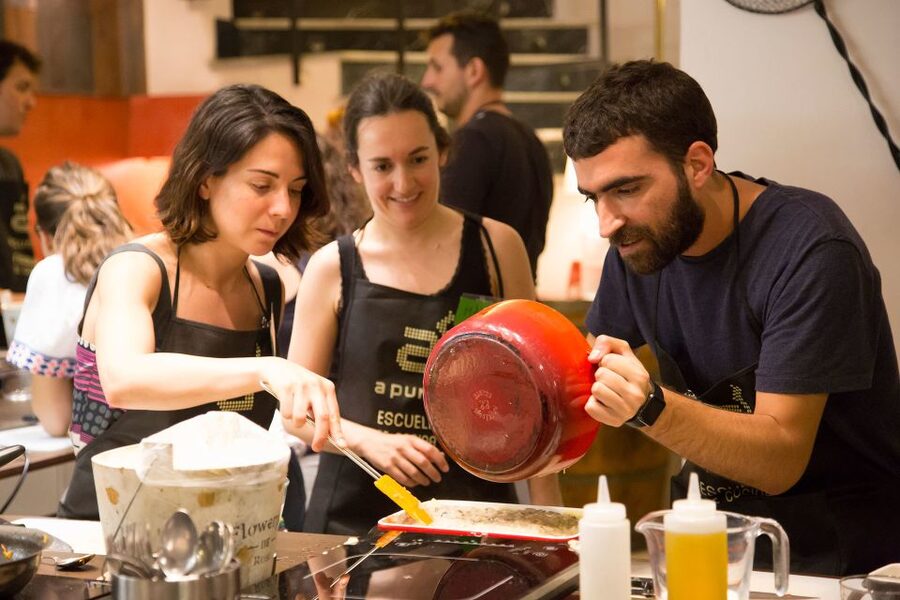
At $80 per person, this is not the cheapest way to eat tapas in Madrid. You can order several plates at a neighborhood bar for less money, especially if your main goal is simply to sample Spanish food.
The value improves if you want three things at once: a meal, a cooking lesson, and a social activity. The price includes the food you prepare, sangría, the recipe copy, and the apron. It also covers the use of the kitchen and instruction from a professional chef.
For a two-and-a-half-hour activity, that is a fair package if you enjoy participating rather than just being served. The meal alone does not justify the price as easily, but the chance to learn 10 regional tapas and recreate them at home makes the cost easier to accept.
Timing matters. A 2.5-hour class fits well on an afternoon or evening when you want a break from museums and monuments. Because you eat at the end, avoid scheduling a late dinner immediately afterward. You may leave with plenty of food, depending on the group and the amount prepared.
The class is taught in English and requires no previous experience. It is not suitable for children under 14. Baby strollers and baby carriages are not allowed, and smoking and audio recording are prohibited.
You can cancel up to 24 hours before the activity for a full refund, and the reserve-now, pay-later option helps if your Madrid schedule is still changing. Check the available start times when booking, since the exact schedule is not fixed in the details provided.
Who should book this cooking class?
I’d recommend it to you if you want a social Madrid activity with a clear connection to Spanish food. It suits beginners, couples, solo visitors, friends, and older teenagers who enjoy meeting people while doing something practical.
It is especially good for you if:
- You want to learn several Spanish dishes rather than one complicated recipe.
- You like sharing tasks in a group.
- You appreciate food stories and regional context.
- You want a full meal after the cooking.
- You hope to repeat the recipes at home.
- You are comfortable with a fixed menu and a partly vegetarian selection.
I would be more cautious if you need strict dietary customization, expect private instruction, or want to cook every dish yourself. The class gives you a taste of 10 recipes, but it cannot provide detailed individual training on all of them in 150 minutes.
The social side is a major part of the value. If you are traveling alone, this can be an easy way to meet people without the awkwardness of a formal group tour. If you are traveling with children under 14, though, you’ll need another plan.
Should you book the A Punto tapas class?
Book it if you want an enjoyable introduction to Spanish cooking and the chance to turn dinner into an activity. The strongest reasons are the broad menu, the friendly English-speaking chefs, the shared meal, and the recipes you can use at home.
Do not book it expecting a private chef lesson or complete control over every dish. You’ll work as part of a team, and a busy session may mean you miss some of the other preparations.
At $80, I see this as a good-value cultural activity rather than a bargain meal. The food, sangría, instruction, apron, and recipes make the price reasonable for someone who wants to learn and socialize. If that sounds like your kind of evening, A Punto Cooking School offers a tasty way to understand Spain one small plate at a time.
FAQ
How long does the Madrid tapas cooking class last?
The class lasts 2.5 hours.
How many tapas will I prepare?
The class covers 10 tapas from different regions of Spain. Examples include Basque gilda, Catalan pan tumaca, and Spanish omelet.
Will I cook every tapa myself?
No. You will work in small groups of three or four, so the dishes are prepared collectively rather than individually.
Is the class suitable for beginners?
Yes. No previous cooking experience is required.
Is a vegetarian option available?
Yes. About half of the menu is vegetarian. The plates cannot be changed, so the menu is not fully customizable.
What is included in the price?
The price includes the meal, Spanish sangría, a souvenir apron, and a copy of the recipes you prepared. Wine and transportation are not included.
More Workshops in Madrid
- Paella Workshop with Bottomless Sangria in Central Madrid
★ 5.0 · 763 reviews - Madrid: Half-Day Spanish Cooking Class
★ 5.0 · 345 reviews - Madrid: Paella and Sangria Workshop with Tapas
★ 4.9 · 128 reviews - Barcelona Paella Cooking Class with Market Visit, Tapas & Sangria
★ 5.0 · 2,531 reviews
Recently reviewed around Madrid
- Tour Madrid: Secrets in a Electric Tuk Tuk★ 4.6 · 155 reviews
- Madrid: Don Quixote de la Mancha Windmills & Toledo Tour★ 4.9 · 254 reviews
- Tour Guiado En Tuk Tuk Recorre Avila De La Forma Mas Comoda★ 4.4 · 235 reviews
- Madrid: Guided Tour of Toledo with Cathedral Visit★ 4.3 · 399 reviews
- Madrid: Toledo Day Trip with Winery Visit and Wine Tasting★ 4.4 · 177 reviews
- Madrid: 6-Hour Day Trip to Toledo with Guided Walking Tour★ 4.0 · 865 reviews
- Madrid: Tasty Tapas Tour & Visit to a Terrace with Views★ 4.5 · 118 reviews
- Madrid: Flamenco Show&Drink at Tablao 1911 (World’s Oldest)★ 4.7 · 253 reviews
Paella Cooking Classes, compared.
Paella Cooking Experience & Boqueria Market Tour
Read our review →
Barcelona Paella Cooking Class with Market Visit, Tapas & Sangria
Read our review →
Natural Coves and Beaches Boat Trip & Paella Lunch
Read our review →
Spanish Cooking Class Paella Tapas and Sangria in Madrid
Read our review →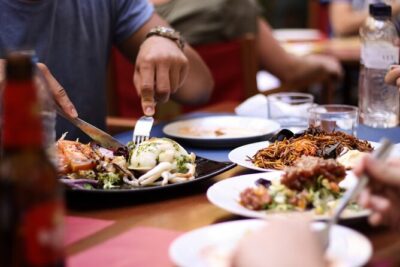
Barcelona Food Tour: Tapas, Paella, Sangria & 8+ Local Tastings
Read our review →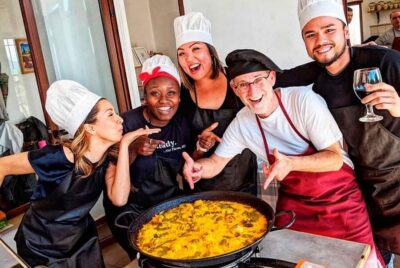
Paella and Sangria Workshop in the City Center
Read our review →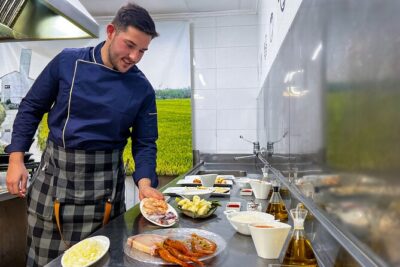
Paella Cooking Class, Wine Tasting & Central Market in Valencia
Read our review →
Girona & Costa Brava Small Group Tour From Barcelona with Paella!
Read our review →Browse the lists this tour appears in