
Reviewed · PAELLA COOKING CLASSES
Málaga: Spanish Cooking Workshop with Paella and Sangria
Málaga’s best cooking lesson is less about watching a chef perform and more about getting your hands on the food. In three hours, you help prepare paella, ajoblanco, remojón malagueño, a surprise dessert, and sangria with chefs Laura and Diego. The class takes place in a comfortable modern kitchen just five minutes from Atarazanas Market.
I love the small, social format, where you can ask questions and get individual help rather than stand at the back of a large demonstration. I also like the local angle: Laura and Diego explain Málaga ingredients, Andalusian food customs, and where to eat after class.
The main consideration is that this is a group activity, and a minimum of four participants is required. You should also tell the organizers about allergies, vegan needs, or vegetarian preferences ahead of time so the menu can be adjusted.
In This Review
- Key points at a glance
- Why this Málaga cooking class is more than a paella lesson
- Meeting Laura and Diego in the central kitchen
- Ajoblanco brings Málaga to the table
- Remojón malagueño adds a local salad course
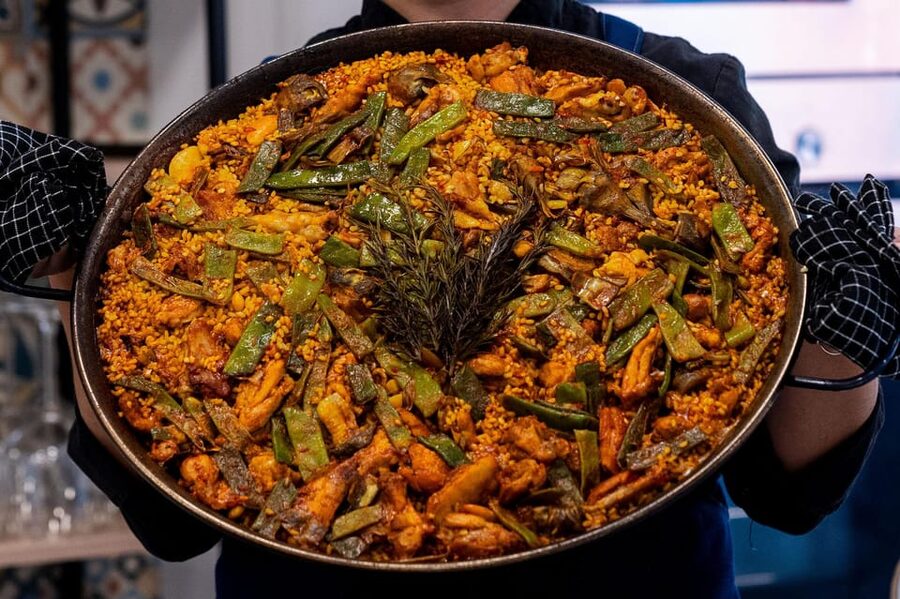
- The paella lesson focuses on technique
- Sangria and the shared meal
- What makes the instruction work
- Comfort, access, and dietary needs
- Who should book this experience
- Planning the $78 price and three-hour schedule
- Should you book the Málaga paella workshop?
- FAQ
- Where does the cooking workshop take place?
- How long does the experience last?
- What dishes do I prepare?
- Is sangria included?
- Who teaches the class?
- Is the class taught in English?
- Are vegetarian and vegan options available?
- Can food allergies and intolerances be accommodated?
- Is the workshop wheelchair accessible?
- Can I cancel for a refund?
Key points at a glance
- Three Málaga dishes plus dessert: Prepare ajoblanco, paella, remojón malagueño, and a surprise sweet.
- Laura and Diego teach differently: Laura brings Le Cordon Bleu training and paella instruction from a Valencian specialist, while Diego focuses on Andalusian cooking and Málaga traditions.
- You do the cooking: This is a participatory workshop, not a cooking show where you simply watch.
- Central location: The kitchen is in Málaga’s historic center, about five minutes from Atarazanas Market.
- A sociable meal follows: Sit down with the group to eat what you have prepared, with sangria included.
- Useful after-class advice: You can ask about markets, restaurants, local ingredients, and places to visit in Málaga and beyond.
Why this Málaga cooking class is more than a paella lesson
Paella is the obvious draw, but the menu gives you a better taste of southern Spain than paella alone. You prepare three savory dishes with different textures and regional identities, then finish with a dessert chosen as a surprise.
That range matters. A paella class can easily become a single-dish demonstration, but here you learn how a meal fits together. Ajoblanco introduces you to Málaga’s cool almond soup, remojón malagueño shows the local fondness for bright salads, and paella brings the group around the pan for the main event.
I especially like that the food is tied to place. You are not just learning a generic Spanish recipe. You are hearing about Andalusian ingredients, regional habits, and the stories behind the dishes while you cook them.
The experience costs $78 per person for three hours. That price includes the instruction, several dishes, dessert, and sangria during the meal. Since you eat a full spread and leave with recipes and practical cooking tips, I consider it good value for a traveler who would otherwise spend a similar amount on a nice Málaga dinner without learning anything useful.
More Malaga & Costa del Sol trips worth a second look
- Barcelona: Paella Cooking Experience & Boqueria Market Tour
★ 4.8 · 3,661 reviews - Barcelona Paella Cooking Class with Market Visit, Tapas & Sangria
★ 5.0 · 2,531 reviews - Barcelona Interactive Spanish Cooking Experience
★ 4.5 · 2,155 reviews
Meeting Laura and Diego in the central kitchen
The location is one of the easiest parts of the plan. The kitchen sits in Málaga’s historic center, close to Atarazanas Market. Being five minutes from the market gives the class a useful connection to the city’s food life, even though the workshop itself takes place indoors.
You do not need to arrange a complicated transfer or set aside a full day. The activity lasts three hours, with starting times available according to the date you choose. It works well as an evening plan, a midday break from sightseeing, or a rainy-day backup.
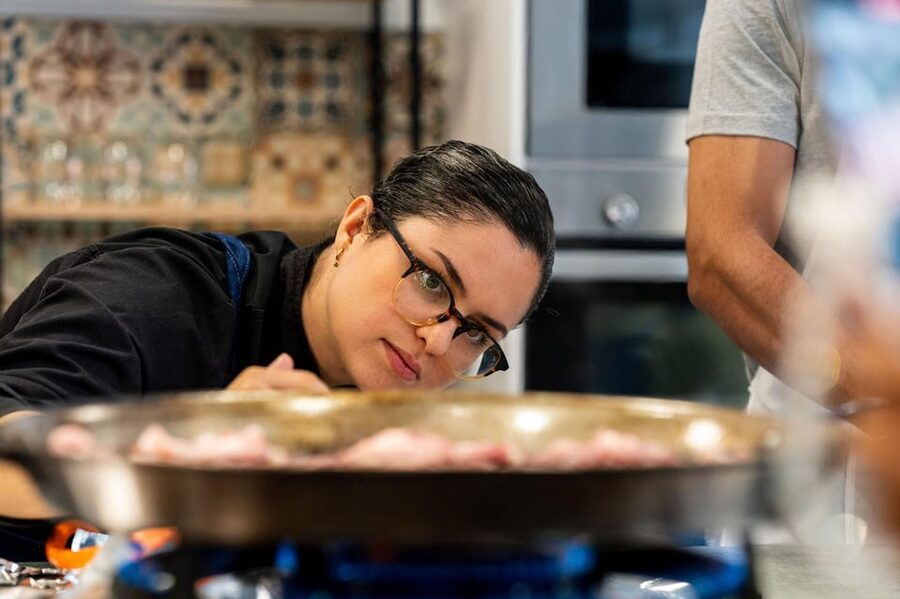
Laura trained at Le Cordon Bleu in London and has worked in Michelin-starred restaurants. Her paella training came from a Valencian chef who specializes in the dish, so she can explain the technique behind the rice instead of treating paella as a loose collection of ingredients.
Diego grew up and trained in Málaga after beginning his cooking life at age nine. His background includes traditional Andalusian kitchens and high-end restaurants in the city. He has a particular interest in Málaga-style dishes and desserts, and he brings a warmer, story-driven approach to the food.
You may have Laura, Diego, or other members of the team leading parts of the class. The teaching style is in English, and the repeated strength of the experience is clear: instructions are explained carefully, questions are welcomed, and the chefs make time for one-on-one help.
Ajoblanco brings Málaga to the table
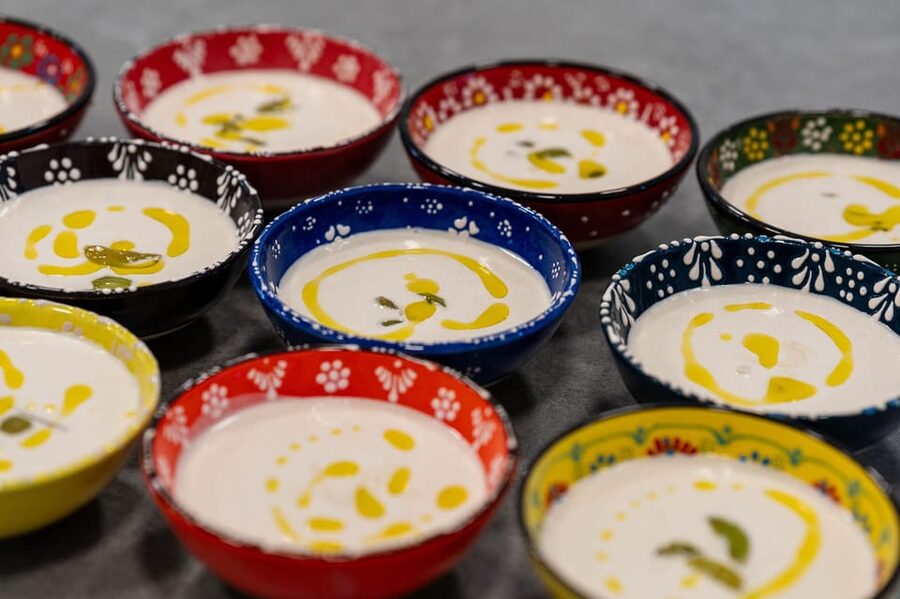
The first dishes help set the regional tone. Ajoblanco is a cold almond soup associated with Andalusia and Málaga. It is a useful lesson in how a few basic ingredients can create a dish with a strong identity.
You learn about the ingredients and how they work together, then take part in preparing the soup. The class is designed to use your senses, not just a printed recipe. You can expect discussion of texture, balance, and the small adjustments that make home cooking taste more polished.
This is one of the dishes I would pay attention to if you want to recreate the class at home. Paella gets most of the attention, but a traditional soup gives you a simpler way to carry a piece of Málaga into your own kitchen.
The pace is described as relaxed, which is good news if you are not a confident cook. You are not expected to arrive with professional skills. The instructors demonstrate each stage, then guide you as you prepare it yourself.
Remojón malagueño adds a local salad course
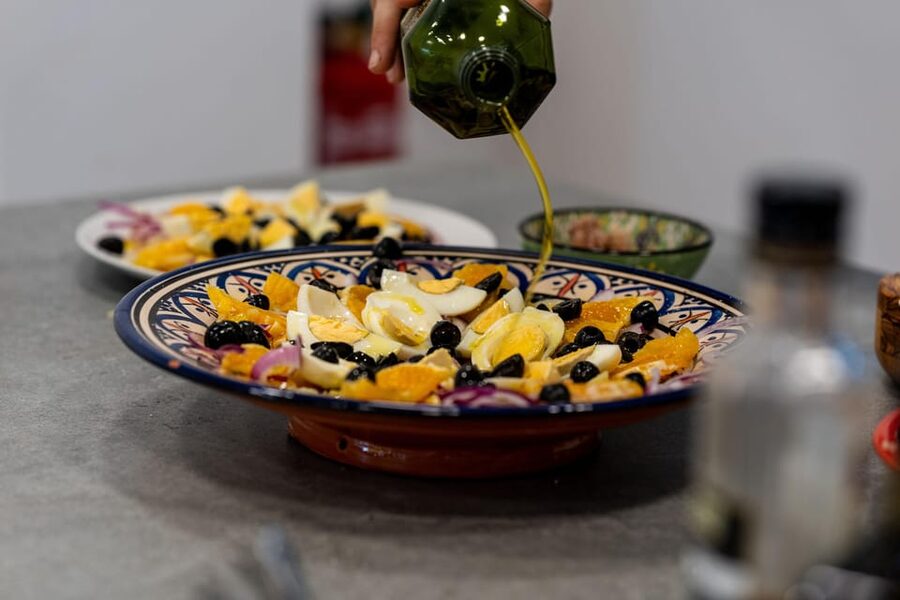
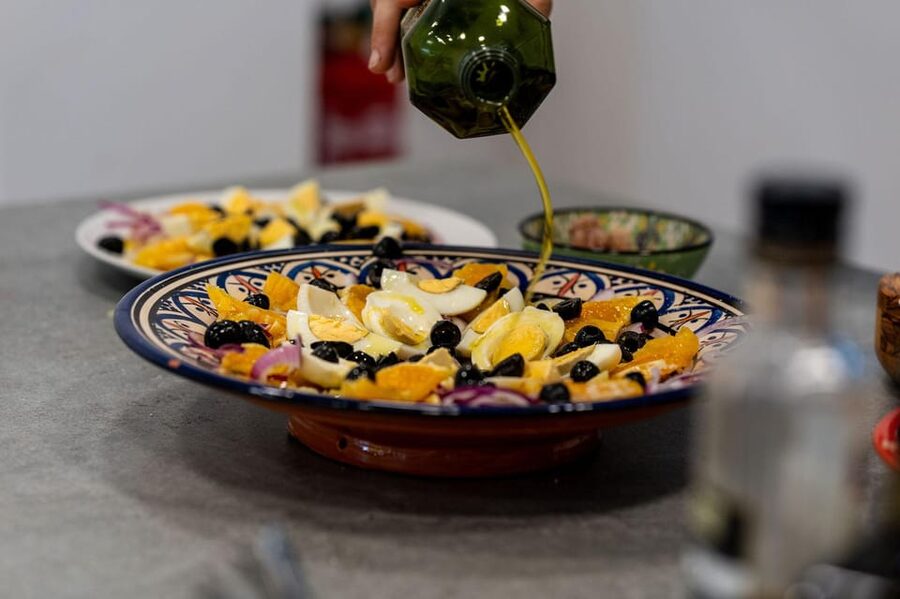
Remojón malagueño is the salad course, and it gives the meal a fresh counterpoint to the rice and soup. It is a typical Málaga dish, so it helps show that Andalusian cooking is not only about large pans and hearty main courses.
Preparing a separate salad also keeps the workshop active while the other dishes develop. You are doing more than waiting for the paella to finish. The menu moves through several parts of a meal, and each one has its own ingredients and techniques.
This part may appeal most to cooks who enjoy learning how local food is assembled rather than simply following a recipe step by step. You get a better sense of how Spanish meals balance warm, cool, rich, and refreshing elements.
The exact surprise dessert is not specified in advance, so you should not book this expecting one particular sweet. Diego’s Andalusian background makes dessert part of the workshop’s regional focus, but the fun is in discovering what appears at the end.
A different way to spend the day, same corner of Spain:
- Málaga: Caminito del Rey Guided Tour with Transportation
★ 4.8 · 12,183 reviews - Caminito del Rey: Guided Tour and Entry Ticket
★ 4.6 · 11,286 reviews - Málaga: Museo Picasso Málaga Entry Ticket
★ 4.4 · 11,138 reviews - From Málaga & Costa del Sol: Caminito del Rey Guided Tour
★ 4.7 · 7,488 reviews
The paella lesson focuses on technique
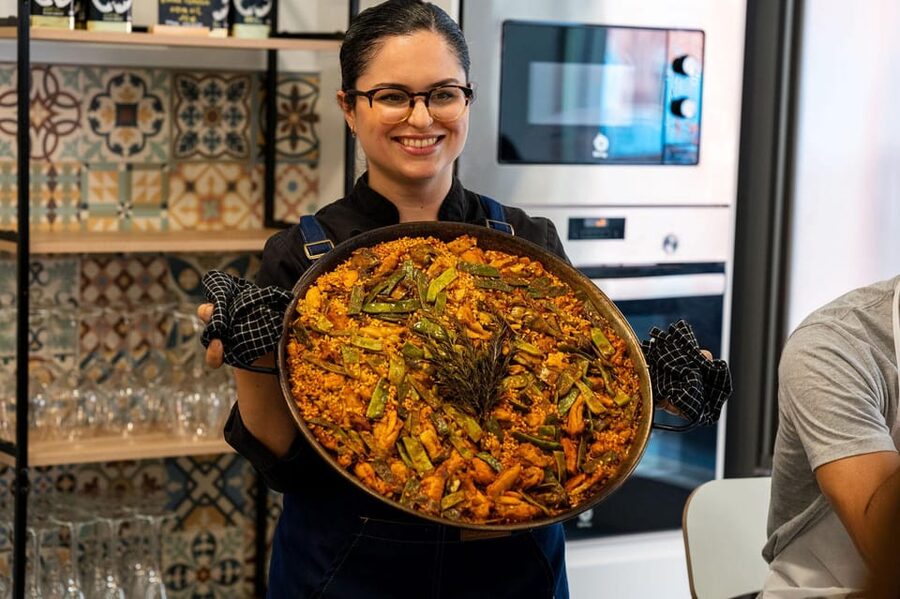
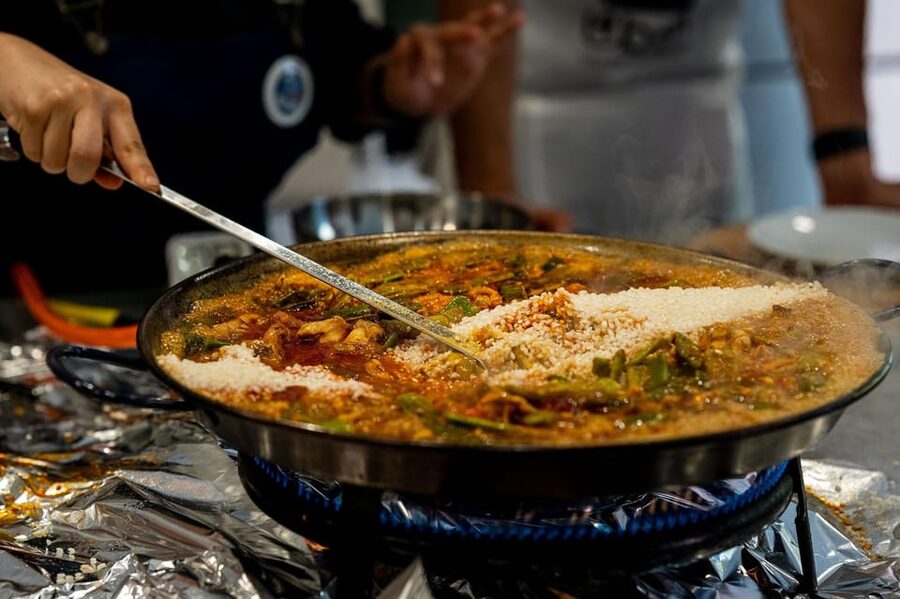
The paella is the centerpiece. Laura teaches the dish using methods learned from a Valencian paella specialist, and Diego also leads paella classes with a strong focus on technique.
The useful part is not just learning which ingredients go into the pan. You get advice on preparing the ingredients, handling the rice, and judging when the dish is ready. Several people leave with enough confidence to try paella again at home, including those who had struggled with it before.
Pay attention to the rice. One of the most useful tips from the class concerns getting the rice right, which is where many home attempts go wrong. The instructors explain the process clearly and answer questions as the dish develops.
The class is hands-on, so you should expect to chop, prepare ingredients, and take part in making the meal. Your role may vary depending on the group and the dish, but this is not a performance with a chef doing everything for you.
That participatory setup creates a practical tradeoff. You may not personally control every stage of every dish, especially if the class is full. The upside is that the group works together, and the instructors can keep the meal moving while still giving individual help.
Sangria and the shared meal
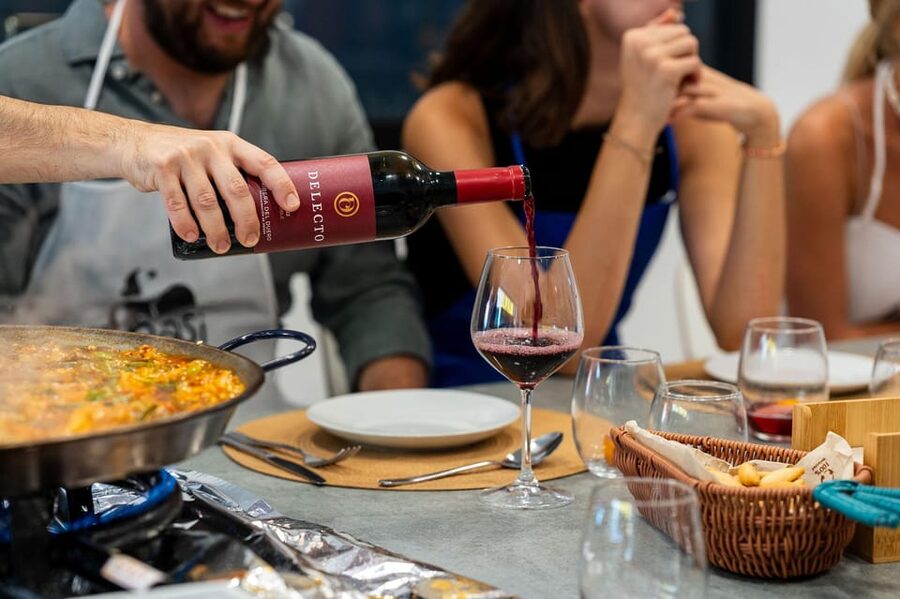
Sangria is part of the social side of the class. You learn how it is made, then enjoy more during the meal, with two additional servings or more included depending on your choice.
This is not an alcohol-focused activity. It is a cooking workshop where sangria accompanies the food, and alcohol and drugs are not allowed beyond the included beverage experience. If you do not drink, the central value remains the cooking, food, instruction, and group meal.
At the end, everyone sits down to eat the dishes prepared during the session. That shared table is important. You get to taste the results while comparing notes with people from different countries, rather than leaving with a recipe and no idea how the finished dishes should taste.
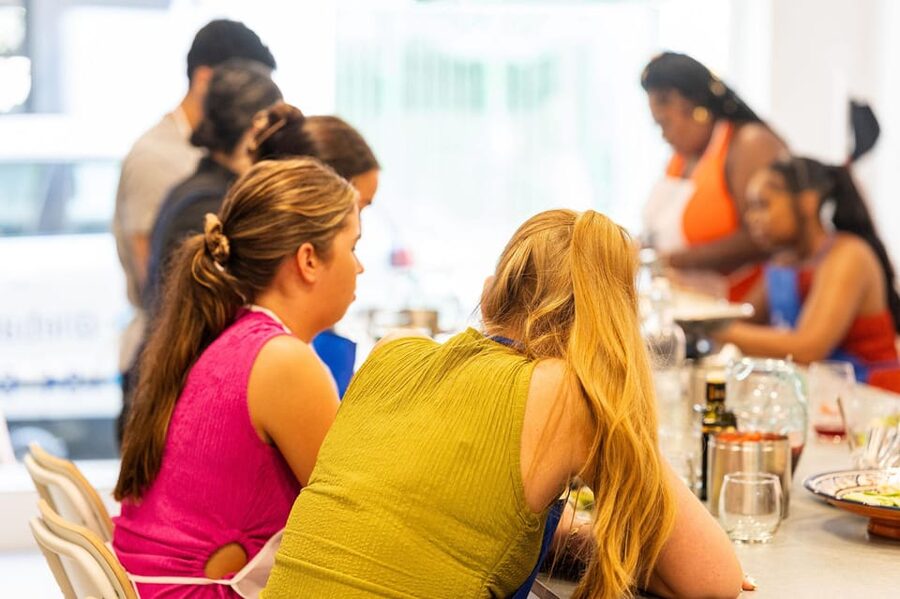
The group atmosphere is often described as friendly and convivial. A class of around nine or ten people has been noted, though the exact size can vary. That is large enough to create conversation but small enough for the chef to answer questions.
What makes the instruction work
The strongest feature is the teaching. Laura is praised for clear explanations, strong English, and the ability to give personal help. She uses stories, food history, and sensory comparisons to make the instructions easier to follow.
Diego brings humor and an easy manner. He explains the food while keeping the room relaxed, and he often adds tips about Málaga culture, restaurants, and places to visit. His personality is especially useful if you are nervous about cooking in front of strangers.
The class also leaves room for questions. You can ask about paella technique, local ingredients, restaurant choices, or where to buy food in Málaga. Laura has even offered advice for finding paella in Valencia, which shows how the conversation can extend beyond the dishes on the table.
You should think of the workshop as part cooking lesson and part informal food orientation. It will not replace a full market tour or a formal culinary course, but it gives you useful context for the rest of your time in Andalusia.
Recipes are sent or provided afterward, according to the arrangements described by the organizers. That makes the class more valuable once you return home. You are not relying on memory after a busy holiday.
Comfort, access, and dietary needs
The kitchen is modern and comfortable. One particularly useful detail is the availability of high stools with backs. If you are concerned about standing at a counter for two hours, this can make a real difference, especially for older participants or anyone with limited stamina.
The activity is wheelchair accessible. You should still communicate any specific access needs when booking, since the general accessibility statement does not describe every feature of the space.
Vegan and vegetarian versions are available with advance notice. Food allergies and intolerances can also be accommodated, but you need to tell the organizers ahead of time. Do not wait until you arrive, since the ingredients and preparation plan may need to be changed.
The three-hour length is enough to feel substantial without taking over your day. You will be cooking, listening, eating, and talking, so it can feel longer than a simple restaurant meal. Plan your appetite accordingly, since the included menu provides several courses and drinks.
Who should book this experience
This workshop suits couples, families, solo visitors, and small groups. Solo participants can count on a social setting, while couples and families get a shared activity that does not depend on everyone having the same sightseeing interests.
It is also a good choice for people who enjoy food but are not expert cooks. The chefs break down the steps, and the tone is friendly rather than formal. You can ask basic questions without feeling out of place.
Families should consider the three-hour duration and the need to take part in food preparation. The activity is presented as suitable for families, but the organizers do not provide a specific age recommendation, so ask ahead if you are booking for young children.
This may be less suitable if you want a quiet meal or a private lesson. The group format is part of the appeal, and you will be sharing the kitchen and table with other participants. A minimum of four people is required, so last-minute solo plans depend on the class being able to run.
It is also not the right pick if your main goal is a market visit. The class is near Atarazanas Market, but it is held in the kitchen rather than structured as a guided market tour.
Planning the $78 price and three-hour schedule
At $78 per person, the price makes sense if you value both the meal and the lesson. You receive several dishes, dessert, sangria, professional instruction, local food context, and recipes to use later.
The value is strongest for people who would enjoy a good dinner but also want to take something home besides a full stomach. You learn techniques you can repeat, especially with paella, and you get practical advice on ingredients and restaurants.
The location helps keep the day efficient. Since the kitchen is in central Málaga and close to Atarazanas Market, you can pair the class with sightseeing in the old center without arranging separate transportation.
You can cancel up to 24 hours before the activity for a full refund, and the reserve-now, pay-later option keeps your plans flexible. Check the available start times before booking, since the schedule varies by date.
Should you book the Málaga paella workshop?
Book it if you want to cook rather than simply watch, enjoy meeting other people, and like the idea of learning several local dishes in one sitting. The combination of paella, ajoblanco, remojón malagueño, dessert, and sangria gives you a fuller picture of Málaga’s food than a standard paella demonstration.
I would give this a particularly strong recommendation to first-time visitors who want local restaurant advice along with a practical cooking lesson. Laura and Diego bring different strengths, and both are focused on clear teaching, humor, and regional food.
Skip it if you dislike group activities, cannot take part in food preparation, or want a private chef experience. Otherwise, $78 is a fair price for a central, accessible, hands-on evening that leaves you with a meal, recipes, and enough paella confidence to try again at home.
FAQ
Where does the cooking workshop take place?
The workshop takes place in a modern kitchen in Málaga’s historic center, about five minutes from Atarazanas Market.
How long does the experience last?
The cooking workshop lasts three hours.
What dishes do I prepare?
You prepare ajoblanco, paella, and remojón malagueño, a typical Málaga salad. A surprise dessert is also included.
Is sangria included?
Yes. You make sangria during the workshop and receive additional sangria during the meal, with two or more included depending on your choice.
Who teaches the class?
The main chefs are Laura and Diego. Laura studied at Le Cordon Bleu in London and trained with a Valencian paella specialist. Diego was raised and trained in Málaga and specializes in Andalusian and Málaga-style cuisine, especially desserts.
Is the class taught in English?
Yes. The live tour guide language is English.
Are vegetarian and vegan options available?
Yes. Vegan and vegetarian options can be provided with advance notice.
Can food allergies and intolerances be accommodated?
Yes. The menu can be adapted for food allergies and intolerances, but you should provide that information in advance.
Is the workshop wheelchair accessible?
Yes, the activity is listed as wheelchair accessible.
Can I cancel for a refund?
Yes. You can cancel up to 24 hours in advance for a full refund. A reserve-now, pay-later option is also available.
Recently reviewed around Malaga & Costa del Sol
- From Marbella: Canyoning Tour in Guadalmina Canyon★ 5.0 · 778 reviews
- Torremolinos: Crocodile Park Entrance Ticket★ 3.7 · 309 reviews
- Torremolinos: Flamenco Show with Drinks★ 4.6 · 290 reviews
- Selwo Aventura Admission Ticket with Skip-the-Line Access★ 4.2 · 151 reviews
- Tour to Gibralfaro★ 4.7 · 182 reviews
- Ronda: Spanish – Classical & Flamenco – Guitar Concert★ 4.8 · 108 reviews
- Ronda: Guided Walking Tour★ 4.6 · 104 reviews
- From Costa del Sol: Ronda and Setenil de las Bodegas★ 4.5 · 149 reviews
Paella Cooking Classes, compared.
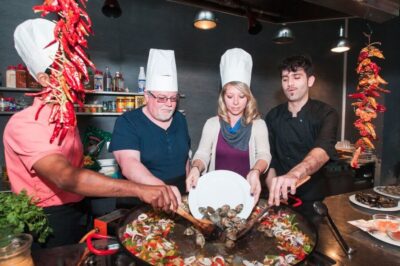
Paella Cooking Experience & Boqueria Market Tour
Read our review →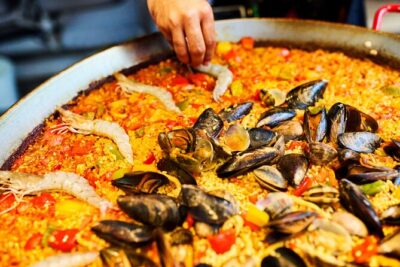
Barcelona Paella Cooking Class with Market Visit, Tapas & Sangria
Read our review →
Natural Coves and Beaches Boat Trip & Paella Lunch
Read our review →
Spanish Cooking Class Paella Tapas and Sangria in Madrid
Read our review →
Barcelona Food Tour: Tapas, Paella, Sangria & 8+ Local Tastings
Read our review →
Paella and Sangria Workshop in the City Center
Read our review →
Paella Cooking Class, Wine Tasting & Central Market in Valencia
Read our review →
Girona & Costa Brava Small Group Tour From Barcelona with Paella!
Read our review →Browse the lists this tour appears in