
Reviewed · CADIZ & JEREZ TOURS
Jerez: Royal Andalusian School of Equestrian Art Admission
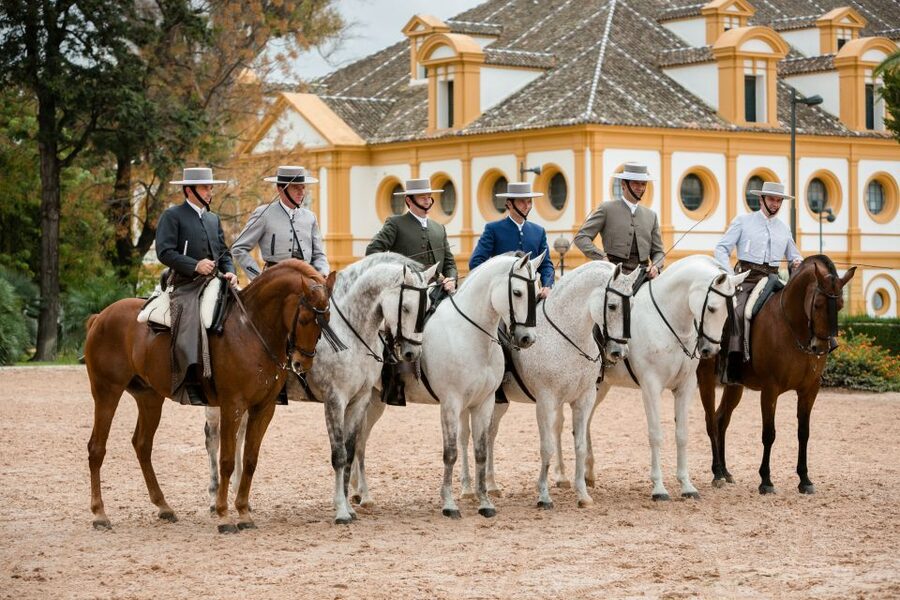
The best part of this Jerez visit is not a polished stage show. It is seeing the Andalusian horses at work, from stable care to training in the arena. You get a close look at the octagonal stables, the tack room, the saddlery, and the riders’ daily routines.
I like the mix of working facilities and elegant surroundings. I also like that the $18 admission includes the equestrian museum and carriage museum, not just a walk past the horses. The main drawback is timing: training and saddlery visits are not offered on Saturdays, and the English tour may begin later than expected.
In This Review
- Key points to know before you book
- Why the training session is the real highlight
- The stables and the horses
- The saddlery shows the work behind the spectacle
- A palace, gardens, and a museum under one ticket
- Finish with the carriage museum
- How the guided visit works
- Is $18 good value?
- Practical comfort and access
- Who will enjoy this most?
- Should you book the Royal Andalusian School?
- FAQ
- How long does the visit last?
- Is horse training included?
- Is the horse show included with admission?
- What languages are available?
- Is the Royal Andalusian School wheelchair accessible?
- What do I need to show at the ticket office?
- Can I bring bottles, cans, or animals inside?
Key points to know before you book
- Watch real training, not only a display: The outdoor rings and indoor arena let you see horses and riders rehearse their work.
- See the horses up close: The octagonal stables hold the school’s most important horses, though touching them is not guaranteed.
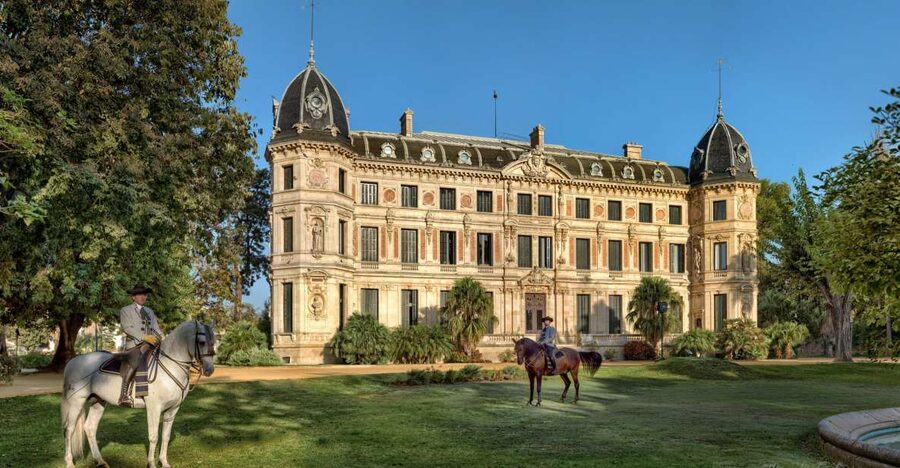
- Explore a Charles Garnier palace: The 19th-century building adds art and architecture to the horse-centered visit.
- Allow extra time for the museums: The standard visit lasts about two hours, but you can spend closer to four hours if you take your time.
- Do not confuse this with the horse show: This admission covers the school facilities and training access, not necessarily the staged performance.
- Check the day carefully: Training and saddlery demonstrations exclude Saturdays, and the management may change the program.
Why the training session is the real highlight
Jerez is famous for sherry, flamenco, and horses, and this visit brings the last of those traditions into focus. The Royal Andalusian School of Equestrian Art is a working institution, not simply a museum with a few animals added for atmosphere.
You may watch riders exercise horses in the outdoor rings, then see more formal work in the indoor arena. The arena is built in an Andalusian style and seats 1,600 people, so it gives you a clear sense of how daily practice connects with the school’s public performances.
I find training more revealing than a short staged number. You see repetition, patience, and control. The horses do not simply appear fully trained. You watch the process that prepares them for the school’s famous performances.
The exact routine can change, and the school reserves the right to alter the program. Training is not offered on Saturdays according to the published schedule, so choose another day if watching the horses work is your main reason for coming.
One visit included stallions being lunged, carriage driving, and practice in the arena. That gives you an idea of the range of work you might see, though no particular exercise should be treated as guaranteed.
Other Cadiz & Jerez days travellers weigh against this one:
- Jerez de la Frontera: Andalusian Horse Dance and Museums
★ 4.7 · 1,289 reviews - Jerez: Yeguada de la Cartuja Carthusian Horses Tour
★ 4.8 · 970 reviews - Tarifa: Whale & Dolphin Watching in the Strait of Gibraltar
★ 4.7 · 835 reviews
The stables and the horses
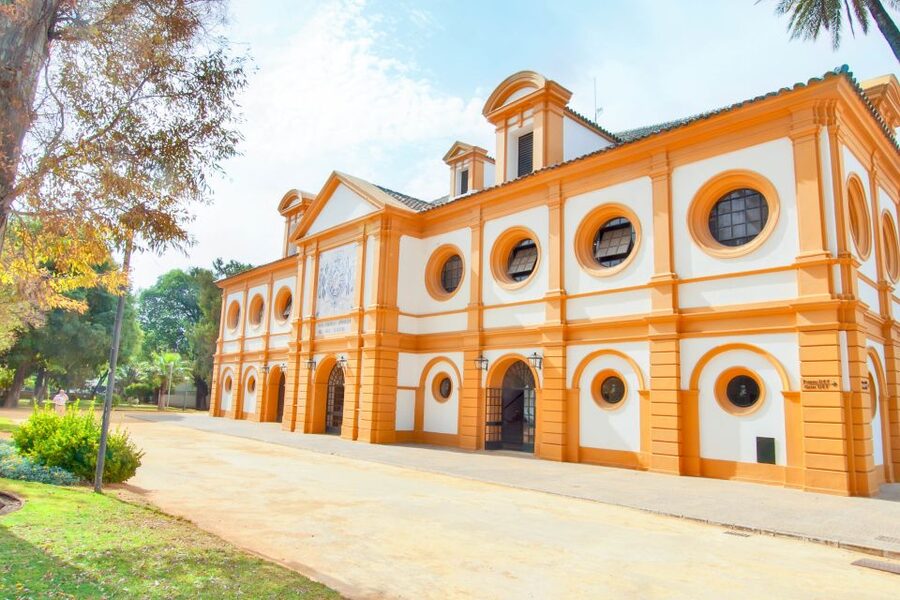
The school’s stables form an octagonal complex. At the center is the tack room, where the harnesses used for training and performances are kept. This is one of the most interesting sections because it shows the practical side of equestrian art.
You are not just looking at beautiful horses from a distance. You are seeing the equipment, preparation, and care behind the polished performance. One guide explained how the horses are kept and answered questions about their daily care, which added useful context to the visit.
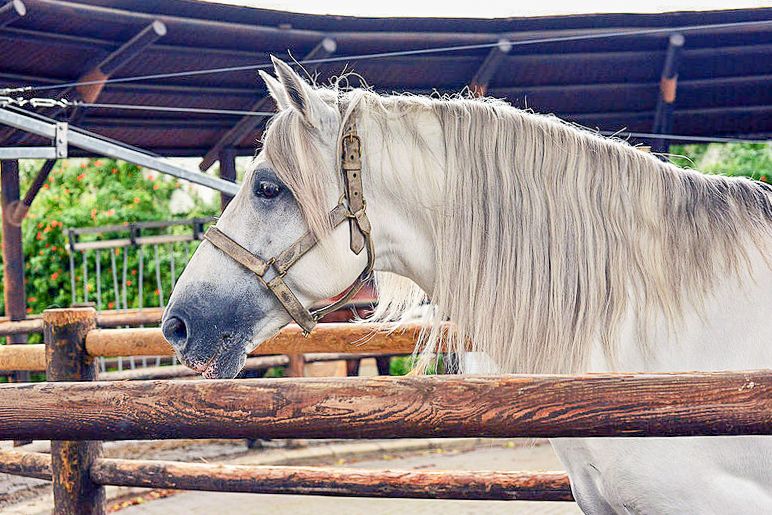
The horses are the stars, of course. The Andalusian breed is known for its graceful movement, and the school’s animals are trained in dressage. Several people found the horses to be in excellent condition, and the facilities are described as clean and carefully maintained.
You may get quite close to the horses in their stalls. One visitor was able to pat them, while another wished the staff had brought a horse out for visitors to touch. That difference matters. You should expect close viewing, but do not book this as an animal-interaction experience.
Photography rules can also apply. One visit did not allow photos inside the arena, so follow staff instructions rather than assuming you can record every part of the training.
The saddlery shows the work behind the spectacle
After the stables, the route takes you to the saddlery. Here, the master harness maker and apprentices make and repair the equipment used by the school.
This small working detail adds real value. A performance can make riding look effortless, but the tack room and saddlery remind you that every horse and rider depend on carefully fitted, well-maintained gear.
The tack room is humidity controlled, according to one detailed visit, which reflects the care given to leather harnesses. You see where the equipment is stored and learn how it supports both daily practice and shows.
The saddlery is not open for the same program on Saturdays. If you are interested in traditional craft as much as dressage, plan your visit for a weekday or another scheduled day.
A palace, gardens, and a museum under one ticket
The visit begins at the reception center, where an audio-visual presentation explains the development of equestrian art in Andalusia. This presentation is available until 11:00 a.m., so arrive early if it is important to you.
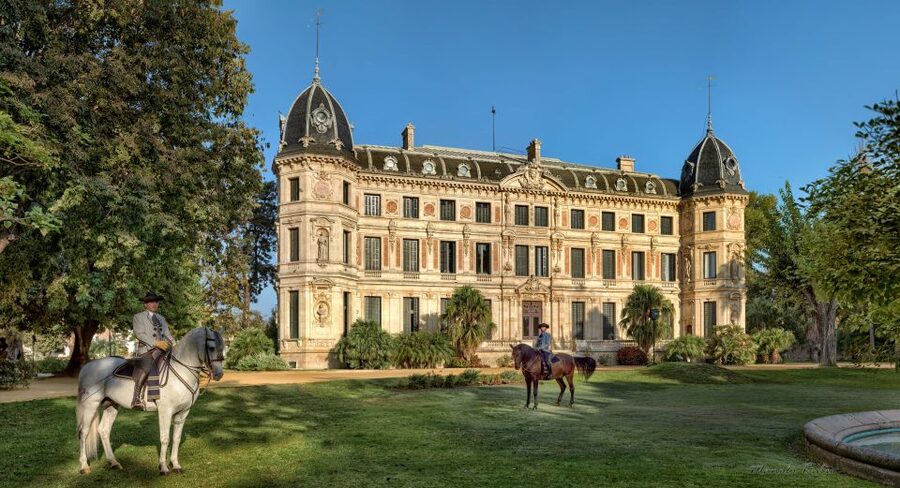
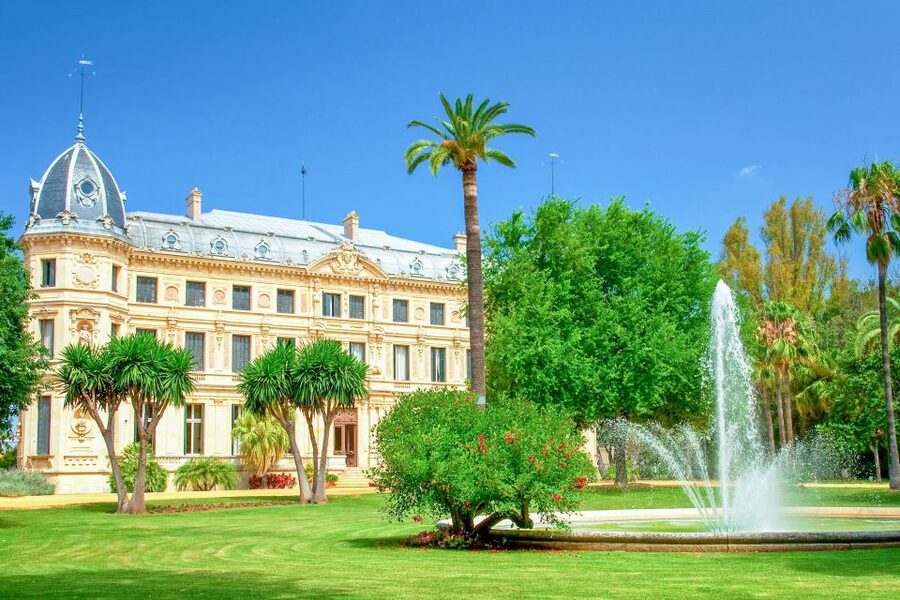
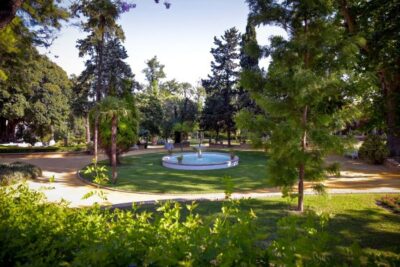
From reception, you enter the gardens. Exotic plants surround a large central fountain, whose tall water jets draw you toward the palace. The setting is formal and calm, a pleasant contrast to the movement and noise of the training areas.
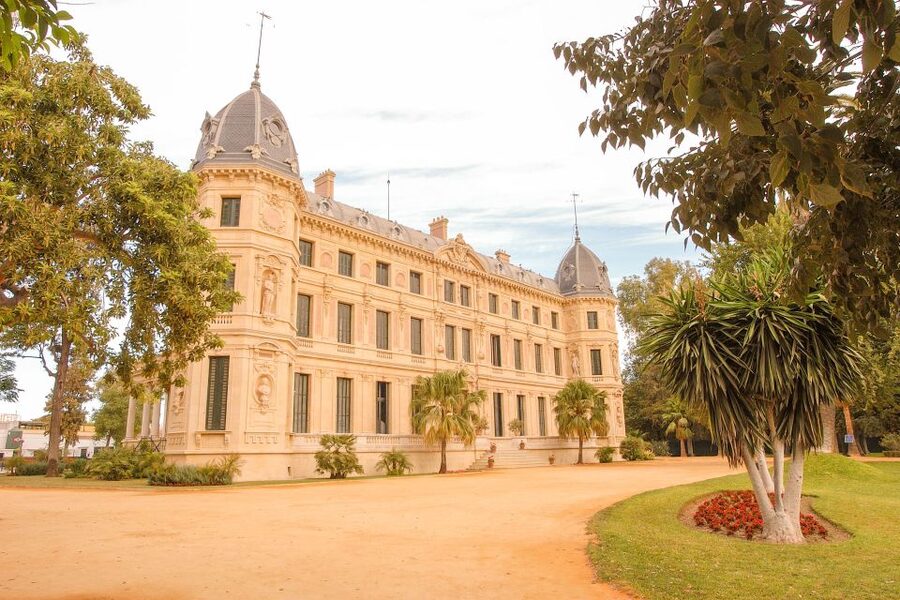
The palace was designed by Charles Garnier and is a fine example of 19th-century architecture. On the ground floor, you can see rooms decorated in their original style. If you enjoy grand interiors, this part gives the visit more range than a standard stable tour.
The palace may not always be fully available. One visit found some rooms closed for filming, so temporary restrictions are possible.
In the basement, the Museum of Equestrian Art takes you through 11 rooms devoted to the horse and equestrian traditions of Andalusia. Exhibits cover the origins of the art, the school’s story, and the movements horses perform.
The museum is especially useful if you do not already know much about classical riding. It gives names and context to what you see in the arena. Interactive displays and videos help explain the techniques, although some video screens were not working during one visit.
A different way to spend the day, same corner of Spain:
- Cadiz: City Sightseeing Hop-On Hop-Off Bus Tour
★ 4.1 · 753 reviews - Jerez: Bodegas Fundador Guided Tour with Tasting Session
★ 4.8 · 714 reviews - Jerez: Guided Winery Tour with Wine Tasting
★ 4.4 · 636 reviews - Walking Tour through Cádiz: Stories from the hand of a local guide
★ 5.0 · 532 reviews
Finish with the carriage museum
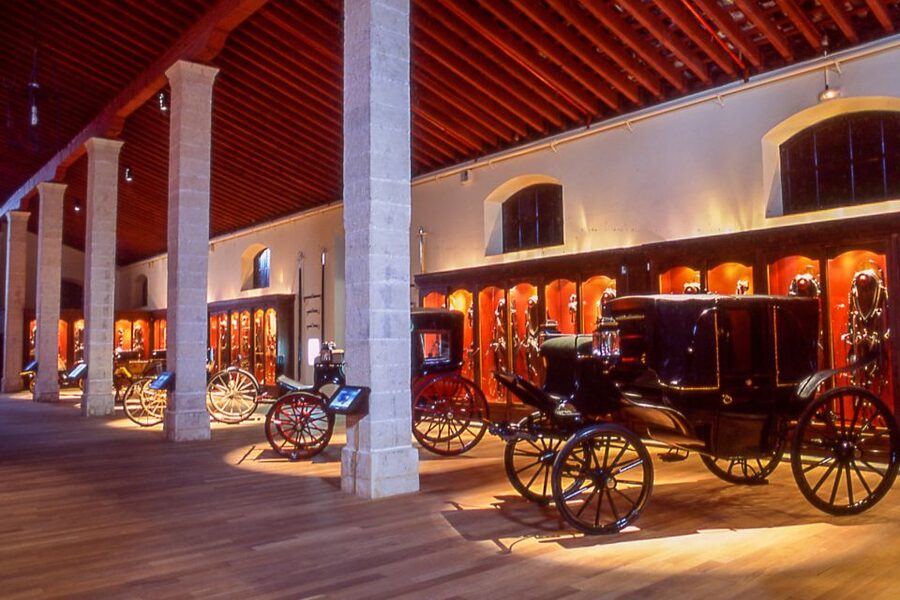
The carriage museum comes at the end of the route. Its collection includes carriages, horses, harnesses, and equestrian clothing.
This section helps complete the picture. The school is not only about a rider on a horse. It also preserves the vehicles, clothing, and equipment connected with formal riding and carriage traditions.
The carriage museum is included in admission, but it is a little removed from the main flow of the visit. In hot weather, you may be tempted to stop after the stables and equestrian museum. I would try to keep enough energy for this final section, especially if you have an interest in historic transport or design.
Because the visit covers several buildings, the advertised two hours is a reasonable basic estimate, not a strict limit on how long you may spend at the school. One person spent nearly four hours taking in the grounds, training areas, stables, and museums.
How the guided visit works
The ticket gives you full admission to the school facilities, but the route is not simply an open walk through every working area. Guided sections are important, particularly in the stables, tack room, and saddlery.
Guides may speak Spanish, English, French, or German. Past guides included Elena, Javi, and Harry, and each was praised for explaining the school and answering questions. The guide may be a school employee, which can make the visit more useful because you are hearing about the facilities from someone connected with the institution.
Pay close attention to your selected start time and language. One English-language visit did not begin until 11:15 a.m., despite an earlier booking time, while another visitor had to wait for an English-speaking group. Schedules and group arrangements can change.
The audio-visual presentation is a separate timing concern. It is available only until 11:00 a.m., so a later arrival may mean missing it. If you want both the presentation and a guided English visit, check the day’s schedule before you set out.
The meeting point can vary by the option booked. Your confirmation should show where to go. At the ticket office, present the printed receipt or show it on your phone. If you bought a discounted ticket, bring proof of eligibility. Without that proof, you may need to pay the difference to the full price, if standard tickets remain available.
Is $18 good value?
At $18 per person, I consider this a strong value for anyone with even a modest interest in horses, architecture, museums, or Andalusian culture.
The price covers more than a short stable visit. You get the gardens, palace rooms, equestrian museum, stables, tack room, saddlery, training areas, indoor arena, and carriage museum. The exact presentation can vary, but the range of places included gives you plenty to see.
The value is best when training is taking place. Watching horses and riders work gives the admission a clear purpose. On Saturdays, when training and saddlery access are excluded, the museums and grounds still provide a worthwhile visit, but the experience is less focused on the working school.
Do not assume this ticket includes the full performance known as the horses dance. A separate show is available at the school, and several people recommended seeing it, but the admission described here is a visit to the facilities and access to training when scheduled.
If you have limited time in Jerez, compare this with the performance before booking. The show offers a finished presentation, while this visit gives you the behind-the-scenes setting and daily practice. Horse lovers may want both. If you can choose only one, your decision depends on whether you prefer rehearsal and working spaces or a formal spectacle.
Practical comfort and access
The school is wheelchair accessible, which makes the combination of museums, palace areas, and grounds easier to manage for many people. The visit lasts about two hours, but the full site can hold your attention longer.
Jerez can be very hot, and the route includes outdoor gardens and carriage displays. One person skipped the carriage museum because of the heat. Bring water for the day, but note that bottles and cans are not allowed inside the grounds.
There may be a cafeteria, but do not count on it for a full break. One visit found the café limited, and another found it closed. Treat refreshments as a bonus rather than part of your plan.
The school may restrict animals or objects it considers unsuitable. Check the current rules before arriving, especially if you are carrying large items.
The site is beautiful, but it is not designed as a casual stop with a guaranteed open-ended schedule. Some facilities close early, and one visit noted that everything shut at 2:00 p.m. Morning is the safest choice if you want the presentation, training, museums, and time to wander without rushing.
Who will enjoy this most?
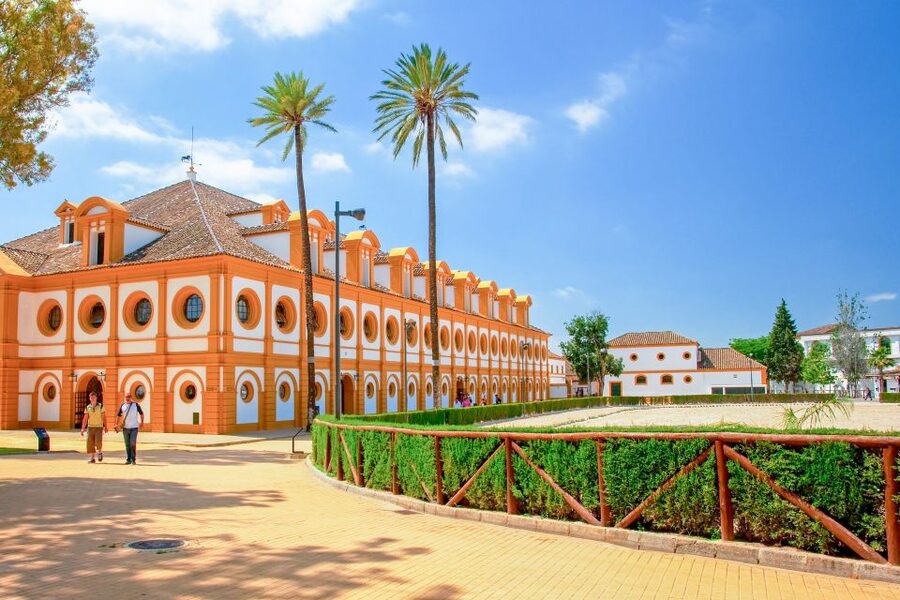
I would choose this for anyone who likes horses, classical riding, traditional crafts, or Spanish architecture. You do not need to be an expert in dressage. The guide and museum displays explain enough to make the movements and equipment easier to understand.
Families with children may find the horses and carriages appealing, though the visit is educational rather than built around hands-on activities. Children should not expect to pet a horse or enter the stalls freely.
The experience also suits people who have already seen a performance and want to understand how it is prepared. Watching practice in the arena, seeing the tack room, and visiting the stables gives you a better sense of the work behind the show.
I would be more cautious if your only goal is to touch or ride a horse. This is a viewing and learning experience. You may be close enough to pat a horse, but that is not promised.
Should you book the Royal Andalusian School?
Yes, if you are spending time in Jerez and can visit on a day when training is scheduled. The combination of magnificent horses, working stables, careful equipment, gardens, palace rooms, and museums gives you far more than the modest admission price suggests.
Book with realistic expectations. You are not guaranteed a particular horse, exercise, guide, or uninterrupted route through every room. Training can change, some video displays may be out of service, and the café may not be open.
Choose a morning slot if you want the audio-visual presentation, and check the language and start time carefully. You can cancel up to 24 hours ahead for a full refund, and reserve now while paying later, which helps if your Jerez plans are still shifting.
For me, the best reason to go is the chance to see the school as a working place. The horses are beautiful, but the saddlery, tack room, arena, and daily training make the visit feel grounded and real. If that sounds better to you than simply taking a photo in front of a grand building, book it.
FAQ
How long does the visit last?
The listed duration is two hours. You can spend longer on the grounds and in the museums, and one visit lasted almost four hours.
Is horse training included?
Training in the outdoor exercise rings and indoor arena is part of the visit when scheduled. Training is not offered on Saturdays according to the published information.
Is the horse show included with admission?
The admission covers the school facilities. It should not be confused with the separate staged performance known as the horses dance.
What languages are available?
Guided tours are available in Spanish, English, French, and German.
Is the Royal Andalusian School wheelchair accessible?
Yes. The activity is listed as wheelchair accessible.
What do I need to show at the ticket office?
You must show your printed receipt or display it on your mobile phone. If you purchased a discounted ticket, you also need proof of eligibility.
Can I bring bottles, cans, or animals inside?
No. Bottles, cans, animals, and objects that management considers unsuitable are not allowed on the grounds.
Recently reviewed around Cadiz & Jerez
- Cadiz Food Tour: Tapas, Drinks and Delights with a Local★ 5.0 · 174 reviews
- Walking Tour through Cádiz: Stories from the hand of a local guide★ 5.0 · 532 reviews
- City Sightseeing Cadiz Hop-On Hop-Off Bus Tour★ 3.5 · 163 reviews
- Cadiz Small Group Bike Tour★ 4.5 · 215 reviews
- Cadiz Shore Excursion: City Sightseeing Cadiz Hop-On Hop-Off Bus Tour★ 4.0 · 124 reviews
- Andalusian Horses Dance Show★ 4.5 · 483 reviews
- Jerez: Traditional Tapas Tour★ 4.6 · 138 reviews
- Sancti Petri: Sunset Catamaran Cruise★ 4.5 · 277 reviews
Cadiz & Jerez Tours, compared.
Jerez de la Frontera: Andalusian Horse Dance and Museums
Read our review →

Tarifa: Whale & Dolphin Watching in the Strait of Gibraltar
Read our review →
Bodegas Fundador Guided Tour with Tasting Session
Read our review →
Walking Tour through Cádiz: Stories from the hand of a local guide
Read our review →
Browse the lists this tour appears in