
Reviewed · WORKSHOPS
Guided Gaudí’s Trencadís Mosaic Workshop in Barcelona
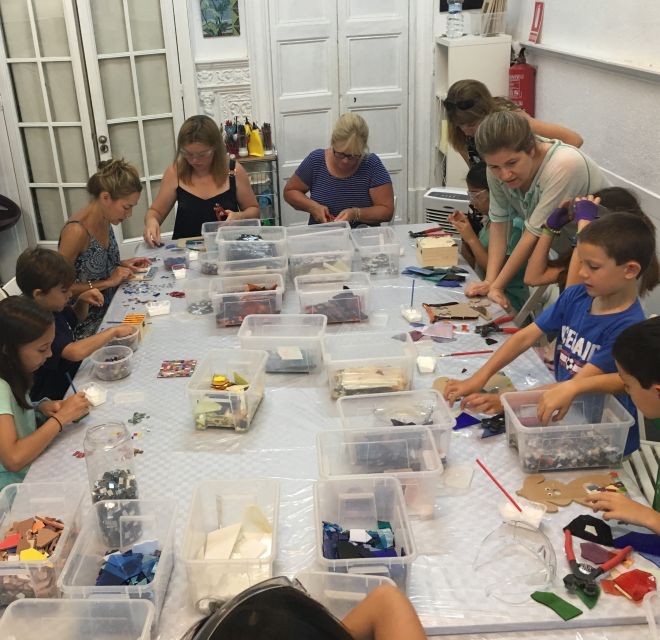
Gaudí’s Trencadís technique turns broken ceramic into something playful and personal, and this workshop lets you try it with your own hands. I like the hands-on format and the fact that you take home a real Barcelona keepsake, not a souvenir pulled from a shelf. I also like that children can join, with safer pre-cut acrylic tiles for younger makers.
The main catch is time. A one-hour booking may feel tight, especially if you are making a rounded animal or working carefully with the ceramic cutter. You may need two or three hours, and you’ll usually collect the finished piece later because the staff applies the grout after you leave.
In This Review
- Key points at a glance
- Why Trencadís makes a good Barcelona souvenir
- Inside the studio near the Picasso Museum
- Choosing between a frame, box, animal, or custom shape
- The tools, tiles, and hands-on work
- How the workshop time really works
- The grout and the second visit
- Is $35 a fair price?
- Who will enjoy this most
- Practical tips for a smoother session
- Should you book this Gaudí mosaic workshop?
- FAQ
- Where is the mosaic workshop located?
- How much does the workshop cost?
- How long does the activity last?
- Do I need previous mosaic experience?
- What can I make during the class?
- Can children take part?
- Can I take my finished mosaic home immediately?
- Is cancellation available?
Key points at a glance
- Gaudí’s broken-tile method: Learn the Trencadís style made famous by Antoni Gaudí, using colorful ceramic pieces arranged by hand.
- Choose your own project: Make a photo frame, box, animal figure, or another available shape.
- Near the Picasso Museum: The studio is at Carrer dels Assaonadors, 10, about five minutes from the museum in Barcelona.
- Good for families: Children can take part, with pre-cut acrylic tiles for younger kids. Children over 10 may also use regular ceramic pieces.
- Plan for pickup: Staff adds the grout after the workshop. Your piece is usually ready later the same day or the next day.
- Strong practical value: At $35 per person, the fee covers instruction, tools, safety goggles, ceramic pieces, and the object you decorate.
Why Trencadís makes a good Barcelona souvenir
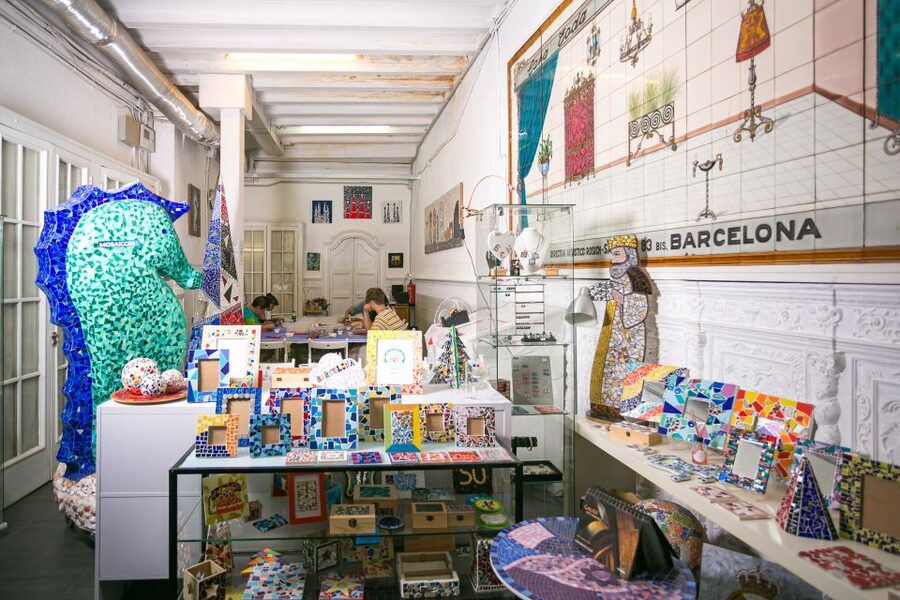
Trencadís is not a neat grid of identical tiles. It uses broken ceramic fragments, often in different colors, shapes, and sizes. The result is more free-form than traditional tile work, which makes it a forgiving style for a first project.
That is part of the charm. You do not need to draw perfectly or arrive with a plan worthy of an art school. You can test colors, shift pieces around, and build a design as you go. The small fragments give the finished piece a handmade look, even when your pattern is simple.
Gaudí helped make this style famous in Barcelona. His work often used broken tiles and irregular pieces to create curves, color, and texture. This class gives you a small, practical connection to that artistic tradition. You are not simply looking at Gaudí’s work from behind a barrier. You are learning one of the techniques associated with it.
I would not book this expecting a formal lecture on Gaudí or a museum-style history lesson. The focus is making. Any background comes through the tools, materials, and method rather than a long talk.
More Barcelona trips worth a second look
- Barcelona Paella Cooking Class with Market Visit, Tapas & Sangria
★ 5.0 · 2,531 reviews - Barcelona: Cocktail Master Class by Mixologist with Tapas
★ 4.7 · 959 reviews - Barcelona: Paella Cooking Class with Market Visit and More
★ 4.9 · 711 reviews
Inside the studio near the Picasso Museum
The workshop takes place at MOSAICCOS, at Carrer dels Assaonadors, 10, in the old center of Barcelona. It is about five minutes from the Picasso Museum, so it fits neatly into a day spent exploring the Born area.
The central location is useful, but it also affects how you should plan the day. You can pair the class with the museum, nearby streets, or a meal before or after, though food and drinks are not allowed inside the workshop. Only soft drinks are permitted, so finish your snack before you arrive.
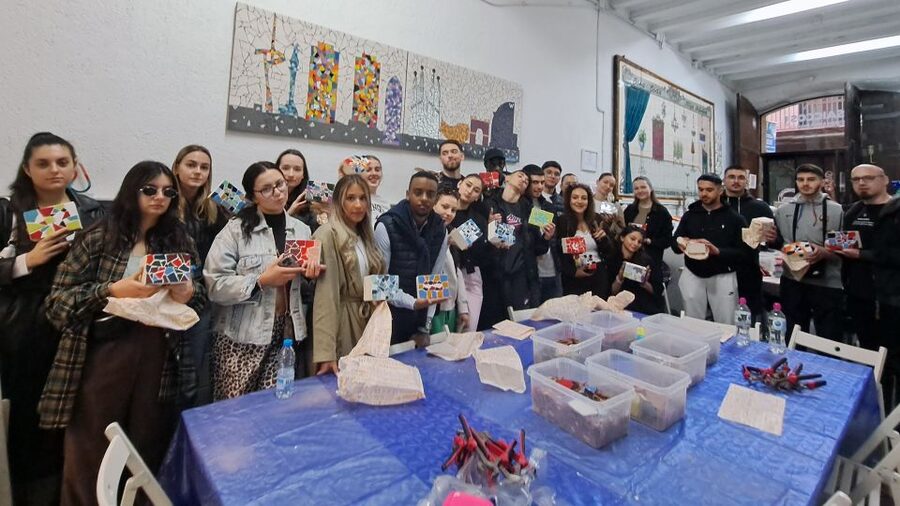
The group can be small, which matters in a craft class. You are working with tools and small ceramic pieces, so personal help is more useful than a large demonstration followed by guesswork. Instructors guide you through the equipment, explain how the technique works, and help you make decisions about your design.
Instruction is available in Catalan, English, French, German, Spanish, Turkish, and Portuguese. Melissa is one instructor specifically praised for being warm, funny, and helpful, and she has also been noted for giving families patient guidance. Staff may vary by session, but the multilingual setup makes this a practical choice for international visitors.
The space is wheelchair accessible. The activity does involve handling materials at a work surface, so if you have particular mobility needs, it is still wise to confirm the details when booking.
Choosing between a frame, box, animal, or custom shape
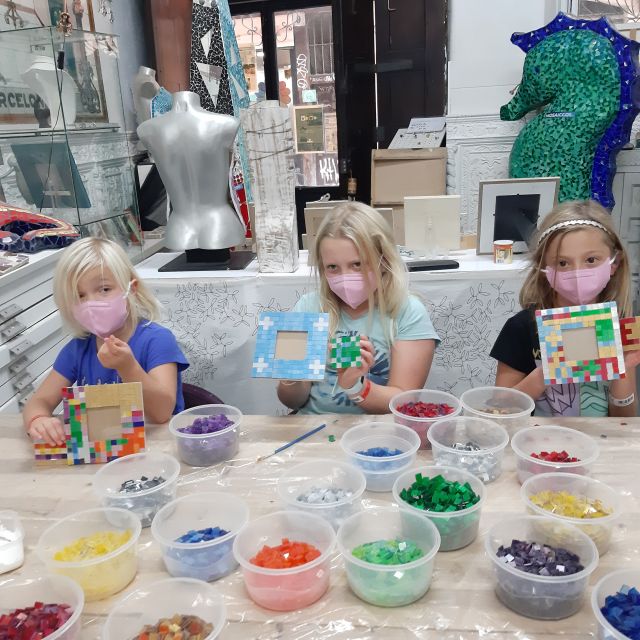
After the introduction, you choose the object for your mosaic. Options can include a photo frame, box, animal figure, or other shapes available at the studio.
A photo frame is a sensible choice if you want a useful keepsake. It also gives you a fairly clear border, which can make planning easier. You can create a simple color scheme or add small contrasting pieces around the edge. Several family members can make frames with different designs, giving everyone the same project but a personal result.
Animal figures are more playful. They can also be harder, especially if the form has curves or narrow sections. One maker created a salamander and a penguin, while another noted that rounded designs were more difficult than square pieces. That is useful advice: if you have limited hand strength or only an hour, a frame or box may be less demanding.
Boxes offer another practical option. A flat surface is easier to cover than a complicated shape, though edges and corners require care. You should ask the instructor which object best matches your available time and experience.
The point is not to reproduce Gaudí’s work. You are making a small object in the spirit of the technique. The best result may be an arrangement of colors and shapes that reminds you of Barcelona, rather than a technically perfect image.
The tools, tiles, and hands-on work
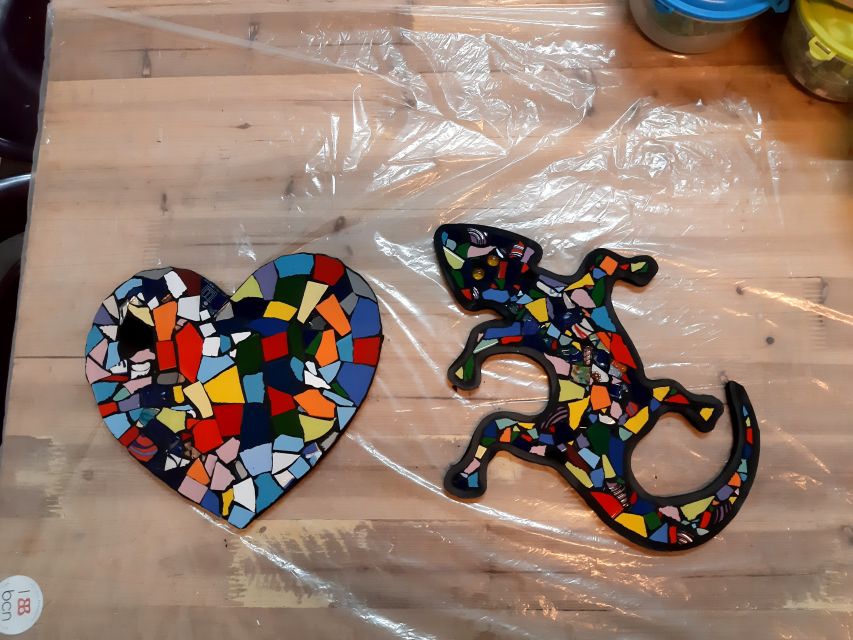
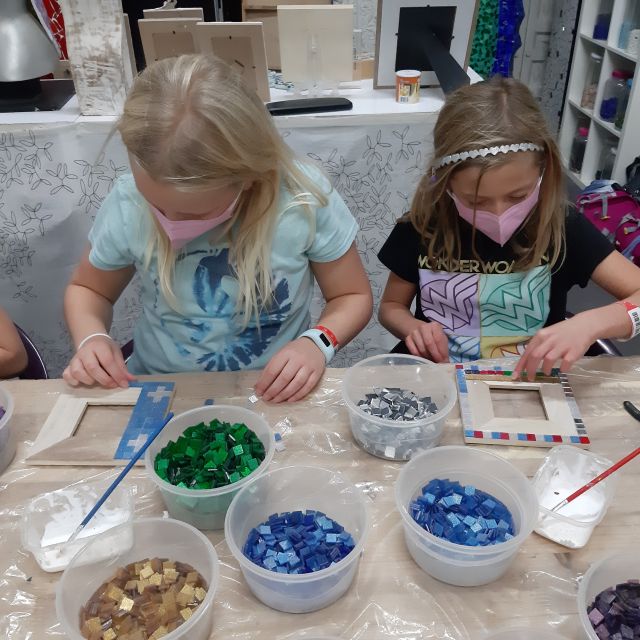
The class includes the necessary materials and tools, including safety goggles, a ceramic cutter, and the object you decorate. You work with colorful ceramic pieces, placing them to create your design.
The ceramic cutter is part of the experience, but it is also the main physical consideration. Cutting and handling tiles requires some hand strength. If you have arthritis or weak hands, the work may become uncomfortable, particularly when creating a rounded design with many small adjustments.
Younger children use pre-cut acrylic tiles. This avoids giving small children the regular ceramic pieces and cutter. Children over 10 may also work with normal ceramic pieces, so families can choose an option that matches age and comfort.
I like this age range because the class can work for a mixed family group. A younger child can create a design with acrylic pieces while a parent or older child uses ceramic. Nobody needs to sit out simply because the tools are too demanding.
Still, this is not a passive craft table. You will spend time choosing, placing, and adjusting pieces. Your hands may get tired before your imagination does. Take breaks when needed, and ask for help early rather than forcing a tile into position.
A different way to spend the day, same corner of Spain:
- Barcelona: Sagrada Familia Entry Ticket with Audio Guide
★ 4.6 · 105,312 reviews - Barcelona: Park Güell Admission Ticket
★ 4.4 · 76,534 reviews - Barcelona: Casa Batlló Entry with Self-Audioguide Tour
★ 4.7 · 25,359 reviews - Barcelona: 24 or 48-Hour Hop-On Hop-Off Bus Tour
★ 4.4 · 20,872 reviews
How the workshop time really works
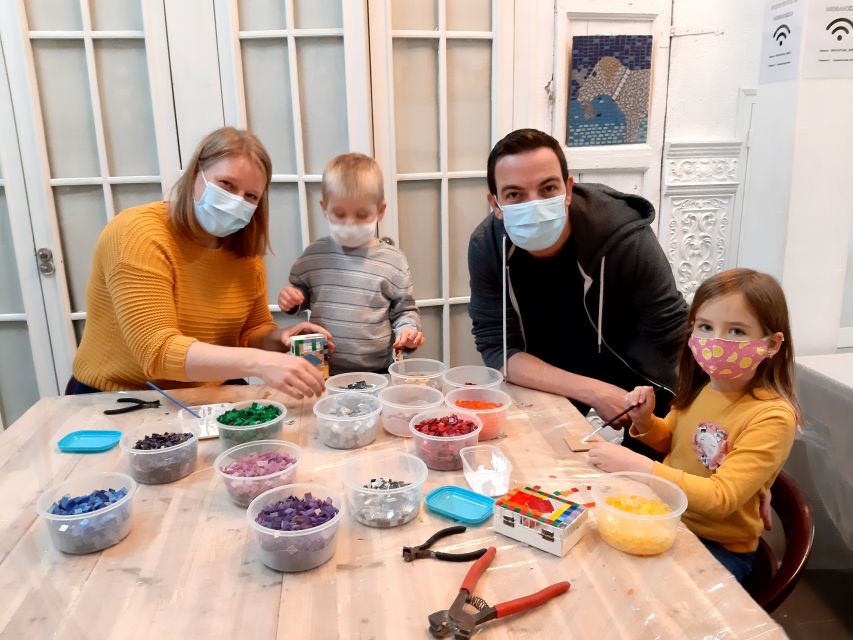
The listed duration ranges from one to four hours, with starting times depending on availability. This wide range is important. A one-hour session may work for a small, simple object, but it can feel rushed if you are making a detailed design.
One family booked an hour and was still working when the scheduled time ended. The instructors did not rush them, and they were given extra help. Another person found that three hours was the better choice, saying two hours felt too short. These experiences point to a simple rule: choose more time if you enjoy careful design, are working with children, or want a rounded figure.
A rough flow looks like this:
- You receive an introduction to Trencadís, the tools, and the materials.
- You select an object and begin planning colors and placement.
- You cut or choose pieces, then arrange them by hand.
- The instructor helps you adjust the design and finish the surface.
- You leave the piece at the studio for grouting.
- You collect it later that day or the following day, depending on your workshop time.
The process has a useful rhythm. You make the creative decisions, while the instructor helps with the technical parts. That balance keeps the class accessible without taking control away from you.
If your workshop is in the morning, your mosaic may be ready in the afternoon. If you attend later in the day, pickup is generally the next day. The exact timing can depend on how quickly the grout sets and how busy the studio is. Plan for pickup rather than assuming you will walk out with a finished object.
The grout and the second visit
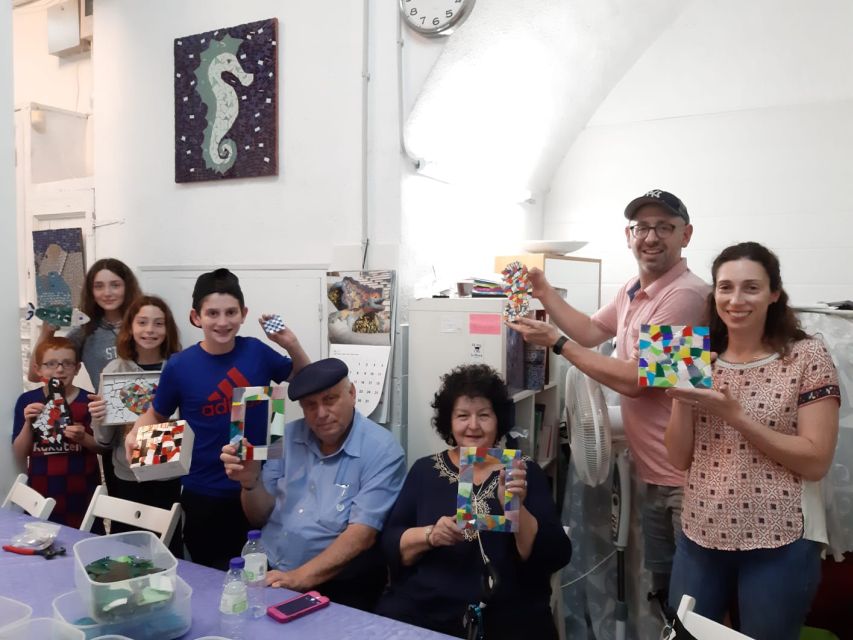
Grout fills the spaces between the ceramic pieces and helps hold the design together. The staff applies it after you finish, so you do not have to manage that final step yourself.
This is good for the quality of the keepsake, but it creates a small planning issue. Your artwork is not immediately ready to pack. You need to return later that afternoon or the next day.
That second visit is easy to manage if you are staying in Barcelona for another night. It can be less convenient if you are leaving the city soon after the workshop. One participant attending shortly before a flight was able to collect the pieces later in the day, but you should not count on an instant finish if your schedule is tight.
Ask about pickup timing at the start of the class. If you are taking an evening session, assume next-day collection unless staff tells you otherwise. Delivery is not included, so you must collect the work yourself or arrange delivery separately.
Once collected, the mosaic makes a personal souvenir. A photo frame can hold a Barcelona picture later, while an animal or box can remain a small reminder of the day you made it. The object may not be flawless, but that is exactly what gives it character.
Is $35 a fair price?
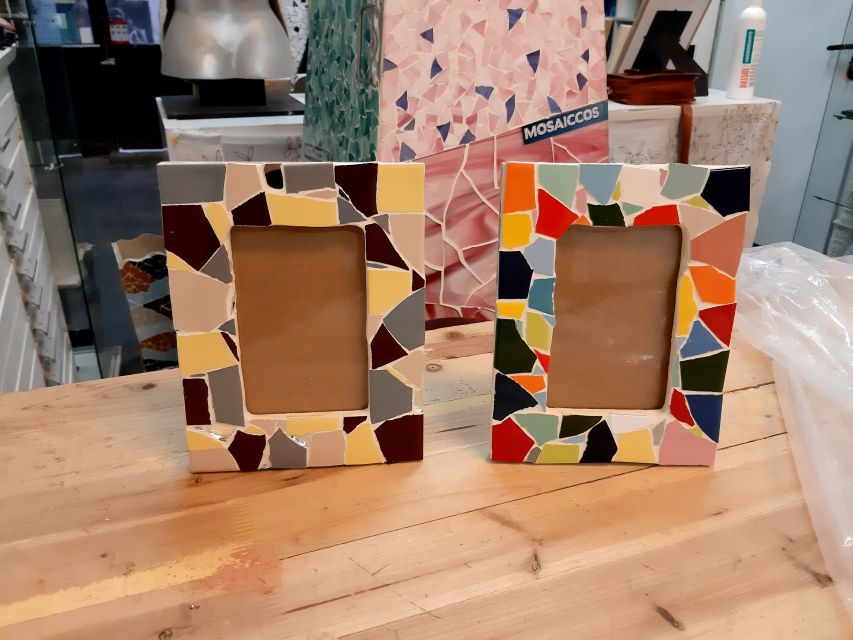
At $35 per person, the class is reasonably priced for a creative activity in central Barcelona. The fee includes instruction, materials, safety goggles, the ceramic cutter, and the object you decorate.
The value is strongest when you want an activity rather than another sightseeing stop. You are paying for time at a worktable, access to materials, help from an instructor, and a finished object that would be difficult to make without the studio setup.
The price also works well for families because children can participate rather than simply watch. A parent and teenager can make pieces together, and each person leaves with something different. The activity has enough flexibility for beginners, so you do not need to buy extra equipment or prepare beforehand.
The value is weaker if your Barcelona schedule is packed tightly. The class can take up to four hours, and pickup adds another stop. If you only have time for a one-hour session, you may need to accept a simpler design or pay close attention to the clock.
Free cancellation up to 24 hours before the activity gives you some flexibility, and the reserve-now, pay-later option means you do not have to pay at booking. These policies are useful when your sightseeing plans are still changing, but the main value still comes from choosing a suitable session length.
The workshop also holds BIOSPHERE Certification 2026, reflecting a stated commitment to responsible tourism and respect for the environment. That does not change the craft itself, but it may matter to you if sustainability influences your activity choices.
Who will enjoy this most
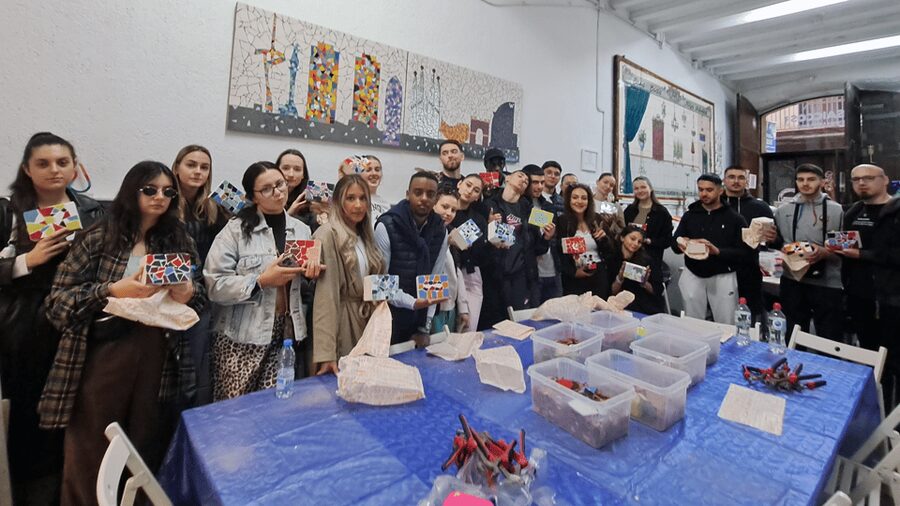
I would recommend this class to families, couples, solo visitors who like making things, and anyone looking for a slower cultural activity between major sights.
It is particularly well suited to:
- Families with children, especially when adults help with planning and tools.
- Children and teenagers who enjoy art projects.
- Adults who want a souvenir with a personal story.
- First-time crafters who prefer guided instruction.
- Visitors staying long enough to return for pickup.
- People who enjoy choosing colors more than following a fixed design.
You may want to reconsider it if you dislike fine handwork, have limited hand strength, or have no room in your schedule for collecting the finished piece. The ceramic cutter can be tiring, and complicated rounded designs take longer.
This is also not the best choice if you want a polished professional object made entirely by an artist. Your piece will show your choices, including uneven spacing or surprising color combinations. That is the point, but it is worth knowing before you book.
Practical tips for a smoother session
Choose at least two hours if you want time to experiment. Three hours is safer for a detailed design, a rounded object, or a family group moving at different speeds.
Arrive on time. The studio has to explain the tools and materials before you begin, and arriving late cuts into the part you paid for. Wear something comfortable for sitting and working with your hands.
Decide whether pickup fits your itinerary before booking. A morning class gives you the best chance of collecting the piece the same day. An afternoon class may mean returning the next day.
If you are making a frame, consider bringing a general color idea rather than a fixed picture. The available pieces may guide your final design. Keeping the plan flexible is easier than trying to match an exact image.
Parents should expect to help younger children with placement and general organization. Pre-cut acrylic tiles make the activity more suitable for young makers, but children still benefit from an adult nearby.
Do not bring food or alcohol into the studio. Food and drinks are not allowed, with soft drinks as the stated exception. Assistance dogs are allowed, but other pets are not.
Should you book this Gaudí mosaic workshop?
Book it if you want to make something yourself in Barcelona and have enough time for both the workshop and pickup. The class offers a clear introduction to Trencadís, patient guidance, flexible project choices, and a souvenir that carries your own fingerprints in the design.
I would choose a longer session for a family, a detailed animal, or anyone who likes to work slowly. Pick a shorter session only if you are happy with a small, simple project and have a firm sightseeing schedule.
At $35, this is a good-value activity for people who want more than a quick photo stop. It is creative, accessible to beginners, and close to the Picasso Museum. Just remember that the grout is applied after you leave, so the finished piece is part of a two-stage Barcelona experience.
FAQ
Where is the mosaic workshop located?
The meeting point is MOSAICCOS at Carrer dels Assaonadors, 10, 08003 Barcelona, Spain. It is about five minutes from the Picasso Museum.
How much does the workshop cost?
The listed price is $35 per person. The mosaic class, materials, tools, safety goggles, ceramic cutter, and the object you decorate are included.
How long does the activity last?
The duration ranges from one to four hours. Available starting times and session lengths should be checked when booking.
Do I need previous mosaic experience?
No. The workshop is designed for beginners, and instructors guide you through the tools, materials, and Trencadís method.
What can I make during the class?
Available projects can include a photo frame, box, animal figure, or other shapes offered at the studio.
Can children take part?
Yes. Younger children work with pre-cut acrylic tiles. Children over age 10 may also work with regular ceramic pieces.
Can I take my finished mosaic home immediately?
Usually not. Staff applies the grout after you finish. Your piece should be ready for pickup later the same day or the following day, depending on the workshop time.
Is cancellation available?
You can cancel up to 24 hours in advance for a full refund. A reserve-now, pay-later option is also available.
Recently reviewed around Barcelona
- Excursion Aigüestortes – Estany Llebreta (1/2 day)★ 5.0 · 138 reviews
- E-Bike tour in Barcelona with English Guide★ 5.0 · 128 reviews
- Wine Tasting Experience in Barcelona★ 5.0 · 172 reviews
- Barcelona Luxury Yacht Cruise – Day or Sunset, Open Bar & Snacks★ 5.0 · 154 reviews
- Montserrat: Cog-Wheel, Basilica, Black Madonna & Licor Tasting★ 4.5 · 886 reviews
- Barcelona Wax Museum Admission Ticket★ 4.5 · 237 reviews
- Barcelona: Wine Tasting and 5 Course Tapas Pairing Dinner★ 4.5 · 129 reviews
- Andorra Original History and Sightseeing Tour (Private, Pickup)★ 5.0 · 350 reviews
Workshops, compared.

Barcelona Paella Cooking Class with Market Visit, Tapas & Sangria
Read our review →
Spanish Cooking Class Paella Tapas and Sangria in Madrid
Read our review →
Paella and Sangria Workshop in the City Center
Read our review →
Paella Cooking Class, Wine Tasting & Central Market in Valencia
Read our review →
Group Surfing Lesson at Playa de las Américas, Tenerife
Read our review →
Paella Cooking Class in Madrid with Bottomless Wine Pairing
Read our review →
Playa de las Américas: Private or Small-Group Surf Lesson
Read our review →Browse the lists this tour appears in