
Reviewed · CITY TOURS
From Seville: Italica Roman City Tour
Italica gives you something Seville itself cannot: a walk through a Roman city where the streets, house floors, theater, baths, and enormous amphitheater still shape the experience. Founded in 206 B.C. by Publius Cornelius Scipio Africanus, it was the birthplace of emperors Trajan and Hadrian.
I like the short ride from Seville and the way a guide turns scattered walls into a picture of Roman daily life. I also like the mosaic floors and amphitheater tunnels, which make this more than a quick photo stop. The main drawback is time: the three-hour visit is guided, and some people find there is little opportunity to wander alone.
In This Review
- Key points to know before you book
- Why Italica is worth leaving Seville for
- The 30-minute ride from central Seville
- Walking the Archaeological Ensemble of Italica
- The amphitheater and its underground passages
- Mosaics, baths, statues, and the Traianeum
- The Roman theater in Santiponce
- The monastery question
- Is $51 good value?
- Who should take this tour?
- Practical details to keep in mind
- Should you book the Italica tour from Seville?
- FAQ
- How long does the Italica tour take?
- How far is Italica from Seville?
- What does the $51 price include?
- Where does pickup take place?
- What languages are available?
- Will I see the Italica amphitheater?
- Is the Roman theater included?
- Will I have free time to explore Italica alone?
- Is lunch included?
- Can I cancel the booking?
Key points to know before you book
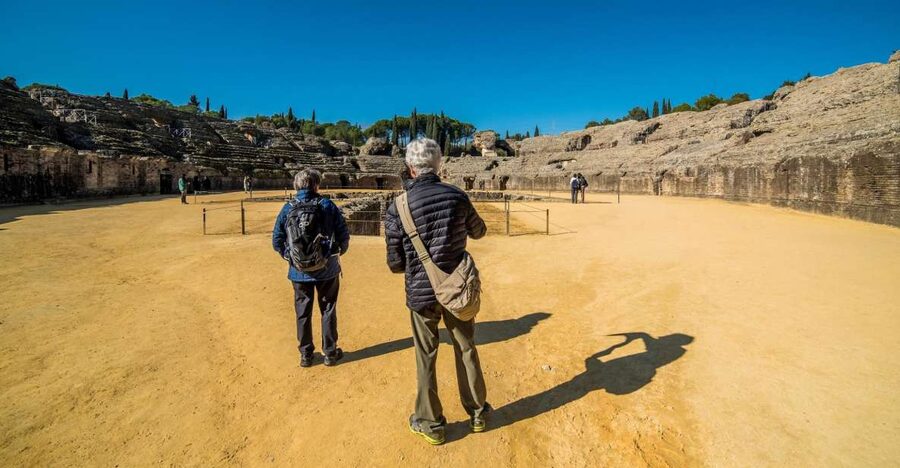
- The amphitheater is the main event: Its seating capacity was about 25,000, making it the third-largest in the Roman Empire.
- Italica is only about 15 minutes from Seville: Round-trip transport saves you the trouble of arranging your own connection.
- Mosaics are the site’s visual prize: Several Roman houses retain striking patterned floors.
- Guides make the ruins easier to read: Alberto, Miguel, Jesus, Jose Luis, Sergio, and others have led particularly strong tours, according to the supplied feedback.
- The visit is mostly guided: You get context and a clear route, but not much unscheduled time for solo exploring.
- A monastery may appear in some versions: It has been included on past outings, but it is not listed as a guaranteed part of the core Italica program.
Why Italica is worth leaving Seville for
Seville is layered with Roman, Islamic, Jewish, and Christian stories, but Italica lets you walk directly through one of the oldest Roman urban sites in Spain. The city was founded after Rome’s victory over Carthage in the Second Punic War, when Roman General Publius Cornelius Scipio Africanus established a settlement here in 206 B.C.
That date matters. Italica is not simply a Roman monument placed in southern Spain centuries later. It was an early Roman settlement in Hispania, and it grew into an important city. Trajan and Hadrian, two emperors who ruled the Roman Empire, were born here.
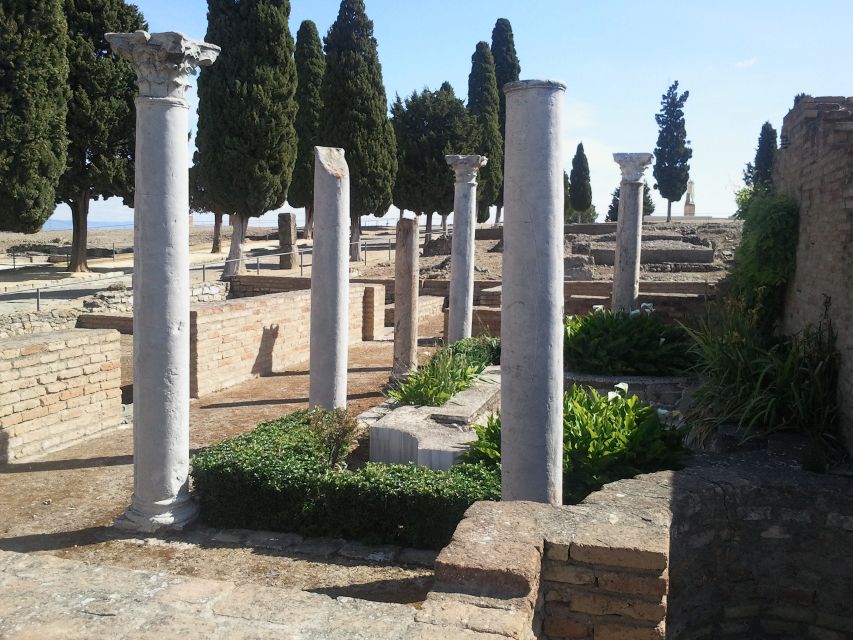
You will not see a complete ancient city. Much remains underground or has disappeared. What you do see is enough to understand the plan: broad streets, public buildings, private homes, baths, a theater, and the amphitheater. A good guide helps you connect those pieces instead of treating each ruin as an isolated pile of stone.
I especially like the way the site rewards close attention. From a distance, a Roman house may look like low walls. Then you notice a detailed mosaic floor, a drain, a courtyard, or the shape of a former room. Italica asks you to slow down and look down.
More City Tours in Seville
- Seville: City Sightseeing Hop-On Hop-Off Bus Tour
★ 4.0 · 4,633 reviews - Seville: Highlights City Bike Tour
★ 4.8 · 2,168 reviews - City Sightseeing Seville Hop-On Hop-Off Bus Tour
★ 4.0 · 1,782 reviews
The 30-minute ride from central Seville
The tour begins with pickup at one of three central locations:
- Calle Rastro 12A at 9:45
- Hotel Don Paco at 9:50
- Calle Trajano 6 at 10:00
The exact meeting point matters, so check your confirmation carefully and arrive early. The bus or coach ride takes about 30 minutes each way, though Italica itself is only around 15 minutes from Seville by road. The extra time allows for city pickup and drop-off arrangements.
Round-trip transport is one of the strongest practical reasons to choose this tour. You do not need to work out the trip to Santiponce, the town where Italica is located, and you return to central Seville after the visit. Past groups have described the vehicle as comfortable, including a comfortable bus and, on one outing, an open-air bus.
That said, pickup tours can run a little behind schedule. One person specifically noted delays at pickup. I would not plan a tight lunch reservation or train departure immediately after the advertised four-hour finish.
The guide may speak both Spanish and English, and the tour can sometimes be conducted in two languages to handle changes in the schedule. French, German, and Italian tours are available on request, but you need to check with the local operator before booking.
Walking the Archaeological Ensemble of Italica
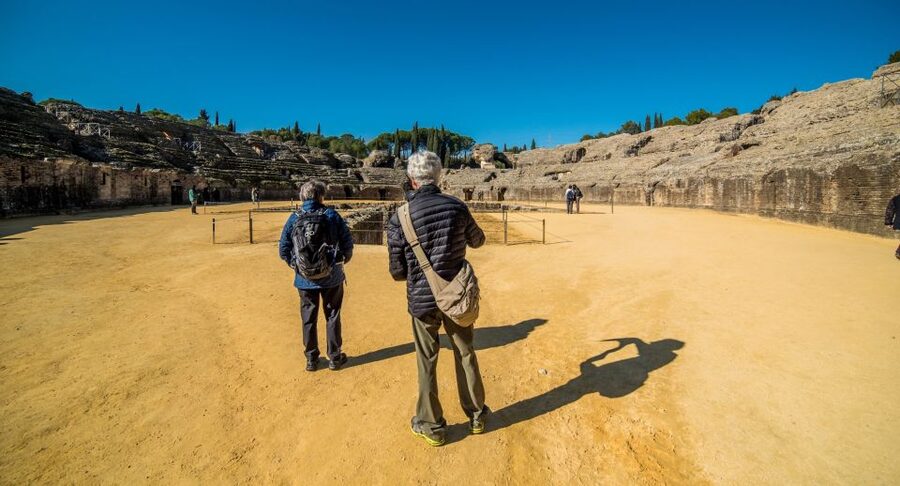
Once inside the Archaeological Ensemble of Italica, expect about three hours with the guide. The route takes you along old streets and past the remains of homes and public buildings.
The best approach is to let the guide establish the layout first. Roman cities were not random collections of buildings. Streets, homes, public baths, entertainment spaces, and civic monuments worked together. Once you understand that arrangement, the low walls make more sense.
The houses are a major highlight. Their mosaic floors often show geometric patterns and decorative scenes, giving you a rare glimpse of private Roman taste. The floors are also a reminder that Italica was not only a military outpost. Some residents had the money and status to build large homes with carefully designed interiors.
Bring shoes suitable for uneven ground. The site involves walking outdoors, and the summer heat can make three hours feel longer. Reviews also note that a stroller can help with young children during parts of the visit, but it cannot be used everywhere. If you are bringing a small child, expect to carry the stroller or child at certain points.
The tour is a better fit for you if you enjoy explanation while looking at ruins. It is less ideal if your main goal is to roam freely, take photographs at your own pace, or sit quietly with each mosaic. One person found the lack of free time frustrating, and that is a fair warning.
The amphitheater and its underground passages
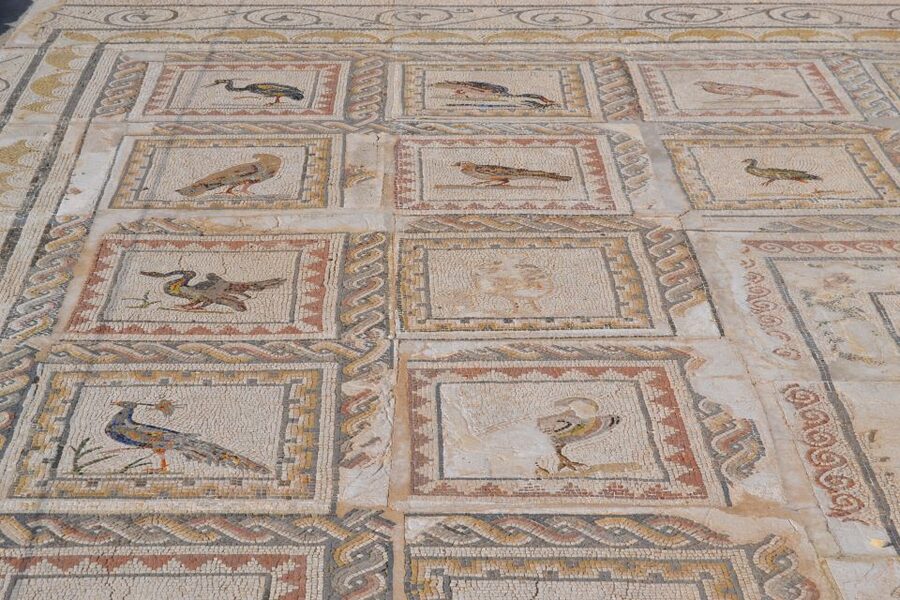
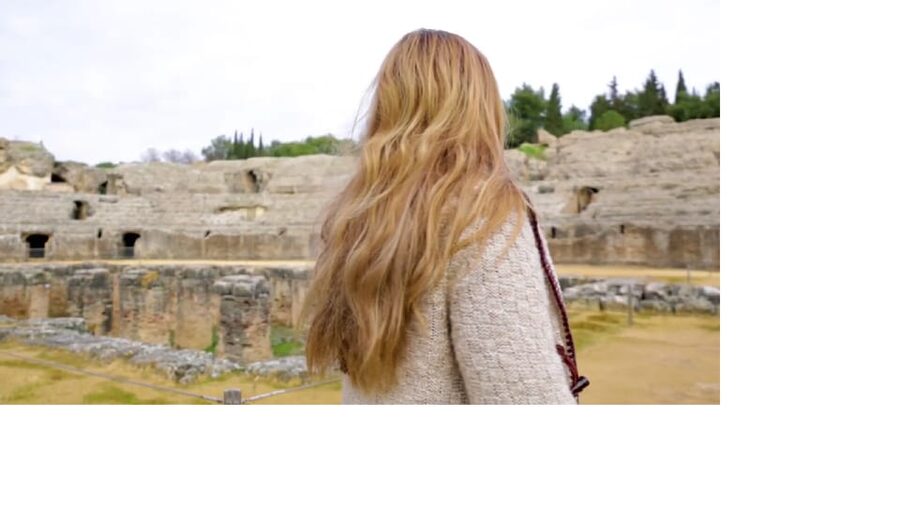
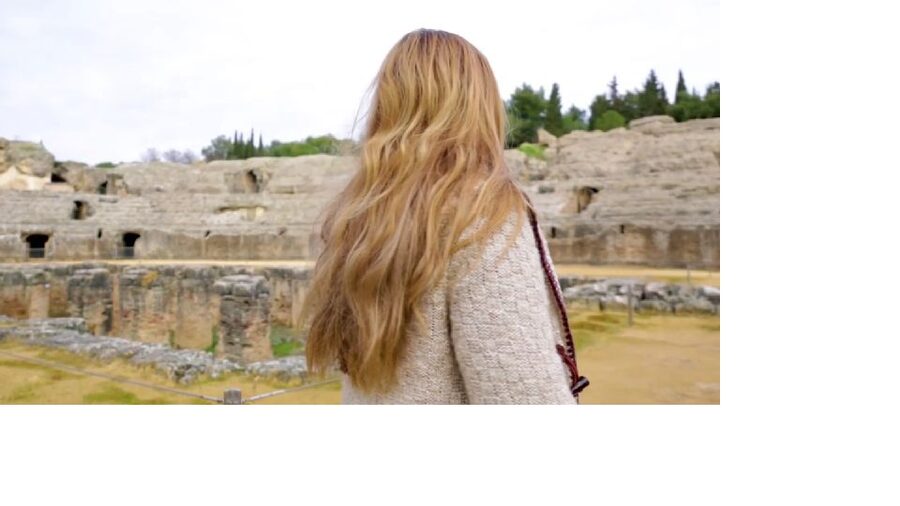
The amphitheater is Italica’s biggest visual payoff. It held about 25,000 people and was the third-largest in the Roman Empire. That figure becomes easier to grasp when you look across the broad oval arena and up toward the surviving seating structure.
The building is partly ruined, but its scale remains clear. You can picture crowds arriving, finding their places, and watching public spectacles in the arena below. The guide’s storytelling is especially useful here, because an amphitheater can otherwise become a large, empty shape with little explanation.
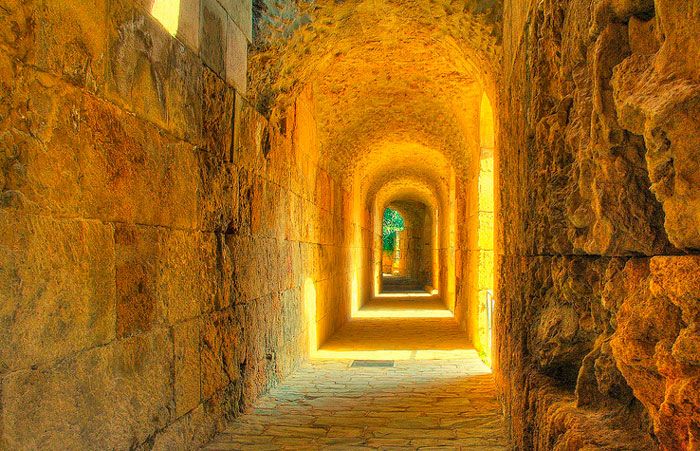
One of the more memorable details is the network of tunnels beneath the seating. Parts of these passages can be walked, and they offer a different view of the structure. Instead of seeing only the public arena, you get a sense of the service spaces hidden below it.
The amphitheater also has a modern connection for some visitors. One person chose the tour because of Italica’s association with Game of Thrones and ended up enjoying the broader Roman site even more. If that is what brings you here, keep your expectations balanced: the ancient architecture is the real reason to come.
Give yourself time to look beyond the central arena. Notice the entrances, passageways, seating levels, and the way the structure controlled movement. The amphitheater is not just a pretty ruin. It was a carefully engineered public building designed to handle a very large crowd.
More Seville trips worth a second look
- Seville: Relaxing City Bike Tour with a Tour Guide
★ 4.8 · 1,588 reviews - Seville: Small-Group City Highlights Walking Tour
★ 5.0 · 1,204 reviews - Seville: City Sightseeing and Local Culture Bike Tour
★ 4.9 · 1,120 reviews - From Seville: Italica Roman City & Medieval Monastery Tour
★ 4.5 · 1,051 reviews
Mosaics, baths, statues, and the Traianeum
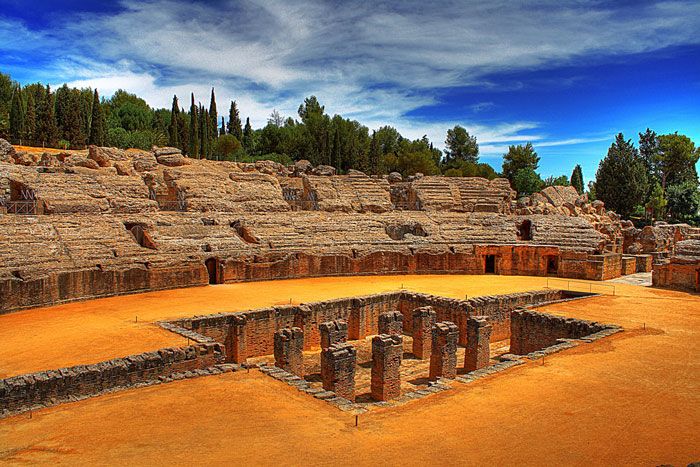
The mosaics are probably the most delicate remains at Italica. The patterns survived because they were protected beneath later layers of earth, and several house floors are still visible. You may find yourself spending as much time looking at small details as at the larger monuments.
The public baths show another side of city life. Roman baths were not merely places to wash. They were public settings where people met, exercised, and spent time. At Italica, the remains help explain how the city served its residents beyond the grand arena.
The tour also points out the Traianeum, a major public space associated with Emperor Trajan, along with statues of Diana, Venus, and Trajan. These features add a civic and religious dimension to the visit. You are not only seeing where people lived, but also how the city presented power, belief, and imperial identity.
The guides make a real difference here. Jose Luis has been praised for making the ancient city easy to follow, while Jesus, Alberto, Miguel, Sergio, and Nieves have each received strong feedback for clear explanations, humor, patience, or good storytelling. Alberto in particular has been described as answering questions clearly and helping people picture how the city worked.
Guide quality can vary, of course. One person found a guide friendly and funny but wanted more historical context. If you get a quieter presentation, the physical remains still carry the visit, but you may need to ask questions to draw out more detail.
The Roman theater in Santiponce
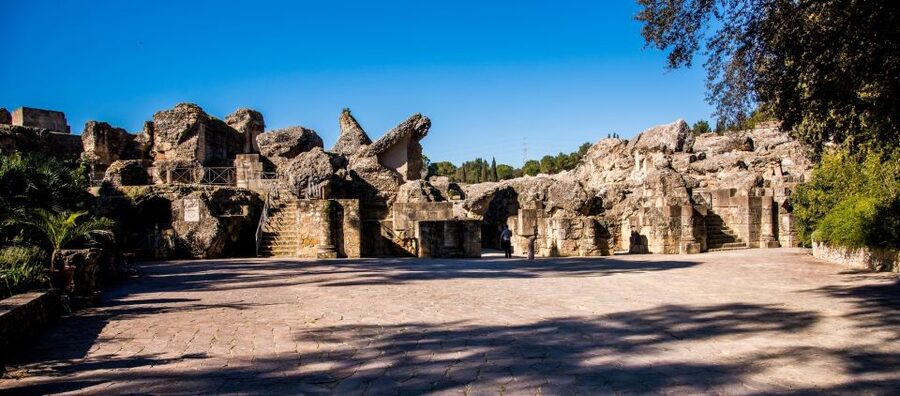
The Roman theater is described as partially reconstructed and located in Santiponce. It adds variety to the day because you move from the broad open ruins of the archaeological site to a building designed for performance.
The theater helps complete the picture of Roman entertainment. The amphitheater handled large public spectacles, while the theater served drama and formal performance. Seeing both in one outing gives you a better sense of the range of public spaces in a Roman city.
The available information does not specify how long you spend at the theater or exactly how the route is arranged on every departure. The order of visits can change because of unexpected circumstances. Your guide may visit the theater before or after the main archaeological area.
This flexibility is practical, but it can create a slightly different experience from one departure to the next. If you have your heart set on a particular order, do not count on it.
The monastery question
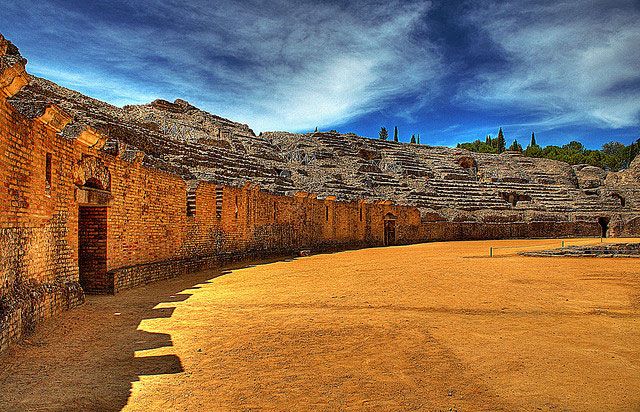
Some past versions of this outing have included a monastery visit, and several people enjoyed it. One person called the monastery beautiful and appreciated the added historical context. Another preferred to spend that time exploring Italica instead.
This is an important distinction. The core description focuses on Italica, the amphitheater, and the Roman theater. A monastery is not listed as a guaranteed part of the basic itinerary. It may be added or included on certain departures, so ask the operator if this matters to your planning.
If the monastery is included, it can be a pleasant change of pace after several hours among Roman ruins. If it is not included, you will have more time focused on Italica. Do not assume that an optional extra will be available unless it is confirmed.
An optional lunch is available for €18. Since the tour lasts four hours and transport returns you to Seville, I would choose the lunch only if you value convenience or want to keep the group together. Otherwise, you may prefer to eat independently in Seville after the tour.
Is $51 good value?
At $51 per person, the price includes round-trip transport, entrance to Italica, and an official tourist guide. That is a fair package for a half-day outing, especially if you want a structured visit and do not want to arrange transport to Santiponce yourself.
The value rests mainly on the guide. Entrance admission gets you into the site, but it does not automatically explain why the streets were laid out as they were, how Roman homes functioned, or why the amphitheater mattered. A strong guide can turn the ruins into a readable city.
The tour also saves you planning time. You meet in central Seville, ride out, enter with your admission arranged, walk with a guide, and return to the city. For a first visit to Andalusia, that simplicity has real value.
The tradeoff is independence. You are paying for a guided route, not an open-ended archaeological visit. If you want extensive time alone, $51 may feel less attractive than arranging your own transport and spending the day at your own pace.
The overall rating is 4.4 out of 5 from 139 reviews, with especially strong praise for the guides, comfortable transport, organization, mosaics, and amphitheater. The recurring cautions are limited free time, occasional pickup delays, and the possibility that a bilingual or larger group can make it harder to hear every explanation.
Who should take this tour?
I would recommend it to first-time visitors staying in Seville who want to see an important Roman site without spending a full day on logistics. It is also a good choice for anyone who learns best through stories, maps, and explanation rather than reading plaques alone.
Families can manage it. A parent traveling with a four-year-old and a one-and-a-half-year-old found the outing workable, though a stroller helped at points. Just remember that the site is not designed for easy stroller use throughout.
History fans will get the most from the combination of urban ruins, mosaics, baths, theater, statues, and amphitheater. The tour also pairs well with visits to Seville Cathedral and the Royal Alcázar, since those sites help you follow the city’s long progression from Roman Hispania through later periods.
I would hesitate if you dislike group tours, need guaranteed free time, or have a strict schedule after the outing. I would also ask about the monastery before booking if that stop is important to you.
Practical details to keep in mind
You can cancel up to 24 hours before departure for a full refund, and the reserve-now, pay-later option keeps your plans flexible. Starting times should be confirmed when you book, even though the listed morning pickups begin at 9:45.
The tour is available in Spanish and English. Other languages can be requested, but they are not automatic. Because the group may be handled in two languages, choose a place near the guide if hearing every detail matters to you.
Bring water, sun protection, and clothing suited to the weather. The ruins are outdoors, and a warm day can make the open site tiring. Comfortable walking shoes are more useful here than stylish footwear.
Should you book the Italica tour from Seville?
Book it if you want an efficient, well-explained half-day among Roman ruins and you value transport, admission, and a guide in one package. The amphitheater, underground passages, and mosaics make the trip worthwhile, and strong guides such as Alberto, Miguel, Jose Luis, Jesus, and Sergio have helped turn the site into a memorable visit.
Skip it if you want to explore alone or need a long stretch of unstructured time. For most visitors with an interest in Roman Spain, though, Italica is close enough to Seville and substantial enough to justify the outing. The practical choice is simple: accept the group format, ask about the monastery and language before departure, and enjoy one of Andalusia’s clearest windows into the Roman world.
FAQ
How long does the Italica tour take?
The tour lasts four hours, including transportation between Seville and Italica.
How far is Italica from Seville?
Italica is located about 15 minutes from Seville, though the scheduled coach journey is listed as 30 minutes each way.
What does the $51 price include?
The price includes round-trip transportation, entrance fees to Italica, and an official tourist guide.
Where does pickup take place?
Pickup is available at Calle Rastro 12A, Hotel Don Paco, and Calle Trajano 6. The listed morning times are 9:45, 9:50, and 10:00 respectively.
What languages are available?
The regular tour languages are Spanish and English. French, German, and Italian tours can be requested from the local operator.
Will I see the Italica amphitheater?
Yes. The amphitheater is a central part of the visit. It had seating for about 25,000 people and was the third-largest in the Roman Empire.
Is the Roman theater included?
Yes. The itinerary includes the partially reconstructed Roman theater in Santiponce.
Will I have free time to explore Italica alone?
The information provided does not promise free time. The visit is primarily a guided tour, and some people have found the schedule too structured for independent exploration.
Is lunch included?
Lunch is not included, but an optional lunch is available for €18.
Can I cancel the booking?
You can cancel up to 24 hours in advance for a full refund. The reserve-now, pay-later option is also available.
Recently reviewed around Seville
- Seville: Alcázar Fast-Track Access with Guided Tour★ 4.2 · 432 reviews
- Seville: Small Group Jewish Quarter Tour with Tapas & Drinks★ 5.0 · 119 reviews
- Seville: Sunset Roof Top Walking Tour★ 4.5 · 122 reviews
- Seville: VIP Exclusive Early Access Tour of The Alcazar★ 4.8 · 276 reviews
- Seville: Small-Group Jewish Quarter Discovery Walking Tour★ 4.9 · 499 reviews
- Seville: Flamenco Show at Tablao Almoraima in Triana★ 4.6 · 483 reviews
- Seville: Authentic and Romantic Horse-Drawn Carriage Ride★ 4.5 · 341 reviews
- Seville: Stand Up Paddle Board Rental★ 4.6 · 134 reviews
City Tours, compared.

City Sightseeing Barcelona Hop-On Hop-Off Bus Tour: 24 or 48-Hour
Read our review →
Granada City Train 1 or 2-Day Hop-On Hop-Off Ticket
Read our review →
Barcelona City Tour Hop-On Hop-Off with Optional Boat
Read our review →
Browse the lists this tour appears in