
Reviewed · CITY TOURS
From Seville: Italica Roman City & Medieval Monastery Tour
Italica gives you one of Spain’s best Roman sites without sending you far from Seville. You’ll walk ancient streets, see astonishing mosaics, and enter the amphitheater used as the Dragonpit in Game of Thrones. I like the short 20-minute bus ride and the way a good guide, such as Carlos, Miguel, Jesús, or Alberto, turns scattered ruins into a believable Roman city.
I also like that the tour adds San Isidoro del Campo, a medieval monastery that brings a completely different period into the same half-day. The main drawback is the tight schedule: you get about 105 minutes at Italica and 40 minutes at the monastery, so you may want more time for photographs, a snack, or a second look at the amphitheater.
In This Review
- Key points to know
- Why Italica makes a smart Seville outing
- The 20-minute ride from Seville
- Walking through Italica’s Roman streets
- Inside the 25,000-seat amphitheater
- San Isidoro del Campo’s medieval change of mood
- Pace, group size, and guide quality
- The four-hour schedule and its limits
- Who will get the most from this tour
- Practical value at $46
- Should you book the Italica and monastery tour?
- FAQ
- How long does the Italica and monastery tour last?
- How far is Italica from Seville?
- What is included in the price?
- Which languages are available?
- Can I choose a private tour?
- Where does the shared tour meet?
- Can I cancel the booking?
Key points to know
- Trajan and Hadrian’s hometown: Italica was founded in 206 BC and later became the birthplace of two Roman emperors.
- A huge amphitheater: The arena once held about 25,000 people, with underground passages and a former lion den.
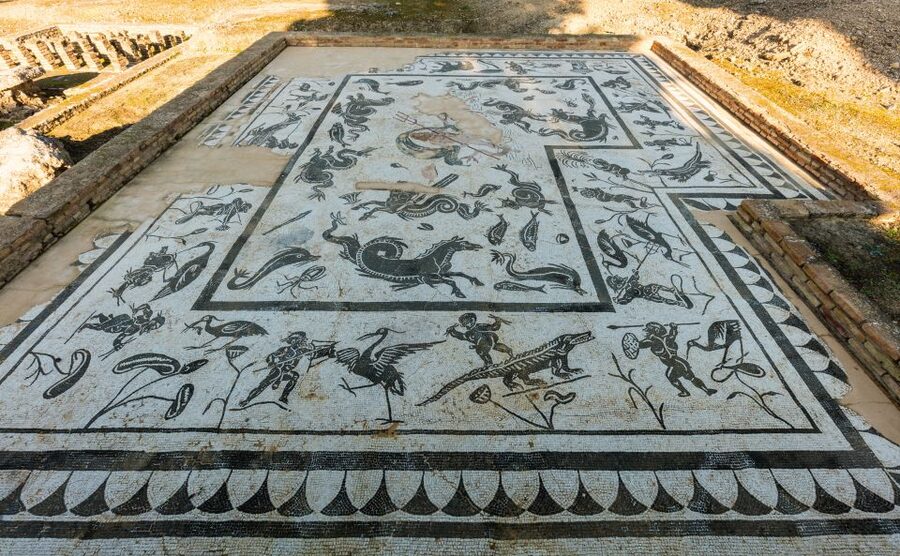
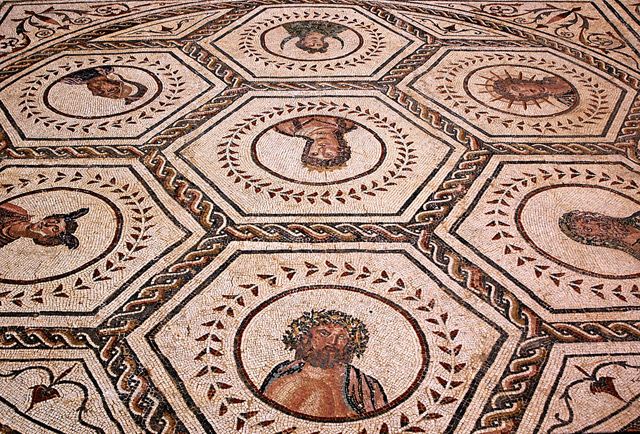
- Exceptional mosaics: Decorative floors are among the clearest reminders that this was a wealthy Roman city, not just a military outpost.
- Two eras in four hours: Roman Italica is paired with the Mudejar, Gothic, and Baroque San Isidoro del Campo monastery.
- Shared or private options: Shared tours offer several meeting points; private tours can include hotel pickup in Seville if your address is within the service area.
- Strong guide-led experience: Guides including Carlos León, Miguel, Jesús, José Luis, and Alberto are especially good at explaining archaeology and setting the site in its Spanish context.
Why Italica makes a smart Seville outing
Seville can keep you happily occupied for days, but Italica offers a useful change of scale. Instead of grand palaces and lively city streets, you get open archaeological ground where the outline of Roman life is still visible under your feet.
The site was founded in 206 BC by the Roman general Publius Cornelius Scipio. Its name reflects the settlement of Romans from Italy, and its later importance is tied to two emperors: Trajan and Hadrian were born here. That fact alone makes Italica more than a collection of old stones. It connects a quiet Andalusian suburb with the machinery of the Roman Empire.
I find the guided format particularly useful here. Italica is impressive, but much of its meaning is easy to miss if you only walk from one ruin to the next. A guide can explain the street plan, the scale of the houses, the purpose of the public buildings, and how the excavated area fits into the larger ancient city.
The tour price is about $46 per person. For that, you get transport from Seville, entry tickets, and a guide across two historic sites. I consider that good value if you want context rather than simply a ride and a ticket. A private option costs more than the shared tour, but it may suit you if you value a slower pace, hotel pickup, and a more personal conversation.
More City Tours in Seville
- Seville: City Sightseeing Hop-On Hop-Off Bus Tour
★ 4.0 · 4,633 reviews - Seville: Highlights City Bike Tour
★ 4.8 · 2,168 reviews - City Sightseeing Seville Hop-On Hop-Off Bus Tour
★ 4.0 · 1,782 reviews
The 20-minute ride from Seville
The trip begins with transportation from Seville, followed by a drive of roughly 20 minutes to Italica. That short journey is one of the tour’s practical strengths. You avoid arranging local transport and can use the ride to shift from modern Seville to the Roman world outside the city.
For the shared option, you choose from three meeting points in Seville. Check your exact point carefully, since the meeting location depends on the option you book. One useful caution: satellite navigation has directed some people slightly away from the correct meeting place, so rely on the confirmed instructions rather than only your phone map.
The coach has been described as comfortable, and one recent departure had USB charging ports. A large coach may carry several groups, with language groups separating after arrival. That arrangement keeps the transport efficient while allowing the actual visit to take place in English, French, Italian, or Spanish.
A private tour includes pickup from your Seville hotel or apartment when the address falls within the pickup area. If it does not, the operator provides the nearest accessible collection point. Give the accommodation details after booking so the exact time and place can be confirmed.
Walking through Italica’s Roman streets
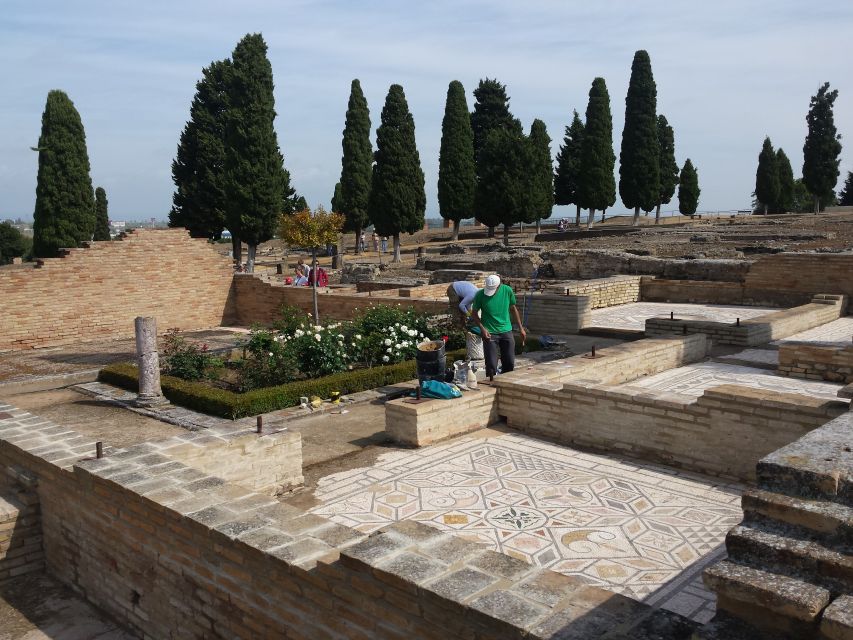
You spend about 105 minutes with a guide at Italica. That is enough time for the main sights, though not enough for an unhurried archaeological study of every visible wall and pavement.
The ruins are unusually rewarding because several features remain clear at ground level. You can follow the ancient streets and see the scale of the planned city. The surviving mosaics are the star for many people. Their patterns and fine workmanship point to the wealth and taste of the Roman residents who lived here.
I recommend listening closely when the guide explains what you are looking at, then taking your own photographs during the pauses. Guides such as Carlos León have been praised for connecting archaeology, art, and daily life rather than giving only dates and names. Alberto has also been singled out for answering detailed questions and making the subject feel personal.
The site is still being excavated and restored. That is exciting, but it also means Italica does not present itself like a fully rebuilt Roman town. You will see partial walls, floors, foundations, and open stretches where the ancient structure is suggested rather than complete. If you want a polished reconstruction, this may feel sparse. If you enjoy working out a place from its surviving evidence, it is a fine visit.
Inside the 25,000-seat amphitheater
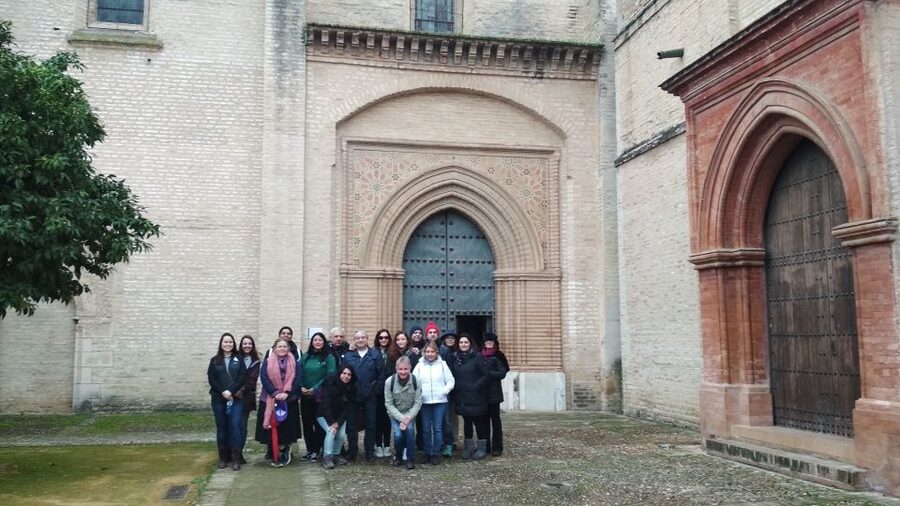
The amphitheater is the emotional high point. It once held about 25,000 people, a startling capacity when you consider the quiet setting today. Its size helps you grasp the public life of Roman Italica in a way that a small fragment of wall cannot.
You see the arena itself and the underground passages used by gladiators. The former lion holding area adds a darker detail to the visit. These spaces make the building easier to picture as a working entertainment complex, with performers, animals, staff, and crowds moving through hidden corridors below the public spectacle.
The Game of Thrones connection is fun, even if you have no interest in filming locations. Fans recognize the amphitheater as the Dragonpit, the setting for a major summit in season seven. The screen connection can draw people here, but the building does not depend on television fame. Its real value comes from its age, scale, and design.
Allow time for photographs, but keep your expectations realistic. The guided visit includes a short period at the end for independent viewing, and several people have found that 15 minutes is not enough to walk back to the amphitheater, use the facilities, and photograph different levels. If pictures matter to you, take some as you go instead of saving every shot for the final pause.
Facilities at Italica are limited. There is a small exhibition and toilets, but the toilets may not be in the best condition. Since the tour lasts half a day and no meal is included, use the available break sensibly and carry water. You may also want a small snack for after the tour, since there is no planned food stop.
More Seville trips worth a second look
- Seville: Relaxing City Bike Tour with a Tour Guide
★ 4.8 · 1,588 reviews - Seville: Small-Group City Highlights Walking Tour
★ 5.0 · 1,204 reviews - Seville: City Sightseeing and Local Culture Bike Tour
★ 4.9 · 1,120 reviews - Seville: Private City Tour by Eco Tuk Tuk
★ 4.8 · 963 reviews
San Isidoro del Campo’s medieval change of mood
After Italica, the coach takes about 10 minutes to the Monastery of San Isidoro del Campo. You spend around 40 minutes here with the guide.
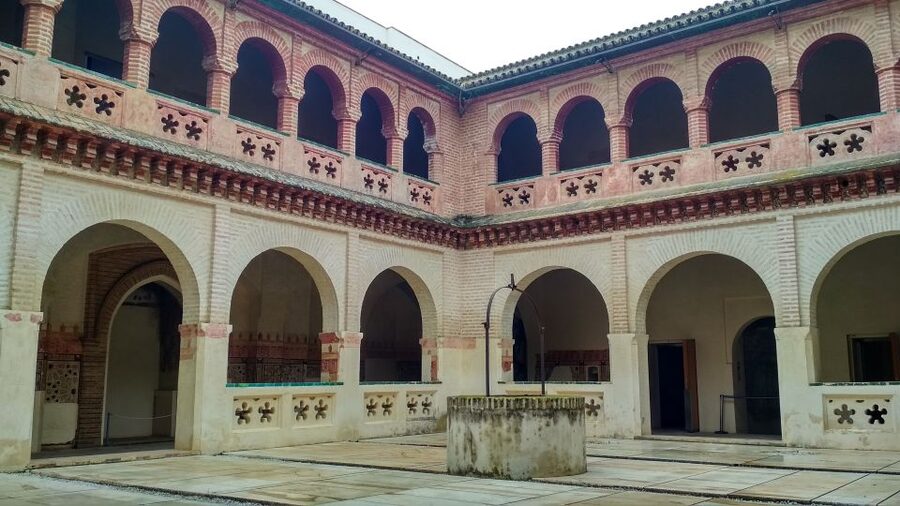
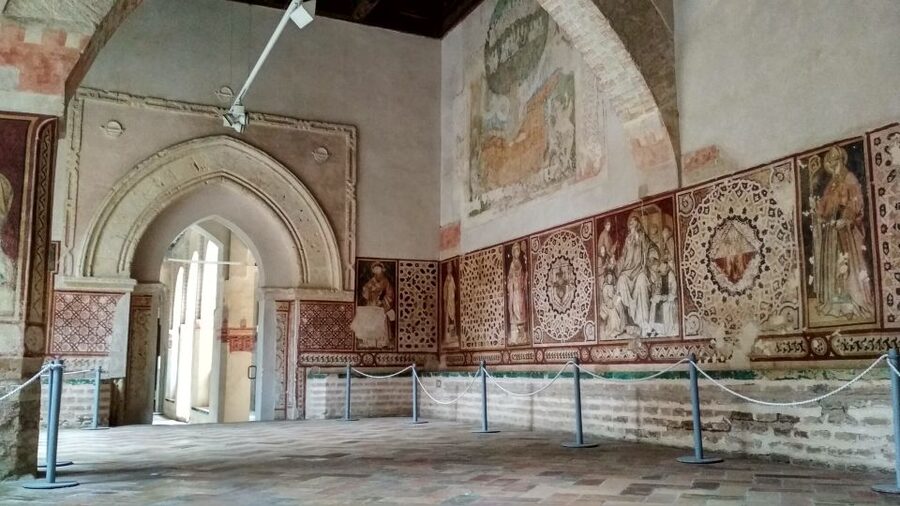
This is not simply an extra church added to fill time. It changes the subject from Roman civic power to medieval religious life. The monastery has the feel of a fortified complex and brings together Mudejar, Gothic, and Baroque elements. The mixture gives you a quick lesson in how Spanish buildings changed over centuries rather than belonging to one tidy style.
I like the contrast. At Italica, you focus on streets, spectacle, engineering, and mosaics. At San Isidoro del Campo, you look at religious architecture, decoration, and the setting of a working monastic institution. The two sites make more sense together because you move from the Roman period into the medieval world in a single morning or afternoon.
The monastery may appeal to you even more than Italica if you enjoy architectural details and photography. It is not as vast as the amphitheater, and not every part is open because of funding limitations. Still, the visit provides a memorable second chapter and prevents the tour from feeling like a one-sight excursion.
Guides who connect the sites well are especially valuable here. Carlos León, for example, has been praised for explaining both places in historical context, while José Luis has been noted for bringing the Roman period to life and making the monastery engaging. The best commentary shows how each building reflects the society that produced it.
Pace, group size, and guide quality
The tour is offered as a shared small-group experience or a private tour. The shared version is the better value for most people, especially if you want transport and a clear explanation without paying for personal service. The private version is worth considering for families, couples, or anyone who wants to ask many questions and move at a more individual pace.
Guide quality matters more here than it does at a simple viewpoint. Much of Italica’s story must be explained, and the monastery benefits from someone who can point out architectural details that you might otherwise pass without noticing.
Several guides have earned especially strong praise for their delivery. Miguel is described as funny, engaging, and clear. Jesús is known for energy and humor, while Carlos León brings an archaeology background and handles questions about the site with care. Alberto is a strong choice for anyone interested in art history. José Luis, Jose, Joanna, Rebecca, Katherine, Nieve, and Nacho have also been praised for good pacing and lively explanations.
Your exact guide will depend on the date and language, so do not book solely in the hope of receiving one particular person. Instead, choose the language that suits you best and understand that the guide is a major part of the experience.
A minimum of four participants speaking the same language is required to guarantee that language. If that number is not reached, you may be offered another language, another date, or a full refund. That is important to know if you are booking a less commonly requested language.
The four-hour schedule and its limits
The advertised duration is four hours, including the bus rides and both guided visits. In practice, allow extra time after the scheduled finish. Traffic leaving Seville can delay the start, and one delayed tour was extended rather than shortened. That is good service, but it means you should not schedule a tight lunch reservation, train, or museum entrance immediately afterward.
The planned sequence is simple:
- Pickup or meeting point in Seville
- About 20 minutes by coach to Italica
- About 105 minutes at Italica
- About 10 minutes by coach to San Isidoro del Campo
- About 40 minutes at the monastery
- About 20 minutes back to Seville
Drop-off points can include Calle Rastro 12a, Hotel Don Paco, Calle Trajano 6, and another listed Seville location, depending on the option booked. Confirm the final drop-off details before you plan the rest of your day.
The pace works well for a first visit, families, and anyone who wants a half-day outing. It is less suitable if you prefer to read every panel, sketch each mosaic, or explore a large archaeological site alone. You will be moving with the group and following the guide’s route.
Who will get the most from this tour
I would recommend it to first-time visitors to Seville who want Roman history without spending a full day away from the city. It is also a natural fit for anyone interested in archaeology, ancient architecture, Roman emperors, or Game of Thrones locations.
Families with teenagers can enjoy the amphitheater, gladiator passages, and lion area, while the monastery gives the outing more substance than a film-location stop. The guide-led storytelling is useful for younger visitors who might otherwise find foundations and broken walls difficult to read.
The tour can work for older people and anyone who uses a walking aid, but tell the guide early if you need a slower pace. The site involves walking outdoors, and the short independent viewing period may not be enough for a slower walker to revisit the amphitheater and make a restroom stop.
You should think twice if you need a guaranteed meal break, a long free-exploration period, or an exact four-hour finish. Food and drinks are not included, and the schedule is designed around guided highlights rather than free time.
Practical value at $46
At $46, the tour bundles three things that can be awkward to arrange separately: transport, admission, and interpretation. The short ride from Seville is a real advantage, and the monastery adds enough variety to make the price feel justified rather than simply covering a trip to one nearby ruin.
The strongest value comes from the guide. Without one, you can admire the amphitheater and mosaics, but you may miss why Italica mattered, how the urban plan worked, and what the monastery’s mixed architectural styles reveal. A good guide also helps you see the difference between what is original, what has been restored, and what remains under excavation.
You do not receive food, drinks, or extensive free time, so factor in a snack and a flexible afternoon. Free cancellation up to 24 hours before the tour and reserve-now, pay-later booking also make it easier to fit the outing into a changing Seville schedule.
Should you book the Italica and monastery tour?
Book it if you want an efficient, well-explained introduction to Italica and prefer not to arrange transport yourself. The Roman amphitheater, underground passages, mosaics, and imperial connection provide plenty of substance, while San Isidoro del Campo gives the half-day a welcome change of period and mood.
Choose the private option if pickup and a more personal pace matter to you. Choose the shared tour if value is your priority and you can accept a fixed route with limited time for independent photographs.
My main advice is to leave a few hours free after the scheduled finish, bring water and a snack, and photograph the amphitheater during the main visit rather than waiting for the final free period. With those small adjustments, this is a strong choice for adding ancient Spain to a Seville stay.
FAQ
How long does the Italica and monastery tour last?
The planned duration is four hours, including transportation from Seville, the guided visit to Italica, the monastery visit, and the return journey.
How far is Italica from Seville?
The coach ride from Seville to Italica takes about 20 minutes.
What is included in the price?
Entry tickets, transport from Seville, and a local guide are included. Food and drinks are not included.
Which languages are available?
The tour is available with a live guide in English, French, Italian, or Spanish. At least four participants speaking the same language are needed to guarantee that language.
Can I choose a private tour?
Yes. You can choose between a shared group tour and a private tour. Pickup from your Seville accommodation is available with the private option if the address is within the pickup area.
Where does the shared tour meet?
The shared tour offers three different meeting points in Seville. The exact meeting point depends on the option you book, so check the confirmed details carefully.
Can I cancel the booking?
You can cancel up to 24 hours in advance for a full refund. The reserve-now, pay-later option lets you book without paying on the day of reservation.
Recently reviewed around Seville
- Seville: Alcázar Fast-Track Access with Guided Tour★ 4.2 · 432 reviews
- Seville: Small Group Jewish Quarter Tour with Tapas & Drinks★ 5.0 · 119 reviews
- Seville: Sunset Roof Top Walking Tour★ 4.5 · 122 reviews
- Seville: VIP Exclusive Early Access Tour of The Alcazar★ 4.8 · 276 reviews
- Seville: Small-Group Jewish Quarter Discovery Walking Tour★ 4.9 · 499 reviews
- Seville: Flamenco Show at Tablao Almoraima in Triana★ 4.6 · 483 reviews
- Seville: Authentic and Romantic Horse-Drawn Carriage Ride★ 4.5 · 341 reviews
- Seville: Stand Up Paddle Board Rental★ 4.6 · 134 reviews
City Tours, compared.

City Sightseeing Barcelona Hop-On Hop-Off Bus Tour: 24 or 48-Hour
Read our review →

Granada City Train 1 or 2-Day Hop-On Hop-Off Ticket
Read our review →
Barcelona City Tour Hop-On Hop-Off with Optional Boat
Read our review →

Browse the lists this tour appears in