
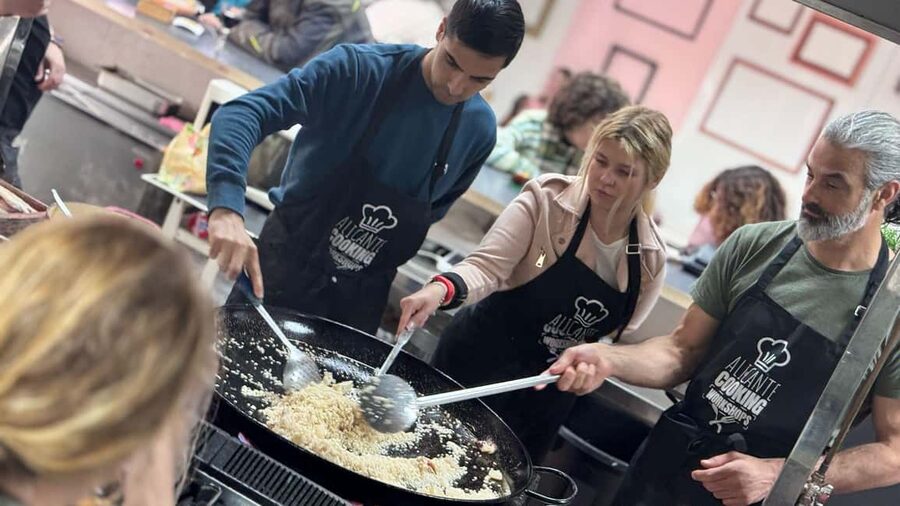
Reviewed · PAELLA COOKING CLASSES
Alicante: Paella and Sangría Workshop with Market Visit
Alicante’s Central Market is the real beginning of this food experience. You meet at the entrance beside a metal Civil War memorial, then walk through the stalls with your guide to choose ingredients for paella and sangría. It is a useful way to see how local food is bought, not just plated.
I like the hands-on cooking and the chance to choose seafood, meat, or vegetarian paella. I also like the generous meal that follows: tapas, homemade sangría, your paella, beer, soft drinks, and water. The main consideration is timing. A group can reach around 19 people, so the class may feel lively rather than intimate, and anyone with mobility problems should take extra care during the move from the market to the cooking venue.
In This Review
- Key points at a glance
- Why the Central Market makes this class worthwhile
- Meeting Fred, the guide who also cooks
- Tapas and sangría set the table
- Choosing your Alicante paella
- The cooking venue feels more local than staged
- Is $56 a good price for three and a half hours?
- Who should book this experience?
- Timing, meeting point, and cancellation details
- Final verdict: a practical food day in Alicante
- FAQ
- How long does the paella and sangría workshop last?
- How much does the experience cost?
- Where does the activity begin and end?
- What paella options are available?
- Is the recipe included?
- What food and drinks are included?
- Is the activity available in English?
Key points at a glance
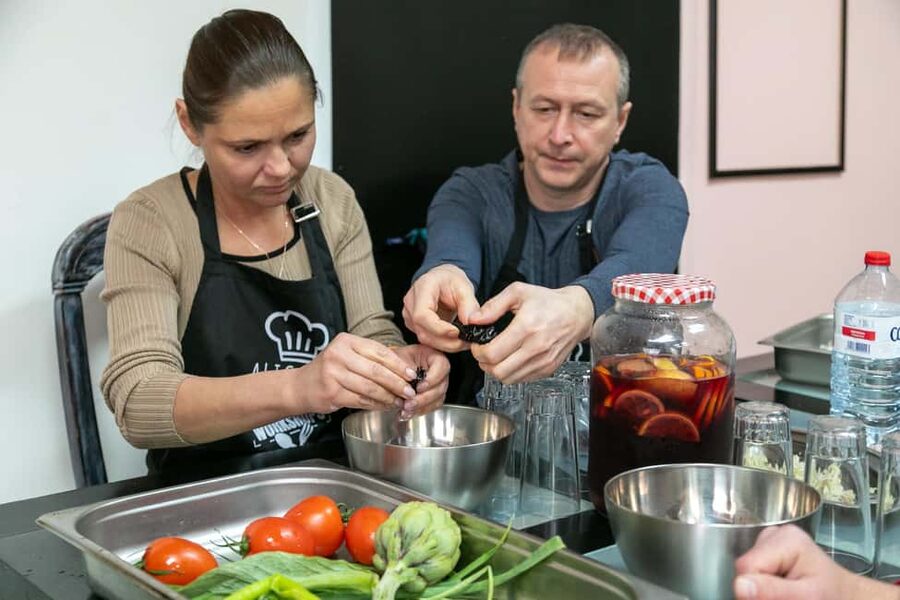
- Shop before you cook: Visit Alicante’s Central Market and help select the fresh ingredients used in class.
- Choose your paella: Pick seafood, meat, or vegetarian, then take the recipe home.
- Cook with Federico or Fred: The guide and chef combination brings clear instruction, translation, and plenty of chances to ask questions.
- Eat more than paella: Iberian ham, tomato salad with salted fish, local cold sausages, olives, and crisps are served before the main dish.
- A working local venue: The cooking takes place in a venue open to local people, rather than a room made only for cooking classes.
- Good value at $56: Three and a half hours of food, drinks, market time, instruction, and a full meal make this a strong mid-priced Alicante activity.
Why the Central Market makes this class worthwhile
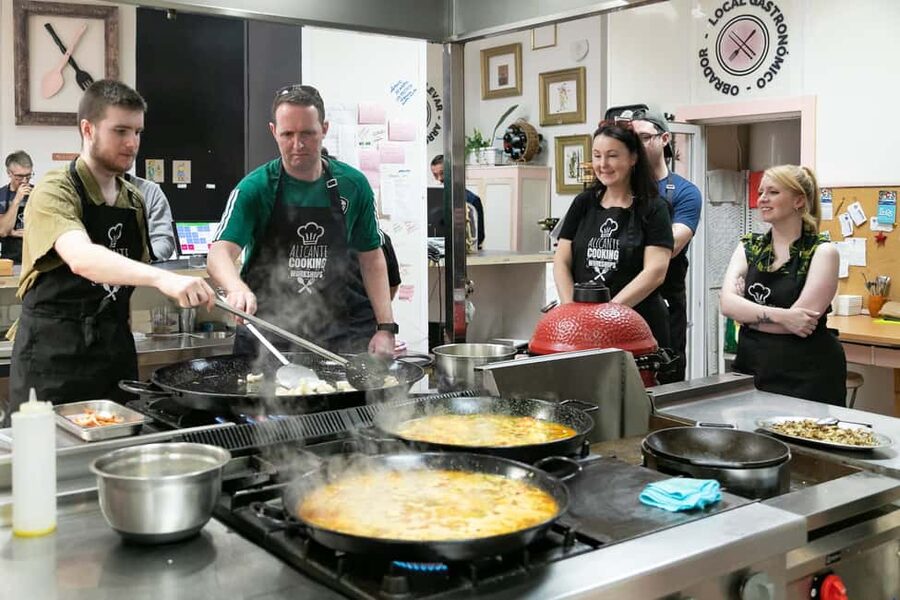
Many cooking classes begin with ingredients already laid out on a counter. This one starts more usefully, with a visit to Alicante’s Central Market. You meet your guide at the market entrance, where a metal Civil War memorial makes the meeting spot easier to find.
The market visit gives the class a sense of place. You see the products before they are chopped, stirred, or added to a paella pan. Your guide explains the ingredients and speaks with stall owners while the group buys what it needs. That small act changes the class from a simple demonstration into a lesson in how Alicante cooks.
You should wear comfortable shoes. The market portion involves walking and standing, and you will get more from it if you can keep up with the group and pay attention to the stalls rather than worrying about sore feet.
The visit is also useful for anyone who wants to shop independently later. You learn what the local products look like and hear explanations of how they fit into Mediterranean cooking. The guide’s role as translator matters here, especially when the class is conducted in both English and Spanish.
The market is not just a backdrop for photographs. It supplies the food you will work with, which gives the next part of the morning or afternoon a clear purpose.
More Alicante & Costa Blanca trips worth a second look
- Alicante Paella Cooking Class, Tapas, Drinks and Market
★ 4.9 · 301 reviews - Paella & Sangria Class with Tapas and Market Visit
★ 5.0 · 122 reviews - Barcelona: Paella Cooking Experience & Boqueria Market Tour
★ 4.8 · 3,661 reviews
Meeting Fred, the guide who also cooks
The experience is led by a local chef and an assistant who helps with guiding and translation. Federico, often called Fred, is the guide name most closely associated with the class. He handles the market explanation and the cooking, so you get one continuous thread from shopping to eating.
That combination is a real strength. A market guide may explain what you are seeing without being able to answer detailed cooking questions. A chef may cook well but struggle to make a group feel included. Here, Fred’s job covers both sides. He explains the origins of paella, talks through the ingredients, and then shows you how to use them.
The class suits beginners because the instruction is step by step. You are not expected to arrive with specialist cooking skills. At the same time, it is not only for people who rarely enter a kitchen. One experienced cook found useful tips in the ingredient selection and preparation, including a particular appreciation for the salted cod salad.
Expect a relaxed teaching style rather than a formal culinary-school lesson. You will have room to ask questions, and the group format means you learn by watching other people handle different tasks. With a larger group, not every person can have the pan to themselves at every moment, but the guide makes an effort to involve everyone.
English and Spanish are available. If you need detailed instruction in English, confirm the current guide arrangement when booking, since the class relies on live explanation and translation.
Tapas and sangría set the table
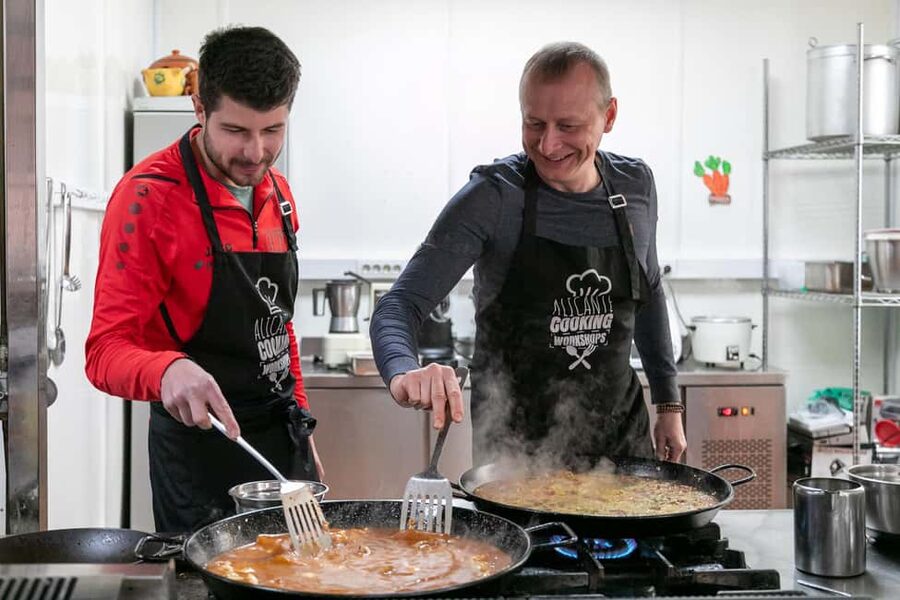
Before the paella takes center stage, you are served a selection of traditional tapas and appetizers. The spread includes Iberian ham, tomato salad with salted fish, cold local sausages, olives, and crisps.
This is more than filler while the rice cooks. The tapas introduce several familiar Spanish flavors in small portions, and the tomato salad with salted fish gives the meal a distinctly local touch. If you are curious about Alicante food but do not want a long restaurant crawl, this provides a compact introduction.
You also learn to make sangría. The class treats it as part of the cooking session, not simply a drink handed to you at the table. You take part in preparing it and then drink your own mixture with the food.
Beer and soft drinks are available as alternatives, along with bottled water. That is helpful in a group where not everyone wants sangría. The supplied information does not specify the exact amount of each drink, so consider the beverages a pleasant part of the meal rather than a reason to book on their own.
The combination of cooking, eating, and drinking gives the class a social rhythm. It can feel like a long lunch with new acquaintances, especially for solo visitors. Several people have found it easy to join in, and the format naturally gives you conversation while the food cooks.
Choosing your Alicante paella
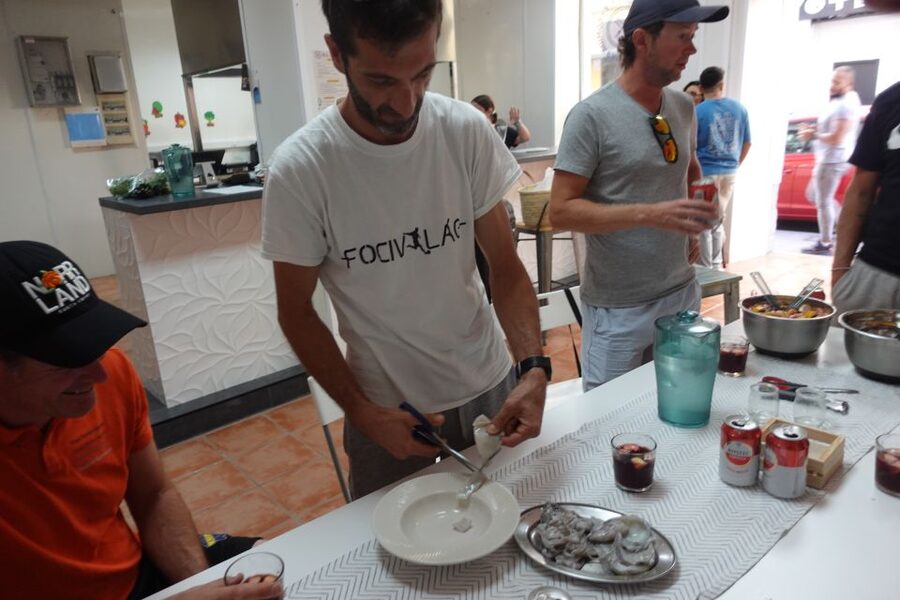
Your main choice is seafood, meat, or vegetarian paella. Make that selection when booking or before the class, depending on the operator’s current process. If you have dietary needs beyond the listed options, ask in advance rather than assuming the kitchen can adapt the recipe.
The useful part is that you do not just watch a chef prepare one fixed dish. You learn the method behind your selected version and leave with the recipe. That makes the experience valuable after Alicante, when you can try the dish at home for friends or family.
The class focuses on Alicante-style paella. Your guide explains the ingredients, gives the group clear instructions, and shows the stages of preparation. You should expect participation rather than a private lesson: people work together, take turns, and follow the chef’s lead.
Paella is also a good group dish because it rewards patience. There are moments when you need to let the pan do its work, which leaves time for questions, tapas, and sangría. The class does not rush straight from chopping to eating.
Do not expect the same control you would have in your own kitchen. A shared class has a set pace, and the final result depends on group coordination. That is a fair trade for learning in a social setting and eating the food immediately.
A different way to spend the day, same corner of Spain:
- From Alicante: Roundtrip to Tabarca Island
★ 4.3 · 3,992 reviews - Alicante: Secret Flavors Food Tour
★ 4.8 · 1,514 reviews - Alicante: 2-Hour Late Afternoon Catamaran Cruise
★ 4.5 · 1,265 reviews - From Alicante: Guadalest, Altea & ticket in Algar Waterfalls
★ 4.7 · 1,027 reviews
The cooking venue feels more local than staged
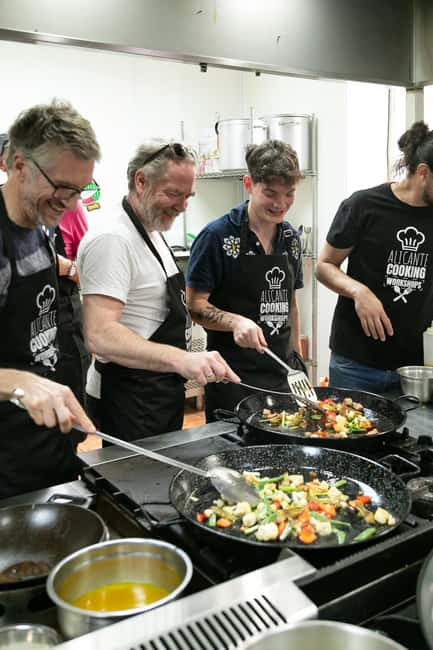
After the market, you continue to a local venue open to the public. People from Alicante use it for food or an after-work drink, so the setting is not presented as a private room built only for tourists.
That detail matters. You are not simply being shown a polished version of Spanish cooking in a closed studio. The class takes place in a working local environment, with the ordinary atmosphere that comes with it. It helps connect the ingredients from the market to the way people eat and socialize in the city.
The venue is also where the tapas, sangría, and paella come together. Staff are described as friendly and accommodating, and the meal is served after you have helped prepare it.
One practical point: the transition from the market to the restaurant or cooking location deserves attention if anyone in your party has mobility issues. Wheelchair access is listed, but one larger group had trouble keeping a person with mobility problems together during the transfer. Tell the operator in advance, stay close to your guide, and do not assume the group will automatically move at the pace your party needs.
On hot days, bring water and dress comfortably. Bottled water is included, but having comfortable clothes and shoes will make the market walk and cooking portion easier.
Is $56 a good price for three and a half hours?
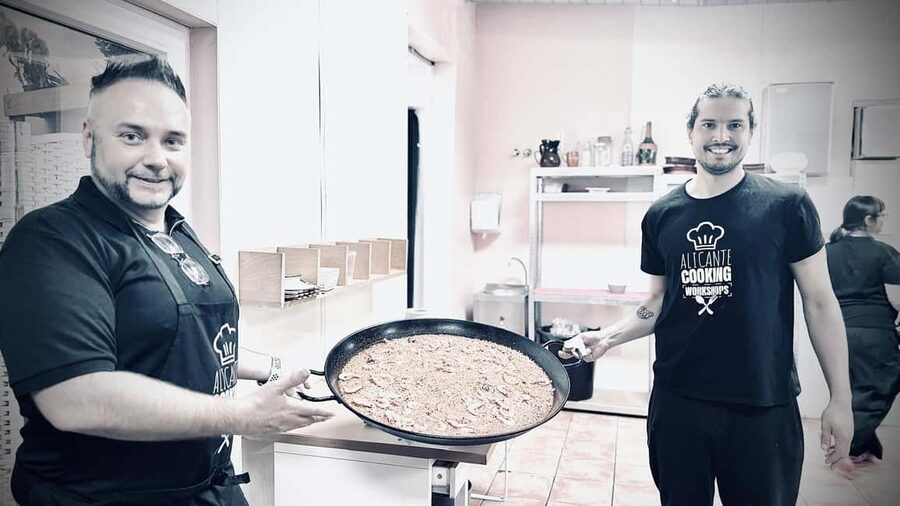
At $56 per person, this is not the cheapest way to eat in Alicante. It is also not priced like a quick cooking demonstration. You are paying for a 3.5-hour activity that combines a market visit, instruction, tapas, sangría, paella, water, beer, and soft drinks.
The value is strongest if you want an activity rather than only a meal. A restaurant can serve paella with less effort, but it cannot give you the market visit, the recipe, and the chance to prepare the dish yourself. You also get a useful food orientation early in your stay.
The price works particularly well for solo visitors and couples who want a social meal. It includes enough food that you should not need to plan another substantial lunch immediately afterward. The format also gives you a practical souvenir: a recipe you can use at home.
The value is weaker if you dislike group activities, do not drink sangría, or mainly want a quiet restaurant meal. You may also find the class less personal when the group is large. The available feedback includes a group of 19, including a party of 13, so group size can affect how much direct time you get with the chef.
Still, the ingredients, food, and drinks add up quickly in Alicante. For someone interested in local cooking, $56 is a reasonable price for the full package.
Who should book this experience?
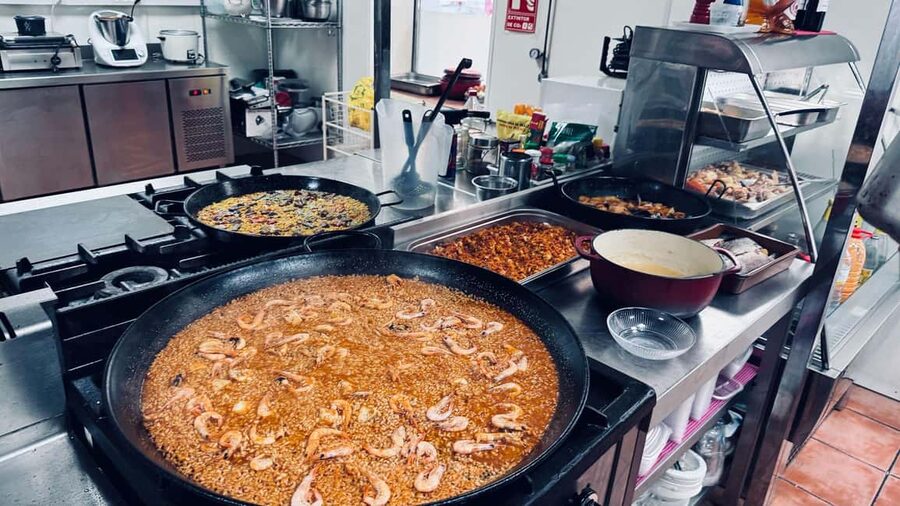
I would choose this for first-time visitors who want food to help them understand Alicante. The Central Market gives you a useful introduction to local shopping, and the cooking class gives you enough context to recognize the flavors afterward.
It is also a good fit for:
- Couples looking for an activity beyond sightseeing
- Solo visitors who enjoy meeting people over a shared meal
- Families with older children who can take part in the cooking
- Keen home cooks who want an Alicante paella recipe
- People who prefer learning by doing
- Visitors planning their own food shopping later in the trip
You do not need to be a cook. The guide’s patient, encouraging approach is designed to bring beginners into the process.
I would think twice if you need a private class, have strict dietary requirements that are not covered by seafood, meat, or vegetarian choices, or cannot comfortably walk through a market. Pets are not allowed.
The activity is wheelchair accessible, but mobility needs should be discussed ahead of time because the route from the market to the cooking venue may require close coordination.
Timing, meeting point, and cancellation details
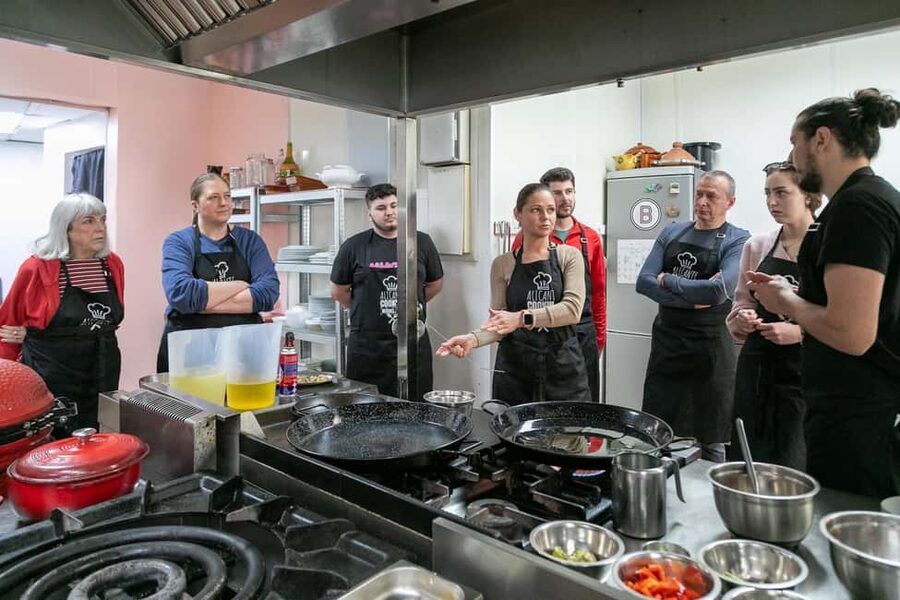
The activity lasts 3.5 hours, with starting times varying by date. Check the available time before booking, especially if you are fitting it between museum visits, a beach stop, or an evening reservation.
Meet at the Central Market entrance beside the metal Civil War memorial. The guide wears a black T-shirt with white lettering identifying the Paella and Sangría Cooking Workshop in Alicante. The activity ends back at the meeting point.
You can cancel up to 24 hours ahead for a full refund, and reserve now while paying later. That flexibility helps if your Alicante plans depend on weather or changing arrival times.
Bring comfortable shoes and comfortable clothes. Pets are not permitted.
Final verdict: a practical food day in Alicante
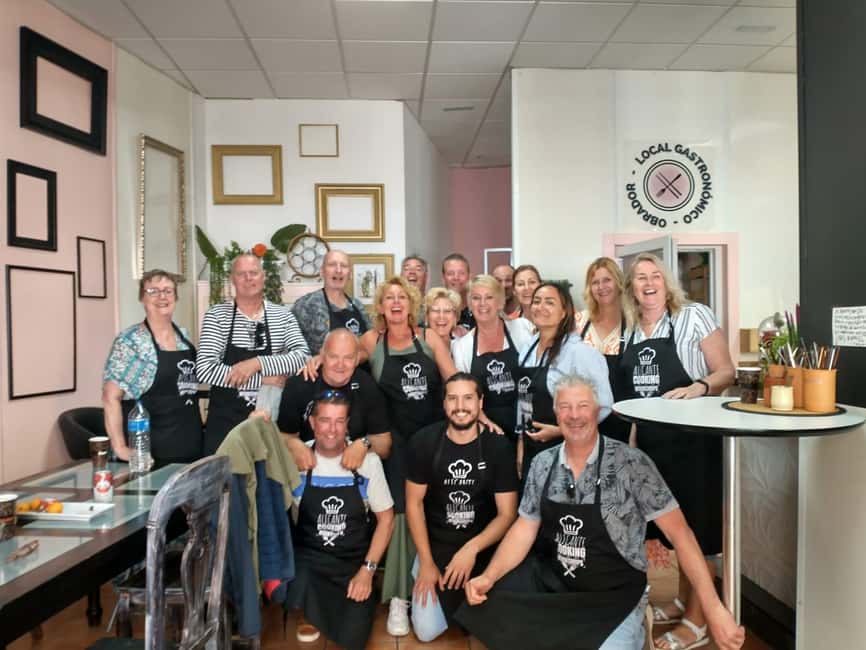
You should book this class if you want to connect Alicante’s food with the place where it is bought, prepared, and eaten. The market visit gives the activity a strong start, the cooking is active without requiring advanced skills, and the meal is substantial enough to make the price feel fair.
The most important variable is group size. A small or medium group should give you more time at the pan and with the chef. A large group can still be fun, but expect a shared experience rather than one-on-one coaching.
For the best version of the day, choose your paella style in advance, wear sensible shoes, arrive at the memorial meeting point early, and tell the operator about mobility or dietary concerns. If Federico or Fred is leading the session, you can expect a guide who explains both the food and the process with patience.
FAQ
How long does the paella and sangría workshop last?
The activity lasts 3.5 hours. Starting times vary, so check availability for your chosen date.
How much does the experience cost?
The listed price is $56 per person.
Where does the activity begin and end?
You meet at the entrance to Alicante’s Central Market beside a metal Civil War memorial. The activity ends back at the meeting point.
What paella options are available?
You can choose seafood, meat, or vegetarian paella.
Is the recipe included?
Yes. You can take the paella recipe home after the workshop.
What food and drinks are included?
The experience includes sangría, Iberian ham, tomato salad with salted fish, cold local sausages, olives, crisps, bottled water, beer, and soft drinks.
Is the activity available in English?
Yes. The live tour guide service is available in English and Spanish.
More Workshops in Alicante & Costa Blanca
- Alicante Paella Cooking Class, Tapas, Drinks and Marketplace
★ 5.0 · 349 reviews - Barcelona Paella Cooking Class with Market Visit, Tapas & Sangria
★ 5.0 · 2,531 reviews - Spanish Cooking Class Paella Tapas and Sangria in Madrid
★ 5.0 · 1,340 reviews - Madrid: Paella and Sangria Workshop in the City Center
★ 4.9 · 1,264 reviews
Recently reviewed around Alicante & Costa Blanca
- Costa Blanca Full-Day Off Road Tour★ 5.0 · 387 reviews
- Sunset in Dénia from the Catamaran Mundo Marino★ 4.5 · 107 reviews
- Terra Mitica Benidorm Entrance Ticket★ 3.5 · 339 reviews
- Benidorm Palace★ 4.0 · 498 reviews
- Uncharted Marine Reserve Cave, Snorkel & Cliff Jumping Kayak Tour★ 4.5 · 251 reviews
- Kayak Dénia “Cova Tallada” + Snorkeling + Speleology★ 5.0 · 282 reviews
- Entrance to the Motor Museum★ 5.0 · 149 reviews
- Benidorm Buggy Tour Off Road★ 5.0 · 124 reviews
Paella Cooking Classes, compared.
Paella Cooking Experience & Boqueria Market Tour
Read our review →
Barcelona Paella Cooking Class with Market Visit, Tapas & Sangria
Read our review →
Natural Coves and Beaches Boat Trip & Paella Lunch
Read our review →
Spanish Cooking Class Paella Tapas and Sangria in Madrid
Read our review →
Barcelona Food Tour: Tapas, Paella, Sangria & 8+ Local Tastings
Read our review →
Paella and Sangria Workshop in the City Center
Read our review →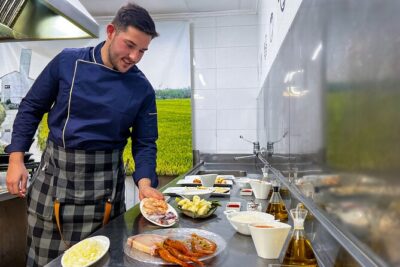
Paella Cooking Class, Wine Tasting & Central Market in Valencia
Read our review →
Girona & Costa Brava Small Group Tour From Barcelona with Paella!
Read our review →Browse the lists this tour appears in