
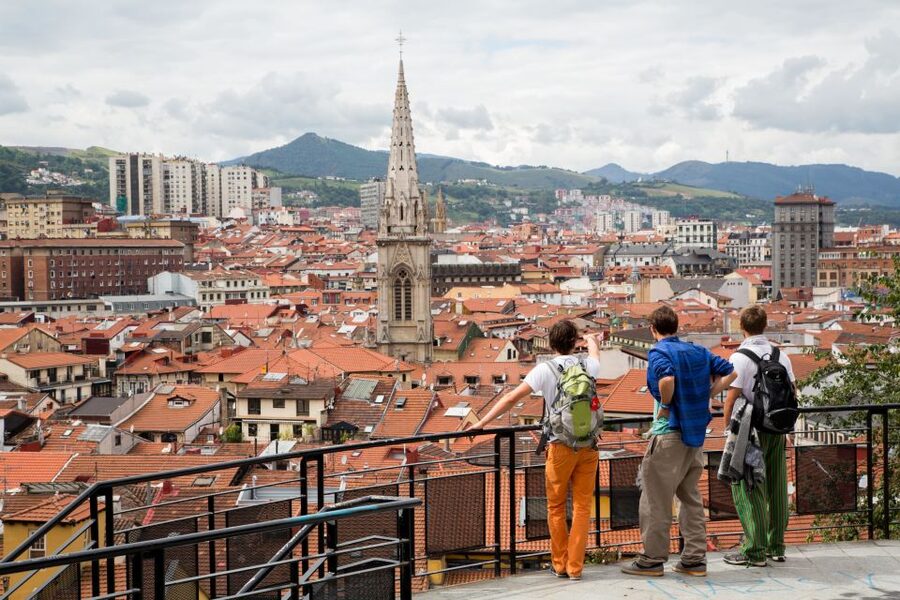
Reviewed · WALKING TOURS
Walking Tour in Bilbao
Bilbao’s story is best understood on foot, where medieval lanes, an old market, grand nineteenth-century streets, and bold modern buildings all sit within a compact city center. This two-hour walk takes you from the Casco Viejo to the Guggenheim area, with local guides such as Beatriz, Miguel, José, and Adur bringing the city’s past and Basque culture into focus.
I like the small group limit of 10, which leaves room for questions and personal recommendations. I also like the practical finish: guides have suggested affordable local food, bars, tabernas, and places worth visiting later. The main consideration is pace. Two hours gives you a strong introduction, but not enough time to explore the interiors of every landmark.
In This Review
- Key points to know
- Starting at the Arriaga Theater in central Bilbao
- The Seven Streets and Bilbao’s medieval core
- Santiago Cathedral and the Church of San Antón
- La Ribera Market and the city’s food culture
- The Ensanche and Bilbao’s nineteenth-century expansion
- Zubizuri Bridge and the modern Bilbao story
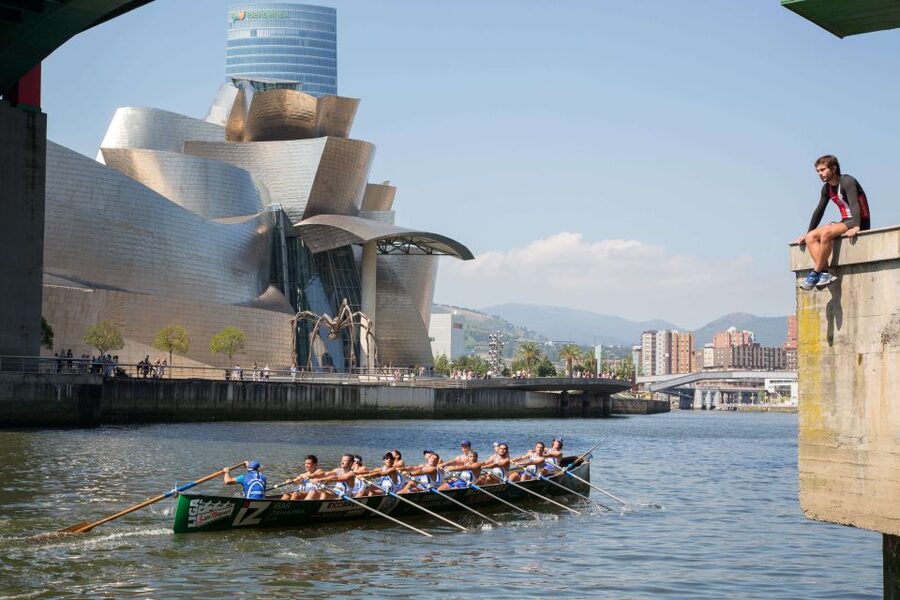
- The Guggenheim area and the city’s cultural renewal
- Why the guide makes the difference
- Is $41 a fair price for two hours?
- Walking conditions, weather, and access
- Who should book this Bilbao walking tour?
- FAQ
- Where does the Bilbao walking tour meet?
- How long does the walking tour last?
- What languages are available?
- How large is the group?
- Is the tour suitable for solo visitors?
- Is the walking tour wheelchair accessible?
- What happens if fewer than two people book?
- Should you book it?
Key points to know
- A medieval-to-modern route: Walk through the Seven Streets, then continue toward the Ensanche, Zubizuri Bridge, and Guggenheim Museum.
- Local perspective: Guides including Beatriz, Miguel, José, and Adur have explained Basque language, politics, food, architecture, and Bilbao’s industrial past.
- Small groups: The tour is limited to 10 participants, making it easier to ask questions and shape the conversation.
- Useful food advice: Expect recommendations for restaurants, bars, tabernas, and local dishes to try during the rest of your stay.
- Easy starting point: Meet at the main entrance of the Arriaga Theater, a central location in Bilbao.
- Weather matters: Rain clothing is not provided, and Bilbao can be wet, so come prepared.
Starting at the Arriaga Theater in central Bilbao
The meeting point is the main entrance of the Arriaga Theater, an easy place to locate in central Bilbao. From here, the route moves toward the Casco Viejo, or Old Town, so you begin with the city’s oldest streets before reaching its later architectural chapters.
A central meeting point also makes this tour useful on your first day. You can arrive without arranging transport from your hotel, and you finish with a better sense of how the Old Town, river, shopping streets, and museum district connect.
The exact starting time varies, so you need to check availability when booking. The walk is offered in English or Spanish, and solo visitors are welcome when space is available. The minimum group size is two people. If that number is not reached, the operator contacts you 24 hours beforehand and offers another date or a full refund.
More Bilbao & Basque Country walks with a guide:
- San Sebastian: Walking Tour with Pintxo and Drink
★ 4.5 · 220 reviews - Bilbao Walking Small Group Tour
★ 5.0 · 203 reviews - Bilbao old town walking tour
★ 4.6 · 151 reviews
The Seven Streets and Bilbao’s medieval core
The first major section leads into the Seven Streets of the Casco Viejo. This is where Bilbao feels most intimate: narrow lanes, older façades, churches, shops, and small eating places packed into a walkable center.
A guide adds value here because the Old Town is not simply a collection of pretty streets. The explanations connect the buildings and lanes to the growth of Bilbao and to the wider Basque Country. You can ask about local customs, the Basque language, food, and the way the city changed over time.
Several guides have adjusted the conversation to match the group. Miguel, for example, has asked what subjects interest people before shaping the walk. That flexibility matters more than a fixed speech, especially if you already know some Spanish history or have a particular interest in architecture, local politics, or regional identity.
Beatriz has also been praised for speaking Basque fluently, giving you a chance to hear a language unlike Spanish or French. You should not expect a language lesson, but the sound and place of Basque culture add an important layer to the tour.
Santiago Cathedral and the Church of San Antón
The route includes Santiago Cathedral and the Church of San Antón, two key religious landmarks in the Old Town. Their inclusion gives the walk a useful sense of time and continuity, even if the visit is focused on exterior views rather than extended interior tours.
Santiago Cathedral helps anchor Bilbao’s medieval identity. San Antón, near the river and market area, connects the old city with the practical life of trade and movement. Your guide explains why these places mattered, rather than simply pointing them out for a quick photograph.
This is one reason the walk works well as an introduction. You are not asked to memorize a long list of dates. Instead, the city’s buildings become part of a larger story about commerce, faith, language, and urban growth.
La Ribera Market and the city’s food culture
La Ribera Market is one of the most useful stops for anyone who wants to eat well in Bilbao. The market brings the tour closer to everyday life, with food at the center rather than architecture alone.
The supplied information does not promise a tasting, so you should treat this as a guided look at the market, not a food tour. The benefit is context and advice. Guides have offered restaurant and taberna suggestions, including places that fit different budgets, and they are happy to answer questions about local cuisine.
I would pay close attention here if you are unsure how to plan meals in Bilbao. A recommendation from someone who lives in the city can save you from eating near the most obvious tourist spots every night. José has also shared suggestions for food and drink, while Beatriz has pointed people toward good restaurants and tabernas.
The market stop also gives the Old Town a human scale. Bilbao’s past was shaped by work, trade, and the river, and food remains one of the easiest ways to connect with that local identity.
A different way to spend the day, same corner of Spain:
- Bilbao: 1- or 2-Hour Sightseeing Boat Tour
★ 4.2 · 1,723 reviews - Bilbao: San Mamés Museum and Stadium Tour
★ 4.8 · 1,464 reviews - Bilbao: Gaztelugatxe, Bermeo, Mundaka, Gernika, & Wine Tour
★ 4.5 · 1,407 reviews - From Bilbao: Gaztelugatxe, Gernika, and Mundaka Group Tour
★ 4.8 · 1,112 reviews
The Ensanche and Bilbao’s nineteenth-century expansion
After the Old Town, the walk continues into the Ensanche. This district reflects Bilbao’s major nineteenth-century transformation, when the city expanded beyond its medieval center during an era of industrial and financial growth.
The change in street plan and architecture is part of the experience. The Old Town feels compressed and historic, while the Ensanche presents broader streets and bourgeois buildings tied to a more modern, outward-looking Bilbao.
This contrast is easy to miss if you walk alone without context. A guide can show you that Bilbao is not one single type of city. Its identity comes from the meeting of an older trading center, an industrial-era expansion, and a recent cultural renewal.
Several guides have linked buildings and streets to the river and to Bilbao’s industrial past. José, in particular, has explained how the river shaped the city’s development, while other guides have brought in stories about local people and family connections to the Basque region.
Zubizuri Bridge and the modern Bilbao story
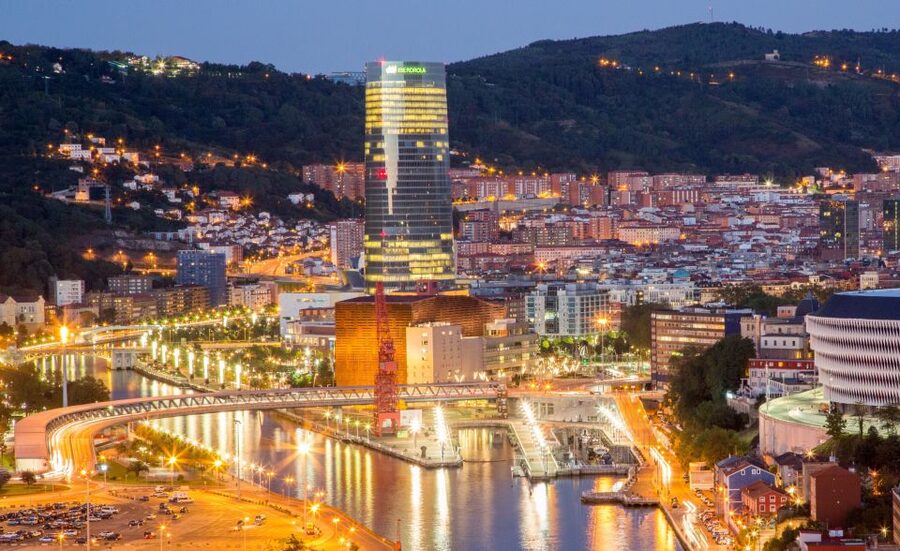
The walk then reaches contemporary Bilbao, including the Zubizuri Bridge. This is where the city’s modern image becomes most visible.
The bridge and surrounding riverfront help explain Bilbao’s shift from an industrial and financial center toward a city known for architecture and culture. The point is not just to admire a striking structure. You get a clearer sense of why the river remains central to Bilbao’s identity and how newer projects changed the way the city presents itself.
The route does not give you unlimited time for photographs, so keep your camera ready. The guide may pause for explanations and questions, but this is still a walking introduction rather than a dedicated architecture tour.
That distinction is useful when planning your day. If you want detailed architectural analysis, you will need more time elsewhere. If you want to understand how the modern buildings fit into Bilbao’s larger story, this stop does the job well.
The Guggenheim area and the city’s cultural renewal
The Guggenheim Museum is the final major landmark named on the route. The museum represents Bilbao’s cultural renewal and gives the tour a clear ending: you begin among medieval lanes and finish beside one of Europe’s best-known modern museum buildings.
Admission to the museum is not included, and the activity is a walking tour rather than a museum visit. Plan a separate visit if you want to see the collections or spend time studying the building from inside.
The advantage of ending here is practical. You receive historical context before deciding how to use the rest of your day. Your guide can help you understand the museum’s place in modern Bilbao, and you can continue independently afterward.
Several guides have provided extra suggestions for later visits. A first-day walk is especially useful because you can return to places that caught your interest instead of trying to cover the whole city at once.
Why the guide makes the difference
The route is attractive, but the guide is the main reason to book this experience instead of simply following a map. The strongest guide reports describe people who are warm, flexible, funny, and able to explain Bilbao without turning the walk into a lecture.
Beatriz has been praised for her command of English, her passion for Bilbao and the Basque Country, and her ability to keep the tour lively even in rain. Miguel has adapted walks to group interests and mixed history with personal stories. José has offered restaurant help and practical advice beyond the formal route. Adur has been praised for explaining Basque history and culture in an entertaining way.
The operator uses several guides, so your experience will depend partly on who leads your departure. That is worth keeping in mind. The consistently strong guide feedback suggests a reliable standard, but no two guides will tell the same stories or give the same emphasis.
The small group makes the format more personal. With no more than 10 people, you can ask about pronunciation, food, architecture, or the best way to spend the afternoon. It also reduces the common walking-tour problem of being lost at the back of a large crowd.
Is $41 a fair price for two hours?
At $41 per person, this is not Bilbao’s cheapest possible introduction. You are paying for a live local guide, a small group, and a planned route through several distinct parts of the city.
I think the price is fair if you use the walk to shape the rest of your stay. The food suggestions alone may help you choose better restaurants and bars, while the historical context can make a later visit to the Guggenheim, market, or Old Town more rewarding.
The value is strongest for first-time visitors, short-stay visitors, and people who prefer conversation to audio guides. It is less compelling if you already know central Bilbao well or only want to see the Guggenheim from outside.
The two-hour length is also a practical advantage. You get a useful overview without giving up half a day. Some tours may run longer when questions and conversation continue, but you should plan around the stated two-hour duration.
Walking conditions, weather, and access
This is a city walking tour, so comfortable shoes are sensible. The activity is wheelchair accessible, though the route includes historic streets and several separate districts. If you use a wheelchair, it is reasonable to contact the local partner ahead of time with any route questions.
Rain clothing is not included. That detail matters in Bilbao. Bring a waterproof jacket or umbrella, especially if the forecast looks uncertain. One guide continued enthusiastically during a rainy tour, but staying dry is still your responsibility.
Hotel pickup and drop-off are not provided. You meet at the Arriaga Theater and make your own way there and away from the final stop.
You can cancel up to 24 hours before the activity for a full refund, and the reserve-now, pay-later option keeps your plans flexible. Those policies are helpful if your Bilbao schedule is still changing.
Who should book this Bilbao walking tour?
I would choose this tour early in a Bilbao visit. It suits you if you want a clear introduction to the Old Town, Basque culture, the river, the Ensanche, and the Guggenheim area without spending a full day on formal sightseeing.
It is also a good fit for solo visitors, couples, families, and small groups who want room to ask questions. Food-focused visitors should listen closely to the restaurant advice, while architecture fans will appreciate the shift from medieval streets to modern landmarks.
You may want something else if your main goal is entering the Guggenheim, sampling food, or taking a slow photography walk. Those activities are not included. This experience gives you context and orientation, then leaves you free to explore further on your own.
FAQ
Where does the Bilbao walking tour meet?
Meet your guide at the main entrance of the Arriaga Theater in Bilbao.
How long does the walking tour last?
The stated duration is two hours. Starting times vary, so check availability when booking.
What languages are available?
The live tour guide is available in English or Spanish.
How large is the group?
The tour is limited to 10 participants.
Is the tour suitable for solo visitors?
Solo visitors are welcome, subject to availability.
Is the walking tour wheelchair accessible?
Yes, the activity is listed as wheelchair accessible.
What happens if fewer than two people book?
If the minimum group size of two is not reached, the tour may be canceled. You will be contacted 24 hours before the activity and offered an alternative date or a full refund.
Should you book it?
Book this tour if you want a thoughtful first look at Bilbao, especially on your first day. The route covers the city’s major chapters, from the Seven Streets and La Ribera Market to the Ensanche, Zubizuri Bridge, and Guggenheim area.
The strongest reason to go is the chance to ask a local guide how Bilbao works, where to eat, and why Basque language and culture matter. At $41, it offers good value when you want personal guidance and useful advice, not just a checklist of sights. Bring rain protection, arrive ready to walk, and save time afterward for the places that catch your interest.
Recently reviewed around Bilbao & Basque Country
- Semi-Private Rioja Tour of 3 Premium Wineries from Bilbao★ 5.0 · 128 reviews
- PRIVATE San Sebastian and Basque Coast Tour from Bilbao★ 5.0 · 103 reviews
- Biarritz, Saint-Jean-de-Luz and San Sebastián from Bilbao★ 4.5 · 144 reviews
- Bilbao Highlights 3-hour E-Bike tour: Small Group or Private Tour★ 5.0 · 202 reviews
- Basque Best Bites – #1 Food & Wine tour of Bilbao★ 5.0 · 268 reviews
- Rioja Wine Tour: 2 Wineries From Bilbao★ 5.0 · 111 reviews
- Enjoy the Coast of Biscay★ 5.0 · 139 reviews
- Gaztelugatxe, Mundaka and Gernika Tour from Bilbao★ 5.0 · 706 reviews
Walking Tours, compared.
Barcelona Tapas and Wine Experience Small-Group Walking Tour
Read our review →
Tapas Walking Tour with Food, Wine, and History
Read our review →
Albaicín and Sacromonte Guided Sunset Walking Tour
Read our review →
Toledo Tour & Vineyard Walk with Wine Tasting from Madrid
Read our review →

Barcelona Tapas Walking Tour: Food, Wine & History
Read our review →
Madrid Old Town & Royal Palace Walking Tour Skip the Line Ticket
Read our review →
Browse the lists this tour appears in