
Reviewed · MUSEUMS
Seville: Museum of Fine Arts Guided Tour
Seville’s Museum of Fine Arts is more than a collection of paintings. It is a former convent, with calm cloisters, grand halls, and a setting that helps explain the religious art inside. This two-hour visit brings you face to face with Gothic, Renaissance, Baroque, and Sevillian Costumbrismo works without asking you to wander a large gallery alone.
I like the small group of up to eight, which gives you a fair chance to ask questions. I also like the focus on context. Guides such as Julio have explained the symbolism, artists, and social setting behind the paintings in clear terms, making the collection approachable even if you do not know much about art.
The main consideration is time. Two hours is enough for a strong introduction, but not enough to examine every room in Spain’s second-largest gallery. If you want a quiet, unhurried look at every work, you will need extra time after the guided portion.
In This Review
- Key points
- Why Seville’s Fine Arts Museum deserves two hours
- Meeting at Plaza del Museo beside Murillo
- Walking through the former Convent of La Merced
- From Sevillian Gothic to Torrigiano’s Saint Jerome
- Murillo’s room and Seville’s artistic identity
- What the guide adds to the paintings
- Why $23 can be good value
- Who will enjoy this museum tour most
- A simple plan for getting the most from the visit
- Should you book the Museum of Fine Arts guided tour?
- FAQ
- Where does the Museum of Fine Arts tour begin?
- How will I identify the guide?
- How long does the guided visit last?
- What languages are available?
- What does the price include?
- How large is the group?
- Is the museum accessible by wheelchair?
- Can I cancel the booking?
Key points
- A former convent makes the building part of the experience: See the Claustro de los Bojes and Claustro Mayor, not just the galleries.
- Murillo receives special attention: The dedicated room offers a useful focus on Seville’s best-known painter.
- The guide supplies the missing story: Learn about symbolism, historical periods, artists, and the relationship between art and Spanish society.
- The tour begins beside Murillo’s statue: Meet at Plaza del Museo, next to the statue, where the guide carries a blue umbrella or wears a Sevilla Guías & Tours name tag.
- Small groups keep the visit personal: A maximum of eight participants is included in the price.
- The $23 fee covers the essentials: Admission and a licensed English or Spanish-speaking guide are included.
Why Seville’s Fine Arts Museum deserves two hours
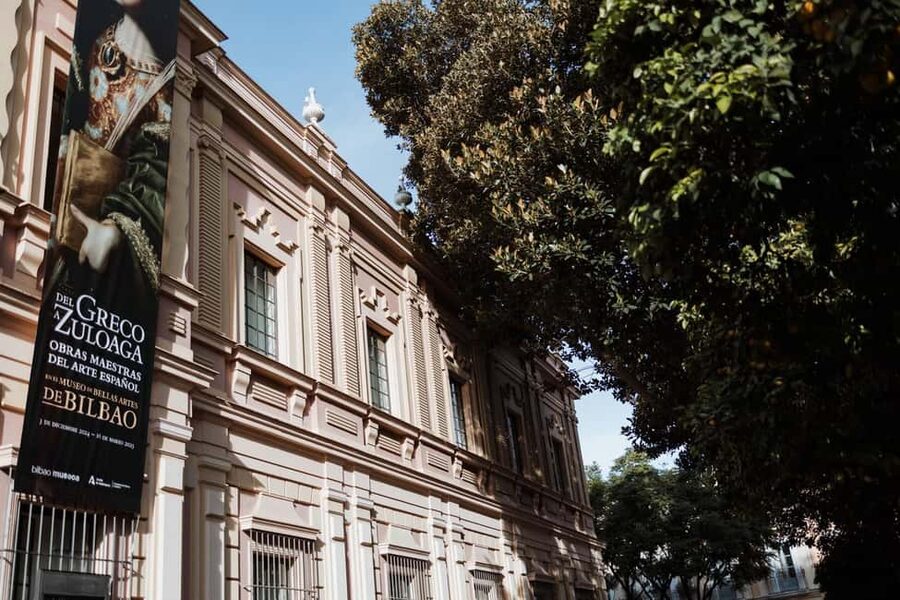
Many visitors come to Seville for the cathedral, Alcázar, and flamenco. The Museum of Fine Arts offers a different view of the city. Its paintings show how religion, patronage, artists, and everyday Spanish life shaped Seville over several centuries.
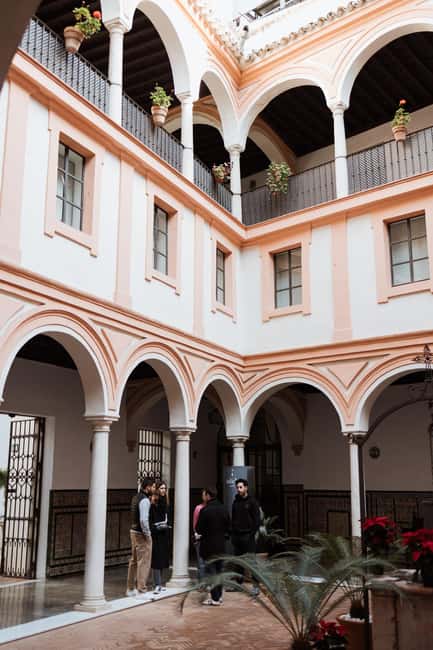
The museum occupies the former Convent of La Merced, in Seville’s historic center. You begin with the building itself: Renaissance and Baroque details, elegant courtyards, and cloisters that create a surprisingly peaceful pause from the city outside.
That setting matters. A painting of a saint feels different when you see it in a space built for religious life. The architecture gives the collection a clear sense of place, rather than making the museum feel like a neutral box filled with unrelated objects.
The museum is Spain’s second-largest art gallery, so a first visit can be a little hard to organize. A guide helps you decide what deserves your attention. Instead of spending twenty minutes on a minor work and rushing past a major one, you get a planned route through key periods and artists.
More Seville museums and collections:
- Seville: Puro Flamenco Show with Optional Museum Ticket
★ 4.8 · 6,088 reviews - Seville: Museum of Illusions Entry Ticket
★ 4.2 · 1,196 reviews - Seville: Museum of Flamenco Dance Admission Ticket
★ 4.4 · 197 reviews
Meeting at Plaza del Museo beside Murillo
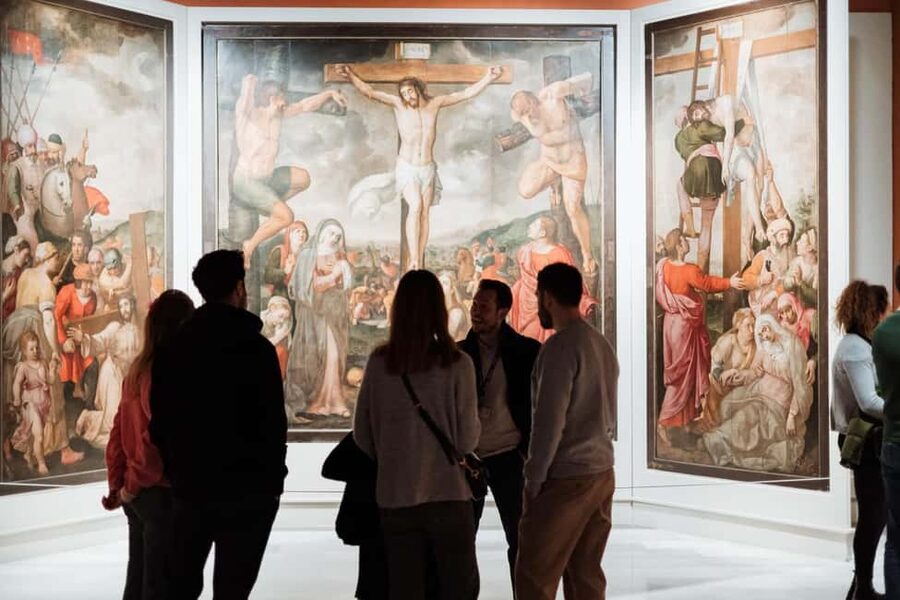
The starting point is easy to identify if you know what to look for. Go to Plaza del Museo and find the statue of Bartolomé Esteban Murillo. Your guide waits nearby with a blue umbrella or a name tag marked Sevilla Guías & Tours.
Transportation to the plaza is not included, so you need to make your own way there. Build in a few extra minutes. A central meeting point sounds simple, but arriving early is still wise when you are dealing with a fixed tour start.
The tour returns to the Asociación Amigos del Museo de Bellas Artes after the museum visit. The entire activity lasts about two hours, and starting times vary, so check the available time when you reserve.
The group limit is one of the strongest practical features. With no more than eight people, the guide can adjust the amount of explanation, answer questions, and keep the group together without the feel of a large procession.
Walking through the former Convent of La Merced
The first part of the visit introduces the building and its courtyards. The Claustro de los Bojes and Claustro Mayor are important stops because they show the former convent’s formal design and quiet character.
You will notice how much visual interest sits outside the picture galleries. Columns, arches, tiled surfaces, and open courtyards create a gradual transition from Seville’s streets to the museum’s art collection.
This is also where a guide can help you read the building. Without explanation, you may simply see attractive architecture. With context, you can better understand how the convent’s spaces were used and why a religious institution became home to one of Spain’s major collections.
The pace should suit most visitors, but keep in mind that the museum is not just a quick hallway of highlights. There is plenty to see, and the tour has to balance architecture, sculpture, painting, and historical explanation within two hours.
From Sevillian Gothic to Torrigiano’s Saint Jerome
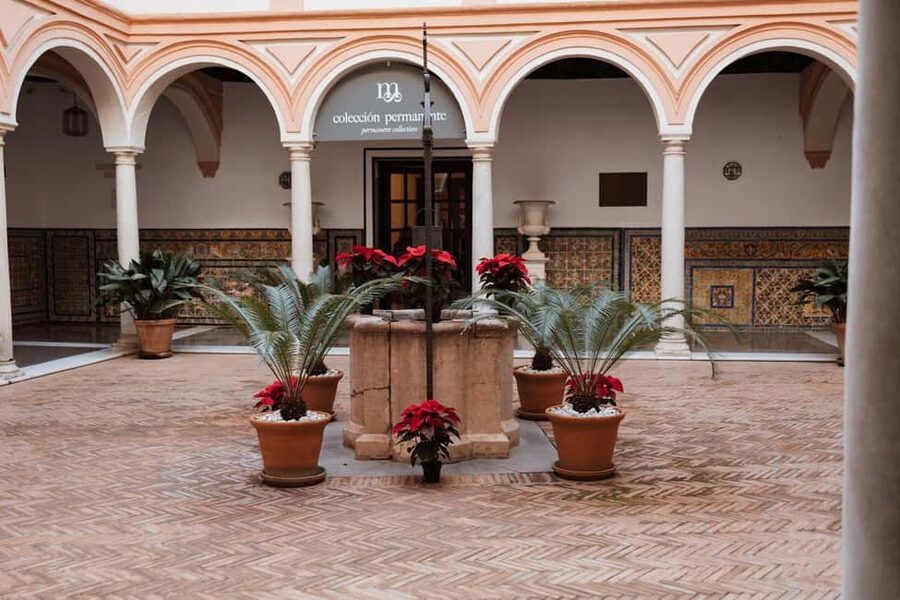
The collection traces artistic change across centuries. You may encounter Gothic works from Seville and other parts of Andalusia before moving toward the more natural forms and technical ambition of the Renaissance.
One key work is Saint Jerome Penitent by Torrigiano. It offers a useful example of Renaissance sculpture and gives the guide a chance to explain how artists represented the body, devotion, and emotion during this period.
This is one of the places where a guided visit earns its keep. A sculpture can be impressive at a glance, but a good explanation draws your attention to the choices you might otherwise miss. The aim is not to turn you into an art historian in two hours. It is to give you enough tools to see why a work matters.
Past visitors have especially valued explanations of iconography and symbolism. Those details help with religious art, where gestures, objects, colors, and poses often carry a specific meaning. You do not need prior art training. The guide can set the level for beginners while still offering useful detail to people who already know the subject.
More Seville trips worth a second look
- Seville: Cathedral, Giralda, and Royal Alcázar Guided Tour
★ 4.7 · 9,165 reviews - Seville: Cathedral, Giralda & Alcazar Entry With Guided Tour
★ 4.6 · 8,560 reviews - Seville: Alcázar and Cathedral Entry Ticket and Guided Tour
★ 4.6 · 5,056 reviews - Alcázar of Seville Skip-the-Line Tickets and Guided Tour
★ 4.6 · 3,941 reviews
Murillo’s room and Seville’s artistic identity
The visit includes a spectacular room devoted to Bartolomé Esteban Murillo. Murillo is central to Seville’s artistic identity, and this focused display gives you a chance to see his work as part of a larger story rather than as isolated famous paintings.
A guide can connect Murillo’s style with the religious and social world of Seville. That connection is valuable because the paintings are not only exercises in beauty. They reflect the beliefs, institutions, and patrons that shaped art in the city.
The route also includes selected works by other major Sevillian artists. You may come away with a better sense of how local art changed over time, from Gothic religious pieces to Renaissance and Baroque works, and then to Sevillian Costumbrismo.
That last category is especially useful for anyone who wants more than church art. Costumbrismo focuses on local customs and daily life, giving you another way to view Seville and Andalusia. The exact works shown can vary, so do not expect the same emphasis in every visit, but the collection provides a broad picture of the region’s artistic development.
What the guide adds to the paintings
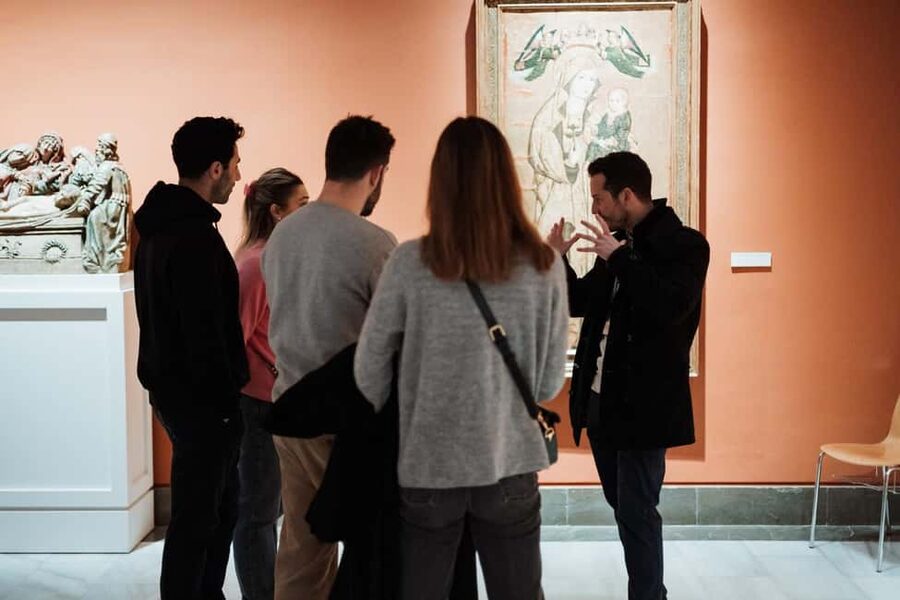
The strongest part of this experience is the human explanation between the frames. Julio is repeatedly singled out for his history background, clear English, friendly manner, and ability to answer questions. He has been praised for making complex material digestible without flattening it.
That balance matters. A guide who only lists dates and names can make a museum tiring. A guide who gives only entertaining stories may leave you without a clear understanding of the art. Julio’s approach, as described through the experience, connects the painting to its period, artist, symbolism, and location.
He has also helped visitors connect museum art with Seville beyond the gallery walls. If you ask, he may offer advice about the city as well, although the central purpose remains the museum tour.
Other guides lead the activity too. Lorraine has been described as engaging, humorous, and easy to follow. The available guide language is English or Spanish, and the provider is Guides and Tours. You should check the language offered at your chosen time if that matters to you.
Some tours may use an earpiece, which can make it easier to hear the guide in the galleries. The equipment is not listed as a separate inclusion, so I would not treat it as guaranteed for every departure. The small group already helps with communication, especially when standing near a popular painting.
Why $23 can be good value
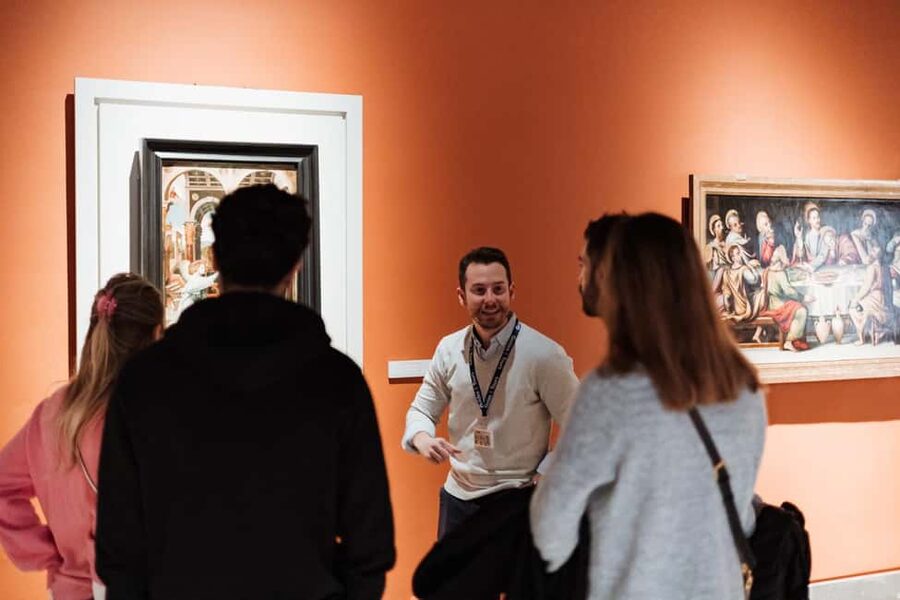
At $23 per person, the price is reasonable if you want more than admission. The fee includes entrance to the Museum of Fine Arts and a licensed guide, so you are paying for both access and interpretation.
The value is strongest for first-time visitors. You get a structured introduction to the museum’s major periods, the former convent, and Murillo without having to study a floor plan or decide which rooms matter most.
It is also a good choice if you find audio guides repetitive. A live guide can respond to your questions and adjust the explanation. One visitor who normally uses audio guides found the local historian’s discussion of context and symbolism more useful than listening alone.
The calculation changes if you are an experienced art student who prefers to set your own pace. You might get more from an independent visit, especially because the guided portion ends after two hours. The useful compromise is to take the tour first, then remain in the museum afterward for additional viewing. This gives you the guide’s framework and your own quiet time.
Food and drinks are not included, though that is hardly a serious issue for a two-hour museum visit in central Seville. Plan a café stop before or after rather than expecting refreshments as part of the activity.
Who will enjoy this museum tour most
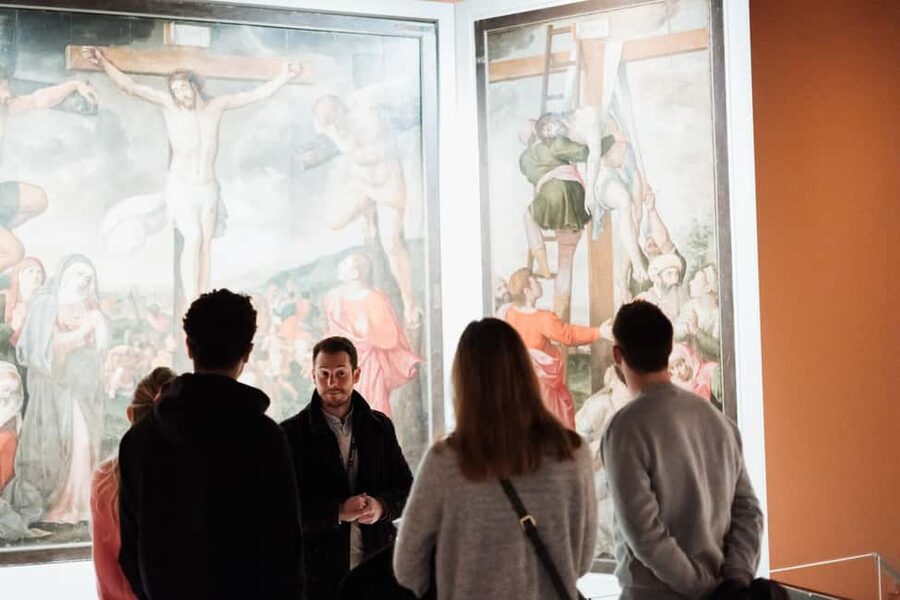
I would recommend this tour to you if you want art explained in plain language. It suits beginners, couples, families with older children, and anyone who likes to understand the story behind a painting rather than simply take a photograph.
It is also a smart choice for visitors with a short stay in Seville. Two hours gives you a useful cultural stop without taking up half a day, and the central location fits well with other sightseeing.
The tour works for more experienced art lovers too, especially if you want to focus on Sevillian artists, religious symbolism, or the link between art and local society. The small group allows room for questions that may not be possible on a large scheduled visit.
You should think twice if you prefer complete independence. The guide sets the route and pace, and you will not have unlimited time in each room. Also, the tour is not designed for people looking only for modern art. Its core focus is Gothic, Renaissance, Baroque, and Sevillian Costumbrismo.
The museum is wheelchair accessible, which makes this a practical option for visitors who need step-free access. Pets are not allowed.
A simple plan for getting the most from the visit
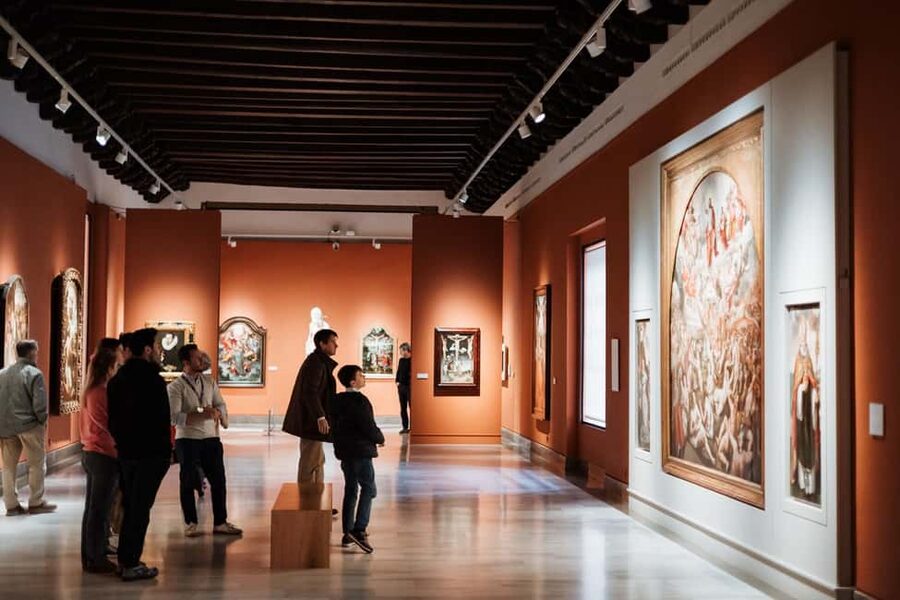
Arrive at Plaza del Museo early and look for the Murillo statue. The blue umbrella or Sevilla Guías & Tours name tag should help you identify the guide.
Before the tour begins, tell the guide if you have a particular interest in sculpture, Murillo, religious art, or Seville’s social history. The group is small enough that this kind of question can shape the discussion.
During the visit, do not worry about remembering every artist and date. Instead, listen for the broad changes in style and the clues that reveal symbolism. Ask about details you would not notice alone, especially in the religious paintings and sculptures.
After the guided portion, use any remaining museum time to revisit the works that caught your attention. Two hours can give you the structure, while a slower second look lets you enjoy the building and art without trying to keep pace with the group.
The cancellation policy is flexible: you can cancel up to 24 hours ahead for a full refund. You can also reserve now and pay later, which helps if your Seville schedule is still shifting.
Should you book the Museum of Fine Arts guided tour?
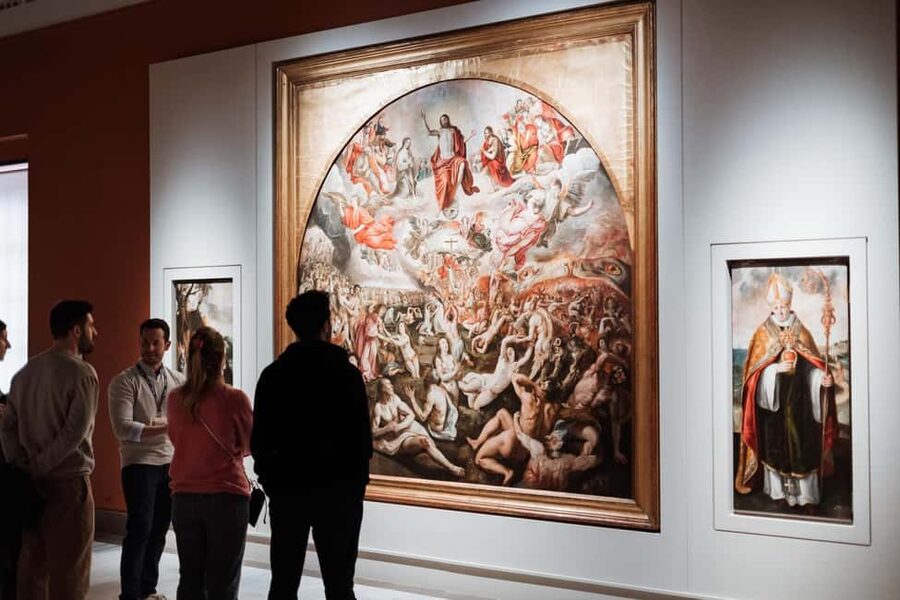
Book it if you want a compact, well-explained introduction to Seville’s major art museum. The best reasons are the small group, admission included, and guides who connect paintings with history, symbolism, and the life of the city.
The tour is particularly worthwhile if names such as Murillo and Torrigiano mean little to you now but you would like them to mean something by the end. It gives you a foundation without requiring a full day of study.
Skip it if you already know the collection well or want to spend each minute alone with the art. For everyone else, $23 is a fair price for two hours inside a beautiful former convent, with a guide to point out what your eyes might otherwise miss.
FAQ
Where does the Museum of Fine Arts tour begin?
The meeting point is Plaza del Museo, next to the statue of Murillo, at the Asociación Amigos del Museo de Bellas Artes.
How will I identify the guide?
The guide waits with a blue umbrella or a name tag that says Sevilla Guías & Tours.
How long does the guided visit last?
The guided tour lasts two hours.
What languages are available?
The tour is available in English or Spanish with a live guide.
What does the price include?
The $23 price includes entrance to the Museum of Fine Arts of Seville and an expert licensed guide.
How large is the group?
The tour is limited to eight participants.
Is the museum accessible by wheelchair?
Yes. The activity is listed as wheelchair accessible.
Can I cancel the booking?
Yes. You can cancel up to 24 hours in advance for a full refund. You can also reserve now and pay later.
Recently reviewed around Seville
- Seville: Alcázar Fast-Track Access with Guided Tour★ 4.2 · 432 reviews
- Seville: Small Group Jewish Quarter Tour with Tapas & Drinks★ 5.0 · 119 reviews
- Seville: Sunset Roof Top Walking Tour★ 4.5 · 122 reviews
- Seville: VIP Exclusive Early Access Tour of The Alcazar★ 4.8 · 276 reviews
- Seville: Small-Group Jewish Quarter Discovery Walking Tour★ 4.9 · 499 reviews
- Seville: Flamenco Show at Tablao Almoraima in Triana★ 4.6 · 483 reviews
- Seville: Authentic and Romantic Horse-Drawn Carriage Ride★ 4.5 · 341 reviews
- Seville: Stand Up Paddle Board Rental★ 4.6 · 134 reviews
Museums, compared.

FC Barcelona Museum “Barça Immersive Tour” Ticket
Read our review →
Park Güell and Gaudí House Museum Entry Ticket
Read our review →
Puro Flamenco Show with Optional Museum Ticket
Read our review →
Girona & Dali Museum Small Group Tour with Pick-up from Barcelona
Read our review →
Oceanogràfic, Hemisfèric & Science Museum Combo
Read our review →Browse the lists this tour appears in