
Reviewed · WINE TOURS
Manilva: Nilva Vineyard, Wine Tasting & Tapas Guided Tour
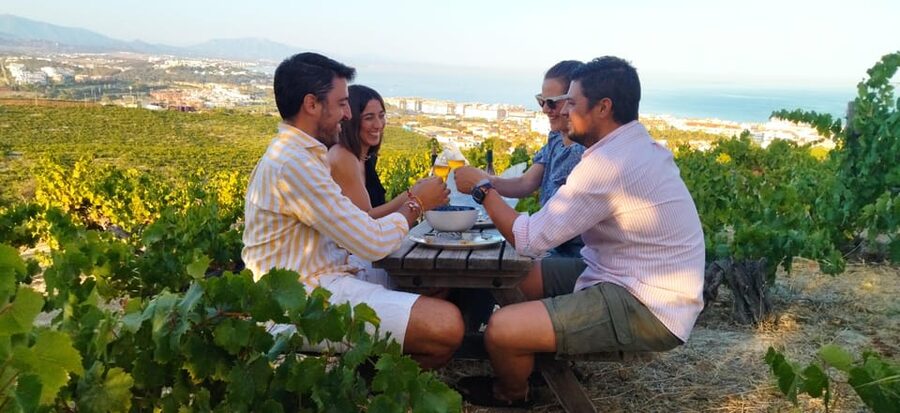
Manilva’s old vineyards sit on a hillside above the Costa del Sol, where rows of Moscatel de Alejandría vines look toward the Mediterranean and, on a clear day, Africa. This two-hour Nilva tour connects that view with the work behind the bottle: a small museum, a garage-sized winery, and a tasting among the vines.
I like two things especially. First, the guide Maggie brings warmth, humor, and practical knowledge to the story of Manilva wine. Second, your $35 includes the museum, winery, vineyard tasting, and ham-and-cheese tapas. The main drawback is transport between stops: you need your own vehicle, or you must walk roughly 10 to 20 minutes to the vineyard, and the outdoor tasting depends on good weather.
In This Review
- Key points to know before booking
- Why Manilva wine matters
- Begin at CIVIMA, Manilva’s wine museum
- See Nilva’s small artisan winery
- Reach the vineyard by car or on foot
- Taste Nilva wines with local tapas
- Sunset, weather, and the best time to go
- What the $35 price really covers
- Who will enjoy this Manilva experience
- What makes the guide so important
- Is the Nilva vineyard tour worth booking?
- FAQ
- How long does the Manilva Nilva wine tour last?
- Where does the tour begin?
- What does the tour include?
- How many wines will I taste?
- What food is served with the wine?
- Do I need my own transport to the vineyard?
- Is hotel pickup included?
- What happens if the weather is bad?
- Is the tour offered in English?
Key points to know before booking
- Moscatel vines facing the Mediterranean: You taste Nilva wine beside old Manilva vines with views toward the sea and Africa.
- Three-part local story: CIVIMA explains viticulture, winemaking, and grape harvest traditions before you see Nilva’s small production space.
- Maggie is a major part of the experience: Her clear English, humor, and passion for saving the vineyards make the tour lively rather than technical.
- Three or four wines with tapas: The advertised tasting includes three wines, while several recent departures included four different wines with ham, cheese, walnuts, and crisps.
- The vineyard transfer needs planning: The vineyard is about 1 kilometer from CIVIMA, but some people found the walk closer to 15 or 20 minutes.
- Your money supports conservation: Nilva’s wine tourism project aims to keep historic vineyards in production and make farming them financially worthwhile.
Why Manilva wine matters
Manilva is a small coastal town in Málaga province, set near the Costa del Sol resorts but still tied to farming traditions. Its old vineyards grow Moscatel de Alejandría, a grape variety associated with sweet, aromatic wines and long-established Mediterranean wine culture.
The problem is easy to understand. Coastal development puts pressure on agricultural land, while small-scale vineyard work is hard to make profitable. Old vines can disappear one plot at a time when building land earns more than grapes.
That gives this tour a useful purpose beyond tasting. Nilva’s Save the Vineyards of Manilva project uses wine production and tourism to keep the vines in use. The project has received an International Skal award for sustainable tourism, and your booking helps support that effort.
I appreciate this kind of local connection. You are not simply being shown a polished tasting room built for day trips. You are learning why these vineyards are under pressure, how a small producer is trying to protect them, and what it takes to keep an old agricultural tradition going.
More Food Tours in Malaga
- Malaga: Show and Food at Alegría Flamenco and Restaurant
★ 4.6 · 740 reviews - Ronda: LA Almazara LA Organic, Olive Oil Museum and Tasting
★ 4.6 · 335 reviews - Málaga Evening Tapas Crawl Tour by Food Lover Tour
★ 5.0 · 258 reviews
Begin at CIVIMA, Manilva’s wine museum
The tour begins at CIVIMA, the Centro de Interpretación Viñas de Manilva. The meeting point is the CIVIMA building between the fire station and Plaza de la Vendimia. Make sure you head to the museum rather than directly to the vineyard.
The guided museum visit lasts about 30 minutes. Its three rooms cover viticulture, oenology, and the grape harvest. In plain terms, you start with how the vines are grown, move to how grapes become wine, and finish with the practical traditions connected with picking and processing.
This is a good opening because it gives you a framework for everything that follows. Instead of tasting an unfamiliar local wine with only a few production notes, you first learn what makes Manilva’s vineyards distinct and why their survival matters.
Maggie is frequently praised for making this part easy to follow in English. She explains the subject with humor and enthusiasm, although one person found that she sometimes spoke quickly. If you prefer a slower pace, ask her to repeat a point. The tour is designed as a conversation, not a formal lecture.
The museum is also valuable for anyone who wants more than a pretty photograph. You see the cultural side of winemaking in Manilva, including the connection between local people, seasonal work, and the land around town.
See Nilva’s small artisan winery
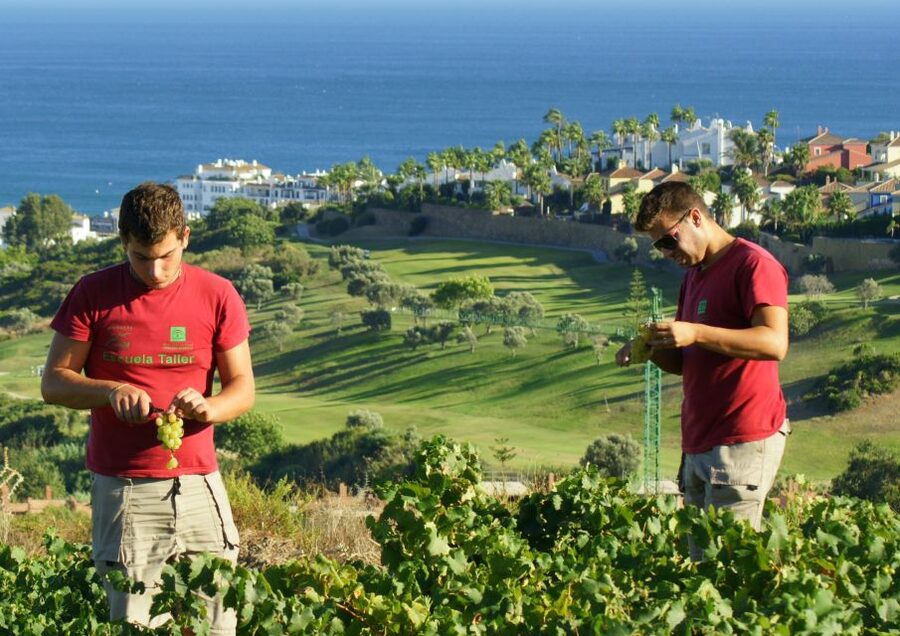
After CIVIMA, the tour moves to Nilva’s winery for roughly 15 minutes. This is a small artisan operation, described as a garage wine project rather than a large commercial cellar.
That distinction matters. You will not get the scale, machinery, or theatrical presentation of a major wine estate. Instead, you get a closer look at how a small producer handles fermentation, winemaking, and bottling.
For me, this is one of the tour’s strongest parts because it puts the wine in human scale. The bottle is the result of decisions made by a small team working with limited production, local grapes, and a strong interest in keeping the old vineyards alive.
The visit also connects tradition with new ideas. Manilva’s wine culture is old, but Nilva is not simply repeating the past. The project is trying to find a workable future for the vines through organic farming, small-batch wine, and tourism.
Do not expect a long cellar visit. Fifteen minutes is enough for an introduction, not a full technical wine course. The museum supplies the wider context, while the winery shows how that story is handled today.
Reach the vineyard by car or on foot
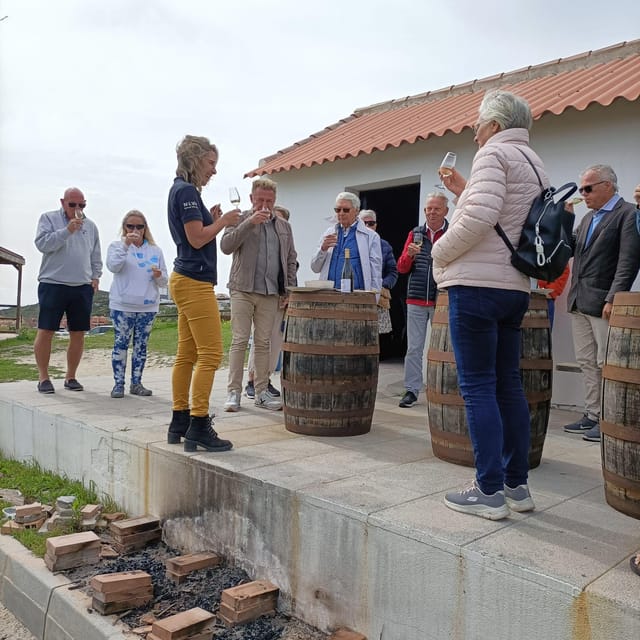
The tasting takes place at Viña del Peñoncillo, about 1 kilometer from CIVIMA. This practical detail deserves attention because transport is not included.
You need your own vehicle to drive there. Several people chose to walk, and the route has been described as an easy walk taking about 10 to 20 minutes, depending on your pace and route. Others were glad they drove because the vineyard felt farther than expected.
I would make this decision before the tour begins. If you are comfortable walking and the weather is pleasant, the route can add to the rural feel of the outing. If you are carrying bags, using mobility equipment, or simply want to arrive fresh for the tasting, drive instead.
The tour does not provide hotel pickup, drop-off, or transport between the stops. That is the one logistical weakness in an otherwise simple outing. The vineyard is close, but close does not mean automatic. Plan for the transfer.
The reward is the setting. Viña del Peñoncillo is certified for organic agriculture, and the tasting takes place among the vines rather than inside a city restaurant. You look across the Mediterranean, toward surrounding mountains and, in clear conditions, Africa.
There are good photo opportunities here, including the large chairs noted by one couple. The view is the sort of backdrop that makes the final tasting feel like a small occasion without needing elaborate staging.
More Tapas Tours in Malaga
- Malaga Wine & Tapas Small Group Guided Tour
★ 5.0 · 1,972 reviews - From Malaga: Caminito del Rey/White Village Tour & Tapas
★ 4.9 · 1,361 reviews - Málaga: Wine & Tapas Tour
★ 4.8 · 1,039 reviews - Malaga: Tapas Crawl
★ 4.9 · 390 reviews
Taste Nilva wines with local tapas
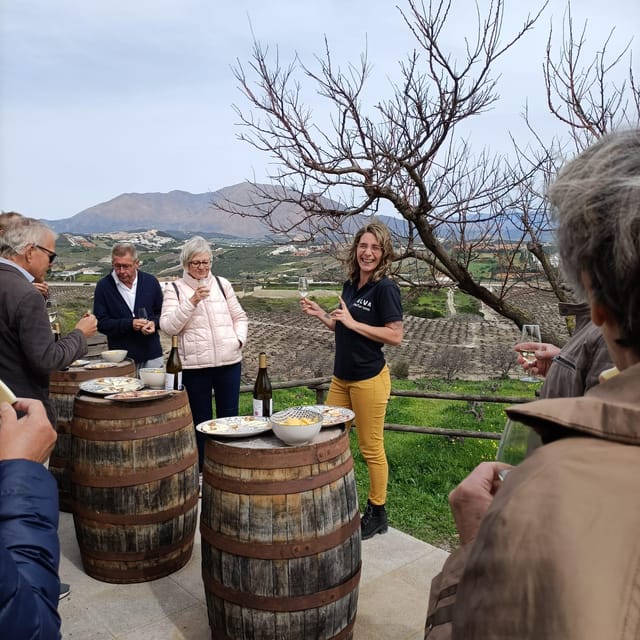
The tasting includes Nilva wines and tapas. The official description lists three wines, while several recent tour experiences included four different wines. The exact number may vary, so I would treat three as the safe expectation and four as a pleasant possibility.
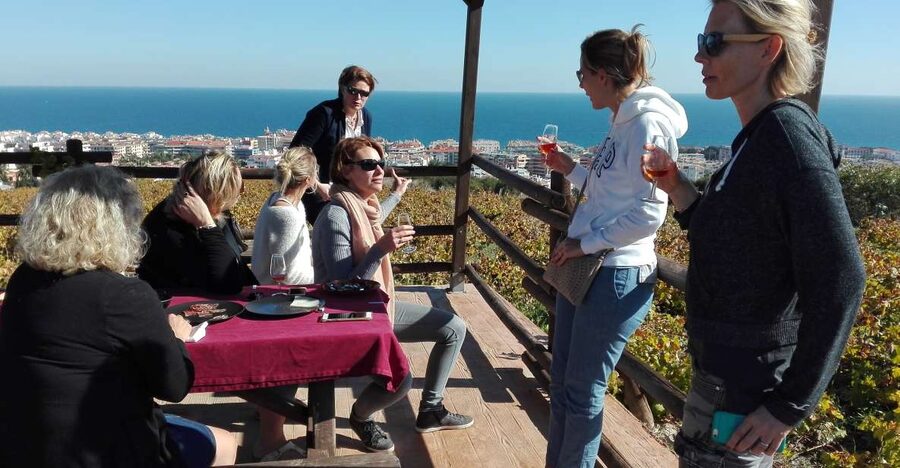
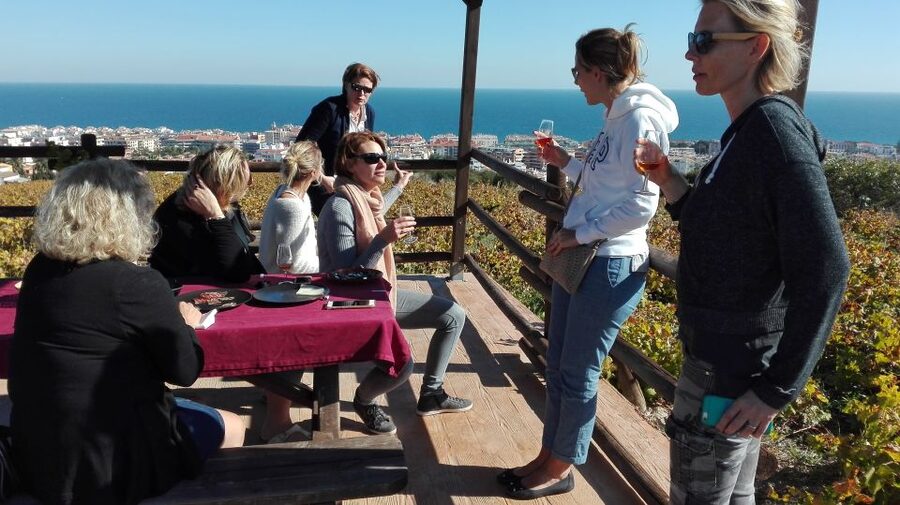
The wines are served with simple, well-chosen food: ham, cheese, walnuts, and crisps are all mentioned. This is not a full meal, but it is enough to make the tasting more comfortable and to show how the wines work with familiar local flavors.
The guide explains how to approach each glass and gives you a better sense of the production process behind it. You do not need to be a wine expert. One recent participant even recommended the activity for people who do not particularly like wine because the guide keeps the mood relaxed and inclusive.
The tasting is one of the places where Maggie’s role matters most. She works with the vineyard and can speak about the land as well as the finished wine. That makes the session feel less like a sales pitch and more like an introduction to a working agricultural project.
The setting also changes the experience. A wine tasting indoors can focus tightly on aroma, color, and flavor. Here, you are also paying attention to the vines, the sea, the weather, and the scale of the farm. That does not make the wine more objectively complex, but it gives the tasting a clear sense of place.
Several people described the wines as very different from one another. The experience is therefore useful even if your main interest is learning what local producers are doing, not simply drinking the most familiar Spanish varieties.
Sunset, weather, and the best time to go
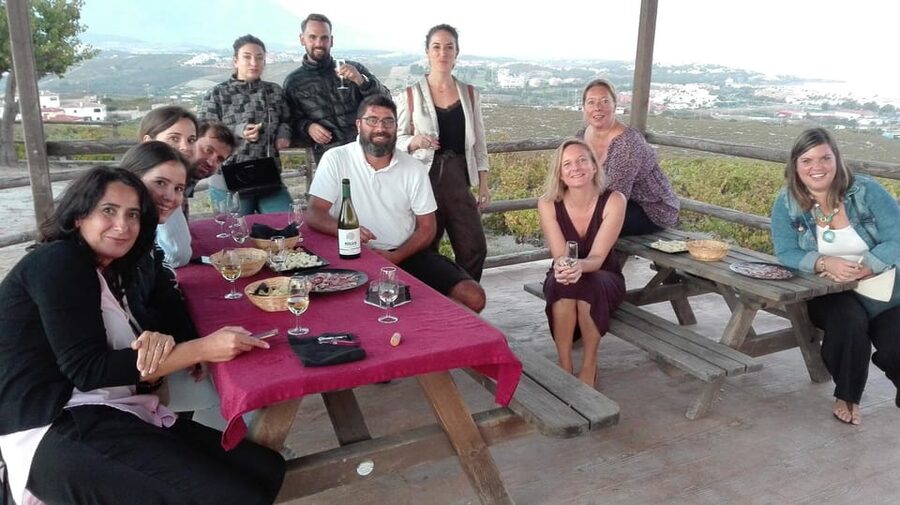
The tour is promoted as an opportunity to enjoy sunset and spectacular views, but the exact light will depend on the departure time and season. Check the available start times before booking if the evening view is important to you.
The vineyard visit is subject to good weather. In poor conditions, the outdoor portion may not take place. That happened on at least one outing, yet the museum and winery still provided a worthwhile introduction to Manilva wine.
This is a fair trade-off for an outdoor tasting. The vineyard is the special part of the experience, but vines, paths, and open-air seating are all vulnerable to wind and rain. Bring a light layer for the coast, and do not book this as your only plan if the forecast looks unsettled.
Summer brings longer evenings and warmer conditions. Spring and autumn may offer a more comfortable walk and a quieter feel, while winter can produce clear views but cooler air. The supplied experiences include visits across the year, with strong responses in every season.
What the $35 price really covers
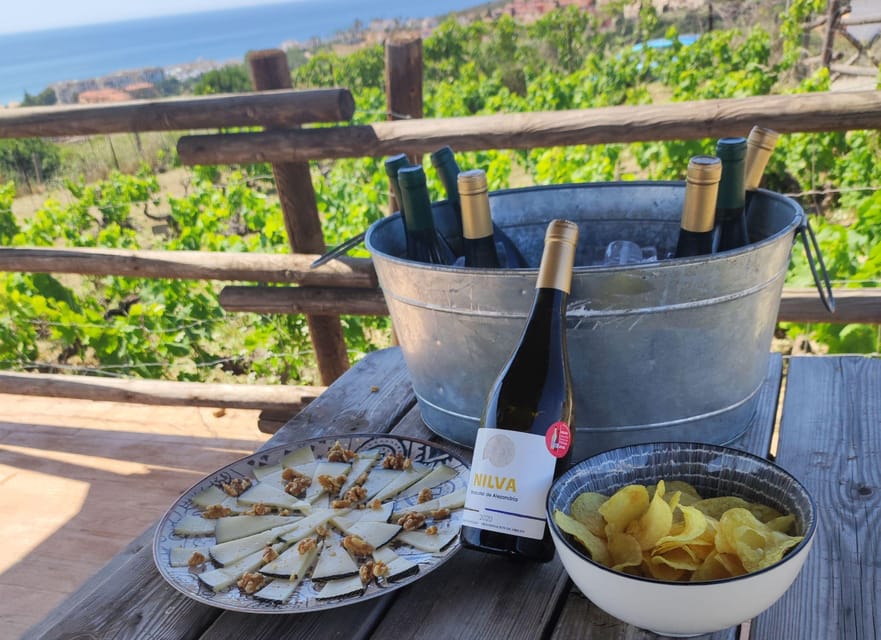
At $35 per person, this is a solid-value half-day alternative compressed into two hours. You receive admission to CIVIMA, entry to the Nilva winery and vineyard, a guided explanation in English, and wine with tapas.
The value comes from the combination. A basic wine tasting might offer drinks and snacks but little local context. A museum visit might explain the town’s traditions but stop short of showing you current production. This tour links both sides, then finishes at the vines themselves.
You are also supporting a small producer and a conservation project. That does not make the wine automatically better, but it gives your spending a clear local purpose.
The price is less attractive if you expect transport, a full meal, or a long vineyard walk with extensive agricultural work. None of those is included. Think of it as a compact introduction with a generous tasting and a memorable setting.
The group size is not specified, so I would not assume a private or tiny tour. What is clear is that the guide-led format allows questions, and the repeated praise for Maggie suggests that personal explanation is central to the experience.
Who will enjoy this Manilva experience
I would recommend it to you if you want a local activity away from the standard Costa del Sol beach routine. It suits couples, small groups, birthday outings, and anyone interested in food, farming, or regional traditions.
It is also a good choice for wine beginners. The tone is friendly, and you do not need prior knowledge to take part. If you already know Spanish wine well, the strongest appeal will be the unusual local grape, the small producer, and the story of vineyard conservation.
You should be comfortable with a short walk or have access to a car. The vineyard route is not presented as difficult, but the distance can feel longer than expected, especially in summer. Wheelchair access is listed for the activity, though the outdoor route and vineyard conditions are worth confirming when you book.
Animals are not allowed inside the winery. Hotel pickup and drop-off are not included, so this works best when you are already staying nearby or have arranged your own way to CIVIMA.
What makes the guide so important
Maggie is repeatedly singled out for her warmth, humor, clear English, and passion for Manilva. That is not a minor detail here. A small winery does not rely on grand architecture or rows of expensive equipment to carry the visit. The explanation has to do much of the work.
She covers the local history of winemaking, the Moscatel grape, the production process, and the effort to preserve the vineyards. She also brings personal experience from working with the land, which helps explain why maintaining these plots is difficult.
Her style appears energetic and fast at times. Most people found her easy to understand, but if you prefer a quiet, slow-paced tasting, the personality-led approach may feel lively. I see that as a matter of taste rather than a serious flaw.
The best guide-led experiences leave you with a clearer idea of where you are. This one should help you see Manilva not only as a coastal town, but also as a farming community trying to hold onto its vines.
Is the Nilva vineyard tour worth booking?
I would book this tour if you want good value, a strong guide, and a genuine connection to Manilva. The sea views are memorable, but the real strength is the link between CIVIMA, Nilva’s small winery, and the organic vineyard.
Book with a plan for transport. Drive from the museum if possible, or allow extra time for the walk. Keep an eye on the weather, since the vineyard tasting may be affected by rain or poor conditions.
Skip it if you want a large estate, a formal sommelier lesson, or a full lunch. Choose it if you want a relaxed introduction to a threatened local wine tradition, generous tasting portions, simple tapas, and a beautiful place to drink them.
FAQ
How long does the Manilva Nilva wine tour last?
The experience lasts about two hours.
Where does the tour begin?
It begins at the CIVIMA building, located between the Manilva fire station and Plaza de la Vendimia.
What does the tour include?
It includes entry to CIVIMA, the Nilva winery, and the vineyard, along with wine tasting and tapas.
How many wines will I taste?
The activity description lists three wines. Several tour experiences included four different wines, so the number can vary.
What food is served with the wine?
Tapas include items such as ham, cheese, walnuts, and crisps.
Do I need my own transport to the vineyard?
Yes. Transport is not included, and you need your own vehicle to travel from CIVIMA to the vineyard. Walking is also possible, with the distance described as about 1 kilometer and the walk taking roughly 10 to 20 minutes.
Is hotel pickup included?
No. Hotel pickup and drop-off are not included.
What happens if the weather is bad?
The vineyard visit depends on good weather. The museum and winery portions can still provide an introduction to Manilva winemaking if the outdoor visit cannot go ahead.
Is the tour offered in English?
Yes. The listed live tour guide language is English.
More Food Tours in Malaga & Costa del Sol
- Guided tour and olive oil tasting in Alhaurin el Grande (Málaga)
★ 5.0 · 200 reviews - Malaga: Tapas Tasting Tour
★ 4.9 · 133 reviews - Madrid: Live Flamenco Show with Food and Drinks Options
★ 4.5 · 9,901 reviews - Montserrat & Cogwheel Train, Gourmet Wine Tasting & Tapas/Lunch
★ 5.0 · 6,290 reviews
More Wine Tours in Malaga & Costa del Sol
- Malaga: Organic Vineyard Tour with 6 Wines, Tapas & Transfer
★ 4.8 · 334 reviews - Malaga: Wine and Tapas Tour with Tastings and Drinks
★ 4.8 · 217 reviews - Málaga: Traditional Andalusian Tapas and Wine Tour
★ 4.7 · 167 reviews - Montserrat Half-Day Tour with Tapas and Gourmet Wines
★ 5.0 · 7,359 reviews
Recently reviewed around Malaga & Costa del Sol
- From Marbella: Canyoning Tour in Guadalmina Canyon★ 5.0 · 778 reviews
- Torremolinos: Crocodile Park Entrance Ticket★ 3.7 · 309 reviews
- Torremolinos: Flamenco Show with Drinks★ 4.6 · 290 reviews
- Selwo Aventura Admission Ticket with Skip-the-Line Access★ 4.2 · 151 reviews
- Tour to Gibralfaro★ 4.7 · 182 reviews
- Ronda: Spanish – Classical & Flamenco – Guitar Concert★ 4.8 · 108 reviews
- Ronda: Guided Walking Tour★ 4.6 · 104 reviews
- From Costa del Sol: Ronda and Setenil de las Bodegas★ 4.5 · 149 reviews
Wine Tours, compared.

Montserrat & Cogwheel Train, Gourmet Wine Tasting & Tapas/Lunch
Read our review →
Barcelona Tapas and Wine Experience Small-Group Walking Tour
Read our review →
Montserrat with Black Madonna & Medieval Winery with Tapas/Lunch
Read our review →
Montserrat and Winery Tour with Tapas or Lunch
Read our review →
Tapas Walking Tour with Food, Wine, and History
Read our review →
Sevilla Food Tour: Tapas, Wine, History & Traditions
Read our review →
Valencia Old Town Tour with Wine & Tapas in 11th Century Historic Monument
Read our review →
Toledo Tour & Vineyard Walk with Wine Tasting from Madrid
Read our review →Browse the lists this tour appears in