
Reviewed · MUSEUMS
Malaga: Picasso’s Birthplace Museum Entrance Ticket
Picasso’s birthplace is not a grand palace or a vast art center. It is a compact, personal museum in the house where Pablo Picasso was born, with baby clothes, family photographs, early drawings, and work by both Picasso and his father. I like the way it connects Malaga to Picasso’s imagination, especially through themes such as doves, bullfighting, nudes, and the Mediterranean. I also like the low price and self-paced audio guide, which make this an easy stop in the center of town.
The main thing to consider is the museum’s size. Most people need about an hour or less, so it will not replace a full Picasso collection. The English audio guide has also been described as somewhat artificial sounding, and one section has been reported as Spanish-only.
In This Review
- Key points at a glance
- Entering Picasso’s birthplace in Plaza de la Merced
- Nine rooms that explain Picasso before cubism
- What Malaga meant to Picasso’s art
- Personal objects that make the artist approachable
- Sketchbooks, lithographs, ceramics, and early works
- The temporary exhibition and contemporary art collection
- Using the audio guide without losing your own pace
- How long the visit takes
- Is the $4.71 ticket good value?
- Who should visit this museum?
- Practical details before you go
- Should you book the Picasso Birthplace Museum?
- FAQ
- Where is Picasso’s Birthplace Museum?
- What does the entrance ticket include?
- How long is the ticket valid?
- Is an audio guide included?
- Which languages are available for the audio guide?
- Should I bring headphones?
- Is the museum wheelchair accessible?
- When is admission free?
- How late can I enter the museum?
Key points at a glance
- Birthplace at Plaza de la Merced: Enter the house at Museo Casa Natal de Picasso, where Pablo Picasso was born.
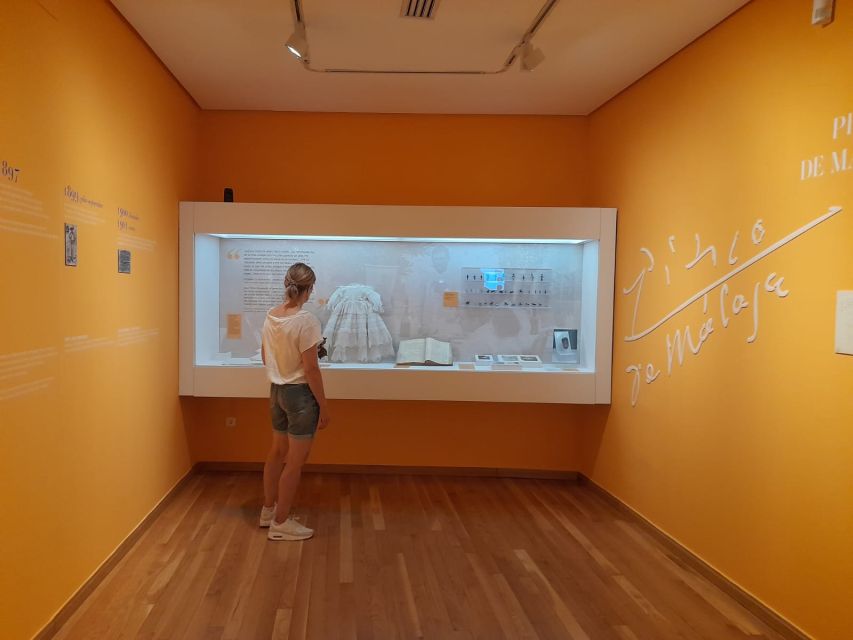
- Nine rooms of personal history: See a baby shirt, the shoes he learned to walk in, family portraits, photographs, and other mementos.
- Early Picasso and his father: The first floor includes works by Picasso and his father, Jose Ruiz Blasco.
- Malaga’s artistic influence: Learn how bullfighting, doves, the Mediterranean, nudes, and local life shaped Picasso’s work.
- More than a Picasso stop: The museum also holds over 3,500 contemporary works by more than 200 artists.
- Strong value for a short visit: The ticket costs $4.71 per person, includes both exhibition areas and an audio guide, and is valid for one day after activation.
Entering Picasso’s birthplace in Plaza de la Merced
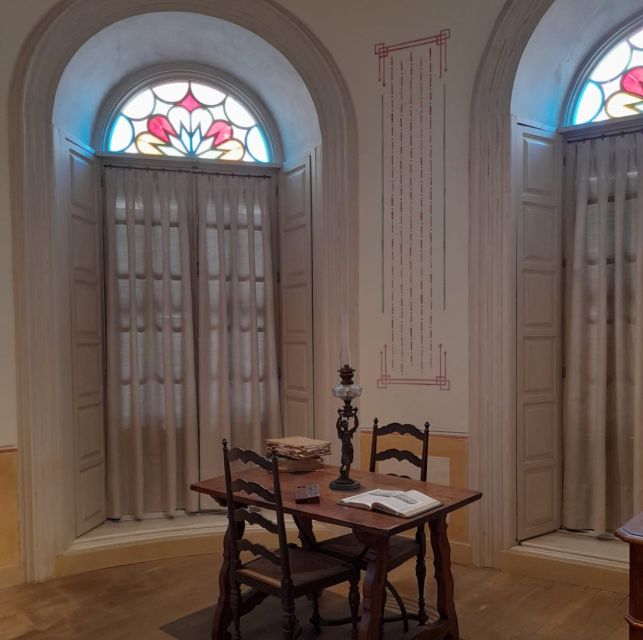
The museum sits at Plaza de la Merced 15, a convenient location for anyone exploring central Malaga. The address matters because this is not simply another gallery displaying Picasso paintings. You are entering the place tied to his first days, which gives the visit a human starting point before you begin thinking about his later fame.
The building itself is the focus of the opening part of the visit. You move through the rooms at your own speed, using the audio guide if you wish. The visit is not presented as a long guided walk with a fixed group, so you can pause over a photograph or move quickly through material that interests you less.
I find that birthplace museums work best when they avoid turning childhood objects into grand claims. Here, a baby shirt and the shoes Picasso learned to walk in are small things, but they help bring the artist back to earth. Before the cubist paintings and famous public image, he was a child in a Malaga family.
The museum also uses photographs and portraits to explain his family life. That makes the visit useful even if you already know Picasso’s name but know little about his parents, early surroundings, or training.
More Museum Tours in Malaga
- Malaga: Picasso Museum Guided Tour with Skip-the-Line Ticket
★ 4.8 · 485 reviews - Skip the Line: Malaga Automobile and Fashion Museum Entrance Ticket
★ 4.5 · 379 reviews - Ronda: LA Almazara LA Organic, Olive Oil Museum and Tasting
★ 4.6 · 335 reviews
Nine rooms that explain Picasso before cubism
The museum’s nine rooms focus on Picasso’s early life, artistic training, family, and the themes that followed him through his career. The displays do not try to show every period of his work. Instead, they explain the beginnings and the ideas that continued to appear in different forms.
The first floor presents work by Picasso and his father, Jose Ruiz Blasco. This family connection is important. Picasso’s father was an artist and art teacher, and seeing their work together gives you a more useful sense of Picasso’s early artistic environment than a display of famous masterpieces alone.
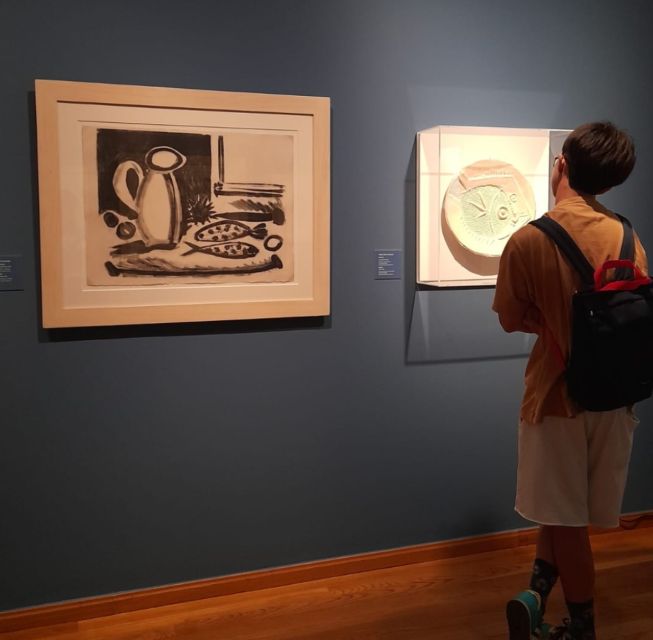
You can expect several types of material rather than one narrow collection. Sketchbooks and early drawings sit alongside lithographs, ceramics, and other works. This range helps you see Picasso as an artist who worked across many forms, not only as the painter associated with cubism.
The chronological arrangement is also helpful. If you have seen Picasso’s work in other museums and found the different periods hard to follow, the layout here gives you a basic path through his life and development. It is a small museum, but the order of the material keeps the visit from feeling random.
Descriptions are available in Spanish and English for the works, while the audio guide adds another layer of explanation. Bring your own headphones, since they are listed as something you should carry with you.
What Malaga meant to Picasso’s art
The strongest reason to visit this museum is its focus on Malaga’s place in Picasso’s life. You are not only looking at objects from his childhood. You are being asked to consider how the city, its customs, and the wider Mediterranean setting became part of his visual language.
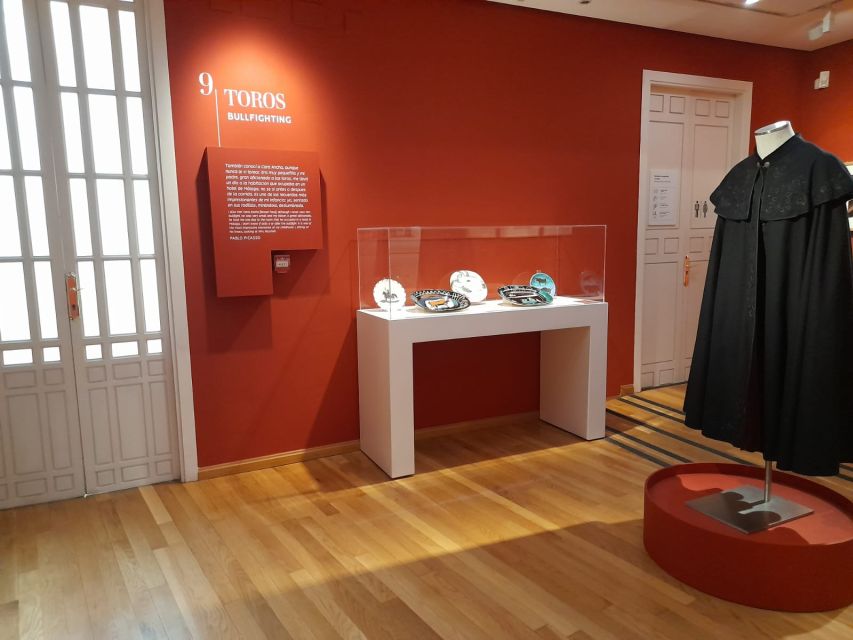
Bullfighting receives special attention. It was a major motif in Picasso’s art, and the museum explains why it mattered within his work. You may not leave with a simple answer, but you will have a clearer sense that the bull and the bullfight were not just decorative subjects.
Doves form another important thread. The museum discusses their symbolic role, including their connection with peace. One small language point is worth knowing: the Spanish word paloma means dove, although it has reportedly been translated as pigeon in part of the material. It is a minor error, but it can change the tone of a display about Picasso’s peace imagery.
The Mediterranean, nudes, and other recurring subjects also appear in the museum’s thematic presentation. These sections are useful because they connect a local birthplace to ideas that became important across Picasso’s long career. You get a sense of how place and memory can remain present even as an artist’s style changes.
Personal objects that make the artist approachable
Picasso is often presented as a towering modern artist, which can make him feel distant. The personal objects here work against that distance.
The baby shirt and first walking shoes are the most intimate examples. Family photographs and portraits add faces and relationships to the story. These are not the works most art historians would use to define Picasso, but they help you understand the person behind the public reputation.
I especially like this part of the visit for first-time Picasso viewers. You do not need to arrive with a detailed knowledge of cubism, surrealism, ceramics, or printmaking. The museum gives you a simple entry point: family, childhood, place, and early training.
At the same time, you should keep your expectations sensible. The museum will not offer a large selection of major paintings. Its value comes from context and personal connection, not from the scale of the collection.
More Malaga & Costa del Sol museums and collections:
- Malaga: Tour of Malagueta Bullring & Immersive Exhibition
★ 4.7 · 271 reviews - Málaga: Carmen Thyssen Museum Ticket
★ 4.6 · 245 reviews - Málaga: Picasso Birthplace Museum Ticket & City Audio Guide
★ 4.1 · 158 reviews - Madrid: Prado Museum Entry Ticket
★ 4.6 · 17,509 reviews
Sketchbooks, lithographs, ceramics, and early works
The art on display covers several media, including sketchbooks, lithographs, ceramics, and sculpture-related material. That variety gives you a better understanding of Picasso’s working habits and range.
Sketchbooks are especially useful in a birthplace museum because they show the artist thinking through an idea. A finished painting can look inevitable. A sketch reveals choices, experiments, and changes. The museum’s early drawings help you follow the development of a talent that was still being formed.
The displays also include work by Picasso’s father. Comparing father and son can add a valuable family dimension to the visit. You are not being asked to treat them as equal figures in art history. Instead, you can see the artistic world Picasso grew up around and consider how early instruction may have shaped his direction.
The ceramics section is another reason not to assume that the museum is only about paintings. One visitor specifically enjoyed the ceramics display, and the range of media is one of the museum’s strengths. If you have seen Picasso mainly through paintings, the objects here broaden the picture.
The temporary exhibition and contemporary art collection
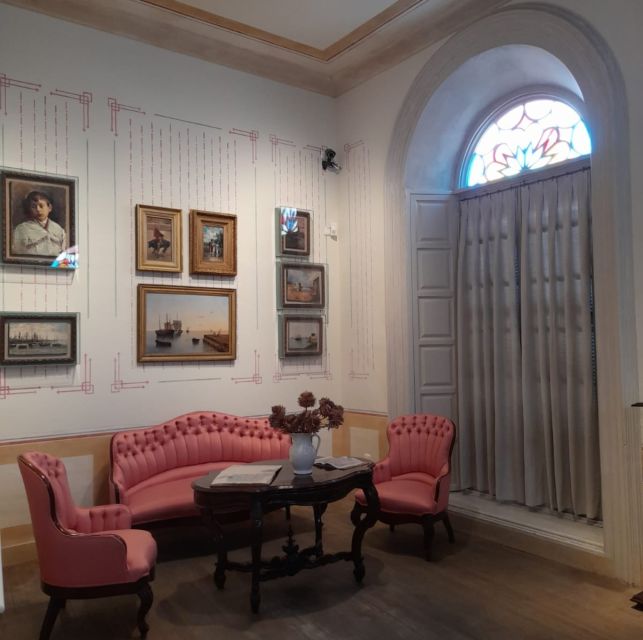
Your ticket includes access to the temporary exhibition as well as the permanent display. Temporary shows change, so you should check the current title and dates before your visit.
A listed exhibition called Picture of Picasso ran until April 28, 2024. It examined Picasso through books, press coverage, social media, advertising, photography, comics, cinema, television, and popular music. The idea was to show how other creators and media have presented the artist from different angles.
That sort of exhibition can add useful context, but it should not be treated as a guaranteed part of a future visit. The subject, layout, and dates of temporary displays can change.
The museum also contains more than 3,500 examples of contemporary art by over 200 artists. The collection includes graphic art by Joan Miro, Francis Bacon, Max Ernst, Roberto Matta, and others, along with contemporary artists from the 1950s to the present.
This is a significant part of the museum’s identity, although it may surprise you if you expect a small house museum devoted only to Picasso. The contemporary works provide a wider setting for the exhibitions, but the amount you see may depend on which galleries and displays are open during your visit.
Using the audio guide without losing your own pace
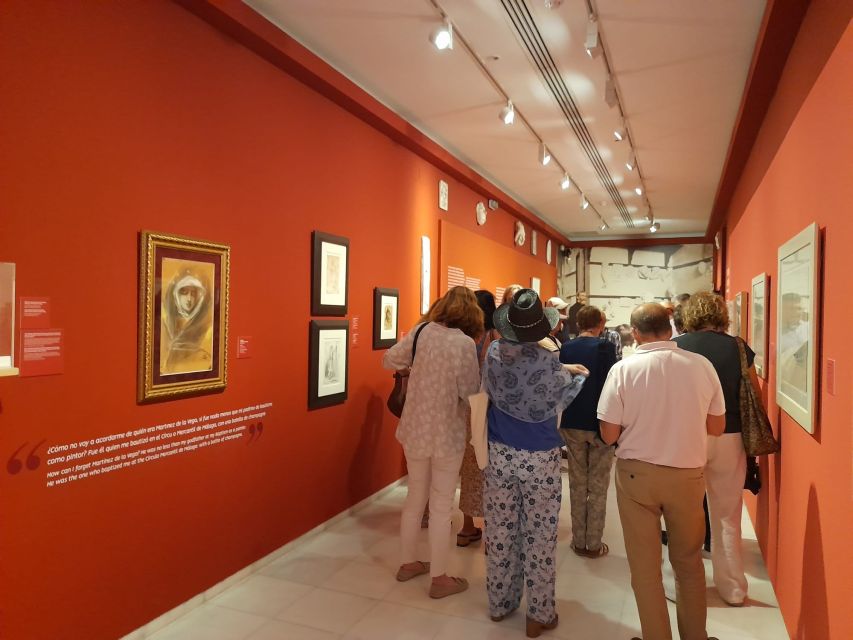
The audio guide is included and available in English, Spanish, French, German, Italian, and Chinese. It is designed for a self-paced visit, so you can listen closely to important sections and move faster through familiar material.
A good approach is to use it selectively. Listen to the explanations about Picasso’s childhood, his father, and Malaga’s artistic influence. Then pause the guide while you look at the objects themselves. If you play every track without stopping, a small museum can begin to feel longer than it needs to.
The English version has received mixed practical feedback. It has been described as informative, but one person found the voice distracting because it sounded computer-generated. Another found the audio guide excellent and appreciated being able to follow Picasso’s development at a personal pace.
You may also find that part of the second section is in Spanish. This is worth keeping in mind if you are relying entirely on English audio. Bring headphones, and treat the guide as a helpful tool rather than the sole reason to visit.
How long the visit takes
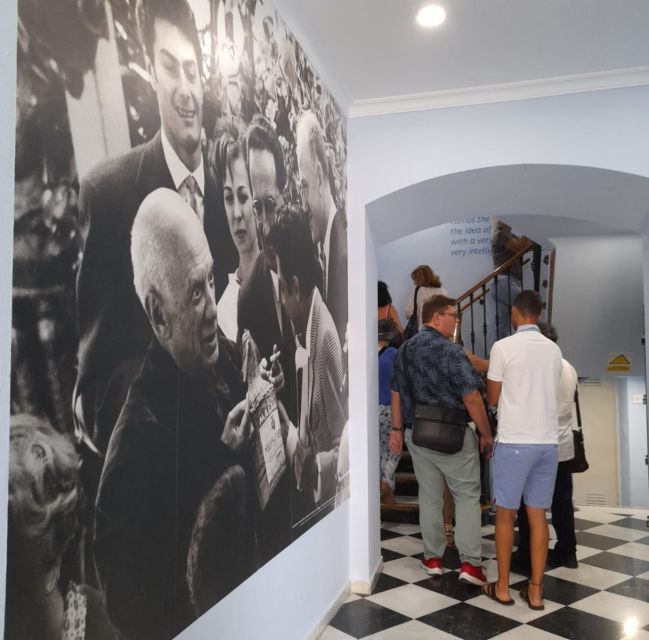
Plan on about an hour, or slightly less if you read only the main panels. The audio guide can stretch the visit, especially if you stop for each explanation and spend time with the temporary exhibition.
That short length is not a weakness for every visitor. Malaga has many major sights competing for your time, and this museum fits neatly into an afternoon of sightseeing. It also works well as a quick cultural stop before or after exploring Plaza de la Merced.
The museum can be busier in the afternoon. If you prefer a calmer visit, an early opening visit may help, or you could go later in the day. One useful timing detail is that the museum is free on Sundays from 4:00 PM until closing, so the paid ticket may not be worthwhile at that time if your schedule allows you to use the free period.
Last entry is 30 minutes before closing. The ticket is valid for one day from first activation, which gives you some flexibility if you are fitting the museum around other plans.
Is the $4.71 ticket good value?
At $4.71 per person, this is one of the easier cultural purchases to justify in Malaga. The ticket includes the permanent exhibition, the temporary exhibition, and the audio guide. Even with a visit lasting less than an hour, the cost is modest.
The value depends on what you want from a Picasso museum. If your priority is a large collection of famous paintings, the main Museo Picasso Malaga may be the better choice. If you want to understand his childhood, family, and connection to Malaga, this smaller museum offers a different kind of value.
It can also be a sensible alternative for people who have already seen the larger museum. You will not simply repeat a room full of cubist works. Instead, you get early sketches, personal objects, family material, and an explanation of local influences.
Sunday’s free period changes the calculation. The museum is free from 4:00 PM until closing, as well as for unemployed and disabled people. If you qualify or can visit during the free Sunday hours, you may prefer to save the ticket money and use the same visit time.
Who should visit this museum?
I would recommend it most strongly to:
- First-time visitors who want an approachable introduction to Picasso
- People interested in artists’ childhoods and family settings
- Anyone already visiting Plaza de la Merced
- Visitors who have seen the larger Picasso museum and want a more personal companion visit
- Families or mixed-interest groups looking for a short, manageable museum stop
- Art lovers who want to see Picasso’s work in ceramics, lithographs, sketchbooks, and other forms
You may want to lower your expectations if you have come specifically for major masterpieces. The museum is small, and its main strength is story and setting.
It is also a good choice for a self-guided visit. You do not need a named guide or a fixed schedule. The audio guide gives structure, while the rooms let you decide how much time to spend.
Practical details before you go
The meeting point is Museo Casa Natal de Picasso, Plaza de la Merced 15, 29012 Malaga. The museum is wheelchair accessible.
The activity is non-refundable, so check your plans before buying. Bring headphones for the audio guide, and remember that last entry is 30 minutes before closing.
The ticket is used for one day from first activation. It does not describe a full-day tour, so read that validity as a window for entry rather than a promise of hours of museum programming.
Should you book the Picasso Birthplace Museum?
Yes, if you want a short and inexpensive look at Picasso’s early life, family, and connection to Malaga. The birthplace, childhood objects, early drawings, multilingual audio guide, and varied media make this more personal than a standard gallery visit.
I would not choose it as your only Picasso experience if you want a broad survey of his most famous paintings. But at $4.71, it is easy to pair with another museum, and it offers context that a larger collection may not provide.
If you can visit on Sunday after 4:00 PM, use the free admission period. Otherwise, book it when you want a calm, self-paced hour that puts the man and his Malaga beginnings before the legend.
FAQ
Where is Picasso’s Birthplace Museum?
It is at Museo Casa Natal de Picasso, Plaza de la Merced 15, 29012 Malaga, in Andalusia, Spain.
What does the entrance ticket include?
The ticket includes entry to the permanent exhibition, access to the temporary exhibition, and an audio guide.
How long is the ticket valid?
The ticket is valid for one day from the time you first activate it.
Is an audio guide included?
Yes. The audio guide is included with the ticket.
Which languages are available for the audio guide?
The audio guide is available in English, Spanish, French, German, Italian, and Chinese.
Should I bring headphones?
Yes. Headphones are listed as something you should bring for the audio guide.
Is the museum wheelchair accessible?
Yes. The museum is wheelchair accessible.
When is admission free?
The museum is free every Sunday from 4:00 PM until closing. Admission is also free for unemployed and disabled persons.
How late can I enter the museum?
Last entry is 30 minutes before closing.
Recently reviewed around Malaga & Costa del Sol
- From Marbella: Canyoning Tour in Guadalmina Canyon★ 5.0 · 778 reviews
- Torremolinos: Crocodile Park Entrance Ticket★ 3.7 · 309 reviews
- Torremolinos: Flamenco Show with Drinks★ 4.6 · 290 reviews
- Selwo Aventura Admission Ticket with Skip-the-Line Access★ 4.2 · 151 reviews
- Tour to Gibralfaro★ 4.7 · 182 reviews
- Ronda: Spanish – Classical & Flamenco – Guitar Concert★ 4.8 · 108 reviews
- Ronda: Guided Walking Tour★ 4.6 · 104 reviews
- From Costa del Sol: Ronda and Setenil de las Bodegas★ 4.5 · 149 reviews
Museums, compared.

FC Barcelona Museum “Barça Immersive Tour” Ticket
Read our review →
Park Güell and Gaudí House Museum Entry Ticket
Read our review →
Puro Flamenco Show with Optional Museum Ticket
Read our review →
Girona & Dali Museum Small Group Tour with Pick-up from Barcelona
Read our review →
Oceanogràfic, Hemisfèric & Science Museum Combo
Read our review →Browse the lists this tour appears in