
Reviewed · COSTA BRAVA DAY TRIPS
Costa Brava: Via Ferrata Cala del Molí
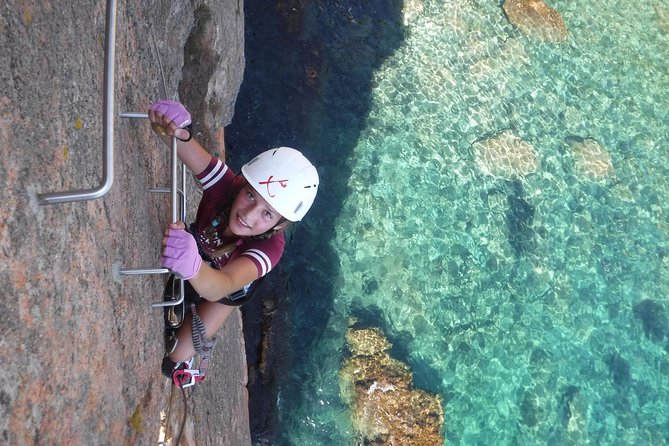
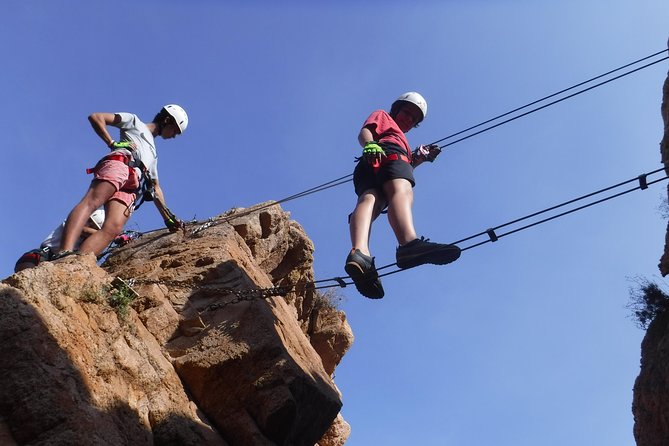
The best part of the Via Ferrata Cala del Molí is its setting: you move along rocky sea cliffs with the Mediterranean beside you, rather than climbing in an enclosed mountain valley. Metal steps, safety cables, and bridges turn difficult coastal rock into a route that feels adventurous without requiring traditional rock-climbing technique.
I like two things in particular. The first section gives beginners a sensible introduction, while the harder second section lets fit climbers push farther. I also like the small group size, the included photo report, and guides such as Miguel and Matías, who are repeatedly praised for clear equipment instruction and close attention to safety. The main caution is physical effort: the second section can be demanding, especially on a hot day, and guide decisions about continuing have caused frustration for some families.
In This Review
- Key points at a glance
- A via ferrata above the Mediterranean
- The first section: a friendly start with an exit option
- The second section: more work, more satisfaction
- Guides, safety, and the human factor
- Photos, picnic, and what the price covers
- Getting there and planning the day
- Who will enjoy Cala del Molí most
- Should you book the Costa Brava Via Ferrata?
- FAQ
- Where does the Via Ferrata Cala del Molí take place?
- Why is the tour associated with Figueres?
- How long does the activity last?
- Is the activity available in English?
- How many people can join the activity?
- Do I need previous via ferrata experience?
- How fit do I need to be?
- Can I stop before the second section?
- What does the price include?
- What happens if the weather is bad?
Key points at a glance
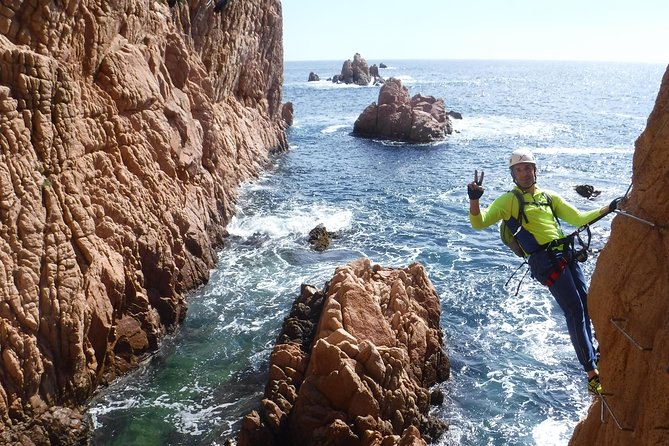
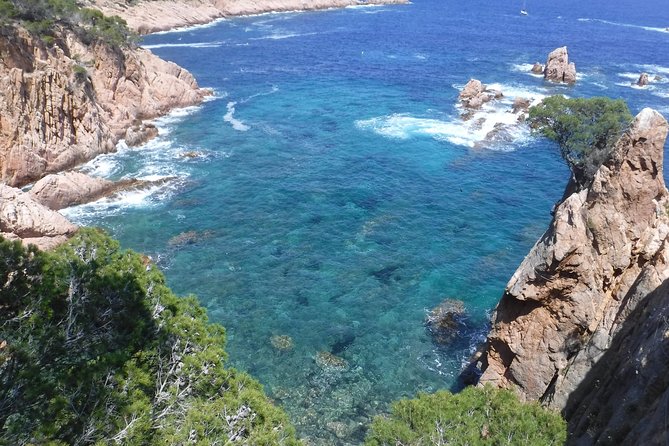
- Sea-cliff setting: Climb above the Mediterranean at Cala del Molí, one of the Costa Brava’s most unusual outdoor activities.
- Two-part route: The first section is introductory; the second is more demanding, with an exit available before continuing.
- Three to four hours: Allow a half day, including the short approach, safety briefing, climbing, picnic, and return.
- Small groups: The stated maximum is six people, though one booking account described a group of seven.
- Useful inclusions: A qualified guide, technical gear, photo report, mini picnic, civil liability insurance, and accident insurance are included.
- Fitness matters: You need moderate fitness, upper-body stamina, and enough comfort with height to use the metal route safely.
A via ferrata above the Mediterranean
A via ferrata is a protected climbing route. You clip into a fixed safety cable and progress along metal steps, footholds, chains, and bridges. It sits between hiking and climbing: you do not need to find a natural handhold at every move, but you still work your legs, arms, balance, and nerve.
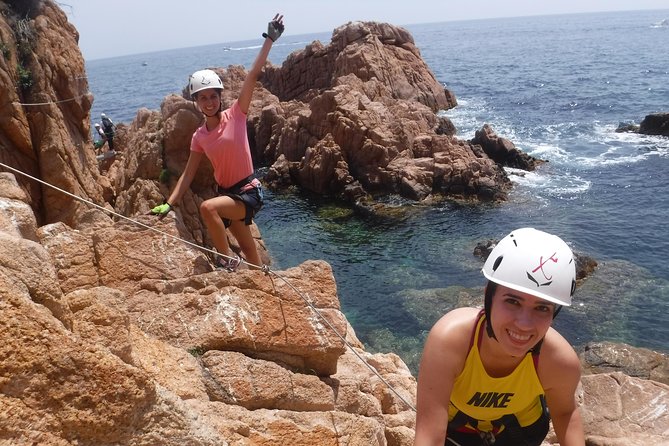
Cala del Molí is special because the route runs by the sea. You get the unusual combination of rock walls and open water, with sections that pass through coastal terrain and offer views across the Mediterranean. The experience is active, but the scenery gives you plenty to look at when you reach a safe pause point.
The activity is based in Sant Feliu de Guíxols in Baix Empordà, not in central Figueres. The booking information may present Figueres as the wider location, but the actual meeting point is Carretera de Sant Pol, 200, 17220 Sant Feliu de Guíxols, Girona. Check this carefully before arranging your day.
The approach is only about two minutes, which is a real advantage. You are not spending an hour hiking uphill before the main event. After meeting your guide, you return to the same point at the end.
Other Girona & Costa Brava days travellers weigh against this one:
- Lloret de Mar: Catamaran Sailing Cruise with BBQ and Drinks
★ 4.5 · 3,812 reviews - From L’Estartit: Snorkeling Trip to the Medes Islands
★ 4.5 · 1,243 reviews - Costa Brava: Sea Caves Kayaking and Snorkeling Tour
★ 4.8 · 1,060 reviews
The first section: a friendly start with an exit option
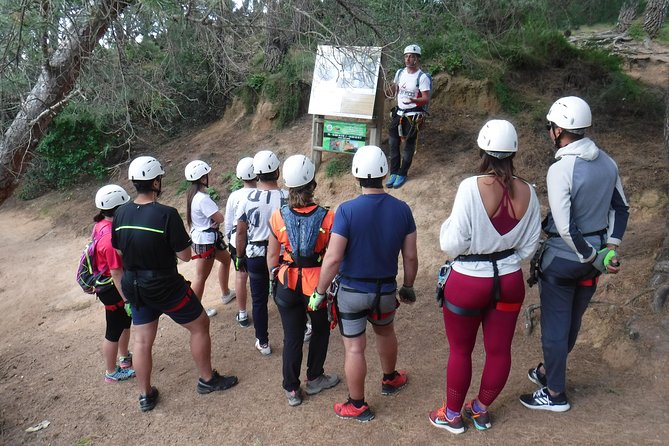
The route has two sections, and the first is designed as the introduction. Your guide fits the harness and explains the clipping system before you begin. This matters more than it may sound. First-timers need time to understand how to move one carabiner at a time along the cable, and several positive accounts specifically praise Miguel for demonstrating the equipment patiently.
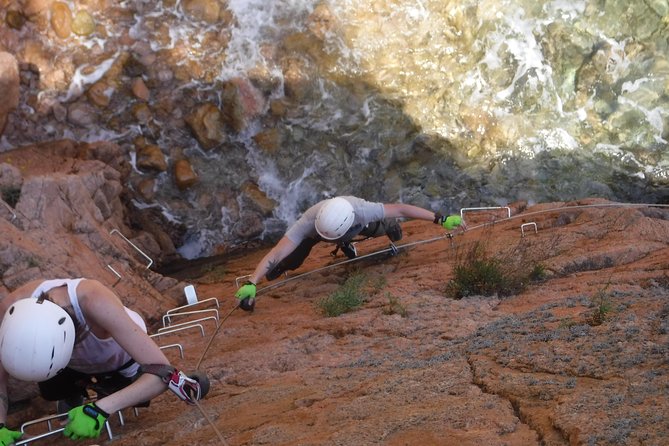
The opening section uses the protected metal route to build confidence. You progress along steps and secured sections of rock, with the sea providing an impressive backdrop. It is not simply a walk with a cable beside you. You need to keep moving your body upward and sideways, manage your grip, and choose where to place your feet.
This part is also the route’s practical test. Your guide watches how you handle the equipment, the height, and the physical work. If you are tired or uncomfortable, you can stop at an intermediate point rather than commit to the harder section. That design makes the activity more approachable for families and first-time climbers.
Still, do not mistake beginner for effortless. One account describes the first section as suitable for someone with reasonable fitness, while another warns that upper-arm strength is important. The route is built with metal aids, but you may need to pull, hold, and support yourself while changing position.
Take your time at the start. Keep your arms as straight as possible when you can, use your legs to push upward, and do not treat the safety cable as a handrail for every move. Your guide’s instructions should take priority, particularly when the route becomes exposed or crowded.
The second section: more work, more satisfaction
The second section is where the activity changes from an easy introduction to a genuine physical challenge. It is described as more demanding, and several accounts compare it favorably with via ferratas in Colorado and other well-known climbing areas. The route is still equipped, but you should expect more exertion and less room for casual pacing.
The extra work comes from the combination of height, repeated metal steps, and the need to keep your body close to the rock. On a hot day, the effort can build quickly. One particularly useful account says the second part was tough but rewarding, and another says the experience was harder than a similar route in Colorado.
Your guide may advise some people not to continue. That is a safety call based on how you handled the first part, not a promise that every person who starts will complete the full route. For some people, this is reassuring. For others, particularly fit family members who feel underestimated, it may be disappointing.
The route’s greatest strength is this built-in choice. You can enjoy the sea-cliff section without treating the full course as a test of pride. If you feel strong and your guide agrees, continue. If your arms are tiring, your grip is failing, or height is becoming too much, stopping is the sensible decision.
The route may also be less like traditional Alpine via ferrata climbing than you expect. One detailed account describes it as relying heavily on metal steps, rings, chain ropes, and cables rather than natural rock holds. That makes it accessible in one sense, but climbers looking for a route based on finding their own hand and footholds may find the style different from a route in Austria.
Guides, safety, and the human factor
Guide quality matters greatly on an activity where the equipment and route are fixed, but your comfort is not. Miguel receives especially strong praise for explaining the clipping process, helping first-timers, checking the group, and taking photographs while people concentrate on climbing. Matías is also praised for helping participants through the route and keeping the experience enjoyable.
Lorenzo receives mixed feedback. Some accounts describe him as an outstanding guide who encouraged a family and helped after a participant fell onto the safety system. Another account criticizes his judgments about strength and ability, tone, and communication. The provider’s response says guides make decisions for safety and adapt to each person’s progress.
That disagreement is worth taking seriously without making too much of it. A guide must sometimes tell someone to stop, and a cautious decision can prevent an accident. At the same time, tone matters. If you are climbing with a family group, you want clear reasons, respectful communication, and encouragement rather than assumptions.
English is offered for the activity. One French-speaking participant still managed to understand the guide, but did not receive the requested French guide. If you need detailed instructions in a language other than English, confirm that before booking. This is a safety activity, so being able to understand clipping and movement instructions is essential.
The operator includes civil liability and accident insurance. That is useful protection, but it does not replace sensible preparation. You are still expected to have moderate physical fitness, follow instructions, and tell the guide honestly if you feel unwell or unable to continue.
A different way to spend the day, same corner of Spain:
- Medieval Three Villages Small Group Day Trip from Barcelona
★ 5.0 · 994 reviews - Girona: Game of Thrones Small Group Tour
★ 4.9 · 816 reviews - Figueres: Dalí Theatre-Museum Entry Ticket
★ 4.7 · 802 reviews - From Roses: Catamaran Cruise Cap Norfeu – Cadaqués
★ 4.7 · 716 reviews
Photos, picnic, and what the price covers
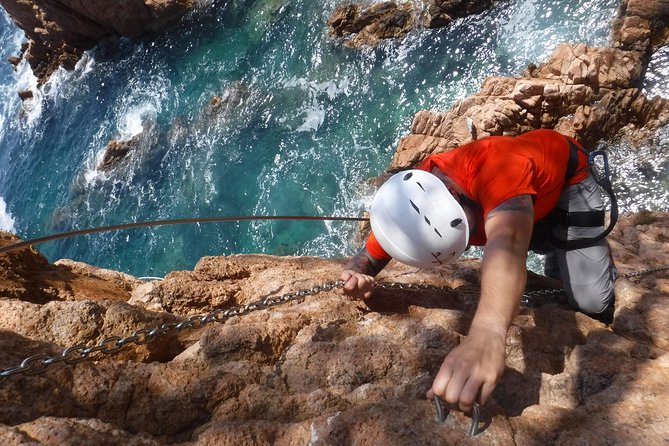
At $48.31 per person, this is a fair half-day price if you value the included gear and support. You are not paying only for access to a route. The fee includes a qualified guide, technical equipment, a photo report, a mini picnic, civil liability insurance, and accident insurance.
The photo report is one of the most practical extras. Taking pictures while managing two carabiners, a harness, footholds, and height is awkward at best. Guides such as Miguel are praised for taking plenty of photos, allowing you to focus on the route instead of protecting your phone.
The mini picnic is modest, not a full meal. Think of it as a useful snack during or after the activity. You should not plan to use it as your only food for the day, particularly if you choose the more strenuous second section.
The duration is listed as three to four hours, with the wider tour summary giving about three hours. Actual timing can vary with group pace, weather, guide decisions, and how many people continue to the second section. One unhappy account says the activity lasted about two hours including the snack, while most descriptions present it as a roughly three-hour outing. If your day depends on a precise finish time, leave a generous buffer.
Getting there and planning the day
The meeting point is Carretera de Sant Pol, 200, in Sant Feliu de Guíxols. The activity ends there too. Public transportation is nearby, and one account describes driving from Barcelona in less than an hour and a half, though your exact journey will depend on traffic and your starting point.
The booking is generally made in advance, with an average lead time of 11 days. That suggests you should not leave this until the last morning of a Costa Brava trip, especially if you need a particular time or guide language.
The group maximum is six people in the published details. A separate account describes a group of seven, so I would confirm the exact group size if keeping the outing intimate is important to you. Smaller groups usually mean less waiting at the cable and more direct help, while larger groups can slow the route.
Wear clothing that allows free movement and shoes suitable for a rocky outdoor activity. The supplied details do not specify a required shoe type, so ask the operator if you are unsure about your footwear. Bring enough water and arrive ready for sustained physical effort, particularly in warm weather.
The experience requires good weather. If conditions force a cancellation, you are offered another date or a full refund. You can also cancel for a full refund up to 24 hours before the start time. Changes or cancellations made later are not accepted under the stated policy.
There have been reports of late cancellations and schedule problems. One booking was canceled four hours before the meeting time, and another involved confusion over availability and cancellation through the booking platform. These accounts do not describe the normal climbing experience, but they are a reason to keep written confirmation and resolve any schedule change through the platform rather than relying only on messaging.
Who will enjoy Cala del Molí most
I would recommend this for an active person who wants more than a coastal walk but does not necessarily have formal climbing experience. The first section gives beginners a workable entry point, and you have the chance to stop before the harder part.
It also suits fit families, couples, and small groups of friends. Several first-timers completed the route with guide support, and one person with a fear of heights found the equipment and activity helped make the height manageable. That does not mean the route is suitable for everyone with a fear of heights, but the protected format gives you something concrete to focus on.
Experienced climbers should adjust expectations. You may find the route less technical than an unguided rock climb because the metal steps and cable do much of the route finding. The reward is the coastal position, not a long series of difficult natural moves.
I would be cautious about booking if you have poor upper-body stamina, dislike exposed heights, or need a fully private pace. The guide may recommend that you stop, and you need to accept that decision as part of the safety system. The activity is also a poor match for a tightly scheduled day because its finish time can vary.
Should you book the Costa Brava Via Ferrata?
Book it if you want a memorable way to experience the Costa Brava from the rock itself. The combination of Mediterranean views, a two-level route, small groups, included equipment, insurance, and guide-taken photos gives the price solid value.
Before paying, confirm the Sant Feliu de Guíxols meeting point, the language you need, the exact time slot, and the likely group size. Go in expecting moderate to strenuous effort, not a sightseeing ride. If your fitness is reasonable and you are willing to stop at the first section if needed, Cala del Molí is one of the more distinctive active outings on this coast.
FAQ
Where does the Via Ferrata Cala del Molí take place?
The activity takes place in Sant Feliu de Guíxols, in the Baix Empordà area of Girona, Spain. The meeting point is Carretera de Sant Pol, 200, 17220 Sant Feliu de Guíxols.
Why is the tour associated with Figueres?
The wider location is listed as Figueres, Spain, but the specific activity location and meeting point are in Sant Feliu de Guíxols. Check the address carefully when planning transportation.
How long does the activity last?
The stated duration is about three to four hours. The tour summary gives an approximate duration of three hours.
Is the activity available in English?
Yes. English is one of the offered languages.
How many people can join the activity?
The published maximum is six people. One booking account described a group of seven, so confirm the group size if this is important to you.
Do I need previous via ferrata experience?
No previous experience is stated as a requirement. The route includes an initiation section, and the guides provide technical equipment and instruction.
How fit do I need to be?
You should have a moderate level of physical fitness. The second section requires more effort, and several accounts specifically point to the importance of upper-arm strength.
Can I stop before the second section?
Yes. The route has an exit option at the middle and at the end of the first section, allowing you to stop if you are tired or do not want to continue.
What does the price include?
The $48.31 price includes a qualified guide, technical equipment, a photographic report, a mini picnic, civil liability insurance, and accident insurance.
What happens if the weather is bad?
The activity may be canceled because it requires good weather. You will be offered another date or a full refund.
Recently reviewed around Girona & Costa Brava
- Catamaran ride -Costa Brava with barbecue and drinks. Familiar.★ 4.5 · 278 reviews
- Game Of Thrones Walking Tour in Girona★ 5.0 · 406 reviews
- Medieval Three Villages Small Group Day Trip from Barcelona★ 5.0 · 994 reviews
- Girona History and Legends Tour Small Group from Girona★ 5.0 · 299 reviews
- Catalonia Hot Air Balloon Ride and Breakfast over the Volcanoes of la Garrotxa★ 5.0 · 132 reviews
- Tossa de Mar Scuba Diving PADI★ 5.0 · 175 reviews
- Explore Cap Norfeu and the Secret Cave: An Underwater World★ 4.5 · 118 reviews
- Girona History, Legends, and Food Walking Tour with food tasting★ 5.0 · 195 reviews
Costa Brava Day Trips, compared.
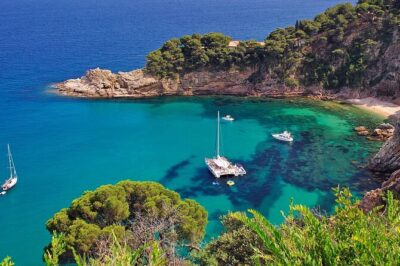
Girona & Costa Brava Small-Group Tour with Pickup from Barcelona
Read our review →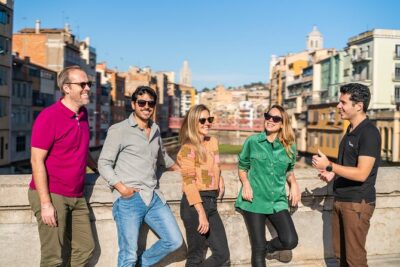
Montserrat, Girona & Costa Brava Guided Day Trip from Barcelona
Read our review →
Barcelona Costa Brava Kayak, Snorkel & Cliff Jump Day Tour
Read our review →
Costa Brava Kayak, Snorkel & Cliff Jump & Lunch
Read our review →
Montserrat, Girona & Costa Brava Guided Day Trip
Read our review →
Girona & Costa Brava Small Group Tour From Barcelona with Paella!
Read our review →Browse the lists this tour appears in