
Reviewed · DRINKING TOURS
Bean to Bar Chocolate Workshop in Barcelona
The best part of this Barcelona chocolate workshop is that you do not merely taste finished chocolate. You handle the raw cocoa beans, roast them, peel them, grind them, and turn them into cocoa paste. That hands-on chain from pod to bar makes the final bite far more meaningful.
I like two things right away: the small group of no more than eight keeps the class personal, and the instructors, including Oscar, Renee, and Franklin, bring real warmth and curiosity to the subject. You also make a chocolate bar to take home. The main consideration is that this is as much a lesson and tasting as a cooking class, so you will not spend the full two hours independently making chocolate from scratch.
In This Review
- Key points at a glance
- Why this small Barcelona workshop is worth two hours
- Starting with the cocoa pod
- Roasting, peeling, and grinding the beans
- Tasting cocoa before it becomes a bar
- Making your own chocolate bar
- The instructors make the difference
- Who will enjoy it most
- A good rainy-day plan near the city sights
- What the $47 price really covers
- Practical advice before you book
- Should you book the Bean to Bar Chocolate Workshop?
- FAQ
- Where does the Bean to Bar Chocolate Workshop take place?
- How long does the workshop last?
- How much does the workshop cost?
- Which languages are available?
- What will I do during the workshop?
- Can I take chocolate home?
- Is the workshop suitable for teenagers and wheelchair users?
Key points at a glance
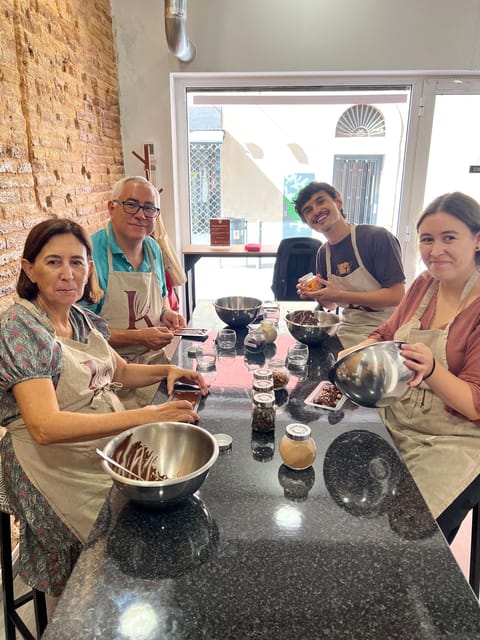
- Roast and grind real cacao beans: You take part in the early stages of chocolate production, rather than simply watching a demonstration.
- Taste cocoa in several forms: The workshop includes cocoa-based drinks, chocolate samples, and the changing flavors of the bean as it is processed.
- Make one bar to take home: Your finished bar gives you a small edible souvenir, though Barcelona’s heat can make chocolate difficult to transport.
- Learn where chocolate begins: The class covers cocoa cultivation, fermentation, geography, farming communities, and the bean-to-bar movement.
- Small, family-friendly setting: The group is limited to eight, and adults and teenagers can take part. Some families have brought children around 10 or 11.
- Good indoor activity: The two-hour session at Kina Chocolates works well on a rainy day or during a break from Barcelona’s outdoor sights.
Why this small Barcelona workshop is worth two hours
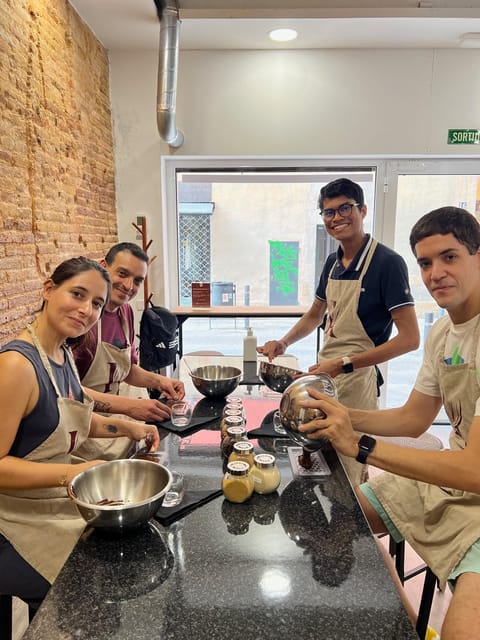
Barcelona has no shortage of food experiences, but many stop at eating. This workshop begins much earlier, with the cocoa pod and the work required to turn its seeds into something smooth, fragrant, and sweet.
That distinction matters. When you see a cocoa pod, handle the beans, and taste cocoa before sugar and other ingredients are added, chocolate stops being an anonymous supermarket product. You start noticing acidity, bitterness, roast, fruit, and texture.
The experience costs $47 per person. I consider that a fair price for a two-hour class that includes materials, utensils, an apron, a hat, several tastings, cocoa drinks, a handmade bar, a certificate, and a written workshop summary. It is not the cheapest snack stop in Barcelona, but it offers instruction, participation, and a keepsake rather than just a tasting plate.
The workshop has earned a five-star average from 172 verified bookings, with especially strong praise for its practical format and engaging instructors. That matches what you should expect: this is an educational food activity with plenty of tasting, not a formal pastry-school lesson.
More Drinking Tours in Barcelona
- Barcelona: Unique Sunset Sailing Tour with Tapas & Open Bar
★ 4.7 · 959 reviews - Barcelona Sailing: Light Snacks & Open Bar with Private Option
★ 5.0 · 874 reviews - Barcelona Sensational Sunset Tour with Open Bar and Snacks
★ 5.0 · 681 reviews
Starting with the cocoa pod
At Kina Chocolates, the class begins with the source of everything: the cocoa pod. You get to observe one and learn what happens in the fields before the beans ever reach a chocolate maker.
The instructor explains cocoa cultivation and the work of local cocoa-producing communities. This social part of the lesson gives the workshop more weight than a simple demonstration of roasting and grinding. Bean-to-bar chocolate is not only about flavor. It is also about traceability, farming, quality, and how the people who grow cacao are treated.
You will hear about fermentation and production, as well as the geography of cocoa. Beans from different regions can produce noticeably different flavors, much like grapes from different wine areas. The workshop uses samples from different climates to help you notice those differences rather than treating all cocoa as the same.
I especially like this opening because it gives context before the tasting begins. You learn why the raw material matters, and then you get to see how each stage changes it.
Roasting, peeling, and grinding the beans
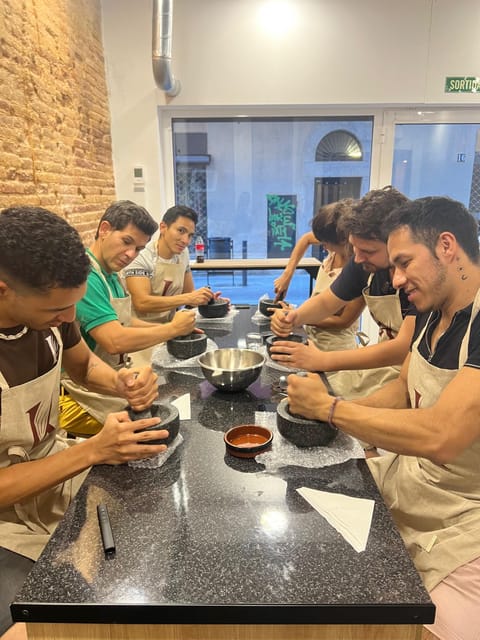
The most active portion of the class takes you through the main early steps of chocolate making. You roast cocoa beans, peel away their shells, and grind the inner nibs.
Roasting brings out aroma and changes the flavor. Peeling reveals the nib, the part of the bean used to make chocolate. Grinding turns those nibs into cocoa paste. You may have eaten chocolate countless times, but this sequence shows how much work sits behind even a modest bar.
This is where the workshop earns its name. You are not just told that chocolate comes from cocoa beans. You feel the beans, smell the roasted cocoa, and take part in the mechanical work that changes its texture.
The grinding stage also sets up one of the class’s useful lessons: chocolate is not automatically sweet. Raw and processed cocoa can be bitter, sharp, earthy, fruity, or nutty. Sugar, milk, and other additions shape the final result, but they do not erase the character of the bean unless used heavily.
A small point is worth keeping in mind. The class does not give you a complete independent chocolate-making production line. Most of the workshop is guided, with the instructor organizing the process and explaining what is happening. If you want a long, technical session focused on tempering, molds, recipes, and professional equipment, this is not that kind of class.
For most people, that is a sensible trade. You get to perform the memorable parts without spending an entire afternoon on the more demanding stages of commercial chocolate production.
Tasting cocoa before it becomes a bar
The tasting is not tacked on at the end. It runs through the workshop and helps you understand each stage.
You may try cocoa nibs, chocolate from beans grown in different regions, and several cocoa-based preparations. The workshop also includes different drinks made from cocoa. These tastings show how the same basic ingredient can be used in forms that are bitter, creamy, warm, sweet, or surprisingly light.
One useful lesson is learning to separate the flavor of cocoa from the sweetness of a finished bar. Mass-market chocolate often contains a great deal of sugar and additional flavoring. This class introduces the bean-to-bar idea, where the maker pays closer attention to the origin and quality of the cacao.
You do not need to be a serious chocolate expert to enjoy this part. The instructor guides you through what to notice, and the format leaves room for questions. Several participants singled out the explanations of flavor, geography, and different parts of the cocoa bean as especially helpful.
If you have children or teenagers with you, tasting can be the most revealing part. Younger participants may discover that cocoa nibs do not taste like a candy bar, while older ones may begin comparing chocolate in a more thoughtful way.
More Barcelona trips worth a second look
- Barcelona: Nougat and Chocolate Museum Tour with Tasting
★ 4.5 · 232 reviews
Making your own chocolate bar
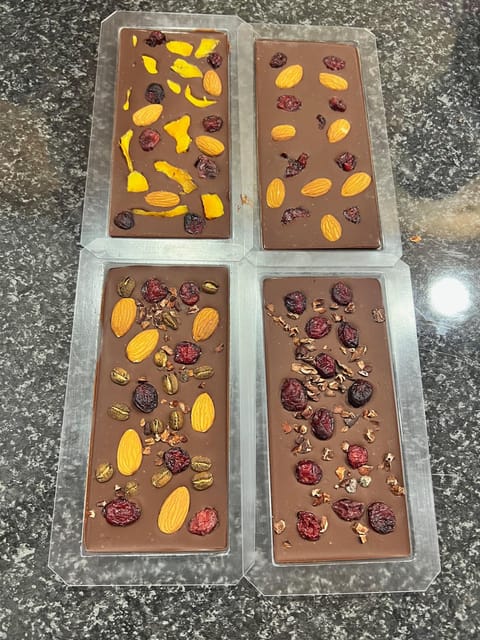
Near the end, you make a chocolate bar of your own to take home. This is the tangible reward for all the roasting, peeling, tasting, and grinding.
The bar is not meant to turn you into a professional chocolatier in two hours. Its value is personal: you have followed the raw ingredient through several stages and finished with something you helped create.
The finished bar also gives families and couples a shared project. Several parents found that teenagers who were hard to impress stayed engaged because the workshop mixed facts with real tasks. It is a good balance for a family activity because nobody has to sit still for a full lecture.
Take care with the bar after the class. One participant found that Barcelona’s summer heat damaged theirs. The workshop provides the chocolate to take home, but the information does not promise special temperature-controlled packaging or storage. In warm weather, collect it near the end of your sightseeing day and keep it out of direct heat as much as you can.
The bar is only one part of what you receive. The apron and hat make the session feel like a proper workshop, while the personalized certificate and written summary add a little ceremony. The summary is useful if you want to remember the terms and stages later, especially after a busy trip.
The instructors make the difference
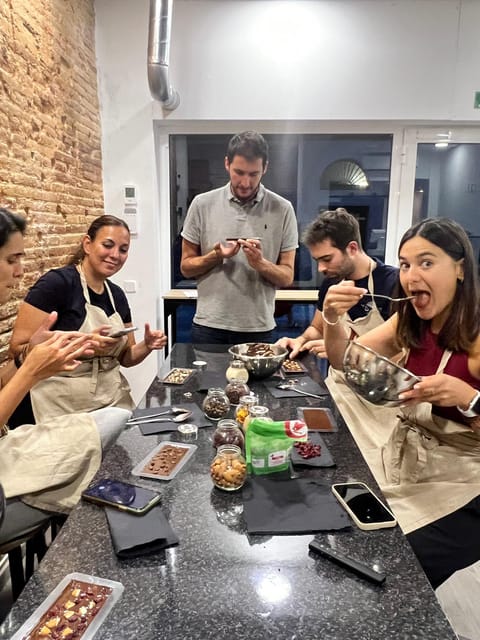
The format depends heavily on the person leading it, and this workshop benefits from instructors who clearly enjoy the subject.
Oscar is repeatedly praised for his passion, storytelling, humor, and ability to explain chocolate without making the lesson stiff. Renee is described as warm, enthusiastic, and very good at guiding the group through each step. Franklin is also noted for being engaging and happy to answer questions.
Names and staffing can vary by session, so you should not assume a particular instructor will lead your booking. Still, the teaching style appears consistent: friendly, clear, and interactive.
The best instructors do more than recite facts. They ask what you notice as you taste, adjust explanations for the group, and connect farming, culture, chemistry, and flavor. One session may include a playful joke or prank, while another may focus more on questions from the group.
English and Spanish are available. Some material may be presented in its original language, so ask questions if a term or explanation moves too quickly. The small group size helps here. With a maximum of eight participants, you are less likely to disappear at the back of a crowded demonstration.
Who will enjoy it most
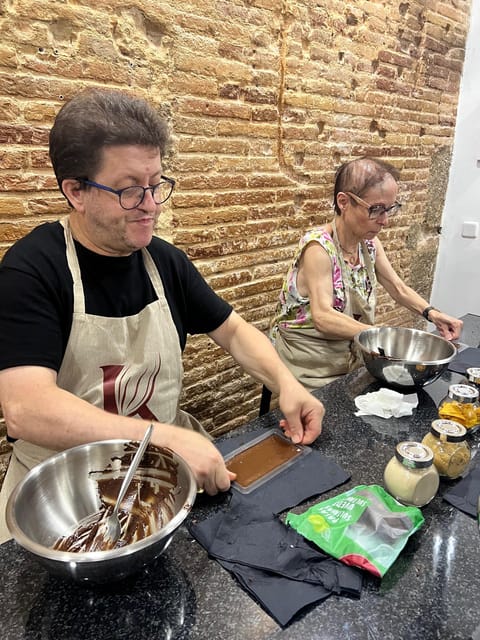
This is a strong choice for chocolate lovers, curious eaters, couples, and families with teenagers. It also works for adults who want a change of pace from churches, museums, and architectural sights.
The activity is suitable for adults and teenagers. Family feedback suggests children around 10 or 11 can enjoy it, though the exact fit depends on their interest and attention span. The practical work helps, but there is still a fair amount of explanation about cocoa cultivation, history, geography, and production.
I would also recommend it to anyone interested in ethical food production. The discussion of traceability and fair treatment for cocoa farmers gives you something to think about after the sugar rush fades.
It may be less suitable if you want a highly technical class in advanced confectionery. You will make a bar, but the workshop is built around understanding the full bean-to-bar path, guided participation, and tasting. It is not advertised as a professional training course.
The experience is wheelchair accessible, which adds useful flexibility for visitors planning indoor activities in Barcelona.
A good rainy-day plan near the city sights
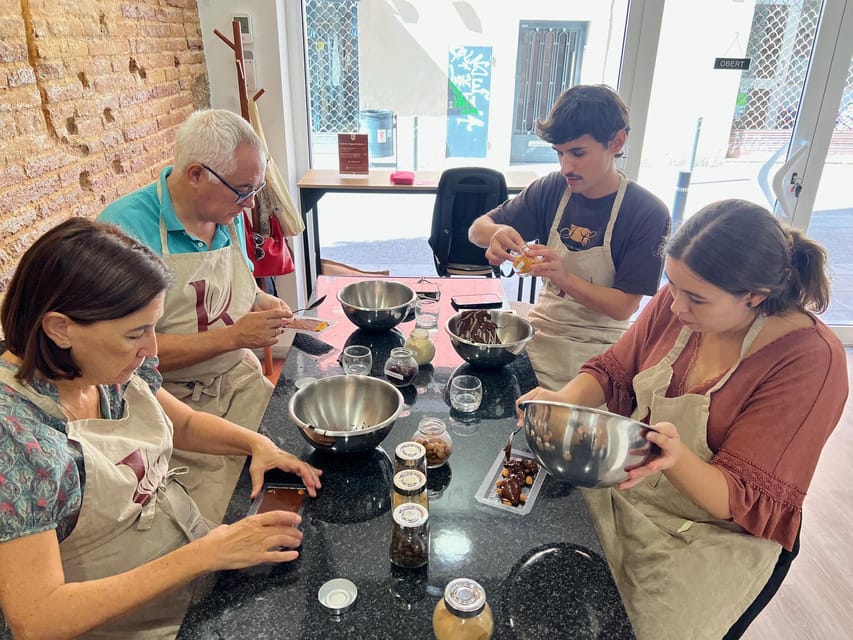
The workshop lasts two hours, making it easy to fit into a Barcelona itinerary. You meet at Kina Chocolates in Catalonia, and the class takes place at the chocolate shop itself.
Because the group is limited to eight, booking ahead is sensible, especially if you have a fixed sightseeing schedule or want to attend with family. Starting times vary, so check the available session when planning your day.
This is also a smart rainy-day activity. You get shelter, a warm drink, a structured activity, and something edible to bring away. It is less weather-dependent than a market visit or walking tour, though heat can affect the bar you make.
You can also browse the shop’s chocolate after the class. The workshop itself is not simply a sales pitch, and the teaching focuses on the process and its background. Still, you may want to buy extra bars, cocoa bean shell tea, caramel cocoa beans, or other chocolate products once you understand what you are tasting.
That optional shop visit adds value for people who want a food souvenir beyond the one handmade bar.
What the $47 price really covers
At $47, the workshop sits above the cost of a casual chocolate tasting but below many long cooking classes. The value comes from the combination of instruction and participation.
Your fee covers:
- Two hours with an English- or Spanish-speaking instructor
- All materials and utensils
- Apron and hat
- Cocoa roasting, peeling, grinding, and tasting
- Cocoa-based drinks
- Chocolate samples from different origins or climates
- One chocolate bar to take home
- A personalized completion certificate
- A written summary of the lesson
If you only want to eat chocolate, this is probably more than you need. Barcelona’s shops can handle that job for less money.
If you want to understand why chocolate tastes different from one region to another, see the work behind the product, and make something yourself, the price is easier to justify. The small group is important here. You are paying for access to a guided activity, not just admission to a shop.
Free cancellation up to 24 hours before the start and the option to reserve now and pay later make it easier to fit the workshop into an uncertain schedule. Those terms are useful, but the real value is the content of the two hours.
Practical advice before you book
Tell Kina Chocolates about allergies or food intolerances in advance. The workshop may be adapted, but the provider needs that information before the session.
Wear something you do not mind covering with an apron, even though the apron and hat are included. The class is hands-on, and cocoa is being roasted, peeled, ground, and handled.
Plan your chocolate shopping carefully in hot weather. The bar you make is a nice souvenir, but it may need protection from heat after you leave.
If you are booking for a family, consider the ages and interests of the children. The workshop welcomes teenagers and has worked well for families with children around 10 years old, but a child who dislikes tasting new flavors may not enjoy every stage.
Finally, keep two hours free rather than trying to rush straight to another timed attraction. The session is designed to move through explanation, tasting, practical work, drinks, and the final bar. Giving it room will make the experience more relaxed.
Should you book the Bean to Bar Chocolate Workshop?
Book it if you want a small, friendly Barcelona activity that combines food, craft, history, and ethical sourcing. I especially recommend it for couples and families with children around 10 or older, as well as anyone who enjoys knowing where food comes from.
The strongest reasons to go are the real cacao work, the thoughtful tasting, the chance to make a bar, and the instructors’ clear enthusiasm. Oscar, Renee, and Franklin are all associated with the workshop, and the teaching style is warm rather than formal.
Skip it if your only goal is to eat a lot of finished chocolate or if you want advanced pastry training. For everyone else, $47 buys a useful and tasty two-hour break from Barcelona’s usual sights, with a handmade souvenir and a better understanding of what the word chocolate really involves.
FAQ
Where does the Bean to Bar Chocolate Workshop take place?
The workshop meets at Local Kina Chocolates in Catalonia, Spain.
How long does the workshop last?
The experience lasts two hours. Available starting times vary, so check the schedule when booking.
How much does the workshop cost?
The listed price is $47 per person.
Which languages are available?
The workshop is offered in English and Spanish. Some content may be shown in its original language.
What will I do during the workshop?
You will learn about cocoa cultivation and chocolate production, observe a cocoa pod, roast and peel cocoa beans, grind them, make cocoa paste, prepare cocoa-based drinks, taste chocolate, and create a chocolate bar.
Can I take chocolate home?
Yes. You make one chocolate bar to take home. In hot Barcelona weather, protect it from heat because the bar may soften or melt.
Is the workshop suitable for teenagers and wheelchair users?
Yes. The activity is designed for adults and teenagers and is wheelchair accessible. Tell the provider about any allergies or food intolerances so the workshop can be adapted.
More Workshops in Barcelona
- Barcelona Paella Cooking Class with Market Visit, Tapas & Sangria
★ 5.0 · 2,531 reviews - Barcelona: Cocktail Master Class by Mixologist with Tapas
★ 4.7 · 959 reviews - Barcelona: Paella Cooking Class with Market Visit and More
★ 4.9 · 711 reviews - Paella Cooking Class with Professional Chef: Four Course Dinner
★ 5.0 · 561 reviews
Recently reviewed around Barcelona
- Excursion Aigüestortes – Estany Llebreta (1/2 day)★ 5.0 · 138 reviews
- E-Bike tour in Barcelona with English Guide★ 5.0 · 128 reviews
- Wine Tasting Experience in Barcelona★ 5.0 · 172 reviews
- Barcelona Luxury Yacht Cruise – Day or Sunset, Open Bar & Snacks★ 5.0 · 154 reviews
- Barcelona Wax Museum Admission Ticket★ 4.5 · 237 reviews
- Barcelona: Wine Tasting and 5 Course Tapas Pairing Dinner★ 4.5 · 129 reviews
- Montserrat: Cog-Wheel, Basilica, Black Madonna & Licor Tasting★ 4.5 · 886 reviews
- Andorra Original History and Sightseeing Tour (Private, Pickup)★ 5.0 · 350 reviews
Drinking Tours, compared.

Guided Pub Crawl Madrid Experience and Club Entry
Read our review →

Sunset Boat Party at Ibiza Boat Club with Open Bar
Read our review →
Unique Sunset Sailing Tour with Tapas & Open Bar
Read our review →
Barcelona Sailing: Light Snacks & Open Bar with Private Option
Read our review →
Barcelona Sensational Sunset Tour with Open Bar and Snacks
Read our review →
El Born and Gothic Quarter Wine & Tapas Bar Tour
Read our review →Browse the lists this tour appears in