
Reviewed · SCUBA DIVING
Tossa de Mar: Scuba Diving Experience for Beginners
Tossa de Mar’s beginner scuba session puts you underwater on your first day, but with a careful lesson and an instructor beside you. You learn to breathe through the regulator, handle the equipment, communicate underwater, and adjust to moving without normal gravity before entering from the beach.
I like the small maximum group of six, since beginners often need extra time and reassurance. I also like that the price includes equipment and both diving and liability insurance. The main consideration is health: this activity is not suitable for non-swimmers, pregnant people, or anyone with several heart, respiratory, ear, kidney, blood pressure, or recent-surgery concerns.
In This Review
- Key points to know
- Learning the basics before entering the water
- Getting fitted with the equipment
- Entering from the beach in Tossa de Mar
- What makes the underwater portion worthwhile
- Marine life, photos, and the character of the session
- Returning to the center after the session
- Is $91 a fair price?
- Who should book this Tossa de Mar experience?
- Language, group size, and practical planning
- My verdict: book it if you want a careful first taste
- FAQ
- Where does the scuba experience begin?
- How long does the activity last?
- How deep will beginners go?
- Is scuba equipment provided?
- What should I bring?
- What languages do the instructors speak?
- Can children participate?
- Do I need to be able to swim?
- Can I fly after the activity?
Key points to know
- A real first underwater session: After the lesson, you spend about 40 to 45 minutes underwater at a maximum depth of 12 meters.
- Patient, attentive instruction: Guides such as Uri, David, Mano, and Mark are praised for clear explanations and calm support.
- Small groups help nervous beginners: The group limit is six participants, allowing closer supervision.
- Good chance of marine life: Fish, rock formations, jellyfish, and octopus have all been seen during sessions.
- Suitable for children from age eight: Children need parental or guardian authorization, and ages eight to 15 must be declared during booking.
- Bring your own beach gear: Swimwear, a towel, and flip-flops are not included.
For many people, the hardest part of scuba is not the water. It is the first few minutes with the mask, regulator, and air tank, trying to breathe in a way that feels unfamiliar. This experience is built around that moment.
You meet at the Tossasub Diving Center in Tossa de Mar and redeem your voucher at the ticket counter before the scheduled start. The timing matters. The center says the activity begins promptly, and late arrivals are not admitted once the session has started.
That firm start is practical rather than fussy. The instructor needs time to check equipment, explain safety points, complete the medical questionnaire, and prepare the group. Plan to arrive early enough to find the center, change if needed, and begin without a rush.
Learning the basics before entering the water
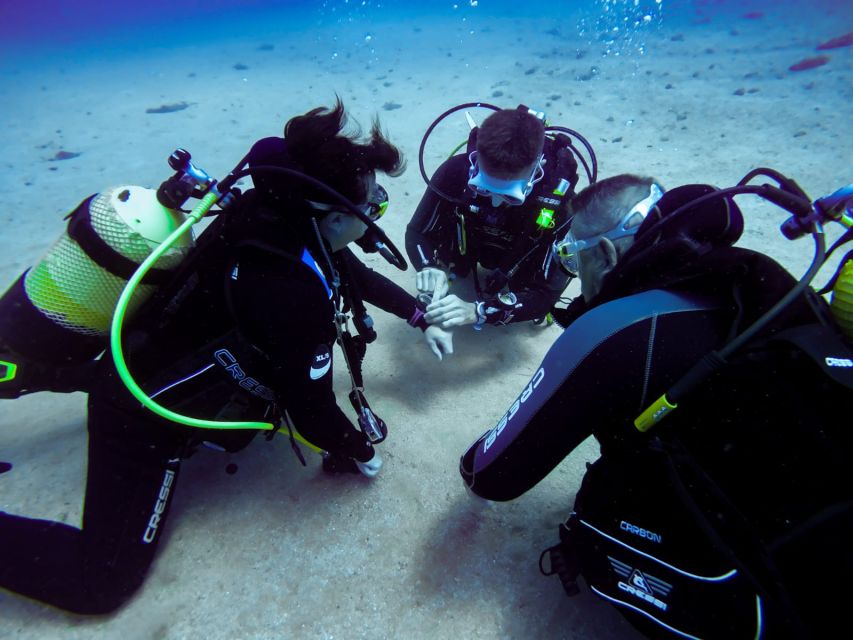
The first part of the three-hour session is an introduction to scuba. Your instructor explains how to use the mask, regulator, buoyancy equipment, and other supplied gear. You also learn how to breathe underwater and how to move when your usual sense of balance no longer works in the same way.
The aim is not to turn you into a fully certified scuba diver in one afternoon. It is an entry-level SSI Try Scuba program, designed to let you experience the underwater world in a controlled setting. At the end, a successful participant may receive an SSI Try Scuba recognition rating.
That distinction matters. The rating is a record that you completed this introductory experience. It is not the same as completing a full Open Water Diver certification, so you should not treat this three-hour session as a license for independent scuba trips.
The briefing also covers basic underwater communication. Since you cannot speak normally while using the regulator, simple hand signals are essential. This early explanation can make the actual session feel less strange, especially if you are anxious about needing help.
The instructors’ teaching style is one of the strongest reasons to consider this experience. Uri is praised for making the process feel easy and helping participants relax. David is noted for clear explanations and patience, while Mano and Yuri are credited with helping first-time participants feel calm and confident. Guide names and availability can change, but the pattern is clear: personal reassurance is a major part of the experience.
More dive trips off Girona & Costa Brava:
- Tossa de Mar: PADI Discovery Scuba Diving in Costa Brava
★ 4.8 · 276 reviews - Tossa de Mar Scuba Diving PADI
★ 5.0 · 175 reviews - Lloret de Mar: Scuba Diving Experience no License Required
★ 4.7 · 107 reviews
Getting fitted with the equipment
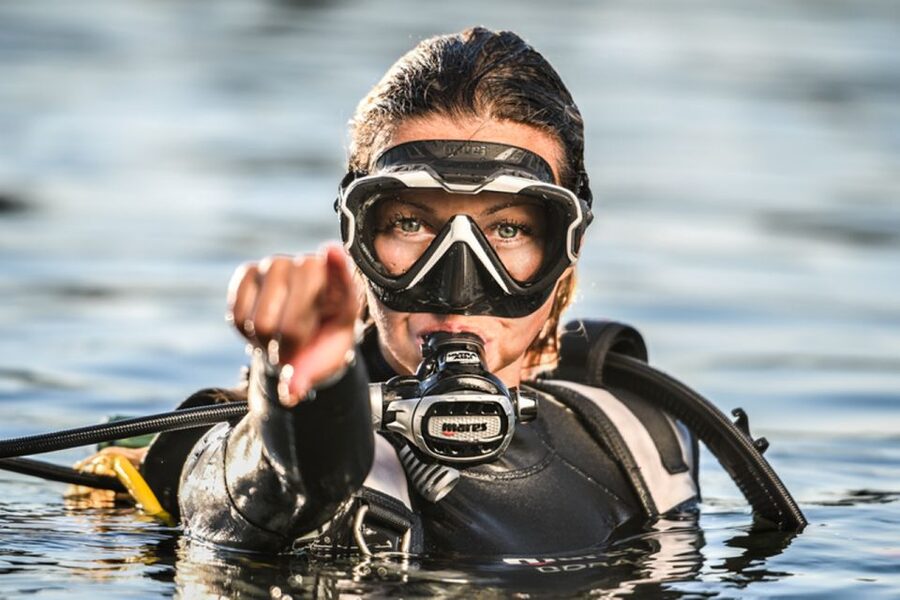
The center provides the scuba equipment, along with diving insurance and liability insurance. You will still need to bring your own swimwear, towel, and flip-flops or shower sandals.
A good fit is especially important for a first session. An ill-fitting mask can distract you, and unfamiliar equipment can feel bulky before you enter the water. One useful detail for people who wear glasses is that the center has had masks with corrective lenses available. Availability may depend on the center’s current stock, so mention your needs when booking or arriving.
The staff fit you with the necessary equipment before taking the group to the beach. You should expect a little practical work here: adjusting straps, checking the mask, getting comfortable with the regulator, and learning how the equipment behaves before the session begins.
This is not the place to arrive empty-handed because the package includes only the scuba gear. A towel is useful after the water session, and flip-flops protect your feet around the center and beach. A swimsuit is essential.
Entering from the beach in Tossa de Mar
After the briefing and equipment setup, you move to the beach with the instructor. The entry from shore keeps the experience straightforward. You do not need to board a boat or spend extra time traveling to an offshore site.
That simplicity is valuable for beginners. Your first concern is getting used to breathing underwater, not coping with a boat ride, waves around a vessel, or a long wait before reaching the water. The instructor supervises your entry and helps you begin at a pace suited to the group.
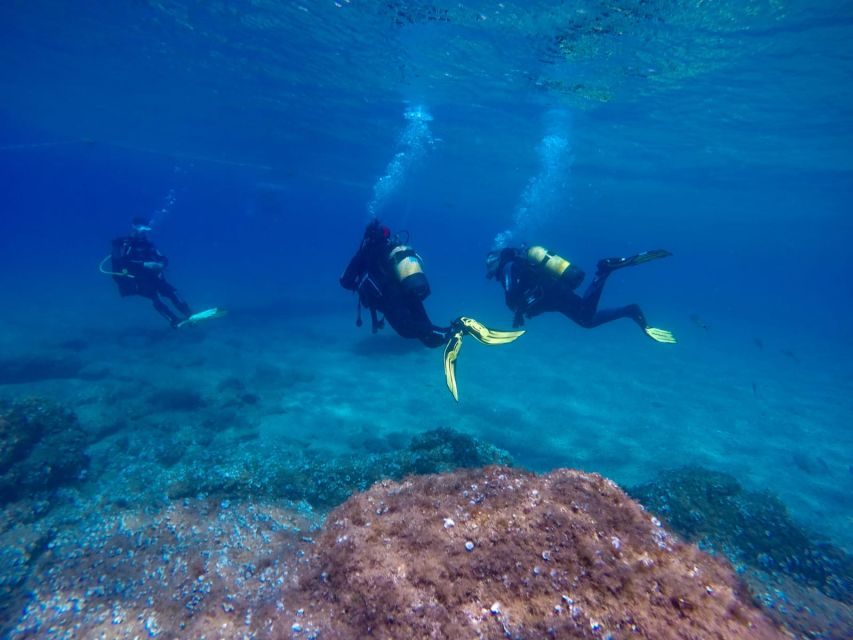
The session reaches a maximum depth of 12 meters, with around 40 to 45 minutes spent underwater. For a first-time participant, that is a substantial amount of time. You have room to settle in, practice the basics, and look around instead of rushing through a brief trial.
At the same time, 12 meters is not shallow in the ordinary swimming sense. If the idea of going below the surface makes you nervous, say so early and listen closely to the instructor. The program is controlled, but it still asks you to manage breathing equipment and remain comfortable in open water.
You should also understand that marine life is never guaranteed. Fish have been seen in good numbers, and some sessions have included octopus, jellyfish, and rock formations. One particularly memorable sight is an octopus tucked among the rocks. Conditions and visibility can change, so approach those sightings as a welcome possibility rather than a promise.
What makes the underwater portion worthwhile
The main reward is the change in perspective. Even a beginner session can make familiar coastal water feel completely different once you are moving beneath the surface with steady breathing.
You practice the basics rather than simply being carried through the water. The instructor helps you use the equipment, move underwater, and communicate with hand signals. That active role gives you a better sense of what scuba actually involves.
The small group limit helps here. With no more than six participants, the instructor can watch how each person is coping. This is especially helpful if one person in a family is confident and another needs extra time. A family group can share the same experience while still receiving individual attention.
The activity has also worked well for parents bringing children old enough to participate. One family brought a nine-year-old, and the guides kept close watch while helping the child feel comfortable. Another family with children aged nine, 12, and 14 found that the careful support made the session manageable for all three.
Still, do not book this simply because a child meets the minimum age. Children must be at least eight, have parental or guardian authorization, and ages eight to 15 must be declared during booking. The child must also be a swimmer and pass the required medical screening.
A different way to spend the day, same corner of Spain:
- Lloret de Mar: Catamaran Sailing Cruise with BBQ and Drinks
★ 4.5 · 3,812 reviews - From L’Estartit: Snorkeling Trip to the Medes Islands
★ 4.5 · 1,243 reviews - Costa Brava: Sea Caves Kayaking and Snorkeling Tour
★ 4.8 · 1,060 reviews - Medieval Three Villages Small Group Day Trip from Barcelona
★ 5.0 · 994 reviews
Marine life, photos, and the character of the session
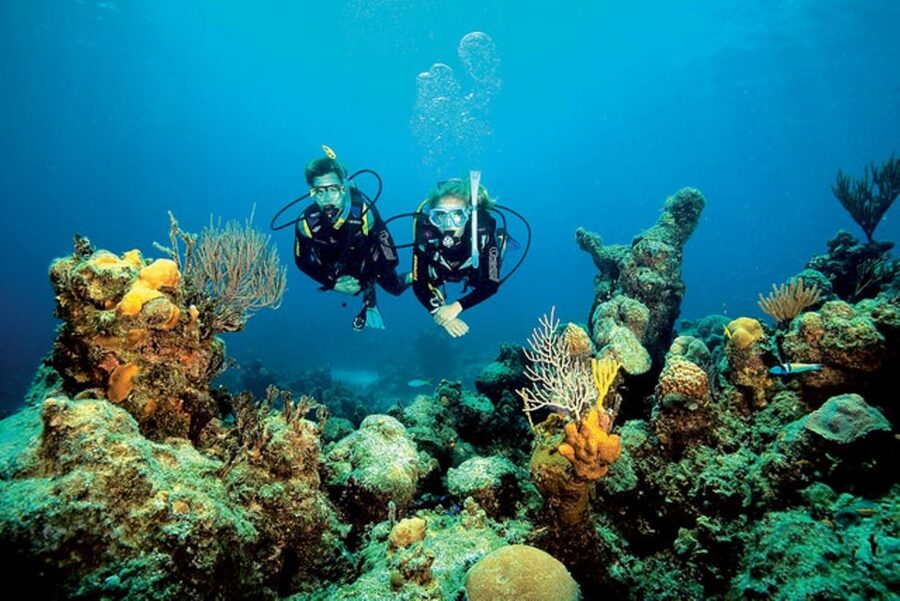
Fish are the most likely reward mentioned throughout the experience. You may also see an octopus among the rocks, and jellyfish have appeared during some sessions. The setting is less about dramatic tropical coral and more about a genuine Mediterranean coastal encounter.
That point is worth stressing. If you are expecting the coral scenes shown in a movie or a far-off tropical destination, this is not that kind of experience. The underwater appeal here is the chance to observe local fish and rock formations while learning a new skill.
The guides have also taken photographs during some sessions. That can be a useful extra, especially when your attention is occupied by breathing, buoyancy, and hand signals. You should confirm how photos are handled on the day, since the supplied details do not specify whether they are included in the price or how they are delivered.
The mood seems to be friendly and light without losing the safety focus. Some guides are described as funny and approachable, which matters when a first-time participant is tense. A relaxed instructor can help you concentrate on the next simple task instead of worrying about the whole underwater experience at once.
Returning to the center after the session
After the underwater portion, you return to the center, where you can shower and change. The recognition rating may be issued after a successful completion of the program.
Three hours includes the briefing, equipment fitting, beach entry, underwater time, and return to the center. It is not three hours spent underwater. That is a useful distinction when planning the rest of your day.
The activity takes place rain or shine. Weather does not automatically cancel the session, so bring the right attitude and be prepared for conditions that may not match your original plans. The water portion can also feel different depending on visibility and comfort levels on the day.
You should wait at least 12 hours after the activity before flying. This is a standard practical precaution associated with scuba, and it means you should not schedule the session immediately before a flight.
Is $91 a fair price?
At $91 per person, this is not the cheapest beach activity in Catalonia. But the price includes the scuba equipment, diving insurance, and liability insurance, which makes the comparison more favorable than it first appears.
You are also paying for a three-hour introduction with a trained instructor, not simply equipment rental. The underwater portion lasts about 40 to 45 minutes, and the rest of the time gives you the instruction and preparation needed to use the gear properly.
The strongest value comes if you are genuinely curious about scuba but do not want to commit to a full certification course. This session lets you find out how you feel underwater before paying for a longer course.
It is less valuable if you already hold a current certification and want a challenging site, a long boat trip, or advanced underwater skills. The program is specifically designed for beginners, and its maximum depth and teaching pace reflect that purpose.
The reserve-now, pay-later option also helps with planning, while free cancellation is available up to 24 hours before the activity. Those terms are useful for a coastal holiday, where weather and changing plans can affect your schedule.
Who should book this Tossa de Mar experience?
I would recommend it to a first-time scuba participant who can swim, wants close instruction, and is happy with a structured introduction. It is particularly well suited to couples, families with older children, and friends who want to try something more unusual than a standard beach day.
It can also work for someone whose old certification has lapsed and who wants a gentle way to regain confidence. One participant in that situation joined with a nine-year-old family member and found that the close supervision allowed both of them to enjoy the session.
I would not choose it for a non-swimmer. The activity specifically excludes non-swimmers, and being comfortable in water is basic to managing the equipment and following instructions.
You should also read the medical restrictions carefully. The experience is not recommended for people with heart, respiratory, ear, kidney, or recent eye problems, as well as epilepsy, diabetes, high blood pressure, recent surgery, or other pre-existing medical conditions. Pregnant people cannot participate.
Every participant must complete the medical questionnaire supplied by the center. If you have any doubt about your health, get medical advice before booking rather than hoping the questionnaire will sort it out on the day.
Language, group size, and practical planning
Instruction is available in Catalan, English, French, and Spanish. If you need a particular language, check it when selecting your time, since the available instructor may vary.
The six-person limit is one of the best practical features. A group this size is small enough for the guide to notice when someone needs help with breathing, mask comfort, or movement. It also avoids turning a personal first experience into a crowded line underwater.
Arrive before the scheduled time at Tossasub Diving Center and redeem your voucher at the ticket counter. Late entry is not allowed after the activity begins, so do not build your plan around arriving at the last minute.
Bring:
- Swimwear
- A towel
- Flip-flops or shower sandals
Do not bring alcohol or drugs, and do not touch underwater plants. The rain-or-shine policy means you should check your plans before booking, but not assume that ordinary rain will cancel the session.
My verdict: book it if you want a careful first taste
I would book this experience if you want to try scuba without committing to a full course. The combination of a clear classroom introduction, a supervised beach session, a maximum depth of 12 meters, and a six-person group gives beginners a sensible first step.
The most compelling reason is the human support. Guides such as Uri, David, Mano, and Mark are repeatedly singled out for patience, calm explanations, and close attention, especially with children and nervous first-timers.
Book it for the experience of breathing underwater, seeing Mediterranean fish, and perhaps finding an octopus in the rocks. Skip it if you are a non-swimmer, have a listed medical concern, expect tropical coral, or want an advanced scuba trip. At $91, it offers solid value for a carefully managed introduction, provided you meet the health and swimming requirements.
FAQ
Where does the scuba experience begin?
You meet at the Tossasub Diving Center in Tossa de Mar. Redeem your voucher at the ticket counter before the activity starts.
How long does the activity last?
The full activity lasts three hours. The underwater session lasts around 40 to 45 minutes.
How deep will beginners go?
The maximum depth is 12 meters.
Is scuba equipment provided?
Yes. Diving equipment is included, along with diving insurance and liability insurance.
What should I bring?
Bring swimwear, a towel, and flip-flops or shower sandals.
What languages do the instructors speak?
Instruction is available in Catalan, English, French, and Spanish.
Can children participate?
Children must be at least eight years old. Minors need parental or guardian authorization, and participants aged eight to 15 must be indicated during booking.
Do I need to be able to swim?
Yes. The activity is not suitable for non-swimmers.
Can I fly after the activity?
You should wait at least 12 hours after the activity before flying.
Recently reviewed around Girona & Costa Brava
- Catamaran ride -Costa Brava with barbecue and drinks. Familiar.★ 4.5 · 278 reviews
- Game Of Thrones Walking Tour in Girona★ 5.0 · 406 reviews
- Medieval Three Villages Small Group Day Trip from Barcelona★ 5.0 · 994 reviews
- Girona History and Legends Tour Small Group from Girona★ 5.0 · 299 reviews
- Catalonia Hot Air Balloon Ride and Breakfast over the Volcanoes of la Garrotxa★ 5.0 · 132 reviews
- Tossa de Mar Scuba Diving PADI★ 5.0 · 175 reviews
- Explore Cap Norfeu and the Secret Cave: An Underwater World★ 4.5 · 118 reviews
- Girona History, Legends, and Food Walking Tour with food tasting★ 5.0 · 195 reviews
Scuba Diving, compared.
Beginners Scuba Dive Experience in Turtle Area
Read our review →
Scuba Diving Experience for Beginners in Gran Canaria
Read our review →
Tenerife First Time Scuba Dive – Turtle Habitat, Small Groups
Read our review →
Tossa de Mar: PADI Discovery Scuba Diving in Costa Brava
Read our review →Browse the lists this tour appears in