
Reviewed · WALKING TOURS
The Spanish Civil War & Franco Barcelona Walking Tour
Barcelona’s Civil War story is written into ordinary streets, church walls, and busy squares. This tour takes you past places most city walks skip, using Barcelona’s Old Town to explain the fighting between Republican factions, the rise of Franco, and the long silence that followed. The local setting makes a difficult subject easier to grasp.
I like two things in particular: the guide uses historic photographs and posters beside the actual streets, and the tour explains the working-class and anarcho-syndicalist forces that shaped Barcelona. Guides including Henrieta, Chrysa, Evan, Filipa, and Yannis have been praised for clear, passionate teaching. The drawback is that this is a serious, walking-heavy history lesson, and one poorly organized guiding style could make the many names and factions hard to follow.
In This Review
- Key points to know before booking
- Why Barcelona’s Civil War story works best on foot
- Plaça Catalunya: beginning with the city’s central stage
- La Rambla: reading a famous avenue through wartime events
- Antic Hospital de la Santa Creu: a medieval setting with modern scars
- Basilica de Santa Maria del Pi: an old church with a wartime connection
- Plaça Sant Felip Neri: beauty beside visible destruction
- Guides who can make the politics understandable
- What the photographs add to the walk
- A serious walk, not a light sightseeing break
- Who will get the most from the $47.16 price
- How to prepare for a better experience
- Cancellation and weather details worth noting
- Is this the right Barcelona tour for you?
- FAQ
- Where does the Spanish Civil War and Franco Barcelona Walking Tour begin?
- Where does the tour end?
- How long does the tour last?
- What language is the tour offered in?
- How much does the tour cost?
- How large is the group?
- Is a radio headset included?
- Are admission tickets included?
- Is the tour suitable for most people?
- Can I cancel for a full refund?
Key points to know before booking
- The tour connects five central Barcelona locations with Civil War events, from Plaça Catalunya to Plaça Sant Felip Neri.
- Guides explain rival Republican groups, anarcho-syndicalism, and Franco’s dictatorship, not just the military timeline.
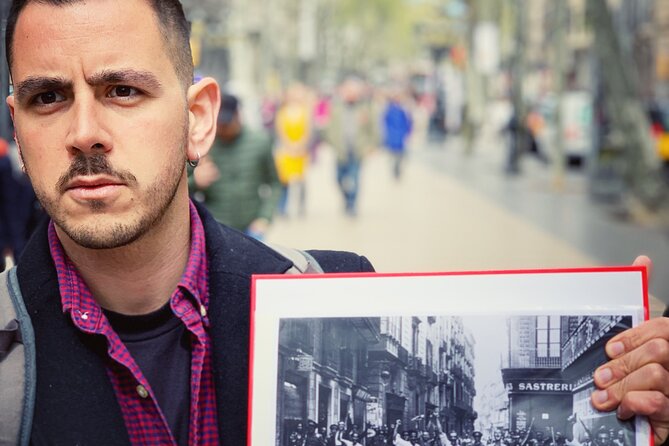
- Historic photographs and posters help you compare wartime Barcelona with the streets you see today.
- The tour lasts about two and a half hours and is offered in English, with a maximum group size of 25.
- Bring comfortable shoes and prepare to concentrate, since the route involves walking and a large amount of information.
- A radio headset costs an extra €1 per person, paid at the meeting point to an outside provider.
Why Barcelona’s Civil War story works best on foot
You can read about the Spanish Civil War in a book, but Barcelona adds layers that are hard to picture from a timeline. The conflict was not simply Republicans against Nationalists. Within the Republican side, political groups disagreed sharply about the war, the revolution, and the future of society.
That is why a street-based tour can be useful. You are shown where major events unfolded, then given the political background needed to understand them. The guide’s task is not just to identify old buildings. It is to explain who controlled them, why different groups clashed, and how the conflict changed daily life in Barcelona.
The tour also reaches beyond 1936 to the Franco dictatorship. That matters because the war did not end the political story. Repression, memory, identity, and silence continued to shape Spain long after the fighting stopped.
I would book this early in your Barcelona visit if modern Spanish history interests you. It gives you a different way to read the Old Town afterward. A church, square, or battered wall may look like a simple sightseeing stop until you understand what happened there.
More Walking Tours in Barcelona
- Barcelona Tapas and Wine Experience Small-Group Walking Tour
★ 5.0 · 5,804 reviews - Barcelona: Tapas Walking Tour with Food, Wine, and History
★ 4.8 · 4,261 reviews - Barcelona Tapas Walking Tour: Food, Wine & History
★ 4.5 · 1,928 reviews
Plaça Catalunya: beginning with the city’s central stage
The walk begins near Foot Locker at Plaça de Catalunya. The meeting point is easy to locate in one of Barcelona’s main central squares, and the tour starts with roughly ten minutes focused on the square’s role during the Civil War.
This is a sensible opening because Plaça Catalunya is familiar to almost anyone visiting Barcelona. The guide can use a place filled with modern traffic, shops, and pedestrians to establish how the city functioned during wartime. You begin with geography, then build toward politics and social conflict.
The short stop does not mean the square is treated as a quick photo opportunity. It sets up Barcelona as a city where public spaces became tied to power, protest, and factional control. You will want to listen closely here because later stops depend on understanding the competing forces introduced at the start.
La Rambla: reading a famous avenue through wartime events
From Plaça Catalunya, the route continues to La Rambla for another ten-minute stop. This is one of Barcelona’s best-known streets, but the tour gives it a more difficult role by pointing out sites connected with the Civil War.
The value here is contrast. La Rambla is usually presented as a grand pedestrian avenue lined with markets, cafés, and historic buildings. The guide instead uses it to show how conflict occupied familiar public space. Historic images make the comparison sharper, helping you connect the modern street with the city shown in wartime photographs.
The stop is fairly brief, so do not expect every event connected with La Rambla to receive a long explanation. You will get the most from it if you have already listened carefully to the guide’s outline of the political groups involved.
Antic Hospital de la Santa Creu: a medieval setting with modern scars
The Antic Hospital de la Santa Creu brings the route into a complex with roots in the 15th century. The stop lasts about five minutes, but its age gives the tour another useful layer. Barcelona’s Civil War unfolded inside a much older city, where hospitals, churches, civic buildings, and narrow streets all carried earlier stories.
A brief stop at an old hospital also helps move the discussion away from generals and government offices. War is measured in institutions that treat the wounded, care for civilians, and try to keep functioning when normal life breaks down.
Because the visit is an outdoor walking tour rather than a museum program, you should not expect a long indoor examination of hospital collections. The point is the location and its connection to the city’s wartime experience.
More Barcelona walks with a guide:
- Barcelona: Tapas Food Crawl Walking Tour with Tastings
★ 4.9 · 1,798 reviews - Barcelona: Gothic Quarter Ghosts and Legends Walking Tour
★ 4.7 · 1,443 reviews - Barcelona Helicopter, Sailboat & Old Town Private Walking Tour
★ 5.0 · 1,395 reviews - Barcelona: Old Town and Gothic Quarter Walking Tour
★ 4.8 · 1,393 reviews
Basilica de Santa Maria del Pi: an old church with a wartime connection
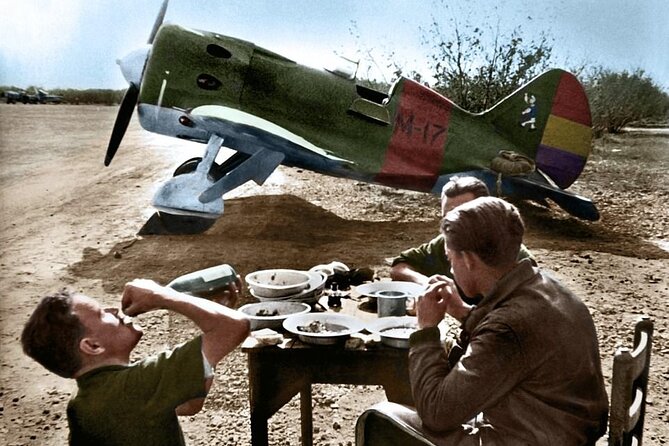
The Basilica de Santa Maria del Pi receives about five minutes of attention. The church has a lesser-known connection to the Civil War, and this is exactly the kind of stop that makes the tour different from a standard Barcelona walk.
You may already pass this basilica while exploring the Gothic Quarter. The guide gives you a reason to stop and consider how religious buildings fitted into the political and social pressures of the period. The church’s age also highlights the collision between old religious traditions and the revolutionary currents that ran through Barcelona’s working-class districts.
Admission is not included, so the tour should be understood as a guided look at the site rather than a paid interior visit. If entering the basilica matters to you, you will need to handle that separately.
Plaça Sant Felip Neri: beauty beside visible destruction
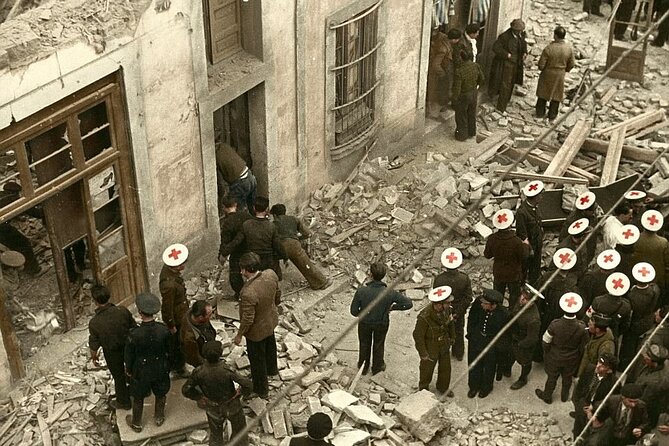
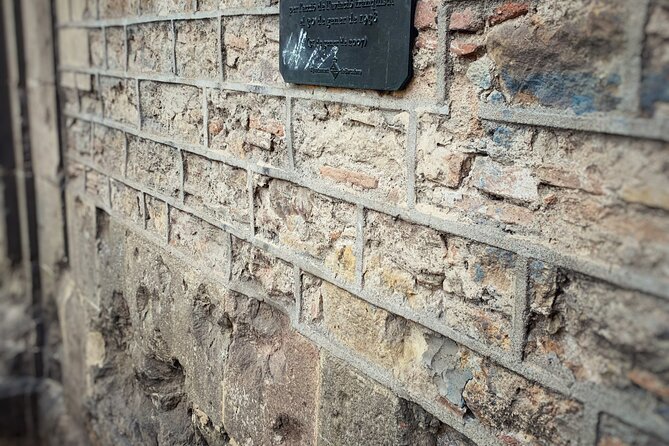
The final listed stop is Plaça Sant Felip Neri, with about five minutes devoted to the square. It is one of the most visually striking places on the route, but the beauty comes with a painful story. Damage linked to the Civil War remains one of the clearest reminders of destruction in Barcelona’s historic center.
This is where the tour’s method becomes especially direct. Instead of discussing violence only in abstract terms, the guide places the subject beside a wall and a quiet square. Historic images can help you see what changed, while the surviving marks give the story a physical presence.
The stop is short, and the square can be emotionally heavy. It is best approached with respect rather than treated as a dramatic backdrop for photographs. The tour’s strength is its willingness to connect attractive Barcelona with the damage and loss that shaped it.
Guides who can make the politics understandable
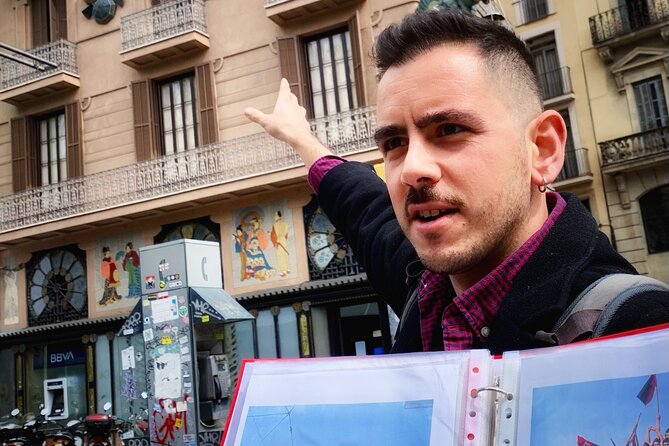
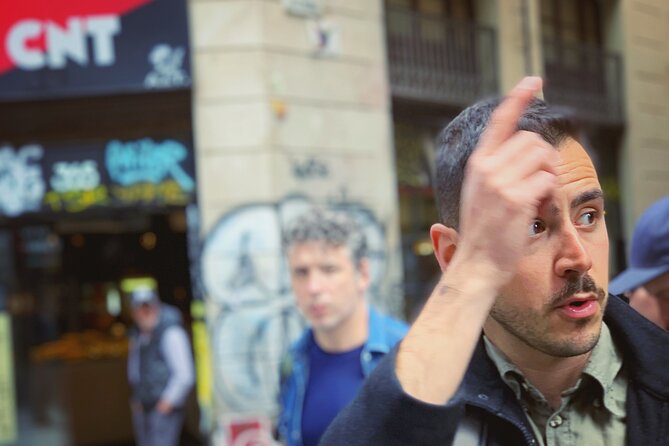
The quality of this experience depends heavily on the guide. The subject is complicated, and the group may include people with no prior knowledge alongside people who have studied the Civil War closely.
Several guides receive strong praise for handling that range of interest. Henrieta is described as thorough, clear, and able to explain the many organizations and personalities involved. Chrysa is praised for patient answers and a thoughtful approach to sensitive material. Evan is noted for making difficult political relationships easier to follow, while Yannis is described as a strong teacher who connects past events to ordinary life.
Filipa is also praised for her command of the social and political forces behind the war. Onno is described as willing to adjust the route to address questions. These details matter because the best version of this tour is not a memorized speech. It is a guided lesson that responds to the people standing in front of the speaker.
There is also a practical warning. One account describes a guide who presented names and events in a confusing order and did not use the visual material consistently. That suggests a real risk with any complex history tour: even accurate information can become difficult to follow if it is not organized well. Ask questions when you lose the thread, and use the photographs and maps as anchors.
What the photographs add to the walk
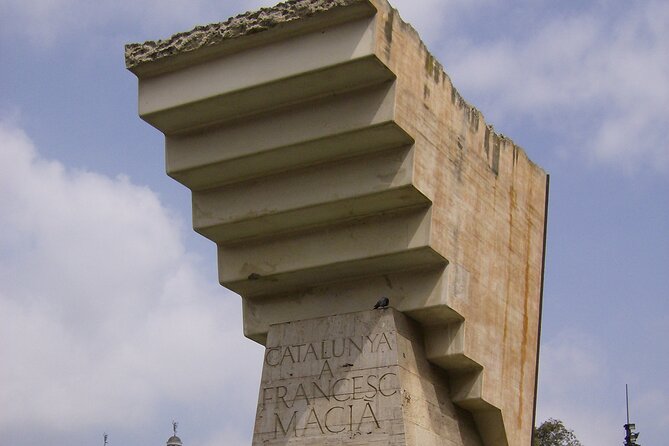
The tour includes historic images from the war. This is more useful than it may sound. Barcelona has changed, and many wartime events do not have large monuments or clear plaques. Without visual aids, you may hear a location’s story but struggle to picture the scene.
A photograph shown at the right corner or beside the right façade can bridge that gap. You can compare the wartime view with the present street, then understand that today’s shops and crowds occupy a place with a very different past.
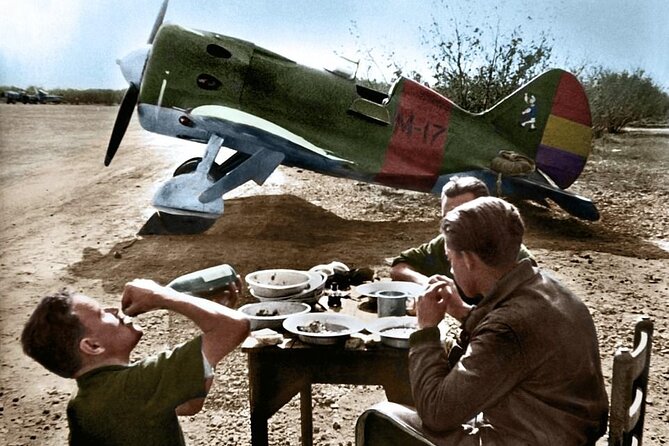
The material also appears to include posters and other historical images. That broadens the story beyond physical damage. Political messages, public feeling, and rival visions for Spain become easier to discuss when you can see how people communicated during the conflict.
A serious walk, not a light sightseeing break
The advertised duration is about two hours and thirty minutes. The stops themselves are short, but the time between them is filled with explanation, political context, and questions. Some sessions have run close to three hours, so allow a little flexibility rather than scheduling a tight appointment immediately afterward.
Comfortable shoes are important. One account calls the walk intensive, while another describes the walking as minimal, so the exact feel may depend on the guide, pace, and group. Either way, you will be standing outdoors and moving through the Old Town. Shoes that handle stone streets are a smart choice.
The €1 radio headset is another small but useful detail. It is paid at the meeting point to an outside provider, and using a headset can make it easier to hear in central Barcelona. One person specifically recommends having headphones to concentrate. If the group reaches the maximum of 25, the headset may be especially helpful.
Who will get the most from the $47.16 price
At $47.16 per person, this is not the cheapest way to spend two and a half hours in Barcelona. Its value depends on how much you want structured historical teaching rather than general sightseeing.
I think the price makes sense if you want a clear introduction to the Spanish Civil War in Barcelona and would otherwise struggle to connect scattered buildings and political groups. A good guide can save you hours of reading while putting the subject directly into the streets.
The price is harder to justify if you prefer a relaxed stroll, dislike long explanations, or already have a detailed plan for studying the war. The tour covers a demanding subject quickly, and the experience depends more on the guide’s delivery than on grand monuments or formal museum exhibits.
Group discounts may help lower the cost for several people. Since the tour is capped at 25, it is not designed as a private walk, but the group size is still manageable for a street lesson when everyone can hear.
How to prepare for a better experience
You do not need a degree in Spanish history, but a little preparation will help. Know that the tour covers both the Civil War and Franco’s dictatorship, along with Barcelona’s working-class and anarcho-syndicalist past. That is a wide subject for one walk.
Come ready to ask questions. Guides such as Evan, Chrysa, Yannis, and Henrieta have been praised for welcoming questions and explaining difficult points patiently. The tour works best when you speak up instead of letting unfamiliar names pile up.
I would also bring water, wear comfortable shoes, and leave room in your schedule. The tour is offered in English, and service animals are allowed. Most people can participate, but the format still requires walking and standing outdoors.
The route begins at Foot Locker, Plaça de Catalunya 20, in Ciutat Vella. It ends somewhere different, though the supplied meeting details do not specify the final address. Plan to check the end point before booking any timed activity afterward.
Cancellation and weather details worth noting
You can cancel up to 24 hours before the start time for a full refund. Changes or cancellations made inside that 24-hour window are not accepted for a refund.
The experience requires suitable weather and a minimum number of participants. If poor weather or insufficient bookings cancel the tour, you are offered another date or experience, or a full refund. Confirmation arrives when you book.
Is this the right Barcelona tour for you?
Book it if you want Barcelona explained through political conflict, working-class life, physical damage, and the long shadow of Franco. It is especially useful early in a stay, when the Old Town is still unfamiliar and you want a historical key for reading the city.
Skip it if you want Gaudí, food, architecture, or a cheerful orientation walk. This is a focused lesson on a painful period, and the quality can vary with the guide’s organization. Still, the strongest guides make the subject clear, humane, and relevant. For a visitor willing to listen, ask questions, and walk at a steady pace, this is one of the more worthwhile ways to understand modern Barcelona.
FAQ
Where does the Spanish Civil War and Franco Barcelona Walking Tour begin?
The tour begins at Foot Locker, Plaça de Catalunya 20, Ciutat Vella, 08002 Barcelona, Spain.
Where does the tour end?
The activity ends at a different location from the starting point. The supplied details do not provide the final address.
How long does the tour last?
The stated duration is approximately two hours and thirty minutes. Some sessions may run close to three hours, so leave extra time afterward.
What language is the tour offered in?
The tour is offered in English.
How much does the tour cost?
The listed price is $47.16 per person. Group discounts are available.
How large is the group?
The maximum group size is 25 participants.
Is a radio headset included?
No. A guide radio headset costs €1 per person and is paid at the meeting point to an external provider.
Are admission tickets included?
The walking tour includes access to the listed outdoor stops. Admission to the Basilica de Santa Maria del Pi is not included.
Is the tour suitable for most people?
Most people can participate, and service animals are allowed. You should be comfortable walking and standing during the experience.
Can I cancel for a full refund?
Yes. You must cancel at least 24 hours before the local start time to receive a full refund. If poor weather or an insufficient minimum group cancels the tour, you are offered another date or a full refund.
Recently reviewed around Barcelona
- Excursion Aigüestortes – Estany Llebreta (1/2 day)★ 5.0 · 138 reviews
- E-Bike tour in Barcelona with English Guide★ 5.0 · 128 reviews
- Wine Tasting Experience in Barcelona★ 5.0 · 172 reviews
- Barcelona Luxury Yacht Cruise – Day or Sunset, Open Bar & Snacks★ 5.0 · 154 reviews
- Montserrat: Cog-Wheel, Basilica, Black Madonna & Licor Tasting★ 4.5 · 886 reviews
- Barcelona Wax Museum Admission Ticket★ 4.5 · 237 reviews
- Barcelona: Wine Tasting and 5 Course Tapas Pairing Dinner★ 4.5 · 129 reviews
- Andorra Original History and Sightseeing Tour (Private, Pickup)★ 5.0 · 350 reviews
Walking Tours, compared.
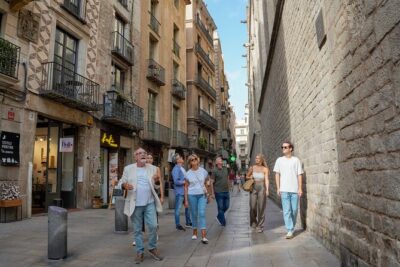
Barcelona Tapas and Wine Experience Small-Group Walking Tour
Read our review →
Tapas Walking Tour with Food, Wine, and History
Read our review →
Albaicín and Sacromonte Guided Sunset Walking Tour
Read our review →
Toledo Tour & Vineyard Walk with Wine Tasting from Madrid
Read our review →
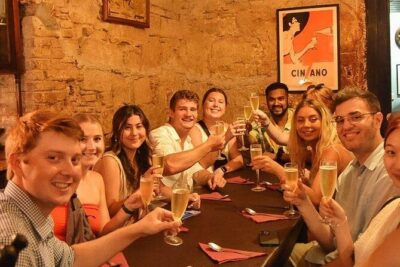
Barcelona Tapas Walking Tour: Food, Wine & History
Read our review →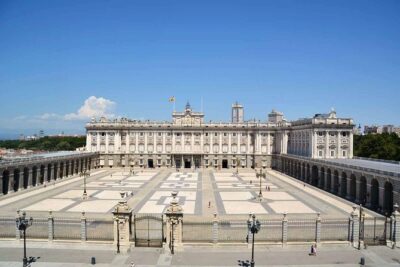
Madrid Old Town & Royal Palace Walking Tour Skip the Line Ticket
Read our review →
Browse the lists this tour appears in