
Reviewed · TENERIFE TOURS
Tenerife: La Casa de Los Balcones Entrance Ticket
La Casa de Los Balcones gives you a close look at domestic life in 19th-century Tenerife. Instead of touring a grand palace built for royalty, you walk through a family home with preserved belongings, traditional rooms, handmade textiles, and the famous wooden balconies of La Orotava.
I like the lovingly kept interior and the chance to see Calados, a delicate Canarian thread craft that is easy to miss elsewhere. I also like the low $7 price, which makes this a simple cultural stop during a day in town.
The main drawback is scale. The house is attractive, but there is not a huge amount to see, so the visit may feel brief if you expect a large museum. Bring your own phone and headphones for the audio guide, and note that Apple device compatibility has caused problems for at least one visitor.
In This Review
- Key points to know before you go
- Entering a Canarian family home
- What the preserved antiques tell you
- Calados, the fine threadwork of Tenerife
- Using the downloadable audio guide
- A short route with several layers
- The gift shop and its local connection
- What the $7 ticket is worth
- Who will enjoy this museum most
- Practical advice for a smoother visit
- Should you book La Casa de Los Balcones?
- FAQ
- Where is La Casa de Los Balcones?
- What is La Casa de Los Balcones?
- What does the entrance ticket include?
- Which languages are available for the audio guide?
- Do I need my own phone for the audio guide?
- Is the audio guide guaranteed to work with Apple devices?
- How much does admission cost?
- How long is the ticket valid?
- Can I cancel the booking?
- Is the museum wheelchair accessible?
Key points to know before you go
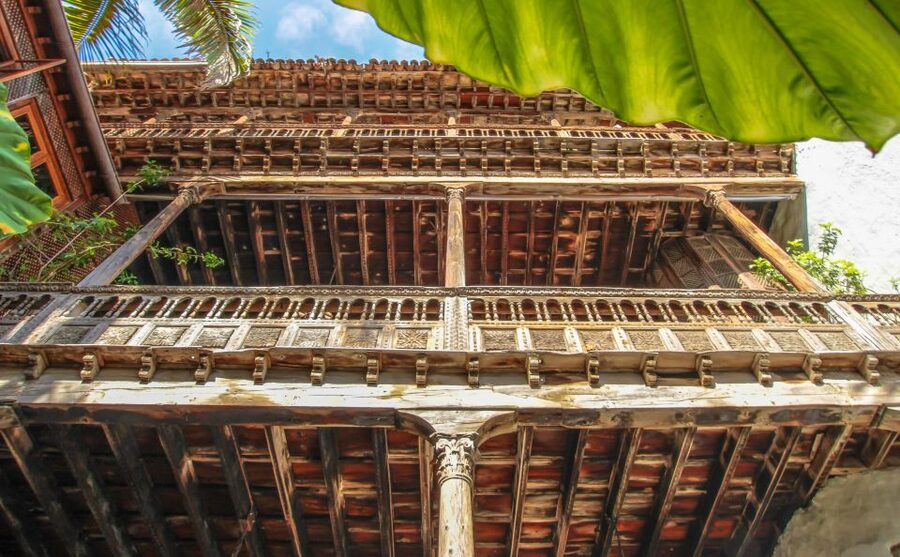
- A real 19th-century townhouse: See a former family home rather than a modern museum reconstruction.
- Personal antiques on display: Preserved belongings help show how the household lived and worked.
- Calados threadwork: Study fine Canarian embroidery and learn about the techniques behind it.
- Audio guide in four languages: Downloadable commentary is available in English, Spanish, French, and German.
- A small but useful gift shop: Look for lace, embroidery, pottery, regional costumes, and miniature balconies.
- Best for a short cultural visit: The house is easy to fit into a day in La Orotava, but it may not fill an entire afternoon.
Entering a Canarian family home
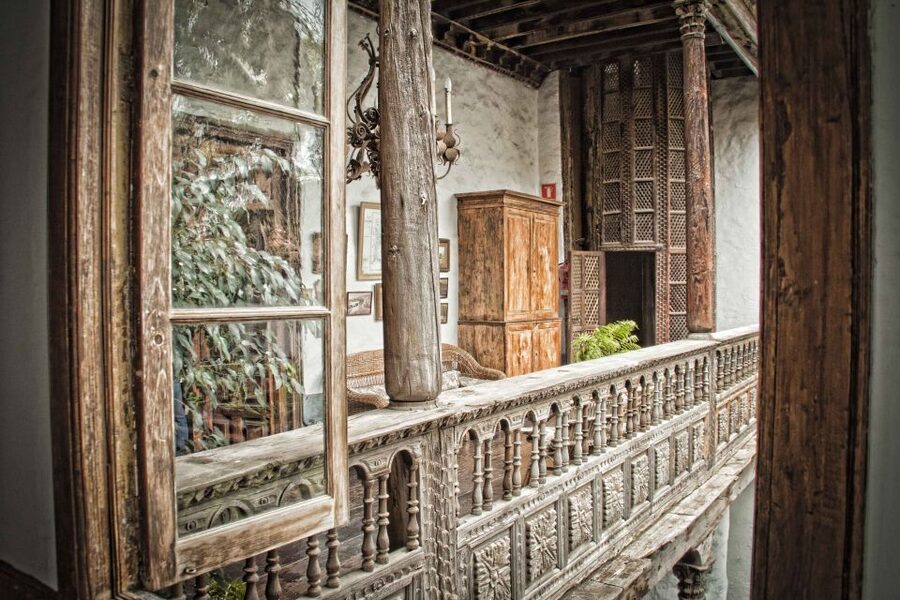
La Casa de Los Balcones is not simply a building with an attractive facade. It is a former 19th-century Canarian townhouse that now works as a cultural museum. The appeal begins with its scale. You are looking at a home made for family life, not a monumental residence designed to impress visiting dignitaries.
As you move through the property, you can see preserved belongings and antique pieces connected with the former owners. These objects give the visit a personal feel. A table, household item, decorative piece, or old furnishing can say more about daily habits than a long history panel.
The house also helps you picture how a family once used its rooms. The experience is less about a single famous object and more about the way the rooms, furnishings, customs, and craft traditions fit together. I find that useful because Tenerife’s past can otherwise seem abstract when you only see churches, viewpoints, and old streets from outside.
The displays are not presented as a huge collection. That is important when setting your expectations. One recent assessment described the house as attractive but with very little to visit, and that is a fair warning. You can enjoy the character of the place without expecting several floors of major museum galleries.
More Tenerife trips worth a second look
- Siam Park Entry Tickets
★ 4.5 · 15,710 reviews - Tenerife: Loro Parque Entry Ticket
★ 4.8 · 12,411 reviews - Loro Parque and Siam Park Combined Admission Tickets
★ 4.7 · 7,307 reviews
What the preserved antiques tell you
The former owners’ personal antiques are one of the strongest reasons to pay attention here. They add a human scale to the visit. Rather than looking at anonymous objects behind glass, you are shown belongings linked to the people who lived in the house.
The information provided does not identify every object or describe a full room-by-room route, so you should not arrive expecting a detailed catalogue. Still, the preserved collection gives you a glimpse of family life in 19th-century Tenerife and the customs that shaped it.
I would take time to look at how the household objects relate to the rooms. Notice what appears practical, what appears decorative, and what reflects local taste. The point is not speed. This is a place where slowing down for a few minutes can make a modest display feel more meaningful.
The house also connects private life with the wider story of La Orotava. You learn about the town’s old roots and Canarian cultural traditions, giving the objects a setting beyond the walls. That local link makes the visit more useful than a simple architectural photo stop.
Calados, the fine threadwork of Tenerife
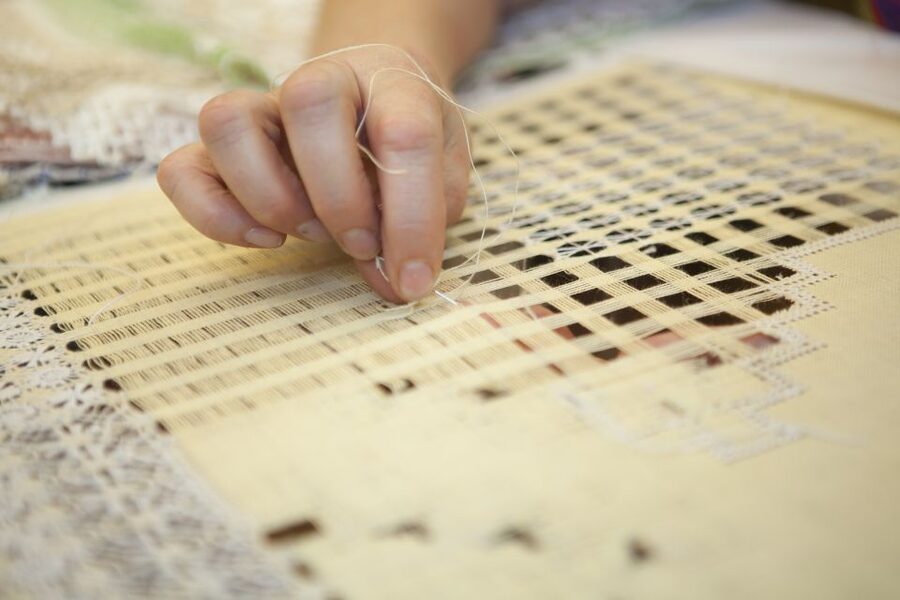
The handcraft exhibits are a particular highlight. They include Calados, a traditional form of Canarian threadwork made with intricate drawn-thread techniques. The designs require care and precision, and the fine open patterns can be surprisingly detailed when seen at close range.
You can learn about the history of Calados and the methods used to produce it. This matters because the craft is not just a pretty souvenir. It reflects time, skill, and local practice passed through generations. Once you understand how the thread is worked, you look at the cloth differently.
I would give this section more time than you might expect. Visitors often move quickly past textile displays, but Calados rewards a close look. The delicate patterns are easy to underestimate from a distance.
The house’s craft displays also broaden the visit. You are not only seeing how a family lived, but also how people in the Canary Islands made useful and decorative goods. The museum connects home life, handwork, and regional identity in a compact space.
Using the downloadable audio guide
Your ticket includes a downloadable audio guide in English, Spanish, French, and German. For many people, this will be the best way to add context to the rooms and objects, especially since the house is not described as having a named live guide.
You need to use your own mobile phone and headphones. Download or prepare the guide before you start if possible, since handling a phone while looking at small exhibits can become awkward.
There is an important technical caution. One visitor reported that the audio guide did not work with an Apple device. The supplied information does not explain the full range of compatible phones, so I would not assume that every iPhone setup will function without trouble. If the commentary matters to you, bring headphones, check access before setting out, and keep your booking details available.
The audio guide is available in four languages, which is helpful for an international audience. Still, the quality of your visit should not depend entirely on it. The building, antique collection, craft displays, and printed information provide the basic experience, but the audio adds detail about customs and techniques.
A different way to spend the day, same corner of Spain:
- Tenerife: Eco-Yacht Whale and Dolphin Watching and Swimming
★ 4.7 · 15,619 reviews - Los Cristianos Respectful No-Chase Whale and Dolphin Safari
★ 4.6 · 12,782 reviews - Tenerife: Kayak and Snorkel with Turtles, Wetsuits Included
★ 4.6 · 7,215 reviews - Costa Adeje: Whale & Dolphin Eco-Cruise with Snacks & Drinks
★ 4.6 · 5,096 reviews
A short route with several layers
The visit is valid for one day, with availability and starting times shown when you check. The information does not give a fixed length for the walk-through, and the house itself is not presented as a full-day attraction.
I would plan it as a short museum stop within a wider visit to La Orotava. You can begin with the building and its domestic rooms, then look at the antique collection, move on to the art and Calados displays, and finish with the cultural information and shop.
That order gives the house a natural flow:
- Start by taking in the townhouse itself and its traditional design.
- Look at the former owners’ belongings and consider how the rooms supported family life.
- Spend time with the art and handcraft displays, especially the Calados work.
- Use the audio guide for background on techniques, customs, and the town’s past.
- Finish at the shop if you want a locally themed souvenir.
The route sounds simple because it is simple. That is not necessarily a weakness. If you already plan to explore La Orotava, this museum adds a focused dose of local culture without demanding a major time commitment.
The limitation is that a compact route can feel too short at full price for some visitors. At $7 per person, though, the cost is modest. The value depends on your interests. Someone who enjoys traditional homes, textiles, and local history should find enough here for the price. Someone looking for a large collection or a long guided tour may feel underwhelmed.
The gift shop and its local connection
The gift shop gives you a practical ending to the visit. It sells embroidery, lace, pottery, regional costumes, and other local products. You can also find miniature balconies representing La Orotava, a more specific souvenir than the usual generic Tenerife merchandise.
This is a good place to buy something linked to what you just saw. A piece of lace or embroidery connects to the handcraft displays, while a miniature balcony recalls the architecture of the town.
The supplied information does not give prices or details about how items are made or sourced, so I would inspect products carefully and ask staff for more information if craftsmanship or origin matters to you. Even so, the shop helps keep the cultural theme going rather than switching suddenly to unrelated souvenirs.
If you do not plan to buy anything, you can still view it as a final display of regional crafts. It gives you another chance to compare embroidery, pottery, costumes, and decorative objects after seeing the museum’s examples.
What the $7 ticket is worth
At $7, this is one of those visits where the question is not simply cheap or expensive. The question is what you want from a museum.
The ticket is good value if you want:
- A preserved historic house rather than a large formal museum
- A quick cultural stop in La Orotava
- Local textile traditions and handmade work
- A look at family antiques and domestic customs
- An audio guide in your preferred language
- A chance to buy regionally themed crafts
The value is weaker if you want a long itinerary, a live guide, or a large number of rooms and major objects. The house is described as beautiful and carefully furnished, but the amount on display is limited.
I would compare it to paying for a small local museum, not a major Tenerife attraction. That comparison makes the price easier to judge. You are paying for atmosphere, context, and a specific look at Canarian life. You are not paying for hours of entertainment.
The reserve-now-and-pay-later option can help if your route around Tenerife is still changing. You can reserve the visit without paying immediately, and free cancellation is available up to 24 hours before the visit for a full refund. Check the conditions at booking, since the attraction uses availability and starting times.
Who will enjoy this museum most
I would recommend La Casa de Los Balcones to you if you enjoy architecture, domestic history, traditional crafts, or small museums with a local focus. It is also a sensible choice if you want to understand La Orotava beyond its streets and views.
Families may find the townhouse easier to manage than a long museum, though the accessibility limits matter. The experience is not suitable for wheelchair users or people with mobility impairments, so check your needs before booking.
Art and textile enthusiasts should pay particular attention to the Calados displays. The work is fine enough that you may appreciate having a phone camera for personal reference, provided photography is allowed on site. The supplied information does not state the photography rules, so ask at the entrance before taking pictures.
The museum also suits anyone who prefers self-guided sightseeing. You can move at your own pace rather than following a group, and the four-language audio guide gives you a way to add explanation without arranging a private tour.
Practical advice for a smoother visit
Show your voucher at the museum’s entrance ticket collection point. Bring your own phone and headphones, since they are required for the downloadable audio guide.
If you use an Apple phone, treat the audio as something to verify rather than a guarantee. The reported compatibility problem does not prove that every Apple device will fail, but it is enough reason to check before you rely on the guide.
Allow enough time to look closely at the small details. The attraction is not described as large, so rushing will only make it feel smaller. Focus on the furnishings, personal antiques, traditional customs, and textile work instead of trying to count rooms.
The attraction is valid for one day, but that does not mean you need to spend a full day inside. Think of it as one stop in a La Orotava plan. The museum can give your walk through town more context, particularly if you visit the shop and take note of the balcony designs.
The available languages are Spanish, English, French, and German. If you need another language, the provided information does not indicate that one is available.
Should you book La Casa de Los Balcones?
Book it if you want a modestly priced, focused look at a traditional Canarian home. The best parts are the lovingly furnished rooms, the former owners’ antiques, and the close look at Calados threadwork. The shop adds useful local souvenirs, especially the miniature balconies and regional crafts.
Skip it if you need a full-day attraction, a large museum collection, or guaranteed audio compatibility with an Apple device. At $7, the risk is fairly small, but your expectations should stay realistic.
My advice is to pair the house with other time in La Orotava and treat it as a cultural pause, not the sole reason for a full day. If that fits your plans, the ticket offers a clear and affordable way to see the town’s traditions from inside an actual historic home.
FAQ
Where is La Casa de Los Balcones?
La Casa de Los Balcones is in La Orotava, Tenerife, in the Canary Islands of Spain.
What is La Casa de Los Balcones?
It is a former 19th-century Canarian townhouse that now operates as a cultural museum with antique belongings, art, traditional handcrafts, and local products.
What does the entrance ticket include?
The ticket includes entrance to the museum and a downloadable audio guide.
Which languages are available for the audio guide?
The audio guide is available in English, Spanish, French, and German.
Do I need my own phone for the audio guide?
Yes. You need your own mobile phone and headphones to use it.
Is the audio guide guaranteed to work with Apple devices?
The available information does not guarantee Apple compatibility. One visitor reported that the audio guide did not work with an Apple device, so check before relying on it.
How much does admission cost?
The stated price is $7 per person.
How long is the ticket valid?
The ticket is valid for one day. You should check availability for the available starting times.
Can I cancel the booking?
Yes. You can cancel up to 24 hours in advance for a full refund.
Is the museum wheelchair accessible?
The experience is not suitable for wheelchair users or people with mobility impairments.
Recently reviewed around Tenerife
- BRONZE tandem paragliding flight in South Tenerife, free pick up★ 5.0 · 257 reviews
- Tenerife: Teide, Icod de los Vinos & Garachico Full Day Tour★ 4.3 · 602 reviews
- Las Galletas: Whale & Dolphin Tour with Local Skipper★ 4.8 · 397 reviews
- Tenerife: Sunset Night Tour and Stargazing at Teide + Dinner★ 3.8 · 316 reviews
- Tenerife: Teide National Park Guided Buggy Tour★ 4.6 · 299 reviews
- Tenerife: Sunset Catamaran Tour with Transfer, Buff & Drinks★ 4.8 · 570 reviews
- Tenerife: Siam Park All-Inclusive Entry Ticket★ 4.7 · 915 reviews
- Tenerife: Snorkeling Tour in a Marine Protected Area★ 4.9 · 636 reviews
Tenerife Tours, compared.


Eco-Yacht Whale and Dolphin Watching and Swimming
Read our review →
Los Cristianos Respectful No-Chase Whale and Dolphin Safari
Read our review →
Loro Parque and Siam Park Combined Admission Tickets
Read our review →
Kayak and Snorkel with Turtles, Wetsuits Included
Read our review →
Whale & Dolphin Eco-Cruise with Snacks & Drinks
Read our review →
Mount Teide Tour with Cable Car Ticket & Transfer
Read our review →Browse the lists this tour appears in