
Reviewed · NATIONAL PARKS
Teide National Park: Stargazing Experience
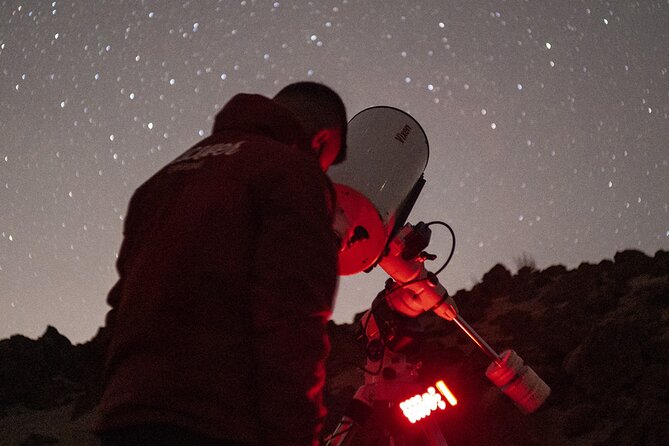
Teide National Park gives you a rare chance to see the night sky without town lights washing it out. The tour begins with the naked eye, then moves to high-grade telescopes aimed at planets, star clusters, and other striking objects. Guides such as Miguel and Manuel have made the science clear, lively, and easy to follow.
I especially like the practical sky navigation and the Greek mythology woven into the constellations. I also like the chance to receive astrophoto images of objects seen during the session. The main drawback is the cold: at altitude, even a mild Tenerife evening can feel bitter after two hours outdoors.
In This Review
- Key points to know before you book
- Why Teide is the right place for stargazing
- The first lesson happens before the telescope
- What you may see through the telescope
- Clear guides turn science into a shared experience
- The cold is the real challenge
- How much value do you get for $41?
- The best time to book depends on the moon
- Who will enjoy this most?
- Practical details that can make or break the evening
- Should you book the Teide stargazing experience?
- FAQ
- Where does the stargazing tour meet?
- How long does the activity last?
- What languages are available?
- What does the tour include?
- Is hotel pickup included?
- Is dinner included?
- What should I wear?
- Can children attend alone?
- Are pets allowed?
- Can I cancel for a refund?
- Does the moon affect the experience?
- Who should not take part?
Key points to know before you book
- You start with the naked eye: Learn Polaris, the celestial north pole, the ecliptic, zodiac constellations, and major stars before using a telescope.
- The telescope targets change: Depending on the season and conditions, you might see Jupiter and its moons, Saturn, Mars, Orion’s Nebula, Andromeda, or star clusters.
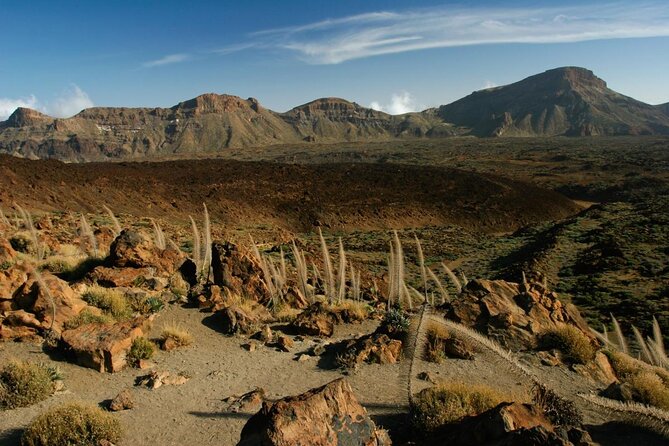
- Teide’s dark sky matters: The national park offers far less interference from town lights than the coast and resort areas.
- Guides make the difference: Miguel, Manuel, and Luke have been praised for clear explanations, humor, and strong astronomy skills.
- Dress for winter at any time: Warm clothing and warm shoes are essential, especially from autumn through spring.
- The tour is short and focused: At 80 minutes and $41 per person, it works best as a dedicated astronomy activity rather than a full evening outing.
Why Teide is the right place for stargazing
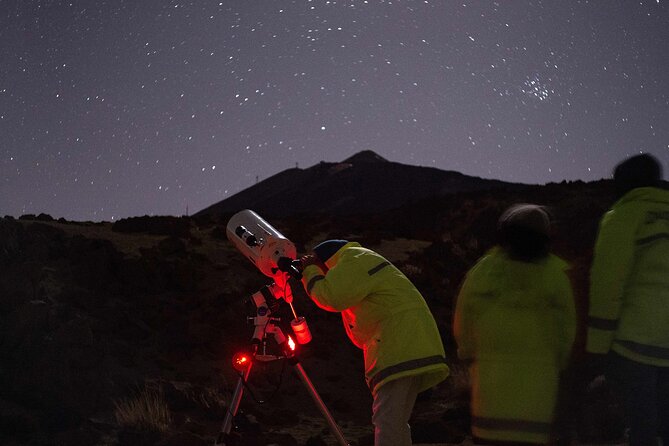
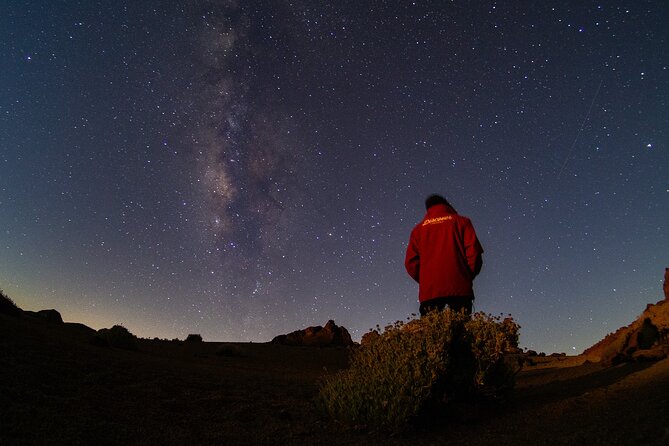
Tenerife is famous for sun, beaches, and volcanic scenery, but the island’s high interior offers a very different experience after dark. Teide National Park is far from the strong lights of the main coastal resorts, so more stars become visible. That difference is not a minor detail. It is the reason the sky here can feel crowded with stars instead of reduced to a few bright points.
You meet in the parking area just in front of the natural environment of Minas de San José. If you drive from the south, this is the second car park on the right. From the north, it is the first car park on the left. The meeting point is practical, but you need to pay close attention to the directions because this is not a hotel pickup service.
The activity starts after sunset. The exact time can change with the season, and a booking made months ahead may not have a final start time yet. The provider contacts you by WhatsApp or email to confirm the schedule, so keep an eye on both.
More Tenerife trips worth a second look
- Tenerife: Sunset and Stargazing at Teide National Park
★ 4.7 · 2,826 reviews - Teide National Park Sunset & Stargazing with Dinner (Star Safari)
★ 5.0 · 2,601 reviews - Tenerife: Snorkeling Tour in a Marine Protected Area
★ 4.9 · 636 reviews
The first lesson happens before the telescope
A good stargazing session should not begin with a telescope pointed at a random bright object. This one starts by helping you understand the sky above you.
Your guide first identifies major stars and constellations with the naked eye. You learn how to locate Polaris and understand the position of the celestial north pole. That gives you a fixed reference point, a useful way to make sense of the sky rather than simply stare at it.
The guide also introduces the ecliptic, the apparent path followed by the sun across the sky, and the zodiac line. This is where the tour can appeal to people who know little about astronomy. Zodiac signs are often treated as fortune-telling symbols, but here you see the actual constellations and their place in the night sky.
Greek mythology adds another layer. Your guide explains the shapes and stories linked to the constellations, giving you memorable hooks for finding them again. I like this mix because it serves both curious beginners and people who already know a few names. You receive facts, but you also get stories that help the patterns stick in your mind.
The naked-eye section is more important than it may first appear. It teaches you how to look upward without relying on equipment. After the tour, you can try to find Polaris or recognize a constellation from your hotel terrace, even without a telescope.
What you may see through the telescope
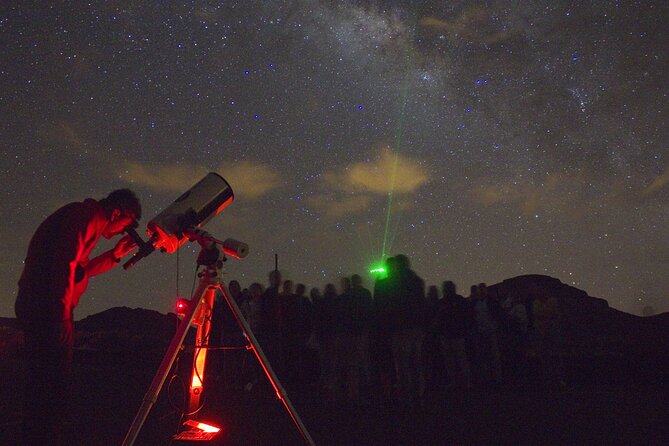
Once you have your bearings, the group turns to telescope observation. The exact objects depend on the date, visibility, and position of the planets. No responsible astronomy guide can promise the same view every night, and that is worth remembering when you book.
Several previous sessions have included Jupiter and its moons, Saturn, Mars, Orion’s Nebula, the Andromeda Galaxy, the Milky Way, and star clusters. Seeing Jupiter as a bright disk with its moons is a very different experience from seeing it as a point of light. Saturn can be especially memorable when conditions allow its rings to show clearly.
Orion’s Nebula offers a chance to see a cloud of gas and young stars within our own galaxy. Andromeda gives you a look at another galaxy, though the view through a telescope is not the same as a colorful space-agency photograph. That contrast is useful. The tour helps you understand what you are actually seeing rather than presenting every object as a dramatic image.
The selection changes with the calendar. A winter evening may offer Orion and Mars, while another season brings different constellations and planets. The moon also matters. A bright full moon can make some faint objects harder to see, while a darker sky can reveal more stars. The activity specifically advises you to consider the moon’s cycle before booking.
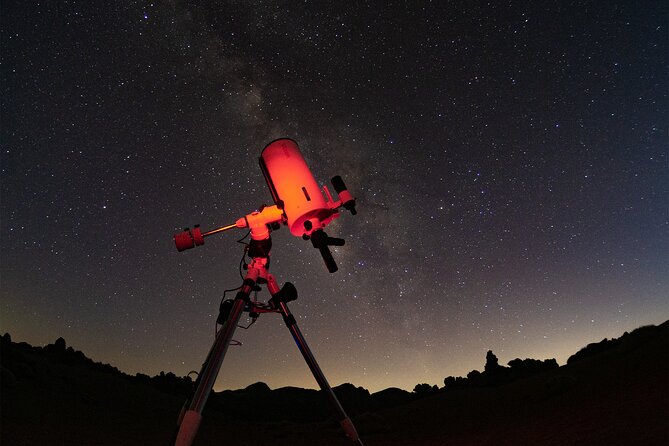
The telescopes are described as advanced, and the experience also uses an astrophoto telescope. On some evenings, images of an observed star cluster or galaxy are sent after the tour. That is a welcome extra because faint deep-sky objects can be hard to capture with your phone at the eyepiece.
Clear guides turn science into a shared experience
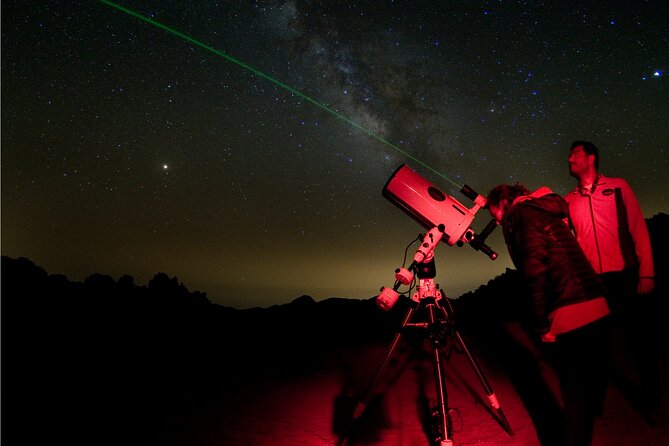
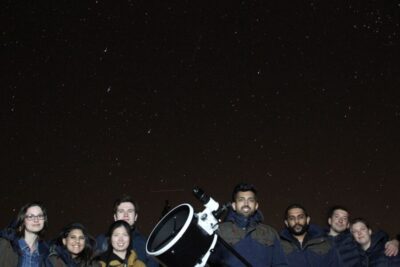
The guide is central to this activity. Miguel has led English sessions with a style described as clear, passionate, and funny. Manuel has also been praised for explaining the moon, constellations, and mythology in an engaging way. Luke led another session that combined telescope viewing with basic instruction on navigating the sky.
You should expect a live guide in English or Spanish. The best part of the commentary is its range. It covers basic orientation, some more advanced astronomy, mythology, and practical information about what you are seeing. You do not need an astronomy background to take part.
The tone appears friendly rather than academic. That makes the session a good choice for families with older children, couples, and adults who simply want a fresh evening activity. Children must be accompanied, since unaccompanied minors are not allowed, and pets are not permitted.
I would not book this expecting a private lesson or a silent, solitary night under the stars. It is a guided activity, and the value comes from having someone explain the sky, position the equipment, and connect separate objects into a larger picture.
A different way to spend the day, same corner of Spain:
- Siam Park Entry Tickets
★ 4.5 · 15,710 reviews - Tenerife: Eco-Yacht Whale and Dolphin Watching and Swimming
★ 4.7 · 15,619 reviews - Los Cristianos Respectful No-Chase Whale and Dolphin Safari
★ 4.6 · 12,782 reviews - Tenerife: Loro Parque Entry Ticket
★ 4.8 · 12,411 reviews
The cold is the real challenge
Tenerife’s coast may be warm, but Teide National Park sits high above the resorts. After sunset, the temperature can drop sharply, and wind makes the cold feel worse. Several sessions were described as freezing, with people still cold after roughly two hours outside.
Take the clothing advice seriously:
- Wear several warm layers.
- Bring a proper warm jacket.
- Use warm shoes with good coverage.
- Do not rely on the temperature at your hotel or the beach.
- Bring extra warmth in autumn and winter.
Comfortable shoes are also requested. You will be standing outside while looking at the sky and moving between viewing points or equipment, so thin sandals are a poor choice even if they suit your daytime plans.
The cold is not a flaw in the astronomy itself, but it changes how much you enjoy the evening. If you are poorly dressed, you may spend more time thinking about your hands and feet than about Jupiter’s moons. Pack for the mountain, not the coast.
The activity is also not suitable for people with heart problems or respiratory issues. It is not suitable for anyone who has been diving within the previous 24 hours. These restrictions should be treated as real booking considerations, not minor fine print.
How much value do you get for $41?
At $41 per person, the price is reasonable for a focused astronomy activity that includes a professional astronomical guide, naked-eye instruction, telescope viewing, and insurance. The use of advanced equipment and the dark setting add value that you would not get from simply looking at the stars from a resort balcony.
The 80-minute duration keeps the cost manageable, but it also limits what can be covered. This is not an all-night observatory program. You will receive a guided introduction and telescope time, but the session has to move at a steady pace.
One point to consider is the total time you may spend outdoors. Some sessions have lasted closer to two hours in practice, especially when telescope viewing and explanations run long. That can be good news if you want more astronomy, but it makes the warm-clothing advice even more important.
Dinner is not included, and neither is transport to or from your hotel. You need to arrange your own way to the Minas de San José meeting point. If you are already planning a drive through Teide National Park, this can fit neatly into your evening. If you are staying on the coast and do not have transport, the lack of pickup adds a practical complication.
The reserve-now-and-pay-later option helps if your schedule is still shifting. Free cancellation is available up to 24 hours before the activity for a full refund. The provider confirms the final start time by WhatsApp or email, which is useful when the booking is made far ahead.
The best time to book depends on the moon
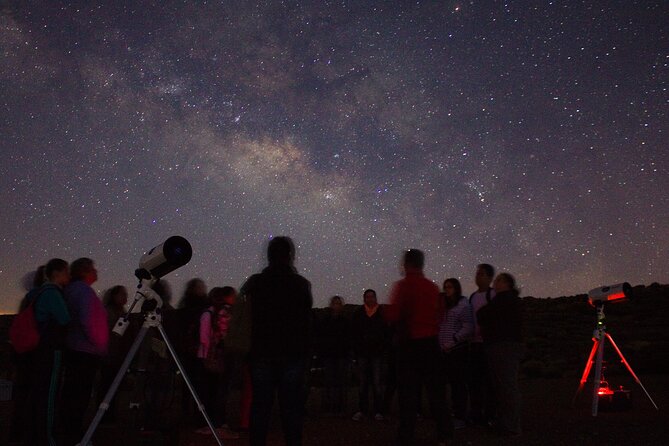
A dark moonless sky is not automatically best for every person. A bright moon can be a beautiful object to observe through a telescope and may give beginners something familiar to start with. It can also reduce the visibility of faint stars and distant galaxies.
For a stronger view of the Milky Way and dimmer objects, check the moon phase before choosing your date. The activity specifically warns you to think about the moon’s cycle. You should also remember that cloud, wind, and visibility can affect the night’s targets.
Because the tour runs after sunset, the season changes the start time. A summer booking will not necessarily begin at the same hour as a winter booking. If you book months ahead, wait for the provider’s WhatsApp or email confirmation rather than assuming the original time is final.
Who will enjoy this most?
I would recommend this tour to you if you want an introduction to astronomy that feels active and easy to follow. You get more from it if you are willing to ask questions, look carefully, and accept that the sky changes from night to night.
It suits:
- First-time stargazers who want help recognizing constellations.
- Couples looking for an unusual evening activity.
- Families with children who can manage a cold outdoor session.
- Amateur astronomy fans who want to use strong telescopes in a dark setting.
- Visitors already exploring Teide National Park who can reach the meeting point independently.
It may not suit you if you dislike standing outdoors at night, struggle with cold, or want guaranteed views of one specific planet. It is also a poor fit if you need hotel transportation or want dinner included.
The activity works best when you treat the telescope targets as part of the night’s natural conditions rather than a fixed checklist. Jupiter, Saturn, Mars, a galaxy, and a nebula may be possible at different times of year, but the guide cannot put every object in the sky at once.
Practical details that can make or break the evening
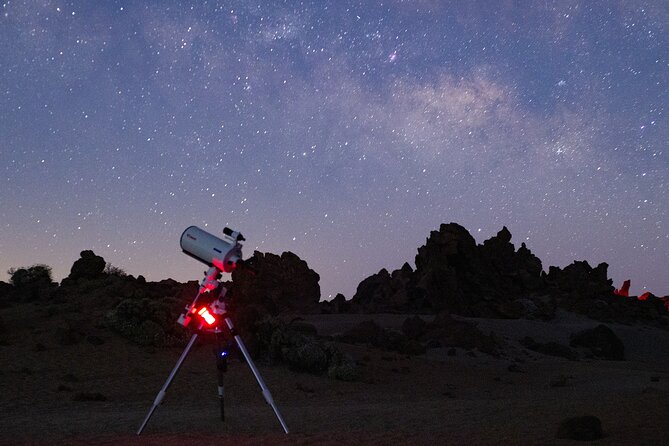
Wear your warmest practical clothing, even if Tenerife feels hot earlier in the day. Pack warm shoes and consider bringing more layers than you think you need. The high setting and night wind are the biggest comfort issue by far.
Keep your phone available for messages from the provider. The language options are Spanish and English, and schedule updates may arrive through WhatsApp or email. If you booked well in advance, confirm the final time before setting off.
The meeting point is the parking area in front of Minas de San José. Coming from the south, use the second car park on the right. Coming from the north, use the first car park on the left. Since hotel pickup is not included, allow enough time to reach the park and find the correct area.
The session includes insurance, but it does not include food. Eat beforehand or plan your own dinner arrangements. Since the tour is after sunset and the park is cold, a full stomach and warm drink before or after the activity can make the evening more pleasant, though food and drinks are not part of the booked service.
Should you book the Teide stargazing experience?
I would book this if you want a well-explained first look at the night sky and are prepared for serious cold. The strongest reasons are the dark setting, the step-by-step naked-eye orientation, and the chance to see planets, nebulae, galaxies, or star clusters through quality telescopes.
At $41, the experience offers fair value for its focused 80-minute format. You are paying for the guide’s explanations as much as for the equipment. The astronomy becomes easier to understand when someone points out Polaris, traces the zodiac path, explains a constellation’s myth, and then shows you a real object through the telescope.
Skip it if you need transport, dislike outdoor night activities, or have health conditions listed in the restrictions. Also check the moon phase and prepare properly for the temperature. If you do those two things, this can give your Tenerife trip a memorable change of pace, with the bonus of seeing a sky that feels far removed from the island’s busy coastal resorts.
FAQ
Where does the stargazing tour meet?
Meet in the parking area directly in front of the natural environment of Minas de San José in Teide National Park. Coming from the south, it is the second car park on the right. Coming from the north, it is the first car park on the left.
How long does the activity last?
The stated duration is 80 minutes. Some sessions may take longer when explanations and telescope viewing continue, so plan for substantial time outdoors.
What languages are available?
The live guide is available in Spanish and English.
What does the tour include?
It includes a naked-eye explanation of the sky, astronomical observation with telescopes, a professional astronomical guide, and insurance during the activity.
Is hotel pickup included?
No. You must make your own way to the Minas de San José meeting point.
Is dinner included?
No. Dinner is not included in the activity.
What should I wear?
Bring comfortable shoes, warm clothing, and warm shoes. Temperatures can be low at night, especially in autumn and winter.
Can children attend alone?
No. Unaccompanied minors are not allowed. Children must attend with an accompanying adult.
Are pets allowed?
No. Pets are not allowed on the activity.
Can I cancel for a refund?
You can cancel up to 24 hours in advance for a full refund. The reserve-now-and-pay-later option lets you hold a place without paying immediately.
Does the moon affect the experience?
Yes. The moon follows a cycle, and its brightness can affect how many faint stars and deep-sky objects you can see. Check the moon phase when choosing your date.
Who should not take part?
The activity is not suitable for people with heart problems, respiratory issues, or anyone who has gone diving within the previous 24 hours.
Recently reviewed around Tenerife
- BRONZE tandem paragliding flight in South Tenerife, free pick up★ 5.0 · 257 reviews
- Tenerife: Teide, Icod de los Vinos & Garachico Full Day Tour★ 4.3 · 602 reviews
- Las Galletas: Whale & Dolphin Tour with Local Skipper★ 4.8 · 397 reviews
- Tenerife: Sunset Night Tour and Stargazing at Teide + Dinner★ 3.8 · 316 reviews
- Tenerife: Teide National Park Guided Buggy Tour★ 4.6 · 299 reviews
- Tenerife: Sunset Catamaran Tour with Transfer, Buff & Drinks★ 4.8 · 570 reviews
- Tenerife: Siam Park All-Inclusive Entry Ticket★ 4.7 · 915 reviews
- Tenerife: Siam Park Full-Day VIP Entry Ticket★ 4.5 · 183 reviews
National Parks, compared.
Teide National Park Sunset & Stargazing with Dinner (Star Safari)
Read our review →
Arrecife/Playa Blanca: Timanfaya National Park Area Day Tour
Read our review →
Jávea: Cala Tango and San Antonio Nature Reserve Kayak Tour
Read our review →
Browse the lists this tour appears in