
Reviewed · HISTORICAL TOURS
Tarragona: Roman Heritage Guided Walking Tour
Tarragona’s Roman past is not locked away in one grand ruin. It is mixed into the modern city, with ancient walls beside today’s streets, Circus vaults under the historic center, and an Amphitheater overlooking the Mediterranean. This two-hour guided walk gives you a clear route through that layered story for $17.
I especially like the way the tour combines real Roman remains with visual aids, including a large model of ancient Tarragona and an audiovisual presentation with 3D images. I also like the final stop at the Amphitheater, where the sea helps you understand why this was such a striking place for gladiator fights and beast hunts. The main caution is time: two hours can feel short, especially when the group is large or the guide has a lot to explain.
In This Review
- Key points to know
- Starting beside Tarragona’s oldest Roman walls
- Roman Tarragona under the modern streets
- Entering the Circus vaults for ancient chariot races
- Seeing the ancient city through a large model
- Using 3D images to picture lost buildings
- Finishing at the Amphitheater above the sea
- How the two-hour pace affects the experience
- Is $17 a fair price for Tarragona?
- Who should choose this Roman walking tour?
- Should you book the Tarragona Roman Heritage Tour?
- FAQ
- How long does the Tarragona Roman Heritage Guided Walking Tour last?
- What language is the tour conducted in?
- What is included in the price?
- Where is the meeting point?
- Is the tour wheelchair accessible?
- Can I cancel the tour and receive a refund?
Key points to know
- Roman walls beside the meeting point: Begin at walls described as the oldest Roman walls outside Italy.
- Circus vaults included: Your admission covers the underground spaces linked to ancient chariot races.
- Ancient city explained with a model: A large city model shows how Roman Tarragona once functioned.
- 3D presentation before the finale: The audiovisual exhibit helps you picture buildings that are now partly lost.
- Amphitheater by the Mediterranean: Finish with views of the arena and sea while learning about gladiatorial contests.
- Simple, flexible booking: The tour costs $17, runs for two hours, and allows cancellation up to 24 hours before departure for a full refund.
Starting beside Tarragona’s oldest Roman walls
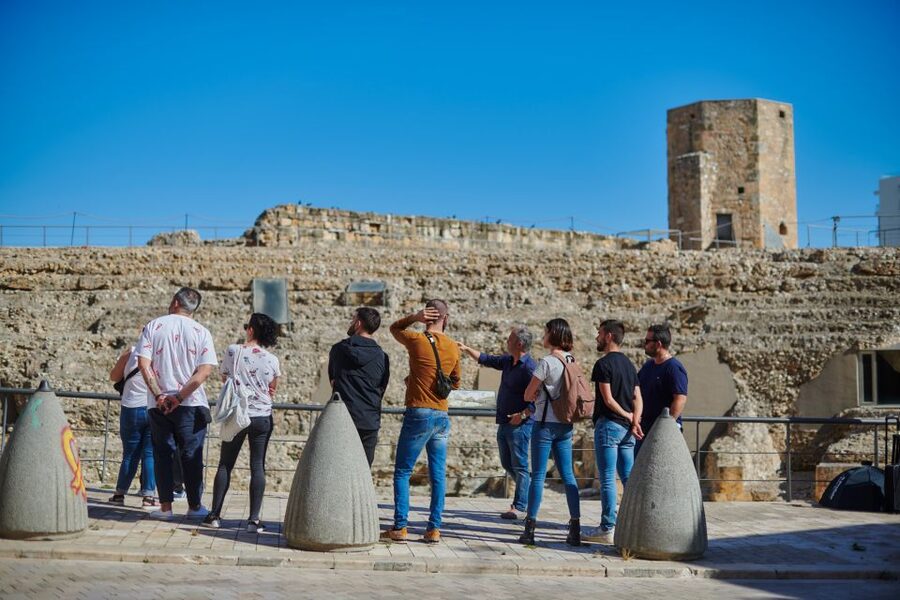
Meet 10 minutes early at the Itinere office beside the Roman walls. That is a useful location, since the tour begins with the remains themselves rather than with a long walk to the first sight.
The walls are presented as the oldest Roman walls outside Italy. That detail gives the opening real weight. Tarragona was not just a provincial town added to the Roman map later. Its hill beside the Mediterranean was chosen as a gateway toward the rest of the Iberian Peninsula.
Your guide sets out why the Romans wanted this position. You will hear how the hill offered a commanding location while the sea connected the city to wider Roman routes. The opening talk is not only about stones and dates. It explains why Tarragona developed where it did.
That context matters because the Roman remains can otherwise seem scattered. A wall section here, a buried vault there, and an arena at the edge of town may look like separate attractions. The guide’s job is to connect them into one city plan.
The tour is led in Catalan or Spanish, so you should be comfortable following one of those languages. Recent outings with a guide named Adrià received especially warm comments for clear explanations and evident pride in Tarragona. Guide assignments can vary, so Adrià may not be leading every departure.
More history-led days around Salou & Costa Dorada:
- Madrid Essential: Historic Center, Plaza Mayor & Royal Palace
★ 5.0 · 6,416 reviews - Barcelona: Tapas Walking Tour with Food, Wine, and History
★ 4.8 · 4,261 reviews - Sevilla Food Tour: Tapas, Wine, History & Traditions
★ 5.0 · 3,468 reviews
Roman Tarragona under the modern streets
From the wall area, you continue through Tarragona’s historic center. This is one of the tour’s most useful ideas: Roman monuments are woven into ordinary city life.
You are not walking through a single preserved archaeological park. Ancient structures appear among houses, streets, and squares. That arrangement can make the city feel more authentic, but it also requires explanation. Without a guide, you might pass a Roman feature without realizing what it was used for.
The tour helps you read the city in layers. The guide describes how Roman Tarragona looked and explains the purpose of its main buildings. This is where the large city model becomes important.
A model can sound like a small museum extra, but here it gives you a practical map in your head. You can see how the Roman settlement was organized, where public buildings fit into the town, and how the surviving fragments relate to one another.
I find this especially helpful early in a visit. Once you understand the old layout, later sights make more sense. You are no longer looking at an isolated ruin. You are looking at part of a working Roman city, with public spaces, entertainment buildings, walls, and routes tied together.
The drawback is that this section depends heavily on the guide’s delivery. A strong guide can make the model easy to follow. A distracted or hard-to-hear explanation can leave you trying to match an unfamiliar ancient plan to the streets around you.
One recent departure had several groups setting off at the same time, with about 20 people in each group. Noise made it difficult for some people to follow the guide. That may not happen on every tour, but it is worth bearing in mind if you prefer small, quiet walks.
Entering the Circus vaults for ancient chariot races
The included entrance to the Circus is one of the clearest value points. Your $17 covers the guided experience and admission to the vaults, so you are not paying separately for this part.
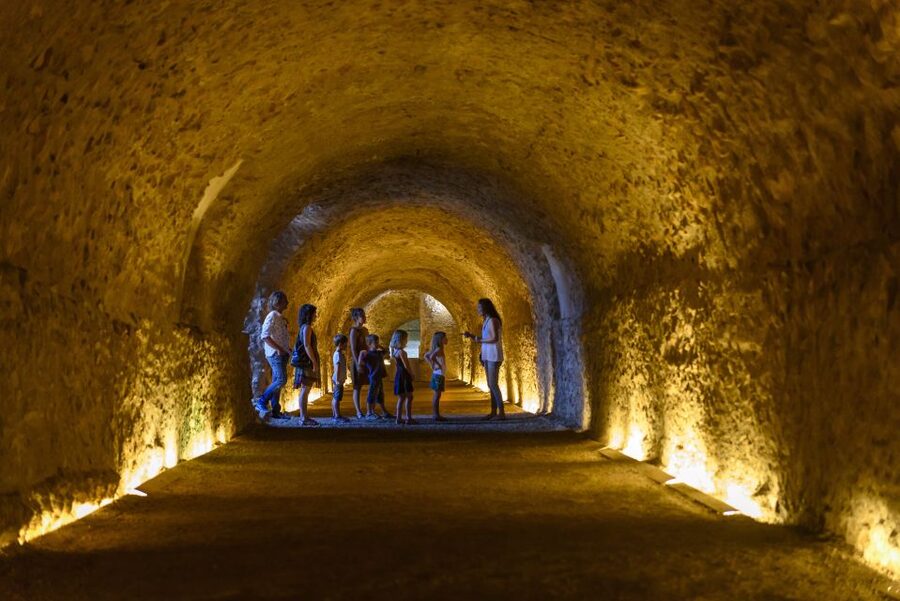
The Circus was connected with chariot racing, and the underground vaults help you picture how that huge entertainment complex worked. The tour uses the space to bring back the excitement of ancient races, rather than treating the remains as plain masonry.
This stop also shows how much of Roman Tarragona lies below the present city. Modern streets and buildings occupy ground that once supported Roman public life. The vaults are a direct reminder that the old city has not vanished. Much of it is still underfoot.
Do not expect a long, leisurely archaeological visit inside the Circus. The entire experience lasts two hours, and the Circus is one section of a wider route. You will receive an explanation and a chance to see the vaults, but the schedule must also allow time for the walls, city center, model, presentation, and Amphitheater.
That makes the tour a good first introduction. If the Circus becomes your main interest, you may want more time afterward to explore Tarragona’s Roman sites at your own pace. The guided visit gives you the framework, while an independent follow-up lets you linger.
Wear comfortable shoes. The route is a walking tour, and even a short visit becomes less enjoyable when your feet are complaining. Large bags and luggage are not allowed, so leave suitcases elsewhere before you arrive.
Seeing the ancient city through a large model
The city model is a practical teaching tool, not just decoration. It allows the guide to point out how Tarragona once appeared and to explain what its buildings did.
This part may be especially useful if you are new to Roman urban planning. You can better grasp the difference between defensive walls, public entertainment spaces, and the buildings that shaped civic life. The model turns a complex city plan into something you can view all at once.
I like this approach because it keeps the walk from becoming a string of disconnected stops. You hear the story, then see a physical representation of the city, then visit surviving remains. The sequence helps you build a mental picture before reaching the seaside arena.
The model also gives the guide a chance to explain what has changed. Ancient Tarragona was built for Roman public life, while modern Tarragona has grown around and over those remains. The result is a city where the past is often close but not always obvious.
If you enjoy detailed archaeology, you might wish for more time here. One participant felt the full tour was too short and would have preferred three hours. That is a fair criticism, especially if the guide is explaining a large model to a full group.
Still, the short format has a benefit. You can fit the tour into a morning or afternoon without giving up most of your day. At $17, it is a modest way to get oriented before choosing which Roman sites deserve a longer visit.
More Salou & Costa Dorada walks with a guide:
- Barcelona Tapas and Wine Experience Small-Group Walking Tour
★ 5.0 · 5,804 reviews - Granada: Albaicín and Sacromonte Guided Sunset Walking Tour
★ 4.9 · 2,962 reviews - Toledo Tour & Vineyard Walk with Wine Tasting from Madrid
★ 5.0 · 2,546 reviews - Madrid Walking Tour from Puerta del Sol to Retiro Park
★ 5.0 · 2,285 reviews
Using 3D images to picture lost buildings
Before heading to the Amphitheater, you watch an audiovisual exhibit with 3D images. This section helps restore the parts of Roman Tarragona that time has taken away.
Ancient ruins often make you work hard to imagine the original building. A few walls or foundations do not always show the scale, decoration, or activity that once filled the space. The 3D material gives the guide another way to explain the city’s former appearance.
A video was singled out as a particularly enjoyable part of the experience by one recent visitor. That makes sense. After walking among fragments and studying the model, moving images can pull the pieces together.
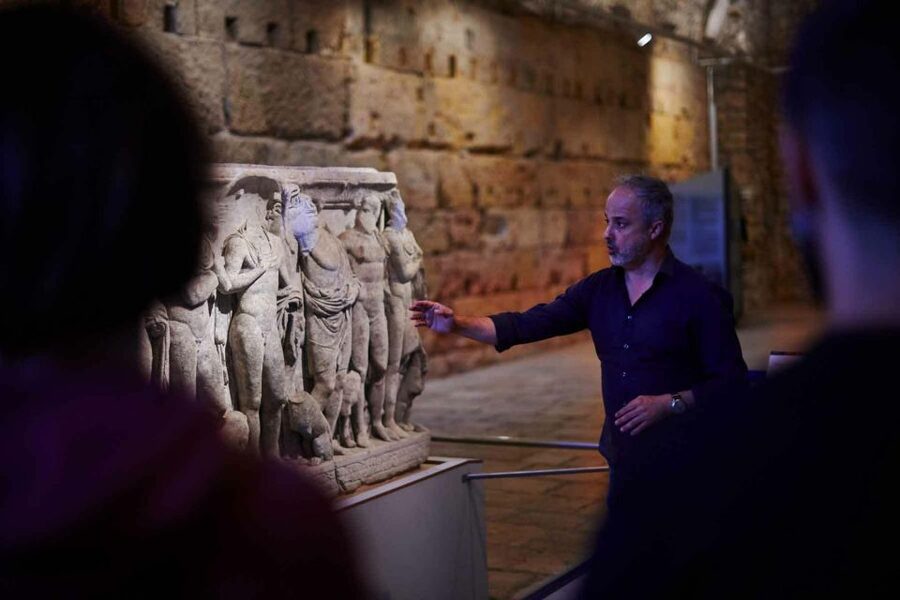
This presentation is also a good choice for mixed groups. Children and adults who might lose interest during a long explanation can often follow a visual reconstruction more easily. At the same time, it gives history-minded adults a clearer sense of how the buildings worked.
Keep your expectations measured. The presentation supports the walking tour, but it is not a separate film program or a long museum visit. Its role is to prepare you for the Amphitheater and make the final stop easier to understand.
Finishing at the Amphitheater above the sea
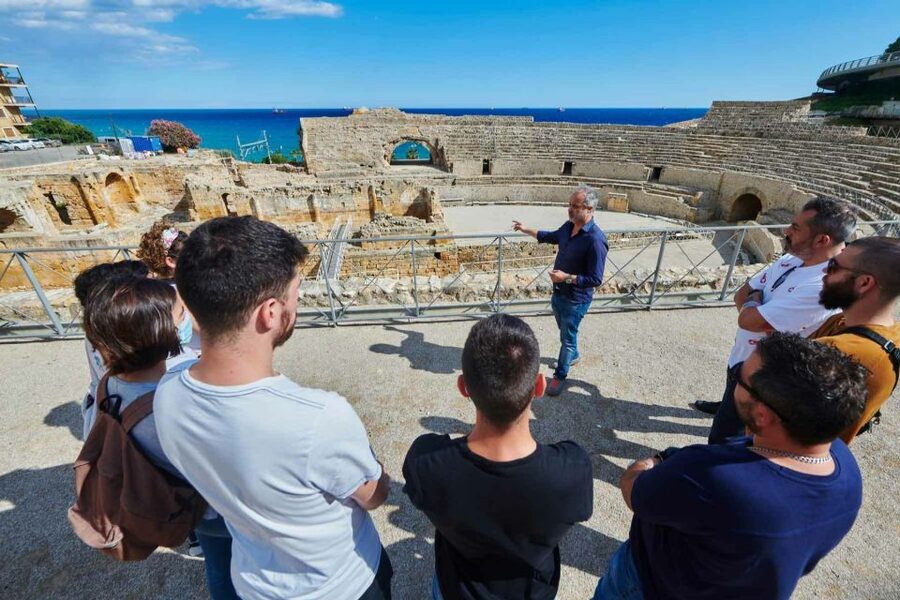
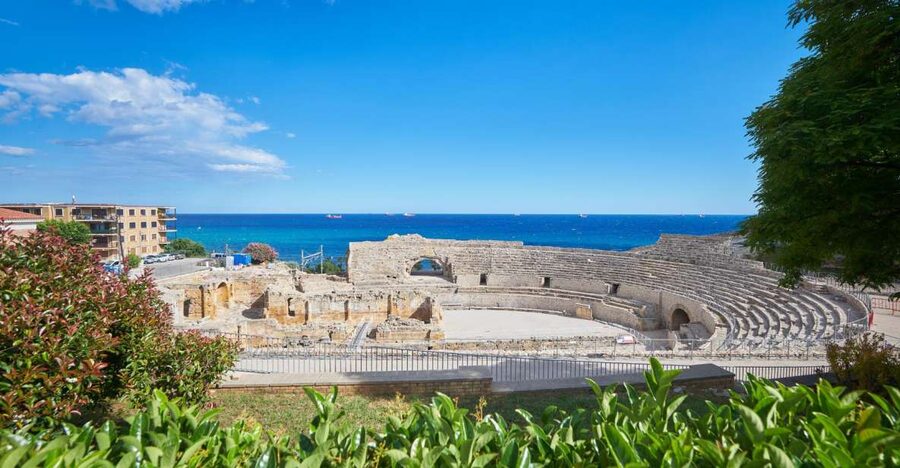
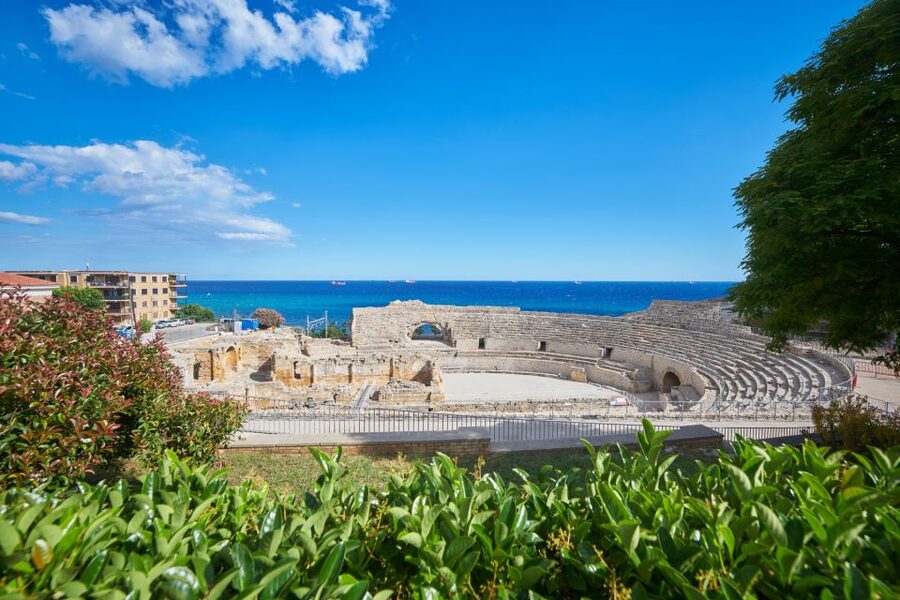
The tour ends at the Amphitheater, located beside the Mediterranean. This is the strongest visual finish, since you get both the Roman arena and broad sea views in the same place.
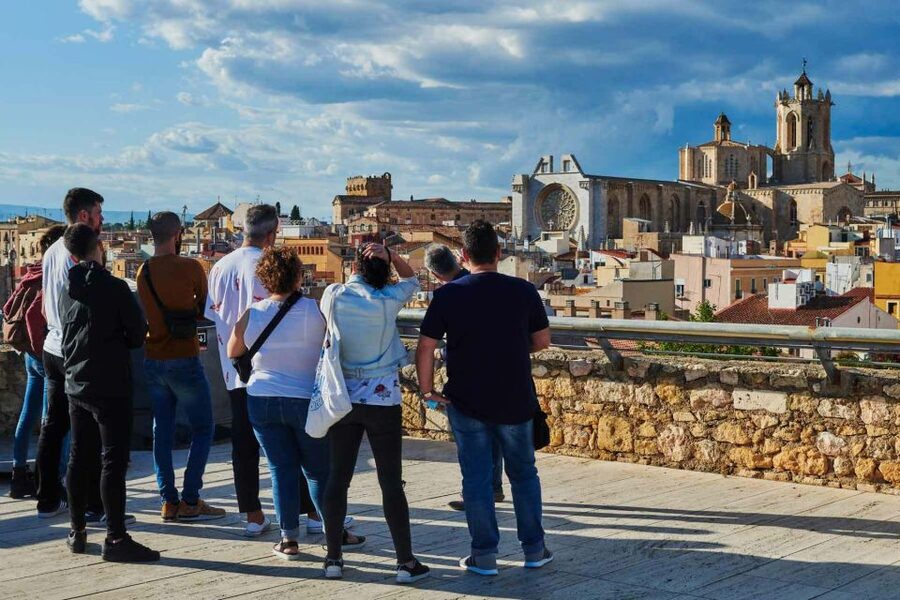
The guide explains the gladiator fights and beast hunts held here. These events were public spectacles, and the setting helps you understand their effect. The arena was not hidden away. It was placed where a large audience could gather and where the building formed part of Tarragona’s public identity.
The sea view adds something that a model or wall cannot. You can see why the site feels memorable even before the explanation begins. At the same time, the view should not distract from the difficult side of the arena’s story. This was a place built for violent entertainment.
The guide also reviews the Amphitheater’s long history up to the present day. That is useful because the building you see now is not simply a perfectly preserved Roman stadium. It has survived changes, damage, and later use, all of which shape the remains visible today.
For photography, this is likely the tour’s best stop. You have the arena, the Mediterranean, and the relationship between the city’s hill and shoreline. Weather will matter. One January outing took place during heavy rain and was still considered acceptable, but wet conditions can make any walking tour less comfortable.
If your schedule allows, give yourself a few quiet minutes around the Amphitheater after the explanation. The official tour has a fixed pace, while your own time lets you absorb the scale of the site and enjoy the view without trying to keep up with the group.
How the two-hour pace affects the experience
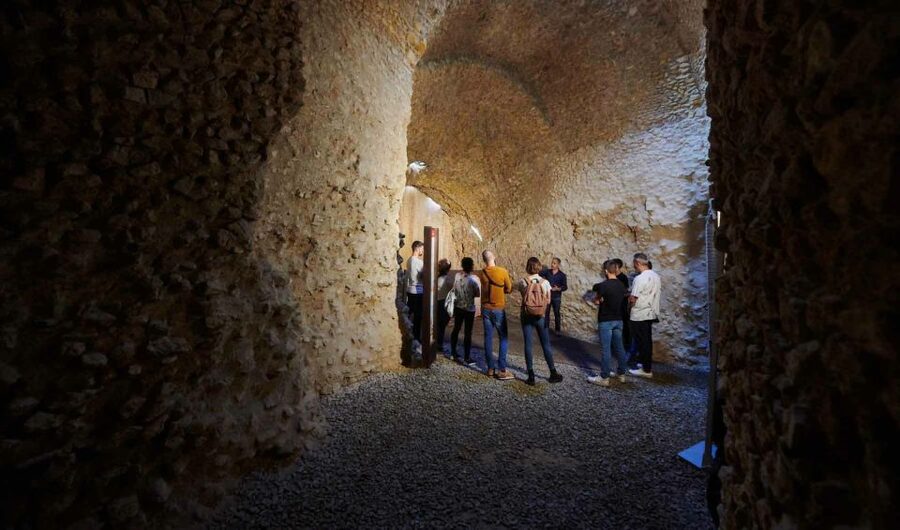
Two hours is enough for a well-shaped introduction, but it is not enough for every stop to receive equal attention. You move from the walls to the historic center, Circus vaults, model, audiovisual presentation, and Amphitheater in a compact sequence.
That pace works best if you want orientation. You will leave knowing what the main Roman monuments are, how they relate to one another, and which places you may want to revisit.
It works less well if you want a slow archaeological study. The model and Amphitheater can both invite extra questions, while the Circus vaults deserve time for careful looking. A guide who explains every point at length may make the final stops feel rushed.
The guide’s communication style matters, too. Adrià was praised for clear, understandable explanations and strong local pride. On another outing, the guide had difficulty keeping a clear thread, and crowd noise made matters harder. These contrasting experiences show why group conditions and guide assignment can affect the day.
You can improve your odds by arriving early, staying close enough to hear, and choosing a departure time that does not place several groups together if alternative times are available. The activity page says to check availability for starting times, but no exact schedule is provided here.
Is $17 a fair price for Tarragona?
At $17 per person, this is good value if you want a guided introduction rather than a series of disconnected admission tickets. The Circus entrance is included, and the guide adds context at the walls, model, audiovisual presentation, and Amphitheater.
The price is especially reasonable for a first visit. You get the city’s major Roman story in a single two-hour route, without arranging separate explanations at each site. The official city guide format also gives you a local perspective in Catalan or Spanish.
The value is more limited if you already know Tarragona’s Roman remains well or want long visits at each monument. In that case, the fixed pace and group setting may feel restrictive.
The tour also includes free cancellation up to 24 hours before the start, with a full refund. You can reserve now and pay later, which helps if your Tarragona plans are still shifting.
The experience is listed as wheelchair accessible. Everyone should still arrive in comfortable shoes, and nobody should bring luggage or a large bag. Those rules are simple, but they can matter if you are visiting Tarragona between hotel check-out and a train or cruise departure.
Who should choose this Roman walking tour?
I would recommend it to you if you want a clear introduction to Tarragona’s Roman center, prefer learning from a guide, and have only a short window in the city.
It suits first-time visitors, families who benefit from models and 3D visuals, and anyone curious about how Roman remains fit into a modern town. The final Amphitheater stop also makes it appealing if you want a strong view along with the archaeology.
You may want a different plan if you dislike group walks, need silence to follow detailed explanations, or prefer to spend an hour at every monument. The tour can be less satisfying during a crowded departure or bad weather, and the two-hour limit leaves little room for delays.
Language is another clear consideration. Live guiding is available in Catalan and Spanish. If you do not follow either language, the explanation will not serve its main purpose.
Should you book the Tarragona Roman Heritage Tour?
Book it if you want an affordable, efficient introduction to Tarragona’s Roman remains. The combination of the city walls, Circus vaults, model, 3D presentation, and seaside Amphitheater gives you more than a quick photo walk.
Go in knowing that this is a compact overview, not a leisurely three-hour archaeological visit. Arrive 10 minutes early at the Itinere office, wear comfortable shoes, leave large bags behind, and try to position yourself where you can hear the guide.
If Adrià leads your departure, you may get the especially clear and warm presentation noted in recent outings. Even without that guarantee, the route itself is well chosen. For $17, it gives you the basic Roman map of Tarragona and a good reason to keep exploring the city afterward.
FAQ
How long does the Tarragona Roman Heritage Guided Walking Tour last?
The tour lasts two hours.
What language is the tour conducted in?
The live guide speaks Catalan or Spanish.
What is included in the price?
The price includes the guided tour of Tarragona and entrance to the Circus vaults.
Where is the meeting point?
Meet at the Itinere office next to the Roman walls. You should arrive 10 minutes before the activity starts.
Is the tour wheelchair accessible?
Yes, the activity is listed as wheelchair accessible.
Can I cancel the tour and receive a refund?
Yes. You can cancel up to 24 hours in advance for a full refund. You can also reserve now and pay later.
Recently reviewed around Salou & Costa Dorada
- Salou: Siurana Medieval Village Guided Tour w/ Hotel Pickup★ 4.5 · 213 reviews
- Salou: PortAventura, Caribe Aquatic & Ferrari Land Passes★ 4.4 · 419 reviews
- Salou: PortAventura Ferrari Land Admission Ticket★ 3.8 · 488 reviews
- From Salou: Barcelona City Center Tour★ 4.4 · 247 reviews
- Salou: Scuba Diving for Beginners★ 4.8 · 227 reviews
- Salou: Off-Road Guided Quad Safari with Hotel Pickup★ 4.8 · 602 reviews
- From Salou/Cambrils: Speedboat Tour★ 4.7 · 876 reviews
- From Salou: Montserrat Monastery and Colonia Güell★ 4.5 · 167 reviews
Historical Tours, compared.
Madrid Essential: Historic Center, Plaza Mayor & Royal Palace
Read our review →
Tapas Walking Tour with Food, Wine, and History
Read our review →
Sevilla Food Tour: Tapas, Wine, History & Traditions
Read our review →
Valencia Old Town Tour with Wine & Tapas in 11th Century Historic Monument
Read our review →
Barcelona Tapas Walking Tour: Food, Wine & History
Read our review →
Ultimate Seville Tapas, Wine & History Small Group Tour
Read our review →
Skip-the-Line Great Mosque-Cathedral History Tour
Read our review →
Browse the lists this tour appears in