Reviewed · BARCELONA TOURS
Tarragona and Sitges Tour with Small Group and Hotel Pick Up
Tarragona gives you ancient Roman ruins beside the Mediterranean, while Sitges brings you narrow streets, Modernist buildings, and a sandy urban beach. The contrast makes this Barcelona day trip unusually well balanced: part archaeology lesson, part seaside escape.
I like the hotel pickup and tiny group, which remove much of the fuss from a long day away. I also like the guides’ personal touch. Eduardo, Diego, Luis, and Miquel are repeatedly praised for history, humor, smooth driving, food tips, and patience. The main drawback is physical: Tarragona means cobbles, stairs, hills, and plenty of walking, so this is not an easygoing sightseeing drive.
In This Review
- Key points to know before booking
- Why this day trip works so well from Barcelona
- The Devil’s Bridge aqueduct starts the Roman story
- Tarragona’s old town connects Roman and medieval life
- The amphitheater puts Roman spectacle beside the sea
- Roman walls, the circus, and the Tarraco model fill in the picture
- Mercat Central shows Tarragona as a living city
- Sitges brings beaches, art, and a slower pace
- San Sebastian Beach is the day’s easiest reward
- What the small group and price really mean
- Who will enjoy this tour most
- Should you book Tarragona and Sitges?
- FAQ
- How long does the Tarragona and Sitges tour last?
- Where does pickup take place?
- When does hotel pickup happen?
- How large is the tour group?
- Is the tour offered in English?
- Is food included in the price?
- Are Tarragona’s Roman sites included?
- Can I swim at Sitges beach?
- What happens if I need to cancel?
Key points to know before booking
- Roman Tarragona comes first: See the Devil’s Bridge aqueduct, city walls, amphitheater, circus, forum area, and old town.
- Sitges changes the mood: After the ruins, you get a coastal town, Modernist architecture, shops, terraces, and San Sebastian Beach.
- Eight people or fewer: A small vehicle and compact group allow more questions and a less rigid pace.
- Pickup saves time: Collection and return are offered at Barcelona hotels and apartments within the city.
- The day lasts about 10 hours: Expect a full outing, with roughly three hours allocated to Sitges and long walking sections in Tarragona.
- Bring practical footwear: Uneven Roman remains, narrow cobbled lanes, stairs, and hills are part of the experience.
Why this day trip works so well from Barcelona
Barcelona can easily fill several days, but it is only one part of Catalonia. Tarragona sits south along the Costa Dorada and was once Tarraco, a major Roman center in ancient Hispania. Sitges, farther up the coast on the return route, feels much newer and more relaxed, with beaches, art, and Modernist architecture.
That pairing gives you two very different views of the region without renting a car or working out regional buses. You leave Barcelona in the morning, ride in an air-conditioned vehicle, and return after a long but varied day.
Pickup is offered from your Barcelona hotel or apartment, usually between 8 and 9 in the morning. You need to provide the exact address, including an accommodation that is not listed in the booking field. The specific pickup time, guide’s name, and phone number are sent through the booking system the day before.
The drive also provides a brief city overview as you leave. You may pass Catalunya Square, Barcelona Cathedral, Passeig de Gracia, and Gaudí’s Batlló and Pedrera houses. This is not a full Barcelona sightseeing tour, but it helps connect the city you know with the towns beyond it.
Other Barcelona days travellers weigh against this one:
- Barcelona: Sagrada Familia Entry Ticket with Audio Guide
★ 4.6 · 105,312 reviews - Barcelona: Park Güell Admission Ticket
★ 4.4 · 76,534 reviews - Barcelona: Casa Batlló Entry with Self-Audioguide Tour
★ 4.7 · 25,359 reviews
The Devil’s Bridge aqueduct starts the Roman story
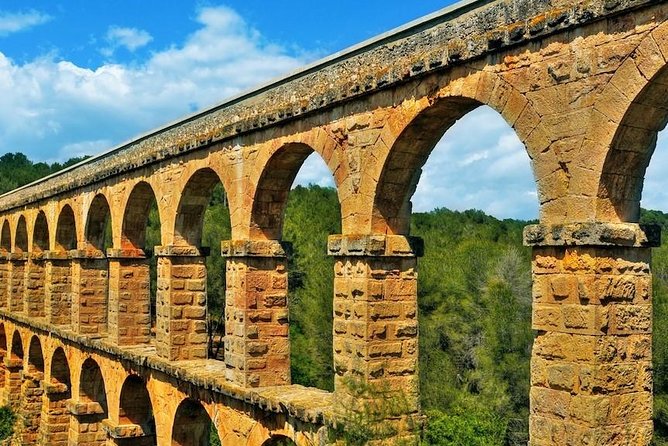
The first stop is Pont del Diable, or the Devil’s Bridge, outside Tarragona. This Roman aqueduct stretches 217 meters and rises 26 meters above the ground. Its purpose was practical: it carried water to Tarragona and continued doing so until the 18th century.
I like starting here because the structure makes Roman engineering easy to understand. At the amphitheater and walls, you see what Roman public life looked like. At the aqueduct, you see how the city survived and grew.
You get about 30 minutes for the stop, enough for photographs and an explanation from your guide. The bridge is surrounded by woodland, so it offers a pleasant change from city streets. Do not expect a long visit or an extended walk through the countryside. This is a focused photo and history stop before the main Tarragona tour.
Tarragona’s old town connects Roman and medieval life
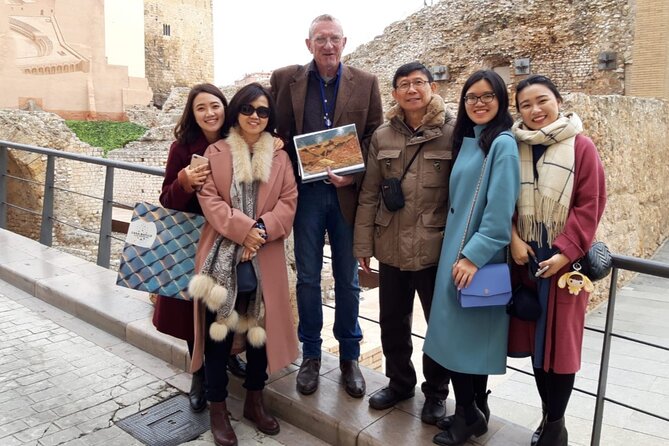
The walking portion moves into Tarragona’s old town, beginning around the former consulate building and the narrow lanes near the historic center. You spend about 90 minutes walking through cobbled streets and shaded squares, with the guide explaining how Roman and medieval Tarragona overlap.
This is where a small group matters. In a group of eight or fewer, you can stop to ask why a street follows a certain line or how the city developed around its ancient remains. Guides such as Ramon, Eduardo, Diego, Luis, and Miquel are praised for adding humor and personal stories rather than delivering a dry list of dates.
You also pass Tarragona Cathedral, a National Monument and a protected cultural site. The church dates to the 17th century in its present form and is one of the city’s best-known landmarks. The tour also pauses near the Castellers monument, a tribute to Catalonia’s human-tower tradition. Its 219 figures rise about 11 meters and weigh roughly 12 tons, giving your guide an opening to explain a local custom that is still closely tied to Catalan identity.
This section is rewarding, but it is not flat or effortless. Old-town cobbles and slopes can be tiring. One person with limited mobility found the guide patient and accommodating, but another noted that stairs and uneven surfaces led them to skip two areas. If your knees, hips, or balance are a concern, tell the guide early and expect some parts to be optional.
The amphitheater puts Roman spectacle beside the sea
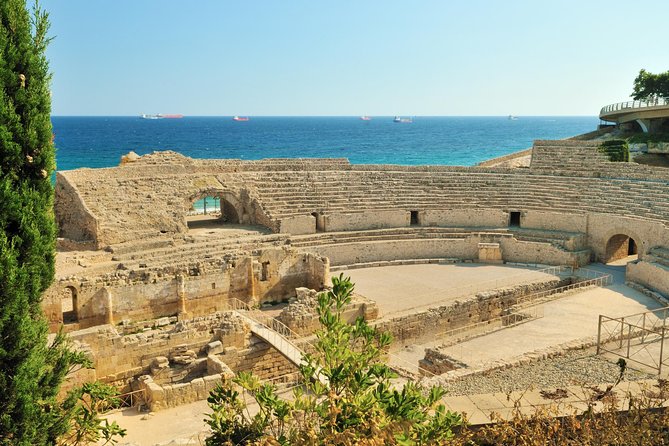
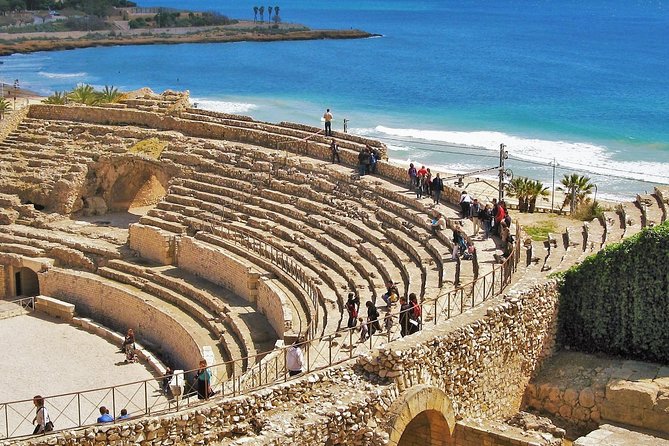
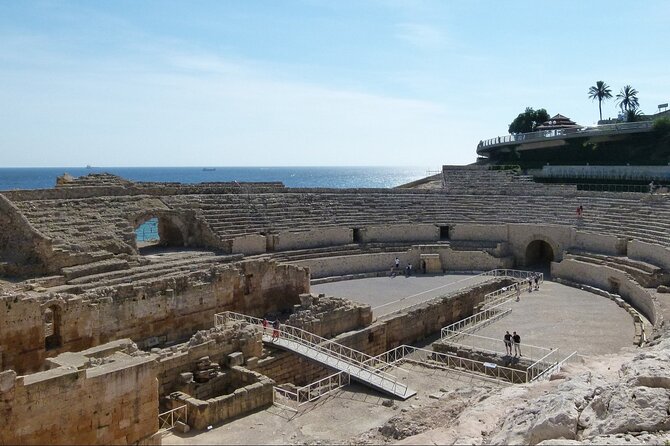
Tarragona’s amphitheater is the emotional center of the Roman visit. Cut into the hillside above the beach in the early second century AD, it hosted gladiator contests and public executions. The setting is striking because the ancient arena sits directly beside the Mediterranean.
You get around 90 minutes for the amphitheater and nearby Roman remains. The entrance is included, as is entry to Tarragona’s Roman Circus, another venue connected with public events. Together, these sites give you more than a quick photograph through a fence. You can walk inside the amphitheater and picture how crowds once gathered on the slope.
The guide adds the meaning that bare stones cannot provide. With the right storytelling, the arena becomes a place of political theater, public punishment, and mass entertainment. Several guides are singled out for making Roman life understandable to teenagers as well as adults, which is useful if your family is not naturally drawn to archaeology.
The setting also creates one of the tour’s best photo opportunities. You can look from ancient stone toward the beach and modern coastline, a compact view of Tarragona’s long story. Wear shoes with a firm sole. This is one of the places where steps and irregular surfaces matter.
A different way to spend the day, same corner of Spain:
- Barcelona: 24 or 48-Hour Hop-On Hop-Off Bus Tour
★ 4.4 · 20,872 reviews - Barcelona: Park Guell Guided Tour with Skip The Line Entry
★ 4.7 · 17,563 reviews - Barcelona in 1 Day: Sagrada Familia, Park Guell,Old Town & Pickup
★ 5.0 · 13,541 reviews - Barcelona Aquarium: Entry Ticket
★ 4.3 · 13,335 reviews
Roman walls, the circus, and the Tarraco model fill in the picture
The Roman walls are among Tarragona’s oldest surviving structures. They go back to the first military camp or the period soon after its foundation. You spend about 30 minutes seeing these remains, then pass the National Archaeological Museum of Tarragona.
The museum itself is viewed from outside on this route, but your guide explains how it preserves and presents material from Tarraco and the surrounding area. Nearby, the Tarraco Model shows the city at its height in the second century BC. A scale model can sound modest, yet it is one of the most useful tools on the day because it lets you see how the walls, public buildings, roads, and shoreline fit together.
The Roman Circus is included in the tour, although the schedule gives less detail about its separate visit than it does about the amphitheater. Its role was tied to Roman public events and racing, and it helps complete the picture of Tarraco as a major city rather than a collection of isolated ruins.
Mercat Central shows Tarragona as a living city
The Central Market gets about an hour and provides a welcome shift from ancient stones. The building dates to 1915 and is a Modernist landmark just off Rambla Nova. Inside, the focus is fresh and seasonal produce from the nearby rural area.
I value this stop because it keeps Tarragona from becoming a Roman-only museum piece. You see where local daily life happens, and you may have a chance to consider food for later in the day. Food and drinks are not included, so budget separately for lunch, coffee, or a snack.
Some guides recommend local places for a meal, and the personal suggestions can be useful. One guide arranged a tapas experience, while another directed a group to a good-value restaurant with a full meal, drink, and dessert. These stops are guide-dependent, not guaranteed inclusions, so treat them as helpful advice rather than part of the package.
Sitges brings beaches, art, and a slower pace
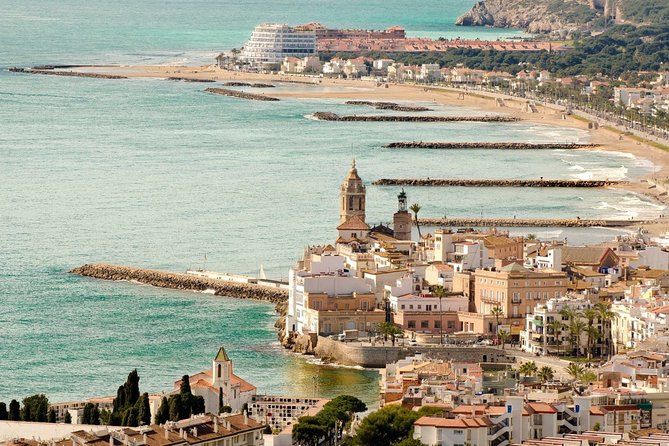
After Tarragona, the tour heads to Sitges. The town began as a fishing community and later became popular for health tourism because of its position between the sea and the mountains. Today, it is known for its old center, sandy beaches, shops, restaurants, live music, and an artistic feel.
You get about three hours in Sitges, with roughly an hour specifically set aside for the beach. That is enough time for a walking tour, photographs, lunch, and a break by the water, though you will need to choose your priorities. A long swim, a leisurely meal, and a thorough old-town visit may not all fit comfortably.
The walking route takes you through less obvious corners of the historic center and past Casa Bacardi. The building connects to the Bacardi family, and the guide explains the local link. You may also have the option to stop for a cocktail made by professional bartenders, but drinks are not included.
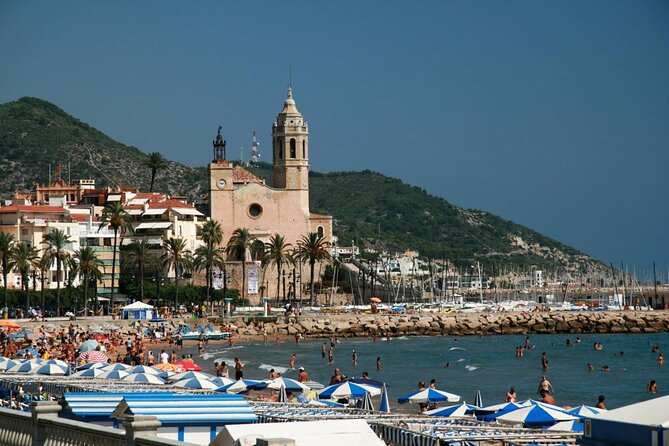
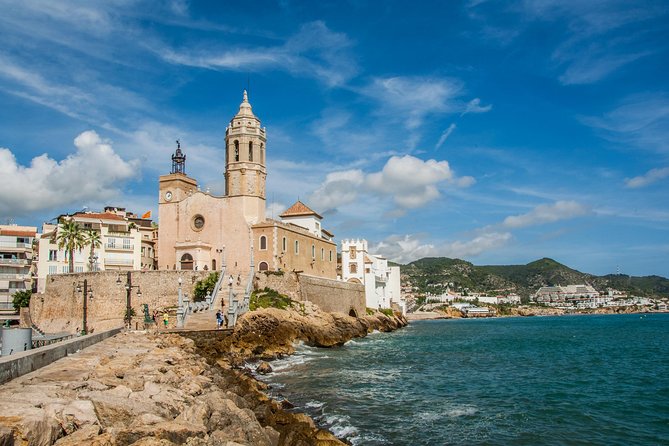
The church of Sant Bartomeu and Santa Tecla is Sitges’ signature landmark. Built in the 17th century, it sits above the shore and provides one of the town’s most recognizable views. The church, beach, and old streets make Sitges easy to enjoy even if you are not interested in every architectural detail.
San Sebastian Beach is the day’s easiest reward
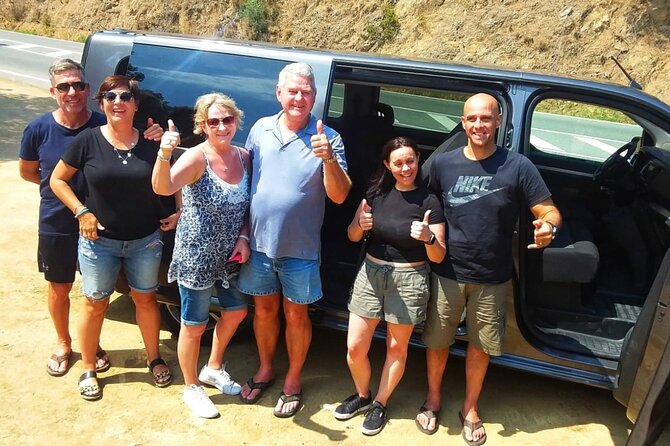
San Sebastian Beach is the relaxed counterpoint to Tarragona’s stairs and archaeological sites. On a sunny day, you can sit on the sand, admire the Mediterranean from a terrace, or swim in the clear water if the schedule and conditions suit you.
The beach time is not just filler. After several hours of walking, it gives you a chance to rest and enjoy Sitges as a seaside town rather than rushing from one sight to the next. In cooler weather, you can use the time for photographs, a drink, or a slow meal instead.
The tour operates in winter as well as warmer months. Winter can mean less crowded streets and a quieter feel, but you should not expect a beach day in the same sense as summer. Weather may also affect how much time you want to spend outside. The tour still works in December, when the focus shifts toward scenery, architecture, and history.
What the small group and price really mean
At $120.29 per person, this is not the cheapest way to reach Tarragona and Sitges. The value comes from combining transport, city pickup and return, a professional local guide, walking tours, and admission to the Tarragona amphitheater and circus.
A maximum of eight people is the key feature. You are not simply paying for a seat on a large coach. You get a more conversational day, easier questions, and a better chance of adjusting a rest stop or spending a little longer where your interests lie. On some departures, only three people are present, and one small booking was changed to a private tour because of the number of participants. That is a pleasant possibility, not something to count on.
The guides receive especially strong marks for punctual pickup, safe driving, regional knowledge, humor, and help with unexpected personal needs. Eduardo is often described as warm and entertaining, Diego as personable and smooth behind the wheel, and Miquel and Luis as attentive to pace and individual needs. Ramon is also praised for answering questions and giving the day an easy rhythm.
Food remains your expense, and the tour does not promise a specific restaurant. If you want the lowest possible cost, independent train travel may be cheaper. If you value door-to-door transport, a very small group, and a guide who explains what you are seeing, the price is easier to justify.
Who will enjoy this tour most
I would choose this outing if you have at least one spare day in Barcelona and want both Roman archaeology and the coast. It suits couples, solo visitors, families with older children, and anyone who prefers a guided day to coordinating several regional connections.
It is particularly good for families with teenagers. The amphitheater, aqueduct, gladiator stories, human-tower tradition, and beach break give the day enough variety to hold attention. It also works well for solo visitors because the small group creates a more social setting without the scale of a big coach tour.
I would be cautious if you have serious mobility limits or dislike walking on uneven ground. The schedule includes stairs, hills, cobbles, and extended time on foot. Guides may help with pacing, but the physical demands cannot be removed from the historic sites.
Book at least a day ahead if you want the safety net of free cancellation. You can cancel for a full refund up to 24 hours before the start time. Changes or cancellations inside that period are not accepted for a refund.
Should you book Tarragona and Sitges?
Book this tour if you want a well-rounded day beyond Barcelona and value a guide more than the absolute lowest price. Tarragona supplies the substance: aqueducts, walls, an amphitheater, a circus, markets, and centuries of urban change. Sitges supplies the breathing room, with architecture, food, sea views, and beach time.
Skip it if you want a slow beach holiday, a short outing, or a route with little walking. For most able walkers, though, the combination is hard to beat. You get two distinct towns, included Roman entrances, hotel pickup, and a small group in one long day, with guides such as Eduardo, Diego, Luis, Miquel, and Ramon adding the human detail that makes old stones memorable.
FAQ
How long does the Tarragona and Sitges tour last?
The tour lasts approximately 10 hours, including pickup and return to Barcelona.
Where does pickup take place?
Pickup is offered from any hotel or apartment in Barcelona city. You need to provide the full address when booking.
When does hotel pickup happen?
Pickup takes place between 8 and 9 in the morning. The exact time is sent through the booking system the day before departure.
How large is the tour group?
The tour has a maximum of eight travelers.
Is the tour offered in English?
Yes. The tour is offered in English.
Is food included in the price?
No. Food and drinks are not included.
Are Tarragona’s Roman sites included?
Yes. Entry to Tarragona Amphitheatre and Tarragona Circus is included.
Can I swim at Sitges beach?
You can take time to swim at San Sebastian Beach on sunny days, if weather and the schedule allow.
What happens if I need to cancel?
You can cancel up to 24 hours before the experience starts for a full refund. Cancellations or changes made less than 24 hours before the start time are not refunded or accepted.
Recently reviewed around Barcelona
- Excursion Aigüestortes – Estany Llebreta (1/2 day)★ 5.0 · 138 reviews
- E-Bike tour in Barcelona with English Guide★ 5.0 · 128 reviews
- Wine Tasting Experience in Barcelona★ 5.0 · 172 reviews
- Barcelona Luxury Yacht Cruise – Day or Sunset, Open Bar & Snacks★ 5.0 · 154 reviews
- Montserrat: Cog-Wheel, Basilica, Black Madonna & Licor Tasting★ 4.5 · 886 reviews
- Barcelona Wax Museum Admission Ticket★ 4.5 · 237 reviews
- Barcelona: Wine Tasting and 5 Course Tapas Pairing Dinner★ 4.5 · 129 reviews
- Andorra Original History and Sightseeing Tour (Private, Pickup)★ 5.0 · 350 reviews
Barcelona Tours, compared.
Sagrada Familia Entry Ticket with Audio Guide
Read our review →

Park Guell Guided Tour with Skip The Line Entry
Read our review →
Barcelona in 1 Day: Sagrada Familia, Park Guell,Old Town & Pickup
Read our review →

Sagrada Familia Skip-the-Line Entry Ticket & Tour
Read our review →