
Reviewed · FLAMENCO SHOWS
Seville: Ticket to Flamenco Show at La Casa de la Guitarra
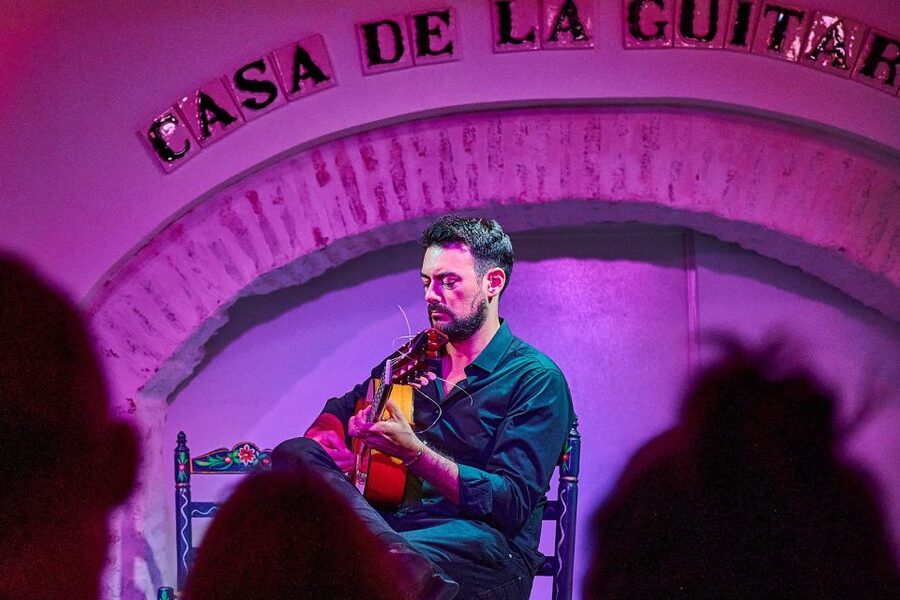
The best thing about this Seville flamenco show is its scale. At La Casa de la Guitarra, you sit close enough to notice the dancer’s footwork, the singer’s expression, and the guitarist’s hands. It feels more like entering an artist’s home than taking your seat in a large tourist theater.
I like the one-hour format, which fits neatly before dinner or after a day of sightseeing. I also like that the ticket includes access to José Luis Postigo’s collection of old classical and flamenco guitars, rather than offering only a quick stage performance. The main consideration is the small room: seating can feel tight, and late arrivals or raised phones may distract from the show.
In This Review
- Key points at a glance
- A close-up flamenco hour in Santa Cruz
- What happens before the music begins
- The room and the guitar collection
- The guitar: more than accompaniment
- The dancer and the visual drama of Alegrías
- How long the experience really needs to be
- Value at $23 per person
- Who should book this show
- Simple tips for getting the most from it
- Should you book La Casa de la Guitarra?
- FAQ
- How long does the flamenco show last?
- How much does the experience cost?
- Where does the show take place?
- What is included with the ticket?
- Who performs in the show?
- Is there an introduction before the show?
- Can I record the performance?
- Is the venue wheelchair accessible?
Key points at a glance
- Three-part performance: A guitarist, singer, and flamenco dancer share the stage, with music and dance given equal weight.
- A genuinely intimate room: Some front-row seats place you remarkably close to the performers.
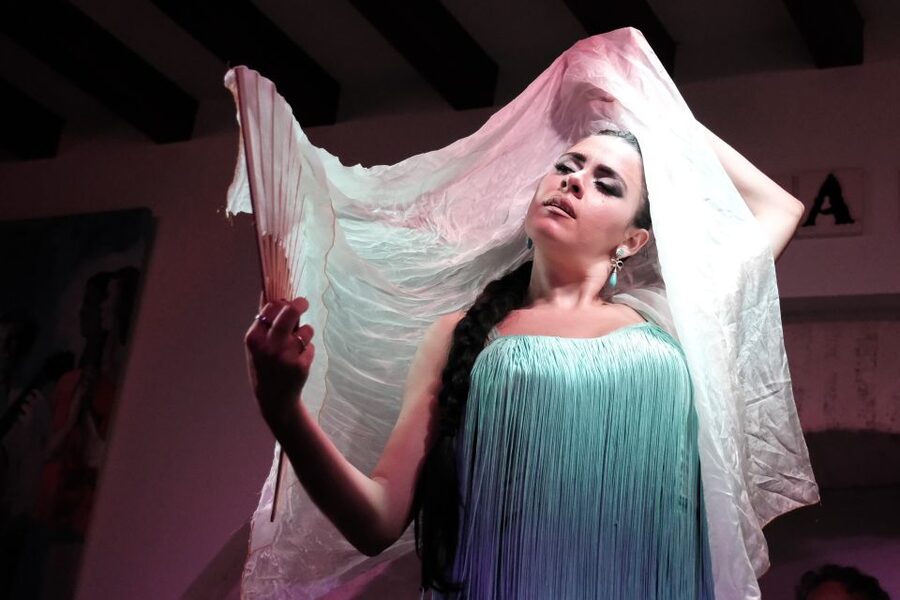
- Traditional Alegrías: The program includes one of flamenco’s classic forms, with swirling shawls, long dresses, castanets, and sharp footwork.
- A short introduction first: You receive background on flamenco before the performance begins.
- Guitars on display: Your ticket includes access to José Luis Postigo’s collection inside Casa de la Guitarra.
- Good value at $23: You get a focused cultural experience without a meal, drinks, or added showmanship.
A close-up flamenco hour in Santa Cruz
If you have only one chance to see flamenco in Seville, this is a sensible introduction. The setting is in the historic Barrio de Santa Cruz, the city’s old central quarter, and the performance takes place at Casa de la Guitarra, the home and cultural space of guitarist José Luis Postigo.
The evening centers on three performers: a flamenco guitarist, a singer, and a dancer. That combination matters. Flamenco is not simply a dance show, and the strongest moments often come when the guitar and voice set the emotional direction before the dancer answers with movement and footwork.
You should expect a traditional presentation rather than a large stage production. There is no mention of dinner, drinks, costume spectacle, or other add-ons. That keeps the focus on the performers, which is exactly what I want from a short flamenco show.
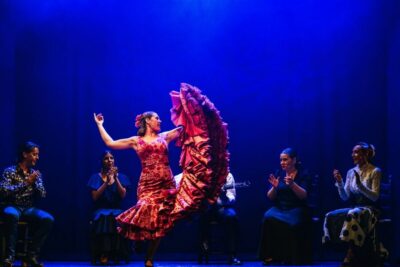
The program features Alegrías, a classic flamenco form associated with lively rhythm and expressive movement. You may see long train dresses, shawls, castanets, and the rapid clicking of heels. The room’s close quarters let you notice small details that can disappear in a bigger theater.
More Flamenco Shows in Seville
- Seville: Live Flamenco Dancing Show Ticket at the Theater
★ 4.7 · 16,396 reviews - Seville: Casa de la Memoria Flamenco Show
★ 4.8 · 12,964 reviews - Seville: Puro Flamenco Show with Optional Museum Ticket
★ 4.8 · 6,088 reviews
What happens before the music begins
Arrive at Casa de la Guitarra in Barrio de Santa Cruz and enter the building used by Postigo as both a home and a place for sharing guitar culture. Before the performance, you receive an introduction to flamenco.
This opening is useful if you are new to the art form. Flamenco has several elements working together, including guitar, singing, rhythm, hand movements, and dance. The introduction gives you a frame for what follows, so you can listen for the relationship between the musicians and dancer instead of treating the show as a sequence of impressive steps.
One practical point: the explanation is offered in English and Spanish, but the balance may favor Spanish at times. If your Spanish is basic, you may miss parts of the spoken background. I would not make that a reason to skip the show, but it is worth knowing if the educational part matters as much to you as the performance.
The introduction also helps set expectations. The dancer is not the only star. You will spend meaningful time listening to the guitar and singer, and the dance is part of a larger musical conversation.
The room and the guitar collection
Casa de la Guitarra is small and cozy, with guitars displayed in cabinets and along the walls. Before or around the show, take time to look at the collection. It gives the visit a personal quality that a standard concert hall would not have.
The collection includes old classical and flamenco guitars connected with José Luis Postigo’s work. Even if you do not play guitar, the display adds context. You begin to see the instrument as more than background accompaniment. In flamenco, the guitar carries rhythm, melody, and mood, often driving the performance as strongly as the dancer’s footwork.
The compact room has a clear benefit: you are close to the action. Several seats are close enough that you may feel almost within arm’s reach of the stage. Many ticket holders receive reserved seats, including front-row or second-row places, though the exact view depends on the seating arrangement.
The same layout creates the main drawback. A small room has limited sightlines, and the crowd can make the view less clear from some seats. A person holding up a phone can block part of the stage. Video recording is not allowed, so keep your phone down and let the people behind you see the performance.
Late entry can also interrupt the mood. In a room this small, even a group arriving after the music starts is noticeable. Arrive on time and settle in before the opening.
The guitar: more than accompaniment
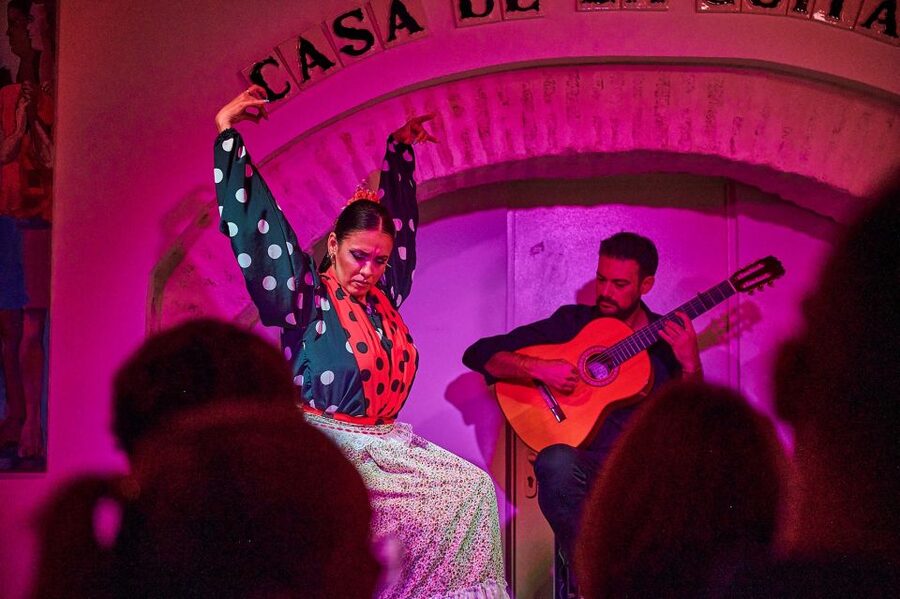
The guitar receives especially strong attention in this performance. That is good news if you enjoy live music, but it also helps explain why the show may feel different from a dance-first production.
You will hear the guitarist establish the rhythm and emotional tone. The singer adds another layer, using the voice as an expressive instrument rather than simply delivering a conventional song. The dancer then responds through posture, gestures, turns, and footwork.
I like this balance because it gives you a better idea of what flamenco is. The art form depends on interaction. A dancer performing alone would show only one part of it, while a concert without movement would miss the physical force that makes flamenco so distinctive.
The guitar can be startlingly powerful in such a small space. You may notice the speed and precision of the playing more clearly than you would in a large theater. The close setting also makes pauses and changes in rhythm easier to follow.
If you are mainly shopping for a long dance recital, this may not be the right choice. The show includes singing and guitar as major features, and the dance portion is not the entire hour. If you appreciate the full exchange among all three artists, the format makes much more sense.
More Seville trips worth a second look
- Seville: Live Flamenco Show at “Teatro Flamenco Triana”
★ 4.6 · 3,290 reviews - Seville: Flamenco Show Ticket at Tablao Flamenco Las Setas
★ 4.8 · 2,214 reviews - Seville: Baraka Sala Flamenca Show with Drink in Triana
★ 4.8 · 1,761 reviews - Seville: Traditional Flamenco Show in Triana
★ 4.8 · 1,580 reviews
The dancer and the visual drama of Alegrías
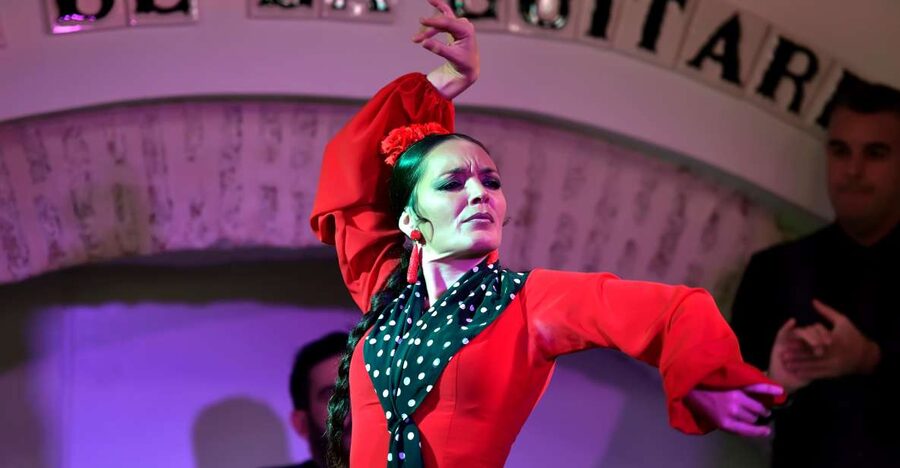
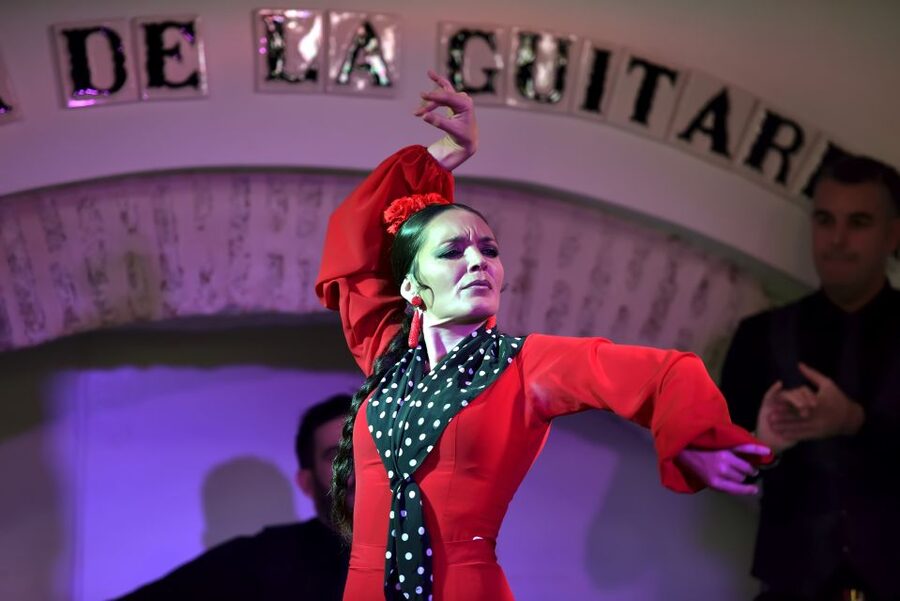
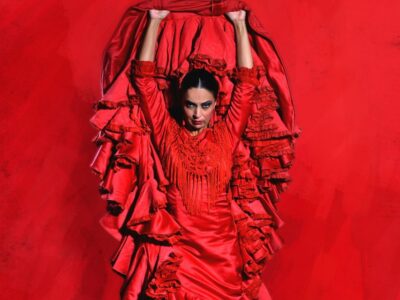
The dancer brings the most obvious visual drama. The long train dress, swirling shawl, castanets, and controlled footwork create the familiar image of Seville flamenco, but the performance is not just about decoration.
Watch the dancer’s upper body and hands as carefully as the feet. The movements can shift from restrained and deliberate to forceful and fast. In a small room, you can see how the dancer uses posture and facial expression to respond to the singing and guitar.
The performance is often described as passionate and emotionally direct, but you do not need a technical background to appreciate it. The changing rhythm gives the show a clear shape, and the dancer’s physical effort is easy to sense from nearby seats.
There is only one featured dancer, not a large company moving across a broad stage. That can feel modest if you expect a full-scale production. I see it differently: one dancer in a tight space puts the emphasis on control, timing, and presence.
The program’s traditional Alegrías material also helps keep the show tied to flamenco practice rather than turning it into a generic Spanish dance display. You are seeing singing, guitar, and movement working together in a familiar form.
How long the experience really needs to be
The performance lasts one hour. For most people, that is enough time to get a clear taste of flamenco without taking over the evening.
I especially like this length for a first show. You can book it before dinner, or choose a later performance after your meal. It also works well for families and mixed-age groups. A group ranging from age 20 to 80 can enjoy the same performance, and children can manage an hour more easily than a longer theater program.
The short running time does mean the experience is an introduction, not a complete study of flamenco. You will not see an extended evening of many dancers, several acts, or a wide range of styles. If you already know flamenco well, you might want a longer program elsewhere.
For a first encounter, though, the hour is efficient. You get the essential ingredients, a bit of explanation, the guitar collection, and a central location without committing half a day.
Value at $23 per person
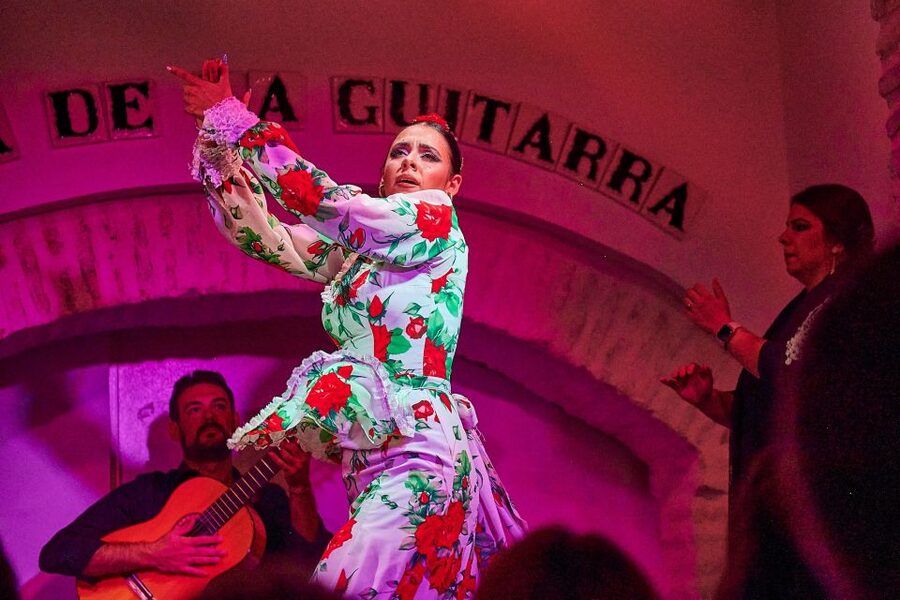
At $23 per person, this is one of the easier cultural experiences to fit into a Seville budget. The price includes the flamenco show and access to the guitar collection. There is no meal or drink included, but that also means you are not paying for extras you may not want.
I consider it good value for three reasons. First, the room brings you close to professional performers. Second, the program includes the singer and guitarist instead of treating them as background support. Third, the guitar collection adds a small museum-like element before or around the show.
The value is strongest if you want an authentic-feeling performance without dinner theater trimmings. If you are looking for a full night out with food and drinks, you will need to arrange those separately.
The overall rating is 4.5 from 1,321 reviews, and the repeated praise centers on the quality of the guitarist, the passion of the singer and dancer, and the intimate setting. Those are also the features I would use to judge the ticket. You are paying for proximity and musicianship, not a grand production.
Who should book this show
I would recommend La Casa de la Guitarra to first-time flamenco viewers, live music fans, couples, families, and anyone who prefers a small room to a large theater. It is also a strong choice if you want a one-hour activity that fits around sightseeing and dinner.
It suits people who want to hear the guitar and singing as well as watch the dance. Several performances have placed the guitarist at the center of the experience, so music lovers may enjoy this more than a show designed mainly around choreography.
The venue is wheelchair accessible, and the host or greeter can assist in English or Spanish. The ticket system offers free cancellation up to 24 hours in advance and a reserve-now, pay-later option, which can help if your Seville schedule is still shifting.
I would think twice if you need generous legroom, a wide stage, or a fully translated lecture. I would also avoid filming, since video recording is not allowed and phones can spoil the close view for everyone nearby.
Simple tips for getting the most from it
Plan to arrive early enough to find the meeting point, listed as Flamenco in Seville, Casa de la Guitarra, Tablao Flamenco Sevilla. The venue is in Barrio de Santa Cruz, so allow a little time to reach the correct entrance rather than arriving at the last minute.
If you can choose among performances, pick a time that fits your energy. An earlier show works well before dinner, while a late show can finish an evening of sightseeing. The one-hour length makes either plan practical.
Once inside, look at the guitars before the performance begins. The collection is part of the appeal, not just a waiting-room decoration. Then put your phone away, listen to the introduction, and pay attention to the guitarist during the quieter passages.
Do not judge the experience only by the dancer’s most dramatic moments. The guitar, singing, clapping, rhythm, and footwork all matter. If you listen for how the dancer responds to the musicians, the show becomes easier to follow and more rewarding.
Should you book La Casa de la Guitarra?
Yes, if you want a focused and affordable introduction to Seville flamenco. At $23, the combination of a close performance, three skilled artists, a short introduction, and access to a notable guitar collection offers solid value.
Book it with the right expectations. This is not a grand theater production or a dinner show. It is a compact, music-led performance in a small room, where the best seats can put you very close to the dancer and guitarist. For many people, that closeness is the whole point.
FAQ
How long does the flamenco show last?
The performance lasts one hour.
How much does the experience cost?
The listed price is $23 per person.
Where does the show take place?
It takes place at La Casa de la Guitarra in Seville’s Barrio de Santa Cruz. The meeting point is listed as Flamenco in Seville, Casa de la Guitarra, Tablao Flamenco Sevilla.
What is included with the ticket?
The ticket includes entry to the flamenco show and access to José Luis Postigo’s classical and flamenco guitar collection.
Who performs in the show?
The performance features a flamenco guitarist, a singer, and a dancer.
Is there an introduction before the show?
Yes. You receive an introduction to flamenco before the live performance begins. The available languages are English and Spanish.
Can I record the performance?
No. Video recording is not allowed.
Is the venue wheelchair accessible?
Yes, the activity is listed as wheelchair accessible.
Recently reviewed around Seville
- Seville: Alcázar Fast-Track Access with Guided Tour★ 4.2 · 432 reviews
- Seville: Small Group Jewish Quarter Tour with Tapas & Drinks★ 5.0 · 119 reviews
- Seville: Sunset Roof Top Walking Tour★ 4.5 · 122 reviews
- Seville: VIP Exclusive Early Access Tour of The Alcazar★ 4.8 · 276 reviews
- Seville: Small-Group Jewish Quarter Discovery Walking Tour★ 4.9 · 499 reviews
- Seville: Flamenco Show at Tablao Almoraima in Triana★ 4.6 · 483 reviews
- Seville: Authentic and Romantic Horse-Drawn Carriage Ride★ 4.5 · 341 reviews
- Seville: Stand Up Paddle Board Rental★ 4.6 · 134 reviews
Flamenco Shows, compared.
Live Flamenco Dancing Show Ticket at the Theater
Read our review →
Live Flamenco Show with Food and Drinks Options
Read our review →
Puro Flamenco Show with Optional Museum Ticket
Read our review →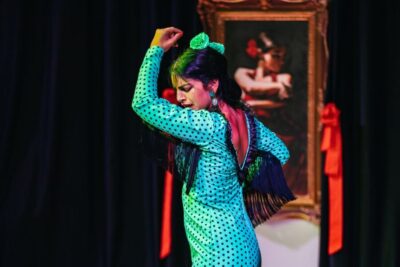
Browse the lists this tour appears in