
Reviewed · SKIP THE LINE
Seville: Bullring Guided Tour with a Skip-the-Line Ticket
Seville’s bullring is more than a pretty oval of white-and-yellow walls. This 60 to 75-minute tour explains how the corrida works, who takes part, and why it still matters in Andalusia. You walk through the museum, horses’ courtyard, chapel, and main arena gate, then stand where the bullfight unfolds.
I like two things here. First, a live guide gives the place context that a quick look around cannot provide. Margarita, in particular, is often praised for her stories, humor, and detailed answers. Second, the tour does not dodge the cultural questions. You can learn about the ritual and skill involved without having to attend a bullfight.
The main catch is that arena access can change during bullfighting season. At some times, you admire the ring from the seats rather than walking onto the sand. English quality can also vary by guide, so arriving on time and choosing your preferred language carefully matters.
In This Review
- Key points before you book
- Why Seville’s bullring deserves a closer look
- The four-part museum sets the stage
- The horses’ courtyard and the quiet chapel
- Entering through the main gate
- A live guide makes the difference
- Is $32 a fair price?
- Meeting points and practical timing
- Who will enjoy this tour most?
- Should you book the Seville bullring tour?
- FAQ
- How long does the bullring tour last?
- What language is the tour conducted in?
- Does the ticket include skip-the-line entry?
- Can I walk into the arena?
- What identification should I bring?
- Is the tour wheelchair accessible?
Key points before you book
- Walk through the bullfighters’ chapel: See where matadors traditionally pray before entering the arena.
- Enter through the main gate: The tour recreates the dramatic passage into the ring, complete with the sound of the wooden door opening.
- Study original costumes and capes: The four-part museum gives the sport its historical and human detail.
- Look across the arena from the center: When access is allowed, you can see the front rows, bull pens, and Prince’s Gate from the sand.
- Use the included headset: You can hear the guide clearly even when the group is spread through the building.
- Expect a cultural explanation, not a bullfight: The visit teaches how the event works, but it does not include attendance at a fight.
Why Seville’s bullring deserves a closer look
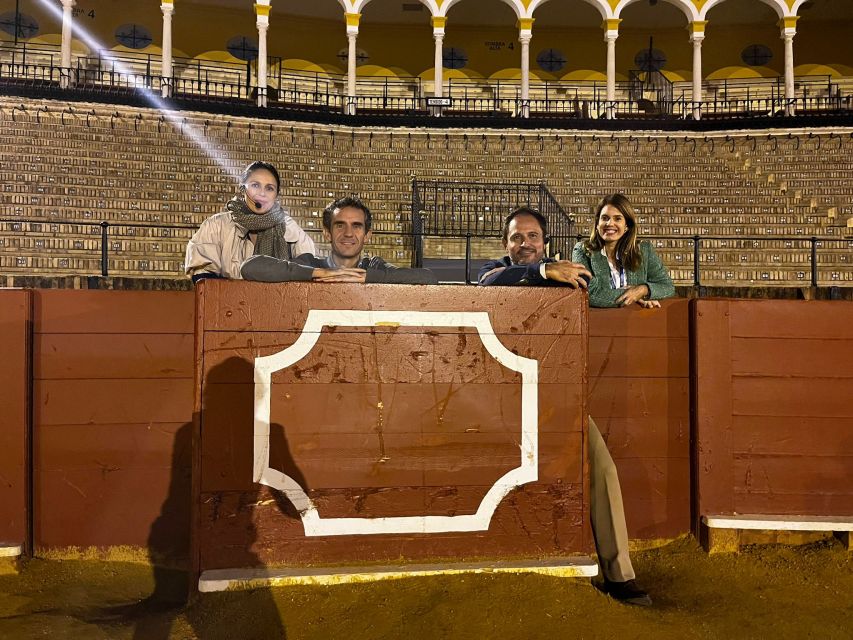
The Plaza de Toros de la Real Maestranza is one of Seville’s best places to examine a local tradition from the inside. You may arrive with strong feelings about bullfighting, and that is fine. The tour is useful precisely because it gives you enough background to understand the practice before deciding what you think of it.
A bullfight is not explained simply as a contest between a person and a bull. The guide introduces the different roles, the sequence of the event, the clothing, the horses, and the ceremonial details. You also hear about the aim of bullfighting and how its form changed over the centuries.
That context helps you read the building. The arena is not just an open circle. The seating, gates, animal pens, chapel, and working courtyards each have a purpose. Once you know what you are looking at, the visit feels less like a photo stop and more like a lesson in Seville’s social and cultural life.
I especially like this tour for people who are curious but not convinced. Several participants have arrived unsure about bullfighting or opposed to it, then found the historical explanation worthwhile without changing their views. You do not need to want to attend a fight to appreciate the architecture, rituals, and stories connected with the bullring.
More Seville trips worth a second look
- Alcazar and Cathedral of Seville Tour with Skip the Line Tickets
★ 4.5 · 4,579 reviews - Alcázar of Seville Skip-the-Line Tickets and Guided Tour
★ 4.6 · 3,941 reviews - Seville: Alcazar Skip-the-Line Guided Tour with Tickets
★ 4.3 · 2,188 reviews
The four-part museum sets the stage
The visit begins in the Bullfight Museum, which is arranged in four parts. That layout gives the guide a natural way to explain the subject step by step instead of throwing a pile of unfamiliar Spanish terms at you.
You learn about the origins and development of bullfighting, then move toward the mechanics of a modern corrida. The guide explains the parts of the event and the people who share the ring. This is where you start to understand that the matador is only one figure in a larger production involving assistants, horses, costumes, and carefully timed actions.
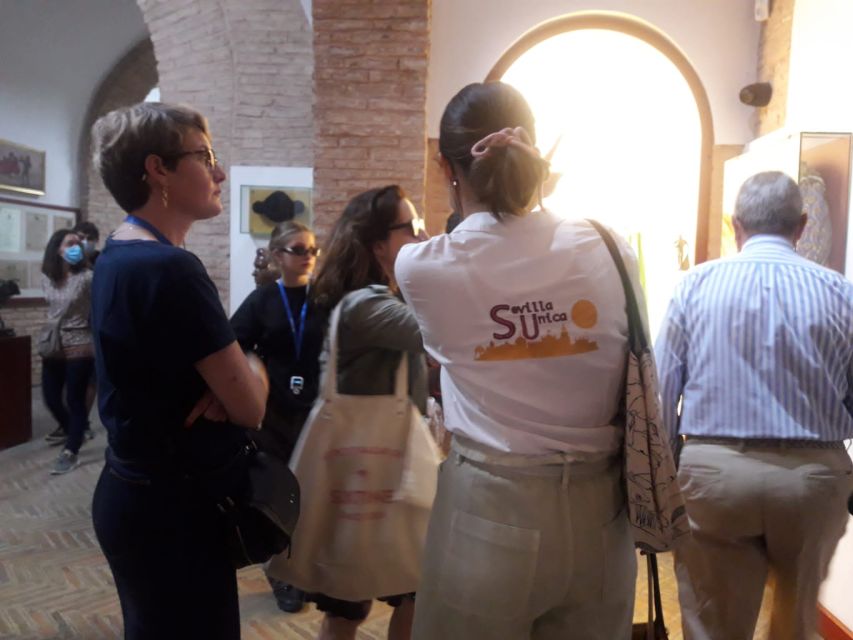
Original bullfighter costumes make the display more personal. Capes and clothing show how much of the tradition is visual and ceremonial, while also giving you a sense of the skill and risk tied to each role. The museum is not huge, so the guided explanation matters. Without it, you could easily look at the objects and miss their purpose.
The strongest guides add stories about particular bulls and bullfighters. Margarita has received especially warm praise for remembering specific people and animals, and for making time for questions. That sort of detail is the difference between reading labels and understanding how the tradition is remembered in Seville.
The museum also gives you a chance to ask difficult questions. If you are unfamiliar with bullfighting, ask about the sequence of the event, the training involved, or the meaning of the costumes. The guide conducts the tour in the language you select, English or Spanish, and a headset helps you follow the commentary.
The horses’ courtyard and the quiet chapel
After the museum, you move into the horses’ courtyard. This is a more practical part of the building, and it helps connect the ceremony in the arena with the work that supports it.
The courtyard was used for the horses associated with the fight, especially in the earlier development of bullfighting. The guide explains their place in the event and how the roles around the bull changed over time. It is a small but important stop because it shows that the bullring functioned as a working complex, not only as a grand theater for spectators.
Then comes the chapel. Its mood is very different from the bright arena. Bullfighters traditionally pray here before the fight, and the small space gives you a glimpse of the private side of an intensely public event.
I find this one of the most affecting stops, even if you have no interest in bullfighting itself. The chapel shows the tension before the spectacle begins. It is also a reminder that the people entering the ring are dealing with fear, faith, family expectations, and public honor, not just costume and ceremony.
Your time in each section depends on the guide and group. Some guides leave plenty of room for questions, while others keep a brisk pace to fit the full route into an hour. The included headset helps here, since you can keep looking around without standing shoulder to shoulder with the guide.
Entering through the main gate
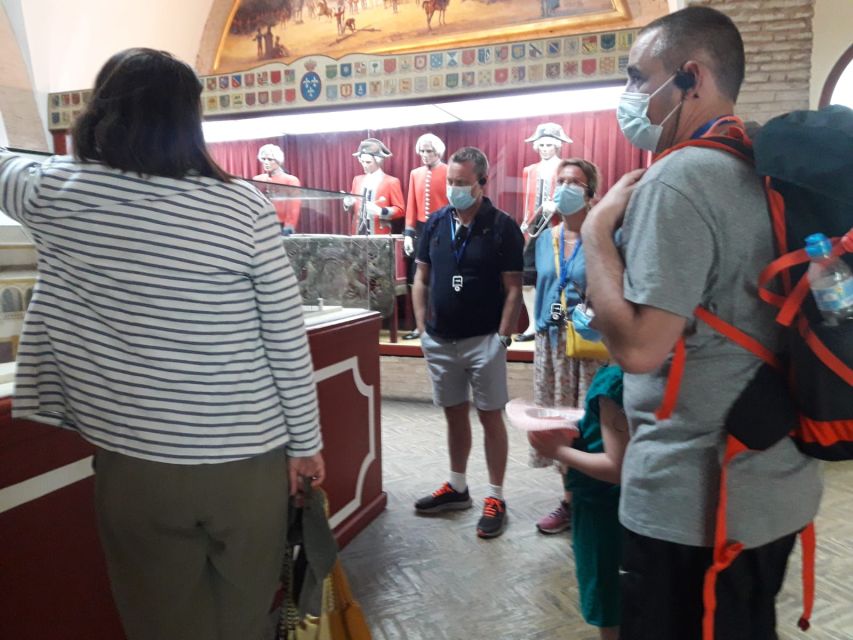
The tour’s most theatrical moment comes at the main gate. The group pauses before the wooden doors while the guide explains what this entrance means. Then you hear the door open and pass through as a bullfighter would.
This is a simple touch, but it works. The sound and narrow passage create a clear change from the museum and courtyards. You move from learning about the event to seeing the space where it takes place.
When you reach the arena, stop and look around before taking photos. From the middle, you can study the tendidos, or the front rows, and see how the seating rises around the sand. The guide points out the toriles, the bull pens, and the Prince’s Gate.
The Prince’s Gate is the most honored exit in the bullring. If a matador has earned the right reception, crossing it brings a special public celebration. Knowing that makes the gate more than an architectural feature. It becomes part of the reward system and public drama of the corrida.
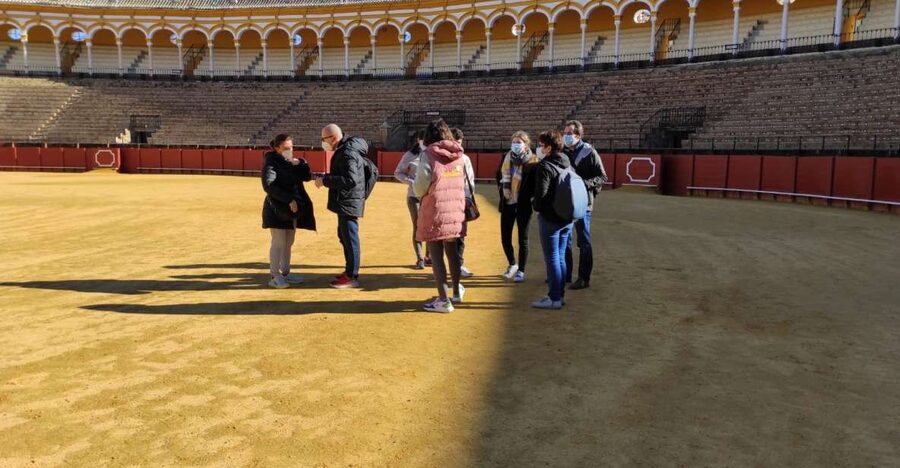
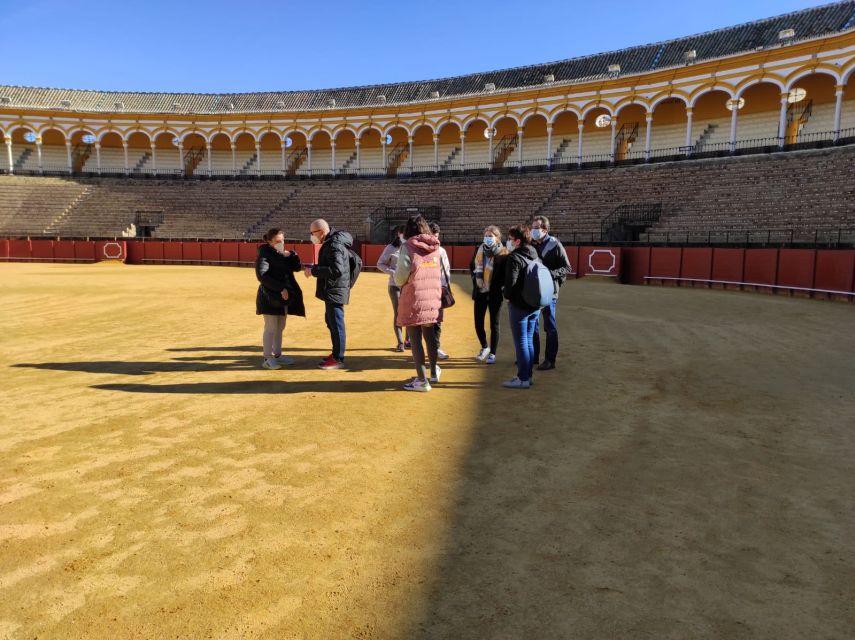
If the conditions allow you onto the arena floor, this is the moment when the scale of the ring becomes clear. You can turn in a full circle and see the relationship between the matador, the bull, the audience, and the gates. The sand feels very different from a seat high in the stands.
During bullfighting season, access may be restricted and the arena may be viewed from the seats instead. This is the biggest practical limitation to keep in mind. The tour still covers the ring and its features, but the photo shown when booking may suggest floor access that is not available on every date.
A different way to spend the day, same corner of Spain:
- Seville: Royal Alcázar Entry Ticket
★ 4.6 · 28,378 reviews - Seville: Cathedral and La Giralda Entry Ticket
★ 4.5 · 24,592 reviews - Seville: Live Flamenco Dancing Show Ticket at the Theater
★ 4.7 · 16,396 reviews - Seville: Casa de la Memoria Flamenco Show
★ 4.8 · 12,964 reviews
A live guide makes the difference
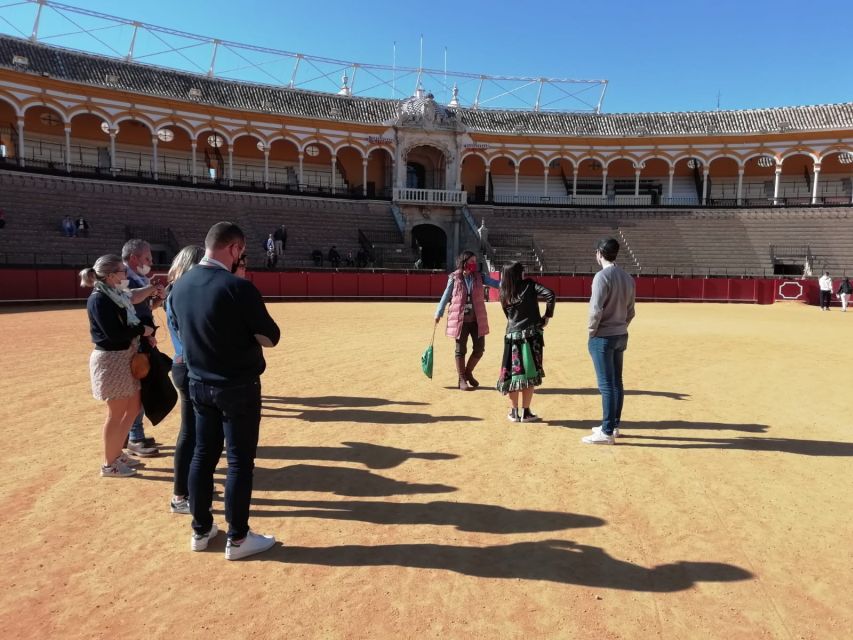
The ticket includes an official guide and a headset. That combination is important in a building where the group may spread out between displays, doorways, and the arena.
The best guides bring more than dates and definitions. Margarita is repeatedly praised for her passion, humor, and willingness to answer questions in depth. Other guides have been noted for explaining both the older traditions and the bullring’s place in modern Seville.
You should also keep expectations realistic. A few English-speaking participants found a Spanish guide’s English difficult to follow at first, although many said it became easier as the tour continued. Language ability can vary, so the clearest choice is to book the language you understand best and use the headset properly.
A small group can make the experience better. One group of six found it easy to ask follow-up questions and explore points in more detail. The activity does not promise a fixed group size, though, so your experience may be more or less personal depending on the departure.
The guide is not responsible for changes to opening times, access limits, or security restrictions. That sounds like routine fine print, but it matters here because the bullring is an active venue. Events and preparation can affect what parts of the building you see.
Is $32 a fair price?
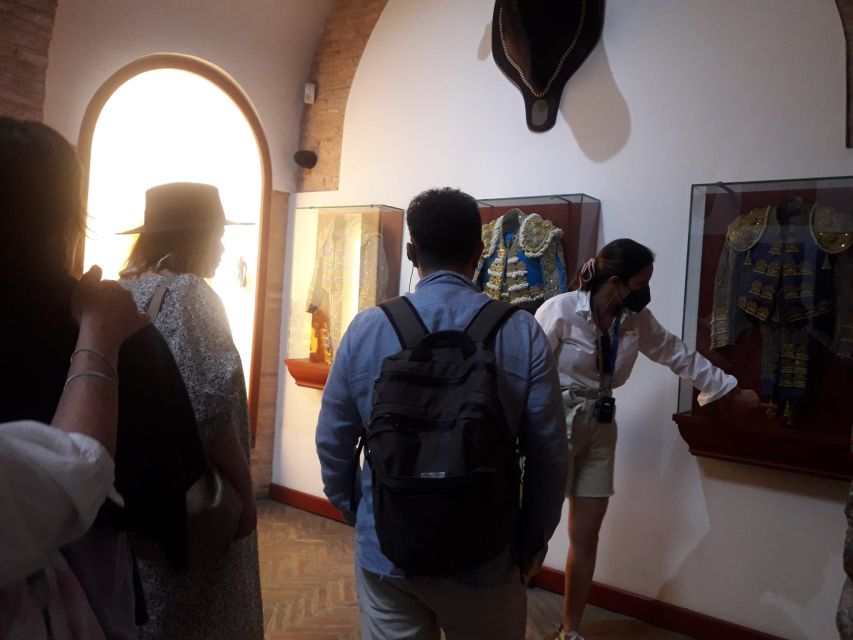
At $32 per person, this is not the cheapest way to see the bullring. You are paying for more than entry, though. The price includes skip-the-line admission, a live guide, and a headset, all within a compact visit lasting about one hour to 75 minutes.
The value depends on your interest. If you only want a quick look at the arena and a few photographs, independent admission may suit you better if that option is available for your date. If you want to understand the costumes, roles, chapel, horses, gates, and language of bullfighting, the guide adds real value.
The skip-the-line ticket is useful when the entrance is busy. It does not remove every possible delay, since security or venue restrictions can still affect access, but it gets you past the standard ticket queue. That makes the tour a sensible choice on a tightly planned day in Seville.
I would also consider the tour’s short length a plus. You get a focused cultural visit without giving up half a day. It fits neatly before lunch, after a visit to the cathedral, or alongside a walk along the Guadalquivir.
The downside is that the tour can feel short if you want a slow museum visit. One hour is enough for the main story, but not for lingering over every display and asking endless questions. If your booking allows time in the arena or museum after the guided portion, use it. That extra time can make the visit feel less rushed.
Meeting points and practical timing
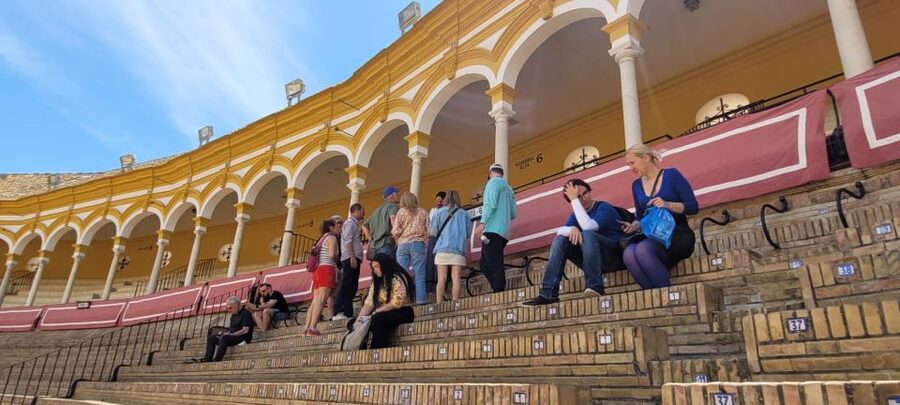
There are two possible starting points listed for this experience: P.º de Cristóbal Colón, 12, and Calle Circo, 7. Your exact meeting point depends on the option booked, so check it before leaving your accommodation.
Both locations are given as possible start and end points, and the activity finishes at one of those two locations. Do not assume you can join from the wrong address. Access is not permitted once the tour has started, so arriving early is essential.
Bring a passport or ID card. Children need identification as well, and anyone using a senior, student, or child fare must prove eligibility. Students must also carry a valid student card.
A reusable water bottle is a good idea, especially in Seville’s warm months. The tour is wheelchair accessible, but access within the active bullring can still be subject to venue conditions and restrictions. If mobility is a concern, confirm the current route when booking.
Free cancellation is available up to 24 hours before the activity for a full refund. You can also reserve now and pay later, which helps if your schedule is still changing.
Who will enjoy this tour most?
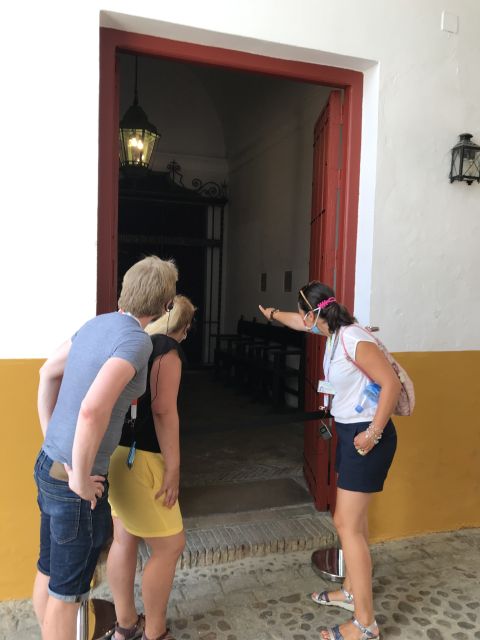
I recommend it to first-time visitors who want a cultural experience beyond Seville’s major churches and palaces. It also suits anyone who has seen a bullring from outside and wants to understand what happens behind the gate.
Families can find plenty to discuss here, since the visit explains people, animals, clothing, architecture, and ritual. The subject may not suit every child, however. Bullfighting involves animal death, even though the tour itself is an educational visit rather than a live event.
It is also a good fit for visitors who do not support bullfighting. You can learn how the tradition developed, hear how its supporters describe it, and examine the building without buying a ticket to a fight. The guide’s explanation gives you useful cultural context while leaving your moral judgment in your own hands.
I would be less enthusiastic if you dislike guided tours or prefer to spend a long time reading museum displays alone. The visit moves at the guide’s pace, and the real strength is the commentary. Pick this tour for interpretation, not just admission.
Should you book the Seville bullring tour?
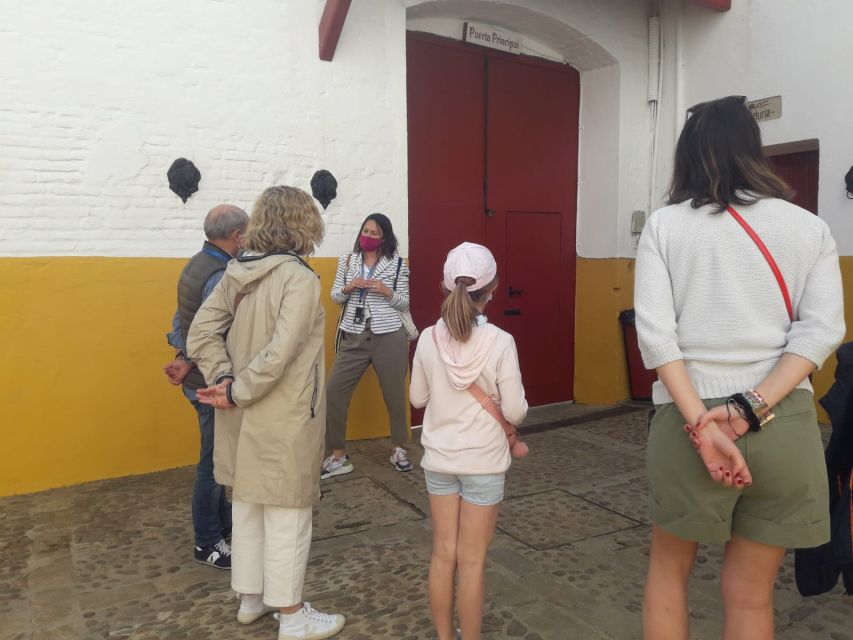
Book it if you want the bullring to make sense. The museum objects, chapel, horses’ courtyard, arena gates, and seating become far more interesting when someone explains how they fit together.
The tour is especially good value for a curious visitor who has limited time, wants to avoid the ticket line, and prefers a live English or Spanish explanation. Margarita is an especially strong guide when available, though the guide is not guaranteed by the activity details.
Skip it if you only want arena-floor photographs and are visiting during bullfighting season, when you may have to view the ring from the seats. Also skip it if the subject is too troubling for you. For everyone else, $32 buys a focused, well-organized look at one of Seville’s most revealing cultural institutions.
FAQ
How long does the bullring tour last?
The activity lasts approximately one hour to 75 minutes. Check the available starting times when booking.
What language is the tour conducted in?
The live tour is offered in English or Spanish. The tour is conducted in the language selected when booking.
Does the ticket include skip-the-line entry?
Yes. Skip-the-line tickets to the Plaza de Toros de la Real Maestranza are included.
Can I walk into the arena?
Arena access depends on conditions at the time of your visit. During bullfighting season, the arena may be viewed from the seats instead of from the floor.
What identification should I bring?
Bring a passport or ID card for yourself. Children need identification too. Senior, student, and child-fare bookings require proof of age, and students must bring a valid student ID card.
Is the tour wheelchair accessible?
Yes, the activity is listed as wheelchair accessible. Access may still be affected by venue restrictions, opening changes, or security requirements.
Recently reviewed around Seville
- Seville: Alcázar Fast-Track Access with Guided Tour★ 4.2 · 432 reviews
- Seville: Small Group Jewish Quarter Tour with Tapas & Drinks★ 5.0 · 119 reviews
- Seville: Sunset Roof Top Walking Tour★ 4.5 · 122 reviews
- Seville: VIP Exclusive Early Access Tour of The Alcazar★ 4.8 · 276 reviews
- Seville: Small-Group Jewish Quarter Discovery Walking Tour★ 4.9 · 499 reviews
- Seville: Flamenco Show at Tablao Almoraima in Triana★ 4.6 · 483 reviews
- Seville: Authentic and Romantic Horse-Drawn Carriage Ride★ 4.5 · 341 reviews
- Seville: Stand Up Paddle Board Rental★ 4.6 · 134 reviews
Skip the Line, compared.
Park Guell Guided Tour with Skip The Line Entry
Read our review →
Cathedral of Mallorca Skip-the-Line Entry Ticket
Read our review →
Sagrada Familia Skip-the-Line Entry Ticket & Tour
Read our review →
Park Guell Guided Tour with Skip the Line Ticket
Read our review →
Royal Palace Expert Guided Tour with Skip-the-Line
Read our review →
Cordoba Mosque-Cathedral: Skip-the-Line Guided Tour
Read our review →
Park Guell and Sagrada Familia Tour with Skip the Line Tickets
Read our review →
Browse the lists this tour appears in