
Reviewed · CANOES & KAYAKS
Seville: 2–Hour Guadalquivir River Kayaking Tour
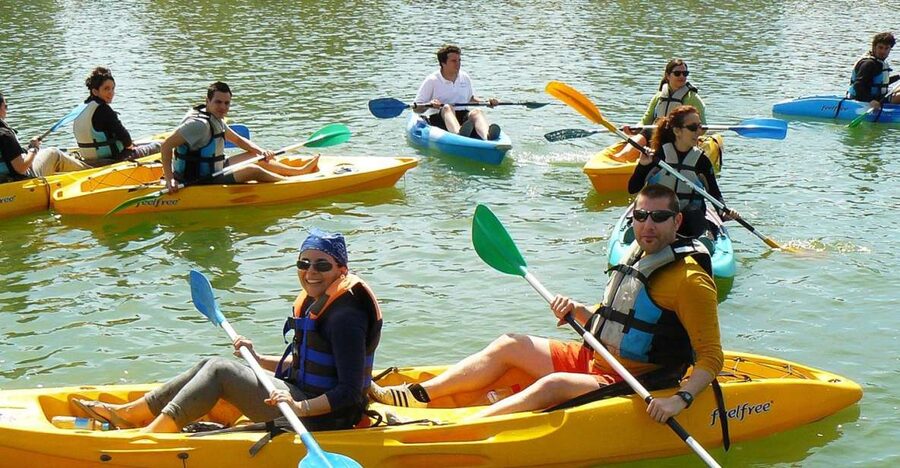
Seville’s Guadalquivir River gives you a different view of the city, one that links Christopher Columbus, the port that handled goods from the Americas, Triana’s waterfront, and the modern buildings of Expo 92. You paddle through the center in a two-person kayak while a professional guide explains what you are seeing.
I like the clear safety lesson and warm-up, especially if you have never kayaked before. I also like the small-group format, which gives guides such as Alex, Juan, Rey, Karlos, and Federico room to adjust the pace and answer questions. The one catch: kayaking takes real effort, and you should expect to get wet.
In This Review
- Key points to know before you paddle
- Why the Guadalquivir is the real attraction
- Starting at Club Deportivo RemoSevilla
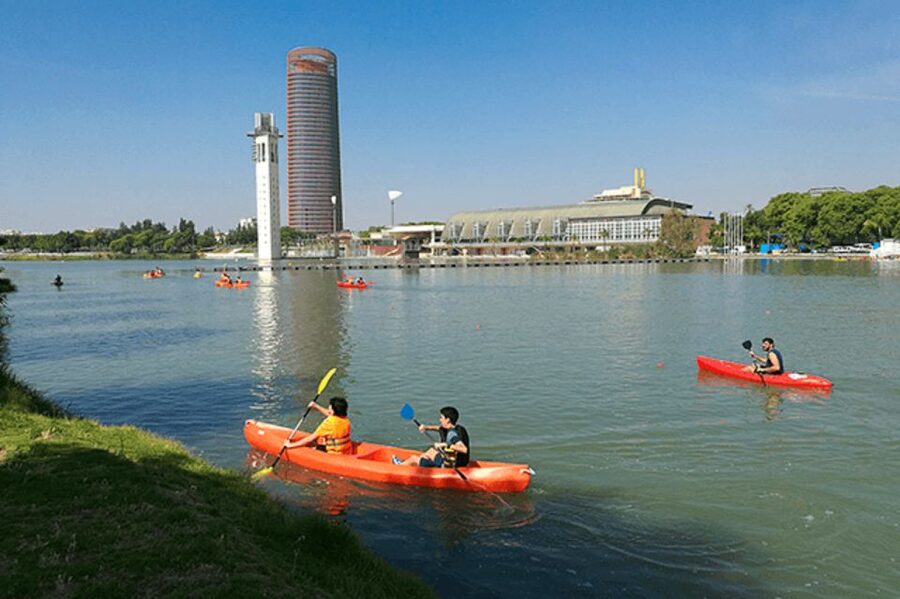
- Isla de La Cartuja and the Expo 92 buildings
- Puente del Cristo de la Expiración and the approach to Triana
- Isabel II Bridge, Calle Betis, and Torre del Oro
- San Telmo Bridge and the paddle back
- How difficult is the kayaking?
- Guides, languages, and group size
- Is $46 a good value?
- What to bring and when to go
- Who should book this Guadalquivir kayak tour?
- FAQ
- How long does the Seville kayaking tour last?
- Where does the tour start and finish?
- Is kayaking instruction included?
- What should I bring?
- Can children join the tour?
- Is the tour available in English?
- Should you book it?
Key points to know before you paddle
- The route links old and new Seville: You pass Torre del Oro, Triana, Calle Betis, Isla de La Cartuja, and Expo 92 buildings.
- The river is calm but the activity is physical: You paddle for much of the two-hour outing, so basic fitness helps.
- A safety class comes first: Your guide demonstrates technique, leads a warm-up, and explains how to handle the kayak.
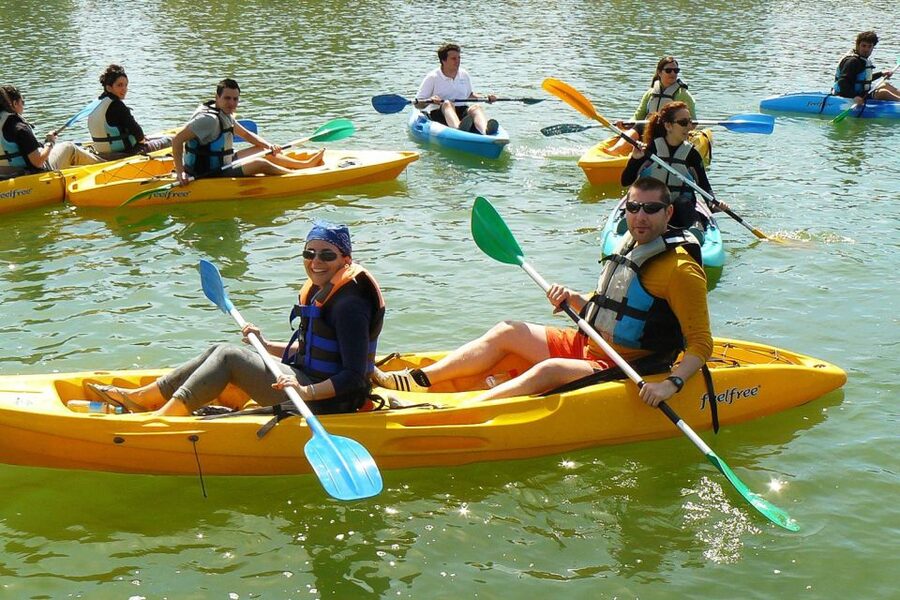
- You share a kayak: The standard arrangement is two adults, or one adult with one child.
- The rowing club has changing facilities: Bring a towel, sun protection, and spare clothes and shoes.
- The $46 price is fair for a small group: Equipment, instruction, a guide, and use of the changing room are included.
Why the Guadalquivir is the real attraction
The Guadalquivir is not just a pleasant stretch of water beside Seville. The Romans called it Betis, while its Arabic name means the Big River. For roughly 150 years, it was one of Europe’s key waterways.
During Seville’s golden era, ships brought gold, silver, tobacco, and other goods from the Americas. The river’s role declined after it became difficult for large ships to reach the city, and its silting in the 17th century helped shift commercial importance elsewhere.
The river received new attention before the Universal Exhibition of 1992. Its banks were restored, and the waterway became useful again for cruises, rowing, canoeing, and kayaking. As you paddle, you can see this change in physical form: old bridges and waterfront neighborhoods share space with modern towers and exhibition buildings.
I find this context makes the tour more worthwhile than a simple outdoor workout. The guide is not only pointing out attractive buildings. You are learning why Seville grew where it did, why the river mattered, and how the city reclaimed it.
More Seville trips worth a second look
- Seville: Guadalquivir River Kayaking Trip
★ 4.5 · 506 reviews - Seville: Sunset and Evening Paddle Boarding Tour
★ 4.8 · 355 reviews - Seville: Stand Up Paddle Board Rental
★ 4.6 · 134 reviews
Starting at Club Deportivo RemoSevilla
The tour begins at Club Deportivo RemoSevilla, a proper rowing club rather than a street-side rental kiosk. That matters. You have a place to change before getting on the water, and you can leave belongings while paddling.
Your guide gives you an introduction to kayak safety and basic technique. The practical teaching includes demonstrations and a warm-up, which is useful for first-time paddlers and anyone who has not used a kayak recently.
Pay attention here. The river may look easy from the bank, but two hours of paddling can work your arms, shoulders, and core. One guide lets you set your own pace, while another may encourage you to keep moving, but the activity still calls for steady effort.
Wear comfortable clothes and shoes that can get wet. Bring a towel, sunscreen, and an extra set of clothes and shoes. You may want to change after the outing, especially in Seville’s hot months. Water can be purchased, but food and drink are not included.
Isla de La Cartuja and the Expo 92 buildings
The early part of the route takes you toward Isla de La Cartuja, the large river island associated with Seville’s 1992 Universal Exhibition. The Pasarela de la Cartuja is the first listed photo stop, with about 10 minutes for the guide to explain the area and for you to take pictures.
The bridge gives you a clear sense of the river’s modern role. The route is not confined to Seville’s postcard center. You see the city from the water, where bridges, open river views, and long building lines make more sense than they do from a crowded pavement.
Next comes the Pabellón de la Navegación, with about five minutes for photographs. Its name reflects the city’s long connection with navigation and overseas trade. Even if modern exhibition architecture is not your main reason for booking, this stop adds useful background to the older port story.
The route continues past Torre Schindler and Sevilla Tower. Each gets roughly five minutes for a photo stop and explanation. Torre Schindler is part of the Expo 92 area, while Sevilla Tower is one of the city’s most recognizable modern high-rises. From a kayak, you get an unusual angle on both.
This section is a good reminder that Seville is not only cathedral towers, tiled plazas, and old lanes. The riverfront also tells the story of a city trying to make practical use of its waterway in the modern age.
Puente del Cristo de la Expiración and the approach to Triana
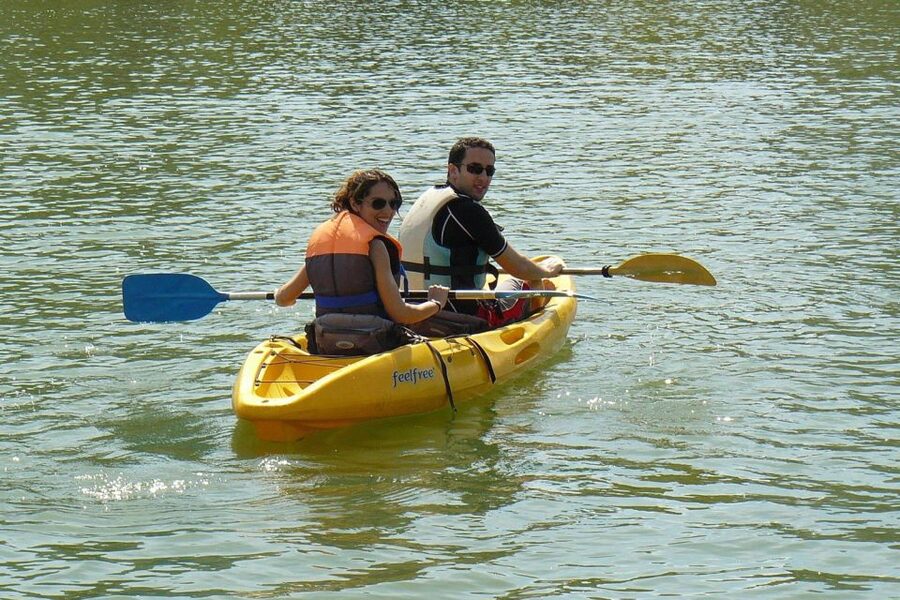
The Puente del Cristo de la Expiración receives a longer stop of about 10 minutes. The bridge is also known as the Cachorro Bridge, and its position makes it an important link between the central city and the Triana side of the river.
Here you begin to feel the mix of movement on the Guadalquivir. Professional rowers and canoeists use the water, and school groups may be out on the river as well. That activity adds atmosphere, though it also means you should listen to your guide and keep aware of other boats.
The tour then reaches Triana, one of Seville’s best-known neighborhoods. The guide has about 10 minutes to talk about the area and point out views from the water. Triana’s riverfront is one of the most rewarding parts of the route because you see the district from its natural edge rather than from a busy road.
This is also where the tour feels most connected to everyday Seville. You are not simply looking at monuments from a distance. You are moving through the same river corridor used by rowers, canoeists, and local activity groups.
A different way to spend the day, same corner of Spain:
- Seville: Royal Alcázar Entry Ticket
★ 4.6 · 28,378 reviews - Seville: Cathedral and La Giralda Entry Ticket
★ 4.5 · 24,592 reviews - Seville: Live Flamenco Dancing Show Ticket at the Theater
★ 4.7 · 16,396 reviews - Seville: Casa de la Memoria Flamenco Show
★ 4.8 · 12,964 reviews
Isabel II Bridge, Calle Betis, and Torre del Oro
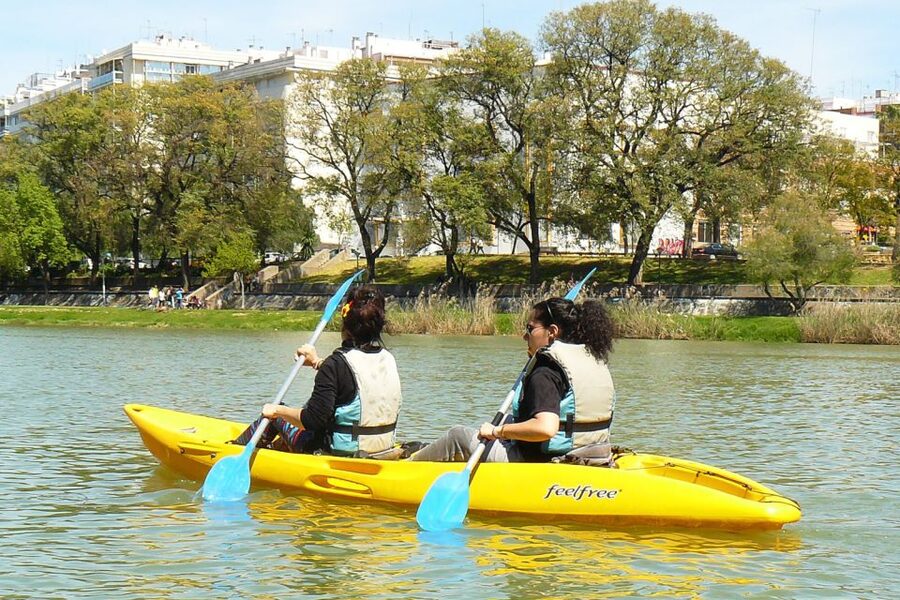
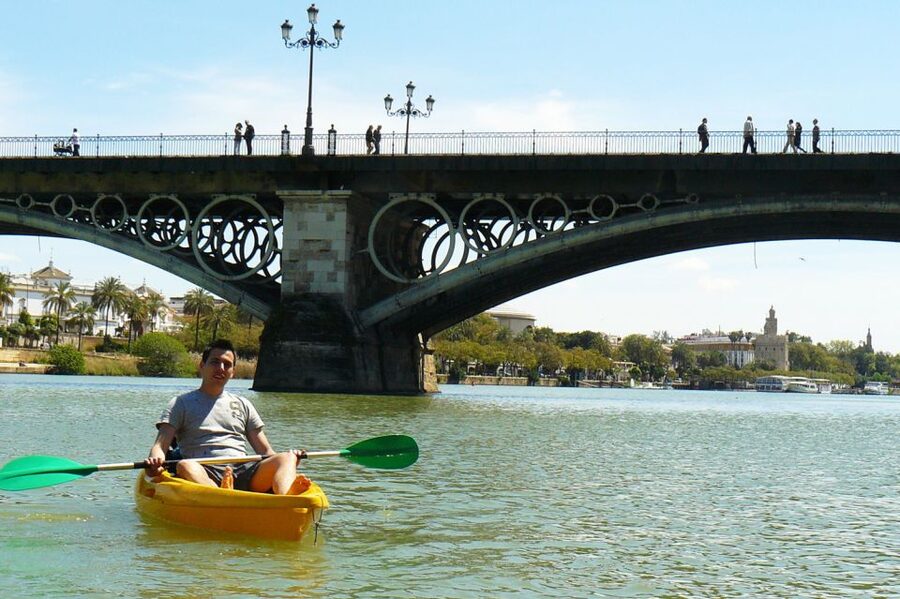
The Puente de Isabel II, usually called the Triana Bridge, gets another 10-minute stop. Its iron structure is one of the classic views along the Guadalquivir, and the water offers a clean way to frame it.
From here, the route follows Calle Betis. The street runs along the Triana waterfront and is known for its colorful riverfront buildings, restaurants, and views back toward central Seville. From a kayak, you are below the level of the road and can appreciate the relationship between the water, the facades, and the bridge crossings.
The most historic stop comes at Torre del Oro. The guide spends about 10 minutes here, explaining the tower and its place beside the river. The Torre del Oro is one of Seville’s defining waterfront landmarks, and seeing it from the Guadalquivir helps explain why the tower was built where it was.
This part of the route is especially useful if you are planning a first visit to Seville. You get a basic map in your head: Triana on one side, the Arenal district and historic center on the other, and the river connecting them.
San Telmo Bridge and the paddle back
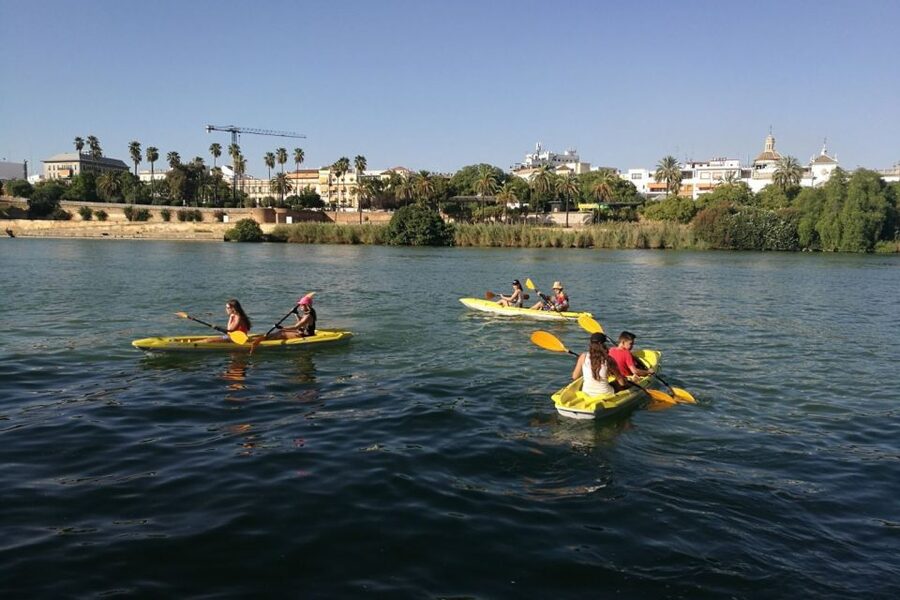
The final sightseeing stop is Puente de San Telmo, with about five minutes for photographs and commentary. By this point, you have seen a broad cross-section of Seville’s riverfront, from Expo 92 structures and modern towers to traditional neighborhoods and historic defenses.
You then return to Club Deportivo RemoSevilla. The full activity lasts two hours, but the time is not all spent stopped for commentary. You should expect a real paddling session with short pauses at key points.
That balance works well for me. A bus tour can give you more facts with less effort, but it keeps you at street level. A walking tour gives you more detail in each neighborhood, but it cannot show you Seville’s bridges and waterfront from this angle. Kayaking offers less time at each sight, but it gives the river a central role.
How difficult is the kayaking?
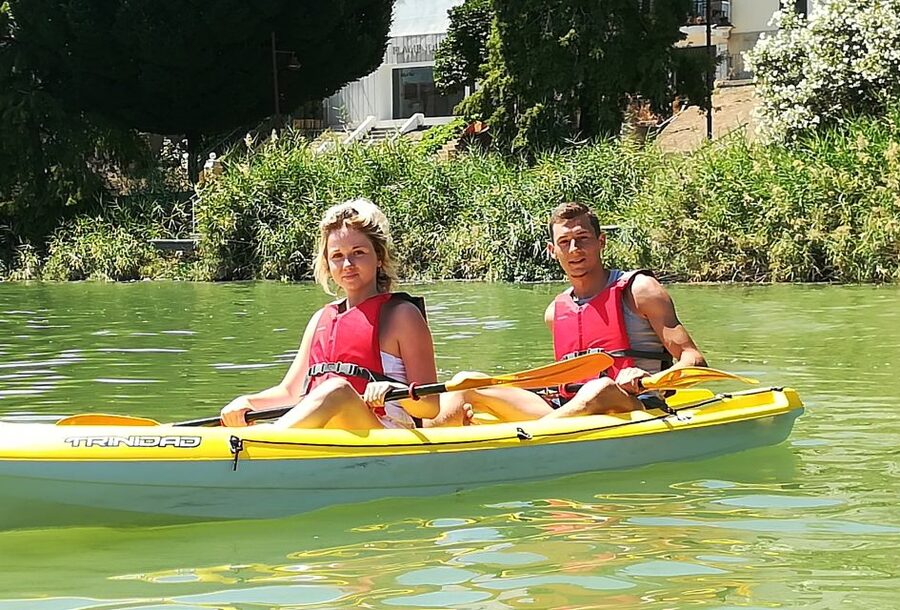
The Guadalquivir is described as calm and suitable for this activity, but calm water does not mean effortless water. You still need to paddle, steer, and coordinate with the person sharing your kayak.
One useful detail is the two-person setup. Two adults share one kayak, or one adult can paddle with one child. Children must always be accompanied by an adult. If you are inexperienced, a private tour or very small group may suit you best, since the guide can give more direct help.
The experience can be adjusted to your pace. Some guides allow a relaxed rhythm, while you might also find yourself trying to keep up briefly with faster rowers passing nearby. Do not treat that as a race. The aim is to enjoy the city and finish comfortably.
I would rate the physical demand as moderate. You do not need advanced kayaking skills, since instruction is provided, but you should be prepared for sustained movement. If you want only sightseeing with no exertion, choose a river cruise instead.
Guides, languages, and group size
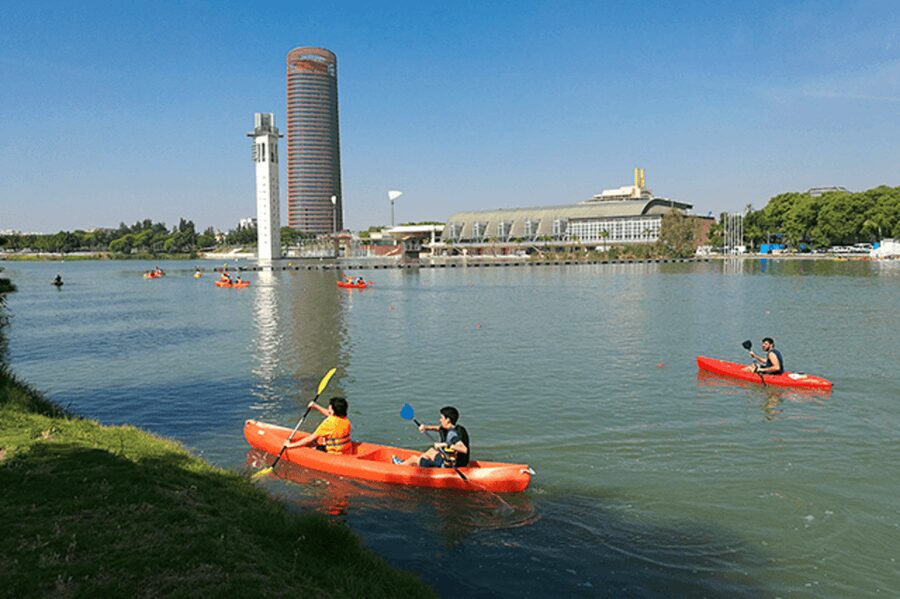
Instruction is available in Spanish and English. The guides praised in the supplied material include Alex, Karlos, Juan, Rey, Federico, Pablo, and others, but your specific guide depends on the date and booking.
The strongest part of the guiding is the mix of technique and local explanation. Alex is noted for careful demonstrations, a warm-up, and clear safety instructions. Juan is praised for practical suggestions about places to eat afterward. Rey is described as considerate of different ability levels, while Pablo allows paddlers to set their own pace.
Small groups make a real difference here. A guide can watch how you handle the kayak, explain a bridge without shouting over a large crowd, and answer questions about Seville’s buildings. Private options are available if you want a slower pace or extra help with technique.
I would book this near the start of a Seville stay if you enjoy local food and neighborhood advice. A guide may point you toward places to eat or areas to explore afterward, and you will have a useful river-based orientation before walking the city.
Is $46 a good value?
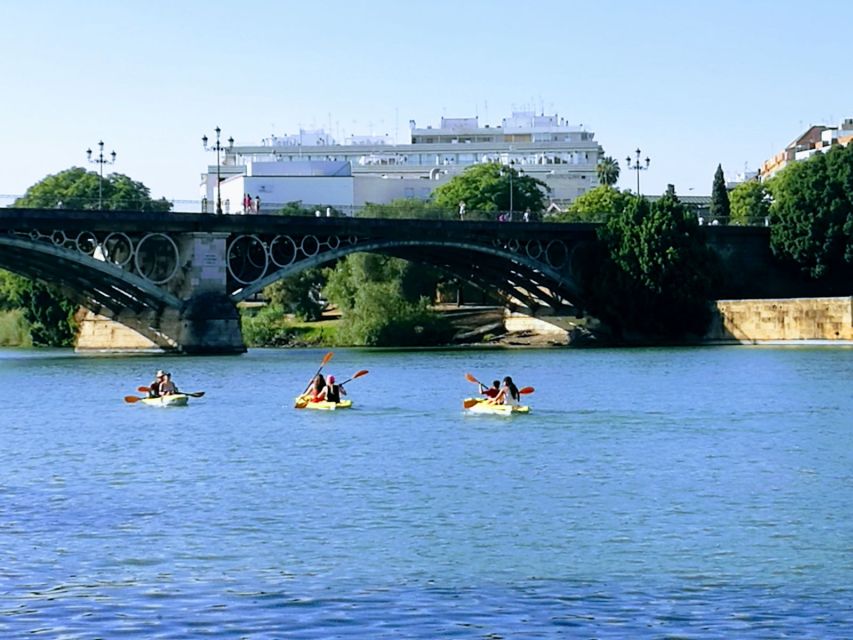
At $46 per person, the price is reasonable for a two-hour small-group experience in a major European city. You receive the kayak, paddling equipment, safety instruction, a professional guide, and access to a changing room.
The value depends on what you want from sightseeing. If you want detailed time inside monuments, this is not the best use of your budget. The tour visits buildings and landmarks from the river, but it does not replace entry to museums, palaces, or towers.
If you want exercise, outdoor time, and history in one activity, the price works well. The small-group setting adds value over simply renting equipment because you receive instruction and a planned route through important parts of the city.
Food and drink are not included. Budget for your own water and plan a meal afterward, especially if you paddle in hot weather.
What to bring and when to go
Bring comfortable clothing, comfortable shoes, a towel, sunscreen, and spare clothes and shoes. You may get wet, and the changing facilities make it practical to clean up afterward.
Seville can be intensely hot in summer. Early or later starting times may feel more comfortable, but you must check the available schedule for your date. A cloudy day can be especially pleasant for paddling, since the sun is less tiring on the open water.
The tour runs in different conditions, but the river setting still exposes you to the sun. Apply protection before leaving the club and bring any additional protection you normally use.
If you need the student price, bring a valid student card for staff to check. Cancellation is free up to 24 hours before the activity, and you can reserve now and pay later, useful if you are still arranging an Andalusia itinerary.
Who should book this Guadalquivir kayak tour?
I recommend it to active couples, friends, families with older children, and first-time kayakers who want a guided introduction. It also suits repeat visitors who have already seen Seville’s main monuments and want something different.
You should be comfortable sharing a kayak and doing physical work for two hours. Families need to follow the adult-and-child arrangement, and anyone who dislikes getting wet should choose a land-based tour.
The tour is less suitable if you have limited upper-body strength, want a fully relaxed sightseeing experience, or prefer long stops at each landmark. In those cases, a cruise or walking tour may fit better.
FAQ
How long does the Seville kayaking tour last?
The tour lasts two hours, including the safety introduction, guided paddling, sightseeing stops, and return to Club Deportivo RemoSevilla.
Where does the tour start and finish?
You meet at Club Deportivo RemoSevilla. The tour returns to the same location after the river route.
Is kayaking instruction included?
Yes. A professional guide provides an introduction to kayaking safety, including demonstrations and a warm-up before you set out.
What should I bring?
Bring comfortable shoes, comfortable clothes, sunscreen, a towel, and an extra set of clothes and shoes. You should dress for the possibility of getting wet.
Can children join the tour?
Yes, but children must always be accompanied by an adult. The kayak arrangement is two adults, or one adult with one child.
Is the tour available in English?
Yes. The activity is offered with an instructor in English or Spanish. Private and small-group options are available.
Should you book it?
Book this tour if you want to see Seville from the Guadalquivir while getting some exercise. The route covers an unusually wide slice of the city, from Isla de La Cartuja and Expo 92 architecture to Triana, Calle Betis, and Torre del Oro.
The best reasons to choose it are the careful safety briefing, small groups, local history, and useful changing facilities. The main warning is simple: you will work for the views. At $46, that is a good trade for an active, well-guided look at Seville, but not if you want a quiet ride with no paddling.
Recently reviewed around Seville
- Seville: Alcázar Fast-Track Access with Guided Tour★ 4.2 · 432 reviews
- Seville: Small Group Jewish Quarter Tour with Tapas & Drinks★ 5.0 · 119 reviews
- Seville: Sunset Roof Top Walking Tour★ 4.5 · 122 reviews
- Seville: VIP Exclusive Early Access Tour of The Alcazar★ 4.8 · 276 reviews
- Seville: Small-Group Jewish Quarter Discovery Walking Tour★ 4.9 · 499 reviews
- Seville: Flamenco Show at Tablao Almoraima in Triana★ 4.6 · 483 reviews
- Seville: Authentic and Romantic Horse-Drawn Carriage Ride★ 4.5 · 341 reviews
- Seville: Stand Up Paddle Board Rental★ 4.6 · 134 reviews
Canoes & Kayaks, compared.
Kayak and Snorkel with Turtles, Wetsuits Included
Read our review →
Barcelona Costa Brava Kayak, Snorkel & Cliff Jump Day Tour
Read our review →
Guided Kayak Tour Nerja Cliffs and Maro Waterfall
Read our review →
Costa Brava Kayak, Snorkel & Cliff Jump & Lunch
Read our review →
Kayak Safari and Sea Turtle Snorkeling with Photos
Read our review →
Cabo de Gata Active. Guided kayak and snorkel route through coves of the Natural Park
Read our review →
Turtle & Dolphin Kayak Tour with Snorkel & Wetsuit
Read our review →Browse the lists this tour appears in