Reviewed · TICKETS
Sant Pau Recinte Modernista Entrance Ticket in Barcelona
The most surprising thing about Sant Pau is its original purpose. This is not simply a pretty Modernist monument. It was a working hospital, still treating patients into the 1990s, and its pavilions, gardens, tunnels, and grand rooms were designed around patient care. The architecture is the star, but the medical story gives the beauty a practical reason.
I like the freedom here. You enter with a mobile ticket and set your own pace, and the complex is usually a calmer change from Barcelona’s most crowded sights. I also like the chance to see mosaics, stained glass, domes, sculptures, and tiled tunnels in one visit. The main drawback is the self-guided format: signs can be uneven, some areas may be closed, and the route is not always obvious without the map or an audio device.
In This Review
- Key points to know before you go
- Why Sant Pau is more than another pretty Barcelona building
- Starting at the Administration Pavilion
- Sant Salvador Pavilion and the hospital’s long story
- Pavilions, gardens, and Modernist detail
- Underground tunnels and the practical side of the design
- Restored rooms with a direct connection to medicine
- The Sant Jordi Pavilion and temporary exhibitions
- What the $21.78 ticket is worth
- How to make the self-guided route work
- Who will enjoy Sant Pau most
- Should you book the Sant Pau ticket?
- FAQ
- Where is Sant Pau Recinte Modernista?
- How long does the visit take?
- Is the ticket self-guided?
- Is information available in English?
- What does the admission ticket include?
- Can I use a mobile ticket?
- Can I cancel the booking?
Key points to know before you go
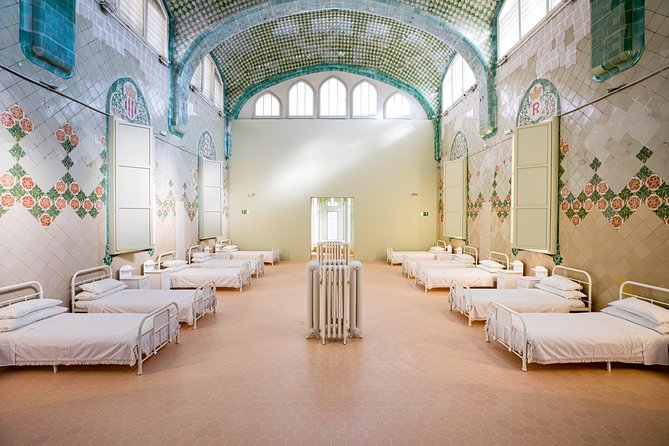
- A hospital designed as a work of art: Sant Pau combines medical planning with Catalan Modernisme, the local form of Art Nouveau.
- The underground tunnels are part of the visit: These passages once helped move patients between the pavilions.
- The Sant Salvador Pavilion explains the whole story: Its exhibits trace the hospital from 1401 into the 21st century.
- You explore alone, not in a large group: Admission is self-guided, with English information available.
- Allow about 1 to 2 hours: You can move quickly, but the buildings reward a slower look at the details.
- An audio device costs €4 extra: The ticket covers admission, not food, drinks, a guide, or the optional audio guide.
Why Sant Pau is more than another pretty Barcelona building
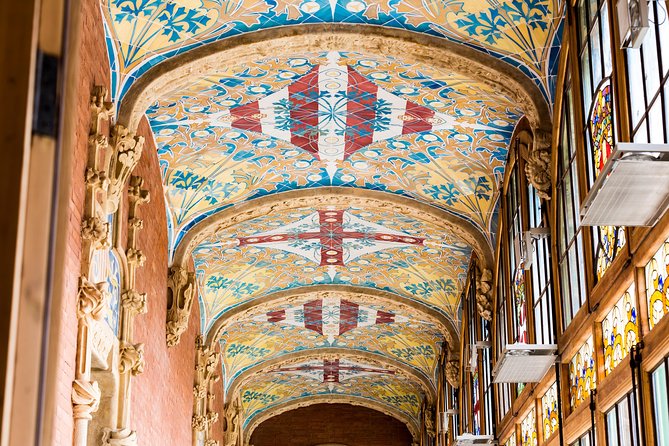
Barcelona is full of decorative Modernist buildings, but Sant Pau gives you a different angle on the movement. Lluís Domènech i Montaner used colored tile, sculpture, stained glass, gardens, and natural light to create a hospital that was meant to help people heal.
That idea matters as you walk through the grounds. The complex was not decorated after the fact simply to impress wealthy owners. Its buildings formed a medical institution, with separate pavilions connected by underground passages. The layout gave patients space, air, light, and gardens, while staff could move between buildings below ground.
The result is an unusual mix of beauty and function. You may pause to study a tiled roof, then remember that the building served patients and medical staff. You may admire a sculpted facade, then enter a room connected to the story of surgery and treatment.
Sant Pau is also less demanding than some of Barcelona’s largest attractions. You are not pushed through a fixed group itinerary, and the visit generally takes around 1 to 2 hours. That makes it easy to pair with other sightseeing in the area, especially since the complex is a short distance from the Sagrada Família.
More Barcelona trips worth a second look
- Barcelona: Sagrada Familia Entry Ticket with Audio Guide
★ 4.6 · 105,312 reviews - Barcelona: Park Güell Admission Ticket
★ 4.4 · 76,534 reviews - Barcelona Aquarium: Entry Ticket
★ 4.3 · 13,335 reviews
Starting at the Administration Pavilion
Your visit begins at the Administration Pavilion. This is a useful starting point because it introduces both sides of Sant Pau: the hospital’s work and its artistic design.
The exhibition space explains how the institution developed from the Hospital de la Santa Creu, founded in 1401, into the Sant Pau complex associated with Domènech i Montaner. An interactive touch table and video presentation help explain the site before you walk through the pavilions.
I recommend taking a few minutes here instead of rushing straight to the gardens. The medical background makes the rest of the visit easier to understand. Without it, Sant Pau can feel like a collection of beautiful rooms. With it, you begin to see how the pavilions worked together.
The information is available in English, which helps if you want to read at your own speed. Still, the self-guided approach means you need to pay attention to the route. One practical complaint about the visit is that the signposting can be hit-and-miss. Pick up the paper guide and use the map as you go, rather than assuming every turn will be obvious.
Sant Salvador Pavilion and the hospital’s long story
The Sant Salvador Pavilion summarizes the history of the Hospital de la Santa Creu i Sant Pau, from its 1401 foundation through the 21st century. This section gives the complex a human scale. You are not only looking at tilework and vaulted spaces. You are learning how medical care changed over hundreds of years.
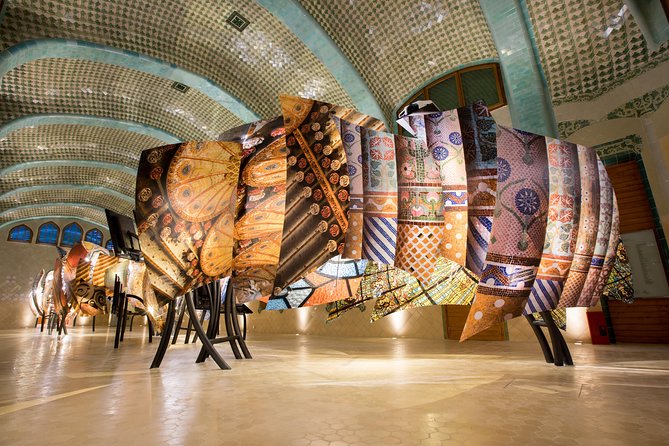
The upper floor includes a contemporary installation shaped like a dragon. It pays tribute to Domènech i Montaner and his role in Catalan Modernisme. The piece adds a modern note to a site that otherwise looks firmly tied to the past.
This pavilion is particularly worthwhile for anyone interested in hospitals, public health, or the changing practice of medicine. Exhibits include information about care in earlier periods, and you may see old hospital equipment during the visit. The displays help explain why Sant Pau was considered a forward-thinking medical facility in its day.
The subject may not appeal to every person in your group. If you only want architectural photographs, you can move through the historical displays quickly. But I think the story is what turns this from a decorative stop into a meaningful one.
Pavilions, gardens, and Modernist detail
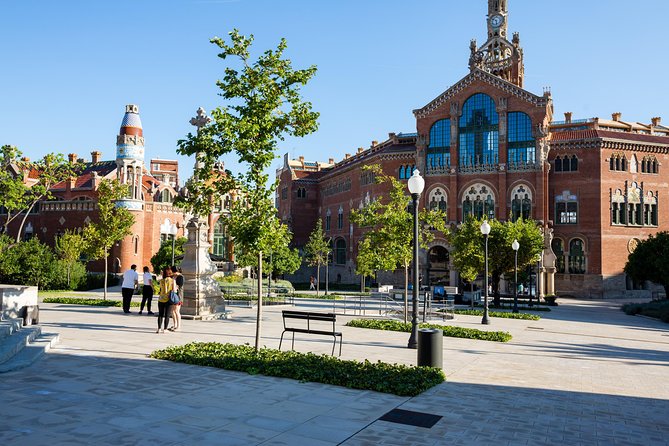
Once you move beyond the introductory exhibits, the architecture takes over. Sant Pau is made up of multiple pavilions set among gardens and connected by passages. The open spaces give you room to step back and see the buildings as a planned medical campus rather than isolated monuments.
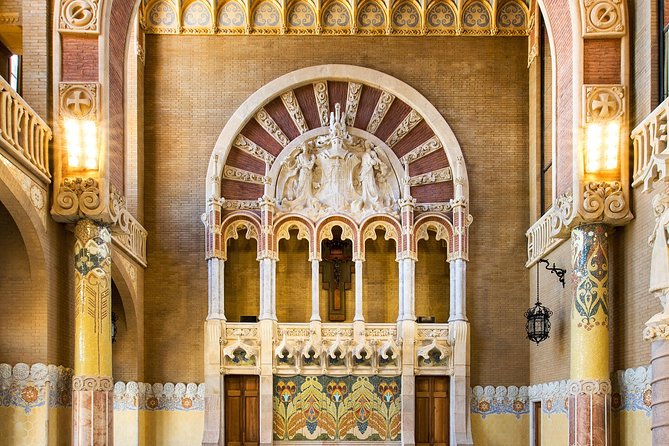
Look closely at the outside walls. Frescoes, sculptures, mosaics, stained glass, domes, and tile roofs appear at nearly every turn. The decoration is colorful without feeling random. Each detail contributes to the larger idea that a hospital could be orderly, bright, and humane.
The gardens are an important part of the visit. They offer a quiet pause between interior spaces and make the complex feel less like a conventional museum. On a hot day, the combination of outdoor areas, indoor rooms, seating, and air-conditioned sections can make the visit easier.
You should not expect every pavilion to be open at all times. Temporary closures or private events can block access to parts of the complex. That is one reason I would keep your expectations flexible. Sant Pau is large, and a short visit may not cover every building even when all areas are available.
A different way to spend the day, same corner of Spain:
- Barcelona: Casa Batlló Entry with Self-Audioguide Tour
★ 4.7 · 25,359 reviews - Barcelona: 24 or 48-Hour Hop-On Hop-Off Bus Tour
★ 4.4 · 20,872 reviews - Barcelona: Park Guell Guided Tour with Skip The Line Entry
★ 4.7 · 17,563 reviews - Barcelona in 1 Day: Sagrada Familia, Park Guell,Old Town & Pickup
★ 5.0 · 13,541 reviews
Underground tunnels and the practical side of the design
The underground passages are among the most memorable parts of Sant Pau. These tiled tunnels connected the pavilions and allowed patients and staff to move between buildings without crossing the gardens above.
They also reveal how carefully the complex was planned. The tunnels were not merely a dramatic architectural feature added for show. They supported the hospital’s daily operation and linked the separate treatment areas.
The passageways are easy to overlook if you follow the route too quickly, so watch for the entrance as you move between the buildings. The self-guided route has been described as confusing in places, and it is possible to miss sections if you do not use the map.
For many people, the tunnels are what make the visit feel different from a standard Modernist architecture tour. You are seeing the infrastructure behind the grand facades. That connection between beauty and practical hospital design is one of Sant Pau’s strongest features.
Restored rooms with a direct connection to medicine
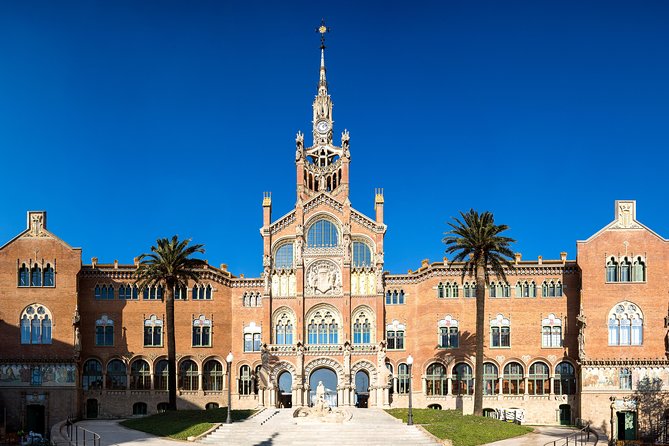
The restored Sant Rafael Pavilion and the old Surgery Room bring the medical purpose of the site into sharper focus. These areas help you picture how the buildings were used, rather than treating them as empty architectural shells.
You will also see the Lluís Domènech i Montaner Room, the Pau Gil Room, and the Main Hall. Each space offers a different look at the complex’s interior design, from decorative surfaces to formal institutional rooms.
The Main Hall provides one of the clearest reminders that Sant Pau was built as a serious public institution, not a private residence. Its scale and finish show the importance placed on the hospital and its role in Barcelona.
I would not rush through the named rooms. Take time to look up, examine the tilework, and compare the formal interiors with the more practical hospital spaces. The visit works best when you allow the decorative details and the medical story to sit side by side.
The Sant Jordi Pavilion and temporary exhibitions
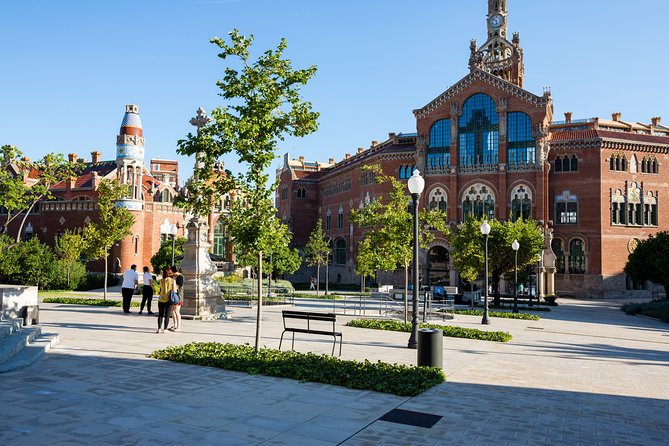
The route ends at the Sant Jordi Pavilion, which hosts rotating temporary exhibitions. Because the displays change, the pavilion may feel different from one visit to the next.
This final stop can either add a useful contemporary perspective or feel less essential if the temporary show does not interest you. I would treat it as an extra rather than the main reason to buy the ticket. The permanent architecture, tunnels, gardens, and hospital exhibits are the core experience.
The changing exhibitions also give repeat visitors a reason to return. Still, check what is currently on display if the temporary program matters to you, since the supplied ticket information does not specify a particular exhibition.
What the $21.78 ticket is worth
At about $21.78 per person, this is not Barcelona’s cheapest sightseeing stop, but the ticket covers access to a large historic complex rather than one small room. You are paying for the restored pavilions, gardens, tunnels, exhibition spaces, and former hospital rooms.
The value is strongest if you enjoy architecture, urban history, or the story of medicine. You can easily spend 90 minutes here, and a slower visit may take closer to two hours. The calm setting also gives you something different from the city’s more crowded headline sights.
Prebooking is useful during busy periods because it guarantees admission. That may matter more than skipping a long line. On a quiet Monday afternoon, there may be little or no queue, but demand can change. A prepaid mobile ticket also lets you arrive with the main admission already handled.
The ticket does not include a guide, food, drinks, or an audio guide. An audio device is available for an additional €4 at the entrance, and I consider it worth considering if you want more context. Several people found the narration helpful, while others relied on the paper guide and English exhibit text.
The booking price has also been reported as similar to buying directly from Sant Pau, with the benefit here being free cancellation up to 24 hours before the start time. That flexibility is useful when Barcelona plans shift. Any cancellation or change made within 24 hours is not accepted for a refund.
How to make the self-guided route work
Show your mobile voucher at the entrance to the Administration Pavilion. The check-in process is described as easy, and arriving earlier than the time printed on a ticket may sometimes be accepted, though you should not count on that as a guarantee.
Once inside, get the paper guide and orient yourself before moving on. The route includes several pavilions, tunnels, gardens, and rooms, so a quick look at the map can prevent missed sections.
If you want the fullest explanation, rent the audio device for €4. If you prefer to read and explore independently, the English information and paper guide may be enough. The important thing is to choose one method and use it consistently. Wandering without the map is when the visit is most likely to feel disorganized.
Plan extra time if you have bad knees or dislike stairs. Lift access has been described as limited in parts of the complex, and some sections may require more walking than expected. The attraction is near public transportation, and the green Hop-On Hop-Off bus has a stop directly outside, according to the practical information available for the site.
Service animals are allowed, and most people can participate. The combination of outdoor gardens and indoor rooms makes the complex workable in changing weather, though your comfort will depend on how much walking and stair use you can manage.
Who will enjoy Sant Pau most
I would recommend Sant Pau to you if you like Barcelona’s Modernist architecture but want something beyond the usual residential buildings. The hospital setting gives you a fresh way to understand Domènech i Montaner’s work.
It is also a good pick for anyone interested in medical history. The old equipment, surgery room, exhibits, and hospital layout make the visit more than a photo stop.
Families with older children may appreciate the tunnels, gardens, and unusual hospital setting. The interactive touch table and video can help younger visitors understand the site, though the amount of reading may not suit very young children.
You should think twice if you want a guided story with a clear route and constant explanation. This is a self-guided admission ticket, not a guided tour. Some sections can be closed, and the directions may not always be clear. An audio device improves the context, but it does not change the independent nature of the visit.
Should you book the Sant Pau ticket?
Yes, I would book it if you want beautiful architecture with a real purpose behind it. Sant Pau offers colorful Modernist detail, quiet gardens, underground tunnels, and a long medical story in one manageable visit.
Book ahead if your Barcelona schedule is tight or you are visiting during a busy period, since prepaid admission guarantees entry. If your schedule is loose and you are visiting at a quiet time, buying at the door may be possible, but the advance ticket adds useful flexibility and free cancellation up to 24 hours before the visit.
I would allow at least 90 minutes, pick up the map, and budget another €4 if you want the audio device. Skip it only if you dislike self-guided museums or are interested in Modernist decoration without much concern for hospital history. For everyone else, Sant Pau is a thoughtful, distinctive stop, and its short distance from the Sagrada Família makes it easy to add to a day in Barcelona.
FAQ
Where is Sant Pau Recinte Modernista?
Sant Pau is located on Sant Antoni Maria Claret in central Barcelona. It is near public transportation, and the green Hop-On Hop-Off bus has a stop directly outside.
How long does the visit take?
The visit takes approximately 1 to 2 hours. You can move faster through the exhibits or spend more time studying the buildings, gardens, rooms, and tunnels.
Is the ticket self-guided?
Yes. The admission ticket does not include a guide. You explore the complex independently using the available information and map.
Is information available in English?
Yes. English information is available, and the exhibits are translated into English. An optional audio device can also be rented at the entrance for €4.
What does the admission ticket include?
The ticket includes admission to Sant Pau Recinte Modernista. It does not include food, drinks, a guide, or the optional audio device.
Can I use a mobile ticket?
Yes. A mobile ticket is provided, and you can show the prepaid voucher at the entrance.
Can I cancel the booking?
Free cancellation is available if you cancel at least 24 hours before the experience’s start time. Cancellations and changes made less than 24 hours before the start time are not accepted for a refund.
Recently reviewed around Barcelona
- Excursion Aigüestortes – Estany Llebreta (1/2 day)★ 5.0 · 138 reviews
- E-Bike tour in Barcelona with English Guide★ 5.0 · 128 reviews
- Wine Tasting Experience in Barcelona★ 5.0 · 172 reviews
- Barcelona Luxury Yacht Cruise – Day or Sunset, Open Bar & Snacks★ 5.0 · 154 reviews
- Montserrat: Cog-Wheel, Basilica, Black Madonna & Licor Tasting★ 4.5 · 886 reviews
- Barcelona Wax Museum Admission Ticket★ 4.5 · 237 reviews
- Barcelona: Wine Tasting and 5 Course Tapas Pairing Dinner★ 4.5 · 129 reviews
- Andorra Original History and Sightseeing Tour (Private, Pickup)★ 5.0 · 350 reviews
Tickets, compared.
Sagrada Familia Entry Ticket with Audio Guide
Read our review →