
Reviewed · MADRID TOURS
San Lorenzo de El Escorial: Monastery and Site Guided Tour
San Lorenzo de El Escorial is far more than a grand palace. It is a monastery, royal burial place, basilica, library, and political statement packed into one stern Renaissance complex. This two-hour tour gives you a clear route through the major rooms and explains why Philip II built such an imposing monument near Madrid.
I like the focus on the Royal Library, where Philip II gathered books to support his humanist interests, and the way the tour connects the building to Spain’s Golden Age instead of treating it as a series of empty rooms. I also like the efficient length: two hours is enough to see the essential interiors without giving up an entire day.
The main consideration is language. The activity lists a live guide in Spanish, so you should be comfortable following a Spanish-language tour. The meeting point can also take a little care to find, since you must exchange your voucher and look for a blue Todo Tour umbrella at the monastery’s main entrance.
In This Review
- Key points to know before booking
- Why El Escorial deserves your time near Madrid
- Meeting the guide at the monastery entrance
- Entering the grill-shaped monastery
- The basilica and the religious heart of the complex
- The pantheon and Spain’s royal burials
- The Battle Hall and the visual record of war
- Palatial rooms and the daily side of royalty
- The Royal Library, the tour’s intellectual highlight
- What the two-hour format does well
- Is $47 a fair price?
- Dress rules, access, and what to bring
- Who will get the most from this tour?
- Should you book the San Lorenzo de El Escorial tour?
- FAQ
- Where does the tour meet?
- How early should I arrive?
- How long does the tour last?
- What language is the live tour in?
- Is the entry ticket included?
- What areas of El Escorial are visited?
- Do I need to bring identification?
- Can I bring luggage or a large bag?
- What clothing is not permitted?
- Is the tour wheelchair accessible?
- Can I cancel for a refund?
- Do I have to pay when I book?
Key points to know before booking
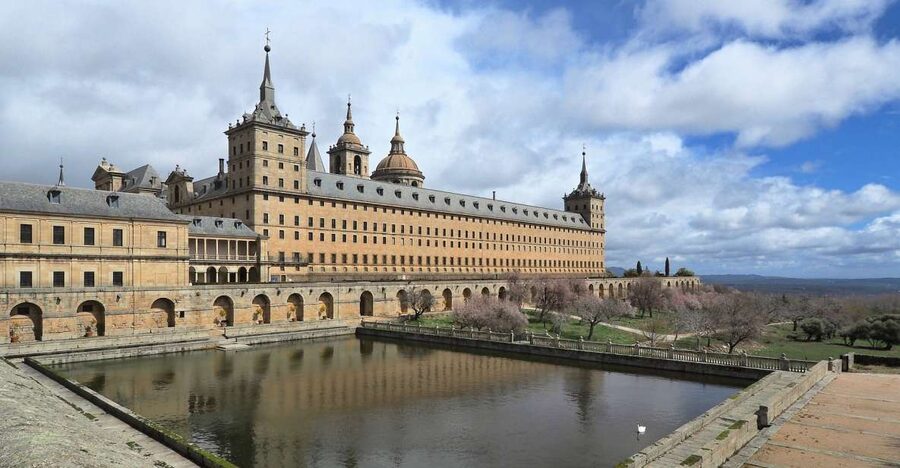
- Philip II’s Renaissance power project: Learn how the monastery reflected the king’s religious, political, and cultural ambitions.
- A tour of the major interiors: See the basilica, Battle Hall, pantheon, royal rooms, and other important parts of the complex.
- The Royal Library is a highlight: Philip II collected its books as part of his effort to expand his humanist knowledge.
- Two hours with a planned route: A guide helps you cover a large building without wandering through its maze of rooms.
- Spanish-language guiding: The live tour is listed in Spanish, so confirm that this suits your group.
- Practical entrance details matter: Arrive 15 minutes early, bring your passport or ID, and find the blue umbrella at the entrance with the Spanish flag above it.
Why El Escorial deserves your time near Madrid
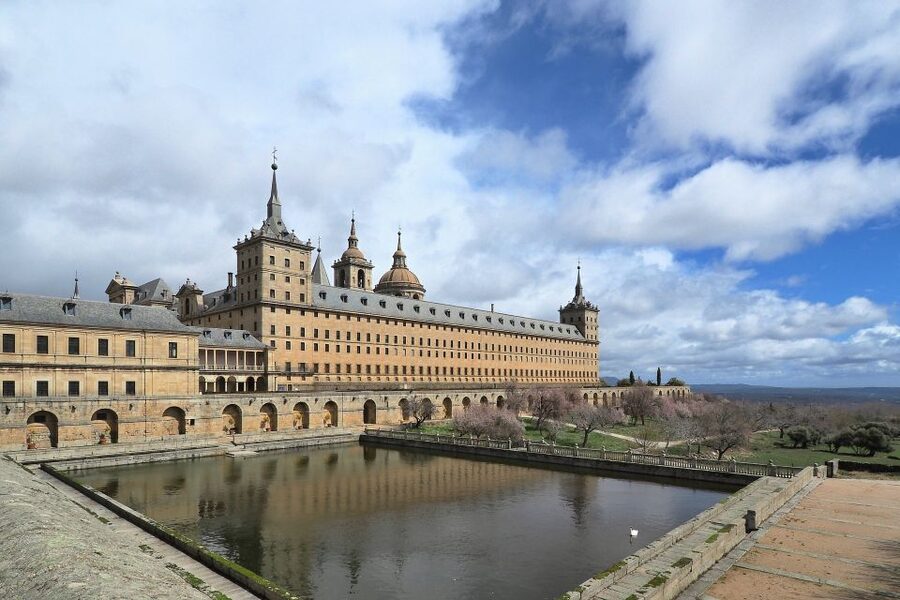
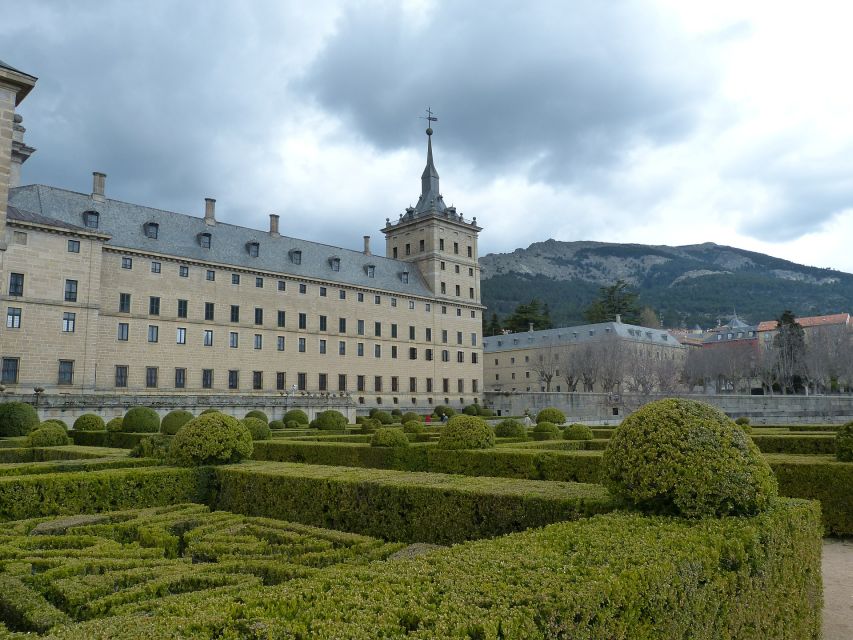
The Royal Monastery of San Lorenzo de El Escorial is one of Spain’s key Renaissance monuments and a UNESCO World Heritage Site. Its scale can seem severe at first. This is not a palace designed mainly for lightness, comfort, or playful decoration. It was built to express order, devotion, royal authority, and learning.
That mixture is what makes the place worth visiting. You are not seeing only a royal residence. You are moving through a building meant to serve several roles at once: monastery, church, royal palace, mausoleum, school of thought, and library.
Philip II’s reign is central to the visit. The guide places the architecture within the Spanish Golden Age, a period when Spain held major political and cultural power. The building reflects a king who wanted faith, monarchy, military success, and intellectual life gathered under one roof.
I find that context especially useful here because the interiors can otherwise blur together. Stone corridors and formal rooms make more sense when you understand the ideas behind them. The tour helps you read El Escorial as a carefully planned statement rather than just a large historic building.
More Madrid trips worth a second look
- Madrid: Royal Palace Expert Guided Tour with Skip-the-Line
★ 4.7 · 6,986 reviews - From Madrid: Guided Day Trip to Toledo by Bus
★ 4.1 · 5,280 reviews - Madrid: Toledo & Segovia Full Day Guided Tour with Alcázar
★ 4.6 · 4,394 reviews
Meeting the guide at the monastery entrance
The meeting point is at the access door to the monastery, specifically the main entrance with the Spanish flag above it. Look for a guide holding a blue umbrella from Todo Tour. You must exchange your voucher at the meeting point, so do not arrive at the last second.
Arriving 15 minutes before the start is sensible. El Escorial is a large complex, and the entrance instructions are more specific than simply meeting outside the town’s train station or main square. Give yourself enough time to identify the correct door and complete the voucher exchange.
Bring your passport or identity card. This is listed as required, and it is the sort of small detail that can cause needless trouble if overlooked.
The tour ends beside the entrance after two hours. That is convenient because you will not have to figure out a new meeting point inside the building or follow the guide across town afterward. You can continue exploring San Lorenzo de El Escorial on your own once the guided portion is over, though the activity itself does not include a separate town tour.
Entering the grill-shaped monastery
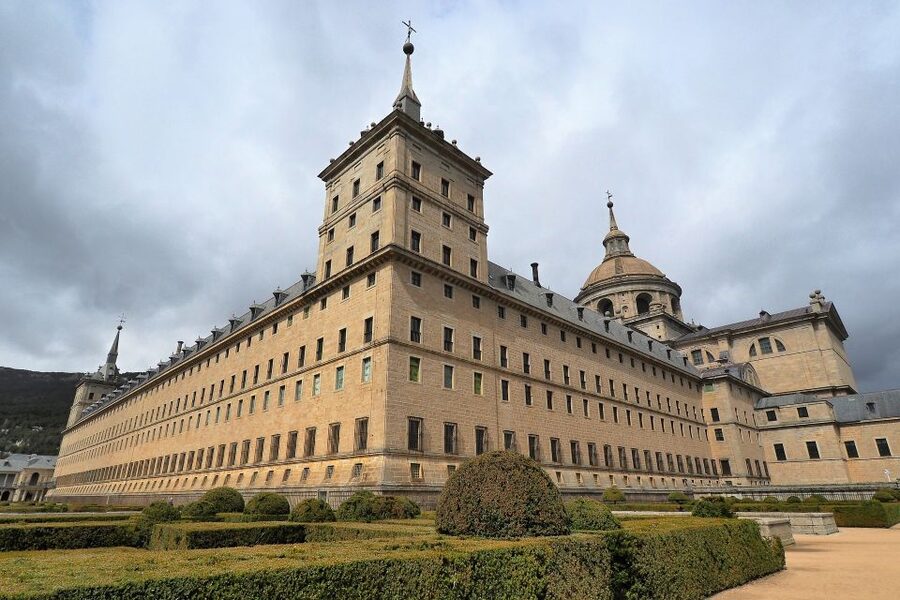
One of the most memorable details is El Escorial’s unusual plan. The building is often described as grill-shaped, a reference to Saint Lawrence, the monastery’s patron. The design gives the complex a strong geometric character, with long corridors, courtyards, towers, and formal rooms arranged as parts of one large plan.
You will quickly notice that this is not a small monument that can be understood in a single glance. Its size is part of the message. Philip II wanted a building that could express the reach of the Spanish monarchy and the seriousness of its Catholic mission.
A guide is useful from the start because the architecture does not always explain itself. The tour takes you through the complex in a planned order and points out why the rooms mattered. Without that structure, you might spend your time admiring stonework while missing the connection between the monastery, the royal family, the church, and the state.
The building’s mood is formal and restrained. If you prefer ornate palaces filled with bright decoration, El Escorial may feel austere. If you enjoy places where architecture carries political meaning, you will find plenty to think about.
The basilica and the religious heart of the complex
The basilica is one of the essential stops. It gives the monastery its spiritual center and helps explain why the building was created as more than a royal residence.
Expect the guide to place the church within Philip II’s religious outlook and the wider goals of the Spanish Golden Age. The basilica was not an optional feature added to a palace. It was central to the identity of the entire complex.
This is also a good point to pay attention to the relationship between the monumental architecture and its intended message. The scale encourages respect and reinforces the connection between royal authority and Catholic faith. You are seeing the public face of a monarchy that presented itself as a defender of the religion.
The tour is not designed as a long, quiet independent visit. The guide keeps the group moving through the principal areas, and one local review described the experience as feeling more rushed than on an earlier visit. That is the tradeoff: you cover more ground and gain explanation, but you may not have unlimited time to linger in every part of the basilica.
A different way to spend the day, same corner of Spain:
- Madrid: Tour Bernabéu Entry Ticket
★ 4.5 · 21,573 reviews - Madrid: Prado Museum Entry Ticket
★ 4.6 · 17,509 reviews - Madrid: Royal Palace Fast-Access Admission Ticket
★ 4.6 · 13,856 reviews - Madrid: “Emociones” Live Flamenco Performance
★ 4.8 · 12,866 reviews
The pantheon and Spain’s royal burials
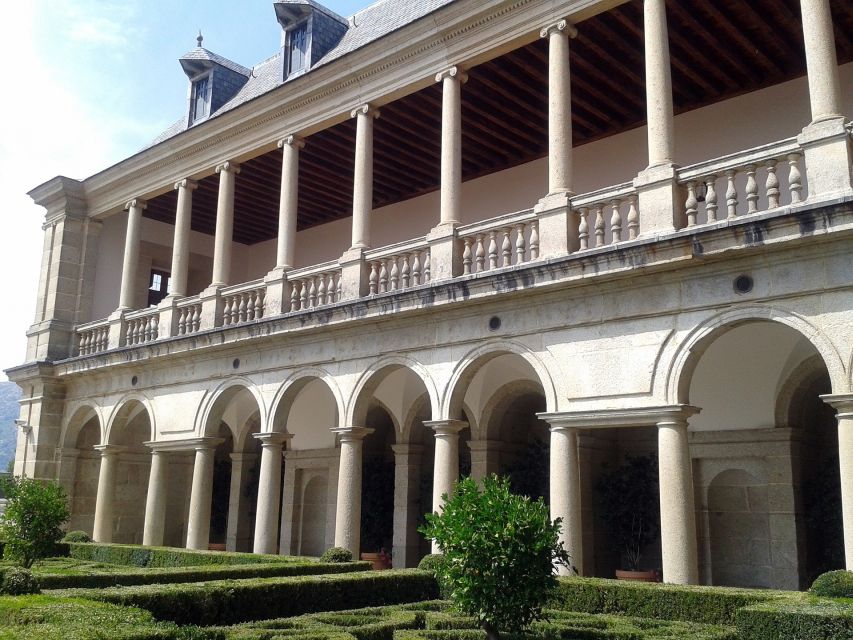
The pantheon is another major reason to choose this visit. It is where many of Spain’s monarchs are buried, making the room one of the clearest links between El Escorial and the history of the Spanish crown.
You will not simply be looking at a tomb in isolation. The pantheon shows how the monastery served the royal family across generations. It turns the building from a monument to one king into a long record of monarchy, succession, and memory.
This stop can feel weightier than the palace rooms because it brings the human cost of royal power into view. Names, dynasties, and reigns become physical and personal. The guide’s historical explanation helps you understand who is connected to the space and why the pantheon was placed within the monastery.
The available information does not promise a complete list of every burial or a specialist genealogy lesson. Think of the pantheon as one important part of a larger guided visit. If royal tombs are your main interest, you may want to allow extra independent time afterward if the opening arrangements permit, but this tour itself includes the essential stop.
The Battle Hall and the visual record of war
The Battle Hall, also known as the Hall of Battles, adds a military side to the tour. Its decoration records Spain’s military campaigns and connects the monastery to the political power of Philip II’s reign.
This room helps balance the visit. El Escorial was a place of prayer and learning, but it also belonged to a monarchy shaped by war and imperial ambition. The Battle Hall makes that connection visible through its historical scenes.
Look beyond the room’s size and decoration. Ask yourself what it was meant to communicate to people who entered the royal complex. Military success was part of the monarchy’s public image, and the hall presents that success as part of the larger story of Spain.
A guide can point out the meaning behind what you are seeing, which is particularly useful in a room filled with historical scenes. Without explanation, the artwork may register as impressive but confusing. With context, it becomes part of the political message running through the building.
Palatial rooms and the daily side of royalty
The tour also includes palatial rooms and other essential areas of the monument. These spaces shift the focus from public ceremony and religious purpose to the private and administrative side of royal life.
Do not expect a soft, modern palace atmosphere. El Escorial’s character remains formal throughout, and the rooms belong to a complex built around duty, faith, and royal representation. Still, the palatial interiors help you picture how the king and court related to the monastery.
This is where a good guide can make a large difference. Several guides named in past tour experiences, including Alejandro, Isabella, and Marta, were praised for clear explanations, humor, energy, and an ability to separate documented facts from invention. The activity currently lists Spanish as the tour language, so you should not assume those individual guides or another language will be available for your date.
The group may move at a steady pace. That is helpful in a huge building, but it means you should keep your questions short and ask them as the route allows. If you want time for careful architectural study or photography, an independent visit may suit you better, provided you can enter separately and find the relevant areas.
The Royal Library, the tour’s intellectual highlight
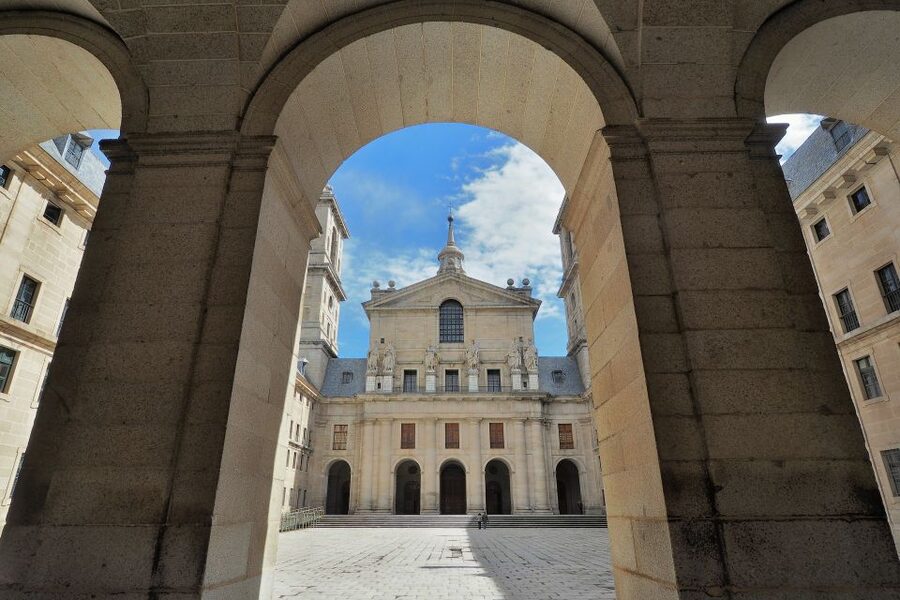
For me, the Royal Library is the most distinctive stop. It shows that Philip II’s interests were not limited to warfare, royal ceremony, and religious authority. He also collected books to expand his humanist knowledge.
The library is described as a Renaissance statement of power, and that is exactly the right way to think about it. A major book collection in a royal monastery was both a place of study and a declaration. Knowledge itself became part of the monarchy’s image.
The guide explains the library’s place in the cultural ambitions of the Spanish Golden Age. That makes this stop more than a quick look at shelves and volumes. You see how collecting, scholarship, religion, and royal power came together in the same building.
The library can also change the rhythm of the visit. After the grand religious and military spaces, it offers a more intellectual view of the complex. If you are interested in books, Renaissance culture, or the way rulers used learning to shape their public image, pay close attention here.
What the two-hour format does well
Two hours is a practical length for El Escorial. The building contains enough major sights to fill much longer, but a focused visit helps you avoid spending an entire day trying to decode its layout.
I like the efficiency of a guided route. One past participant described an independent visit with an electronic device as confusing and longer because of the maze-like interior. That is a useful warning: an audio guide can give information, but it may not help you understand where you are going or what deserves your attention first.
The guide-led format also gives you a narrative. You move from the reign of Philip II to the building’s religious purpose, then through military, royal, dynastic, and intellectual spaces. That sequence turns separate rooms into one connected story.
The limit is equally clear. Two hours cannot provide an unhurried study of every room. If you like to stop for long periods, examine architectural details, or read every available label, the pace may feel brisk. One experience was described as somewhat rushed, which suggests you should choose this tour for orientation and context rather than total freedom.
Is $47 a fair price?
At $47 per person, the value depends on how much help you want inside the monastery. The entry ticket is included, along with the live guide, so you are paying for both admission and interpretation.
That price makes sense if you want to understand the building rather than simply walk through it. El Escorial’s scale, several functions, and historical symbolism can be hard to organize on your own. The tour gives you a route through the principal rooms and supplies the background that ties them together.
The value is strongest for first-time visitors, people with only a short window, and anyone interested in Philip II, Renaissance Spain, royal burials, or the Spanish Golden Age. It is less compelling if you already know the complex well or prefer to set your own pace with a self-guided device.
The high overall rating and repeated praise for guides such as Alejandro, Isabella, and Marta point to the human side of the experience. Still, I would treat the guide quality as a reason to book a scheduled tour, not a promise that one particular guide will lead your visit. The listed language is Spanish, and individual guide assignments can change.
Dress rules, access, and what to bring
You need to dress for a religious and historic monument. Short skirts, sleeveless shirts, and swimwear are not allowed. You should also avoid making noise inside the complex, especially in areas where quiet is part of the setting.
Large bags and luggage are not allowed. Pack light and leave suitcases elsewhere before arriving at the entrance. This is particularly important if you are visiting San Lorenzo de El Escorial between other stops and carrying a full travel bag.
Bring your passport or ID card. Arrive 15 minutes early, exchange your voucher, and look for the blue Todo Tour umbrella at the entrance under the Spanish flag.
The activity is listed as wheelchair accessible. If access is essential for your plans, confirm the current route and conditions when booking, since a large historic building can have different access arrangements from one interior area to another.
Free cancellation is available up to 24 hours before the activity for a full refund. You can also reserve now and pay later, which helps if your Madrid plans are still shifting.
Who will get the most from this tour?
I would choose this tour if you want the main story of El Escorial in a compact visit. It suits you especially well if the idea of sorting out a huge monastery on your own sounds tiring or if you want historical explanation rather than a silent walk through grand rooms.
It is a good match for:
- First-time visitors to the monastery
- People interested in Philip II and Renaissance Spain
- Anyone curious about royal tombs and the Spanish monarchy
- Visitors who want to see the Royal Library with context
- People who prefer a planned two-hour route
- Spanish-speaking visitors who enjoy live explanation
You may prefer an independent visit if you need a slow pace, want to focus on one room, or are not comfortable with a Spanish-language tour. The tour is also not designed to cover every corner of the complex in detail.
Should you book the San Lorenzo de El Escorial tour?
Book it if you want structure, history, and the major sights in two hours. The basilica, Battle Hall, pantheon, palatial rooms, and Royal Library form a strong introduction to El Escorial, and the guide helps connect them to Philip II’s religious, political, and intellectual aims.
The $47 price is reasonable when you include admission and the benefit of a planned route through a complicated building. Just confirm that Spanish guiding works for you, arrive early at the flag-topped main entrance, bring identification, and pack no large bags.
If you already know El Escorial or prefer to wander slowly, you may find the pace restrictive. For most first visits, though, this is a practical way to make sense of one of the most important monuments near Madrid.
FAQ
Where does the tour meet?
Meet the guide at the access door of the monastery’s main entrance, the entrance with the Spanish flag above it. The guide will hold a blue umbrella from Todo Tour.
How early should I arrive?
Arrive 15 minutes before the activity begins. You must exchange your voucher at the meeting point.
How long does the tour last?
The guided tour lasts two hours and finishes beside the monastery entrance.
What language is the live tour in?
The activity lists a live guide in Spanish.
Is the entry ticket included?
Yes. The monastery entry ticket and tour guide are included.
What areas of El Escorial are visited?
The tour includes the basilica, Battle Hall, pantheon, palatial rooms, Royal Library, and other essential parts of the monument.
Do I need to bring identification?
Yes. You should bring your passport or ID card.
Can I bring luggage or a large bag?
No. Luggage and large bags are not allowed.
What clothing is not permitted?
Short skirts, sleeveless shirts, and swimwear are not allowed. You must also avoid making noise inside the monument.
Is the tour wheelchair accessible?
Yes. The activity is listed as wheelchair accessible.
Can I cancel for a refund?
You can cancel up to 24 hours in advance for a full refund.
Do I have to pay when I book?
No. The reserve-now, pay-later option lets you hold a place without paying immediately.
Recently reviewed around Madrid
- Tour Madrid: Secrets in a Electric Tuk Tuk★ 4.6 · 155 reviews
- Madrid: Don Quixote de la Mancha Windmills & Toledo Tour★ 4.9 · 254 reviews
- Tour Guiado En Tuk Tuk Recorre Avila De La Forma Mas Comoda★ 4.4 · 235 reviews
- Madrid: Guided Tour of Toledo with Cathedral Visit★ 4.3 · 399 reviews
- Madrid: Toledo Day Trip with Winery Visit and Wine Tasting★ 4.4 · 177 reviews
- Madrid: 6-Hour Day Trip to Toledo with Guided Walking Tour★ 4.0 · 865 reviews
- Madrid: Tasty Tapas Tour & Visit to a Terrace with Views★ 4.5 · 118 reviews
- Madrid: Flamenco Show&Drink at Tablao 1911 (World’s Oldest)★ 4.7 · 253 reviews
Madrid Tours, compared.

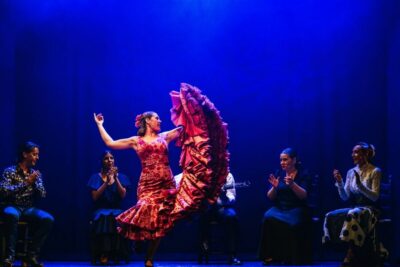
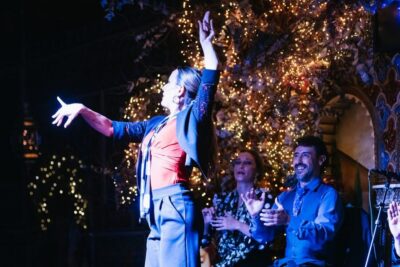
Live Flamenco Show with Food and Drinks Options
Read our review →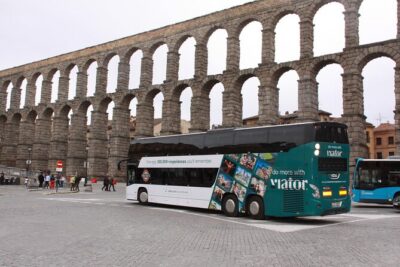
Avila & Segovia Tour with Tickets to Monuments from Madrid
Read our review →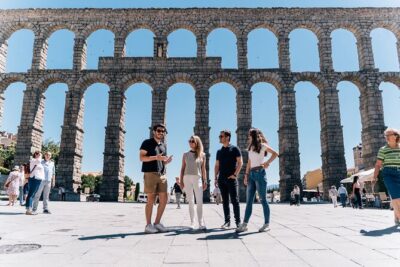
Three Cities in One Day: Segovia, Avila and Toledo from Madrid
Read our review →
Royal Palace Expert Guided Tour with Skip-the-Line
Read our review →Browse the lists this tour appears in