
Reviewed · MADRID TOURS
Royal Site of San Lorenzo de El Escorial Entrance Ticket
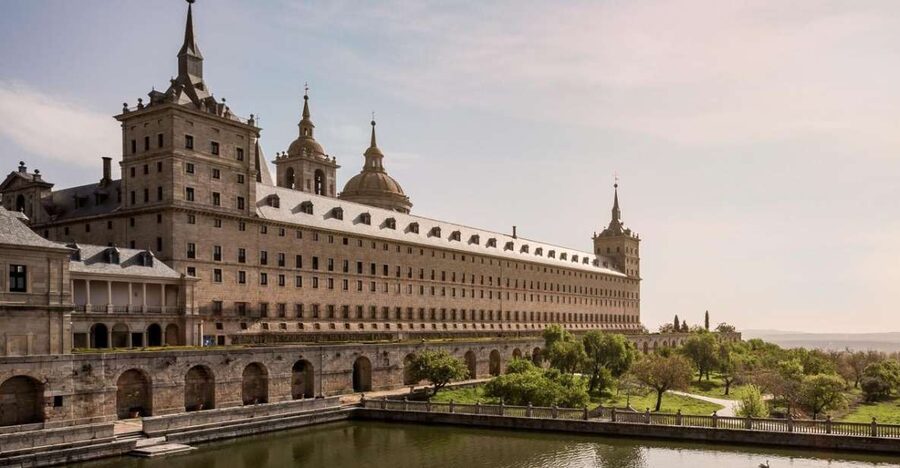
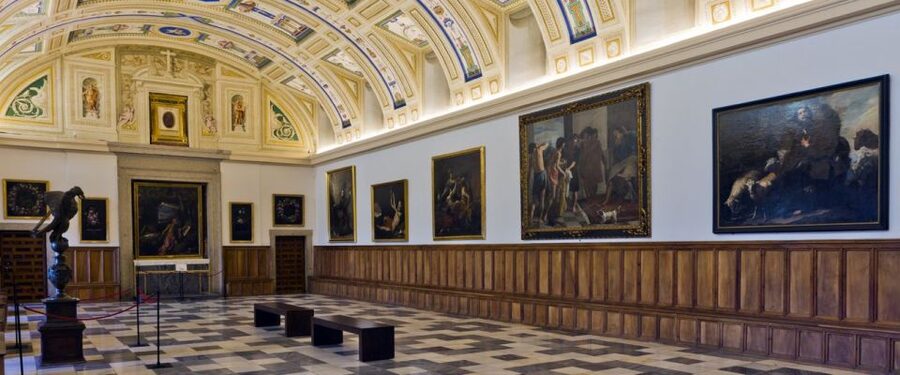
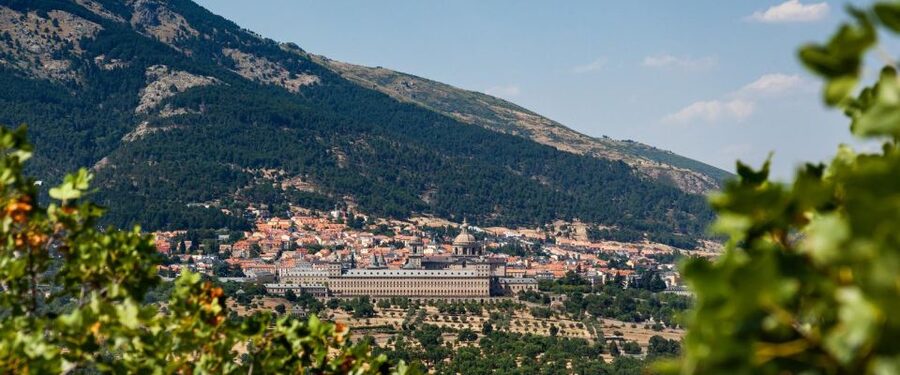
The most surprising part of San Lorenzo de El Escorial is the contrast between its severe stone exterior and its decorated interior. From the outside, it can look more like a fortress or prison than a royal retreat. Inside, you find frescoes, royal rooms, chapels, art, a grand library, and a crypt filled with Spanish monarchs.
I like the freedom of a self-guided visit. You can spend extra time in the basilica or gardens instead of being hurried from room to room. I also like the chance to see several sides of Spain’s Golden Age in one place: royal power, Catholic devotion, Renaissance design, and mountain scenery. The main drawback is that no guide is included, and unclear entry directions have caused problems for some ticket holders.
In This Review
- Key points to know before you go
- Why El Escorial feels different from a palace visit
- From the stern exterior to the decorated interior
- The monastery and the Order of St. Jerome
- The Basilica completed in 1574
- The royal palace and the burial crypt
- The library and the intellectual side of power
- Renaissance design and Juan de Villanueva
- Gardens, the Sierra de Guadarrama, and the Valley of the Fallen
- Getting there from Madrid
- Is the $21 ticket good value?
- Who should book this experience?
- Should you book the El Escorial entrance ticket?
- FAQ
- Where is San Lorenzo de El Escorial?
- How long is the ticket valid?
- How much does admission cost?
- Is a guide included?
- Can I visit at my own pace?
- What can I see inside El Escorial?
- Can I see the Valley of the Fallen?
- How do I reach El Escorial from Madrid?
- Is the activity accessible to people with mobility impairments?
- Can I cancel the ticket for a refund?
Key points to know before you go
- Philip II’s royal complex: See the monastery, palace, basilica, library, chapels, and royal burial crypt in one historic building.
- Italian and Flemish art: Look for the mix of artistic styles tied to Spain’s Golden Age.
- Gardens with mountain views: On a clear day, you may see across the Sierra de Guadarrama toward the Valley of the Fallen.
- A flexible one-day ticket: Visit at your own pace, with no fixed tour schedule listed.
- A useful Madrid side trip: The train journey takes under an hour, followed by a pleasant but uphill 25 to 30 minute walk from the station.
- Bring your own context: Admission is included, but a guide is not.
Why El Escorial feels different from a palace visit
El Escorial is not simply a palace with a few royal rooms added on. It was built to serve several purposes at once. It functioned as a monastery for the monks of the Order of St. Jerome, a royal residence, a church complex, a burial place, and a center of learning.
That mixture gives the visit its particular character. You move from spaces connected with prayer to rooms tied to monarchy, then into areas devoted to books, art, and ceremony. The building reflects the ideals of Philip II and the Spanish Golden Age, when religious faith and royal authority were closely linked.
The complex was also connected with Emperor Charles V and his wife, who lived there. The layout has remained largely unchanged, so you are not seeing a modern recreation arranged for convenience. You are walking through an old plan designed for several kinds of life at once.
I find this more rewarding than a standard palace tour because the setting explains how power worked. The king was not separated from religious life, burial rituals, or the work of scholars. El Escorial puts all of those pieces under one roof.
More Madrid trips worth a second look
- Madrid: Tour Bernabéu Entry Ticket
★ 4.5 · 21,573 reviews - Madrid: Prado Museum Entry Ticket
★ 4.6 · 17,509 reviews - Madrid: Royal Palace Fast-Access Admission Ticket
★ 4.6 · 13,856 reviews
From the stern exterior to the decorated interior
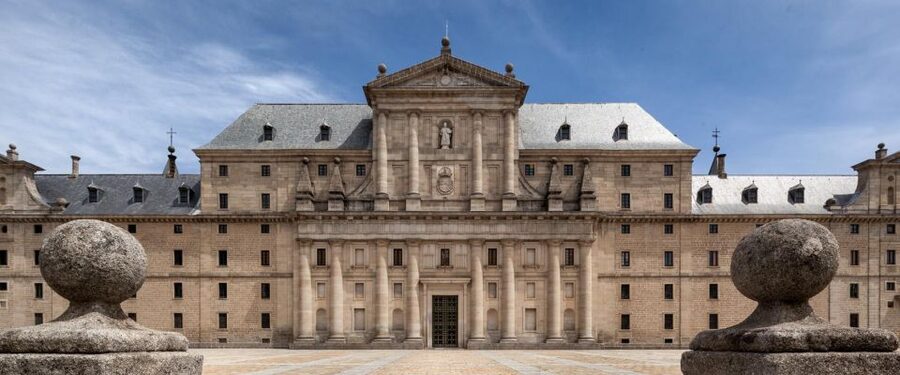
Give yourself a moment outside before entering. The exterior is famous for its plain, imposing look, with long stone walls and a strict Renaissance design. It does not offer the immediate visual drama of a colorful Spanish palace.
That restraint is part of the point. El Escorial was meant to project order, discipline, and seriousness. Once you enter, the change is striking. Decorative details, painted surfaces, royal furnishings, and religious art soften the hard outer shell.
The contrast also helps you read the building. Rather than expecting a single grand room after another, you begin to notice how different functions shaped each space. Some areas feel formal and ceremonial. Others are quieter and more devotional.
If you are visiting on a foggy or cold day, the interior becomes even more important. The gardens and distant views may be muted, but the rooms still provide plenty to examine. Clear weather is best for the scenery, not necessary for the main architectural visit.
The monastery and the Order of St. Jerome
The monastery of San Lorenzo el Real was created for the Order of St. Jerome. Its presence explains why El Escorial feels larger and more structured than an ordinary royal residence.
As you walk through, pay attention to the balance between communal religious areas and spaces linked to the court. The monastery was a working religious foundation, not just a backdrop for royal ceremonies. Its chapels, corridors, and planned courtyards show how carefully movement and daily routine were organized.
This is also where the building’s scale can become tiring. There is a lot to take in, and a self-guided visit requires you to manage your own pace. I suggest slowing down for the major rooms rather than trying to inspect every surface equally.
The admission ticket gives you access to the complex, but it does not provide a personal explanation of the symbols, artists, or political ideas behind each space. If you already enjoy reading architectural signs and taking your time, that may be enough. If you want the full story of Philip II’s decisions, a separate guide or advance reading would help.
The Basilica completed in 1574
The Basilica is one of the emotional centers of the visit. It was erected in 1574 and took years to complete, which gives you a sense of the ambition behind the entire project.
Look for the relationship between the architecture, religious artwork, and royal setting. The Basilica was not an isolated parish church. It was part of a complex built to connect Spain’s monarchy with Catholic devotion.
The scale can make the room feel formal and distant at first. Spend a little time looking beyond the overall impression. The artwork and architectural details reward a slower glance, especially if you arrive when the space is less crowded.
Because the ticket is self-guided, you decide how long to stay. I would not rush through this part. Even without a guide, the Basilica helps explain why El Escorial was much more than a country residence.
A different way to spend the day, same corner of Spain:
- Madrid: “Emociones” Live Flamenco Performance
★ 4.8 · 12,866 reviews - Madrid: Panoramic Route City Tour
★ 4.1 · 12,259 reviews - Madrid: Live Flamenco Show with Food and Drinks Options
★ 4.5 · 9,901 reviews - Avila & Segovia Tour with Tickets to Monuments from Madrid
★ 5.0 · 9,762 reviews
The royal palace and the burial crypt
The royal sections show another side of the complex. Here, the focus shifts from monastic routine to the Spanish crown and the life of the court.
The royal connection is especially powerful in the burial crypt, where monarchs who once lived in or used the complex are housed. It is a quiet, serious space, and it gives the whole visit a sense of finality. The palace rooms show royal life, while the crypt reminds you where that life ended.
This pairing is one of the strongest reasons to visit El Escorial instead of seeing only a church or only a palace. You move from authority and ceremony to memory and death within the same historical setting.
The crypt may not suit everyone, especially young children or anyone who prefers lighter sightseeing. For many people, though, it is one of the most memorable parts because it makes the royal story personal rather than abstract.
The library and the intellectual side of power
The library adds an important layer to the visit. El Escorial was not only a place for rulers and monks. It was also connected with study, books, and the intellectual aims of its age.
The library helps you see how knowledge supported religious and political authority. The building’s cultural purpose was as deliberate as its royal and spiritual roles.
You may find this room more rewarding if you pause to consider its position within the complex. The books were not an unrelated collection added for decoration. They formed part of a larger vision in which faith, learning, art, and monarchy belonged together.
The ticket does not come with a guide to explain the collection in detail. Still, the room is worth including in your route, particularly if you have an interest in architecture, old books, or the cultural life of sixteenth-century Spain.
Renaissance design and Juan de Villanueva
The complex is strongly associated with Renaissance architecture, and the visit includes works connected with architect and artist Juan de Villanueva. The design reflects the period’s interest in proportion, order, and controlled form.
You will also see how Italian and Flemish artistic influences came together in Spain. That mix matters because it keeps the building from feeling like a copy of one foreign style. El Escorial presents a Spanish version of Renaissance culture, shaped by the court, the church, and local ambitions.
Rather than hunting for one single masterpiece, I would look at how the building works as a whole. Courtyards, chapels, gardens, and formal rooms all support the same sense of order. The artwork then adds color and human detail to that framework.
The name Juan de Villanueva may be especially useful for visitors interested in Spanish architecture. The ticket does not identify a personal guide named Juan de Villanueva. He is the architect and artist associated with works you can encounter in the complex.
Gardens, the Sierra de Guadarrama, and the Valley of the Fallen
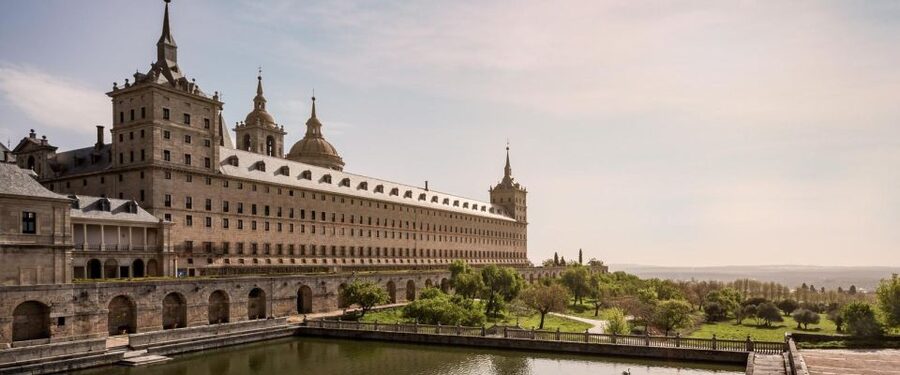
The gardens provide a welcome change after the indoor rooms. They are maintained in a formal style and give you space to step back from the building.
On a clear day, you may see toward the Sierra de Guadarrama and the Valley of the Fallen’s basilica. The view adds geographical context to the visit. El Escorial was not placed in a random urban setting. Its mountain surroundings help explain the sense of separation and authority that the complex projects.
Weather matters here. Fog and cold can hide much of the distant scenery, although they can also give the stone buildings a solemn look. If the forecast is clear, allow time for the gardens rather than treating them as a quick exit route.
The gardens are also useful if you need a break from the dense interior route. They are not a substitute for the monastery, but they complete the visit by showing the relationship between the building and its setting.
Getting there from Madrid
The journey from Madrid takes under an hour by train, according to one detailed visit. From the station, you should expect a pleasant walk of about 25 to 30 minutes uphill to the monastery.
That walk is manageable for many people, but it is not flat. Plan for it if you have mobility concerns, limited stamina, or heavy luggage. The activity is specifically not suitable for people with mobility impairments, and the uphill approach is one reason to take that warning seriously.
The walk can help you get your bearings in San Lorenzo de El Escorial before entering the complex. It also means the experience is not simply a door-to-door attraction. You are making a small day trip from Madrid, with transport and walking time on both ends.
Check the start time and ticket instructions before setting out. The activity lasts one day rather than following a fixed guided schedule, but the exact available entry times should be checked when booking.
Is the $21 ticket good value?
At about $21 per person, the ticket is a reasonable buy if you want to see the entire royal and monastic complex in one visit. The price covers admission, and the planned express security check may save time compared with a standard entry line.
The value is strongest for independent visitors. You can set your own pace, stop in the rooms that interest you, and avoid paying for a full guided excursion if you already know something about Spanish history.
The value is weaker if you need detailed interpretation. No guide is included, so the ticket gets you inside but does not explain the political meaning of Philip II’s project, the artistic influences, or the role of each room. You may want to bring a guidebook or arrange separate commentary.
There is also an important practical warning. Some ticket holders have been given unclear directions, found the stated address away from the entrance, or had to wait in a long line and pay again. One person specifically felt the ticket cost more than buying directly at the site. These reports do not erase the convenience of advance admission, but they make it wise to check the entry point carefully and keep your confirmation accessible.
The ticket is non-refundable. I would not buy it until your Madrid plans are firm.
Who should book this experience?
I would recommend it to visitors who enjoy architecture, royal history, religious art, and self-guided sightseeing. It also suits anyone looking for a substantial day trip from Madrid without committing to a full group tour.
It is less suitable if you want a lively guide telling stories throughout the visit. It is also a poor fit if you have mobility limitations, dislike uphill walks, or prefer a short attraction that can be covered in an hour.
For the best experience, give the complex enough time for the Basilica, palace, crypt, library, monastery areas, and gardens. Arriving only to rush through the rooms would miss the reason El Escorial is worth the trip.
Should you book the El Escorial entrance ticket?
Book this ticket if you want independent access to one of Spain’s most ambitious royal and religious buildings, and if you are comfortable supplying your own historical background. The interiors, crypt, library, Basilica, and gardens offer far more than the plain exterior suggests.
Think twice if precise entry directions, guided commentary, or easy mobility are essential. Check the meeting and entrance information carefully, allow time for the uphill walk from the station, and remember that the ticket cannot be refunded.
For a self-guided day trip from Madrid, the $21 price is fair. Just treat the ticket as admission, not as a complete tour.
FAQ
Where is San Lorenzo de El Escorial?
It is in the Community of Madrid, Spain.
How long is the ticket valid?
The activity has a duration of one day.
How much does admission cost?
The listed price is $21 per person.
Is a guide included?
No. The ticket includes admission only, and no guide is included.
Can I visit at my own pace?
Yes. This is an admission ticket rather than a fixed guided tour, so you can explore the complex independently during the available entry period.
What can I see inside El Escorial?
You can see the monastery, Renaissance buildings, gardens, chapels, palace areas, Basilica, library, royal crypt, and works connected with Juan de Villanueva.
Can I see the Valley of the Fallen?
You may be able to view the Valley of the Fallen’s basilica from the gardens, along with parts of the Sierra de Guadarrama mountain range, especially in clear weather.
How do I reach El Escorial from Madrid?
The train journey from Madrid takes under an hour. From the train station, the walk to the monastery takes about 25 to 30 minutes and is uphill.
Is the activity accessible to people with mobility impairments?
No. The activity is listed as unsuitable for people with mobility impairments.
Can I cancel the ticket for a refund?
No. The activity is non-refundable. Check your plans and entry details before purchasing.
Recently reviewed around Madrid
- Tour Madrid: Secrets in a Electric Tuk Tuk★ 4.6 · 155 reviews
- Madrid: Don Quixote de la Mancha Windmills & Toledo Tour★ 4.9 · 254 reviews
- Tour Guiado En Tuk Tuk Recorre Avila De La Forma Mas Comoda★ 4.4 · 235 reviews
- Madrid: Guided Tour of Toledo with Cathedral Visit★ 4.3 · 399 reviews
- Madrid: Toledo Day Trip with Winery Visit and Wine Tasting★ 4.4 · 177 reviews
- Madrid: 6-Hour Day Trip to Toledo with Guided Walking Tour★ 4.0 · 865 reviews
- Madrid: Tasty Tapas Tour & Visit to a Terrace with Views★ 4.5 · 118 reviews
- Madrid: Flamenco Show&Drink at Tablao 1911 (World’s Oldest)★ 4.7 · 253 reviews
Madrid Tours, compared.


Live Flamenco Show with Food and Drinks Options
Read our review →
Avila & Segovia Tour with Tickets to Monuments from Madrid
Read our review →
Three Cities in One Day: Segovia, Avila and Toledo from Madrid
Read our review →
Royal Palace Expert Guided Tour with Skip-the-Line
Read our review →Browse the lists this tour appears in