
Reviewed · WALKING TOURS
Private Barcelona Old Town and Gothic Quarter Walking Tour
Barcelona’s oldest streets make the best classroom in the city. On this private walk, you move from Roman walls and medieval squares to La Rambla, La Boqueria, the cathedral, and the Born District, with a local guide explaining what you would likely miss on your own. Montse, Isabel, Olga, Juan, and Baggio are among the guides praised for making the past easy to follow and the route personal.
I like the private format, since you can set the pace, ask about your own interests, and pause when a building or street catches your eye. I also like the practical local advice, from where to find good tapas to how Catalonia fits into modern Spain. The main consideration is the price, $96.75 per person, and the fact that the tour is a long urban walk with no food or drinks included.
In This Review
- Key points at a glance
- Why Barcelona’s oldest streets work so well on foot
- Starting in Ciutat Vella and the Roman past
- The Gothic Quarter, where old and new meet
- Barcelona Cathedral and Plaça de Sant Jaume
- La Rambla and the food culture of La Boqueria
- Plaça Reial and the changing face of the old city
- Plaça del Rei and the medieval royal center
- Santa Maria del Mar and the Born District
- What the private format is worth at $96.75
- The guides and the quality of the experience
- Who should book this walk?
- My call: a strong introduction with one practical caution
- FAQ
- How long is the Private Barcelona Old Town and Gothic Quarter Walking Tour?
- Where does the tour begin?
- Where does the tour end?
- Is the tour private?
- Is the tour offered in English?
- Are food and drinks included?
- Can I cancel for a full refund?
Key points at a glance
- Roman Barcelona in the Gothic Quarter: See ancient walls, columns, aqueduct remains, and streets built over the city’s earliest foundations.
- A truly private group: Your guide can adjust the pace and give more time to the places you care about.
- Nine major stops: The route covers Ciutat Vella, the Gothic Quarter, La Rambla, La Boqueria, two major churches, three historic squares, and the Born District.
- Local advice built in: Guides have shared tips about tapas, shops, evening entertainment, and places to return to later.
- English by default: Other languages may be available if requested in advance.
- Allow roughly two and a half hours: Wear comfortable shoes, eat before setting out, and confirm the exact meeting time and point.
Why Barcelona’s oldest streets work so well on foot
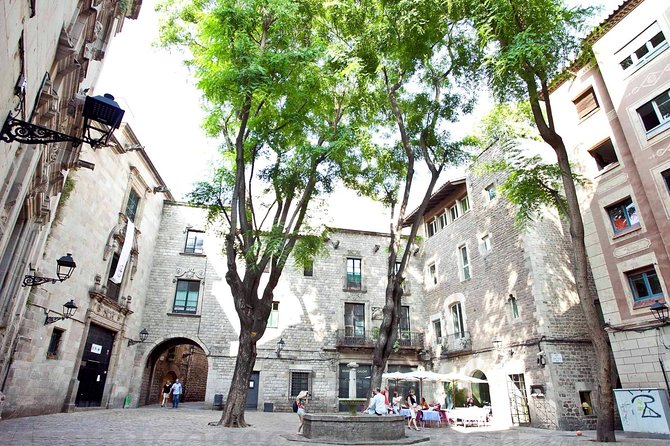
The appeal here is not simply checking off famous buildings. It is seeing how Barcelona’s layers sit on top of one another. Roman Barcelona began in what is now Ciutat Vella. Medieval churches and narrow lanes followed. Later changes added grand squares, shops, restaurants, and public spaces that still feel tied to the old city.
A private guide can explain those layers as you walk. One guide might point out an old wall, another may connect a square to Catalan politics, and another may bring up local customs or food. That context matters because the Gothic Quarter can look like a maze of attractive stone buildings if you have no idea what came before.
The route also gives you a useful first look at several parts of central Barcelona. You begin around the old city, pass through the Gothic Quarter, cross La Rambla, and finish in the Born District. It is a good orientation walk for a first visit, but it also has enough less obvious corners to interest you if you have already seen the main sights.
More Walking Tours in Barcelona
- Barcelona Tapas and Wine Experience Small-Group Walking Tour
★ 5.0 · 5,804 reviews - Barcelona: Tapas Walking Tour with Food, Wine, and History
★ 4.8 · 4,261 reviews - Barcelona Tapas Walking Tour: Food, Wine & History
★ 4.5 · 1,928 reviews
Starting in Ciutat Vella and the Roman past
The opening section takes about 30 minutes in Ciutat Vella, Barcelona’s old city. This is where you begin to understand the city’s origins, rather than simply admiring its later Gothic appearance.
Expect narrow lanes, old stonework, and a strong sense of enclosure. Your guide may explain how Roman Barcelona was laid out and point to surviving pieces of that earlier city. Past guides have discussed Roman walls, columns, aqueduct remains, and the changing level of the streets. One especially useful detail shared on the walk is that some ground in the Roman period was covered with sand, a small fact that helps you picture the city before its medieval buildings rose around it.
This is also where a guide earns the fee. Without explanation, old walls can blend into the scenery. With a guide, a fragment becomes evidence of how the city grew and changed.
The route is not a museum visit, and admission tickets are not required for the walking stops. You should expect to admire the exterior of many landmarks rather than receive guaranteed interior entry.
The Gothic Quarter, where old and new meet
The Gothic Quarter, or Barri Gòtic, takes another 30 minutes in the stated schedule, though the whole route continues through this area. It occupies the site of the former Roman settlement and contains medieval buildings, Roman remains, newer construction, small boutiques, bars, and restaurants.
That mix is part of the charm. The quarter can feel medieval in one lane and thoroughly modern just a few steps later. A good guide helps you separate genuine old fabric from later rebuilding and explains why the district looks the way it does.
Guides such as Isabel, Alba, Katty, and Antonio have been especially good choices for different kinds of groups. Isabel has been praised for making quieter families feel at ease. Alba has focused on interesting points while steering away from the largest crowds. Antonio has adjusted the route for people who had visited Barcelona before and wanted to see something new.
You should not expect a fixed lecture delivered at every corner. The best use of a private tour is to tell your guide what you already know and what you want to understand better. If you care about architecture, ask for more detail there. If you are more interested in daily life, food, politics, or local customs, say so early.
Barcelona Cathedral and Plaça de Sant Jaume
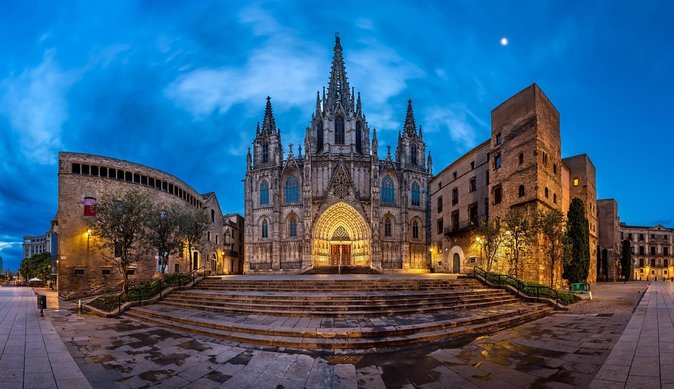
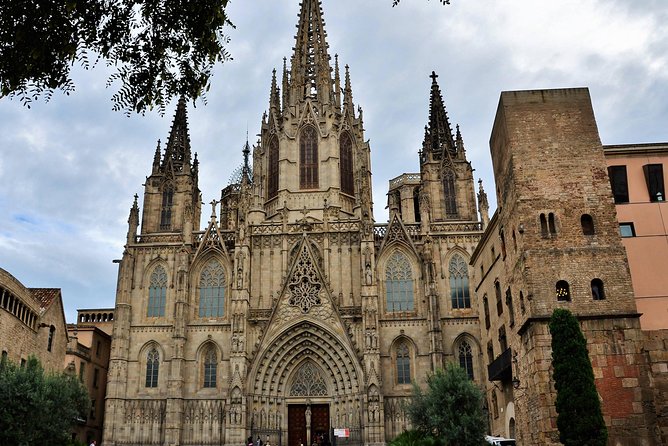
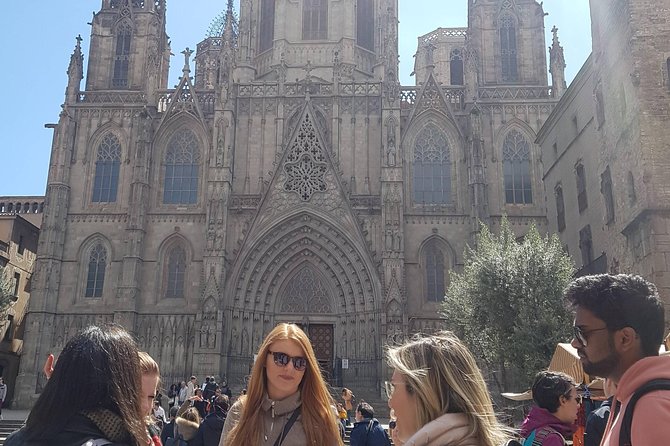
The walk passes Barcelona Cathedral, the seat of the city’s archbishopric and a church dedicated to Saint Eulalia. Its gargoyles are a memorable detail, especially when viewed from the surrounding lanes and squares.
The cathedral is one of the route’s clearest examples of Barcelona’s medieval character, but the guide’s explanation gives it more meaning than a quick photograph can. You can learn about its religious role, its place in the old city, and the way the surrounding quarter developed around it.
The itinerary does not include a cathedral admission ticket. If you want to go inside, ask your guide what is possible during your time and check any entrance rules or opening conditions separately.
From there, the route reaches Plaça de Sant Jaume, one of the Gothic Quarter’s oldest and most important squares. It remains a center of Catalan political life. This is a useful stop for anyone trying to understand that Barcelona is not just a Spanish destination with distinctive architecture. Catalan identity and the relationship between Catalonia and Madrid are part of the city’s present-day story.
Montse has been particularly effective at connecting the city’s buildings with that wider subject. She has explained Catalonia’s history, Barcelona’s culture, and the role of the old city in a way that gives the walk more meaning than a string of dates.
More Barcelona walks with a guide:
- Barcelona: Tapas Food Crawl Walking Tour with Tastings
★ 4.9 · 1,798 reviews - Barcelona: Gothic Quarter Ghosts and Legends Walking Tour
★ 4.7 · 1,443 reviews - Barcelona Helicopter, Sailboat & Old Town Private Walking Tour
★ 5.0 · 1,395 reviews - Barcelona: Old Town and Gothic Quarter Walking Tour
★ 4.8 · 1,393 reviews
La Rambla and the food culture of La Boqueria
La Rambla changes the mood. After the tight lanes of the Gothic Quarter, this broad pedestrian avenue feels open, public, and theatrical. Street performers, cafés, shops, and food stalls give it an easy energy, though you should keep your belongings close in any crowded central area.
The walk continues past La Boqueria, Barcelona’s famous market. The market offers a quick introduction to Catalan food traditions through colorful produce, cured meats, and other local products. Iberian ham is one of the specialties you may learn more about here.
Because food and drinks are not included, treat this as a guided orientation rather than a tasting tour. If you want to buy something, your private format gives you a better chance to ask about particular foods or return later on your own.
The market can be busy, and the route may not allow a long browsing session. That is a fair trade for covering so much of the old center in one outing. You can note the stalls that interest you and come back at a quieter time.
Several guides have added food advice to the walk. Montse has pointed people toward fresh local tapas after the tour, while Berta has combined historical explanation with stops at several tapas restaurants on a separate food-focused experience. Do not assume this walking tour includes those restaurant visits, but do ask for recommendations before you part ways.
Plaça Reial and the changing face of the old city
Plaça Reial is one of Barcelona’s most graceful public squares, with palm trees, elegant lampposts, a fountain, and yellow façades around the edges. It feels different from the darker, narrower Gothic lanes and gives the walk a welcome change of scale.
The square is also a reminder that the old city is not frozen in the Middle Ages. Barcelona’s center has been altered, rebuilt, and adapted many times. Your guide can help you see the difference between an untouched medieval corner and a later space designed to create a grand urban setting.
The stop is brief in the overall rhythm of the tour, so do not expect a long pause here unless your group requests one. If you enjoy urban design and public squares, tell your guide. A private route is most useful when you make your priorities clear.
Plaça del Rei and the medieval royal center
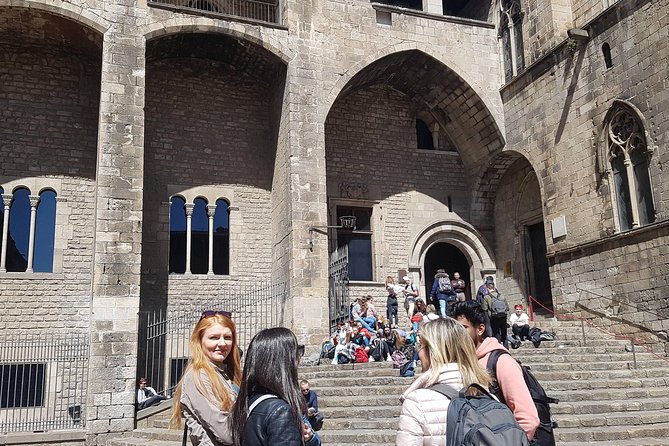
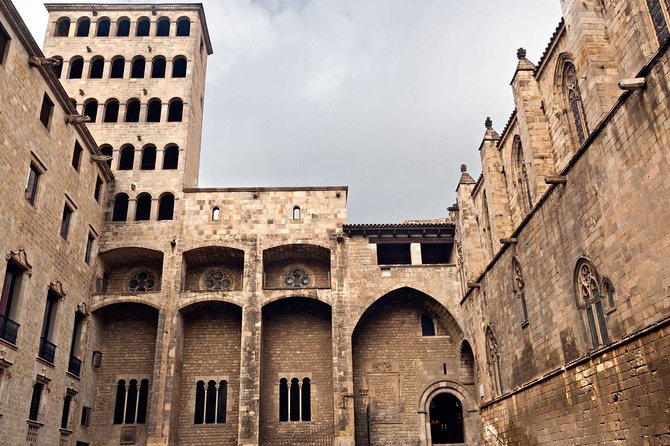
Plaça del Rei may be the most atmospheric stop on the walk. The Royal Palace and surrounding medieval buildings enclose a quiet square that gives you a strong sense of Barcelona’s royal and civic past.
This is a place where a short explanation can transform the view. Instead of seeing a handsome stone courtyard, you begin to understand the square as part of the medieval city’s power center.
The contrast with La Rambla is striking. Within the same two-and-a-half-hour route, you move from food stalls and performers to a calm royal setting. That variety is one of the tour’s strengths, especially if you want a first look at Barcelona that goes beyond Gaudí and the modernist landmarks.
Santa Maria del Mar and the Born District
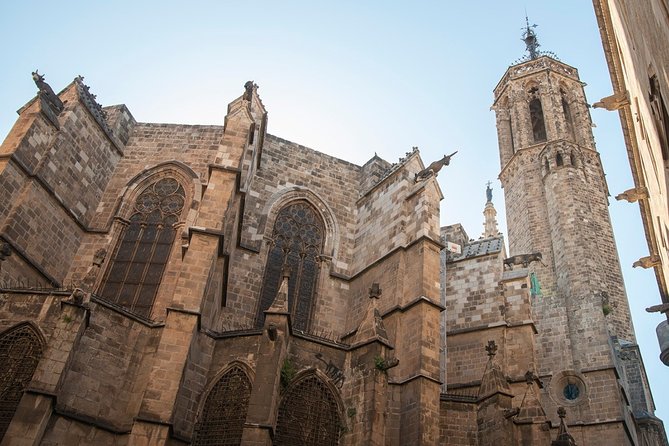
The tour finishes near the Basilica de Santa Maria del Mar and Passeig del Born. Santa Maria del Mar is a major example of Catalan Gothic architecture and an important symbol of the medieval city.
The basilica is also tied to the work and effort of ordinary citizens, not only kings or church leaders. That gives the stop a different feel from the cathedral. Your guide can explain why this church matters and how it fits into the old city’s social and architectural story.
The end point in the Born District is practical. Born is close to historic sights, shops, restaurants, and further walking routes, so you can continue exploring after the guide leaves. Since hotel pickup and drop-off are not included, plan your onward route before the tour begins.
The published meeting information identifies Carrer de Fontanella, 2, near Plaça de Catalunya, as the starting point, while the tour description refers to a meetup at Plaça de Catalunya. Confirm the exact spot and start time before the day of the walk. One booking involved confusion over a 9:00 arrival and a 9:30 start, so clear timing is worth sorting out in advance.
What the private format is worth at $96.75
At $96.75 per person, this is not the cheapest way to see the Gothic Quarter. Its value depends on your group size and how much you use the guide.
For two people, the cost buys roughly two and a half hours of private attention, local orientation, and the freedom to ask questions without holding up a large group. For a family or small group, the per-person cost may feel more reasonable, especially with the available group discounts and child pricing. The first child is free when sharing with two paying adults, and additional children receive 50 percent off based on the price of two adults.
The tour includes a professional local guide and the walking route, but not meals, drinks, hotel transfers, or guaranteed interior admissions. You are paying for interpretation and flexibility, not for a package of tickets.
I would see it as good value at the start of a Barcelona stay. The walk can help you decide where to return, which market foods to try, and which historic buildings deserve more time. It is less useful if you prefer to wander alone, dislike scheduled walking, or only want to enter major monuments.
The guides and the quality of the experience
The guide makes the largest difference here. The guide names associated with particularly strong experiences include Steven, Baggio, Montse, Joris, Juan, Isabel, Olga, Nilufar, Alba, Miguel, Stephanie, Antonio, Katty, Edward, Berta, Ane, Adriano, Elvida, Oliver, and Donnatella.
The repeated strengths are clear: warmth, humor, strong command of Barcelona’s past, and the ability to adjust the pace. Steven used humor to keep the stories lively. Joris kept the walk moderate and avoided overloading the group with facts. Olga tailored a small private outing and gave useful local context. Donnatella stepped in at the last minute and still provided a well-informed visit.
You should also use the guide as a problem solver. Isabel has helped people understand the city’s past, present, and future. Montse has answered questions about Catalonia, local food, evening entertainment, and cultural traditions. A private guide is at its best when you bring questions rather than simply follow silently.
Who should book this walk?
I would recommend it for first-time visitors who want a clear introduction to central Barcelona before exploring on their own. It also suits families, since the guide can adjust explanations and pace for children. Baggio, in particular, made the subject accessible to a child without talking down to the rest of the group.
It works well for adults who enjoy history but do not want a dry lecture. The route gives you Roman remains, medieval churches, civic squares, food culture, and modern city life in one outing.
Repeat visitors can benefit too, especially if you tell the guide which major sights you have already seen. Antonio adjusted a route for people who had visited Barcelona before, showing them less familiar parts of the Gothic Quarter.
You should think twice if you need a short, easy stroll. One person described the tour as long and advised eating beforehand. The stated duration is about two hours and thirty minutes, so comfortable shoes and water are sensible, even though drinks are not supplied.
The tour is offered in English, with other languages available upon request. Most people can participate, and service animals are allowed. Children must be accompanied by an adult.
My call: a strong introduction with one practical caution
I would book this private Barcelona Old Town and Gothic Quarter walk if you want history explained in place, not just a list of buildings. The route is broad, the private setup is useful, and the guide can connect Roman ruins, Catalan Gothic churches, food traditions, and modern Catalan identity.
The price is easiest to justify for a family or small group, or for anyone who wants a tailored first day in Barcelona. Confirm the meeting details, eat before you go, and tell the guide what you most want to see. If you do that, this should give you a solid sense of the old center and a better plan for the rest of your stay.
FAQ
How long is the Private Barcelona Old Town and Gothic Quarter Walking Tour?
The tour lasts approximately 2 hours and 30 minutes.
Where does the tour begin?
The stated meeting address is Carrer de Fontanella, 2, in Ciutat Vella, near Plaça de Catalunya. The tour information also describes the meetup as being at Plaça de Catalunya, so confirm the exact meeting spot before departure.
Where does the tour end?
The tour ends at Passeig del Born in the Born District, listed as Pg. del Born, Ciutat Vella.
Is the tour private?
Yes. Only your group participates in the activity.
Is the tour offered in English?
Yes, English is the listed language. Other languages may be available upon request.
Are food and drinks included?
No. Food and drinks are not included in the price.
Can I cancel for a full refund?
Yes, if you cancel at least 24 hours before the experience’s start time. Cancellations or changes made less than 24 hours before the start time are not accepted for a refund.
Recently reviewed around Barcelona
- Excursion Aigüestortes – Estany Llebreta (1/2 day)★ 5.0 · 138 reviews
- E-Bike tour in Barcelona with English Guide★ 5.0 · 128 reviews
- Wine Tasting Experience in Barcelona★ 5.0 · 172 reviews
- Barcelona Luxury Yacht Cruise – Day or Sunset, Open Bar & Snacks★ 5.0 · 154 reviews
- Montserrat: Cog-Wheel, Basilica, Black Madonna & Licor Tasting★ 4.5 · 886 reviews
- Barcelona Wax Museum Admission Ticket★ 4.5 · 237 reviews
- Barcelona: Wine Tasting and 5 Course Tapas Pairing Dinner★ 4.5 · 129 reviews
- Andorra Original History and Sightseeing Tour (Private, Pickup)★ 5.0 · 350 reviews
Walking Tours, compared.
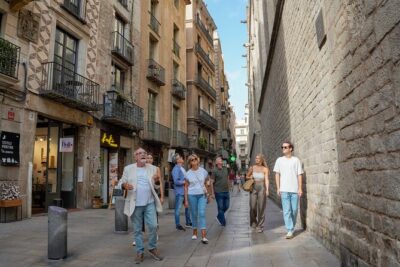
Barcelona Tapas and Wine Experience Small-Group Walking Tour
Read our review →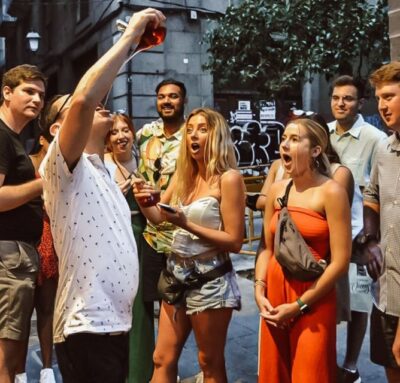
Tapas Walking Tour with Food, Wine, and History
Read our review →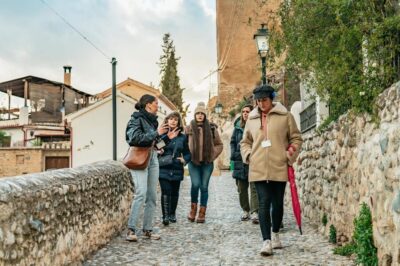
Albaicín and Sacromonte Guided Sunset Walking Tour
Read our review →
Toledo Tour & Vineyard Walk with Wine Tasting from Madrid
Read our review →
Barcelona Tapas Walking Tour: Food, Wine & History
Read our review →
Madrid Old Town & Royal Palace Walking Tour Skip the Line Ticket
Read our review →
Browse the lists this tour appears in