
Reviewed · ALCAZAR TOURS
Málaga: Cathedral, Alcazaba, Roman Theater Walking Tour
Málaga’s best sights sit close together, and this tour links them into one useful story. You move from the Renaissance Cathedral to the Alcazaba’s hillside paths, then down to the Roman Theater and the streets tied to Picasso. The result is a solid first look at the city, not just a checklist of monuments.
I like the included entry tickets, which save you from sorting out separate admissions, and I like the way the guides connect Málaga’s buildings with the city’s wider story. Guides including Carmen, Eduardo, Rachel, Antonio, and Daniel have been especially praised for clear English, humor, local suggestions, and strong storytelling.
The main caution is pace and access. This is a three-hour walk with an uphill section at the Alcazaba, and the experience is not suitable for people with mobility impairments. The Cathedral may also be closed or partly restricted during mass, so some explanations may happen outside.
In This Review
- Key points at a glance
- Why this route works for a first look at Málaga
- Málaga Cathedral, a grand beginning with one caveat
- The Alcazaba, the strongest part of the walk
- The Roman Theater and Málaga’s ancient foundations
- Picasso’s Málaga, told through streets and plazas
- What the guides add to the experience
- Price, timing, and what you receive for $53
- Who should book this Málaga walk
- My verdict: book it for context, not just entry
- FAQ
- Where does the Málaga walking tour meet?
- How long does the tour last?
- Which attractions are included?
- Does the tour include skip-the-line entry?
- What languages are available?
- What happens if mass is taking place at the Cathedral?
- Is the tour suitable for people with mobility impairments?
- Are hotel transfers, food, or drinks included?
Key points at a glance
- Three major monuments in three hours: Visit Málaga Cathedral, the Alcazaba, and the Roman Theater in one organized route.
- A hillside view from the Alcazaba: An elevator takes you to the highest point for broad views over Málaga.
- Picasso beyond the museum: Walk through Plaza de la Merced and streets connected with the artist’s early life.
- Skip-the-line access included: Tickets cover the Cathedral, Alcazaba, and Roman Theater.
- Strong guiding is central: Carmen, Eduardo, Rachel, Antonio, Daniel, Luis, and others have been praised for humor, local context, and answers to questions.
- A practical first-day tour: The route helps you get oriented and can point you toward places to eat and visit later.
Why this route works for a first look at Málaga

Málaga can seem simple at first glance: sunny waterfront, palm-lined streets, a famous art connection, and a compact old center. Walk a little farther and the city’s layers begin to show. Phoenician, Roman, Islamic, Christian, and modern Málaga all appear within a short walk.
This tour makes that layering easy to follow. You begin at Plaza de la Marina, by the door of the Tourist Information Office, and then move into the historic center. Starting here is practical because you are close to the Cathedral, port, Calle Larios, and the Alcazaba.
I would book this early in your stay. A good guide can help you understand where the old center ends, how the port area changed, and where Picasso fits into the city’s identity. Several guides also provide ideas for food and later sightseeing, making the tour useful beyond its three-hour schedule.
The route is fully narrated, so you are not left to guess why a building matters. That is important in Málaga, where a Roman theater sits beside an Islamic fortress and a Christian cathedral, all within the same compact part of town.
More Walking Tours in Malaga
- Málaga: 3-Hour Complete Walking Tour with Tickets
★ 4.5 · 976 reviews - El Chorro: Caminito del Rey Gorge Route Guided Walking Tour
★ 4.4 · 753 reviews - Ardales: Caminito del Rey & El Gaitanejo Guided Walking Tour
★ 4.8 · 552 reviews
Málaga Cathedral, a grand beginning with one caveat
The Cathedral of Málaga is the first major interior stop. Your guide points out details of the Renaissance building and explains the religious and civic setting behind what you see. This is more useful than simply walking through and admiring the scale, since many details are easy to miss without context.
The Cathedral is often called La Manquita, or the one-armed lady, because one of its towers was never completed. The supplied tour information does not promise a detailed focus on that nickname, so I would treat it as one of the city details you can ask about rather than an advertised feature.
The important practical issue is worship. On days when mass takes place, the guide gives the explanation outside the building. Some past departures have also encountered a closed Cathedral, with the group viewing it from the exterior instead. You still receive the broader city walk, but you should not book this tour solely for guaranteed interior time at the Cathedral.
That limitation is worth weighing against the price. Your ticket is included, but access can still be affected by religious services. If seeing every interior detail is your top priority, check the available date and be ready for the possibility of an exterior explanation.
The Alcazaba, the strongest part of the walk

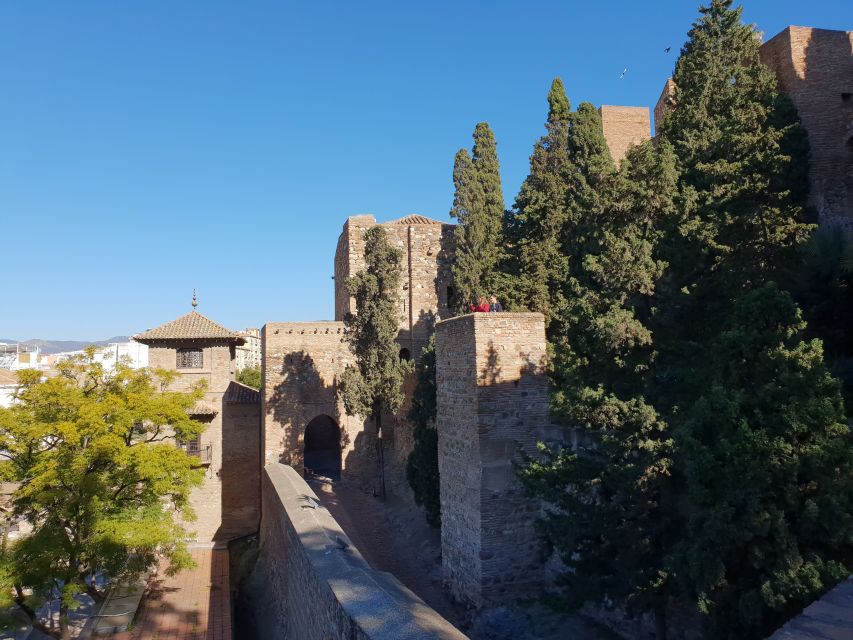
The Alcazaba is likely to be the high point of the tour, both historically and physically. Built into the sides of Gibralfaro Mountain, this Moorish fortress rises above the city and gives the route a change of pace after the Cathedral.
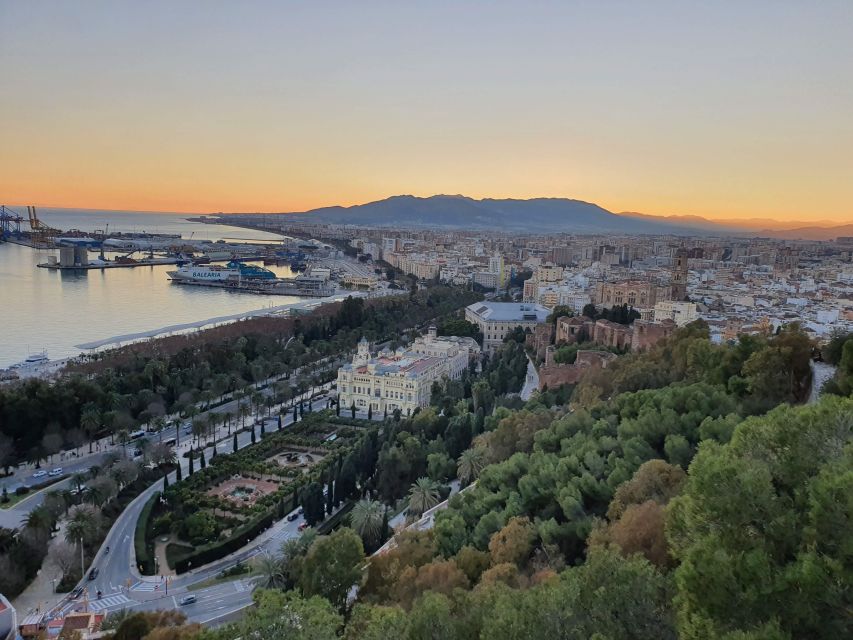
You follow the guide through the complex while hearing how Málaga’s rulers used and shaped the site. The route includes an elevator ride to the highest point, where you can look across Málaga. That view helps you understand the city’s position between mountain and sea far better than a map does.
The Alcazaba is also where a guide’s skill matters most. Its walls, courtyards, paths, and viewpoints can blur together if you are walking alone without preparation. Guides such as Rachel, Raquel, Carmen, and Eduardo have been praised for turning the visit into a clear story rather than a series of disconnected facts.
There is one fair criticism to keep in mind: three hours must cover four major areas, so the Alcazaba visit may not include every corner. One departure left a visitor wanting more time there and prompted a return visit the next day with an audio guide. I see that as both a limitation and a useful plan: take the guided overview first, then return independently if the fortress grabs your attention.
The uphill setting also affects comfort. Wear comfortable clothes and shoes, and expect walking rather than a slow museum-style visit. The elevator helps with the highest point, but it does not turn the entire experience into an accessible route.
The Roman Theater and Málaga’s ancient foundations
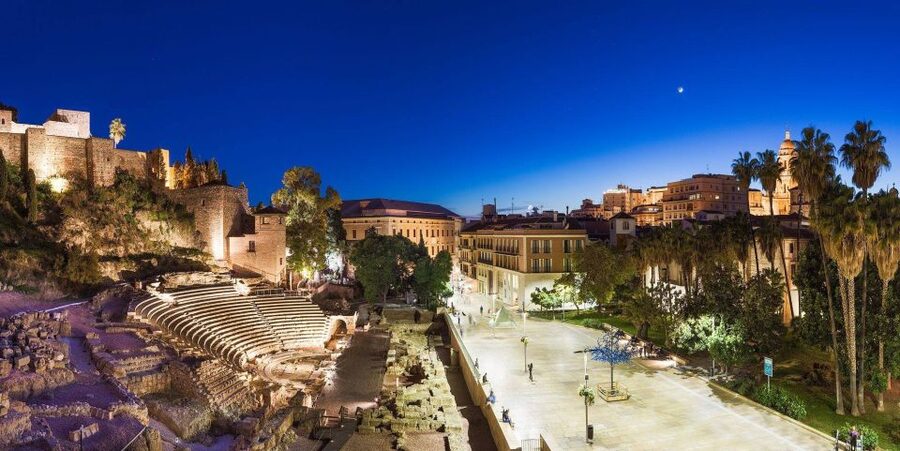
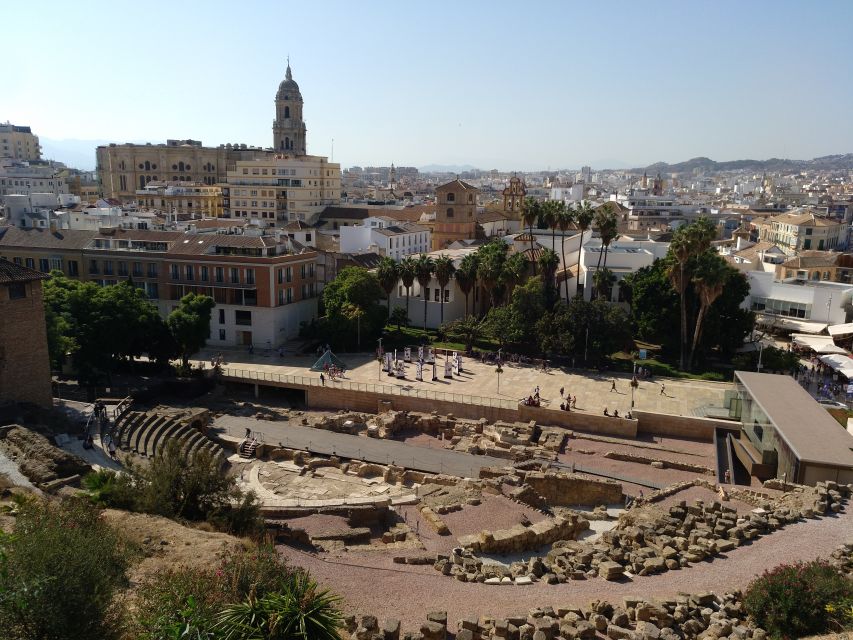
From the Alcazaba, the tour heads to the ancient Roman Theater. Its location is especially striking because it sits at the foot of the fortress, showing how closely Málaga’s Roman and Islamic chapters overlap.
The theater is a quick but meaningful stop within the larger route. Your guide supplies the context, helping you see it as more than a surviving semicircle of stone. The value here is the connection between the monument and the surrounding city, not a long archaeological visit.
If you want a detailed study of Roman construction or a quiet period for photographs, this group walk may feel brief. The tour is designed to show the main sights in one morning or afternoon, so the Roman Theater shares time with the Cathedral, Alcazaba, and Picasso route.
Still, this is exactly the kind of stop that works well with a guide. You gain a sense of Málaga’s age without spending your entire day indoors or at one site.
More Malaga & Costa del Sol walks with a guide:
- Benahavís: Guided Canyoning Adventure (Benahavís River Walk)
★ 4.9 · 540 reviews - Ronda: Guided Walking Tour
★ 4.6 · 104 reviews - Barcelona Tapas and Wine Experience Small-Group Walking Tour
★ 5.0 · 5,804 reviews - Barcelona: Tapas Walking Tour with Food, Wine, and History
★ 4.8 · 4,261 reviews
Picasso’s Málaga, told through streets and plazas
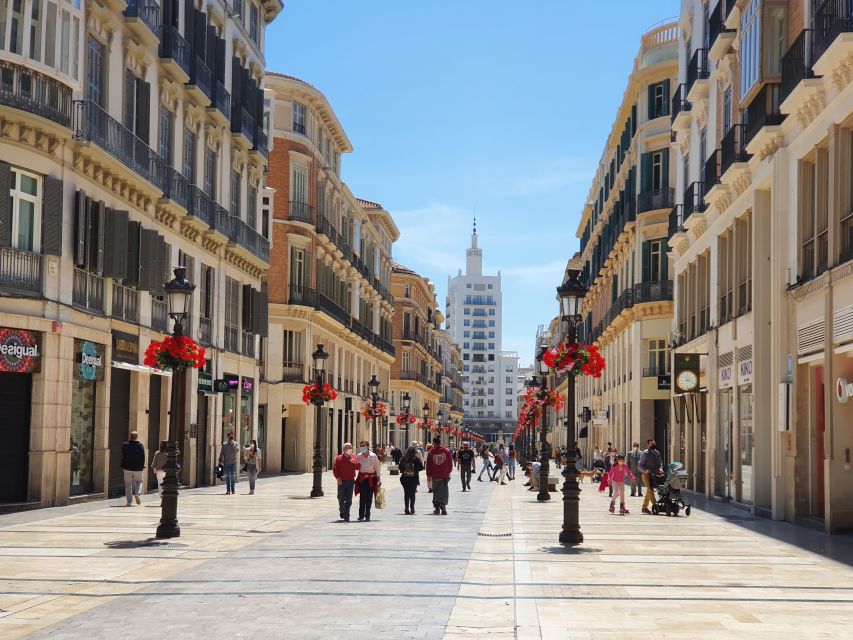
The final part shifts from ancient monuments to the city of Pablo Picasso. You walk toward the streets where he lived and see his statue before exploring Plaza de la Merced, Plaza del Obispo, and Calle Larios.
This section gives the tour a modern human thread. Picasso is not presented only as a name attached to a museum. Instead, you connect him with actual streets and public spaces in Málaga. The statue and Plaza de la Merced help place his early life within the city’s everyday geography.
Calle Larios adds another change of mood. It is one of Málaga’s best-known central streets and helps you understand the city as a living place, not just an outdoor history lesson. Plaza del Obispo also keeps you close to the Cathedral area, tying the route together.
Guides have also used this walking time to explain changes to Málaga’s port. One guide’s account of infilling the port area, creating more room around the waterfront, was singled out as a fascinating piece of city history. Details like this are valuable because they explain the Málaga you see today, not only the buildings that survived from earlier centuries.
What the guides add to the experience
The clearest strength of this tour is the guiding. You are not simply handed admission tickets and pointed toward the entrance. The guide stays with the group, narrates the route, answers questions, and supplies context between the monuments.
The strongest reports describe guides who combine facts with humor and a personal connection to Málaga. Carmen is repeatedly associated with excellent English, patience, and careful answers. Eduardo is praised for history and art knowledge, good humor, and a comfortable pace. Rachel is described as thorough, funny, and strong on the history of the Alcazaba.
Other named guides include Antonio, Daniel, Luis, Anna, Raquel, Maria, and Ana. Antonio has been especially praised for local food and sightseeing suggestions as well as historical information. Daniel is known for storytelling and attention to detail, while Maria has been appreciated for taking time at each monument.
That variety matters because the exact tone can differ from one departure to another. The common pattern is a guide-led experience with strong local interpretation, but you should not assume that every guide will use the same jokes, route emphasis, or amount of time at each stop.
English and Spanish are offered. If you have questions, ask them as you go. The guides are described as willing to explain points again and respond to individual interests, which is one advantage of a group tour over an audio guide.
Price, timing, and what you receive for $53
At $53 per person, this is not the cheapest way to walk around Málaga. You can see the exterior of many landmarks independently for little or no cost. The price makes more sense when you count the three included admission tickets, the live guide, and the time saved at ticket lines.
The best value comes if you want orientation and interpretation in one block of time. A guide can keep you moving between the Cathedral, Alcazaba, Roman Theater, and Picasso-related streets without you stopping to research each site. That saves planning time, especially on a short visit.
The value is weaker if you prefer to linger. The Alcazaba alone can reward a longer visit, and the Cathedral may deserve a quiet look without a group waiting. In that case, use this tour as an introduction and return to your favorite site later.
The schedule lasts three hours, with starting times varying by date. Food, drinks, hotel pickup, and hotel drop-off are not included. Meet by the door of the Tourist Information Office at Plaza de la Marina, and plan to arrive ready for a walking route rather than a vehicle-based excursion.
Small groups have made some departures feel personal, while another group included eight people. Group size can vary, so do not book on the assumption that you will receive a private tour.
Who should book this Málaga walk
I would recommend it for a first visit, a short stay, or a port stop when you want the main historic sights explained without spending a full day on one monument. It suits adults and families who can manage several hours on foot and enjoy asking questions along the way.
It is also a good fit if you like history but do not want a dry lecture. The strongest guides mix historical information, art, humor, and practical advice about Málaga. You get the city’s major landmarks plus the streets and public spaces that connect them.
You may want a different plan if mobility is limited. The activity is specifically listed as unsuitable for people with mobility impairments, and the Alcazaba’s hillside position makes that warning important.
I would also think twice if your main goal is an in-depth visit to the Alcazaba or a guaranteed Cathedral interior. The tour gives you a broad overview, but its strength is range. You see several key places rather than studying one at length.
Cancellation is flexible up to 24 hours before the start for a full refund, and you can reserve now and pay later. Those terms help if your Málaga schedule is still shifting, but the larger decision is how much structure you want during your visit.
My verdict: book it for context, not just entry
Book this tour if you want Málaga to make sense quickly. The combination of Cathedral, Alcazaba, Roman Theater, Picasso’s streets, and port history gives you a strong framework for exploring on your own afterward.
I especially value the live storytelling and the included tickets. The tour’s best guides, including Carmen, Eduardo, Rachel, Antonio, and Daniel, bring humor and local detail that an audio guide cannot easily match.
Skip it if you need a fully accessible route, want to spend most of your day at the Alcazaba, or require guaranteed Cathedral entry during religious services. For everyone else, $53 is a fair price for a well-paced introduction to Málaga’s central sights, provided you arrive in comfortable clothes and shoes and accept that this is an overview rather than an exhaustive visit.
FAQ
Where does the Málaga walking tour meet?
Meet by the door of the Tourist Information Office at Plaza de la Marina.
How long does the tour last?
The tour lasts three hours. Starting times vary by date, so check availability when booking.
Which attractions are included?
Admission is included for Málaga Cathedral, the Alcazaba, and the Roman Theater.
Does the tour include skip-the-line entry?
Yes. The activity includes skip-the-line access to the Cathedral, Alcazaba, and Roman Theater.
What languages are available?
The live guide operates in English and Spanish.
What happens if mass is taking place at the Cathedral?
On days with mass, the guide gives the Cathedral explanations outside the building. The Cathedral may also be closed on some departures.
Is the tour suitable for people with mobility impairments?
No. The activity is listed as unsuitable for people with mobility impairments. Comfortable clothes and suitable walking shoes are recommended.
Are hotel transfers, food, or drinks included?
No. Hotel pickup and drop-off, food, and drinks are not included.
Recently reviewed around Malaga & Costa del Sol
- From Marbella: Canyoning Tour in Guadalmina Canyon★ 5.0 · 778 reviews
- Torremolinos: Crocodile Park Entrance Ticket★ 3.7 · 309 reviews
- Torremolinos: Flamenco Show with Drinks★ 4.6 · 290 reviews
- Selwo Aventura Admission Ticket with Skip-the-Line Access★ 4.2 · 151 reviews
- Tour to Gibralfaro★ 4.7 · 182 reviews
- Ronda: Spanish – Classical & Flamenco – Guitar Concert★ 4.8 · 108 reviews
- Ronda: Guided Walking Tour★ 4.6 · 104 reviews
- From Costa del Sol: Ronda and Setenil de las Bodegas★ 4.5 · 149 reviews
Alcazar Tours, compared.
Cathedral, Giralda & Alcazar Entry With Guided Tour
Read our review →
Priority Access Cathedral, Giralda & Alcázar Tour
Read our review →
Alcazaba and Roman Theatre Guided Tour With Entry
Read our review →
Alcázar and Cathedral Entry Ticket and Guided Tour
Read our review →
Alcazar and Cathedral of Seville Tour with Skip the Line Tickets
Read our review →
Toledo & Segovia Full Day Guided Tour with Alcázar
Read our review →
Browse the lists this tour appears in