
Reviewed · GRAN CANARIA TOURS
Guided tour of the Banana World
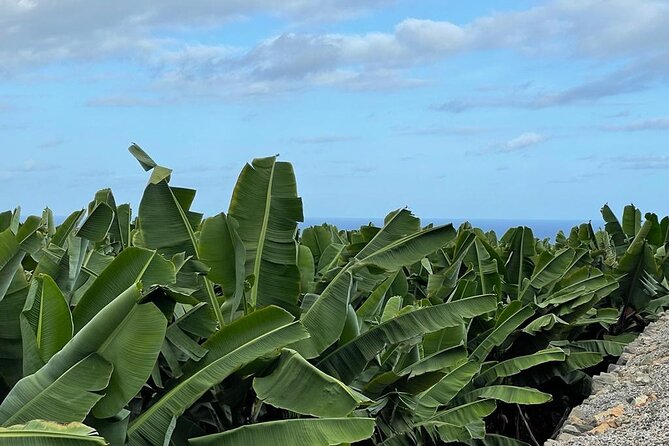
The best part of the Banana World tour is that it turns an everyday fruit into a small lesson in farming, food, and Canarian life. You walk through part of a banana plantation, learn how the plants are grown, then see how bananas end up in wine, jams, snacks, and cosmetics.
I like the restored 1804 Canarian house, which gives the visit a sense of place rather than making it only a farm stop. I also like the generous tasting at the end, with banana wines, banana jam, banana with cactus, and banana with aloe vera. The main drawback is group size: the maximum is 40 people, and one guide can struggle to keep everyone close and listening.
In This Review
- Banana World at a glance
- Why bananas matter in Gran Canaria
- Walking through the plantation
- Inside the 1804 Canarian house
- The tasting: banana wine, jam, and island snacks
- The shop and banana-based souvenirs
- Getting there from Las Palmas and the cruise port
- Timing, group size, and what to expect
- Who will enjoy this visit most
- Is Banana World worth $18.14?
- Should you book the Banana World tour?
- FAQ
- Where does the Banana World tour start?
- How long does the tour last?
- What language is the tour offered in?
- What is included in the price?
- Are coffee and tea included?
- Can I use public transport to reach the farm?
- What happens if the weather is poor?
- What is the cancellation policy?
Banana World at a glance
- A working banana farm near Arucas: You learn about cultivation while walking through part of the plantation.
- A restored Canarian house from 1804: The building contains the interpretation center and shop.
- Tasting included: Try banana-based wines, jams, montaditos, and other island products.
- English-speaking guides: Guides such as John, Dani, Fatima, Ion, Maria, Steve, and Ismael have led visits, though the guide depends on the day.
- Short and easy to fit into a day: Allow about 50 minutes to one hour, plus extra time for shopping.
- Good value at $18.14: The price includes the tour, tastings, and parking, but not coffee, tea, or transport.
Why bananas matter in Gran Canaria
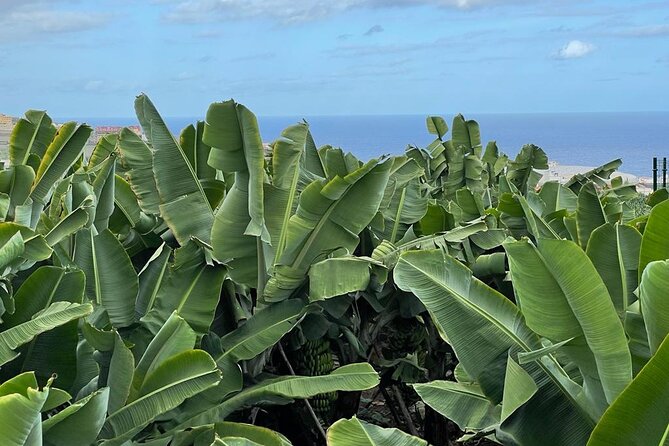
Gran Canaria is not only a beach destination. Its agricultural valleys support bananas, tomatoes, and other crops, and the banana plant is part of the island’s working countryside. This visit gives you a closer look at that side of the island.
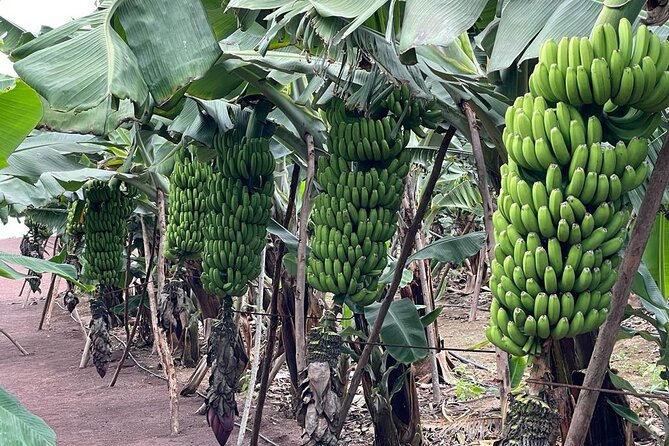
The farm tour explains how bananas are cultivated and lets you see the plants at close range. You may arrive thinking you know the basics already, but the tour covers details about the plant, its growth, and the different products made from it. Several guides use humor and invite questions, which helps keep the talk from feeling like a school lecture.
The visit is especially useful if you are curious about food production. A supermarket banana tells you almost nothing about the plant behind it. Here, you see how much care goes into growing the crop and how a familiar fruit can become something far less familiar, such as banana wine or a banana-based cosmetic.
The agricultural setting also gives the outing a welcome change of pace from city streets. You get views around the plantation and time to look at the property beyond the guided portion. The walk is short, so this is not a long farm hike. Think of it as a compact introduction to one part of Gran Canaria’s rural economy.
More Gran Canaria trips worth a second look
- Maspalomas: Guided Camel Ride in the Maspalomas Sand Dunes
★ 4.4 · 3,690 reviews - Gran Canaria Guided Buggy Tour
★ 4.7 · 1,743 reviews - Gran Canaria: Rural Villages Guided Sightseeing Tour
★ 4.6 · 544 reviews
Walking through the plantation
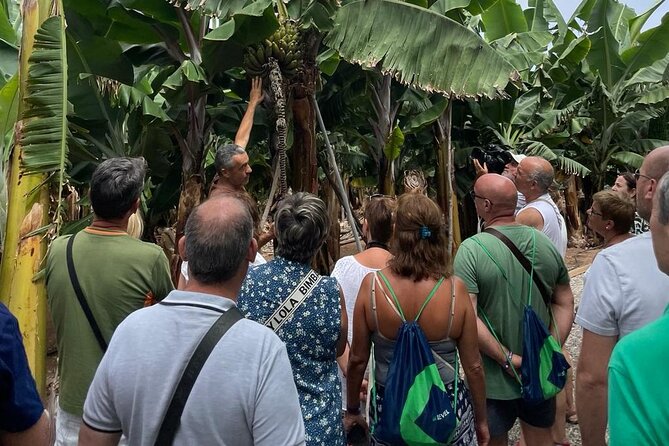
The visit begins at the farm in Trasmontaña, near Arucas. Your guide leads you through a section of the banana plantation and explains how the fruit is grown. The exact route and pace can vary, but the guided portion generally lasts between 40 minutes and an hour.
The strongest guides make the tour conversational. John, Dani, Fatima, Ion, Maria, Steve, Ismael, and JC have all been praised for clear explanations, friendly manner, and a good sense of humor. Guide assignments change, so you should not book based on one particular person. Still, the experience appears to put real weight on the guide’s ability to explain the plants and answer questions.
You can ask about the varieties of bananas, cultivation, and the products made on the farm. One unusual feature is the chance to hear about less familiar types, including strawberry bananas. The tasting may include products such as banana sauces, jams, and drinks, not simply slices of the usual yellow fruit.
The main issue is visibility and sound. With a group approaching the 40-person limit, you may need to stay near the guide to hear everything. A large group can also make it harder to see the plant being discussed. If you want the clearest experience, arrive ready to move with the group and remain close to the guide.
This is not a private farm visit. You are joining a shared tour, and the quality of the explanation depends partly on group discipline. That tradeoff helps keep the price below $20, but it is worth knowing before you book.
Inside the 1804 Canarian house
The restored house is the most distinctive part of the property. Built in 1804, it has been restored in keeping with its original architecture and now serves as an interpretation center and shop.
This building gives the farm a human setting. Instead of hearing about banana cultivation in a modern visitor room, you move through a traditional Canarian structure connected to the land. The stop is not presented as a full architectural tour, but it adds useful context and makes the experience feel more rooted in local life.
The interpretation center explains the banana and its place in the farm. Depending on the guide and the group, you may spend more time listening outside among the plants or inside the house. A few minutes after the formal tour can be well spent looking around the center and asking questions that did not fit into the main talk.
Some visitors would like more background on the longer history of banana cultivation in the Canary Islands. The tour focuses mainly on how bananas grow and how they are used today, so anyone seeking a detailed agricultural history should keep expectations in check. For a short visit, though, the house adds much more character than a basic plantation walk.
The tasting: banana wine, jam, and island snacks
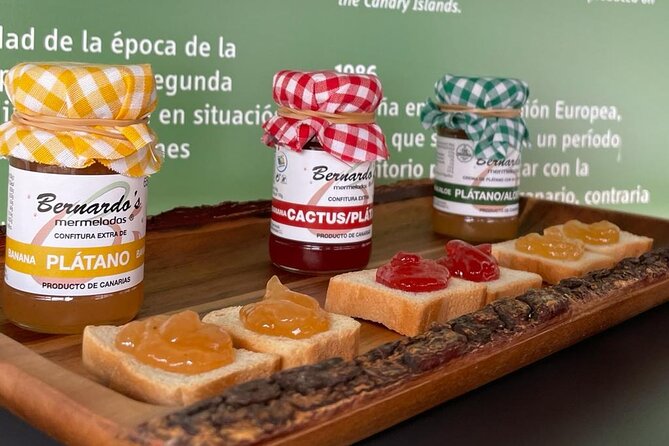
The tasting is a major reason the $18.14 price works well. You receive samples of different banana-based wines from the Canary Islands, along with small snacks such as montaditos with banana jam, banana with cactus, and banana with aloe vera.
The tasting helps connect the farming talk to local food. You are not only told that bananas are used in other products. You get to try those products and decide what you like. Banana jam is a frequent favorite, and you can also find banana liqueur, sauces, and other items in the shop.
The drinks contain alcohol, so this portion is aimed at adults. Families can still enjoy the plantation and food samples, but the wine tasting is not the focus for young children. A family with a three-year-old and another with a nine-year-old found the visit suitable as a shared outing, with the farm and explanations providing plenty to hold a child’s attention for a short time.
Pay attention when you arrive. There may be snacks or drinks set out before the formal tasting begins. If you are unsure what is included, ask the staff rather than taking something from a display. The tasting is usually saved for the end, and clear instructions would make this part less confusing.
A different way to spend the day, same corner of Spain:
- Poema del Mar Skip-the-Line Ticket
★ 4.8 · 3,856 reviews - Puerto de Mogán: Submarine Tour
★ 4.4 · 3,792 reviews - From Puerto Rico de Gran Canaria: Dolphin Watching Cruise
★ 4.3 · 2,520 reviews - Gran Canaria: Dolphin and Whale Watching Cruise
★ 4.3 · 1,855 reviews
The shop and banana-based souvenirs
The shop is part of the restored house and gives you a chance to take the experience home. Products can include banana jams, banana wine or liqueur, sauces, and cosmetic items such as hand cream made with banana.
This is a better souvenir stop than a generic island gift shop because the products relate directly to what you have just seen. A small jar of jam is easy to pack, while cosmetics offer a practical option if you do not want to buy food or alcohol.
The shop is also useful if you have limited time after the tour. Some people stay to browse and buy gifts for family and friends, while others leave quickly for a bus. Plan extra time if shopping matters to you. The formal activity ends back at the meeting point, but the property allows you to look around afterward.
The shop can make the visit feel more commercial than a simple farm walk. That is not necessarily a flaw, since the tasting and shop are part of the point. Just know that the experience combines education, food sampling, and retail rather than focusing only on agriculture.
Getting there from Las Palmas and the cruise port
The meeting location is on Camino del Laurel in the Arucas area, and parking fees are included. Most people will find driving the simplest option, especially if they are combining the visit with other stops around northern Gran Canaria.
The address details need care. The booking information gives Cam. del Laurel, 7, while practical directions identify the tour building as Cam. del Laurel, 10. The most useful arrival tip is to go inside the shop or entrance area and register. Do not wait outside for a guide, and do not rely blindly on the map pin, since it may not place you at the correct shop.
Public transport is possible, but it takes planning. From the Las Palmas cruise port, you can walk to the outbound stop for the blue 210 bus, marked GLOBAL L210 Arucas, near Ambulatorio de Alcaravanera. Get off at El Lomito, then walk about 10 to 15 minutes to the building.
The return 210 bus picks up across the street from the drop-off point. Each bus ride is about 1.50 euros, payable by cash or card. From the cruise port, you can also use Santa Catalina bus station and connect through the Mesa y López area, but that adds a transfer.
The walk from the bus stop is manageable, but the roads are not always pleasant for walking. From Puerto Rico, the journey can take around an hour and a half to Las Palmas, followed by the connection to the plantation. It is doable, but the trip may take far longer than the tour itself. If you are on a cruise schedule, leave a generous buffer and check return bus times before starting.
Timing, group size, and what to expect
The stated duration is about one hour, although some visits run closer to 40 or 45 minutes. The short format is useful when you want to pair the farm with Arucas or Las Palmas, but it does not allow for a long agricultural walk or a detailed museum visit.
You should expect a shared group with up to 40 participants. That size is the clearest weakness in the experience. A guide can be friendly and well informed yet still struggle to project a voice across a large group. Stay near the front, especially during explanations among the plants.
The tour requires good weather. If poor weather forces cancellation, you are offered another date or a full refund. You can cancel for a full refund up to 24 hours before the start time. Cancellations or changes inside that 24-hour window are not refunded or accepted.
The activity is near public transport, and most people can take part. Private transport is not included, so you must arrange your own car, taxi, or bus connection. Coffee and tea are also not included, although snacks and alcoholic tastings are part of the price.
Who will enjoy this visit most
I would choose this tour for anyone who wants a short, local activity near Las Palmas or Arucas. It works well for families, couples, curious food lovers, and anyone who likes seeing how everyday products are made.
It is also a good choice if you have already spent time on beaches and want a change of scene. The farm, restored house, tasting, and shop provide several small highlights without taking half a day.
You may want to skip it if you dislike group tours, have trouble hearing in a crowd, or expect a major museum with a long historical presentation. The plantation section is limited, and the visit is designed as a compact introduction rather than an in-depth farm course.
The experience is also less attractive if you are staying far south and have no car. A long bus journey for a one-hour tour may not be good value unless banana farming is a particular interest.
Is Banana World worth $18.14?
At $18.14 per person, I find the tour fairly priced. The fee covers the guided visit, alcoholic banana-wine samples, snacks, and parking. Even if you buy nothing in the shop, the tasting alone adds something real to the visit.
The value depends on how you reach the farm. For someone based in Las Palmas with a car, the price is easy to justify. For someone staying in Puerto Rico and relying on several buses, transport time and fares become a larger part of the day.
The strongest value comes from the mix of activities. You get a working plantation, an old Canarian house, an English-language explanation, and a tasting. None of these parts lasts a long time, but together they create a pleasant and useful hour.
Should you book the Banana World tour?
Book it if you want an affordable, family-friendly look at Gran Canaria beyond the resort areas. The banana wine and jam tasting, restored 1804 house, and friendly guides give the visit more substance than a simple walk among plants.
Go by car if possible, arrive at the shop or entrance rather than waiting outside, and stay close to the guide in a large group. If you are using public transport, check the 210 bus times and allow much more time than the tour duration suggests.
I would recommend Banana World to most visitors who enjoy food, farming, and small local museums. It is short, informal, and occasionally crowded, but the price is sensible and the tasting makes it memorable.
FAQ
Where does the Banana World tour start?
The tour starts at Cam. del Laurel in the Trasmontaña area near Arucas, Gran Canaria. The booking information gives number 7, while practical arrival directions identify the building as number 10. Go inside the shop or entrance area to register.
How long does the tour last?
The visit lasts about 50 minutes to one hour. Some tours finish in about 40 to 45 minutes, depending on the guide and the pace of the group.
What language is the tour offered in?
The tour is offered in English.
What is included in the price?
The price includes the guided farm visit, samples of banana-based wines from the Canary Islands, snacks, and parking fees.
Are coffee and tea included?
No. Coffee and tea are not included in the tour price.
Can I use public transport to reach the farm?
Yes. The farm is near public transportation. The blue 210 bus can take you toward Arucas, with a stop at El Lomito and a walk of about 10 to 15 minutes to the tour building.
What happens if the weather is poor?
The experience requires good weather. If it is canceled because of poor weather, you can choose another date or receive a full refund.
What is the cancellation policy?
You can cancel at least 24 hours before the start time for a full refund. Cancellations or changes made less than 24 hours before the start time are not accepted and are not refunded.
Recently reviewed around Gran Canaria
- Firgas, Tejeda, Guayadeque – VIP Tour Gran Canaria★ 4.5 · 173 reviews
- Sioux City Park Entrance Ticket★ 4.5 · 171 reviews
- The Best Horse Riding Experience in Gran Canaria (2 hours)★ 4.5 · 349 reviews
- Scuba Diving Experience for Beginners in Gran Canaria★ 5.0 · 561 reviews
- Supercar Experiences on the Circuit of Maspalomas★ 5.0 · 110 reviews
- Sala Scala Gran Canaria Dinner Show★ 4.5 · 212 reviews
- SUBMARINE ADVENTURE – Submarine Excursion in Puerto de Mogán★ 4.0 · 126 reviews
- Small-Group Surf Lessons in Gran Canaria★ 5.0 · 138 reviews
Gran Canaria Tours, compared.


Maspalomas: Guided Camel Ride in the Maspalomas Sand Dunes
Read our review →
From Puerto Rico de Gran Canaria: Dolphin Watching Cruise
Read our review →

El Salobre: Horse Riding Adventure with Transfer Options
Read our review →
Maspalomas: Palmitos Park Ticket with Dolphin and Bird Shows
Read our review →Browse the lists this tour appears in