
Reviewed · MADRID TOURS
Escorial Monastery and the Valley of the Fallen Tour from Madrid
El Escorial and the Valley of the Fallen offer a striking study in contrasts: one is a royal monastery built by Felipe II, the other a monumental Francoist memorial cut into the Sierra de Guadarrama. I like the way this tour places both sites together, since you see Spain’s monarchy, Catholic tradition, civil war, and modern political memory in one half-day.
I also like the practical setup. Your admission tickets and transport are included, and the air-conditioned bus has Wi-Fi. Guides such as Cristina, Bea, Luis, and Oscar have earned praise for their clear historical explanations. The main consideration is that the tour may be bilingual, and some people have found the English commentary rushed or hard to hear through the radio equipment.
In This Review
- Key points at a glance
- Why these two sites belong on the same morning
- Leaving Madrid for the Sierra de Guadarrama
- El Escorial: Felipe II’s royal monastery
- The Valley of the Fallen: impressive, troubling, and worth context
- How the guiding works in practice
- Is $74.98 good value?
- What to bring and how to prepare
- Who should book this tour?
- Should you book the El Escorial and Valley of the Fallen tour?
- FAQ
- How long does the tour last?
- What time does the tour begin?
- Where does the tour meet?
- Where does the tour end?
- Are entrance tickets included?
- Is transportation included?
- Is food included?
- Is the tour offered in English?
- Can I cancel for a full refund?
Key points at a glance
- Two very different monuments in five hours: Visit the royal monastery of El Escorial and the Valley of the Fallen in one morning.
- Royal tombs and major art: El Escorial combines a monastery, palace, mausoleum, basilica, library, and art collection.
- A difficult chapter of Spanish history: The Valley of the Fallen is an impressive but politically charged Francoist memorial.
- Tickets and bus included: You avoid arranging separate transport and entry at both locations.
- Bilingual guiding is possible: English and Spanish may be used together, so ask about the language format before booking.
- Prepare for mountain weather: The sites can be colder than Madrid, and food and drinks are not included.
Why these two sites belong on the same morning
The tour’s real strength is its contrast. El Escorial reflects the power and ceremony of the Spanish crown under Felipe II. The Valley of the Fallen reflects the dictatorship of Francisco Franco and the long shadow of the Spanish Civil War.
These are not interchangeable sightseeing stops. At El Escorial, you move through royal rooms, religious spaces, burial chambers, and galleries filled with art. At the Valley of the Fallen, the scale is more severe: a basilica carved into rock, a gigantic cross, and a memorial connected to a painful period in Spain’s past.
I like this pairing because it gives you more than attractive architecture. It helps you read Spain through its monuments. You see how rulers used religion and art to express power, then confront a later monument built to shape public memory after a brutal conflict.
The five-hour schedule keeps the trip manageable from Madrid. You do not need to spend a full day arranging trains, buses, tickets, and directions. The trade-off is clear: this is an introduction, not an exhaustive study of either place.
Other Madrid days travellers weigh against this one:
- Madrid: Tour Bernabéu Entry Ticket
★ 4.5 · 21,573 reviews - Madrid: Prado Museum Entry Ticket
★ 4.6 · 17,509 reviews - Madrid: Royal Palace Fast-Access Admission Ticket
★ 4.6 · 13,856 reviews
Leaving Madrid for the Sierra de Guadarrama
The meeting point is Fun and Tickets on Calle de San Bernardo, 7, in central Madrid. The bus departs at 9:00 a.m. and returns to the same place when the tour ends.
Transport matters here. El Escorial is about 47 kilometers northwest of Madrid, and the Valley of the Fallen is outside the city in the Cuelgamuros Valley. A direct excursion lets you focus on the sites instead of working out connections between them.
The bus is described as comfortable, air-conditioned, and equipped with Wi-Fi. Several people particularly appreciated the smooth driving and comfortable coach. Drivers named in the feedback include Pablo, Miguel, Manuel, and Alejandro.
The listed group limit is 24 people. One account reported a group of 30, however, so I would confirm the expected group size if having a small party is important to you. A smaller group usually makes it easier to stay near the guide and hear explanations inside large buildings.
El Escorial: Felipe II’s royal monastery
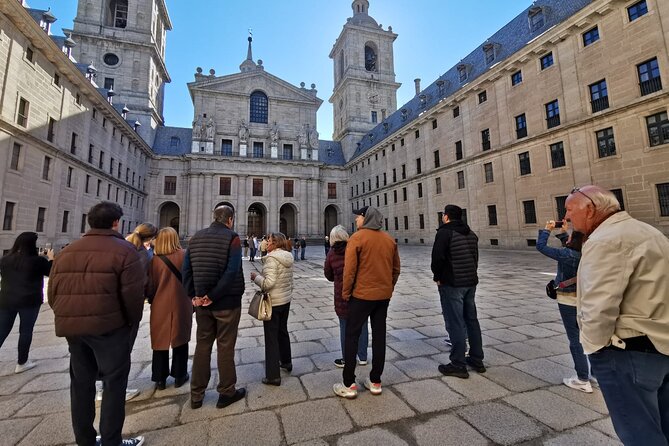
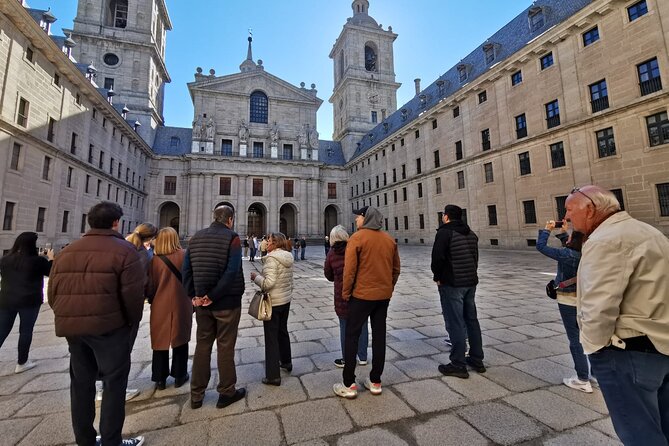
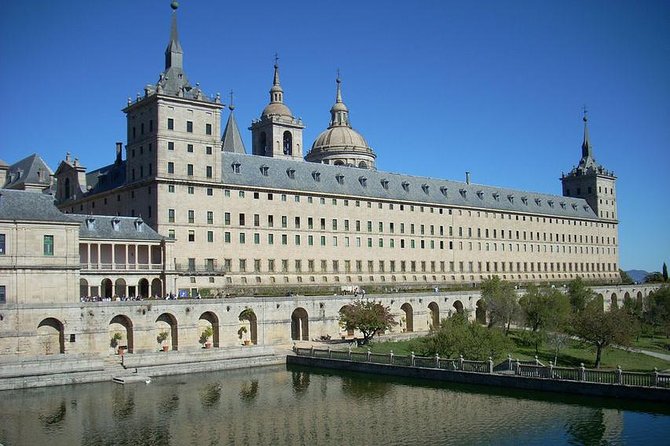
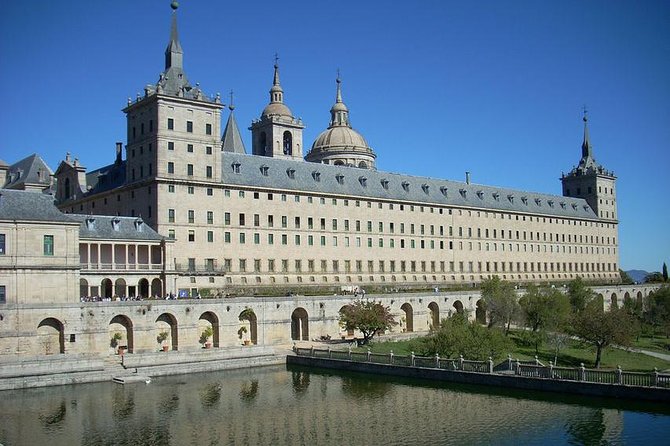
The Real Sitio de San Lorenzo de El Escorial is the morning’s historical heavyweight. Felipe II ordered its construction after the Spanish victory at San Quintín in 1557, a battle fought on the feast day of Saint Lawrence. The complex was dedicated to Saint Lawrence and designed partly as a royal mausoleum.
That purpose helps explain the building’s unusual character. It is not simply a monastery. It brings together a royal residence, church, burial place, library, and art collection in one monumental complex.
You can expect the visit to include the royal burial area, the basilica, selected interior spaces, and works of art. The exact route depends on access and the guide’s plan. One useful point to keep in mind is that El Escorial is enormous, so a two-hour visit cannot cover every room.
The royal crypt is one of the most memorable stops. Spanish royalty is buried there, and the setting makes Felipe II’s wish for a dynastic mausoleum very clear. It is formal, solemn, and far removed from the sunny plazas of Madrid.
The art collection may surprise you. El Escorial is often marketed first as architecture and royal history, but the paintings and decorative works can hold your attention just as strongly. One account singled out the collection as better than many museums, while another noted unusual historical treasures such as an early world atlas and paintings depicting a major naval battle.
Your guide gives the building its meaning. Cristina is repeatedly praised for explaining Felipe II’s life, the royal family, the gardens, the art, and the monastery’s place in Spanish culture. Luis is also praised for detailed historical explanations, while Oscar received strong marks for a thorough delivery.
You should expect a walking visit rather than a quick photo stop. The site is large, and you will likely spend much of the two hours moving through formal interiors and listening to commentary. Wear sensible shoes and keep your attention on the guide, especially if the group is spread out.
The Valley of the Fallen: impressive, troubling, and worth context
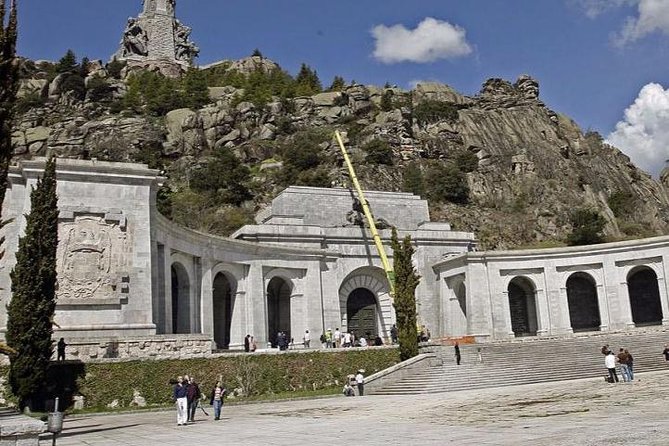
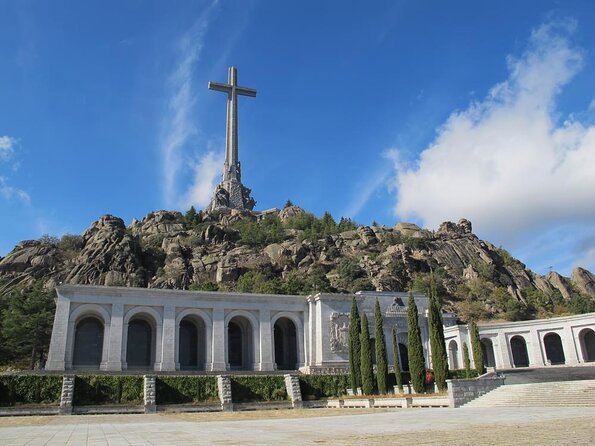
The Valley of the Fallen, now associated with Cuelgamuros Valley, is a monument, Catholic basilica, and burial site created under Franco’s regime. Its enormous cross and mountain setting make an immediate visual impact.
The site is also politically and historically difficult. Franco presented it as a national act of atonement and reconciliation, but its construction took place under the dictatorship between 1942 and 1950. Much of the labor came from free workers, with a smaller but significant number of prisoners working under the regime’s sentence-reduction system.
That background should shape how you visit. This is not merely a dramatic church in the hills. It is a monument built after the Spanish Civil War, tied to Francoist power and to the deaths and suffering of the conflict. Its religious language and memorial purpose deserve a respectful response.
The visit lasts about an hour and includes admission. You can expect time to see the basilica and the monumental exterior setting, including the giant cross and surrounding memorial area. The mountain setting adds to the impact, but it can also make the site colder than Madrid.
I appreciate that the tour includes this stop rather than presenting only the most comfortable version of Spanish history. The Valley of the Fallen can be unsettling, and that is part of its value. You are given a chance to consider how governments use architecture, religion, and burial places to shape national memory.
Dress and behavior matter. You are visiting a religious institution and a memorial to people who died in a cruel war. Smart casual clothing is requested, and respectful conduct is essential. If you approach the site as a place of mourning and historical study rather than a novelty, the visit will feel more meaningful.
A different way to spend the day, same corner of Spain:
- Madrid: “Emociones” Live Flamenco Performance
★ 4.8 · 12,866 reviews - Madrid: Panoramic Route City Tour
★ 4.1 · 12,259 reviews - Madrid: Live Flamenco Show with Food and Drinks Options
★ 4.5 · 9,901 reviews - Avila & Segovia Tour with Tickets to Monuments from Madrid
★ 5.0 · 9,762 reviews
How the guiding works in practice
A professional guide accompanies the group, and radio-guide headphones are available. This is helpful inside wide halls and large religious spaces, where standing close to the guide is not always possible.
The strongest guiding experiences here are detailed and historical. Cristina is praised for her background as a historian and for explaining the monastery’s art, royal connections, and cultural setting. Bea is noted for bringing the history of both sites to life, while Sergio received praise for taking time to explain the places in a friendly way.
The tour may be operated by a multilingual guide. In practice, that can mean commentary in English and Spanish during the same visit. Some people found the bilingual format easy to follow, while another person felt the English sections were inconsistent because the group was mainly Spanish-speaking.
If you want a fully English visit, ask before booking. The tour is offered in English, but the guide may still need to provide explanations in two languages. This can lengthen stops and reduce the amount of time available for questions.
Sound equipment is another practical issue. Most of the feedback about the headphones is positive, but there were complaints about poor sound quality, dropped microphone signals, and guides moving out of range. Stay near the guide and mention sound problems immediately. A small technical issue becomes a major one when you are standing in a vast room and cannot hear the explanation.
Is $74.98 good value?
At $74.98 per person, the tour is priced as a convenience-focused half-day excursion. The cost covers the bus, guide, Wi-Fi, entry to the Valley of the Fallen, and entry to El Escorial. Food and drinks are extra.
I consider the price reasonable if you value time and simple planning. You avoid paying separate admission at two major sites, and you do not need to arrange transport to locations outside Madrid. For a first visit, the guided context is also important. El Escorial can feel overwhelming without knowing why the complex was built, and the Valley of the Fallen needs historical framing.
The value is less clear if you want to explore at your own pace. Two hours at El Escorial and one hour at the Valley of the Fallen give you a useful overview, but not enough time for every room, artwork, or quiet corner. The tour also follows a fixed morning schedule, so you have less freedom than you would with a private car or private guide.
A private tour is available from the same provider if you need more control over pace or language. That option should appeal to visitors with a strong interest in art, royal history, or the Spanish Civil War.
What to bring and how to prepare
Bring water and a snack. Food and drinks are not included, and the schedule does not promise a meal stop.
Wear comfortable shoes and smart casual clothing. You will be walking through large historic complexes, and the Valley of the Fallen may be colder than Madrid. A light extra layer is a sensible choice, particularly when the weather is cool.
Arrive at the Calle de San Bernardo meeting point with enough time to locate the operator and boarding area. The advertised start is 9:00 a.m. The bus returns to the same meeting point, making this easy to fit into a Madrid itinerary.
You need a moderate level of physical fitness. The tour includes walking through substantial historic spaces, and neither stop is designed as a quick roadside visit. If you have trouble walking or standing for extended periods, check the arrangements with the provider before booking.
The mobile ticket is convenient. Keep it easy to access at the meeting point, and bring headphones supplied for the radio guide if the operator provides them during boarding.
Who should book this tour?
I would choose this tour if you want to get outside Madrid without renting a car. It suits people interested in royal Spain, Catholic architecture, European art, and the political history of the twentieth century.
It is also a good fit for first-time visitors who prefer a guide to explain what they are seeing. The two sites are much easier to understand when someone connects Felipe II’s ambitions, the Spanish monarchy, religious devotion, the Civil War, and Francoist memory.
Families with older children may find the contrast memorable, though the Valley of the Fallen requires a mature approach. History students, architecture fans, and visitors who enjoy formal museums and monuments will get the most from it.
I would hesitate if you dislike group tours, need guaranteed English-only commentary, or want to spend a full day at El Escorial. I would also think twice if your main interest is casual sightseeing. The Valley of the Fallen is not a light or cheerful stop, and its political meaning deserves attention.
Free cancellation is available up to 24 hours before the 9:00 a.m. start time for a full refund. Changes or cancellations made less than 24 hours before departure are not accepted for a refund. The tour also requires a minimum number of participants, so a cancellation by the operator may result in another date, another experience, or a full refund.
Should you book the El Escorial and Valley of the Fallen tour?
Yes, if you want a practical, well-priced introduction to two major sites with very different meanings. The included tickets, central meeting point, comfortable bus, and strong guides such as Cristina, Bea, Luis, and Oscar make the outing easy to fit into a Madrid stay.
Book with realistic expectations. The tour gives you a guided overview, not complete access to every corner of El Escorial. Bilingual commentary and occasional audio problems can affect the experience, and the Valley of the Fallen calls for respect rather than quick entertainment.
For most history-minded visitors, the combination is worthwhile. You leave Madrid’s city center, see a remarkable royal complex, confront one of Spain’s most controversial monuments, and return in roughly five hours.
FAQ
How long does the tour last?
The tour lasts approximately five hours.
What time does the tour begin?
The tour starts at 9:00 a.m.
Where does the tour meet?
The meeting point is Fun and Tickets, Calle de San Bernardo, 7, Centro, Madrid.
Where does the tour end?
The activity ends back at the same meeting point in Madrid.
Are entrance tickets included?
Yes. Admission to both the Valley of the Fallen and El Escorial Monastery is included.
Is transportation included?
Yes. The tour includes travel by air-conditioned bus with Wi-Fi.
Is food included?
No. Food and drinks are not included, so bring water and something to eat.
Is the tour offered in English?
The activity is offered in English, but it may be operated by a multilingual guide and delivered in both English and Spanish.
Can I cancel for a full refund?
Yes. You can cancel at least 24 hours before the experience start time for a full refund. Changes or cancellations made less than 24 hours before the start are not accepted.
Recently reviewed around Madrid
- Tour Madrid: Secrets in a Electric Tuk Tuk★ 4.6 · 155 reviews
- Madrid: Don Quixote de la Mancha Windmills & Toledo Tour★ 4.9 · 254 reviews
- Tour Guiado En Tuk Tuk Recorre Avila De La Forma Mas Comoda★ 4.4 · 235 reviews
- Madrid: Guided Tour of Toledo with Cathedral Visit★ 4.3 · 399 reviews
- Madrid: Toledo Day Trip with Winery Visit and Wine Tasting★ 4.4 · 177 reviews
- Madrid: 6-Hour Day Trip to Toledo with Guided Walking Tour★ 4.0 · 865 reviews
- Madrid: Tasty Tapas Tour & Visit to a Terrace with Views★ 4.5 · 118 reviews
- Madrid: Flamenco Show&Drink at Tablao 1911 (World’s Oldest)★ 4.7 · 253 reviews
Madrid Tours, compared.

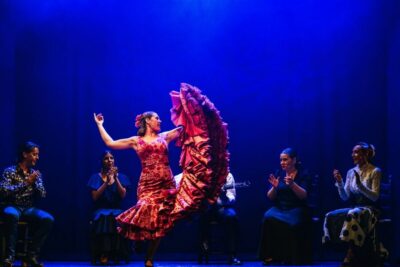
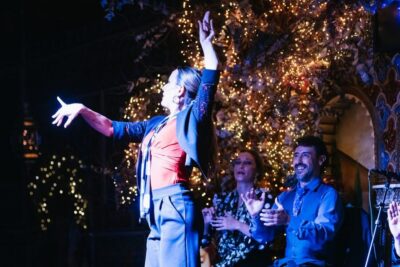
Live Flamenco Show with Food and Drinks Options
Read our review →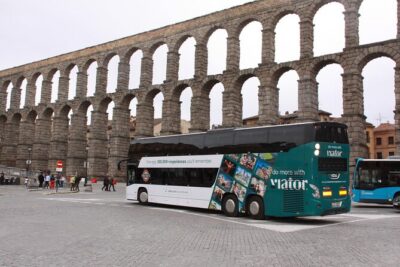
Avila & Segovia Tour with Tickets to Monuments from Madrid
Read our review →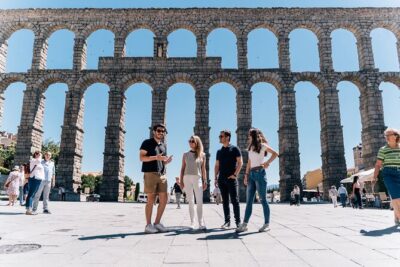
Three Cities in One Day: Segovia, Avila and Toledo from Madrid
Read our review →
Royal Palace Expert Guided Tour with Skip-the-Line
Read our review →Browse the lists this tour appears in