
Reviewed · MADRID TOURS
Escorial Monastery and the Valley of the Fallen from Madrid
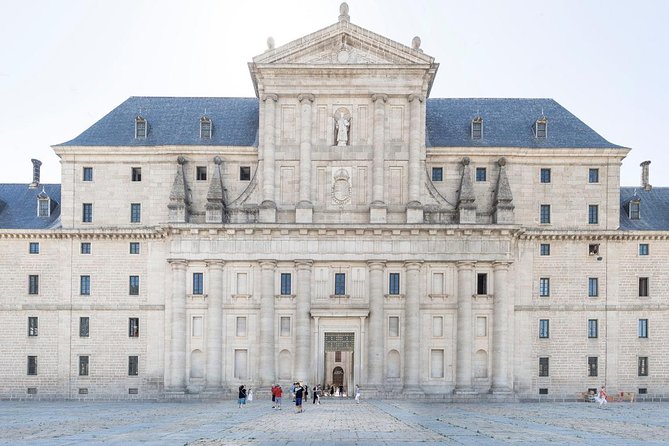
The most striking part of this morning outing is the contrast between El Escorial’s polished royal grandeur and the stark Valley of the Fallen, a mountain monument tied to Spain’s Civil War. In a few hours, you move from Habsburg tombs and painted ceilings to a basilica carved into rock.
I like the comfortable coach ride from central Madrid, and I like having an accredited guide explain a place as large and layered as El Escorial. The main caution is important: this is often a Spanish-English bilingual tour, and the Valley of the Fallen may not operate on every departure day. Check the exact option before paying.
In This Review
- Key points to know before booking
- Why El Escorial is worth the trip from Madrid
- Inside the monastery: tombs, chapels, and royal ceremony
- Allow enough time for the artwork
- The Valley of the Fallen and its enormous cross
- The biggest booking trap: not every departure includes both sites
- Transport, meeting point, and the shape of the morning
- Walking, stairs, and what to wear
- How good is the value at $79.30?
- Who should book this half-day outing?
- Should you book El Escorial and the Valley of the Fallen?
- FAQ
- Where does the tour begin?
- Where does the tour end?
- How long does the tour last?
- Is the Valley of the Fallen included on every departure?
- Is the tour conducted in English?
- Does the guide explain the Valley of the Fallen inside the basilica?
- Is lunch included?
- Is hotel pickup available?
- Is the tour suitable for people with reduced mobility?
Key points to know before booking
- El Escorial takes most of the visit: The monastery portion lasts about two and a half hours and includes the basilica, royal pantheon, palace rooms, library, and Chapter House.
- The Valley of the Fallen is not guaranteed every day: Several departures do not include the site, even though it appears in the tour name. Confirm the selected date and inclusions carefully.
- Expect a brisk walking tour: Stairs are numerous, accessibility is limited, and the pace may be difficult for anyone with reduced mobility.
- The tour may be bilingual: English commentary is offered, but Spanish can receive equal or greater attention. The guide’s accent and radio system also affect how easy the explanations are to follow.
- The Valley visit is short: When included, you generally have about an hour there, and closures or religious services can shorten the visit.
- The price is reasonable for transport and admissions: At $79.30 per person, the value depends on whether both monuments are open and how much you value guided context.
Why El Escorial is worth the trip from Madrid
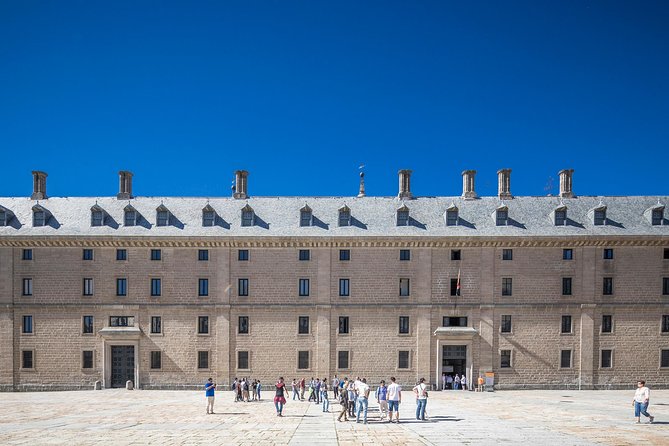
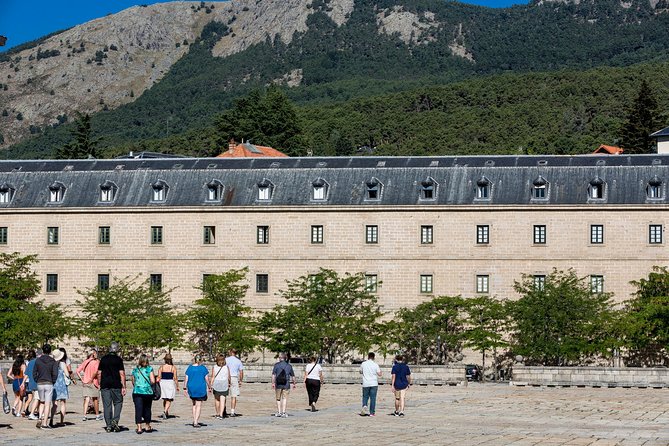
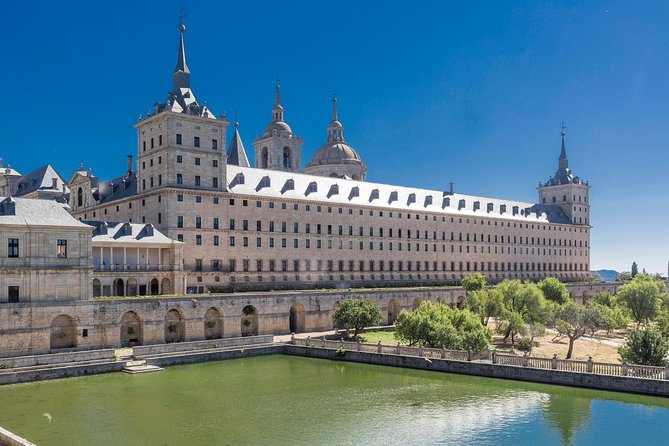
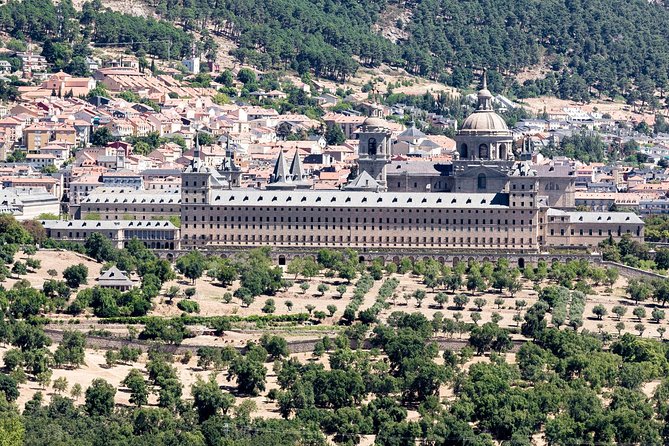
Madrid gives you royal palaces, grand boulevards, and famous art museums. El Escorial gives you a different view of Spanish power: a severe Renaissance complex built to serve as monastery, palace, mausoleum, library, and political statement.
The Royal Seat of San Lorenzo de El Escorial sits about 45 kilometers northwest of Madrid. The coach gets you there without the work of arranging separate transport, and the countryside outside the city adds a pleasant change of pace. The building itself was created in the 16th century, during the period when the Spanish monarchy had immense political and religious influence.
I find the place most interesting when you look past its size. El Escorial is not simply a beautiful palace. Its symmetry and disciplined design reflect the authority of the Habsburg court. The building feels organized around duty, faith, royal succession, and control.
Your guide takes you through the principal rooms rather than leaving you to wander a huge complex alone. That matters here. Without context, a sequence of chapels, tombs, halls, and painted ceilings can blur together.
Other Madrid days travellers weigh against this one:
- Madrid: Tour Bernabéu Entry Ticket
★ 4.5 · 21,573 reviews - Madrid: Prado Museum Entry Ticket
★ 4.6 · 17,509 reviews - Madrid: Royal Palace Fast-Access Admission Ticket
★ 4.6 · 13,856 reviews
Inside the monastery: tombs, chapels, and royal ceremony
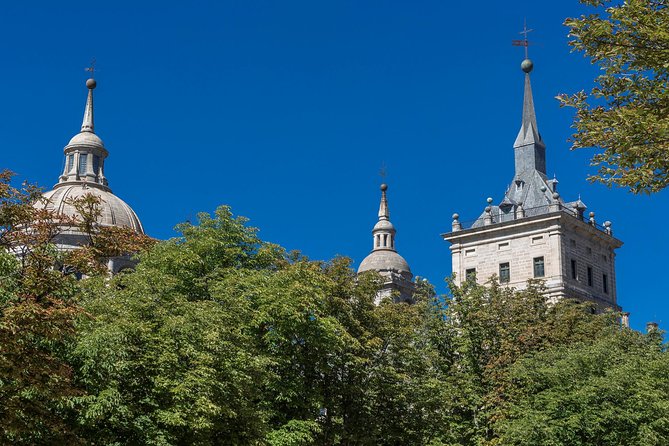
The basilica is one of the central sights. You see its Baroque dome and religious relics, along with the formal spaces connected to the monastery’s religious life. The architecture is grand but not lighthearted. This is a place built to impress and to remind you who held power.
The Pantheon of Kings is another major stop. The marble tomb of Charles V is among the most important royal memorials you see on the tour, and the pantheon explains why El Escorial was more than a residence. It was designed as a final resting place for Spain’s ruling family.
The Habsburg Palace adds a more personal side. Royal rooms are less about glitter than about the machinery of court life and the scale of the people who occupied them. You may find the contrast between the vast public spaces and more contained palace rooms especially revealing.
The Chapter House and the library bring different textures to the visit. The library is particularly memorable for its frescoes, while the Chapter House helps show how the religious community functioned within the larger royal complex. The Architects Room, with its collection of building tools and equipment, offers an unusual look at how a 16th-century project was planned and built.
I like that the tour includes this practical side of construction. It keeps El Escorial from becoming only a parade of famous names and grand rooms. The Weapons Room adds another change of mood, displaying arms that reflect the military world behind Spain’s imperial power.
Allow enough time for the artwork
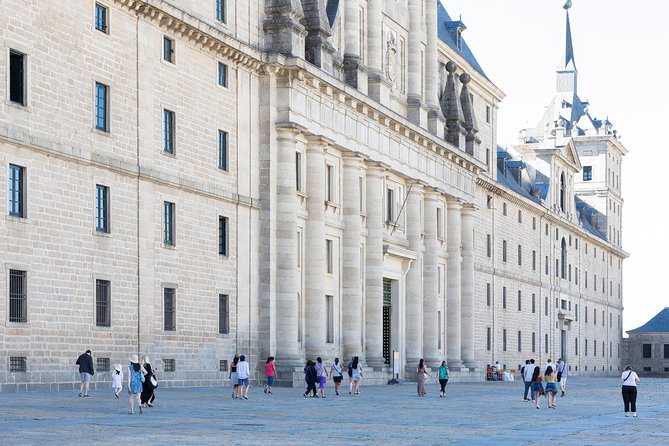
The chief weakness at El Escorial is time. Two hours and 30 minutes sounds generous, but the complex is large, the group may be close to 30 people, and the route includes stairs and regular movement between rooms.
You will see the main highlights, but you may not have much freedom to pause. If you want to study the paintings, ceiling frescoes, architectural details, and royal furnishings carefully, the schedule can feel tight. Groups sometimes gather in the same rooms, making it harder to find a quiet view of the artwork.
A guide such as Jorge, Susanna, María, or another member of the local team can add real value by explaining what you are seeing. The strongest guiding experiences combine clear historical explanation with practical organization, keeping the group together without rushing every person.
The quality of the spoken English is less predictable. Some guides have been praised for clear English and detailed explanations, while others have been difficult for English-only participants to understand. Since this is operated as a bilingual tour, you should not assume that every explanation will be delivered only in English.
The radio-guide system helps, but it cannot solve every problem. If the guide walks quickly or you fall behind, the audio range may become an issue. Stay close to the group, especially in crowded passages and stairways.
The Valley of the Fallen and its enormous cross
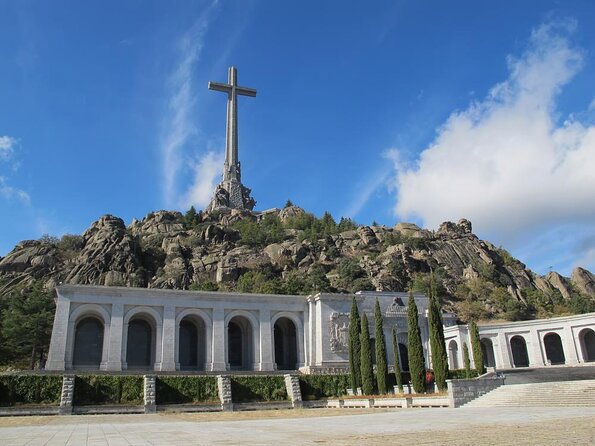
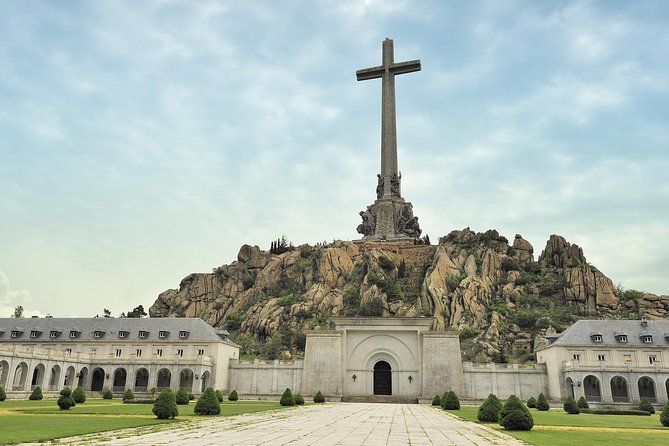
The Valley of the Fallen is about nine kilometers from El Escorial in the Sierra de Guadarrama. You can see the giant granite cross from a long way off. Its scale is the first thing that catches your attention, but the site carries a difficult political and historical meaning connected to those who died in the Spanish Civil War.
The monument includes an underground church cut into the mountain. Inside, the vaulted crypt contains sculpted angels and a large, solemn interior. From the arches, you can look across the surrounding countryside, giving the visit a very different feel from the enclosed ceremonial rooms at El Escorial.
The tour normally allows about one hour here. That is enough to see the basilica and understand the basic layout, but it is not generous. Some departures have had even less time because of a religious service or delays earlier in the day. If the Valley is the reason you are booking, confirm that the basilica will be open and that the selected departure includes the visit.
There is another practical point that is easy to miss. Regulations at the Valley prevent the guide from giving explanations inside the basilica. Your guide explains the monument outdoors, then you enter and look around on your own.
That arrangement is not necessarily bad. The interior is quiet and imposing, and a few minutes without a running commentary can help you take in the scale. Still, you should know that the guided part ends before you enter the most dramatic space.
A different way to spend the day, same corner of Spain:
- Madrid: “Emociones” Live Flamenco Performance
★ 4.8 · 12,866 reviews - Madrid: Panoramic Route City Tour
★ 4.1 · 12,259 reviews - Madrid: Live Flamenco Show with Food and Drinks Options
★ 4.5 · 9,901 reviews - Avila & Segovia Tour with Tickets to Monuments from Madrid
★ 5.0 · 9,762 reviews
The biggest booking trap: not every departure includes both sites
The tour title can make the itinerary look fixed, but the Valley of the Fallen is not included on some days. The supplied experiences specifically warn about departures on Tuesdays and Thursdays, and the wording can be easy to miss during checkout.
This has caused real disappointment for people who expected the full five-and-a-half-hour outing and instead visited El Escorial alone. On those departures, you may still see the Valley from a distance, but that is not the same as entering the basilica.
My advice is simple: do not rely on the tour title alone. Check the exact date, option, duration, and admission details before payment. If both monuments matter to you, contact Julià Travel before the 48-hour point and ask for written confirmation.
The full experience is listed at about five hours and 30 minutes, with an 8:30 a.m. start. A shorter El Escorial-only version may return to Madrid much earlier. That difference matters if this is your last day in Madrid or if you have afternoon plans.
Transport, meeting point, and the shape of the morning
The standard departure is from Julià Travel’s office at Calle de San Nicolás 15, near central Madrid. You should arrive 15 minutes early. The tour ends at Plaza de Oriente, not necessarily at the same place where you began.
The air-conditioned coach is one of the tour’s clear advantages. You avoid arranging transport to two separate locations, and the road time gives you a chance to rest between walking sections. The return route offers more countryside views before you arrive back in Madrid.
Hotel pickup and drop-off are available only with the private tour option. For the regular group departure, plan on reaching the central meeting point yourself. If you are requesting private pickup, you must provide your hotel or apartment information in advance. The operator asks for those details no later than 48 hours before departure and may cancel with fees if the information is missing.
The group limit is up to 30 people per guide. That is not a tiny group, and crowded rooms at El Escorial can make it harder to hear or see. The guide and driver still have to keep everyone together, so the pace is set for the group rather than for the slowest person.
Walking, stairs, and what to wear
This is not a coach tour where you step off, take a picture, and sit down again. You walk through the monuments, and El Escorial has a large number of stairs. Full accessibility cannot be guaranteed because of the building’s architectural features.
Wear shoes that you can manage on stairs and hard floors. Appropriate attire is required for the religious sites, so avoid beachwear or anything too casual for a basilica and monastery. Bring water, especially on a warm day, since time and access to refreshments at the monuments may be limited.
If you have walking difficulties or reduced mobility, I would be cautious about booking this particular outing. The tour description itself says it is not recommended in those circumstances. A private arrangement might offer more flexibility, but no promise is made that every part of the monument will be accessible.
The pace can also challenge older visitors or anyone who needs frequent rests. Stay near the guide and tell the tour leader early if you are having trouble keeping up. Guides such as Susanna and Jorge have been praised for helping people stay with the group, but the itinerary itself remains fairly tight.
How good is the value at $79.30?
At $79.30 per person, the price covers the coach, local guide, radio system, El Escorial admission, and, when included, entry to the Valley of the Fallen and its basilica. For a visitor who wants both sites in one morning without planning transport, that is a fair package.
The value drops if you receive only the El Escorial portion. You are still paying for admission, transport, and guiding at an important UNESCO World Heritage site, but the shorter visit may feel expensive if you specifically paid for the Valley as well.
The tour is also better value for a first visit than for someone who wants a slow, detailed study of the monastery. You pay for convenience and orientation. You do not get much free time, and you may not be able to linger over every painting or architectural detail.
Group discounts are available, and free cancellation is allowed up to 24 hours before the start time. That gives you some protection, but it does not remove the need to confirm the exact departure conditions before booking.
Who should book this half-day outing?
I would choose this tour if you want a practical introduction to two difficult-to-reach sights outside Madrid, prefer organized transport, and enjoy having the major rooms explained as you go.
It suits you especially well if:
- You have only one morning available.
- You want to see royal tombs and the basilica without arranging a separate trip.
- You are comfortable with stairs and a brisk pace.
- You can follow a bilingual guide.
- You are willing to confirm the Valley schedule before booking.
I would look for another option if you need a fully English-only tour, want plenty of time for photography and artwork, or have mobility concerns. A private tour may give you more control, but the supplied details do not promise that it will remove every access limitation.
Should you book El Escorial and the Valley of the Fallen?
Book it if both sites are open on your chosen date and you value efficient transport over a leisurely visit. El Escorial is the main event, with royal tombs, a remarkable library, frescoed ceilings, weapons, building tools, and a basilica gathered into one imposing complex.
The Valley of the Fallen adds emotional weight and visual drama, especially when you stand beneath the enormous cross and enter the mountain church. But it is the part most vulnerable to scheduling changes, services, and a short visit.
Before you commit, confirm three things: the Valley is included on your date, the tour is bilingual rather than English-only, and you can handle substantial walking and stairs. If those conditions suit you, this is a useful, well-organized way to reach two powerful monuments beyond Madrid. If not, El Escorial deserves a slower plan of its own.
FAQ
Where does the tour begin?
The standard tour begins at the Julià Travel office at C. de San Nicolás 15 in central Madrid. Check-in is requested 15 minutes before the 8:30 a.m. start.
Where does the tour end?
The regular tour ends at Plaza de Oriente in central Madrid. The listed end point is different from the standard starting office.
How long does the tour last?
The complete experience takes approximately five hours and 30 minutes. The exact length can change if the Valley of the Fallen is not included or if access to a monument is modified.
Is the Valley of the Fallen included on every departure?
No. The Valley is not included on some days, with Tuesday and Thursday specifically noted as days when it may not be visited. Confirm the exact option and date before booking.
Is the tour conducted in English?
The tour is operated bilingually in English and Spanish. English is offered, but the amount and clarity of English commentary can vary by guide.
Does the guide explain the Valley of the Fallen inside the basilica?
No. Regulations prevent the guide from giving explanations inside the basilica. The guide provides information outside, and you visit the interior on your own.
Is lunch included?
No. Lunch is not included in the tour price.
Is hotel pickup available?
Hotel pickup and drop-off are available if you select the private tour option. You must provide your hotel or apartment details in advance.
Is the tour suitable for people with reduced mobility?
The tour is not recommended for people with walking difficulties or reduced mobility. El Escorial has many stairs, and full accessibility cannot be guaranteed because of the monument’s design.
Recently reviewed around Madrid
- Tour Madrid: Secrets in a Electric Tuk Tuk★ 4.6 · 155 reviews
- Madrid: Don Quixote de la Mancha Windmills & Toledo Tour★ 4.9 · 254 reviews
- Tour Guiado En Tuk Tuk Recorre Avila De La Forma Mas Comoda★ 4.4 · 235 reviews
- Madrid: Guided Tour of Toledo with Cathedral Visit★ 4.3 · 399 reviews
- Madrid: Toledo Day Trip with Winery Visit and Wine Tasting★ 4.4 · 177 reviews
- Madrid: 6-Hour Day Trip to Toledo with Guided Walking Tour★ 4.0 · 865 reviews
- Madrid: Tasty Tapas Tour & Visit to a Terrace with Views★ 4.5 · 118 reviews
- Madrid: Flamenco Show&Drink at Tablao 1911 (World’s Oldest)★ 4.7 · 253 reviews
Madrid Tours, compared.

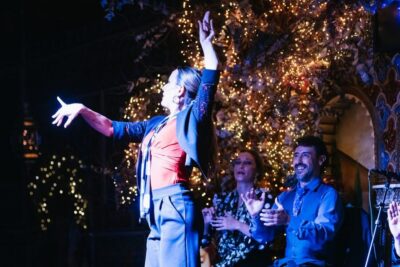
Live Flamenco Show with Food and Drinks Options
Read our review →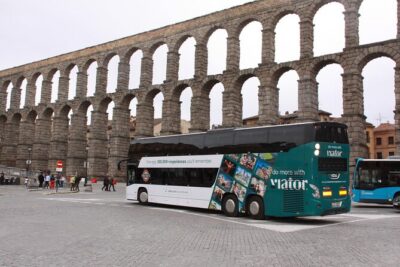
Avila & Segovia Tour with Tickets to Monuments from Madrid
Read our review →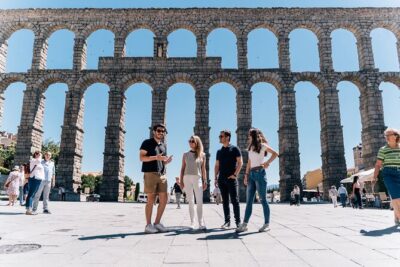
Three Cities in One Day: Segovia, Avila and Toledo from Madrid
Read our review →
Royal Palace Expert Guided Tour with Skip-the-Line
Read our review →Browse the lists this tour appears in