
Reviewed · SPAIN
Cuenca: Medieval Old Town
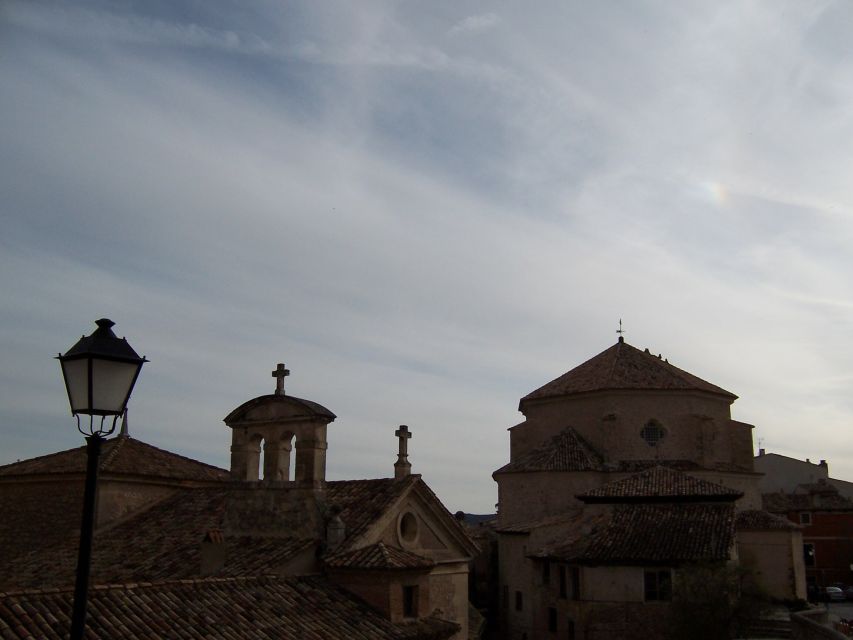
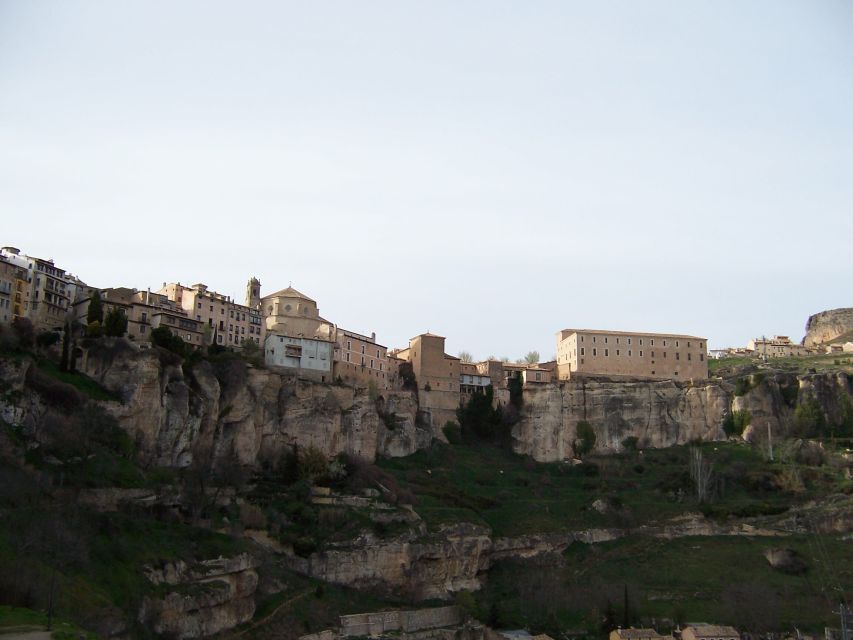
Cuenca’s old town sits on a rocky ridge above the Júcar and Huécar river gorges, where medieval buildings seem to cling to the edge of empty space. The strangest sight is the hanging architecture, including 16th-century apartment buildings that rise 12 stories high.
I like the small price and the way a local guide gives the steep streets a clear story. I also like the chance to see Cuenca’s views and monuments together, instead of wandering past them without knowing why they matter.
The main catch is simple: this is a Spanish-only tour, and the route is not suited to wheelchair users or people with serious mobility limits. One practical point also deserves attention: confirm with the guide whether the route includes the best bridge viewpoint near the hanging houses.
In This Review
- Key points to know before booking
- Starting below Cuenca City Hall
- Walking the narrow medieval streets
- Cuenca’s two dramatic river gorges
- The hanging houses and impossible architecture
- The 16th-century apartments rising 12 stories
- Churches, monuments, and the old town’s character
- How the two-hour format works for you
- Is $10 good value?
- Who will enjoy this Cuenca tour most?
- Practical tips for getting more from the walk
- Should you book this Cuenca old-town tour?
- FAQ
- How long does the Cuenca medieval old-town tour last?
- How much does the tour cost?
- What language is the tour conducted in?
- Where is the meeting point?
- Is hotel pickup included?
- What can I see on the tour?
- Is the tour suitable for wheelchair users?
- Can I cancel the booking?
Key points to know before booking
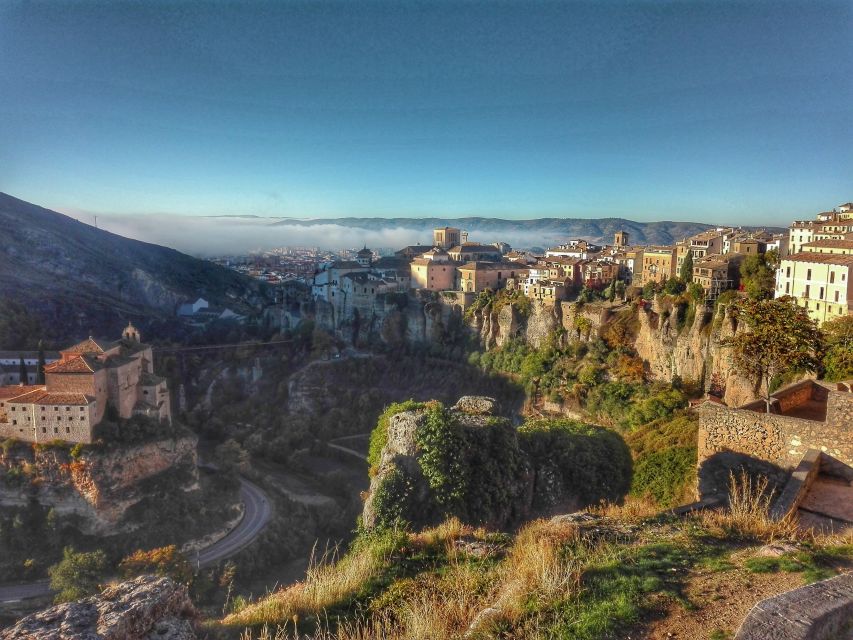
- Cuenca’s hanging buildings: See the remarkable houses built along the rock face above the gorges.
- Two-hour walking tour: The schedule is long enough for the main old-town sights without taking your whole day.
- Spanish-speaking guides: Guides including Ángela and Raúl are known for friendly, engaging presentations.
- 12-story medieval apartments: Look for the unusual 16th-century buildings described as Europe’s highest apartments.
- $10 per person: A low-cost way to add structure and local context to a visit to Cuenca.
- Meeting point below City Hall: Find the group beside the tourist office, with guides wearing red uniforms.
Starting below Cuenca City Hall
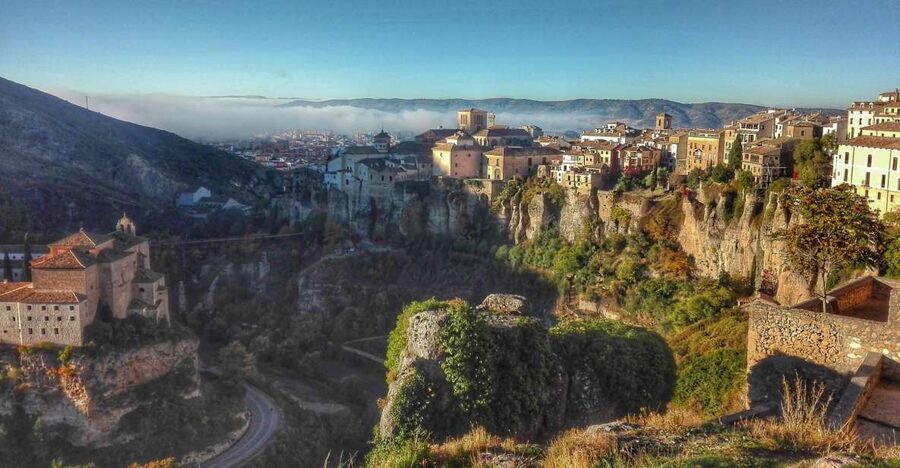
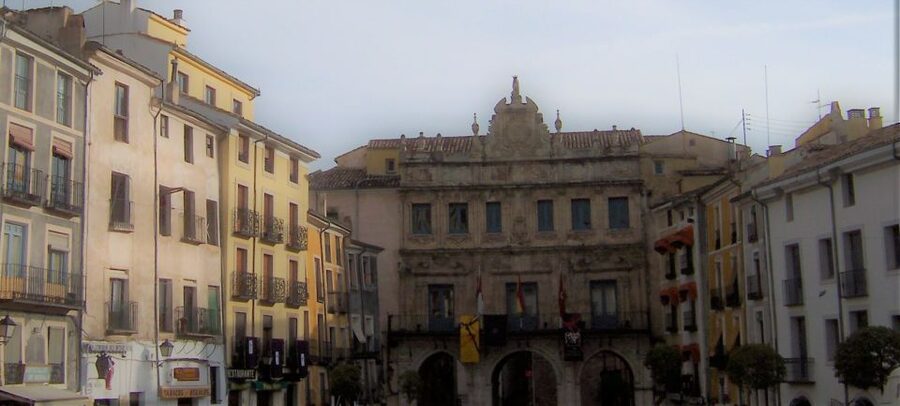
The tour begins just below the arches of Cuenca City Hall, next to the tourist office. Look for the guide in a red uniform, and arrive at least five minutes early.
This is a good meeting point because Cuenca’s old town can feel confusing at first. The narrow streets, steep slopes, and historic buildings do not follow a tidy modern grid. Meeting beneath a recognizable civic building keeps the start simple, especially if you have only a short time in town.
There is no hotel pickup. You need to make your own way to the meeting point, so allow extra time if you are arriving from outside the old town. The tour is designed as a walking visit, not a sightseeing ride.
The guide leads in Spanish. That matters more here than it might on a simple photo walk because the value comes from the explanations of the monuments, local life, and unusual construction. If your Spanish is limited, you can still enjoy the scenery, but you will miss much of the historical detail.
Other Spain days travellers weigh against this one:
- Barcelona: Sagrada Familia Entry Ticket with Audio Guide
★ 4.6 · 105,312 reviews - Barcelona: Park Güell Admission Ticket
★ 4.4 · 76,534 reviews - Seville: Royal Alcázar Entry Ticket
★ 4.6 · 28,378 reviews
Walking the narrow medieval streets
Cuenca rewards slow walking. The old town is compact in feel, but its streets rise and fall across a natural rock formation. The route takes you through lanes that help explain how the city developed in a defensive position above the rivers.
I like guided walks in places such as this because the best details are often easy to miss. A doorway, church wall, old apartment block, or sudden opening toward the gorge can look like part of a general medieval scene unless someone points out its purpose.
The guide also gives you a sense of local life. This is not only a parade of grand monuments. You get the feel of a living old town, where daily streets and historic buildings share the same tight space.
The walking pace may include stops for stories and explanations. That can be a plus if you want context, but it may feel slow if you prefer to cover ground quickly. One participant found that too much time was spent standing still and felt the tour could have been shorter. Keep that in mind if you prefer a brisk route with fewer pauses.
Cuenca’s two dramatic river gorges
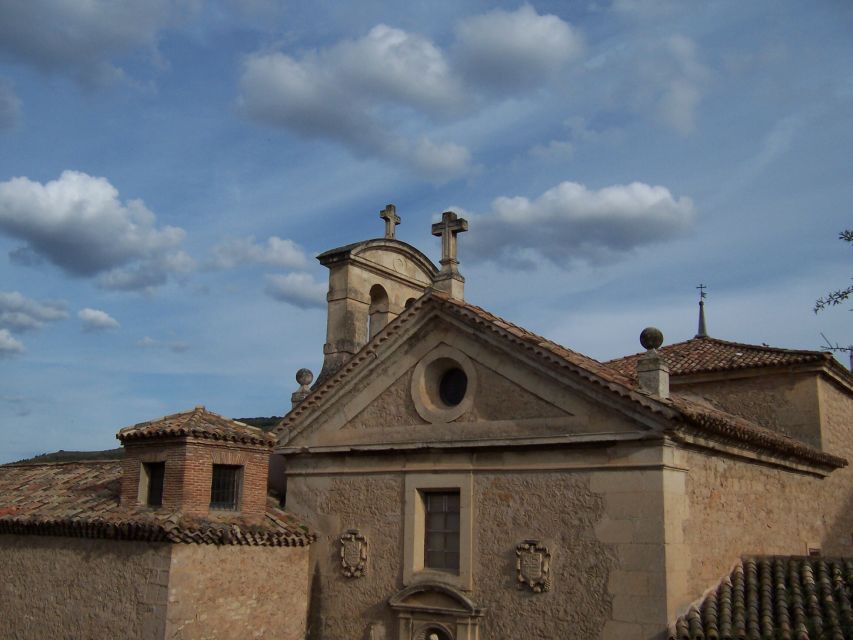
The city’s setting is the real star. Cuenca sits above the deep gorges of the Júcar and Huécar rivers, and the old town’s rock position gives you sudden views into the cuts below.
These are not flat-city vistas. The ground drops sharply, and the buildings appear to press toward the cliff edges. The effect explains Cuenca’s nickname, the Eagle’s Nest, better than any postcard description could.
Your guide points out the most useful viewing places during the walk, but do not treat the tour as a nonstop photo stop. The route mixes streets, buildings, and viewpoints. You may need to pause and look carefully through gaps between houses to appreciate how high the old town sits above the rivers.
Bring shoes with a steady grip. The activity data specifically excludes people with mobility impairments and wheelchair users, and the setting explains why. Even if you walk comfortably, the combination of slopes, narrow streets, and uneven historic surfaces can make the outing more tiring than the two-hour duration suggests.
The hanging houses and impossible architecture
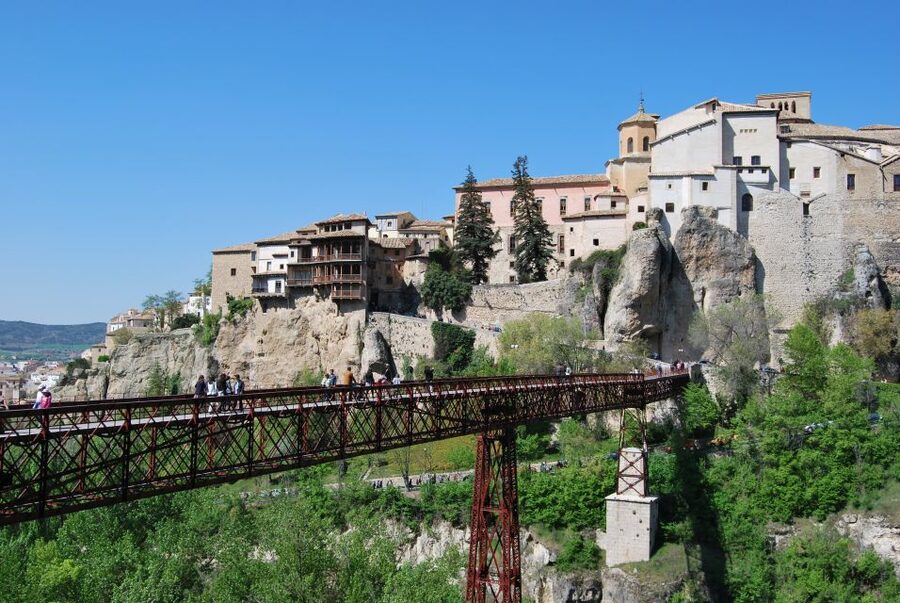
Cuenca’s hanging houses are the sight most people come to see. Built along the edge of the gorge, these structures appear to project over the drop below. Their design looks almost unreasonable until you understand that the city grew wherever the rock allowed it.
The best part of seeing them with a guide is learning to look at the buildings as more than a strange photo background. Their position shows how the city used its natural setting. The cliff was a barrier, a viewpoint, and a place to build.
The buildings also reveal a sharp contrast between medieval construction and modern expectations. From some angles, the houses look as if they are balanced on the rock rather than fixed into it. That visual surprise is what makes Cuenca different from a standard old-town walk.
You should ask about the exact route around the hanging houses and the nearby bridge viewpoint. A concern raised during the experience was that the group saw the houses but did not cross the bridge for the most attractive old-town view. The guide may handle the route differently, but it is sensible to clarify this at the start if the bridge view is important to you.
A different way to spend the day, same corner of Spain:
- Barcelona: Casa Batlló Entry with Self-Audioguide Tour
★ 4.7 · 25,359 reviews - Seville: Cathedral and La Giralda Entry Ticket
★ 4.5 · 24,592 reviews - Madrid: Tour Bernabéu Entry Ticket
★ 4.5 · 21,573 reviews - Barcelona: 24 or 48-Hour Hop-On Hop-Off Bus Tour
★ 4.4 · 20,872 reviews
The 16th-century apartments rising 12 stories
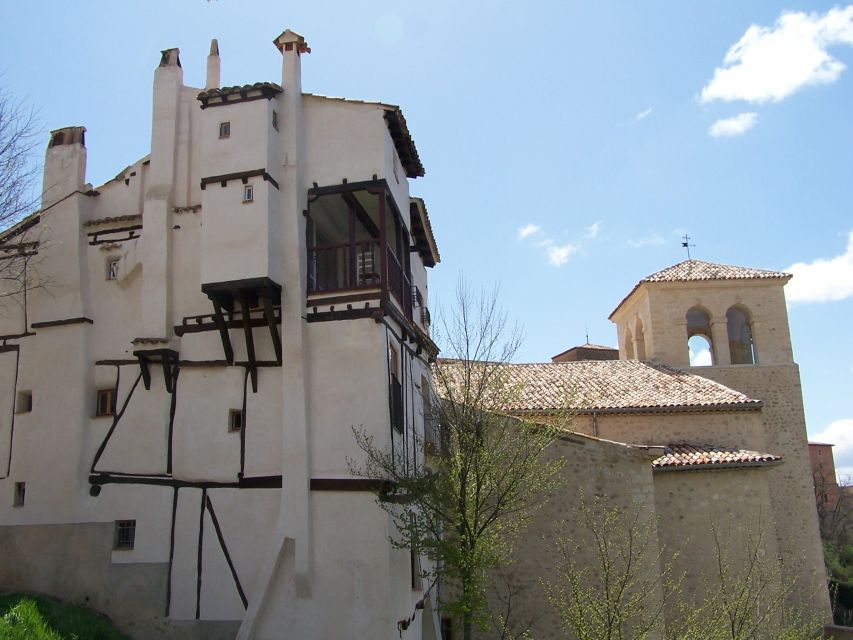
One of the tour’s most unusual details is the mention of Cuenca’s 16th-century apartments reaching 12 stories. They are described as the highest apartments in Europe, an astonishing claim that gives you a reason to look upward as well as outward toward the gorge.
In a city built on a steep rock ridge, height was not just a sign of ambition. It was a practical response to limited building space. Houses could extend vertically along the slope, producing a city that feels taller and more dramatic than its footprint suggests.
This is the kind of fact that makes a short guided walk worthwhile. You might notice the narrow fronts and stacked levels on your own, but the guide supplies the detail that turns an odd-looking building into a memorable part of Cuenca’s story.
The tour information does not identify the apartment buildings by name or give an interior visit. Expect to view and discuss the architecture from the streets rather than enter a private residence.
Churches, monuments, and the old town’s character
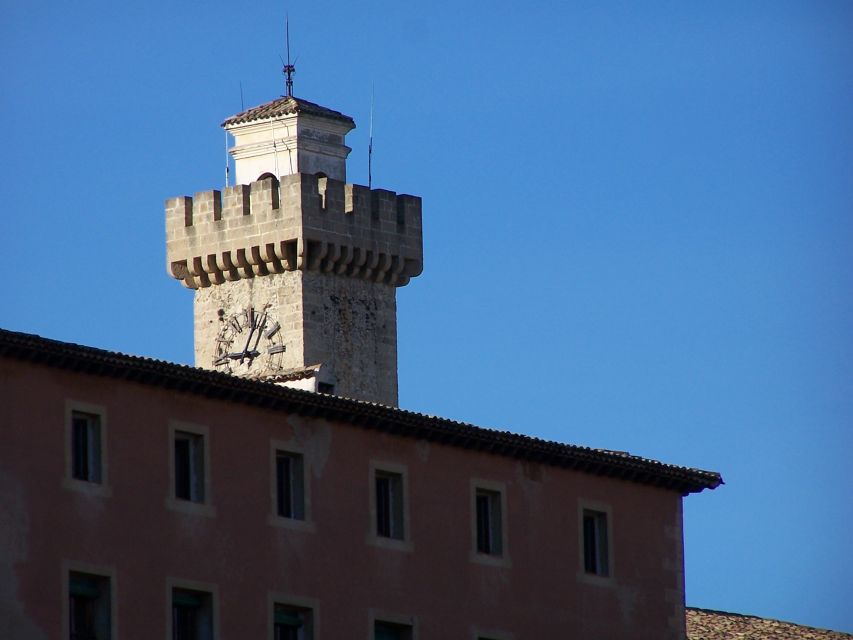
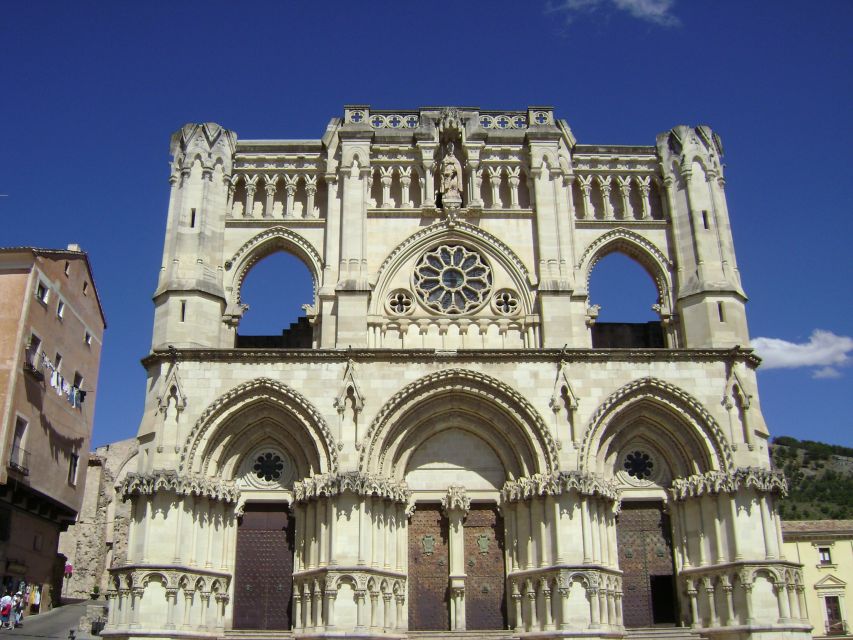
Cuenca’s old town is more than its cliffside houses. The walk also introduces the main monuments and ecclesiastical architecture, helping you connect the city’s religious buildings with its medieval street plan.
The tour focuses on the secrets and stories of the main sights rather than offering a long museum visit. That makes the two-hour format useful for first-time visitors who want orientation before choosing what to explore on their own.
A guide can also help you understand the contrast between the grand churches and the plain, narrow lanes around them. Cuenca’s old town does not present its history in one neat block. You move between impressive religious architecture, tight residential streets, and open views into the gorges.
The tone may vary by guide. Ángela is described as professional, kind, and able to handle a family group with a one-year-old in a stroller. Raúl is praised for connecting with different people in a large group and for being willing to move through Cuenca’s pretty streets with energy. Another guide is described as detailed and funny, with a dry sense of humor.
Those comments suggest a personal style rather than a fixed script. You may get a more formal explanation, a more humorous presentation, or a mix of both. The common thread is a local guide leading in Spanish.
How the two-hour format works for you
Two hours is a sensible length for a first look at Cuenca. You get enough time to walk through the old town, hear the main stories, and see the signature architecture without committing to a full day.
The format is best for travelers who want an introduction, not exhaustive access to every monument. You will likely finish with a better sense of where the hanging houses, river views, and important old-town buildings fit together. You can then decide which places deserve a longer return visit.
The tradeoff is that guided walking tours work at the group’s pace. Stops may last longer than you would choose, particularly when the guide tells local stories. Some people enjoy this human side of the experience. Others would rather take photos and keep moving.
If you have a strict schedule, plan your next activity with a little breathing room. The listed duration is two hours, but groups may move at slightly different speeds. You should also arrive early because the guide needs to gather the group near the City Hall arches.
Is $10 good value?
At $10 per person, this is an inexpensive way to get a structured introduction to one of Spain’s most unusual old towns. The price covers the local guide, and the tour combines views, architecture, history, and orientation in a single outing.
The value is strongest if you do not speak enough Spanish to confidently research the old town in advance, or if you want a local voice to explain why the buildings were built where they were. It is also useful for a short visit, when you need to make your sightseeing time count.
The value drops if you already know Cuenca well or prefer exploring alone. You can walk many old-town streets without a guide, and some of the best viewpoints may require you to stray from the group’s route. At this price, though, the risk is small.
The cancellation policy also reduces the commitment. You can cancel up to 24 hours before the start for a full refund, and you can reserve now while paying later. These terms are useful when your plans around Cuenca are not yet fixed.
Who will enjoy this Cuenca tour most?
I would choose this walk if you want a clear first introduction to the city and understand Spanish well enough to follow a live guide. It suits couples, families with older children, and visitors who enjoy architecture more when someone explains the odd details.
It can also work for families with a stroller, based on the reported experience of a one-year-old joining the tour without trouble. Still, the official conditions say the activity is not suitable for people with mobility impairments or wheelchair users, so do not assume that one successful stroller outing means the route is easy for everyone.
This is less suitable if you need English, French, German, or another language. The tour is conducted only in Spanish. It is also not the best fit if you dislike group walks, frequent stops, or stories that go beyond the bare facts.
If your main goal is a single perfect photograph from the bridge, confirm that point with the guide before setting off. The hanging houses are included in the subject of the walk, but the bridge crossing should not be taken for granted.
Practical tips for getting more from the walk
Wear comfortable shoes with good grip. Cuenca’s setting on a rock above two gorges means that the route includes slopes and historic streets, even though the activity lasts only two hours.
Arrive five minutes early at the City Hall arches. Look beside the tourist office for the red-uniformed guide. This small detail saves you from wandering through the old town trying to spot a group.
Keep your attention on the buildings above you. The 12-story apartment detail is easy to miss if you look only at the river views or the famous houses. Cuenca’s architecture makes the most sense when you look both down into the gorges and up along the rock face.
If you want the bridge view, ask at the beginning. That lets you understand the route and decide whether you need time afterward to cross on your own.
Finally, treat the Spanish language as part of the booking decision, not a minor footnote. The guide’s humor and local stories are part of the appeal, but they only help if you can follow them.
Should you book this Cuenca old-town tour?
Book it if you want a low-cost, two-hour introduction to Cuenca’s medieval center, dramatic river gorges, and hanging houses, and you can follow Spanish. The city’s strange vertical architecture is much easier to understand with a local guide, and the price is modest enough to make this a sensible first activity.
Skip it if you need an accessible route, a non-Spanish guide, or complete control over your pace. If you do book, arrive early, wear sturdy shoes, and ask whether the route crosses the bridge near the hanging houses. Those simple steps will help you get the most from this compact tour.
FAQ
How long does the Cuenca medieval old-town tour last?
The tour lasts two hours.
How much does the tour cost?
The price is $10 per person.
What language is the tour conducted in?
The tour is conducted only in Spanish with a live Spanish-speaking guide.
Where is the meeting point?
Meet just below the arches of Cuenca City Hall, next to the tourist office. The guides wear red uniforms.
Is hotel pickup included?
No. Pickup service is not included, so you need to reach the City Hall meeting point yourself.
What can I see on the tour?
The walk covers Cuenca’s narrow old-town streets, views of the Júcar and Huécar river gorges, the hanging houses, main monuments, ecclesiastical architecture, and unusual 16th-century apartments described as 12 stories tall.
Is the tour suitable for wheelchair users?
No. The activity is not suitable for wheelchair users or people with mobility impairments.
Can I cancel the booking?
Yes. You can cancel up to 24 hours before the scheduled start for a full refund. You can also reserve now and pay later.
Recently reviewed around Spain
- Granada: Alhambra Guided Tour including Nasrid Palaces★ 5.0 · 351 reviews
- Alhambra with Nazaries Palaces Private Tour★ 5.0 · 605 reviews
- Granada: 3-hour Historical Tour by Segway★ 5.0 · 104 reviews
- Private Tour to The Alhambra with Nasrid Palaces in Granada★ 5.0 · 192 reviews
- Flamenco Show Ticket at tablao Jardines de Zoraya Granada★ 4.5 · 162 reviews
- Flamenco show at Cueva Los Amayas, in Sacromonte★ 4.5 · 140 reviews
- Flamenco Show in a Cave Restaurant in Granada★ 4.5 · 659 reviews
- Zooming Through Granada: A Fun-Filled Electric Bike Tour★ 4.5 · 201 reviews