
Reviewed · CORDOBA TOURS
Cordoba: Equestrian Show General Entry
The Andalusian horse takes center stage at Córdoba’s Royal Stables, where classical dressage, cowboy riding, and Alta Escuela movements meet live flamenco. I like the setting as much as the performance: this sixteenth-century building gives the show a genuine Córdoba feel rather than the atmosphere of a modern theater.
I also like the close connection between horse and rider, plus the unusual pairing of a trained horse with a flamenco dancer. The main drawback is practical: general seating can mean hard, backless stone benches, and the no-camera rule is strict.
In This Review
- Key points to know before you book
- Why the Royal Stables make the show special
- What the 70-minute performance includes
- The horses and the bond with their riders
- Flamenco adds more than decoration
- Arriving, collecting tickets, and finding your seat
- General entry versus premium seating
- The pre-show stable and training opportunity
- The no-camera rule
- Who will enjoy this most
- How it fits into a Córdoba evening
- My verdict on value
- Should you book the Córdoba Equestrian Show?
- FAQ
- How long does the Córdoba Equestrian Show last?
- How much does general entry cost?
- What types of riding are included?
- Is flamenco part of the performance?
- Can I take photos or record video?
- Is the experience wheelchair accessible?
- Can I cancel my booking?
Key points to know before you book
- Sixteenth-century setting: The Royal Stables place the performance in one of Córdoba’s most atmospheric historic buildings.
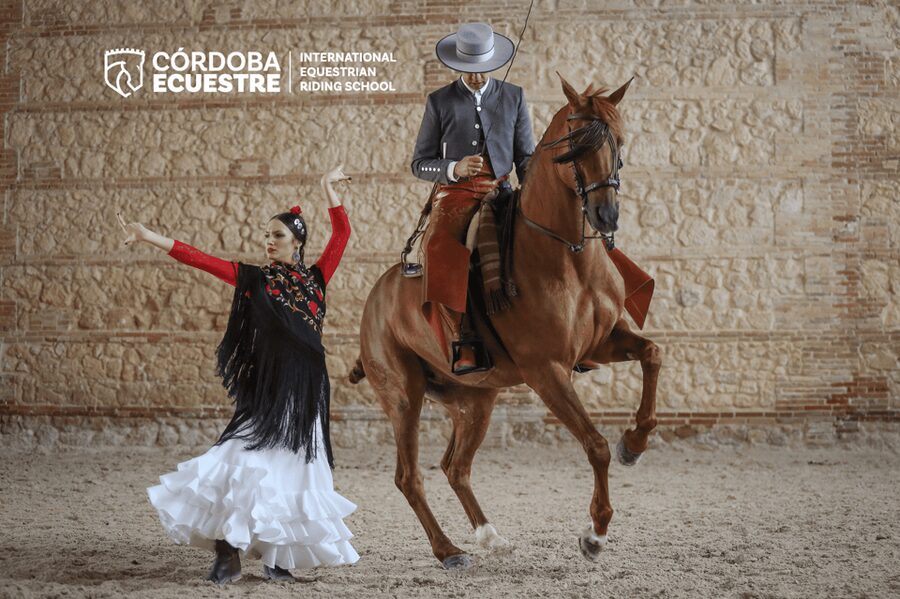
- Three riding traditions: Expect classical dressage, vaquera riding, and Alta Escuela, or high-school dressage.
- Flamenco with horses: A dancer works alongside the horses and riders, adding music, movement, and Andalusian character.
- About 70 minutes: The show is long enough to feel substantial but short enough to fit into a busy Córdoba evening.
- General seating matters: Premium seating offers a designated place, while standard benches may be hard and have no backs.
- No photos or video: Put your camera away before the performance begins. You may miss a picture, but the rule helps keep the arena calm.
Why the Royal Stables make the show special
I would not treat this as just another evening performance. The building is part of the experience.
The Royal Stables were created in the sixteenth century for a royal equestrian purpose, and the architecture gives the show its strongest sense of place. Stone arches, warm lighting, and the enclosed arena create a traditional setting for horses bred and trained in Andalusia.
That matters because the show is closely tied to Córdoba’s horse culture. The Andalusian horse is not presented as a random circus animal performing tricks. The focus is on posture, obedience, controlled movement, and the long partnership between horse and rider.
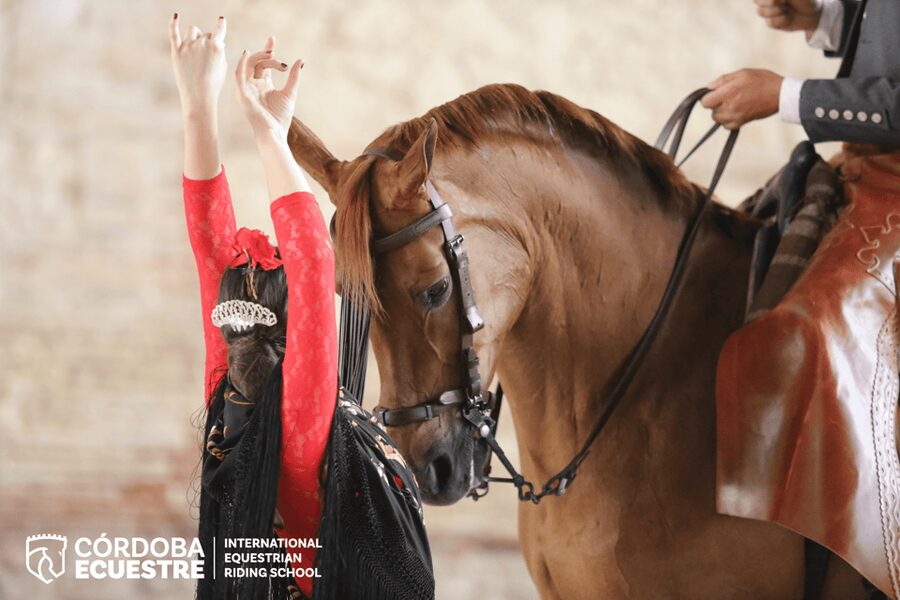
You sit close enough to see the horses’ heads, footwork, and the riders’ precise signals. The arena is arranged so that the action is easy to follow, and even seats toward the rear generally provide a full view. If you care about the details of riding, choose a seat with a clear sightline to the center of the arena.
The building also gives the evening a more local character than a standard stage show. You are watching an art form connected to Spain’s history, not simply adding a horse act to a flamenco program.
More Cordoba trips worth a second look
- Córdoba: Flamenco Show Ticket with Drinks
★ 4.8 · 948 reviews - Equestrian Show Royal Stables of Córdoba
★ 4.0 · 241 reviews - Cordoba Flamenco Show at Tablao El Cardenal with a Drink
★ 4.5 · 210 reviews
What the 70-minute performance includes
The show moves through several forms of equestrian skill. Exact order can vary, but you can expect a blend of classical dressage, vaquera riding, Alta Escuela, and flamenco.
Classical dressage emphasizes control and balance. The horse responds to small movements from the rider, changes pace, and performs carefully trained steps. To a casual viewer, some of this may look effortless. That is the point. The difficulty lies in making a complicated movement appear calm and natural.
Vaquera riding comes from the working traditions of Spanish cattle country. The equipment and riding style have a more practical, rural character than formal dressage. I find this part useful because it shows another side of Andalusian horsemanship, one linked to field work rather than only to the show ring.
Alta Escuela, translated as high-school dressage, brings more advanced movements. The horse may lift its legs high, shift weight with control, or perform movements that require years of training. You do not need to know dressage terminology to enjoy it, but horse riders will notice how much strength and timing sit behind each sequence.
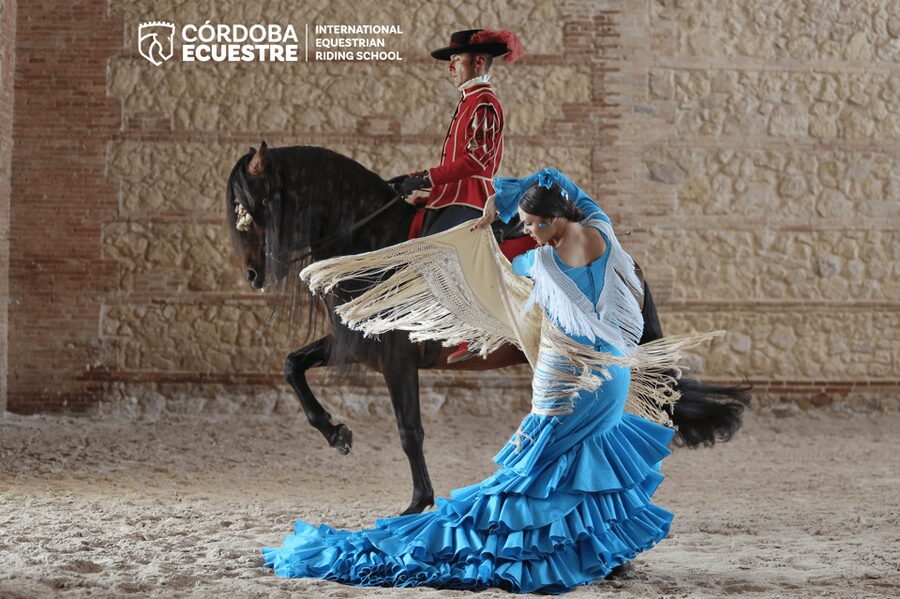
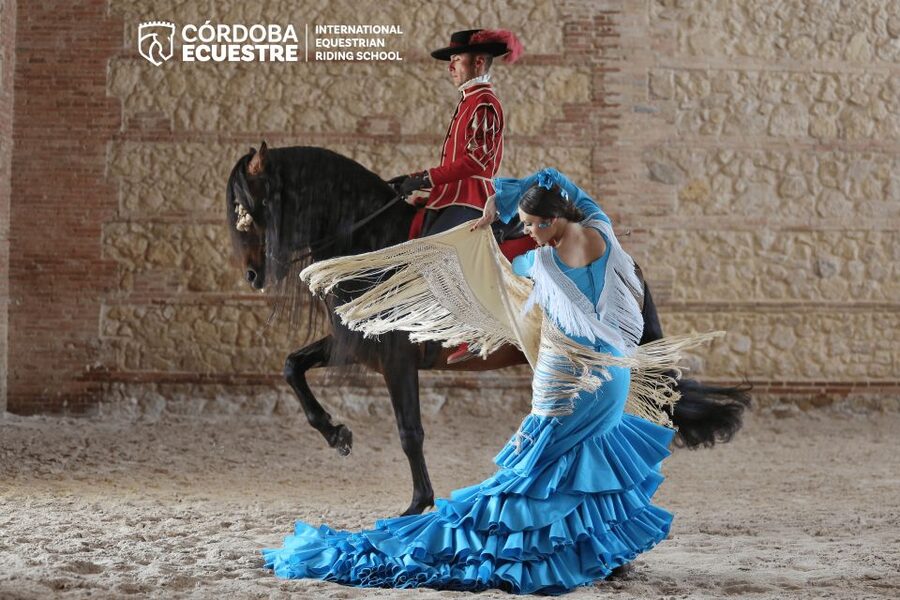
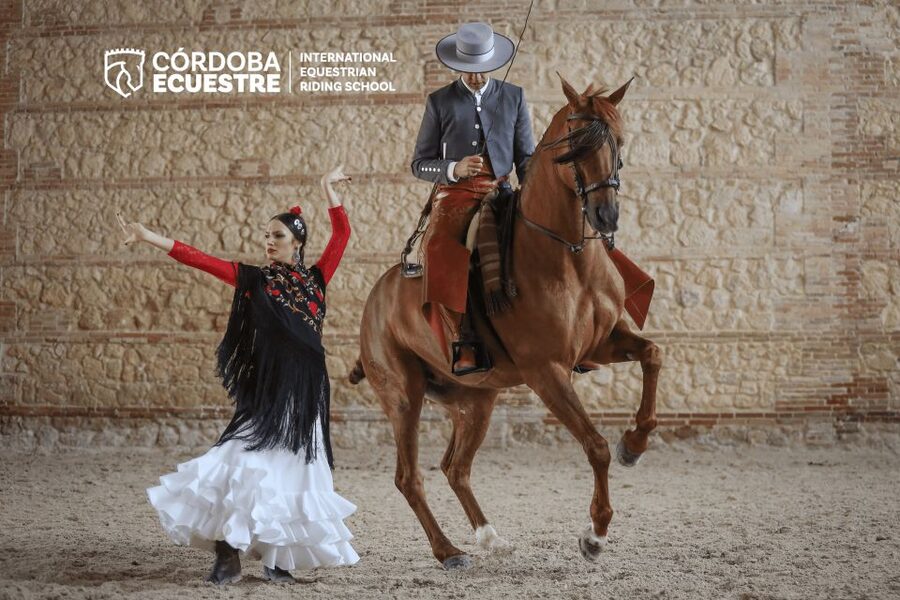
The flamenco dancer changes the mood. Instead of keeping horses and dancers in separate sections, the show brings them together. The dancer’s footwork, posture, and dramatic arm movements contrast with the horse’s controlled steps. One of the most memorable moments can be watching the dancer and horse move in the same space, each following a different kind of rhythm.
The combination works because both traditions depend on timing and body control. Flamenco has its sharp stops and musical accents. Dressage has its measured cadence and exact cues. The show uses that shared sense of rhythm to connect two famous parts of Andalusian culture.
The horses and the bond with their riders
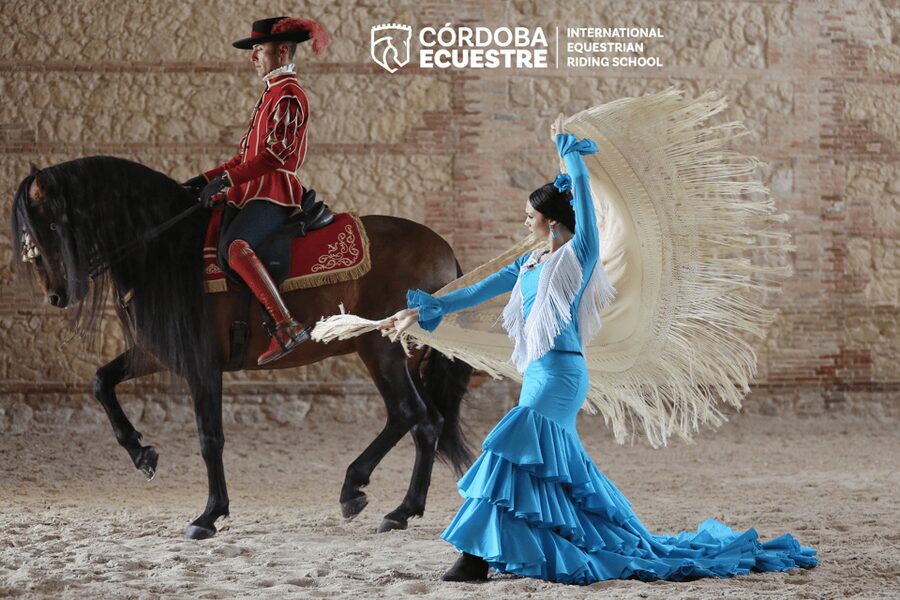
The horses are the main reason to book this experience. They are graceful, muscular, and trained for an unusually high level of responsiveness.
You will see riders working with very small signals. A shift in posture, a change in the reins, or a movement of the legs can guide the horse into a new step. The best sequences look like a conversation rather than a command.
That partnership is especially clear when the rider and horse change direction or pace together. The horse’s head stays composed, the rider remains balanced, and the movement appears smooth. If you ride yourself, you will understand how hard it is to make this look easy.
The program may also include moments where riders dismount and ask horses to rear or perform more dramatic actions. These displays are exciting for some people, but they are not for everyone. I found the more controlled dressage sections more elegant, and some viewers may feel uneasy if a horse appears nervous during a trick sequence.
That is a fair point to consider before booking. This is a trained equestrian show, not a quiet stable visit. The performance highlights discipline and spectacle, and the most theatrical moments may not appeal to visitors who prefer to see horses only in natural settings.
Flamenco adds more than decoration
The flamenco element is not an afterthought. It gives the show its strongest cultural identity.
A dancer accompanies the horse and rider, creating a visual exchange between human movement and equestrian movement. The dancer’s gestures are larger and more expressive, while the horse’s work is measured and exact. The contrast keeps the performance from feeling like a technical riding demonstration.
I especially like the moments when the dancer appears to respond to the horse’s movement. The result is dramatic without requiring a plot or spoken explanation. You can simply watch the rhythm build between the arena floor, the rider, the horse, and the dancer.
This also makes the show a good choice if someone in your group is not especially interested in horses. The flamenco adds music, costume, movement, and atmosphere. You still need to appreciate a performance built around riding, but you do not need to be an equestrian to enjoy the evening.
The program feels most successful when it lets both traditions share the stage. If you are expecting a full flamenco performance with a short horse appearance, this is not that. The horses remain the focus for most of the 70 minutes.
A different way to spend the day, same corner of Spain:
- Córdoba: Skip-the-Ticket-Line Mosque-Cathedral Guided Tour
★ 4.6 · 9,634 reviews - Cordoba Mosque-Cathedral: Skip-the-Line Guided Tour
★ 4.7 · 6,610 reviews - Córdoba: Jewish Quarter, Mosque, and Alcázar Tour
★ 4.7 · 4,279 reviews - Cordoba: Mosque-Cathedral E-Ticket with Audio Guide
★ 4.1 · 2,124 reviews
Arriving, collecting tickets, and finding your seat
The Royal Stables are in Córdoba’s historic center, so plan your route before show time. Driving close to the venue may be frustrating because of narrow streets and limited parking. Parking across the river and walking a few minutes is a more practical approach if you have a car.
Online tickets do not always tell you everything you need to know about entry. If you book through a third party, you may need to collect or confirm your ticket at the venue. One useful detail is that third-party ticket holders may need to use the right-hand queue because the digital ticket does not show a seat number.
Give yourself time to sort this out. The entry process can feel disorganized when several queues form, though staff are generally efficient once you reach the entrance.
If there is a long line outside, you may prefer to collect your ticket first and then wait at the nearby tavern across from the entrance. This is especially sensible on a hot Córdoba evening. You can have a drink and avoid standing in the sun until the doors open, but remember that drinks are not allowed inside the show.
Seating is allocated for many bookings, so do not assume you need to rush forward to claim the best place. Check the details of your ticket. Premium admission includes a designated seat and is worth considering if comfort and viewing position matter to you.
General seating can be the weak point. Some places are hard stone plinths or benches without backs. The view is usually good, but a 70-minute performance feels longer when you cannot lean back.
General entry versus premium seating
At $21 per person, general entry is a reasonable price for a 70-minute performance in a historic Córdoba venue. You are paying for a specialized show, trained horses, riders, dancers, and the setting, not just admission to a short tourist presentation.
I would choose general entry if you are mainly interested in seeing the performance and want to keep costs low. The arena is arranged for visibility, and the show is close enough that you can follow the horses from many parts of the seating area.
I would pay more for premium seating if available and if you care about comfort. A designated seat can remove the uncertainty of the queue and improve your view. It may also be a better choice for anyone with back trouble, since the basic seats can be hard and backless.
The standard ticket includes access to a free audioguide. Use it if you want more context about the building and the equestrian tradition, though do not expect the main performance to become a full lesson in horse care or rider training.
A small point worth noting: the show may be large and polished enough to surprise you. This is not a tiny demonstration in a stable yard. The venue can accommodate a sizable audience, while the performance still keeps the horses close enough to observe clearly.
The pre-show stable and training opportunity
Some ticket holders receive information about visiting the stables before the show. This can offer a look at the horses and training before the formal performance begins.
I would take that chance if it is available to you. Seeing the horses before they enter the arena gives useful context. You can notice their size, calm handling, and preparation without the pressure of a choreographed sequence.
This is also the better time for photographs if photography is permitted in the training area. During the show, cameras, photography, and video recording are not allowed. Do not count on taking a final picture inside the arena, since there may be no formal photo opportunity afterward.
The pre-show visit does not replace an explanation from a horse specialist. The experience would be stronger with more personal information about each horse, its training, and the background of the riders. If you are curious, listen to the audioguide and ask staff what information is available before the performance begins.
The no-camera rule
You must leave cameras, drinks, photography, and video recording out of the show. Phones should stay away too if you are tempted to film.
This disappoints some people, especially because the horse and flamenco sequences are highly visual. Still, the restriction has a reasonable purpose. Flash and sudden movement can distract horses, and a quiet audience helps protect the concentration needed for advanced riding.
You will need to accept that this is a watch-and-remember experience. If you want photographs, check whether the pre-show training visit allows them, and take pictures before the arena performance begins.
The rule also improves the atmosphere. You are not watching through a forest of raised phones, and the room stays focused on the horses and performers.
Who will enjoy this most
I would recommend the show most strongly to:
- Horse riders who appreciate dressage, training, and rider-horse communication
- Visitors who want a distinctly Andalusian evening activity
- Flamenco fans looking for a different setting for dance
- Families and mixed groups, since the visual action is easy to follow
- Visitors who want a short performance that fits around Córdoba sightseeing
You do not need prior horse knowledge. The movements are impressive even if you cannot name them. But the show will have greater meaning if you take a moment to understand the difference between classical dressage, vaquera riding, and Alta Escuela.
I would hesitate only if you dislike staged animal performances or expect a relaxed, informal stable visit. The program includes theatrical riding, and some of the trick sections may feel less comfortable than the formal dressage work.
It is also not ideal for anyone who needs a padded seat unless you choose a more comfortable seating category. Wheelchair access is available, but check your booking details because the meeting point can vary by option.
How it fits into a Córdoba evening
The 70-minute length makes this easy to add after a day in the historic center. You do not need to give up an entire evening, and the Royal Stables are close to Córdoba’s central sights.
I would avoid scheduling it so tightly that you arrive at the last minute. Ticket collection, queues, and the walk from parking can all take longer than expected. Arriving early also gives you time to look at the building and, if offered, see the horses before the show.
Afterward, you are well placed to continue your evening in the center. The performance has a clear beginning and end, so it works better than a long dinner show if you want to control the rest of your night.
The timing is also helpful in hot weather. Córdoba’s summer heat can make an outdoor activity tiring, while the stables provide an enclosed evening setting. You still may wait outside before entry, so bring water for the walk and finish it before going inside.
My verdict on value
At $21, this is one of the more distinctive cultural activities you can add to a Córdoba visit without committing to a long tour. The price feels fair because the program combines a historic venue, advanced riding, Andalusian horses, and flamenco in one sitting.
The value is strongest if you see the performance as a cultural presentation rather than a simple horse show. You are watching local traditions placed together in a setting built for horses. The building and the connection between dancer, rider, and animal do much of the work.
The price is less attractive if you want detailed commentary about horse welfare, training methods, or the personal background of the riders. The show is primarily visual, and the available information may not answer every technical question.
For the best value, I would book general entry if budget matters, arrive early, ask about stable access, and consider premium seating if the price difference is modest. That approach gives you the core experience without paying extra unless comfort is important.
Should you book the Córdoba Equestrian Show?
Yes, if you want an evening activity that feels specific to Andalusia rather than interchangeable with a standard theater performance. The beautiful horses, skilled riding, historic Royal Stables, and flamenco dancer make this a memorable choice in Córdoba.
Choose it with realistic expectations. General seats may be uncomfortable, the entry queues can be confusing, and you will not be able to record the show. But if you can watch without a camera in your hand and appreciate both spectacle and horsemanship, $21 buys a rare look at Córdoba’s equestrian culture.
FAQ
How long does the Córdoba Equestrian Show last?
The performance lasts approximately 70 minutes.
How much does general entry cost?
General entry costs $21 per person.
What types of riding are included?
The show combines classical dressage, vaquera riding, and Alta Escuela, also known as high-school dressage.
Is flamenco part of the performance?
Yes. A flamenco dancer performs alongside the horses and riders as part of the show.
Can I take photos or record video?
No. Cameras, photography, and video recording are not allowed during the show.
Is the experience wheelchair accessible?
Yes, the activity is listed as wheelchair accessible.
Can I cancel my booking?
You can cancel up to 24 hours in advance for a full refund. Reserve-now, pay-later booking may also be available, depending on the option you choose.
Recently reviewed around Cordoba
- Tour to the Mosque-Cathedral of Córdoba with admission included★ 5.0 · 103 reviews
- Cordoba Mosque-Cathedral & City Private Tour★ 5.0 · 117 reviews
- Cordoba Mosque and Jewish Quarter Guided Tour★ 4.5 · 452 reviews
- Mosque-Cathedral, Alcazar & Jewish Quarter with Tickets★ 4.5 · 793 reviews
- Mosque-Cathedral of Córdoba Guided Tour with Priority Tickets★ 4.5 · 378 reviews
- Cordoba Mosque & Jewish Quarter Guided Tour with tickets★ 4.5 · 335 reviews
- Visit in Spanish to the Cathedral Mosque. Does not include entrance ticket★ 5.0 · 165 reviews
- Private Visit Mosque-Cathedral, Jewish quarter, Alcazar and Synagogue★ 5.0 · 236 reviews
Cordoba Tours, compared.
Skip-the-Ticket-Line Mosque-Cathedral Guided Tour
Read our review →
Cordoba Mosque-Cathedral: Skip-the-Line Guided Tour
Read our review →
Cordoba Mosque & Jewish Quarter Tour with Tickets
Read our review →
Skip-the-Line Great Mosque-Cathedral History Tour
Read our review →
Mosque-Cathedral of Córdoba Guided Tour with Tickets
Read our review →Browse the lists this tour appears in