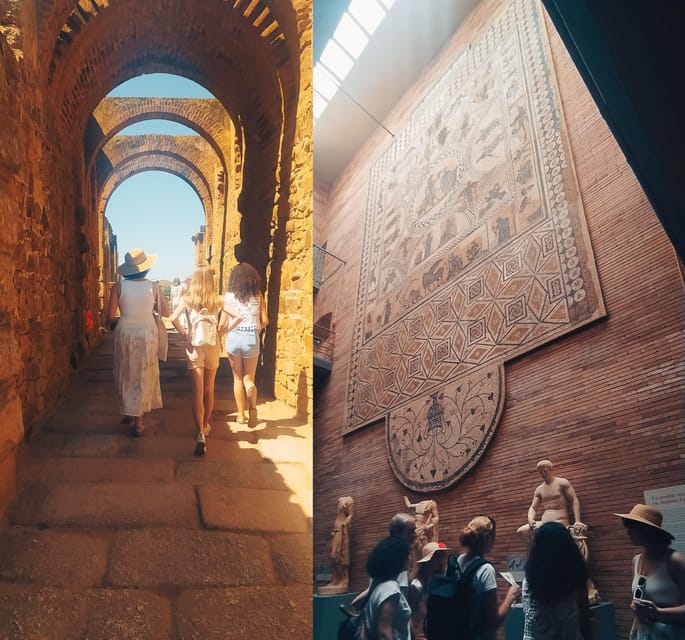
Reviewed · TOURS
Complete Roman Tour in Merida (Spain)
Mérida’s Roman ruins are not a single monument tucked behind a ticket gate. They are spread through the modern city, and this walking tour links them into one clear story, from a villa’s mosaics to the seats where thousands watched chariot races. Lucía GM brings plenty of energy, humor, and practical local knowledge.
I especially like the chance to see the Roman Circus, one of Europe’s best-preserved racing grounds, and the way Lucía uses pictures and anecdotes to explain details that bare stones cannot show. The main drawback is simple: the $29 tour price does not include the archaeological-site ticket, and you should expect about three hours of walking, stairs, and sun.
In This Review
- Key points to know before booking
- Why this tour works well in Mérida
- Starting at the Roman House of the Amphitheater
- The Roman Circus and the thrill of the chariot race
- Roman baths, furnaces, and the unusual snow well
- The Temple of Diana and Mérida’s Roman forum
- Gladiators and spectacle in the amphitheater
- The Roman Theatre, Mérida’s grand finale
- Adding the National Museum of Roman Art
- What the ticket arrangement means for value
- The pace, language, and group experience
- Who will get the most from this walk
- Should you book the Complete Roman Tour?
- FAQ
- How long does the Complete Roman Tour in Mérida last?
- What places are included in the guided walk?
- Is the archaeological entrance ticket included?
- What languages are available?
- Where does the tour meet?
- What should I bring?
Key points to know before booking
- A full Roman circuit: Visit the villa, circus, baths, Temple of Diana, amphitheater, and Roman theater in one morning.
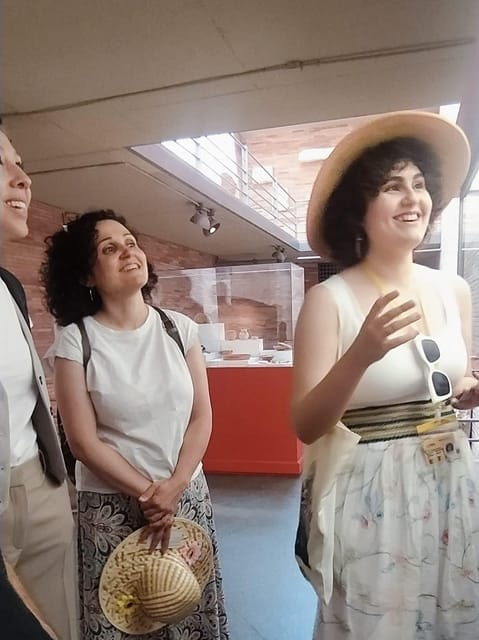
- Lucía’s personal style: She is praised for clear English, friendly humor, patience, and detailed answers.
- The ticket costs extra: You buy the Mérida archaeological ticket at the start, with the exact price set by the Archaeological Consortium.
- More than monuments: Children’s games, illustrated images, gladiator stories, domestic details, and photo advice keep the walk lively.
- A useful full-site ticket: After the guided portion, you can use the same ticket to visit other sites, including the Alcazaba, Muslim quarter, and Basilica of Saint Eulalia.
- Optional museum time: The +Museum Option adds a one-hour visit to the National Museum of Roman Art at 13:00.
Why this tour works well in Mérida
Mérida is often called the Spanish Rome, and the nickname makes sense once you begin walking between its monuments. The ancient city of Emerita Augusta was built as a major Roman settlement in western Iberia, and pieces of it still appear among streets, parks, cafés, and homes.
That spread is both the city’s charm and its challenge. If you explore alone, you can see the headline monuments but miss how they fitted together. This tour gives you a route and a narrative. You move from private life in a Roman house to public entertainment at the circus, religious life at the Temple of Diana, and mass spectacle in the amphitheater and theater.
Lucía is the central reason this experience earns such strong marks. Her manner is warm and lively rather than stiff, and she is comfortable with questions. Several people found her English especially clear, while others appreciated her ability to move between English and Spanish. The supplied details also list French and Portuguese among her languages, but the booking information specifically confirms live guiding in English and Spanish.
She uses an audio receiver with earphones, which matters in open archaeological areas where voices can scatter. Illustrative images help you picture missing buildings, crowded stands, Roman clothing, and activities that are no longer visible in the stone.
Other Spain days travellers weigh against this one:
- Barcelona: Sagrada Familia Entry Ticket with Audio Guide
★ 4.6 · 105,312 reviews - Barcelona: Park Güell Admission Ticket
★ 4.4 · 76,534 reviews - Seville: Royal Alcázar Entry Ticket
★ 4.6 · 28,378 reviews
Starting at the Roman House of the Amphitheater
Meet Lucía in front of the Casa del Anfiteatro, marked by the large MÉRIDA lettering. This is a practical starting point because the house introduces you to Roman Mérida at a human scale before the tour moves to enormous public buildings.
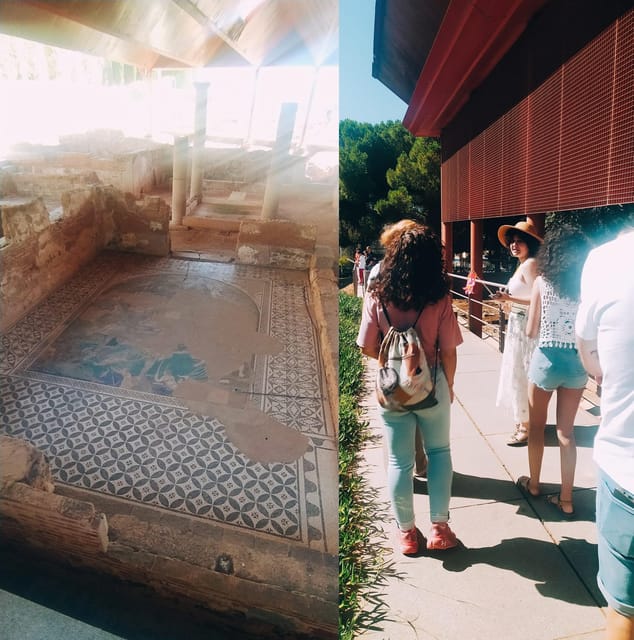
The villa is one of the best-preserved Roman homes in Spain. You walk through rooms with colorful mosaics and imagine the banquets, bedrooms, gardens, and daily routines that once filled them. Lucía points out details tied to food, toys, pets, and household life, so the visit is not just an exercise in identifying walls.
I find this opening particularly useful for families and anyone who struggles to connect with ruins. A private house gives you familiar reference points. You can think about sleeping, eating, playing, and entertaining before confronting the grander world of emperors and gladiators.
Allow yourself time to look down. Mosaics are easy to rush past, but their patterns and small details often tell you more about taste and status than a large column does. Archaeologists may also be working in parts of the villa, and you might see excavation or mosaic restoration in progress.
The Roman Circus and the thrill of the chariot race
The Roman Circus is one of the tour’s strongest stops. It is large, open, and built for speed, noise, money, and public excitement. The surviving seating and pathways make it easier to understand how spectators entered, found their places, and watched chariots thunder around the track.
This is where Lucía’s storytelling can turn a broad field into an event. She explains the gladiatorial and racing world with fun imperial details, so you are not left staring at a flat stretch of grass and trying to guess its purpose.
The circus is visited early in the route, which is smart in Mérida’s hot weather. There is little shade across a large open site, and summer heat can make the walk tiring. Wear proper walking shoes, bring sunscreen, and carry whatever water you normally need for a three-hour city walk.
The open scale also means you may appreciate the audio equipment here. A guide speaking without amplification can be hard to hear when the group spreads out or wind moves across the site.
Roman baths, furnaces, and the unusual snow well
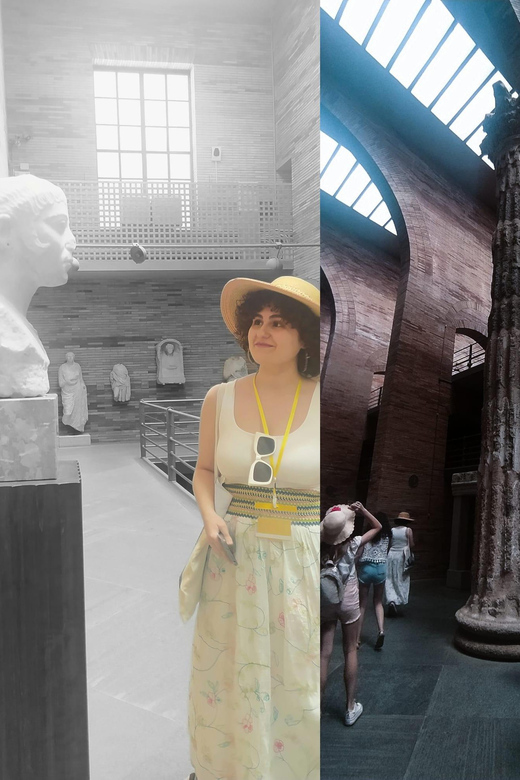
Back toward the city center, the tour reaches Mérida’s Roman baths. The stop explains how Roman bathing was engineered, rather than presenting the pools as isolated stone shapes.
You see the systems used to heat and cool the water, including furnaces. The snow well is an unusual detail and gives the stop a memorable hook. It helps you understand that Roman comfort depended on planning, labor, fuel, and clever ways to manage temperature.
This part of the tour is valuable because bathing was more than washing. Roman baths were social places, and the technology behind them reveals how much effort went into public life. Lucía’s use of images and explanatory stories helps fill in the parts that excavation alone cannot provide.
The site sequence also breaks up the large monuments. After the exposed circus, the baths offer a closer look at infrastructure. You continue walking through peaceful parks and city streets, so the experience feels like an urban walk with archaeology woven through it, not a string of disconnected museum rooms.
A different way to spend the day, same corner of Spain:
- Barcelona: Casa Batlló Entry with Self-Audioguide Tour
★ 4.7 · 25,359 reviews - Seville: Cathedral and La Giralda Entry Ticket
★ 4.5 · 24,592 reviews - Madrid: Tour Bernabéu Entry Ticket
★ 4.5 · 21,573 reviews - Barcelona: 24 or 48-Hour Hop-On Hop-Off Bus Tour
★ 4.4 · 20,872 reviews
The Temple of Diana and Mérida’s Roman forum
At the Temple of Diana, the focus shifts from entertainment and comfort to worship. The surviving columns make this one of Mérida’s most recognizable views, and Lucía explains the religious world of gods and emperors that shaped Roman public life.
The temple is near remnants of the Roman Forum. In ancient times, the forum was a civic and commercial center. Today, the surrounding area includes shops selling handmade terracotta and mosaic crafts, giving you a small link between Mérida’s archaeological identity and its present-day artisans.
This is also a good place for photographs. Lucía offers advice throughout the tour, including help with choosing viewpoints and framing pictures. That service is easy to overlook when comparing tours, but it can make a difference in a city where columns, arches, streets, and modern buildings often share the same view.
The Temple of Diana is located in an active part of the city, so you get a sense of how Mérida’s ancient remains live alongside modern life. The monument is not presented as a sealed-off relic. It is part of the town you are walking through.
Gladiators and spectacle in the amphitheater
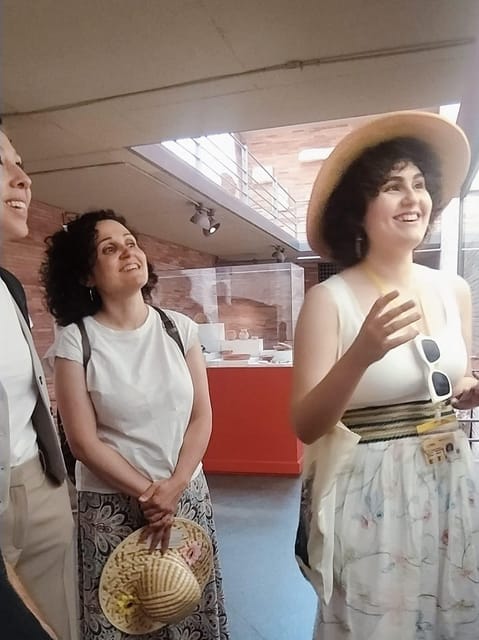
The amphitheater supplies the tour’s most dramatic chapter. Here you learn about gladiatorial contests, fights with wild animals, and even staged naval battles.
The structure gives you a strong sense of how spectacle worked. Entryways, tiers, and the arena floor show how the building managed large crowds and separated different parts of the event. Lucía’s illustrated material and anecdotes help you picture the noise, danger, ceremony, and social ranking that surrounded the games.
I like that the tour treats the amphitheater as more than a place for heroic gladiator stories. Roman games were carefully organized public displays, tied to status and power. The building itself tells part of that story, and the guide adds the human details.
You should expect stairs and uneven ground in the archaeological sites. One person specifically advised wearing sturdy shoes and warned that the route can be difficult if you have knee, foot, or mobility problems. The tour information asks you to bring comfortable shoes, but I would take that seriously rather than treating it as a casual suggestion.
The Roman Theatre, Mérida’s grand finale
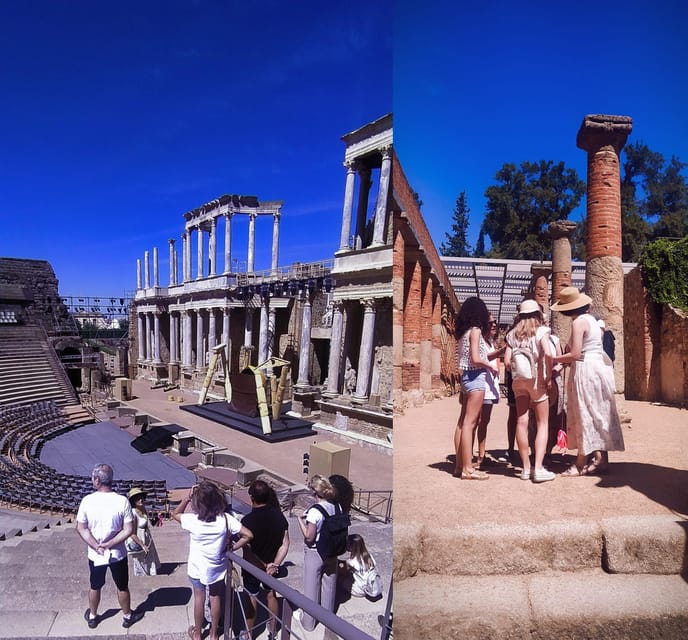
The Roman Theatre is the final major monument on the main route, and it makes a fitting finish. It is described as the largest and best-preserved Roman theater in Spain, with a setting that still supports classical performance during Mérida’s summer festival.
The theater’s design is easier to appreciate after you have already seen the circus and amphitheater. Those buildings focused on racing and combat. Here, the architecture directs attention toward performance, speech, music, and drama.
Look across the seating toward the stage and imagine how the arrangement controlled what the audience saw. The surviving columns and backdrop provide some of the tour’s most striking photographs, and Lucía can help you find good places to take them.
The main guided walk ends around lunchtime near restaurants and bars. That is convenient, but keep in mind that the itinerary includes a break of about 30 minutes. If you want a leisurely meal, you may need to continue on your own after the tour rather than fitting a full restaurant stop into the scheduled pause.
Adding the National Museum of Roman Art
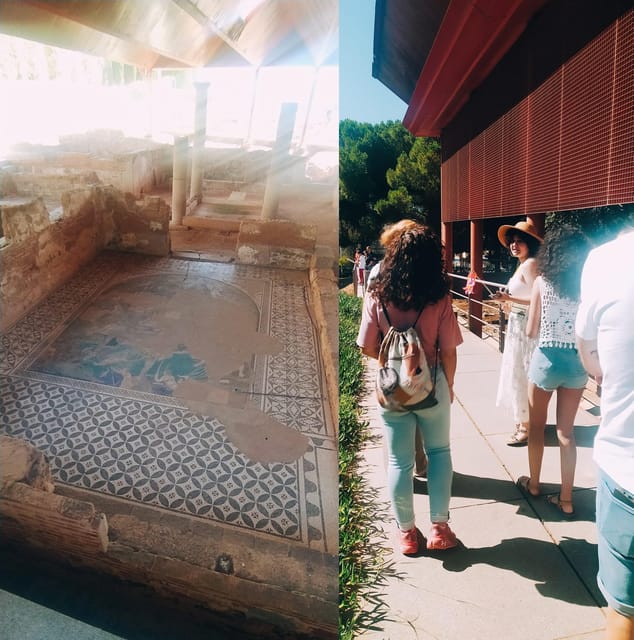
The +Museum Option adds a one-hour visit to the National Museum of Roman Art at 13:00, after a short break for snacks and refreshments. This changes the experience from a monuments-only walk into a fuller look at what excavations have found.
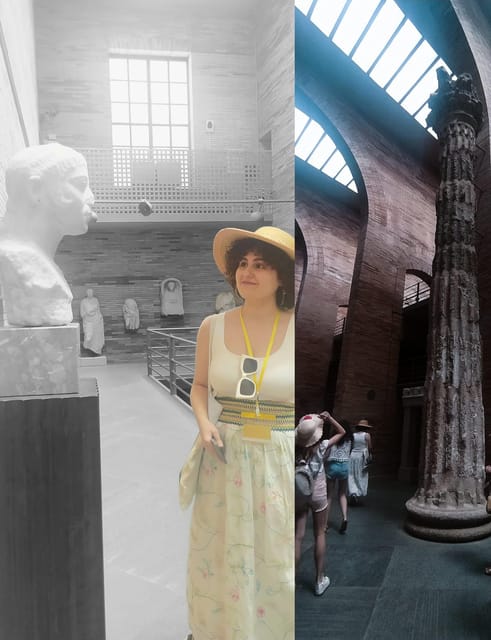
Inside, you can see objects ranging from jewelry and toys to large sculptures and mosaics. These smaller pieces help explain people who are absent from the grand monuments. A toy, household object, or inscription can reveal daily life in a way that a theater façade cannot.
Lucía’s background in Latin is especially useful here. She can point out messages and meanings in inscriptions, helping you read clues left by Mérida’s ancient residents. If you enjoy details, symbols, and museum displays, the extra option adds real value.
The museum option also extends the day, so check the timing before you book. The main route lasts roughly three hours, while the full experience with the museum can reach four hours. That is still manageable, but it is a substantial morning and early afternoon of walking and standing.
What the ticket arrangement means for value
The advertised tour price is $29 per person, which is a reasonable rate for three to four hours of live guiding across several major sites. You are paying for a connected explanation, a planned walking route, audio equipment, visual aids, and the chance to ask questions as you go.
The archaeological entrance ticket is not included. You buy it at the beginning from the Archaeological Consortium of Mérida, and the price can change according to age group, party size, family status, date, and special periods. The guide provides information about possible discounts and free entry, but the ticket cannot be resold through tour websites.
That extra cost is important when you compare the total price. The advantage is that the ticket allows you to return to other parts of Mérida’s archaeological site after the tour. You can use it for places not included in the guided route, such as the Muslim citadel and quarter and the Basilica of Saint Eulalia.
For many people, that makes the ticket more useful than a single-entry visit. You can take the guided tour for the main Roman monuments, then explore the remaining sites at your own pace later that day or the next day, subject to the ticket’s conditions.
One practical point: arrive early enough to buy the entrance ticket before the walk begins. The meeting point is in front of the Roman House of the Amphitheater, but the ticket purchase happens there before the visit starts. Do not assume the $29 covers everything.
The pace, language, and group experience
The tour lasts about three to four hours and covers a lot of ground. The planned visits are roughly 30 minutes each at the Roman house, circus, baths, Temple of Diana, amphitheater, and theater, followed by a break and, if selected, a one-hour museum visit.
That schedule gives you a broad introduction rather than an exhaustive study of every monument. You will see the main sites and get their key ideas, but you may not have time to read every information panel in detail. If you want long, quiet periods at each ruin, plan to return independently using the site ticket.
The pace can also change with the group. Lucía has adjusted timing for people with physical limits, and on quiet dates the tour has continued even with only one participant. A small group or private-feeling experience gives you more room for questions and personal attention, but group size can vary by booking date.
English and Spanish are the confirmed tour languages. The guide is also listed as fluent in French and Portuguese, though you should confirm the language arrangement when booking if that is essential for your party.
Who will get the most from this walk
I would choose this tour if you have one day in Mérida and want to understand the city quickly. It covers the big Roman sights without forcing you to work out the route on your own, and the stories make the remains easier to remember.
It suits families because the guide uses games for children and includes playful imperial and mythological material. It also suits adults who want more than dates and construction details, especially if you enjoy questions about food, toys, pets, worship, public entertainment, and ordinary life.
The tour is less suitable if you cannot comfortably manage several hours on foot, stairs, and uneven archaeological surfaces. Mérida can be very hot in summer, and the circus is especially exposed. Choose a cooler start time when available, use sunscreen, and wear sturdy shoes.
Photography-minded visitors will appreciate Lucía’s help with pictures. So will anyone who prefers an interactive guide rather than a recorded commentary. If you want to move quickly and see every site alone, the guided explanations may feel slower than an independent visit.
Should you book the Complete Roman Tour?
Book it if you want Mérida’s major Roman monuments to make sense as one city. The strongest features are the range of sites, Lucía’s lively and clear delivery, the useful visual aids, and the chance to keep exploring with the archaeological ticket after the walk.
The extra ticket cost and physical demands are the main cautions. Add the museum if inscriptions, sculptures, mosaics, and smaller objects appeal to you, but skip it if you prefer a shorter morning or need more time for lunch.
For a first visit, I would take the tour early, buy the site ticket before the start, wear serious walking shoes, and save the Alcazaba, Muslim quarter, and Basilica of Saint Eulalia for later. At $29 before admission, this is a strong introduction to Mérida, especially when you want a local guide who can turn scattered ruins into a readable Roman city.
FAQ
How long does the Complete Roman Tour in Mérida last?
The main tour lasts about three hours. The full experience can take three to four hours, especially if you add the one-hour museum visit at 13:00.
What places are included in the guided walk?
The guided route includes the Roman House of the Amphitheater, Roman Circus, Roman baths, Temple of Diana, Roman Forum remains, amphitheater, and Roman Theatre.
Is the archaeological entrance ticket included?
No. You buy the ticket at the Roman House of the Amphitheater from the Archaeological Consortium of Mérida. The price varies by age, group size, family status, date, and special periods.
What languages are available?
The confirmed live tour languages are English and Spanish. The experience information also lists French and Portuguese among the guide’s language abilities.
Where does the tour meet?
Meet in front of the Casa del Anfiteatro, near the giant MÉRIDA lettering on José Ramón Mélida Street.
What should I bring?
Bring comfortable or sturdy walking shoes and sunscreen. Expect roughly three hours of walking, stairs, and time outdoors, particularly at the Roman Circus.
Recently reviewed around Spain
- Segway Your Way Through Granada’s History: The Ultimate Ride★ 5.0 · 334 reviews
- Firgas, Tejeda, Guayadeque – VIP Tour Gran Canaria★ 4.5 · 173 reviews
- Sioux City Park Entrance Ticket★ 4.5 · 171 reviews
- The Best Horse Riding Experience in Gran Canaria (2 hours)★ 4.5 · 349 reviews
- Scuba Diving Experience for Beginners in Gran Canaria★ 5.0 · 561 reviews
- Supercar Experiences on the Circuit of Maspalomas★ 5.0 · 110 reviews
- Sala Scala Gran Canaria Dinner Show★ 4.5 · 212 reviews
- SUBMARINE ADVENTURE – Submarine Excursion in Puerto de Mogán★ 4.0 · 126 reviews
Tours, compared.


Park Guell Guided Tour with Skip The Line Entry
Read our review →
Sagrada Familia Skip-the-Line Entry Ticket & Tour
Read our review →
Caminito del Rey Guided Tour with Transportation
Read our review →
Caminito del Rey: Guided Tour and Entry Ticket
Read our review →