
Reviewed · MUSEUMS
Cartagena : Roman Theatre Museum Entry Ticket
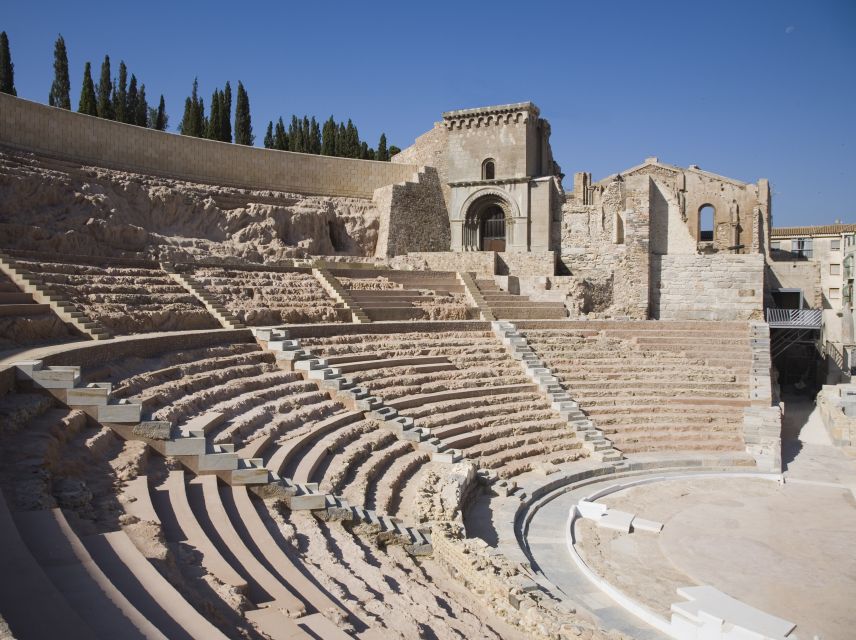
Cartagena’s Roman Theatre is a remarkable surprise: a 7,000-seat Roman venue hidden beneath the modern city for centuries. Your visit begins in Rafael Moneo’s carefully designed museum, where archaeological finds and a Roman house lead you through the story before the theater opens up at the end.
I like the clear, self-paced format and the low $8 price. The museum gives the ruins a proper setting rather than leaving you to stare at old stones without context, and the optional audio guide helps explain Roman performance, politics, and the site’s long burial. The main drawback is access to the lower theater steps, which can be difficult for anyone with limited mobility.
In This Review
- Key points to know before you go
- Start with the museum, not the theater
- Follow the Passageway of History
- See the Roman house beneath the theater
- Step out into a 7,000-seat theater
- Why the museum makes the ruins easier to read
- Allow enough time for both sections
- The audio guide and language choices
- Finding the entrance and handling your ticket
- Is $8 good value?
- Who will enjoy this most?
- Should you book Cartagena’s Roman Theatre Museum?
- FAQ
- How much does entry to the Roman Theatre Museum cost?
- How long is the ticket valid?
- Is an audio guide available?
- What time does the museum close on Sundays?
- Is the site wheelchair accessible?
- Can I use a screenshot of my voucher?
Key points to know before you go
- The museum comes first: You enter the Roman Theatre through the museum, not directly from the visible theater area.
- A 7,000-seat Roman theater: The scale is the big surprise, especially once you reach the open archaeological remains.
- Rafael Moneo’s design: The museum turns the excavation into a chronological walk through Cartagena’s Roman past.
- An audio guide is worth considering: It is available in Spanish, English, French, German, and Russian.
- Sunday timing matters: The museum closes at 2:00 PM on Sundays.
- Bring the original voucher: A screenshot of the QR code is not accepted.
Start with the museum, not the theater
The first thing to know is practical: the theater entrance is inside the museum. If you follow map directions to the wrong side, you may find yourself near the exit or looking at the ruins from above without knowing where the ticket entrance is.
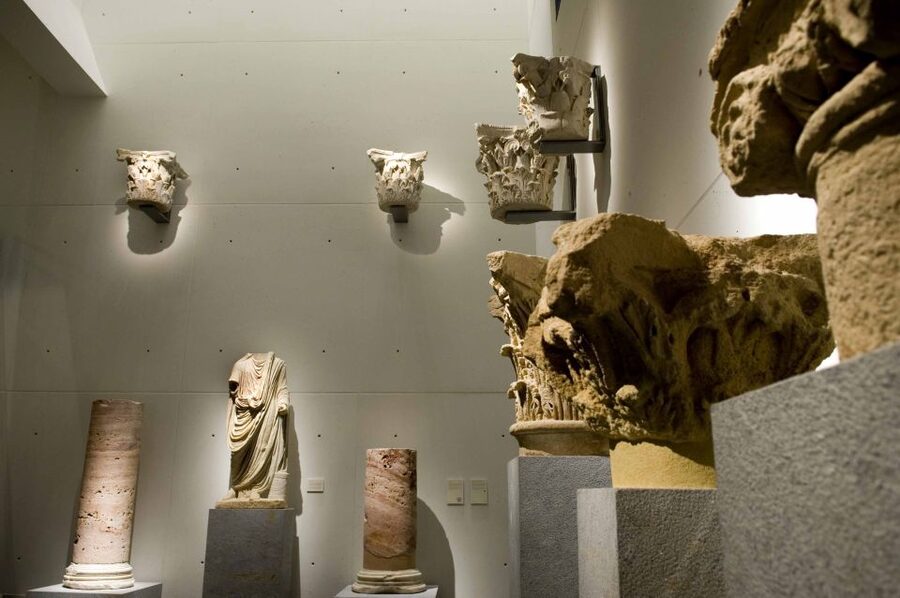
Once inside, the museum provides the background that makes the outdoor remains easier to understand. You move through the archaeological story of the site, beginning with the Roman period and the theater’s development in the 1st century B.C. The displays explain how the area changed over time and how the theater was eventually covered and forgotten.
This order works well. You see objects and structural clues first, then reach the theater with a sense of what you are looking at. Without that preparation, the curved seating, broken walls, and stage area can blur together.
The museum was designed by Rafael Moneo, one of Spain’s best-known architects. His approach gives the visit a calm, controlled rhythm. The building does not compete with the archaeology. Instead, it frames the evidence and guides you from one part of the story to the next.
You can move between several floors using lifts or escalators. That makes the indoor part manageable for many people, though the theater itself has more demanding steps and uneven areas.
More Spain museums and collections:
- Madrid: Prado Museum Entry Ticket
★ 4.6 · 17,509 reviews - Barcelona: FC Barcelona Museum “Barça Immersive Tour” Ticket
★ 4.4 · 10,944 reviews - Madrid: Reina Sofía Museum Entrance Ticket
★ 4.5 · 6,889 reviews
Follow the Passageway of History
One of the museum’s most useful sections is the Passageway of History, which explains how the theater site developed over time. It is not just a collection of Roman fragments. The aim is to show how the building was constructed, used, covered, and rediscovered.
You learn about the theater’s place in Roman society, including how performances worked and why theater had political importance. Roman plays were entertainment, but public performance also helped display power, status, and Roman cultural values.
That political angle adds weight to the visit. You are not only looking at a large auditorium. You are seeing a public building designed for thousands of people, where architecture, spectacle, and civic life came together.
The audio guide can help here. The visit is self-paced, so you can spend more time with the sections that interest you and move faster through displays that feel less important. The guide is offered in Spanish, English, French, German, and Russian, depending on the option you book.
I would add it if you enjoy historical context. The museum is well presented, but an audio guide can connect the objects to the wider story of Roman Spain. It also lets you avoid rushing through written information, especially if you are visiting with children.
See the Roman house beneath the theater
A particularly effective part of the museum is the remains of a Roman house with mosaic tiles. The house was destroyed when the theater was built, which gives you a direct look at how major Roman construction could reshape an existing neighborhood.
This detail helps make the site feel less isolated. The theater did not appear on an empty plot. It replaced earlier structures and altered the daily setting around it.
The mosaic is also a useful contrast to the theater. The house suggests private life, while the theater represents public life and large crowds. In a short visit, that pairing gives you two sides of Roman Cartagena.
Do not expect a complete Roman home. You are seeing preserved remains, not a reconstructed building with rooms furnished as they might have been. The value comes from the connection between the house and the theater’s construction.
Step out into a 7,000-seat theater
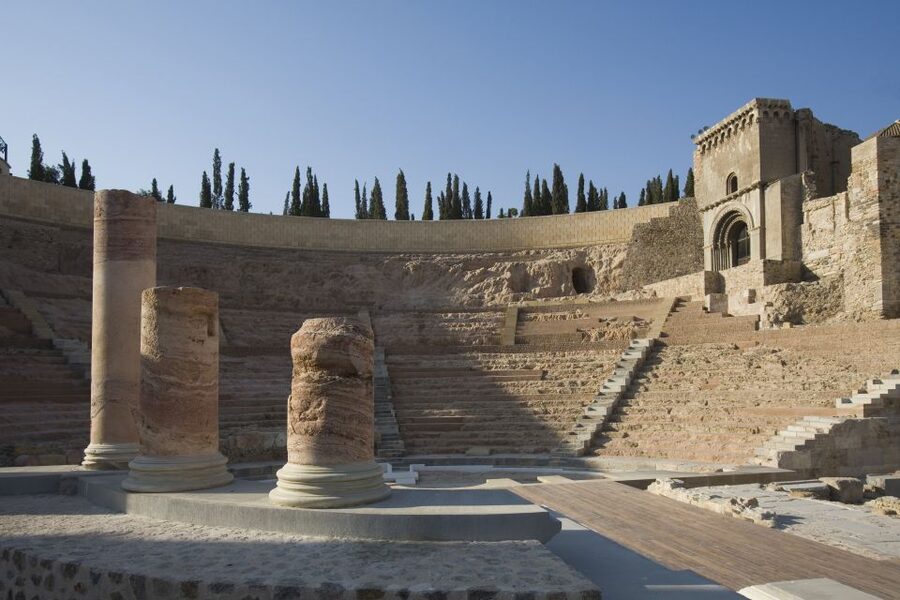
The payoff comes when you leave the museum and reach the open theater. Cartagena’s Roman theater could hold about 7,000 spectators, making it one of the largest ancient Roman theaters in Spain.
The size is hard to grasp from photographs alone. Once you are among the surviving seating and walls, look across the whole curve before focusing on individual stones. The broad shape tells you more than any single fragment.
The theater is presented as an archaeological site rather than a modern attraction. That means some surfaces are uneven and some stairways are open, with limited handrails. You may be able to reach the upper viewing areas comfortably but not the lower stage area.
This is the main physical limitation of the visit. People using wheelchairs or anyone unsteady on steps may have to remain at the upper level. The site is described as wheelchair accessible, but that should not be read as full access to every part of the ancient structure.
Electric wheelchairs are not permitted. Assistance dogs are allowed, but other pets are not.
If you can manage the steps, the lower areas bring you closer to the theater’s structure. If you cannot, the upper view still gives you the essential sense of scale. The archaeological remains are visible from above, and you can take photographs without needing to reach the stage.
More Spain trips worth a second look
- Barcelona: Sagrada Familia Entry Ticket with Audio Guide
★ 4.6 · 105,312 reviews - Barcelona: Park Güell Admission Ticket
★ 4.4 · 76,534 reviews - Seville: Royal Alcázar Entry Ticket
★ 4.6 · 28,378 reviews - Seville: Cathedral and La Giralda Entry Ticket
★ 4.5 · 24,592 reviews
Why the museum makes the ruins easier to read
Roman theaters can be confusing if you arrive without explanation. Curved seating, retaining walls, entrances, and stage structures do not always announce their purpose. Cartagena’s museum solves much of that problem by giving you a sequence to follow.
The story of burial and rediscovery is especially important. The theater was not continuously visible or preserved as an obvious landmark. It disappeared beneath later layers of the city, then returned to view through archaeological work.
That long process is part of the attraction. You are seeing an ancient building, but you are also seeing how modern Cartagena recovered and presented it.
The museum’s design helps maintain that connection between past and present. You move through a contemporary building before reaching the remains themselves. The contrast is useful, especially for anyone interested in architecture as much as archaeology.
I also like that the ticket covers both parts. Paying only to see an exposed ruin would offer less context. Here, the museum is not an optional extra. It is the first half of the experience.
Allow enough time for both sections
The ticket is valid for one day, and you should plan the visit as a museum and archaeological site rather than a quick photo stop. The exact time needed depends on how closely you listen to the audio guide and how long you spend with the displays.
A fast visit can cover the main route without much delay. A slower visit gives you time to understand the excavation, examine the Roman artifacts, and look carefully at the theater’s layout.
The self-paced format is useful for families. You can move at your own speed, pause when children lose interest, and spend longer outdoors if the theater catches their attention. The site has also been described as a good city experience for families with children.
Heat is worth considering. On a hot day, the exposed theater can feel harsh, especially for young children. There is no food or drink allowed inside, and there is no stated refreshment stand within the site. Bring water for before or after the visit, and avoid planning the theater for the hottest part of the day if you have flexibility.
Because Sunday closing is at 2:00 PM, a Sunday morning visit is the safer choice. Check the available start times before booking, since opening arrangements can vary.
The audio guide and language choices
The optional audio guide is available in five languages: Spanish, English, French, German, and Russian. It is not automatically included with every ticket option, so check your selection before paying.
For me, the guide is most useful in the museum. It can explain the Roman theater’s construction, the way performances were staged, and the political meaning of Roman art and public entertainment.
You can also choose to read the exhibits at your own pace. That may suit people who prefer not to wear a headset or who are visiting with children. The site itself is self-guided, so you are not tied to a group schedule.
The listed host or greeter languages include the same five languages. This does not mean every visit has a live guide in all of them, so book the audio option if language support is important to you.
Finding the entrance and handling your ticket
The entrance can be harder to spot than expected. The most useful advice is simple: look for the museum entrance, because that is how you reach the theater.
Online directions may point toward the exit or an upper viewing area. If you arrive at a place where you can see the theater but cannot find the ticket check, keep looking for the museum entrance rather than assuming you are in the right queue.
Your voucher is mandatory. A screenshot of the voucher or QR code is not accepted, so keep the original voucher available on your phone or in the required format.
The meeting point can vary according to the ticket option. Check the details attached to your booking before setting off.
Food and drinks are not allowed inside. Alcohol, drugs, explosive substances, and pets are prohibited, with assistance dogs exempted from the pet restriction.
Is $8 good value?
At $8 per person, this is one of Cartagena’s easier cultural purchases to justify. The ticket includes the museum and the Roman Theatre site, not simply an outdoor view from a platform.
The value is strongest if you spend time with the museum first. You are paying for the archaeological setting, the excavation story, the Roman artifacts, the mosaic floor, and the theater itself.
An optional audio guide may cost extra depending on the booking choice, but it is a sensible addition if you want the visit to explain itself. The low base price also gives you room to add it without turning the outing into a major expense.
You can see part of the theater from public viewpoints without entering, so the ticket is less compelling if you only want a quick photograph. The paid visit earns its keep through the museum access and the chance to walk through the archaeological site.
Free cancellation up to 24 hours before the visit and reserve-now, pay-later booking add useful flexibility. Still, check the exact ticket conditions and Sunday hours before committing.
Who will enjoy this most?
This experience suits anyone interested in Roman Spain, ancient theater, archaeology, or Cartagena’s long urban story. It is also a good choice for families because the route mixes objects, architecture, and open-air remains rather than relying only on text panels.
I would recommend the audio guide for first-time visitors who want a fuller explanation. It is especially helpful if you do not already know how Roman theaters were arranged or why public performances mattered politically.
People with limited mobility should plan carefully. The museum has lifts and escalators, but some open steps in the theater lack handrails, and the lower stage area may not be reachable by wheelchair users or anyone uncomfortable on uneven stairs.
The attraction is also less suited to someone looking for a long guided walking tour of Cartagena. This ticket focuses on one archaeological complex, and the visit is generally self-paced. If you want a wider city tour, you will need a separate experience.
Should you book Cartagena’s Roman Theatre Museum?
Yes, if you want an inexpensive and well-explained look at Cartagena’s Roman past. The combination of Moneo’s museum, the Roman house mosaic, the excavation story, and the large theater makes this more worthwhile than a simple ruin viewed from outside.
Book ahead if you are visiting at a busy time, since buying on arrival can involve long lines. Choose the audio guide if you want the history explained as you go, and plan around the Sunday 2:00 PM closing time.
I would hesitate only if you need completely step-free access throughout or if you have very little time in Cartagena. For almost everyone else, $8 buys a compact, thoughtful visit with a real sense of scale.
FAQ
How much does entry to the Roman Theatre Museum cost?
The listed price is $8 per person. The ticket includes entry to the museum and Roman Theatre site. An audio guide may be included only if you select that option.
How long is the ticket valid?
The ticket is valid for one day. Check availability for the starting times offered with your booking.
Is an audio guide available?
Yes. The optional audio guide is available in Spanish, English, French, German, and Russian.
What time does the museum close on Sundays?
The Roman Theatre Museum closes at 2:00 PM on Sundays. Plan a Sunday morning visit and confirm the available time before booking.
Is the site wheelchair accessible?
The museum is wheelchair accessible, with lifts and escalators available on its various floors. Some theater steps lack handrails, and wheelchair users may not be able to reach the lower stage area. Electric wheelchairs are not allowed.
Can I use a screenshot of my voucher?
No. You must bring the valid original voucher. A voucher or QR code screenshot is not accepted.
Recently reviewed around Spain
- Segway Your Way Through Granada’s History: The Ultimate Ride★ 5.0 · 334 reviews
- Firgas, Tejeda, Guayadeque – VIP Tour Gran Canaria★ 4.5 · 173 reviews
- Scuba Diving Experience for Beginners in Gran Canaria★ 5.0 · 561 reviews
- Sioux City Park Entrance Ticket★ 4.5 · 171 reviews
- The Best Horse Riding Experience in Gran Canaria (2 hours)★ 4.5 · 349 reviews
- Supercar Experiences on the Circuit of Maspalomas★ 5.0 · 110 reviews
- Sala Scala Gran Canaria Dinner Show★ 4.5 · 212 reviews
- SUBMARINE ADVENTURE – Submarine Excursion in Puerto de Mogán★ 4.0 · 126 reviews
Museums, compared.

FC Barcelona Museum “Barça Immersive Tour” Ticket
Read our review →
Park Güell and Gaudí House Museum Entry Ticket
Read our review →
Puro Flamenco Show with Optional Museum Ticket
Read our review →

Girona & Dali Museum Small Group Tour with Pick-up from Barcelona
Read our review →
Oceanogràfic, Hemisfèric & Science Museum Combo
Read our review →Browse the lists this tour appears in