
Reviewed · HISTORICAL TOURS
Barcelona: The Spanish Civil War Historical Walking Tour
Barcelona’s old town has more to say than Gothic arches and polished shopfronts. This Spanish Civil War walking tour uses the streets themselves to explain how anarchists, fascists, socialists, communists, Catalan nationalists, republicans, and foreign powers fought over Spain’s future. You’ll also connect several locations with George Orwell’s Homage to Catalonia.
I like two things right away: the guide turns a tangled subject into a clear story, and the tour looks at ordinary people, women, religion, propaganda, and daily life instead of focusing only on generals. The drawback is that this is a serious, politics-and-war tour, and you spend much of the 2.5 hours standing while listening.
In This Review
- Key points to know before booking
- Why this Barcelona tour matters
- Meeting the guide at Plaça de Catalunya
- From industrial Barcelona to the outbreak of war
- Walking through the streets where Barcelona fought
- Orwell’s Barcelona and the struggle within the struggle
- The many factions, explained without a political fog
- Women, religion, and life after the fighting
- What the $46 price gets you
- Weather, accessibility, and the right audience
- Should you book the Spanish Civil War walking tour?
- FAQ
- Where does the Spanish Civil War walking tour begin?
- How long does the tour last?
- Where does the tour finish?
- What language is the tour conducted in?
- Is the tour suitable for children?
- Is the tour wheelchair accessible?
- Does the tour run in bad weather?
- Is food or drink included?
- Is hotel pickup included?
- Is there an extra charge for the audio equipment?
Key points to know before booking
- Barcelona’s streets become the classroom: See parts of the old town linked to fighting, political conflict, and fascist bombing.
- The factions are explained clearly: Your guide sorts out the competing left-wing groups, right-wing forces, anarchists, military rebels, and foreign allies.
- Orwell’s Barcelona comes into focus: Visit places connected with the events described in Homage to Catalonia.
- Expect strong guides: Javier, Chrisa, Yannis, Filipa, Henrieta, and Evan have led this experience, with clear explanations and room for questions.
- It is a stroll, not a hard hike: You walk between stops, then usually remain in one place while the guide speaks.
- Budget an extra €1: Wireless listening equipment is commonly used, with payment by card or cash at the start.
Why this Barcelona tour matters
Barcelona is often presented through Gaudí, markets, beaches, tapas, and medieval lanes. Those are good reasons to come, but they tell only part of the city’s story. The Civil War changed Barcelona’s politics, buildings, families, neighborhoods, and public memory. The dictatorship that followed lasted 36 years, ending less than 50 years ago.
This tour gives you a way to notice what the usual sightseeing route leaves out. You are not simply looking at an old wall or a city hall. You are learning how the same street could be a place of political organizing, armed conflict, military control, or fear, depending on the year and the person standing there.
I especially value the focus on Barcelona as a particular setting. The war did not feel the same in every part of Spain, and the city’s industrial growth, strong labor movement, anarchist tradition, and Catalan identity shaped its experience. The guide places those local forces within the wider Spanish conflict, so the story does not become a vague lesson about good versus evil.
It also helps answer questions that many standard city tours skip. What did Hitler and Mussolini gain by backing Franco? Who joined the International Brigades? Why did Western governments fail to support the Spanish Republic in the same way? What part did the Catholic Church play? How did Franco’s rule affect Spain after the fighting ended?
You will not leave with every detail memorized. You should leave with a usable framework for understanding the period, plus a better sense of why it still matters in Spain today.
More Historical Tours in Barcelona
- Barcelona: Tapas Walking Tour with Food, Wine, and History
★ 4.8 · 4,261 reviews - Barcelona Tapas Walking Tour: Food, Wine & History
★ 4.5 · 1,928 reviews - Barcelona: 2.5-Hour Bike or E-Bike Historical Tour
★ 4.5 · 1,262 reviews
Meeting the guide at Plaça de Catalunya
The tour begins on the sidewalk in front of the Foot Locker at Plaça de Catalunya. Look for the guide holding a white umbrella. This is a busy central square, so give yourself a few extra minutes to find the exact meeting point rather than arriving at the last moment.
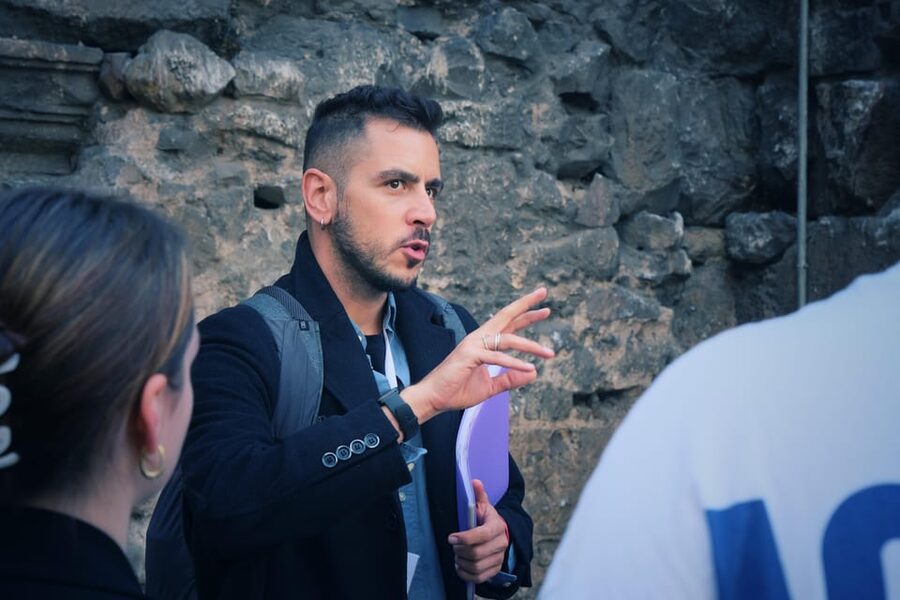
The tour is conducted in English. Guides have included Javier, Chrisa, Yannis, Filipa, Henrieta, and Evan. The individual style may vary, but the experience depends heavily on the person leading it. The strongest guides use plain explanations, visual material, humor when suitable, and frequent checks to make sure the group is following the sequence of events.
That last point matters. The Spanish Civil War can become confusing very quickly. A single political label might cover several groups that later fought one another. A guide who simply lists names and dates will lose you. The better approach, which this tour is designed to provide, is to explain each faction’s goals, alliances, and disagreements as the story moves forward.
Wireless tour systems are typically used, depending on the guide. There is an additional €1 charge per person at the beginning, payable by card or cash. I consider that a small but useful cost in a city where street noise, traffic, and group size can make a voice hard to catch.
From industrial Barcelona to the outbreak of war
The first part builds the background. That may sound less exciting than visiting a famous battlefield, but it is essential. The conflict did not appear out of nowhere in 1936. Social inequality, industrialization, labor organizing, political tension, regional identity, military opposition, and disputes over the future of the Spanish Republic had been building for years.
Barcelona’s working population and organized labor are central to this section. The guide explains how the city’s economic changes affected class relations and helped create a strong political culture. You will hear about the competing hopes for Spain: some wanted social revolution, some wanted parliamentary reform, some defended private property and traditional institutions, and others wanted a centralized authoritarian state.
The aim is not to make every political group sound identical. It is to show why alliances were fragile. Republicans, socialists, communists, anarchists, and Catalan forces could oppose Franco while still disagreeing sharply about what should happen after victory.
This opening also gives the Catholic Church and the military a proper place in the story. The conflict was not only a fight between abstract political ideas. It involved institutions with land, influence, weapons, followers, and long memories.
If you know little about the war, this is the section that makes the rest of the tour possible. If you have already read several books, you may still appreciate seeing Barcelona’s social setting connected to the larger national story.
Walking through the streets where Barcelona fought
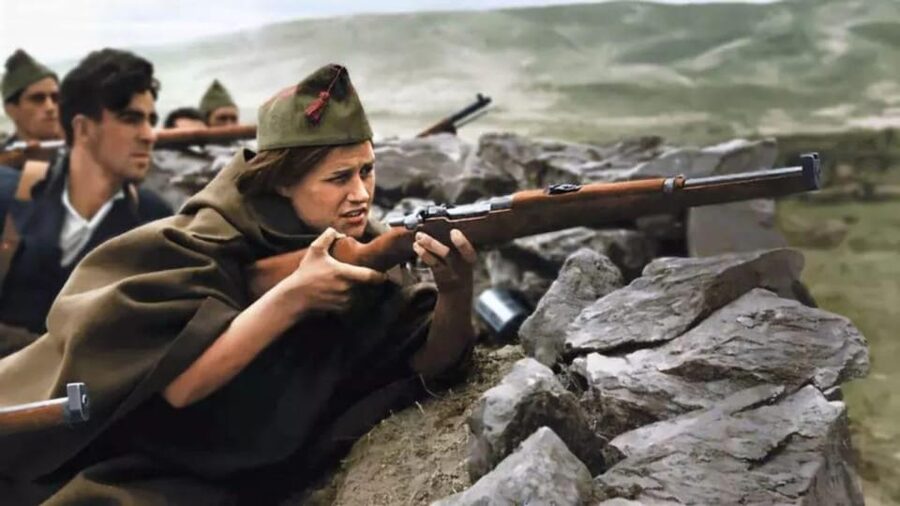
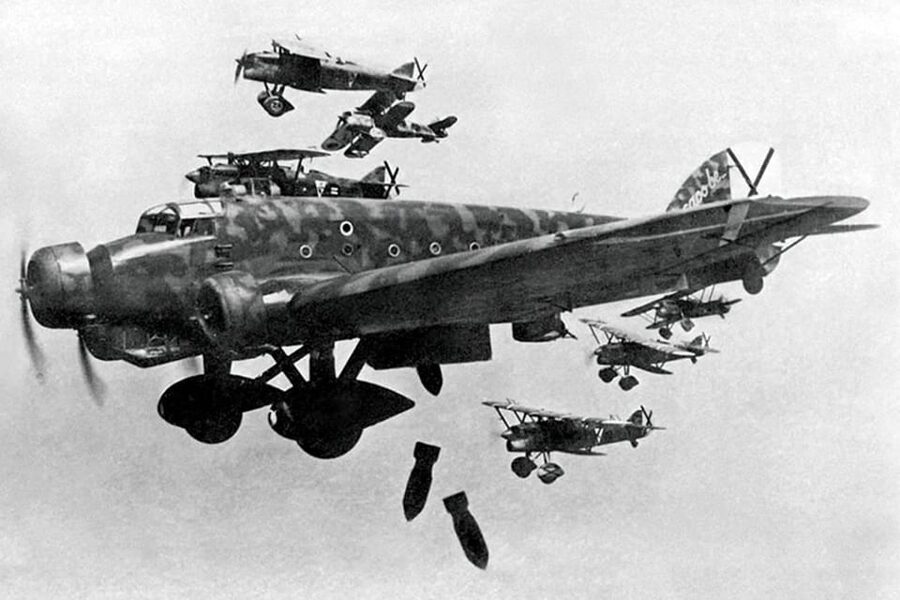
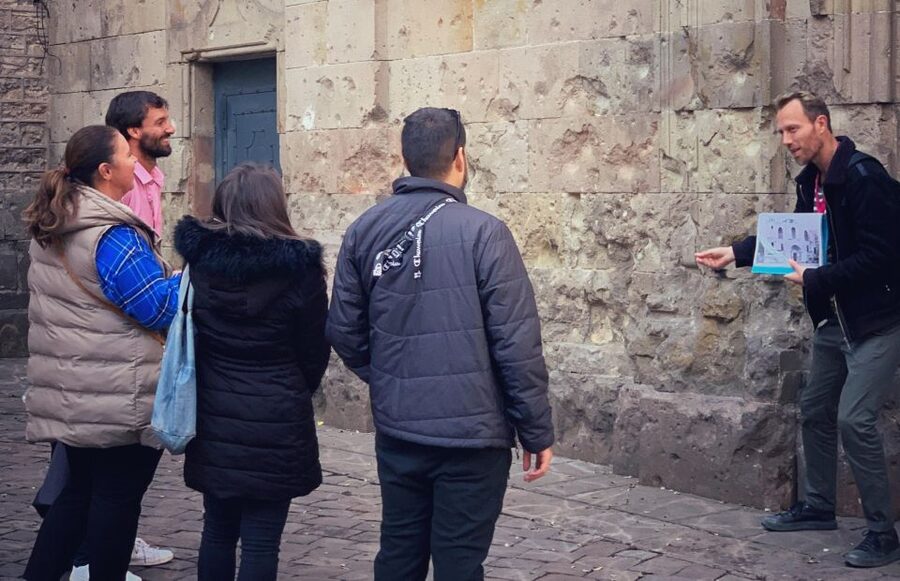
The route then moves through the old town, where the guide points out locations tied to political clashes, street fighting, and the effects of fascist bombing. Exact stops can vary, and you should not expect a preserved battlefield or a large museum display at every corner. The value comes from connecting the present-day street to photographs, testimony, and a clear explanation of what happened there.
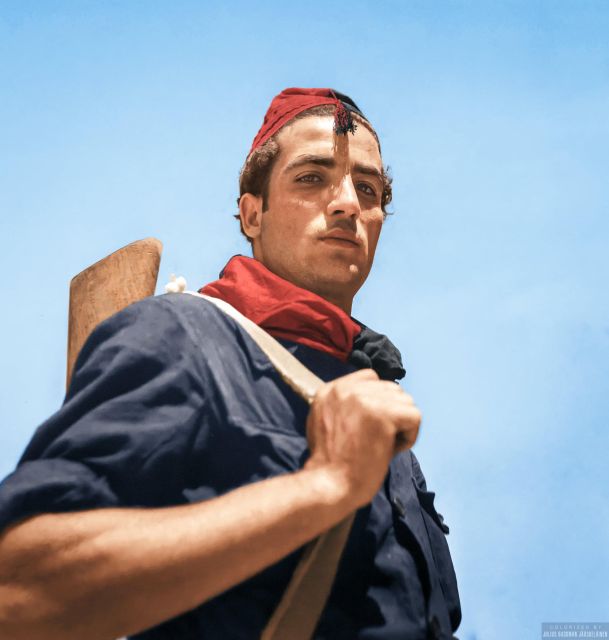
This is one of the tour’s most effective ideas. Barcelona has changed, but the street plan and old buildings can still give the past a physical setting. A guide may show historic images to help you compare the scene with the city as it appears now. That visual contrast makes the period easier to grasp than a lecture in a classroom.
You also go beyond the tourist facade of the Gothic Quarter. The lanes may look picturesque today, but the tour asks you to think about the people who lived, organized, hid, fought, or tried to survive there. The old town becomes a place of political pressure and human choices, not just a backdrop for photographs.
Expect a pattern of walking, stopping, and listening. One participant described the route as more of a stroll than a continuous walk, but also stressed that you are standing for much of the time. Comfortable shoes are sensible, and a small bottle of water is useful. This is not a strenuous excursion, but it is not a seated museum visit either.
More Walking Tours in Barcelona
- Barcelona Tapas and Wine Experience Small-Group Walking Tour
★ 5.0 · 5,804 reviews - Barcelona: Tapas Food Crawl Walking Tour with Tastings
★ 4.9 · 1,798 reviews - Barcelona: Gothic Quarter Ghosts and Legends Walking Tour
★ 4.7 · 1,443 reviews - Barcelona Helicopter, Sailboat & Old Town Private Walking Tour
★ 5.0 · 1,395 reviews
Orwell’s Barcelona and the struggle within the struggle
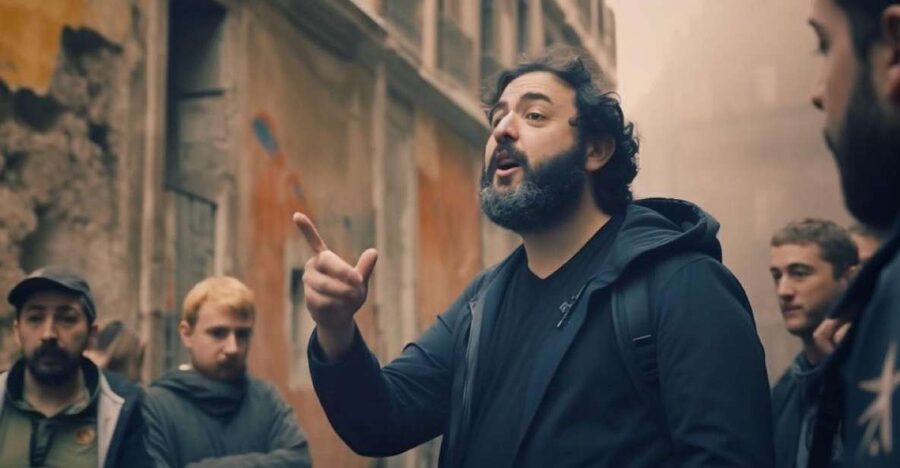
George Orwell’s Homage to Catalonia gives many English-speaking readers their first close look at the Spanish Civil War. The tour visits places associated with the events he described, helping you separate the book’s personal account from the wider political crisis.
Orwell was not simply observing a two-sided war from a safe distance. His experience exposed the bitter conflict among forces that were nominally on the same side. In Barcelona, disagreement over the direction of the revolution and control of the city contributed to violence within the anti-Franco camp.
The guide uses Orwell as a doorway into that complicated reality. You may recognize locations from the book, but the discussion goes beyond literary sightseeing. You learn why the fighting in Barcelona mattered, how propaganda shaped competing accounts, and why the war’s internal divisions weakened the Republic.
This is an especially good part of the tour if you have read Orwell. It can also work if you have not. The guide’s photographs and explanations provide enough context to make the locations meaningful without assuming that you know the book.
The many factions, explained without a political fog
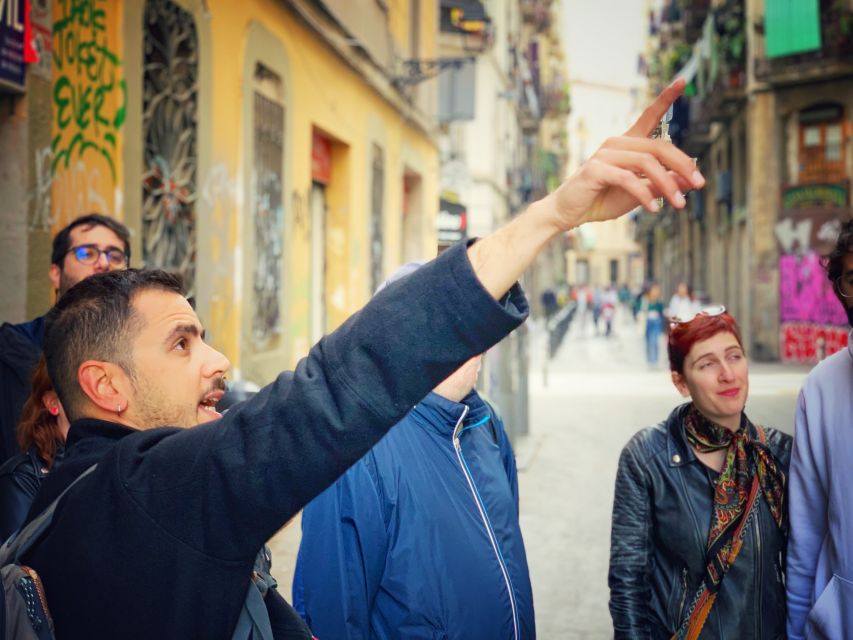
The tour’s hardest task is also its most useful one: making sense of the factions. Franco’s forces were supported by conservative and authoritarian interests, along with military rebels and powerful foreign backing. The Republic included several political movements that did not share a single plan for Spain.
Anarchists played a major role in Barcelona and are important to understanding the city’s revolutionary period. Socialists and communists had their own aims and international connections. Catalan political forces added another layer, since questions of regional autonomy and Spanish state power were tied to the conflict.
The guide also explains the International Brigades, the foreign volunteers who came to fight for the Republic. Their presence shows why the war became an international cause before the Second World War. Hitler and Mussolini supported Franco, while the Western democracies responded with policies that left the Republic isolated. These outside choices changed the balance of the conflict.
The best way to approach this section is with patience. You do not need to arrive as a specialist, but a short introduction to the basic timeline will help. One guide has warned that the material can feel advanced at points, especially if you know nothing about the war. That is not a reason to avoid the tour, but it is a good reason to read a short overview first.
The explanations are designed to make the subject accessible, and the guides allow questions. Still, this is not a light entertainment tour with a few historical decorations. You will get more from it if you are ready to concentrate.
Women, religion, and life after the fighting
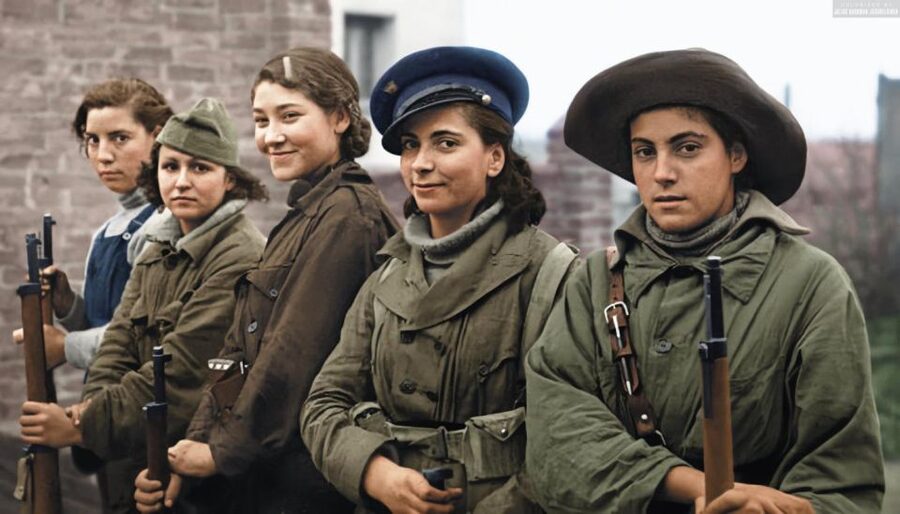
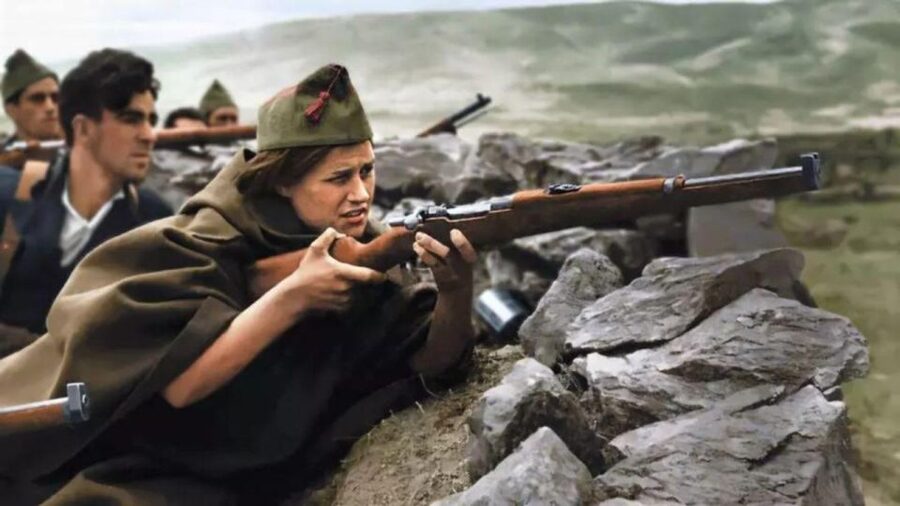
A major strength is the attention to people beyond the best-known male political leaders. The tour discusses women’s roles in the Second Republic and the Civil War, including Mujeres Libres, an anarchist women’s organization that worked for both social revolution and women’s freedom.
That topic adds needed depth. War histories often mention women as victims or symbols, then move on. Here, the guide can show how women organized, worked, fought, educated others, and argued about what a new society should look like. It helps you see the period as a social transformation as well as an armed conflict.
The Catholic Church is another key subject. Its role cannot be reduced to a single sentence, and the guide places religion within the political and social divisions of the time. This is important for understanding why the war carried such moral and emotional force for many Spaniards.
The tour does not stop in 1939. It follows the effects of Franco’s dictatorship and asks how Spain deals with the period now. Since there are very few official museums or memorials devoted to the Civil War, a guided walk can provide context that the city’s public spaces do not explain on their own.
The discussion of historical memory is likely to be one of the most thought-provoking parts. Spain still carries unresolved questions about public remembrance, silence, responsibility, and the legacy of dictatorship. The guide connects the past to current Spanish politics without turning the walk into a campaign speech.
What the $46 price gets you
At $46 per person, this is not the cheapest walking activity in Barcelona. You are paying for a specialist subject, a 2.5-hour English tour, and a guide who can organize a difficult political story while handling questions in the street.
I think the price is fair if you want more than a general introduction to Barcelona. A typical old-town stroll may point out architecture and tell a few colorful stories. This tour gives you a framework for understanding why the city’s neighborhoods and politics developed as they did.
The value is strongest for readers of Orwell, students of European history, visitors with an interest in political movements, and anyone who wants to understand Spain beyond food, architecture, and beaches. It can also be worthwhile early in your stay, since the social and political context may change how you see other parts of Barcelona.
It is less suitable if you want a relaxed sightseeing walk with frequent photo stops. Food and drinks are not included, and there is no hotel pickup or drop-off. You finish near Barcelona city hall in the Gothic Quarter, a useful location for continuing your day, but you should plan your own meal and transportation afterward.
Private groups are available. That option may suit families, friends, or study groups that want more time for questions and discussion. The standard format is in English, with an optional English audio guide listed as available.
Weather, accessibility, and the right audience
The tour runs rain or shine. Barcelona weather can shift, so carry a light rain layer and wear shoes that remain comfortable on old-town paving. Cold-weather visitors should bundle up, since the waiting and listening periods can feel chilly even when the walking is easy.
The route is listed as wheelchair accessible. Since the tour takes place in the old town, anyone with specific mobility needs should still confirm the details for the chosen departure. The supplied information does not describe every surface or route variation.
Children are allowed, but the experience is not aimed at young children. Politics, war, dictatorship, repression, and civilian suffering are serious subjects. Teenagers with an interest in history may enjoy it, and one family found it suitable for two teenagers, but parents should decide based on maturity and attention span.
I would choose this tour for:
- People who want a serious history experience in Barcelona
- Readers of Homage to Catalonia
- Visitors who find the war’s competing factions confusing
- Students and teachers seeking a street-level introduction
- Anyone curious about Franco’s long dictatorship and Spain’s public memory
- Repeat visitors who have already seen the major architectural sights
I would skip it if you mainly want a scenic route, shopping time, or a family activity built around fun stories.
Should you book the Spanish Civil War walking tour?
Book it if you want to understand the forces that shaped modern Barcelona and Spain. The strongest reason to go is not the number of sights. It is the guide’s ability to make ordinary streets speak about revolution, foreign intervention, dictatorship, and memory.
You will get the most from it by reading a short Civil War timeline first, arriving ready to listen, and allowing the subject to remain complicated. Guides such as Javier, Chrisa, Yannis, Filipa, Henrieta, and Evan have been praised for making the material clear, answering questions, and using photographs to bring the past into view.
At $46, it is a considered purchase, but the 2.5-hour length and specialist focus make it good value for history-minded visitors. Add the small €1 equipment charge, dress for the weather, and remember that you will be standing more than the distance suggests.
If Barcelona’s usual sights leave you curious about the people and politics behind them, I would make room for this tour.
FAQ
Where does the Spanish Civil War walking tour begin?
It begins on the sidewalk in front of the Foot Locker at Plaça de Catalunya. Your guide will be holding a white umbrella.
How long does the tour last?
The tour lasts about 2.5 hours.
Where does the tour finish?
It finishes in the middle of the Gothic Quarter, by Barcelona city hall.
What language is the tour conducted in?
The live tour guide speaks English. An optional English audio guide is also listed.
Is the tour suitable for children?
Children are allowed to join, but the tour is not advised for young children because it covers politics, war, and dictatorship.
Is the tour wheelchair accessible?
Yes, the activity is listed as wheelchair accessible.
Does the tour run in bad weather?
Yes. It takes place rain or shine, so bring suitable clothing and shoes.
Is food or drink included?
No. Food and drinks are not included.
Is hotel pickup included?
No. You must make your own way to Plaça de Catalunya, and you are responsible for your own arrangements after the tour.
Is there an extra charge for the audio equipment?
Wireless tour guiding systems are typically used, depending on the guide. An additional €1 per person is charged at the start and can be paid by card or cash.
Recently reviewed around Barcelona
- Excursion Aigüestortes – Estany Llebreta (1/2 day)★ 5.0 · 138 reviews
- E-Bike tour in Barcelona with English Guide★ 5.0 · 128 reviews
- Wine Tasting Experience in Barcelona★ 5.0 · 172 reviews
- Barcelona Luxury Yacht Cruise – Day or Sunset, Open Bar & Snacks★ 5.0 · 154 reviews
- Montserrat: Cog-Wheel, Basilica, Black Madonna & Licor Tasting★ 4.5 · 886 reviews
- Barcelona Wax Museum Admission Ticket★ 4.5 · 237 reviews
- Barcelona: Wine Tasting and 5 Course Tapas Pairing Dinner★ 4.5 · 129 reviews
- Andorra Original History and Sightseeing Tour (Private, Pickup)★ 5.0 · 350 reviews
Historical Tours, compared.
Madrid Essential: Historic Center, Plaza Mayor & Royal Palace
Read our review →
Tapas Walking Tour with Food, Wine, and History
Read our review →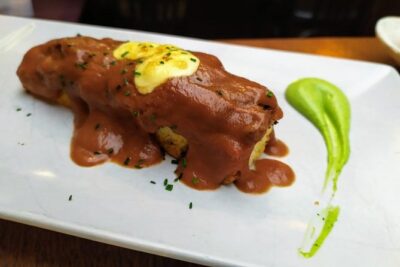
Sevilla Food Tour: Tapas, Wine, History & Traditions
Read our review →
Valencia Old Town Tour with Wine & Tapas in 11th Century Historic Monument
Read our review →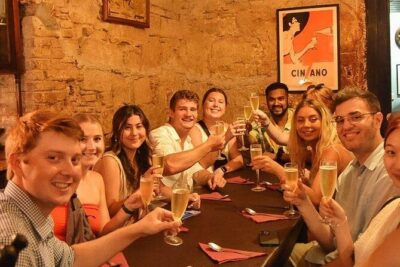
Barcelona Tapas Walking Tour: Food, Wine & History
Read our review →
Ultimate Seville Tapas, Wine & History Small Group Tour
Read our review →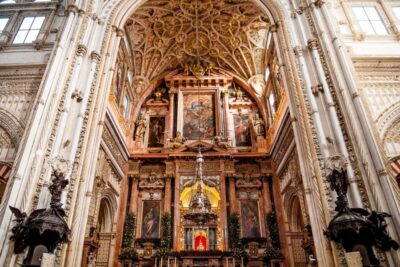
Skip-the-Line Great Mosque-Cathedral History Tour
Read our review →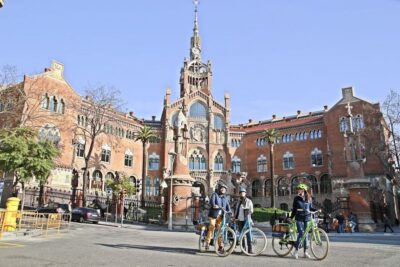
Browse the lists this tour appears in