Reviewed · TICKETS
Barcelona: Sant Pau Recinte Modernista Entry Ticket
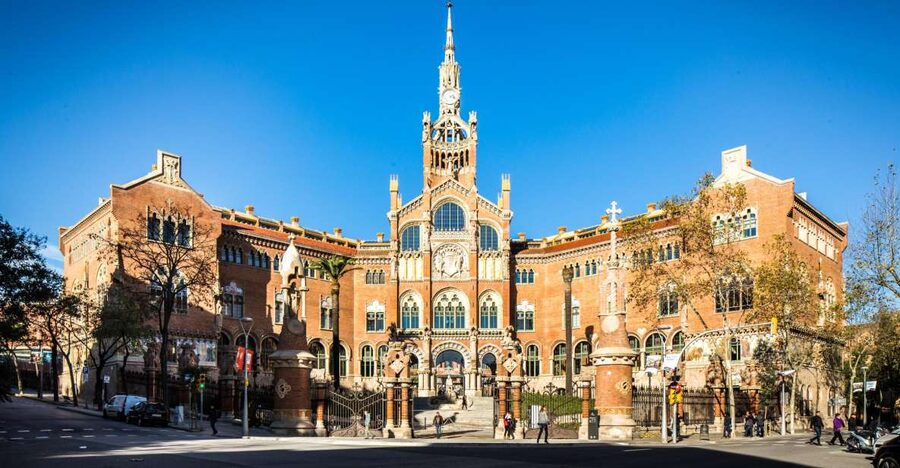
Sant Pau Recinte Modernista is one of Barcelona’s great surprises: a former public hospital designed as a garden city, not a grim block of wards. Lluís Domènech i Montaner filled it with colorful tiles, sculpture, stained glass, gardens, and underground passages.
I like the way the site joins serious social history with beautiful design, and I like that you can explore at your own speed instead of being tied to a tour group. The nearby metro stop also makes it easy to pair with the Sagrada Família.
The main drawback is that this ticket does not include a guided tour. You will get more from the visit if you read the displays carefully or arrange an audio guide if one is available, and the site can take longer than the advertised 1.5 hours if you stop for every detail.
In This Review
- Key points to know before you go
- Why Sant Pau is more than a pretty hospital
- Arriving at Carrer de Sant Antoni Maria Claret, 167
- The central courtyard and the garden-city idea
- Pavilions filled with tile, sculpture, and stained glass
- Inside the former hospital buildings
- Underground passages and the less obvious details
- How the self-guided visit works
- Is $21 a fair price?
- Who will get the most from Sant Pau?
- Practical tips for a better visit
- Should you book Sant Pau Recinte Modernista?
- FAQ
- How long does the Sant Pau Recinte Modernista visit take?
- Is a guided tour included?
- Where is Sant Pau Recinte Modernista located?
- Is Sant Pau wheelchair accessible?
- Can children visit Sant Pau for free?
- Can I cancel my booking?
Key points to know before you go
- A hospital designed around fresh air and gardens: Sant Pau was planned as a humane place for healing, especially for people who could not afford private care.
- A full Modernista complex, not one decorated building: You move among pavilions, courtyards, gardens, tunnels, mosaics, and stained-glass details.
- Self-paced access: The ticket gives you entry for one day, so you can take your time rather than rush through a fixed itinerary.
- A strong choice for medical professionals: Historical instruments, a preserved hospital room, and changing medical practice add another layer to the architecture.
- Easy to fit into a Barcelona day: The address is Carrer de Sant Antoni Maria Claret, 167, near a metro station and a short distance from the Sagrada Família.
- Plan for practical limits: Carry-on-size lockers are available, but there is no guided tour included and no cafe is listed inside the complex.
Why Sant Pau is more than a pretty hospital
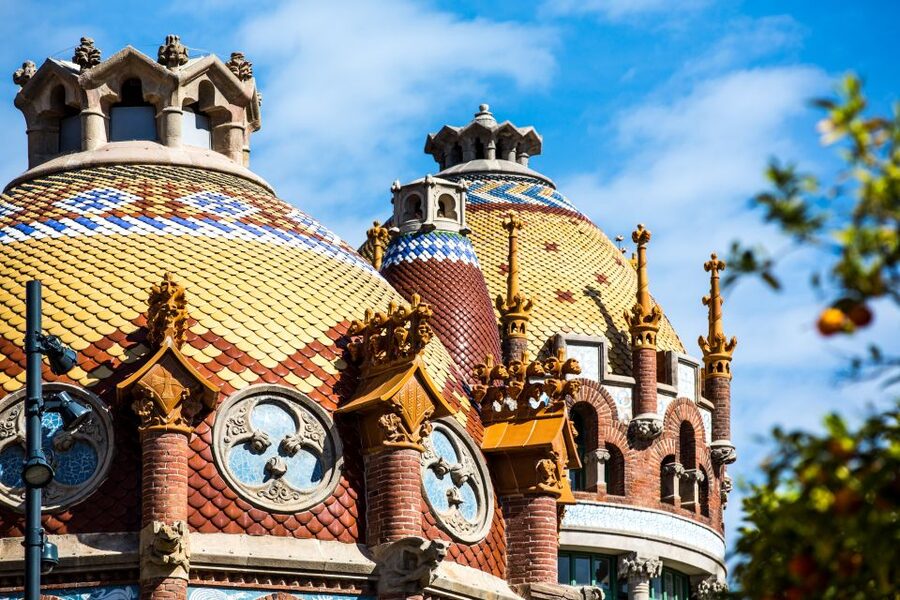
Barcelona is famous for Gaudí, but Sant Pau gives you a different view of Catalan Modernisme. Domènech i Montaner created a place where architecture, art, public health, and charity worked together.
The old Hospital de la Santa Creu in El Raval had become too small by the late 19th century. The solution was a new hospital outside the crowded old city, built between 1905 and 1930. Its design reflected new thinking about hygiene and recovery: patients needed light, air, gardens, space, and calm surroundings.
That idea is important when you walk through the site. The decoration is not simply there to impress you. The complex was planned around care, movement, ventilation, and separation of hospital functions.
Sant Pau operated as a public hospital for about a century. It was only later restored and opened as a cultural site and knowledge campus. The result is unusual. You are not touring a palace or private mansion. You are walking through a place that was still connected to medical care in the recent past.
That gives the visit its emotional weight. The tiled walls and ornamental ceilings are beautiful, but they also frame the daily lives of patients, nurses, doctors, and families.
More Barcelona trips worth a second look
- Barcelona: Sagrada Familia Entry Ticket with Audio Guide
★ 4.6 · 105,312 reviews - Barcelona: Park Güell Admission Ticket
★ 4.4 · 76,534 reviews - Barcelona Aquarium: Entry Ticket
★ 4.3 · 13,335 reviews
Arriving at Carrer de Sant Antoni Maria Claret, 167
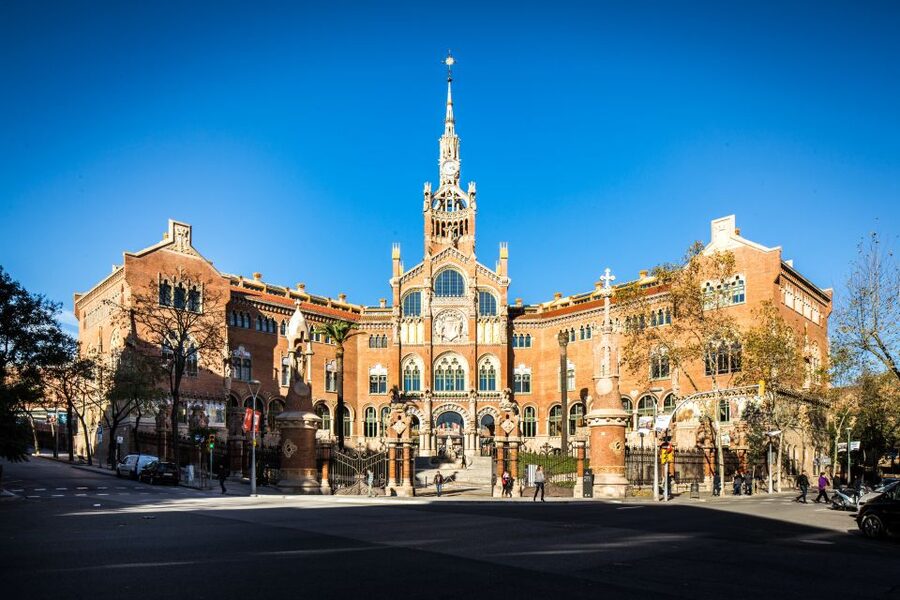
The official address is Carrer de Sant Antoni Maria Claret, 167, in Barcelona. A metro station is close by, making this a practical stop if you are already visiting the Sagrada Família. The two sites are near enough to combine, though Sant Pau deserves more than a quick glance between major attractions.
Allow at least 1.5 hours for the basic visit. I would plan closer to two hours if you want to read the historical panels, examine the medical displays, and explore the buildings and gardens without hurrying.
The entrance process is generally straightforward. Online booking can be useful during busy periods, though the site has often been calm early in the day. Arriving around 9:30 in the morning may give you a quieter start, especially if you want clear views across the central courtyard.
If you are carrying luggage, lockers are available according to visitor information. They are suitable for carry-on-size bags, not large suitcases, so do not treat the site as full luggage storage.
There are cafes just outside the complex, but a cafe is not listed as part of the attraction. I would have coffee or a snack before entering if you want a relaxed visit.
The central courtyard and the garden-city idea
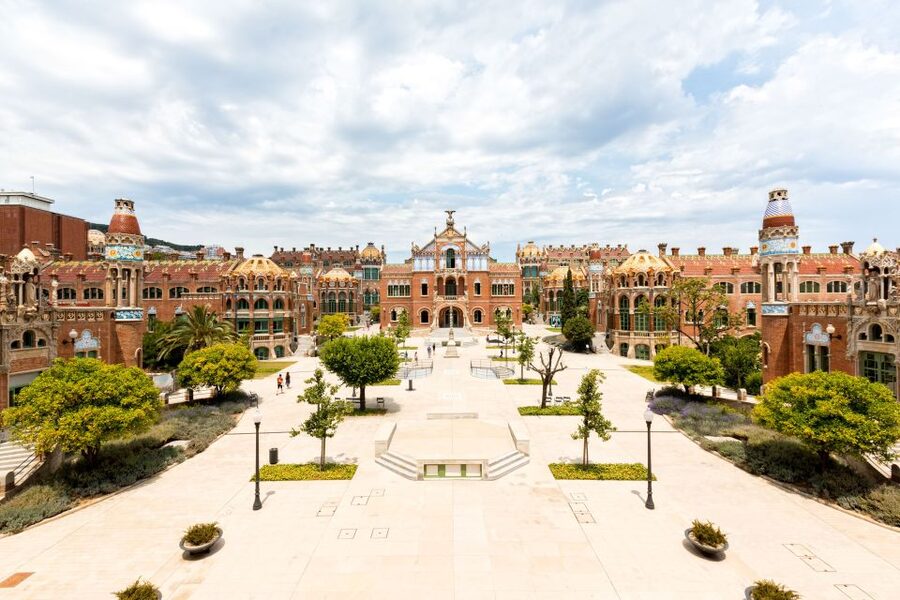
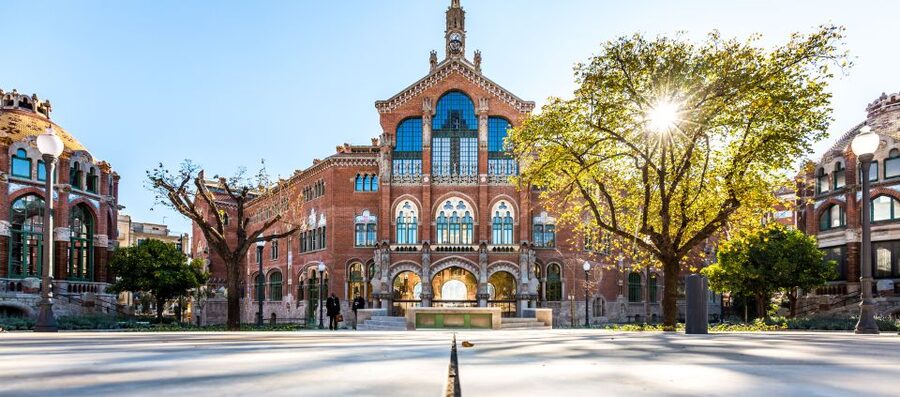
Your first strong impression comes from the scale and order of the complex. Sant Pau was designed as a collection of pavilions rather than one enormous hospital block.
The central space helps you understand Domènech i Montaner’s plan. Gardens separate the buildings, while underground passages connect them. This arrangement allowed the hospital to function as one institution without forcing every patient and staff member into a single crowded structure.
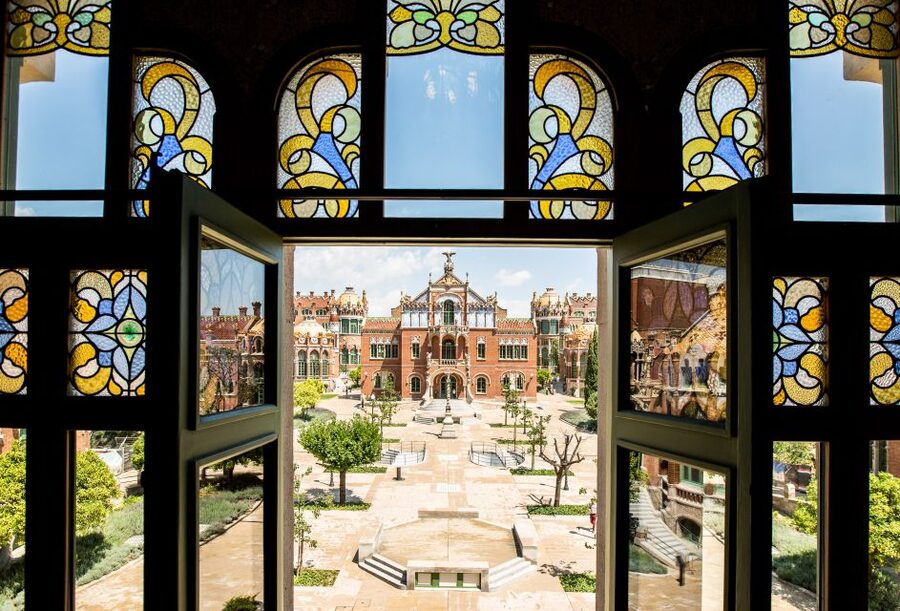
Look across the courtyard before entering the pavilions. The view makes clear how much thought went into symmetry, color, and open space. The architecture is grand, but the gardens soften it.
This is also a good place to pause and consider the original purpose. The hospital served charitable and welfare needs, with care intended for people who had few resources. The decoration was not reserved for the wealthy. Patients were surrounded by art, sunlight, tiled surfaces, and gardens as part of a modern approach to treatment.
I like this part of Sant Pau because it gives the building a human scale. You are not simply collecting photographs of ornate facades. You are seeing how design was meant to affect a sick person’s daily experience.
Pavilions filled with tile, sculpture, and stained glass
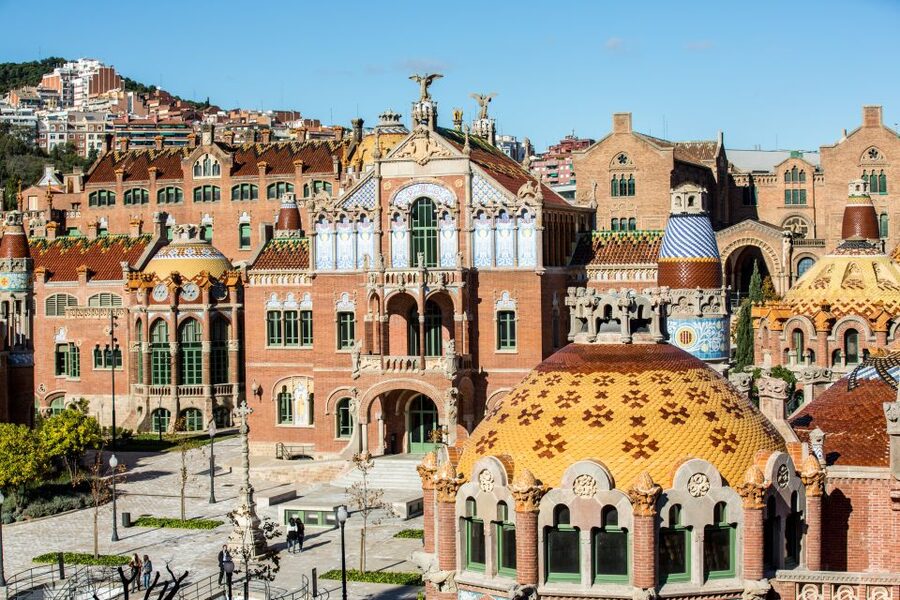
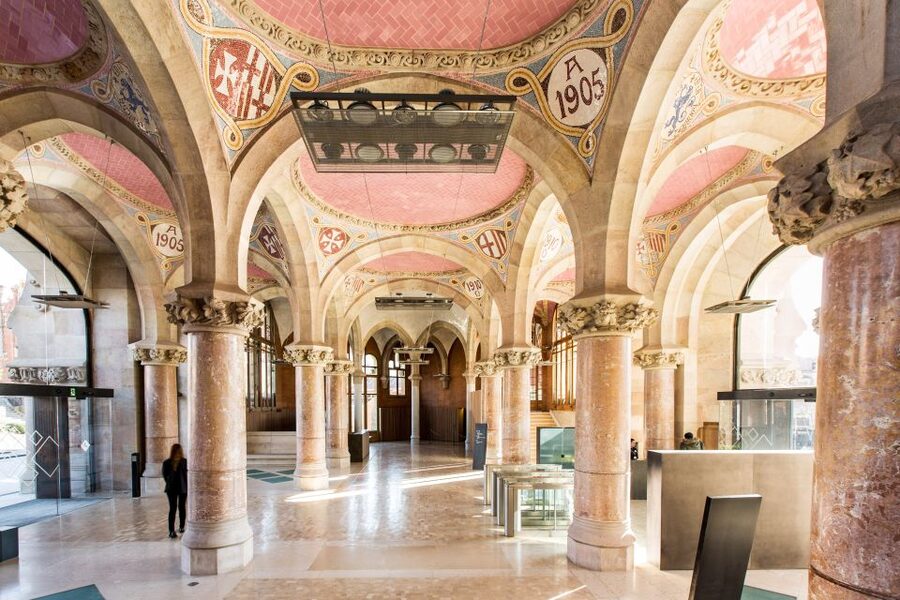
The pavilions are the heart of the visit. Their exteriors use the familiar Modernista language of curved forms, colored tile, carved stone, floral patterns, and symbolic sculpture.
Do not walk with your eyes fixed at ground level. Always look up. Decorative ceilings, arches, rooflines, and small details reward a slower pace. The buildings can look similar at first, but each reveals different patterns and viewpoints as you move around them.
The mosaics deserve special attention. Some are easy to miss if you only photograph the main facade, so walk around the sides of the front buildings. Mural mosaics and smaller decorative sections appear away from the most obvious viewpoint.
Stained glass adds another layer. It changes the interior atmosphere and helps explain why the complex feels more like an art museum than a conventional hospital museum. Light, color, and pattern are part of the architecture, not separate exhibits added later.
The restored condition is a major advantage. The buildings and grounds are carefully maintained, allowing you to see the design with much of its original force. At the same time, the polished setting can make it easy to forget that these were working hospital buildings. The historical displays help bring that practical past back into view.
A different way to spend the day, same corner of Spain:
- Barcelona: Casa Batlló Entry with Self-Audioguide Tour
★ 4.7 · 25,359 reviews - Barcelona: 24 or 48-Hour Hop-On Hop-Off Bus Tour
★ 4.4 · 20,872 reviews - Barcelona: Park Guell Guided Tour with Skip The Line Entry
★ 4.7 · 17,563 reviews - Barcelona in 1 Day: Sagrada Familia, Park Guell,Old Town & Pickup
★ 5.0 · 13,541 reviews
Inside the former hospital buildings
Inside, you get a clearer sense of how Sant Pau operated. The experience includes medical instruments from the period and a hospital room arranged as it was in 1932.
That preserved room is especially useful because it grounds the visit in ordinary hospital life. The grand exterior tells you about architecture and public ambition. The room tells you about patients, equipment, beds, and the actual conditions of care.
For anyone with a medical or nursing background, this section may be the highlight. Historical treatment methods and the changing roles of medical staff give the visit more substance than a simple architecture walk.
You may also find interesting parallels between hospital staff and administration. The complex was built to serve a social mission, but running a large institution still required organization, hierarchy, and practical decisions. Sant Pau lets you think about both sides at once.
The displays are presented clearly, but you will need to give them time. If you rush from facade to facade, you may miss the story of why the hospital was built and how its medical purpose shaped the site.
One useful improvement would be clearer notice of the explanatory video in a small side room. It may not be obvious at first, so look for audiovisual material rather than assuming the main rooms contain everything.
Underground passages and the less obvious details
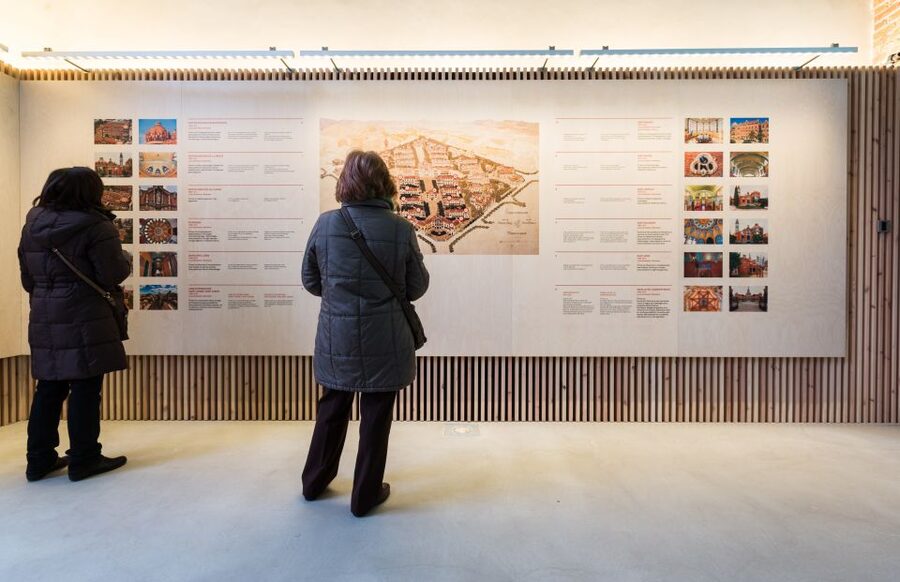
The underground passages are one of Sant Pau’s most distinctive features. They connected the hospital pavilions and made it possible to move through the complex without relying only on outdoor routes.
These tunnels help you understand the site as a functioning hospital. They were not decorative extras. They were part of the practical system that linked wards and services.
The passages also add variety to the visit. After studying bright facades and open gardens, you move into a more enclosed setting. The change helps reveal the difference between Sant Pau as a beautiful public monument and Sant Pau as a working institution.
Signage has not always been perfectly clear, especially outdoors and at points where you need to decide which direction to take next. I recommend checking the map or printed information at the start instead of wandering randomly.
The self-guided format has a real benefit here. You can spend extra time in a tunnel, pavilion, or courtyard that interests you, then move on when you are ready. The tradeoff is that you may not understand the purpose of every space without an audio guide or careful reading.
How the self-guided visit works
This is an entrance ticket, not a guided tour. You are free to set your own rhythm, which suits visitors who dislike fixed schedules or large groups.
A printed pamphlet can be enough for a basic visit. If you want a fuller explanation, check whether an audio guide is available. Some people find it especially helpful for connecting the architecture to the hospital’s medical and social story.
The self-paced approach works well for photographers, architecture fans, and anyone who likes to stop often. You can sit in the courtyard, study a mosaic, or revisit a pavilion without holding up a group.
It is less ideal if you want a specialist to explain symbolism, construction, and medical history as you go. The missing guided element is the clearest weakness of the ticket.
Still, the layout is manageable, and the site is not just one huge building where you can lose an entire day. Most people should be able to see the major areas in 1.5 to two hours, with longer visits possible for museum and medical-history enthusiasts.
Is $21 a fair price?
At about $21 per person, Sant Pau is not the cheapest quick stop in Barcelona. I think the price is fair if you care about architecture, history, or public health, because the ticket covers access to a large and unusual complex rather than one room or viewpoint.
The value improves when you use the ticket for a proper visit. A rushed 30-minute walk through the courtyard would not make the best use of the admission. Give yourself enough time for the pavilions, gardens, underground passages, preserved room, instruments, and explanatory material.
Compared with Barcelona’s most famous Modernista attractions, Sant Pau also offers a calmer experience. It may not have the same international fame as the Sagrada Família, but it gives you a more complete sense of how Modernisme could shape an entire institution.
The ticket is a particularly good buy for medical professionals, nurses, architecture students, history fans, and repeat visitors to Barcelona. It is less essential if your only goal is to see the city’s most famous landmark interiors and your schedule is very tight.
The booking terms add useful flexibility. You can cancel up to 24 hours before the visit for a full refund, and the reserve-now, pay-later option lets you keep plans open. The ticket is valid for one day, with starting times depending on availability.
Who will get the most from Sant Pau?
I would put Sant Pau high on the list for:
- People who want a quieter alternative to Barcelona’s busiest sights
- Anyone interested in Catalan Modernisme beyond Gaudí
- Medical workers and nursing professionals
- Visitors who enjoy restored historic interiors
- Families with children old enough to appreciate buildings and history
- Anyone pairing the visit with the Sagrada Família
Children aged 11 and under may enter free, but a parent or guardian must be present. The complex is wheelchair accessible, which makes the broad outdoor layout useful for visitors with mobility needs.
Pets are not allowed, and smoking, alcohol, and drugs are prohibited. These rules are simple, but remember that Sant Pau remains a protected cultural site, not a casual public park.
I would be cautious about bringing very young children who need constant entertainment. The complex is visually exciting, but much of the value comes from reading, looking closely, and understanding how the hospital worked.
Practical tips for a better visit
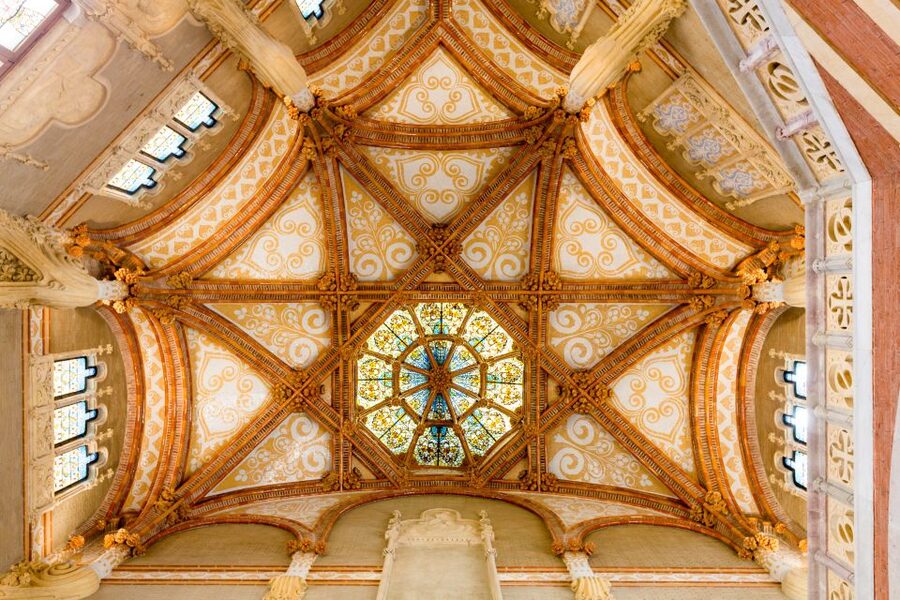
Arrive early if you want the courtyard and main views to feel calm. Morning light can also help with photographing the tilework and facades, though the exact effect depends on the season.
Wear comfortable shoes. You will be walking between pavilions, across gardens, and through underground passages. The site is not difficult, but you will enjoy it more if you are not hurrying or uncomfortable.
Keep your ticket time and address handy. Navigation apps can occasionally send people toward the wrong location, so use the official street address rather than relying only on a general search for Hospital Sant Pau.
Take a moment to walk around the sides of the front buildings. This is where some of the mural mosaics appear, away from the main central view.
If you are flying out later in the day, the location can work well as a final Barcelona stop, provided your luggage fits the available lockers and you leave plenty of time for the airport. A nearby metro connection is useful, but no airport transfer is included with admission.
Should you book Sant Pau Recinte Modernista?
Yes, if you want an attraction that combines exceptional architecture with a real social purpose. Sant Pau is beautiful, but its strongest quality is the way beauty, hygiene, charity, and medical care come together in one place.
Book it if you have already planned the Sagrada Família and want another Modernista site with a different mood. Book it if you work in medicine, enjoy historic hospitals, or prefer a self-guided visit where you can take your time.
Skip it only if your Barcelona schedule is so short that you can spare no more than a quick photo stop, or if you strongly prefer a live guide. For most visitors with two available hours, the $21 admission earns its place in the itinerary.
FAQ
How long does the Sant Pau Recinte Modernista visit take?
The experience is described as a 1.5-hour visit, but the ticket is valid for one day. You can spend longer exploring the pavilions, gardens, underground passages, medical displays, and preserved hospital room.
Is a guided tour included?
No. The ticket includes entrance to Sant Pau Recinte Modernista, but not a guided tour. You explore independently, and you may be able to use an audio guide if available.
Where is Sant Pau Recinte Modernista located?
The meeting point and entrance address is Carrer de Sant Antoni Maria Claret, 167, 08025 Barcelona. A metro station is nearby, and the site is a short distance from the Sagrada Família.
Is Sant Pau wheelchair accessible?
Yes. Sant Pau Recinte Modernista is wheelchair accessible.
Can children visit Sant Pau for free?
Children aged 11 and under are permitted to attend free of charge. A parent or guardian must be present.
Can I cancel my booking?
Yes. You can cancel up to 24 hours in advance for a full refund. A reserve-now, pay-later option is also available.
Recently reviewed around Barcelona
- Excursion Aigüestortes – Estany Llebreta (1/2 day)★ 5.0 · 138 reviews
- E-Bike tour in Barcelona with English Guide★ 5.0 · 128 reviews
- Wine Tasting Experience in Barcelona★ 5.0 · 172 reviews
- Barcelona Luxury Yacht Cruise – Day or Sunset, Open Bar & Snacks★ 5.0 · 154 reviews
- Barcelona: Wine Tasting and 5 Course Tapas Pairing Dinner★ 4.5 · 129 reviews
- Montserrat: Cog-Wheel, Basilica, Black Madonna & Licor Tasting★ 4.5 · 886 reviews
- Barcelona Wax Museum Admission Ticket★ 4.5 · 237 reviews
- Andorra Original History and Sightseeing Tour (Private, Pickup)★ 5.0 · 350 reviews
Tickets, compared.
Sagrada Familia Entry Ticket with Audio Guide
Read our review →