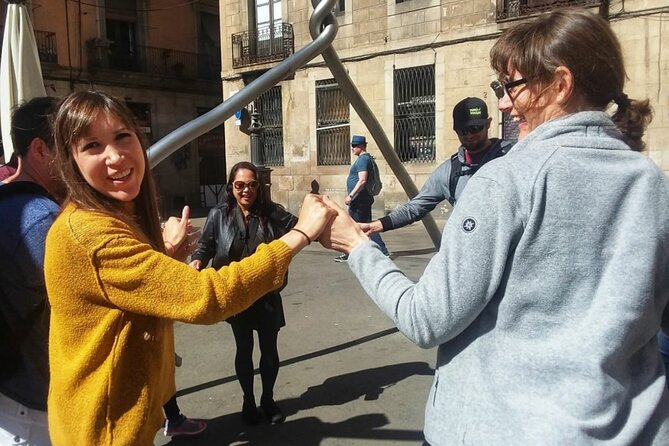
Reviewed · BARCELONA TOURS
Barcelona Old Town & Gothic Quarter Small Group Tour
Barcelona’s Old Town is easiest to understand on foot, but its narrow lanes can turn a simple walk into a puzzle. This 2.5-hour route links Roman remains, medieval churches, La Rambla, Boqueria Market, and the Born District, giving you a useful first look at the city’s oldest quarters.
I like the small-group format, which gives you a better chance to ask questions than on a large city tour. I also like the range: you get history, architecture, food-market color, and practical city orientation for $22.15.
The main drawback is that this is a brisk overview, not a deep visit inside every monument. Cathedral and Santa Maria del Mar admission are not included, and the meeting-point address deserves a careful map check before you set out.
In This Review
- Key points to know before booking
- Why this route works for a first look at Barcelona
- Starting among Roman remains in the Gothic Quarter
- Ciutat Vella and the story of Barcelona’s oldest city
- La Rambla: Barcelona’s famous public stage
- Boqueria Market for color, food, and a short break
- Plaça Reial and Gaudí’s early lanterns
- Barcelona Cathedral and the limits of a walk-by visit
- El Born and Santa Maria del Mar
- Ending near Palau de la Música Catalana
- Guides, group size, and the feel of the walk
- Timing, meeting point, and practical value
- Who should book this Old Town tour?
- Should you book it?
- FAQ
- How long does the Barcelona Old Town tour last?
- What areas does the walking tour visit?
- Is the tour offered in English?
- Are cathedral and basilica entrance fees included?
- What is the group size?
- Are children allowed on the tour?
- Can I cancel for a full refund?
Key points to know before booking
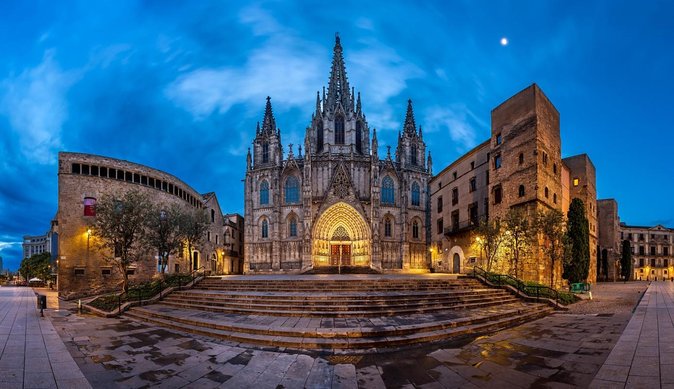
- Roman Barcelona and medieval lanes: See traces of the ancient settlement among the winding streets of the Gothic Quarter.
- A broad Old Town route: Cover Ciutat Vella, La Rambla, Boqueria Market, Plaça Reial, El Born, and two major churches.
- Small groups with room for questions: The tour is designed for a more personal experience, with group sizes listed as up to 12 and, in the additional details, up to 15.
- Strong guide feedback: Guides such as Alba, Isabel, Joris, Steven, Miguel, and Tatiana are repeatedly praised for clear storytelling and friendly help.
- Good value at $22.15: You receive a local guide and a substantial walking route without paying separate attraction admission.
- Convenient timing: Morning and afternoon departures make it easy to fit around other Barcelona plans.
Why this route works for a first look at Barcelona
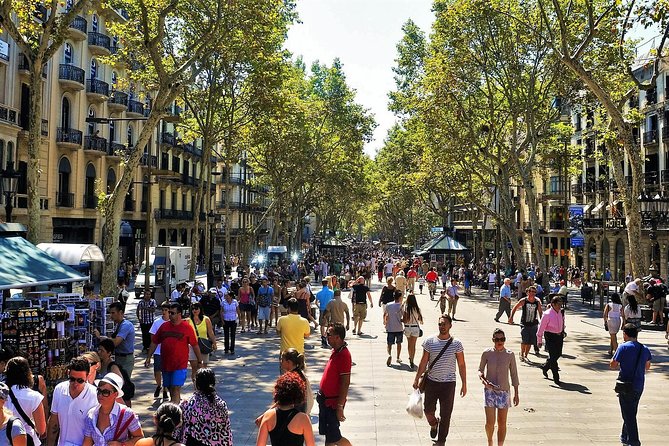
Barcelona’s Old Town is not one single sight. It is a collection of districts layered over one another, each with a different feel and story.
The Gothic Quarter brings the tight medieval lanes. Ciutat Vella gives you the broader idea of the old city. La Rambla adds the famous public face of Barcelona, while El Born shows a more local-feeling mix of old buildings, cultural sites, and popular squares.
I like this progression because it helps you build a mental map. Instead of seeing isolated churches and plazas, you learn how they relate to the former city walls, the old waterfront districts, and the center of modern city life.
At $22.15 per person, the value is especially good if you are new to Barcelona or have only a short stay. You are paying for a guide who can explain what you are looking at and steer you through streets that are easy to miss on your own.
The tradeoff is pace. The route includes many stops, and most are scheduled for about 15 minutes. You will hear the story, look around, and move on. If you want long interior visits, extended photographs, or time to shop and eat, you will need to return independently.
Other Barcelona days travellers weigh against this one:
- Barcelona: Sagrada Familia Entry Ticket with Audio Guide
★ 4.6 · 105,312 reviews - Barcelona: Park Güell Admission Ticket
★ 4.4 · 76,534 reviews - Barcelona: Casa Batlló Entry with Self-Audioguide Tour
★ 4.7 · 25,359 reviews
Starting among Roman remains in the Gothic Quarter
The tour begins at Carrer de Fontanella, 2, in Ciutat Vella. From there, you enter the Gothic Quarter, where the route focuses on narrow streets, small squares, medieval buildings, and Roman remains still visible in parts of the old city.
This is where a guide earns the fee. The quarter can feel like a maze, and the architectural layers are not always obvious. Roman Barcelona, medieval Barcelona, and later city changes appear close together, but without context they can blur into a pleasant collection of stone walls and shadowy lanes.
The guide also brings in legends and stories connected with the quarter. The strongest guides on this route, including Alba, Isabel, Joris, and Steven, are praised for mixing facts with humor, local customs, politics, and memorable anecdotes.
You should wear comfortable shoes. The tour is entirely on foot, and the streets and squares are the main attraction. A small group also matters here, since narrow lanes make it easier to gather everyone around the guide without losing the thread.
Ciutat Vella and the story of Barcelona’s oldest city
Ciutat Vella means Old City in Catalan. The stop is short, but it gives the tour a useful frame: this is the oldest part of Barcelona, not simply a quarter decorated in a Gothic style.
Your guide connects the city’s past with the streets you are walking through. The historical scope can reach from Roman settlement and medieval development to later political and cultural changes in Catalonia.
That broad story is one reason this experience works well near the start of your visit. You are not just collecting names. You are learning the basic shape of Barcelona’s past, which helps later visits to museums, churches, and major landmarks make more sense.
The route does not promise a museum-style treatment of every period. If you already know Barcelona’s history well, you may find some of this introductory. For most first-time visitors, though, the overview is a practical starting point.
La Rambla: Barcelona’s famous public stage
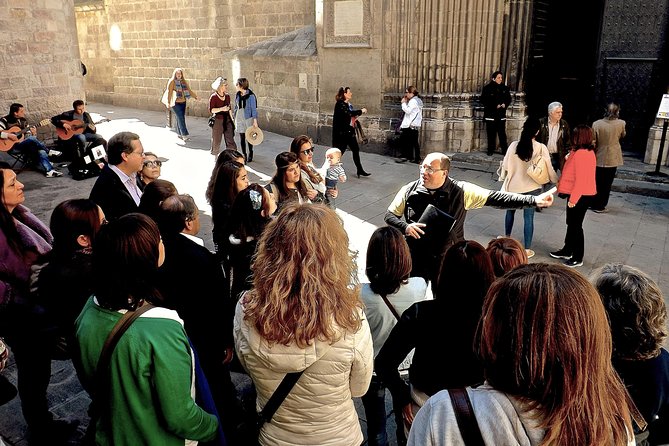
The walk then reaches La Rambla, Barcelona’s best-known avenue. The boulevard follows the line of what was once a sandy stream and a natural defense near the old city wall.
Today, La Rambla is lined with restaurants, bars, shops, street performers, and constant foot traffic. It is one of those places you should see, but it is not necessarily where you will want to spend your whole day.
A guide adds useful context to what can otherwise feel like a crowded commercial street. You learn how the avenue developed and how its position at the edge of the old city shaped its role.
Keep your expectations sensible. The tour gives you a walk along La Rambla, not a long stop for shopping or people-watching. You can return later if you want more time there, and one guest specifically found the market easy to revisit after the tour.
A different way to spend the day, same corner of Spain:
- Barcelona: 24 or 48-Hour Hop-On Hop-Off Bus Tour
★ 4.4 · 20,872 reviews - Barcelona: Park Guell Guided Tour with Skip The Line Entry
★ 4.7 · 17,563 reviews - Barcelona in 1 Day: Sagrada Familia, Park Guell,Old Town & Pickup
★ 5.0 · 13,541 reviews - Barcelona Aquarium: Entry Ticket
★ 4.3 · 13,335 reviews
Boqueria Market for color, food, and a short break
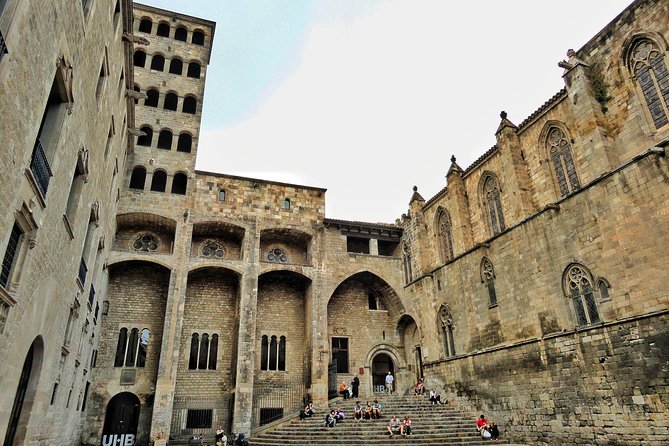
Mercat de la Boqueria is one of the route’s most appealing stops. You enter from La Rambla and get a quick look at the market’s colorful stalls, food traditions, and elegant architecture.
The market is a good change of rhythm after the stone lanes of the Gothic Quarter. You can look at fruit, cured ham, and other food displays, and you may have a chance to buy a fresh juice or something to eat.
Food and drinks are not included in the tour price. That is worth noting, since the market can tempt you into spending extra. If you prefer to focus on the guide, simply use the stop to look around and save the market for a later visit.
I like the way this stop connects sightseeing with daily life. You are not only hearing about Catalan food traditions. You are seeing how food is displayed and sold in a central Barcelona market.
The visit is brief, about 15 minutes. That is enough for an introduction, but not enough for a full market meal or a slow search through every stall.
Plaça Reial and Gaudí’s early lanterns
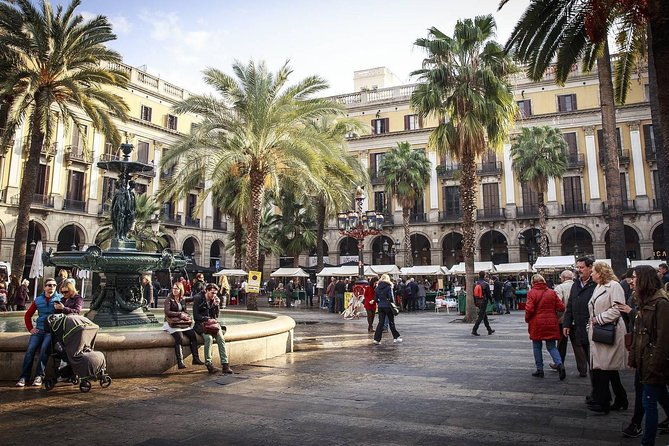
Plaça Reial opens up suddenly after the tight streets of the Gothic Quarter. Its broad space, palm trees, terraces, fountain, and elegant buildings make it an easy place to pause.
The square is associated with artists, bohemians, and people taking a break at its cafés and restaurants. Your guide explains its Napoleonic architectural character and points out the lanterns linked with a young Antoni Gaudí during one of his first public assignments.
That detail gives the stop extra appeal. You are not visiting one of Gaudí’s famous organic buildings, but you are seeing an early piece connected with the architect in a setting that remains central to the Old Town.
Plaça Reial is also a useful orientation point. It shows how Barcelona’s narrow medieval fabric includes larger planned spaces. The contrast helps you read the city instead of simply moving from one attraction to the next.
Barcelona Cathedral and the limits of a walk-by visit
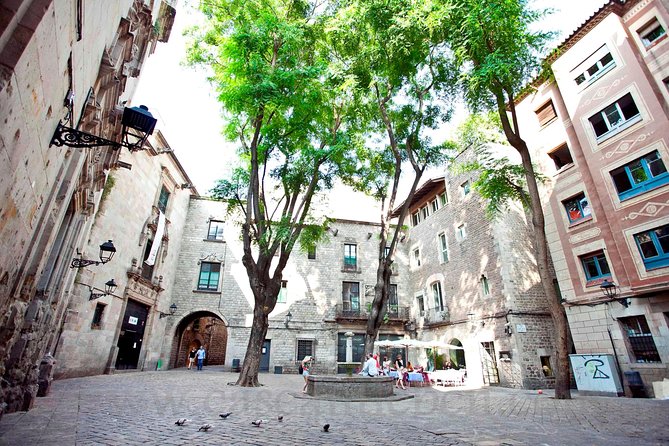
The route passes Barcelona Cathedral, a major Gothic landmark dedicated to Saint Eulalia, the city’s young patron saint. You can admire the exterior, including the gargoyles near the tops of the towers, and hear about the building’s role as the seat of the city’s archbishopric.
The cathedral’s interior, bright patio, and tall columns are part of its appeal, but admission is not included. The schedule allows about 15 minutes, so this is mainly an exterior introduction unless you choose to pay separately and return at another time.
That distinction matters. You should not book this tour expecting a full cathedral visit. You will get the setting and the story, then continue through the Old Town.
For many people, this is the right arrangement. You can decide later if the cathedral deserves more of your time rather than being locked into a long religious-site visit during a general walking tour.
El Born and Santa Maria del Mar
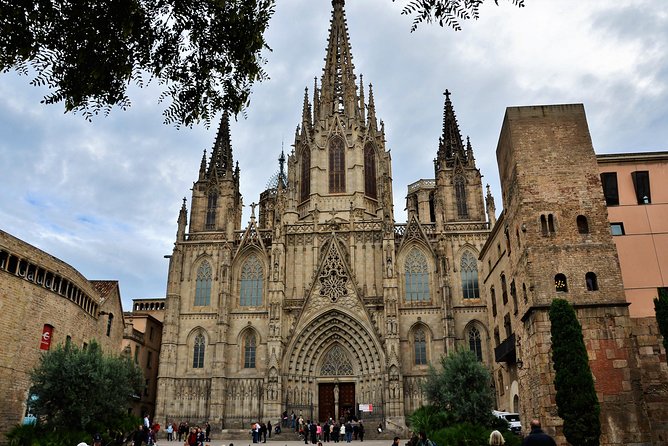
The route continues into El Born, a district known for its mix of older and newer buildings, popular squares, and cultural landmarks. It is another area where wandering without a plan can be enjoyable, but a guide helps you connect the streets with the city’s wider story.
The major stop here is the Basilica of Santa Maria del Mar. The church is closely tied to the neighborhood because local people helped found and build it during the medieval period. It is a key example of Catalan Gothic architecture and is often treated as the Old Town’s people’s cathedral.
Admission is not included, and the scheduled stop is short. You will see the basilica and learn why it matters, but you should plan a separate visit if you want to study the interior carefully.
I consider this one of the route’s strongest historical contrasts. Barcelona Cathedral represents the city’s official ecclesiastical power, while Santa Maria del Mar is presented through its connection with the working neighborhood that built it.
Ending near Palau de la Música Catalana
The walk ends near Palau de la Música Catalana, in the city center and Born District. The building was designed by Lluís Domènech i Montaner, described here as a teacher of Gaudí, and is recognized as a UNESCO World Heritage concert hall.
You finish with a look at Catalan modernism, an architectural style that uses sculpture, mosaic, stained glass, and wrought iron together. That makes a fitting final note after the Roman and medieval sections of the walk.
The tour does not include a concert or an interior visit. You are ending near this architectural landmark, so you can decide later if you want to return for a closer look or another activity nearby.
The end point is useful for your next plan. You are already in the central Old Town, close to more streets, restaurants, cultural sites, and public transportation.
Guides, group size, and the feel of the walk
The strongest part of this experience is the guide. Alba is repeatedly praised for enthusiasm, humor, clear explanations, and her ability to keep children interested. Isabel is praised for weaving history, modern life, local details, and larger ideas into the walk.
Joris receives strong marks for patience, friendliness, and his answers to questions. Steven is noted for mixing city history with local customs and politics. Miguel is praised for involving the whole group and helping people rejoin after they became separated in crowded streets.
Those details tell you what to look for. The tour is not just a list of dates and buildings. A good guide can make Roman stones, a market stall, or a church doorway easier to remember.
The advertised format is a small group of no more than 12 people, while the additional tour information lists a maximum of 15. That is still far more manageable than a large coach-style group, but you should be aware of the discrepancy when booking.
Children must be accompanied by an adult. Children under two can join free, and children aged three to eight receive a 30 percent discount. One family found the route suitable for a stroller, though the tour remains a walking experience through old streets.
Timing, meeting point, and practical value
The tour lasts about two hours and 30 minutes, with morning and afternoon departures. I would choose the morning if you want to use the rest of the day for museums or major sights. An afternoon departure can work well if you arrive late or prefer a slower morning.
The meeting point is Carrer de Fontanella, 2, in Ciutat Vella. One booking issue was reported concerning the map location and the written meeting address being more than 100 meters apart, so check the exact pin and arrive early.
There is no hotel pickup or drop-off. You need to reach the central meeting point yourself, but the location is near public transportation.
The tour is offered in English and uses a mobile ticket. Confirmation is provided when you book. Service animals are allowed, and most people can participate.
Free cancellation is available up to 24 hours before the start time for a full refund. Changes or cancellations within 24 hours are not accepted for a refund, and the cut-off follows local Barcelona time.
Who should book this Old Town tour?
I would recommend it most strongly to first-time visitors, short-stay visitors, and anyone who wants a solid introduction before exploring alone. It also suits families, since guides such as Alba and Isabel have been praised for keeping children engaged.
The tour is a good match if you enjoy history but do not want a formal lecture. You will get stories, architecture, local context, and a few practical suggestions, all while moving through the real streets of the city.
It is less suitable if you want long visits inside churches, a food tour with generous tasting time, or a private pace from start to finish. The private upgrade may solve the last issue, but the standard outing remains a structured group walk.
Should you book it?
At $22.15, this is an easy value choice if you are visiting Barcelona for the first time. You cover a large section of the Old Town, get help with the Gothic Quarter’s maze, and finish near Palau de la Música Catalana.
Book it early if your dates are fixed, since the experience is often reserved well in advance. Before leaving, confirm the meeting-point pin, wear good walking shoes, and decide which church or market you may want to revisit after the group moves on.
You should book this tour if you want orientation, stories, and a broad look at Barcelona’s oldest districts. Skip it only if you already know the Old Town well or prefer to spend your time inside a few monuments rather than moving between many highlights.
FAQ
How long does the Barcelona Old Town tour last?
The tour lasts approximately two hours and 30 minutes.
What areas does the walking tour visit?
The route includes the Gothic Quarter, Ciutat Vella, La Rambla, Mercat de la Boqueria, Plaça Reial, Barcelona Cathedral, El Born, and the Basilica of Santa Maria del Mar. It ends near Palau de la Música Catalana.
Is the tour offered in English?
Yes. The tour is offered in English.
Are cathedral and basilica entrance fees included?
No. Admission to Barcelona Cathedral and the Basilica of Santa Maria del Mar is not included.
What is the group size?
The tour is described as a small group with a maximum of 12 people in the included details. The additional information lists a maximum of 15 travelers.
Are children allowed on the tour?
Yes. Children must be accompanied by an adult. Children under two years old can join free, and children aged three to eight receive a 30 percent discount.
Can I cancel for a full refund?
Yes, if you cancel at least 24 hours before the experience start time. Cancellations or changes made within 24 hours are not refunded.
Recently reviewed around Barcelona
- Excursion Aigüestortes – Estany Llebreta (1/2 day)★ 5.0 · 138 reviews
- E-Bike tour in Barcelona with English Guide★ 5.0 · 128 reviews
- Wine Tasting Experience in Barcelona★ 5.0 · 172 reviews
- Barcelona Luxury Yacht Cruise – Day or Sunset, Open Bar & Snacks★ 5.0 · 154 reviews
- Montserrat: Cog-Wheel, Basilica, Black Madonna & Licor Tasting★ 4.5 · 886 reviews
- Barcelona Wax Museum Admission Ticket★ 4.5 · 237 reviews
- Barcelona: Wine Tasting and 5 Course Tapas Pairing Dinner★ 4.5 · 129 reviews
- Andorra Original History and Sightseeing Tour (Private, Pickup)★ 5.0 · 350 reviews
Barcelona Tours, compared.
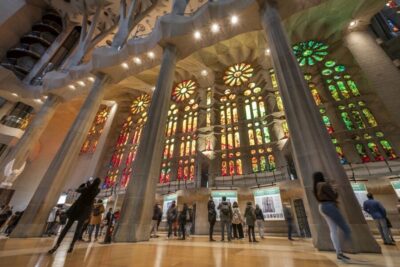
Sagrada Familia Entry Ticket with Audio Guide
Read our review →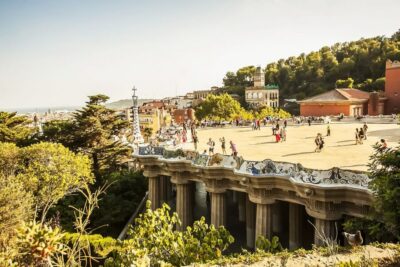
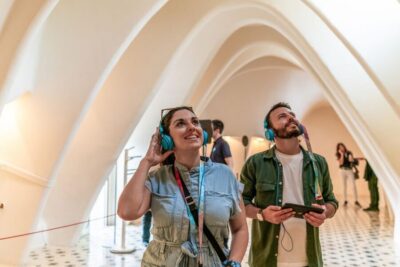
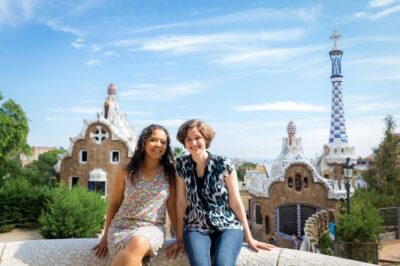
Park Guell Guided Tour with Skip The Line Entry
Read our review →
Barcelona in 1 Day: Sagrada Familia, Park Guell,Old Town & Pickup
Read our review →

Sagrada Familia Skip-the-Line Entry Ticket & Tour
Read our review →