
Reviewed · SELF-GUIDED TOURS
Barcelona: Mies van der Rohe Pavilion Ticket and Audio Guide
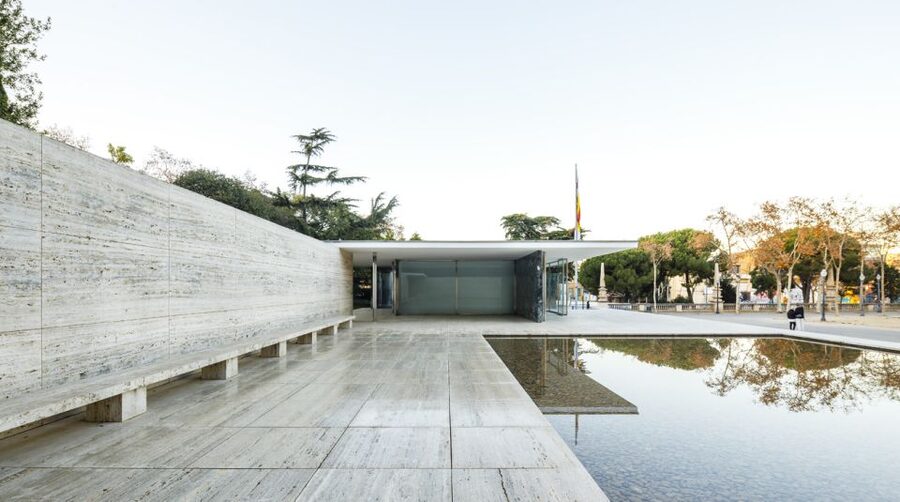
The Mies van der Rohe Pavilion is architecture stripped almost bare: glass, stone, water, steel, and space doing all the talking. Built for the 1929 Barcelona International Exhibition and reconstructed on its original site in 1986, it remains one of the city’s clearest lessons in modern design.
I like the quiet atmosphere and the way the pavilion makes small details feel important, from the precise joints between materials to the smooth movement between inside and outside. I also like that the audio guide gives needed context without turning a short visit into a lecture. The main drawback is simple: at about $10, some people may feel the visit is too brief or too minimal to justify an admission fee.
In This Review
- Key points to know before you go
- Why this small pavilion matters
- Entering the 1929 German Pavilion
- Stone, glass, steel, and water
- A visit built around calm and space
- Is the audio guide worth using?
- What the reconstruction adds to the experience
- Getting value from a $10 ticket
- Who will enjoy the Pavilion most
- Practical rules and small things to know
- Should you book the Mies van der Rohe Pavilion?
- FAQ
- Where is the Mies van der Rohe Pavilion?
- Who designed the Pavilion?
- When was the Pavilion first built?
- Was the original Pavilion preserved?
- What does the ticket include?
- Which languages are available for the audio guide?
- Is the Pavilion wheelchair accessible?
- How long is the ticket valid?
- What can I not bring or do inside?
Key points to know before you go
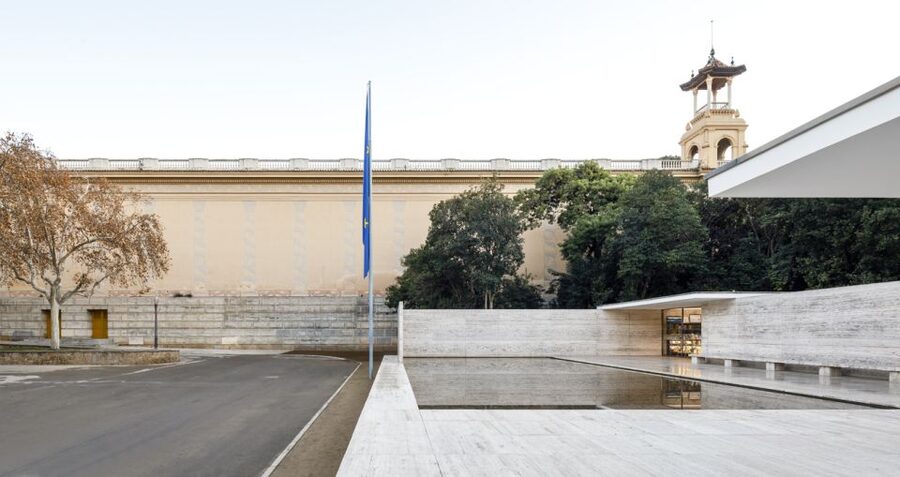
- See a landmark of modern architecture: Mies van der Rohe and Lily Reich designed the pavilion for the 1929 Barcelona International Exhibition.
- Look closely at the materials: Marble from the Alps, travertine from Tivoli, and stone from Atlas and Tinos create the building’s restrained but striking palette.
- Expect a short, calm visit: The pavilion is compact, with no long route or packed schedule to follow.
- Use the five-language audio guide: Commentary is available in Spanish, Catalan, English, French, and German.
- Notice the reconstruction story: The original pavilion was dismantled after the exhibition and rebuilt on its original site in 1986.
- Plan for changing conditions: Artistic interventions, photography sessions, and opening-hour changes may affect what you see.
Why this small pavilion matters
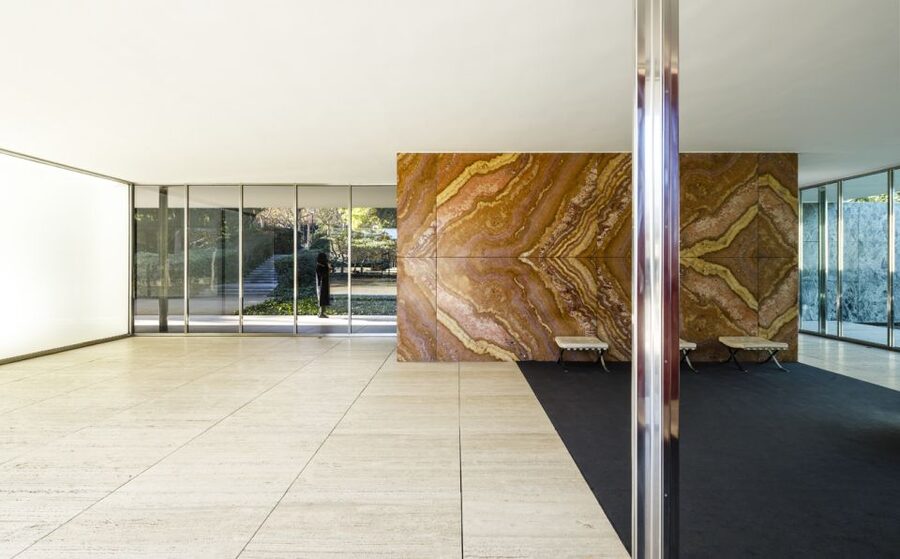
The Pavilion is easy to underestimate from its size. It is not a grand palace, museum, or church. You will not spend hours moving from room to room. Instead, you encounter a carefully arranged composition in which the walls, roof, floor, water, and garden all work together.
Mies van der Rohe and Lily Reich designed it as the German national pavilion for the 1929 Barcelona International Exhibition. The structure was meant to represent modern Germany through clarity rather than ornament. Its message was not delivered through statues or grand decoration. It came through proportion, open space, and expensive materials used with great restraint.
That idea helped shape modern architecture. The Pavilion’s influence reaches far beyond Barcelona because it shows how a building can feel complete without being crowded with detail. I find it useful to visit after seeing some of Barcelona’s more decorative architecture. The contrast is sharp. Here, the eye is asked to slow down and notice alignment, reflection, texture, and empty space.
The building was dismantled after the exhibition ended. Its importance became clearer over time, and a careful reconstruction opened on the original site in 1986. That detail adds another layer to the visit. You are not simply looking at an old exhibition building that survived by chance. You are seeing a modern recreation of a structure considered important enough to bring back.
More Barcelona trips worth a second look
- Barcelona: Sagrada Familia Entry Ticket with Audio Guide
★ 4.6 · 105,312 reviews - Barcelona: Palau de la Música Self-Guided Tour
★ 4.6 · 3,603 reviews - Casa Batllo Admission Ticket with Intelligent Audio Guide
★ 4.5 · 3,168 reviews
Entering the 1929 German Pavilion
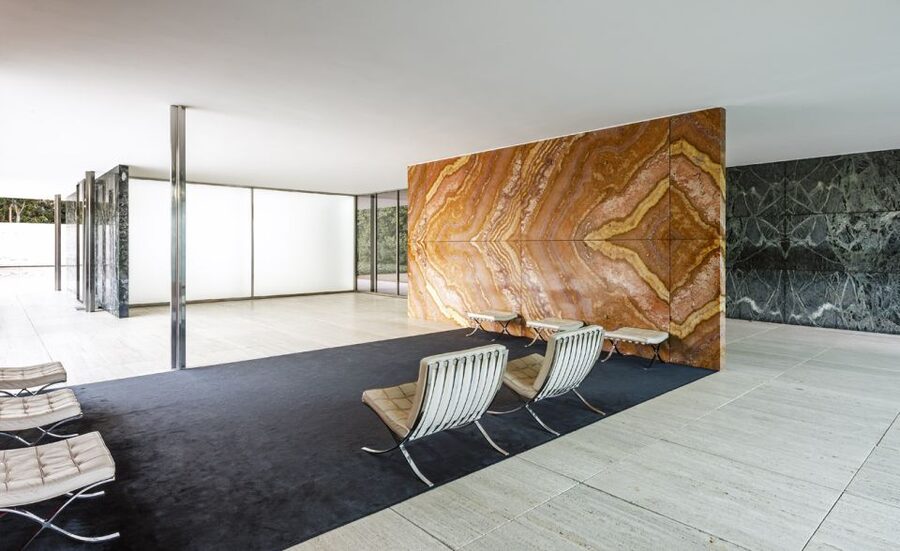
Your ticket gives you entry to the Pavilion and includes an audio guide. The experience begins with the building itself, not with a long introduction or a crowded museum display. You walk into a composition of low horizontal lines, broad glass surfaces, polished stone, and open passages.
The Pavilion does not separate interior and exterior in the usual way. Walls guide your movement, but they do not create a heavy sense of enclosure. Water and garden areas extend the visual space, while the glass lets you keep seeing beyond the rooms. The result is a visit built around movement and changing viewpoints.
I recommend taking a first pass without trying to understand every technical detail. Notice how the building feels. Then use the audio guide to put names and ideas to what you have seen. This two-step approach works well because the Pavilion can be hard to grasp from a photograph or floor plan alone.
The structure’s simplicity also means that there is nowhere for poor upkeep or careless design to hide. Every surface matters. Every line appears deliberate. That is part of the appeal, but it also explains why some people find the visit too spare. If you want layers of decoration, a long historical narrative, or many rooms packed with objects, this is not that kind of attraction.
Stone, glass, steel, and water
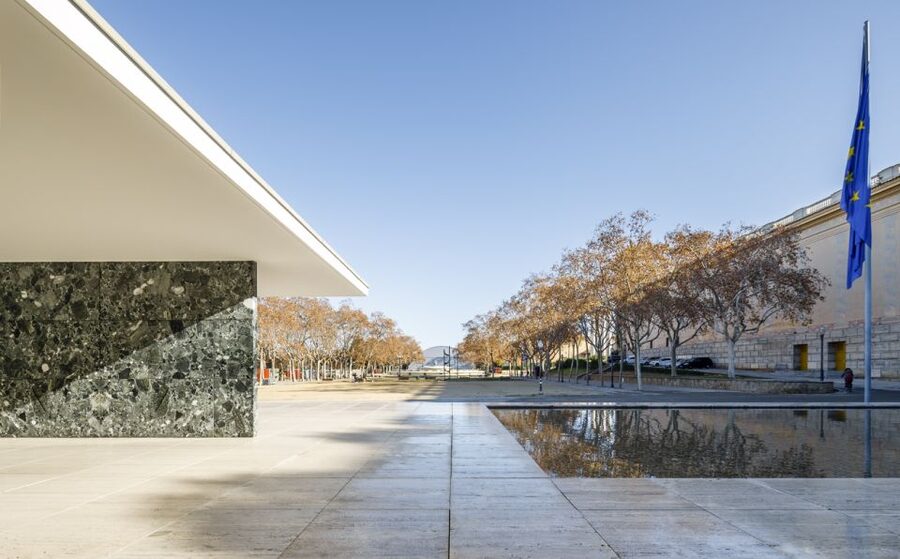
The materials are the Pavilion’s main event. Stone from the Alps, Tivoli, Atlas, and Tinos was selected for its color and texture. These surfaces are not background decoration. They form the visual rhythm of the building.
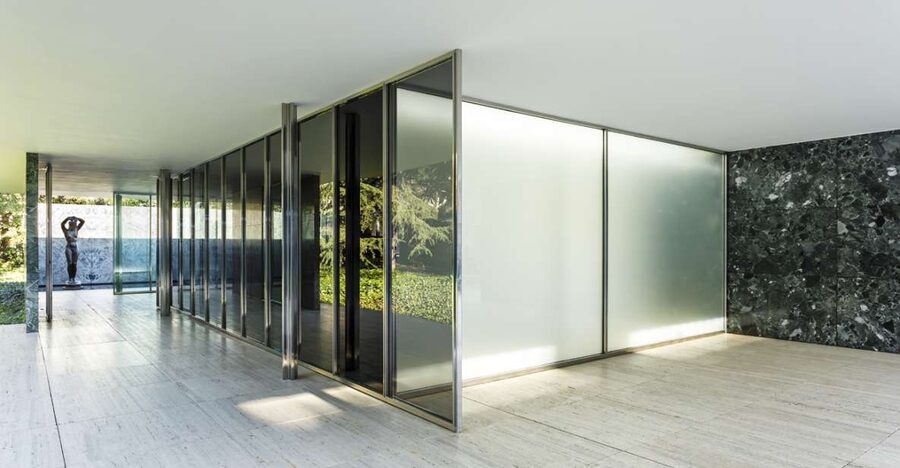
Look at how the stone panels meet. Their placement gives the walls a measured pattern, while the glass changes the balance between solid and transparent surfaces. Steel adds a narrow, clean framework rather than heavy structural drama. Water brings reflection and movement into an otherwise controlled setting.
This is where the audio guide earns its keep. Without context, you may recognize that the building is elegant but miss why the material choices matter. The guide helps explain the relationship between the structure’s palette and its larger architectural ideas.
The five language choices are useful for international visitors: Spanish, Catalan, English, French, and German are offered. No guide’s personal name is provided, so you should think of this as a self-guided architectural visit rather than a tour led by an individual historian or architect.
Do not rush past the walls. The Pavilion rewards close looking more than fast sightseeing. You may notice how a reflection extends a room, how a stone surface changes in different light, or how a narrow opening frames a garden. These details are small, but they are the reason the building has influenced so many designers.
A visit built around calm and space
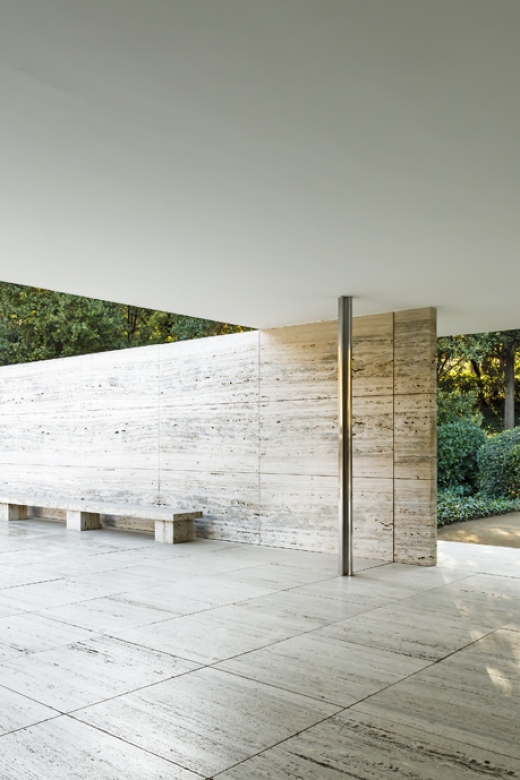
One of the strongest reasons to book this ticket is the mood. The Pavilion offers a calm break from Barcelona’s louder sights. The building’s open layout and controlled materials create a sense of order, and the visit does not require a full day.
The ticket is valid for one day, but that does not mean you need an entire day at the site. The available information does not specify a fixed visit length, though the compact design and short nature of the experience make it better suited to a brief stop than a major half-day outing.
A recent visit included professional photographers and models working in the Pavilion. That can add an interesting human layer to the scene, but it may also affect your photographs or make the space feel less private. The Pavilion is often appreciated as a quiet place, yet it is also an active architectural subject. You might find photography taking place during your visit.
A short nature trail near the site was also enjoyed by one visitor. The details of the trail are not specified, so I would treat it as a possible extra rather than a central part of the ticket. If you have time, it may give you a chance to extend the outing after seeing the building.
Arriving on time is sensible. One visitor specifically advised it, and the opening hours can change. The Pavilion also sometimes hosts artistic interventions. These temporary works may alter the building’s appearance, so the space you see may not look exactly like the familiar photographs.
A different way to spend the day, same corner of Spain:
- Barcelona: Park Güell Admission Ticket
★ 4.4 · 76,534 reviews - Barcelona: Casa Batlló Entry with Self-Audioguide Tour
★ 4.7 · 25,359 reviews - Barcelona: 24 or 48-Hour Hop-On Hop-Off Bus Tour
★ 4.4 · 20,872 reviews - Barcelona: Park Guell Guided Tour with Skip The Line Entry
★ 4.7 · 17,563 reviews
Is the audio guide worth using?
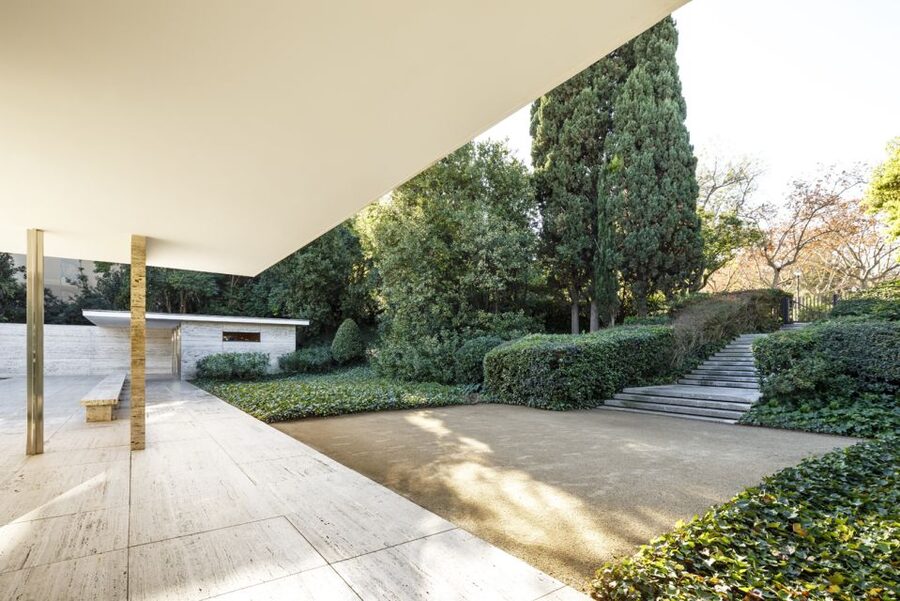
For an architecture specialist, the Pavilion may be self-explanatory. For most people, the audio guide adds welcome context. It explains the building’s role in the 1929 exhibition, its later dismantling, and its reconstruction in 1986.
I would use it selectively rather than listening to every word while walking. Start with the main explanation, then pause to examine the areas being discussed. The Pavilion is a place where you need to look up, around, and through the building. Staring at a phone or audio-guide screen can work against the experience.
The guide is especially helpful if the vocabulary of modern architecture is unfamiliar. Ideas such as purity of form, material contrast, and the relationship between interior and exterior can sound abstract until you see them in practice. The Pavilion gives those ideas a physical shape.
There is one practical caution. A report from February noted that the audio guides were not received, leaving the visit confusing. This may have been an isolated problem, but I would check at entry and ask promptly if the guide is not provided. Since the audio guide is part of the ticket, it is reasonable to expect access to it.
What the reconstruction adds to the experience
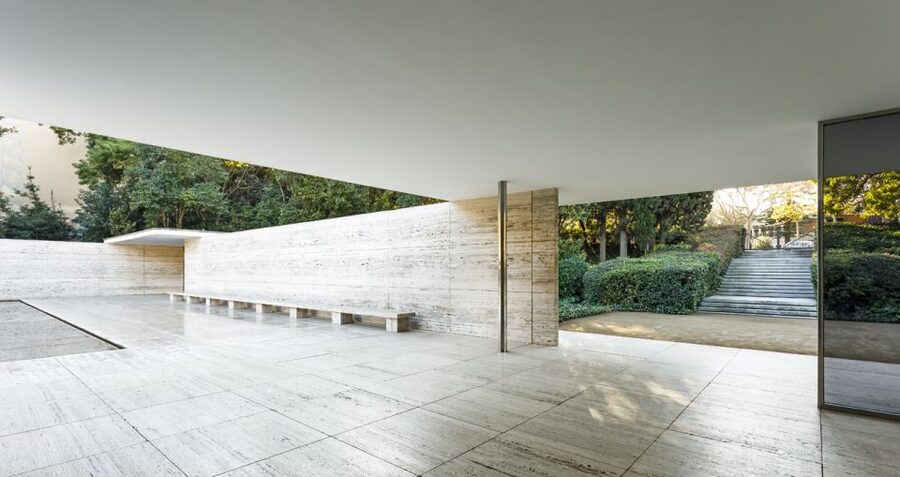
The Pavilion’s reconstruction is not a minor footnote. The original structure existed for the 1929 exhibition and was then dismantled. The building you see today reopened on its original site in 1986 after being rebuilt because its architectural importance had become widely recognized.
That story gives you a useful question to consider: what exactly makes a building worth recreating? In this case, the answer lies in the design’s influence. The Pavilion became a reference point for generations of architects and artists, and it helped establish ideas that shaped modern architecture.
The reconstruction also encourages a more careful look at authenticity. This is not an untouched 1929 relic. It is a return of a lost design, made possible because the plans, photographs, knowledge, and commitment existed to bring it back. The result still lets you understand the original concept and its effect on architecture.
I like this historical angle because it prevents the Pavilion from becoming just a stylish photo stop. Its story includes an exhibition, disappearance, renewed appreciation, and rebirth. The building’s calm appearance hides a surprisingly eventful history.
Getting value from a $10 ticket
At $10 per person, the ticket is reasonably priced if you care about architecture, design, or thoughtful urban spaces. The audio guide is included, and the ticket lets you skip the ticket line. Wheelchair access is also available.
The value depends on your expectations. You are paying for a focused encounter with one important building, not for a long attraction with multiple galleries and activities. If you judge admission by hours spent inside, the price may feel high. If you judge it by the quality and influence of the design, $10 is easier to accept.
The price also makes the Pavilion a practical addition to a day that already includes nearby sights. You can fit it into a broader Barcelona plan without committing to an expensive guided excursion or a long fixed itinerary. Since the ticket is valid for one day, you have some flexibility around the available starting times.
Free cancellation up to 24 hours before the visit and a reserve-now, pay-later option add useful flexibility. These terms matter if your Barcelona schedule is still shifting. Opening hours may change, so check the current schedule before setting out.
Who will enjoy the Pavilion most
I would recommend this experience most strongly to:
- Architecture and design enthusiasts
- Visitors curious about modernism beyond Barcelona’s famous decorative buildings
- People who prefer short, quiet cultural stops
- Anyone who likes to study materials, proportion, and space
- Visitors who want an accessible attraction with multilingual commentary
You do not need formal architecture training. The building is clear enough to appreciate through its visual balance, even if you do not follow every idea in the audio guide.
I would be more cautious if your priority is a big collection, a long guided story, or constant activity. The Pavilion is intentionally restrained. Its success depends on whether you enjoy looking closely at a small number of elements.
Families may find the visit easy to manage because it is short, but children who need interactive displays may lose interest. Photographers will find plenty to study, though professional shoots or artistic interventions could change the look of the space during the visit.
Practical rules and small things to know
Smoking, food, and drinks are not allowed inside the Pavilion. Pets are also prohibited, although assistance dogs are permitted. Tripods are not allowed, so photographers should plan to work without one.
The building is wheelchair accessible. Audio commentary is offered in five languages, making the visit practical for many international visitors. The available languages are Spanish, Catalan, English, French, and German.
Opening hours are subject to change. I would check the schedule before going and arrive at the selected time rather than treating the visit as completely open-ended. If you are hoping for an especially quiet experience or a clean photograph, it is also wise to allow for the possibility of photography sessions or temporary artistic work.
Should you book the Mies van der Rohe Pavilion?
Book it if you want a calm, compact look at a building that changed modern architecture. The $10 price is fair for an entry ticket with a multilingual audio guide, and the reconstruction story gives the visit more substance than its small size first suggests.
Skip it if you want a long attraction filled with objects, decoration, or hands-on displays. Some people feel the Pavilion should be free, and I understand that reaction. It is a short visit centered on space and materials, so the value depends heavily on your interest in architecture.
My advice is to include it when you are already exploring Barcelona’s major cultural sights and want something quieter. Arrive on time, use the audio guide, look closely at the stone and reflections, and give yourself a few unhurried minutes without commentary. That is when the Pavilion’s careful simplicity makes the strongest impression.
FAQ
Where is the Mies van der Rohe Pavilion?
It is in Barcelona, in Catalonia, Spain.
Who designed the Pavilion?
The Pavilion was designed by Mies van der Rohe and Lily Reich.
When was the Pavilion first built?
It was built for the 1929 Barcelona International Exhibition as the German national pavilion.
Was the original Pavilion preserved?
No. The original structure was dismantled after the exhibition. It was reconstructed on its original site and reopened in 1986.
What does the ticket include?
The ticket includes entrance to the Mies van der Rohe Pavilion and an audio guide.
Which languages are available for the audio guide?
The audio guide is available in Spanish, Catalan, English, French, and German.
Is the Pavilion wheelchair accessible?
Yes, the Pavilion is wheelchair accessible.
How long is the ticket valid?
The ticket is valid for one day. Available starting times should be checked when booking.
What can I not bring or do inside?
Smoking, food, drinks, pets, and tripods are not allowed. Assistance dogs are permitted. Opening hours may change, and artistic interventions can sometimes alter the Pavilion’s appearance.
Recently reviewed around Barcelona
- Excursion Aigüestortes – Estany Llebreta (1/2 day)★ 5.0 · 138 reviews
- E-Bike tour in Barcelona with English Guide★ 5.0 · 128 reviews
- Wine Tasting Experience in Barcelona★ 5.0 · 172 reviews
- Barcelona Luxury Yacht Cruise – Day or Sunset, Open Bar & Snacks★ 5.0 · 154 reviews
- Barcelona Wax Museum Admission Ticket★ 4.5 · 237 reviews
- Barcelona: Wine Tasting and 5 Course Tapas Pairing Dinner★ 4.5 · 129 reviews
- Montserrat: Cog-Wheel, Basilica, Black Madonna & Licor Tasting★ 4.5 · 886 reviews
- Andorra Original History and Sightseeing Tour (Private, Pickup)★ 5.0 · 350 reviews
Self-Guided Tours, compared.
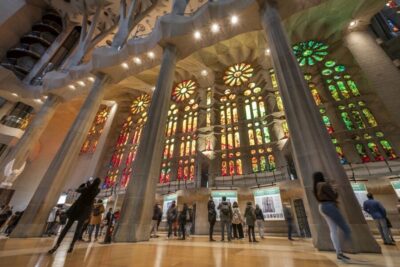
Sagrada Familia Entry Ticket with Audio Guide
Read our review →
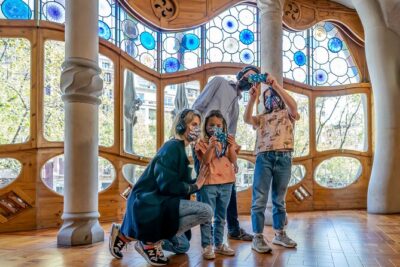
Casa Batllo Admission Ticket with Intelligent Audio Guide
Read our review →

Valencia Bike Tour from the City to the Beach, plus Bike Guy App!
Read our review →Browse the lists this tour appears in