
Reviewed · JEWISH QUARTER TOURS
Barcelona: Jewish Quarter 2-Hour Walking Tour
Barcelona’s Jewish past is easiest to grasp on foot, in the tight lanes of the Gothic Quarter where Roman walls, medieval houses, and faint traces of Jewish life still overlap. This two-hour walk takes you to the Sinagoga Mayor Barcelona, described as Spain’s oldest synagogue and one of Europe’s oldest, along with the site of a medieval Mikve and the ruins of an old synagogue.
I like the small group limit of six, which gives you room to ask questions and hear the guide clearly. I also like the way the walk connects major history with easy-to-miss details, including the former homes of Jewish residents and the locations of four synagogues in the city center.
The main drawback is that the Synagogue Museum entrance costs extra, and the Old Synagogue may occasionally be closed. At $76 per person for two hours, this is not a cheap stroll, but the personal attention and focused subject make it a strong choice for anyone with a family, religious, or historical interest in Jewish Barcelona.
In This Review
- Key points at a glance
- Why this short walk matters
- Plaça Sant Jaume: starting inside Barcelona’s old center
- The narrow lanes of the medieval Jewish Quarter
- The Sinagoga Mayor Barcelona and its layered past
- The old synagogue and a reminder to stay flexible
- The medieval Mikve and the alchemist’s house
- The story of 1391 and the end of medieval Jewish Barcelona
- What the guides add to the experience
- Is $76 a fair price for two hours?
- Who should book this Gothic Quarter walk?
- Practical advice before you go
- Should you book it?
- FAQ
- How long is the Barcelona Jewish Quarter walking tour?
- Where does the tour begin?
- Where does the tour end?
- Is the tour offered in English?
- How many people can join the group?
- Is entrance to the Synagogue Museum included?
- Is hotel pickup available?
Key points at a glance
- Enter the Sinagoga Mayor Barcelona: Visit the site described as Spain’s oldest synagogue and one of Europe’s oldest.
- Find four synagogue locations: See how Jewish Barcelona was spread through the medieval city center.
- Stand beside a medieval Mikve: Learn about the ritual bath and the community that used it.
- Explore the Gothic Quarter on foot: Narrow lanes and Roman walls provide the setting for the story.
- Hear about the turning point in 1391: The guide explains how an attack brought Jewish life in Barcelona to a tragic end.
- Walk with a guide such as Edu, Ella, or Lilach: English-speaking guides bring maps, images, and local context when useful.
Why this short walk matters
Barcelona is full of grand sights, but Jewish history is not always obvious from the street. Much of the old Jewish Quarter has been altered, renamed, or absorbed into the wider Gothic Quarter. You need someone to point out the clues.
That is the real value of this tour. You are not simply walking from one preserved monument to another. You are learning how to read an urban area where the evidence is partial. A narrow passage, a surviving wall, or the shape of an old building can help explain where Jewish families lived, worked, worshipped, and studied.
The guide also places Barcelona in the wider story of Jewish life in Spain. The community is generally understood to have begun arriving in Spain as early as the third century, after the destruction of the Second Temple in Jerusalem in 70 CE. Over the centuries, Jewish residents became important in Barcelona’s political, commercial, and spiritual life.
That period of relative peace ended violently in 1391. The attack on Jewish communities changed Barcelona forever, and the tour explains this rupture without treating it as a footnote. You come away with a clearer sense of both the community’s achievements and the forces that destroyed its place in medieval Spain.
More Walking Tours in Barcelona
- Barcelona Tapas and Wine Experience Small-Group Walking Tour
★ 5.0 · 5,804 reviews - Barcelona: Tapas Walking Tour with Food, Wine, and History
★ 4.8 · 4,261 reviews - Barcelona Tapas Walking Tour: Food, Wine & History
★ 4.5 · 1,928 reviews
Plaça Sant Jaume: starting inside Barcelona’s old center
The walk begins in Plaça Sant Jaume, next to the Alcampo store. This is a practical meeting point in the center of the Gothic Quarter, but do not expect a large tour office or an obvious museum entrance. Keep the meeting instructions handy and arrive with enough time to find the exact spot.
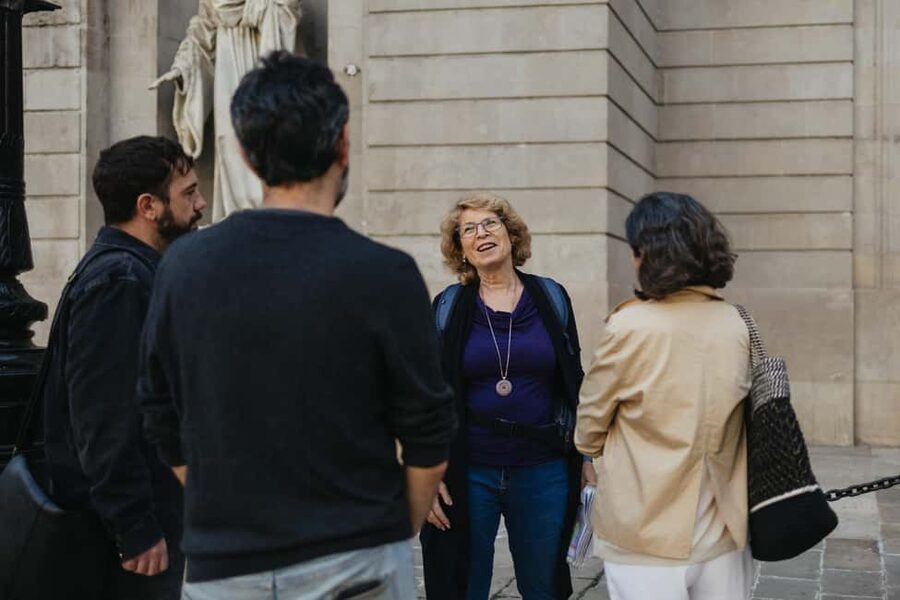
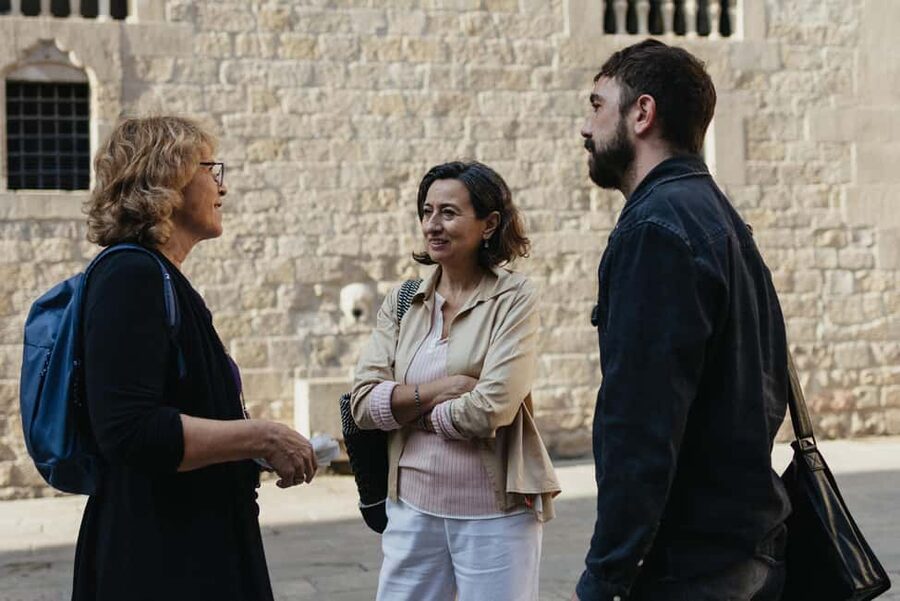
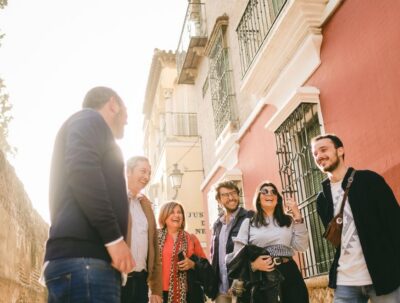
From here, the guide leads you into the old city on foot. The group is limited to six participants, which changes the feel of the experience. You are less likely to lose the guide in a narrow lane, and it is easier to stop for questions without holding up a large crowd.
The walk ends back at the same meeting point. That makes it easy to continue sightseeing in the Gothic Quarter, visit another central attraction, or head to lunch without arranging a separate return trip.
The narrow lanes of the medieval Jewish Quarter
The Gothic Quarter is often presented as a maze of handsome stone streets, but this tour gives those lanes a more precise meaning. You learn how the Jewish community occupied a compact part of medieval Barcelona, close to the Roman walls.
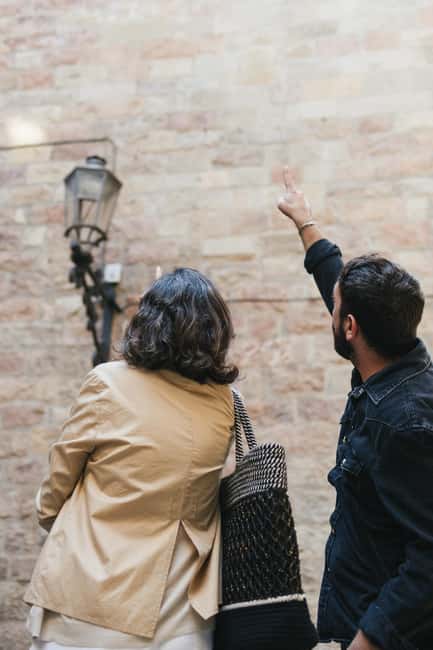
The setting is important. The quarter is not laid out like a modern neighborhood with broad streets and clear signs. Its narrow alleys can make the past feel close, but they can also make the story hard to follow without a guide. The tour’s strongest guides use maps, photographs, and reconstructions to show how the area may have looked at different points in time.
Alan, one of the guides praised for this approach, used images, maps, and mockups of earlier buildings and civilizations to make the explanation easier to picture. That kind of visual help is useful here because many original structures have disappeared or changed purpose.
You may also hear about the daily life of the community, not just its religious buildings. The tour describes Jewish residents as active in Barcelona’s political and spiritual life, and it points to places connected with Jewish work and study. This helps prevent the quarter from becoming a list of ruins. You are asked to imagine a functioning community, not just a vanished one.
The Sinagoga Mayor Barcelona and its layered past
The central stop is the Sinagoga Mayor Barcelona. It is described as the oldest synagogue in Spain and one of the oldest in Europe, making it the most important single interior visit on the route.
The building’s appeal comes partly from its age and partly from its modest scale. Do not expect a vast cathedral-like space. The power of the site is in its layers, its position within the old city, and the fact that it survived while the community around it was disrupted.
Your guide explains the synagogue’s place in medieval Jewish Barcelona and connects it to the wider story of Jewish worship in Spain. The visit works best when you pay attention to the relationship between the building and the surrounding streets. This is not an isolated monument on a broad plaza. It is part of the old neighborhood.
The entrance fee to the Synagogue Museum is not included in the tour price. Check the current admission arrangement when booking, since this can affect the total cost. The tour itself includes the walking experience, but you should budget separately if you want to enter the museum.
More Barcelona walks with a guide:
- Barcelona: Tapas Food Crawl Walking Tour with Tastings
★ 4.9 · 1,798 reviews - Barcelona: Gothic Quarter Ghosts and Legends Walking Tour
★ 4.7 · 1,443 reviews - Barcelona Helicopter, Sailboat & Old Town Private Walking Tour
★ 5.0 · 1,395 reviews - Barcelona: Old Town and Gothic Quarter Walking Tour
★ 4.8 · 1,393 reviews
The old synagogue and a reminder to stay flexible
The route also goes to the ruins of the Old Synagogue, associated with Shlomo Ben Adret. This stop adds an important layer because it shows another place of Jewish worship within the same small area.
The remains are not presented as a complete, polished monument. That is part of the point. You see how little can survive from a major medieval community, and why local history often depends on fragments, records, and careful interpretation.
The Old Synagogue has occasionally been closed, so you should treat access as a possibility rather than a guarantee. One visitor specifically found the closure disappointing, but still enjoyed the walk. That is a fair way to judge the stop. If the doors are open, it adds a strong visual moment. If not, the guide can still explain the site and its role in the quarter.
This is also where a small group helps. If a stop changes, a guide can spend more time explaining what you are seeing rather than rushing a large crowd onward.
The medieval Mikve and the alchemist’s house
Another highlight is the site of a medieval Mikve, a ritual bath used in Jewish religious life. It is a rare and valuable stop because it gives you a glimpse of the practical arrangements behind religious practice.
The Mikve is not just an architectural curiosity. Its presence points to an organized community with religious customs, communal spaces, and the means to maintain them. The guide explains what made this site distinctive and places it within the daily life of medieval Barcelona.
The tour also visits the ruins of a house owned by a Jewish alchemist. Here, the focus shifts from communal worship to individual work and learning. The ruins offer a chance to consider the range of roles Jewish residents held in the city.
These two stops work well together. The Mikve shows communal religious life, while the alchemist’s house suggests skilled work and intellectual activity. You get a broader picture than you would from visiting a synagogue alone.
The story of 1391 and the end of medieval Jewish Barcelona
A good tour of this subject must deal honestly with the violence of 1391, and this one places it at the center of the story’s turning point. The Jewish community had lived in relative peace for centuries, but a brutal attack brought a dramatic end to its presence in Barcelona and helped reshape Jewish life across Spain.
The walk does not treat this as an abstract date. You are standing in the streets where the community once lived, near the buildings and walls that remain. That setting gives the historical account weight.
I find this part especially important for visitors with family connections to Spain. One guide, Edu, was praised for helping connect the past to personal family history while also answering detailed questions. His approach, as described by participants, included a clear pace, strong English, and an interest in what the group already knew.
The subject can be painful, so the quality of the guide matters. Edu, Ella, and Lilach are among the guides associated with particularly warm and informed tours. Guide assignments can vary, but the best experience depends on someone who can explain the violence without losing sight of the community’s long life before it.
What the guides add to the experience
The tour is only two hours, so the guide has to make choices. The strongest guides keep the walk moving while allowing time for questions and short rests.
Ella is known for a thorough, friendly approach and a strong command of Catalan and Barcelona history as well as Jewish medieval history. Lilach is described as engaging, clear, and able to answer questions. Edu is noted for a conversational style, flexibility, and careful attention to walking pace.
Those details matter more than a rehearsed speech. Several participants found that guides adjusted their speed for older people or anyone with walking difficulties. One guide contacted the group the night before to confirm the meeting point, while another took care in rainy weather.
The official details list the tour as wheelchair accessible, but the route runs through narrow historic streets. If you use a wheelchair or have limited mobility, confirm the exact route and museum access before booking. The walk is not described as strenuous, but the old quarter’s paving and tight passages can affect comfort.
Is $76 a fair price for two hours?
At $76 per person, this is priced as a specialist tour rather than a basic orientation walk. You are paying for a narrow subject, a live English-speaking guide, a maximum group of six, and access to places you might not understand or find on your own.
The price makes the most sense if Jewish history is central to your visit, if you are researching family roots, or if you want more than a quick look at the Gothic Quarter. A family of four will spend a substantial amount, but the small group means the tour can feel almost private, especially when six people book together.
The value is weaker if you want a general introduction to Barcelona. This tour does not cover the city’s major artistic sights, food culture, or modern architecture. It focuses tightly on Jewish Barcelona, and that focus is its strength only if the subject matters to you.
Remember to add the Synagogue Museum entrance fee. Hotel pickup is available for an extra €30, but the central meeting point makes pickup unnecessary for most people staying in Barcelona’s core.
Free cancellation up to 24 hours before the start and the option to reserve now and pay later make the booking less rigid. Starting times vary, so check availability before planning the rest of your day.
Who should book this Gothic Quarter walk?
I would choose this tour for:
- Anyone with Jewish family history connected to Spain
- Visitors interested in medieval religion, city life, or Barcelona’s Roman and Gothic layers
- People who prefer a small group over a large city tour
- Families with teenagers who respond well to maps, stories, and real places
- Visitors who want a focused history walk before exploring the rest of the old city
It is also a good first activity in Barcelona if you want context before wandering the Gothic Quarter on your own. Lilach’s clear, welcoming style and Edu’s conversational approach have helped make the walk work for mixed-age groups, including teenagers.
You may want to skip it if your time in Barcelona is extremely limited and your priority is Gaudí, art museums, or the city’s food scene. You should also think twice if you dislike historical sites that are fragmentary or if you expect every synagogue location to be a fully preserved building.
Practical advice before you go
Wear comfortable shoes. The tour is short, but you will be walking through old streets and stopping often. Bring water, and check the weather, since the experience takes place outdoors between indoor visits.
Arrive at Plaça Sant Jaume with the meeting instructions open on your phone. The starting point is next to the Alcampo store, and the walk returns there at the end.
Ask questions. The small group is designed for conversation, and the guides are used to adjusting the pace and following a participant’s interests. If you have a family-history question, bring the names, dates, or places you already know. The guide may be able to help you understand the Barcelona setting, even if two hours cannot provide a full genealogy service.
Finally, ask whether the Old Synagogue is open and what the museum entrance includes. That simple check will help you set realistic expectations and avoid feeling that part of the experience is missing.
Should you book it?
Book this tour if you want to understand the Jewish presence beneath Barcelona’s famous Gothic streets. The Sinagoga Mayor, Mikve, Old Synagogue ruins, alchemist’s house, and four synagogue locations create a focused route with real depth.
The strongest reason to go is the guide. Edu, Ella, and Lilach are all associated with clear, personal explanations, and the six-person limit gives the walk an attentive feel. The 4.8 rating from 333 reviews also suggests a consistently strong experience.
At $76, it is a considered purchase, not an automatic bargain. Add the museum fee, accept that some remains may be closed, and choose it because the subject genuinely interests you. For the right visitor, this is one of the more meaningful ways to read Barcelona’s old center.
FAQ
How long is the Barcelona Jewish Quarter walking tour?
The tour lasts two hours. Starting times vary, so check availability when selecting your date.
Where does the tour begin?
The meeting point is Plaça Sant Jaume, next to the Alcampo store.
Where does the tour end?
The walk ends back at the same meeting point in Plaça Sant Jaume.
Is the tour offered in English?
Yes. The tour has a live guide and is offered in English.
How many people can join the group?
The group is limited to six participants.
Is entrance to the Synagogue Museum included?
No. The Synagogue Museum entrance fee is not included in the tour price.
Is hotel pickup available?
Yes. Hotel pickup is available for an additional €30.
More 2-Hour Experiences in Barcelona
- Barcelona: Two-Hour Midday or Sunset Sailing Cruise
★ 4.8 · 1,732 reviews - Barcelona: 2-Hour City Sights Guided Segway Tour
★ 4.9 · 453 reviews - Barcelona: 2-Hour Sailboat Tour with Snacks and Drinks
★ 4.8 · 357 reviews - 2-Hour Sailing Tour in Barcelona with Open Bar & Snacks
★ 5.0 · 318 reviews
Recently reviewed around Barcelona
- Excursion Aigüestortes – Estany Llebreta (1/2 day)★ 5.0 · 138 reviews
- E-Bike tour in Barcelona with English Guide★ 5.0 · 128 reviews
- Wine Tasting Experience in Barcelona★ 5.0 · 172 reviews
- Barcelona Luxury Yacht Cruise – Day or Sunset, Open Bar & Snacks★ 5.0 · 154 reviews
- Montserrat: Cog-Wheel, Basilica, Black Madonna & Licor Tasting★ 4.5 · 886 reviews
- Barcelona Wax Museum Admission Ticket★ 4.5 · 237 reviews
- Barcelona: Wine Tasting and 5 Course Tapas Pairing Dinner★ 4.5 · 129 reviews
- Andorra Original History and Sightseeing Tour (Private, Pickup)★ 5.0 · 350 reviews
Jewish Quarter Tours, compared.
Cordoba Mosque & Jewish Quarter Tour with Tickets
Read our review →
Mosque-Cathedral, Jewish Quarter and Alcázar Tour
Read our review →
Jewish Quarter and Mosque-Cathedral Guided Tour
Read our review →
Mosque-Cathedral, Alcazar & Jewish Quarter with Tickets
Read our review →
Mosque-Cathedral of Cordoba and Jewish Quarter Tour
Read our review →
Small-Group Jewish Quarter Discovery Walking Tour
Read our review →Browse the lists this tour appears in