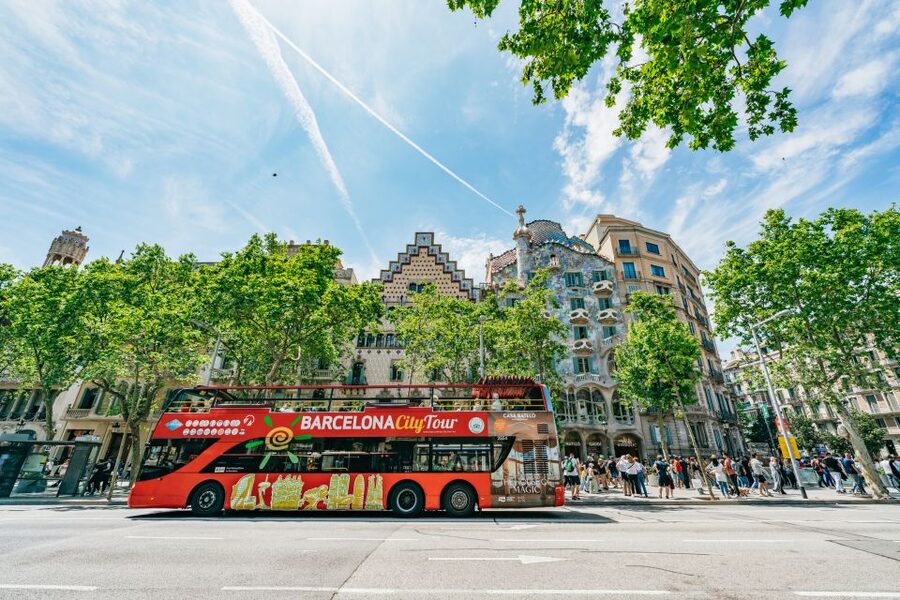
Reviewed · BARCELONA TOURS
Barcelona Hop-On Hop-Off Bus and FC Barcelona Immersive Tour
Barcelona’s best feature is its variety, and this combination lets you see a lot of it without building every bus connection yourself. You can ride between Gaudí landmarks, Montjuïc, the beach, and Camp Nou, then explore the FC Barcelona Museum Immersive Tour at your own pace. I like the two full bus routes and the easy way they reach attractions spread far across the city.
I also like the built-in audio guide, available in 16 languages, and the chance to use the bus for either 24 or 48 hours. The catch is important: the Spotify Camp Nou stadium is closed during construction, so your football visit is museum-based rather than a stadium tour. You must also exchange your voucher in person at the Julià Travel office before riding or visiting the museum.
In This Review
- Key points worth knowing
- A practical way to see far-flung Barcelona
- Collecting the tickets at Estació del Nord
- The orange West Route, from Montjuïc to Camp Nou
- The green East Route, from the beach to Park Güell
- Choosing between 24 and 48 hours
- What happens inside the FC Barcelona museum
- Comfort, audio, weather, and mobility
- How I would plan the day
- Who should book this combination?
- FAQ
- How long is the Barcelona City Tour ticket valid?
- Where do I collect the tickets?
- Can I enter Spotify Camp Nou?
- Are headphones provided on the buses?
- Which languages are available for the audio guide?
- Can I cancel for a full refund?
Key points worth knowing

- Two routes cover the city’s big sights: The orange West Route reaches Montjuïc, Plaça d’Espanya, Sagrada Familia, Camp Nou, and the waterfront. The green East Route covers the beach, Fòrum, Park Güell, Gaudí houses, Plaça Catalunya, and El Born.
- The 48-hour ticket gives you breathing room: Use one day for major sights and another for shorter rides and stops instead of racing around Barcelona.
- Camp Nou access currently means the museum only: You can see trophies, historic shirts, a Johan Cruyff display, and a 360-degree stadium presentation, but not enter the stadium itself.
- Collect your tickets before you start: Pick up both the bus and football tickets at the Julià Travel office in Estació del Nord, ground floor, platform 19, between 9:30 AM and 5 PM.
- Bring your own headphones: The bus audio system is included, but headphones are not.
- The upper deck is best for views, not always comfort: It can be chilly and windy in cooler months, and the roof may be open or closed depending on weather.
A practical way to see far-flung Barcelona

Barcelona is not a compact sightseeing city in the way Florence or central Seville can be. Its major sights stretch from the port and Montjuïc to Park Güell and the northern edge of the old city. Public transport works well, but changing between metro lines and buses can eat up time, especially if you are visiting for only a day or two.
This bus ticket is most useful as a city orientation tool. You sit above street level, listen to commentary, and watch the city change from medieval lanes to broad modern avenues, Olympic sites, beach neighborhoods, and Gaudí architecture. You can stay aboard for a full circuit or get off when a sight catches your eye.
The orange and green routes each take about two hours if you remain on board. Buses generally arrive every 5 to 30 minutes, depending on the season and stop. That range matters. In a busy period, a missed bus may be a minor nuisance. In a quieter or less frequent period, it can alter your whole day, so I would not plan a tightly timed museum visit immediately after getting off.
The buses are air-conditioned double-deckers with anatomical seats and a sliding roof for rain. An onboard stewardess can help with basic questions and route decisions. The audio commentary covers the city in Spanish, Catalan, Chinese, Dutch, English, French, German, Hebrew, Hindi, Italian, Japanese, Arabic, Portuguese, and Russian.
Other Barcelona days travellers weigh against this one:
- Barcelona: Sagrada Familia Entry Ticket with Audio Guide
★ 4.6 · 105,312 reviews - Barcelona: Park Güell Admission Ticket
★ 4.4 · 76,534 reviews - Barcelona: Casa Batlló Entry with Self-Audioguide Tour
★ 4.7 · 25,359 reviews
Collecting the tickets at Estació del Nord
The least convenient part comes before the sightseeing. You must take your booking voucher to the Julià Travel office at Estació del Nord, on the ground floor at platform 19. Ticket collection is available from 9:30 AM to 5 PM, and the tickets cannot be collected before the booked date.
This is not a digital-only experience. A printed voucher or mobile voucher still needs to be exchanged for the actual Barcelona City Tour and FC Barcelona tickets. Give yourself time to find the office, especially if you are unfamiliar with Estació del Nord. Once the exchange is complete, the rest of the day is much simpler.
This stop also works well as your starting point for the bus network, though you should check the current route map and departure information when you collect your tickets. City events can change the route. Demonstrations, sports events, official ceremonies, and cultural festivals may cause detours or temporary stop changes.
The orange West Route, from Montjuïc to Camp Nou
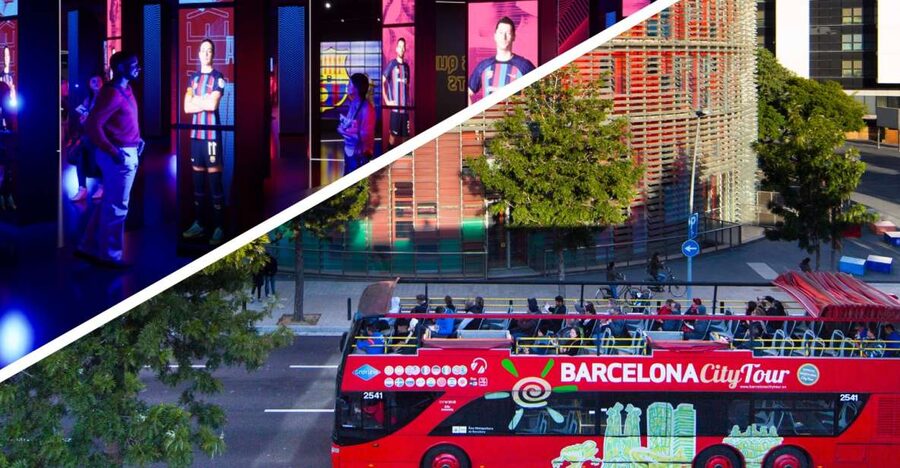
The orange route is the stronger choice for first-time visitors who want Barcelona’s major cultural sights and Camp Nou in one circuit. It begins at the World Trade Center and runs through the port area before climbing toward Montjuïc.
At Jardins de Miramar, you get a good sense of the city’s elevated relationship with the sea. The route then reaches the Fundació Joan Miró and the Anella Olímpica, reminders of Barcelona’s art scene and its 1992 Olympic transformation. If you plan to visit the Miró museum or Olympic sites, check the bus timing before getting off so you know how long you may wait for the next ride.
The Museu Nacional d’Art de Catalunya, or MNAC, is one of the route’s most worthwhile stops. It occupies the grand Palau Nacional above Plaça d’Espanya and is especially useful for anyone interested in Catalan art. Nearby Poble Espanyol offers a purpose-built collection of architectural styles and craft shops. Caixafòrum and the Mies van der Rohe Pavilion add modern art and design to the same stretch of Montjuïc.
Plaça d’Espanya is a useful transport and sightseeing point, while Estació de Sants connects the route with Barcelona’s main rail station. You can use this section of the route to group several Montjuïc stops together rather than crossing the city repeatedly.
The bus then reaches Camp Nou, home of the FC Barcelona museum visit. Since the stadium is closed during construction, you should treat this stop as a football museum stop, not as access to the famous stands, pitch, or changing areas. That distinction is central to deciding if the combo suits you.
After Camp Nou, the orange route passes Plaça Pius XII, L’Illa Diagonal, Avinguda Diagonal, and La Pedrera. The wide Diagonal avenue shows Barcelona’s modern commercial side, while La Pedrera, also called Casa Milà, brings you back to Antoni Gaudí’s sculptural architecture.
The route continues to Sagrada Familia, Estació del Nord, the Zoo and Poblenou, Port Olímpic, Pla de Palau, and Passeig de Colom. The Sagrada Familia stop is also a connection point. Orange route passengers can switch toward Park Güell without riding all the way to Port Olímpic.
The green East Route, from the beach to Park Güell
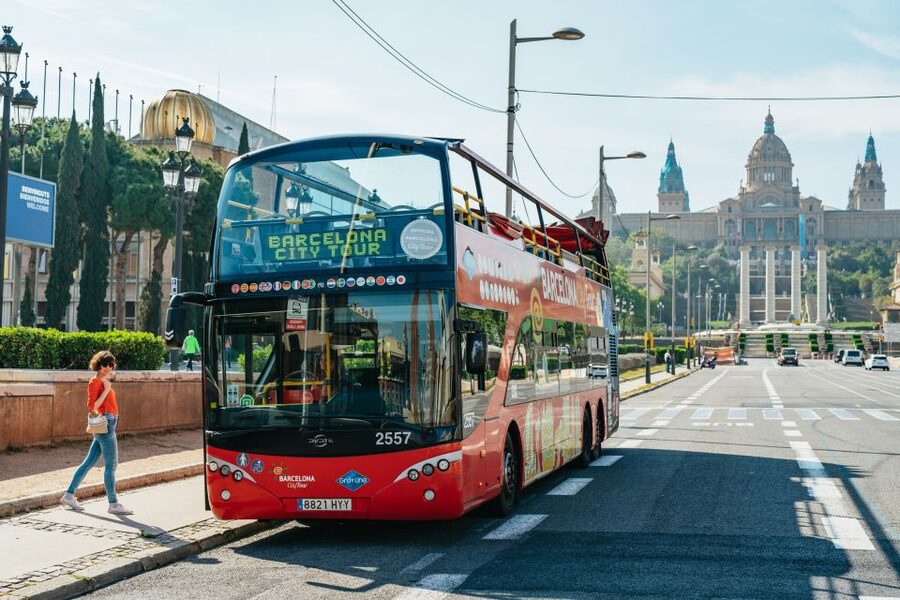
The green route is ideal when you want the waterfront, Gaudí’s central buildings, and Park Güell. Starting around Pla de Palau, it heads through Barceloneta, the old fishing and beach district, then past Port Olímpic and Platja del Bogatell.
The beach section gives you a useful look at Barcelona’s post-Olympic waterfront. Nova Mar Bella and the Fòrum show the city farther east, beyond the areas most people reach on foot. This part is less convenient for a short stop if you have a packed schedule, but it is pleasant from the upper deck when you want to see the shoreline without committing to a long walk.
Torre Glòries is an unmistakable modern landmark, and the Recinte Modernista de Sant Pau offers one of the city’s most striking examples of early twentieth-century architecture. Sant Pau is often overshadowed by Sagrada Familia, but it deserves attention for its tiled facades, pavilions, and former hospital complex.
Next comes Park Güell, one of the most popular stops on either route. The bus gets you close to the attraction, but the stop does not replace an admission reservation if you plan to enter the monumental area. The supplied tour information does not include Park Güell admission, so check your separate plans before getting off.
The green route then runs along La Pedrera and Casa Batlló, two of Gaudí’s best-known homes. Casa Batlló sits on Passeig de Gràcia among other grand buildings, while La Pedrera is known for its irregular stone facade and remarkable roofline. Both are worthwhile from outside, even if you do not have time for an interior visit.
Plaça Catalunya makes a natural break between the Eixample and the old city. From there, the route reaches Arc de Triomf and El Born, beside Parc de la Ciutadella. El Born is a good place to get off for a meal, a walk, or a closer look at one of Barcelona’s most atmospheric central districts.
The green route connects with the orange route at Pla de Palau. It also has a connection at La Pedrera for passengers heading toward Sagrada Familia without taking the entire route to Port Olímpic. These links are useful, but keep a map nearby. The two-route layout is easy enough once understood, yet a first ride can feel confusing if you board without checking direction.
A different way to spend the day, same corner of Spain:
- Barcelona: 24 or 48-Hour Hop-On Hop-Off Bus Tour
★ 4.4 · 20,872 reviews - Barcelona: Park Guell Guided Tour with Skip The Line Entry
★ 4.7 · 17,563 reviews - Barcelona in 1 Day: Sagrada Familia, Park Guell,Old Town & Pickup
★ 5.0 · 13,541 reviews - Barcelona Aquarium: Entry Ticket
★ 4.3 · 13,335 reviews
Choosing between 24 and 48 hours
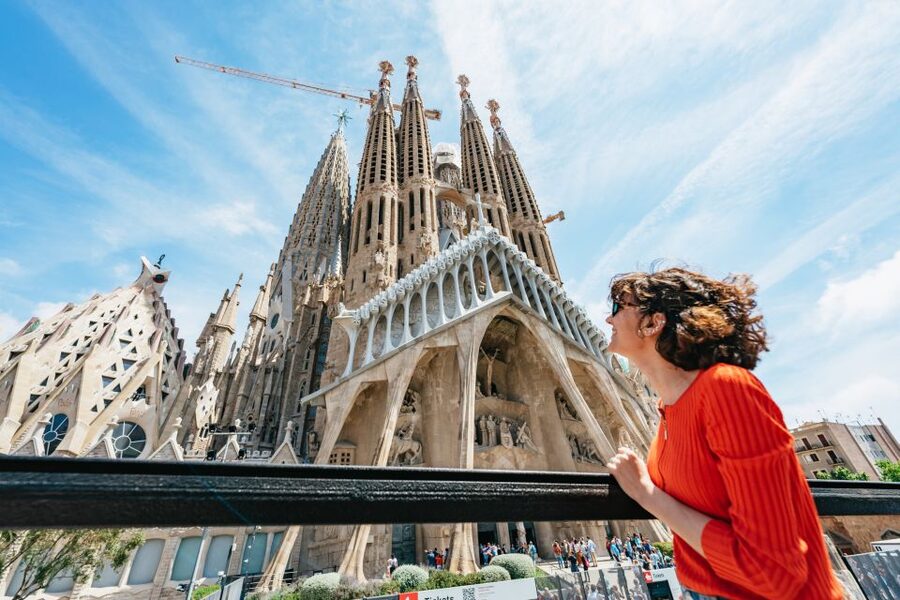
The 24-hour ticket works if you want a broad city circuit and have a clear list of stops. I would use it for a single full sightseeing day: begin with either Montjuïc or the beach, get off at two or three major sights, and use the remaining route as a moving view of the city.
The 48-hour option is more comfortable. You can dedicate one day to Montjuïc, Camp Nou, and Sagrada Familia, then use the second for Park Güell, Casa Batlló, La Pedrera, and the waterfront. The extra time also lets you wait for buses without feeling that every pause has ruined your schedule.
At $77 per person, value depends on how actively you use the bus. It is a fairer deal for someone who wants both transportation and the football museum. If you only want a quick city overview and do not care about FC Barcelona, the combined ticket is less compelling than a city sightseeing ticket alone.
The bus can also replace several taxi rides across long distances. That is one reason the combination works well for families or first-time visitors who would rather avoid repeated navigation. It is not the fastest option at every moment, though. Barcelona traffic can slow the bus, and a metro ride may be quicker for a single point-to-point journey.
What happens inside the FC Barcelona museum
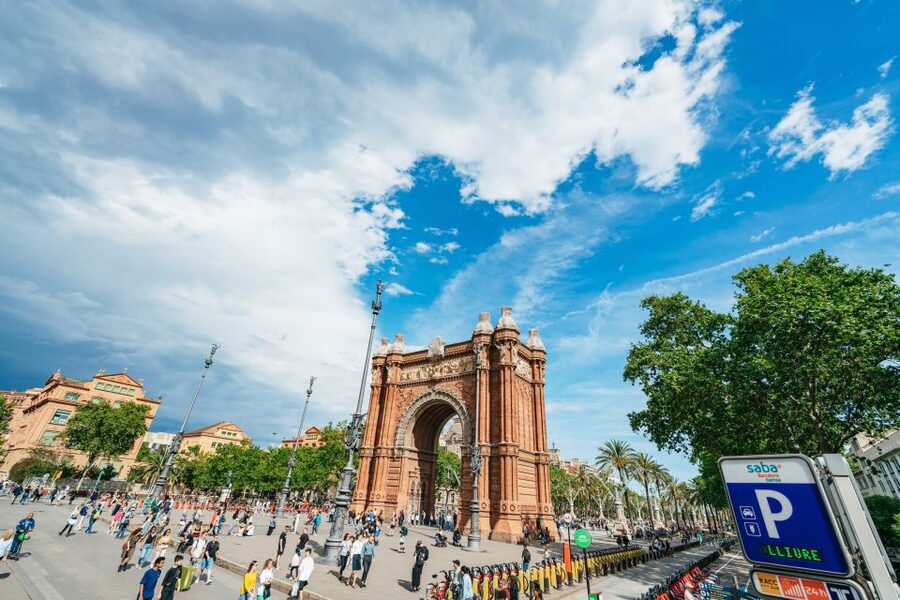
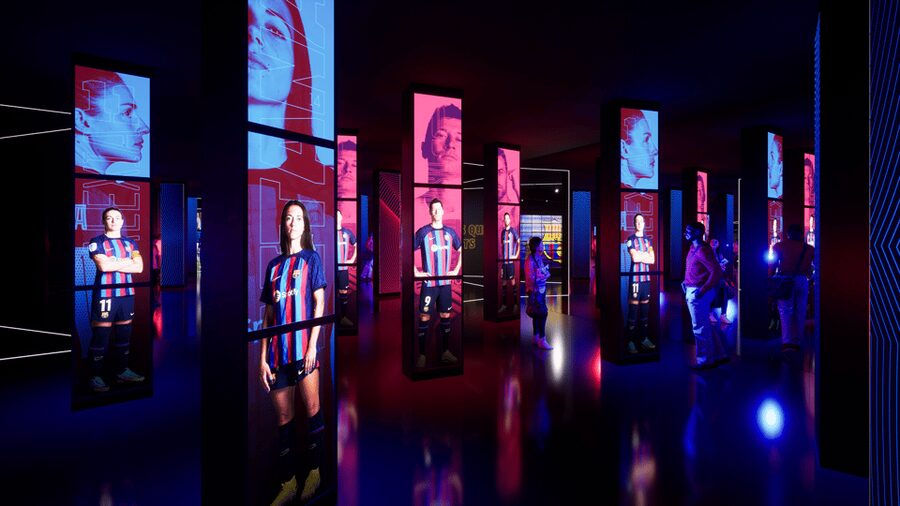
The FC Barcelona Museum Immersive Tour is self-guided. You receive an audio guide at the museum entrance and move through the displays at your own pace. The focus is the club’s past, present, and future, with major moments, famous players, victories, trophies, and historic shirts.
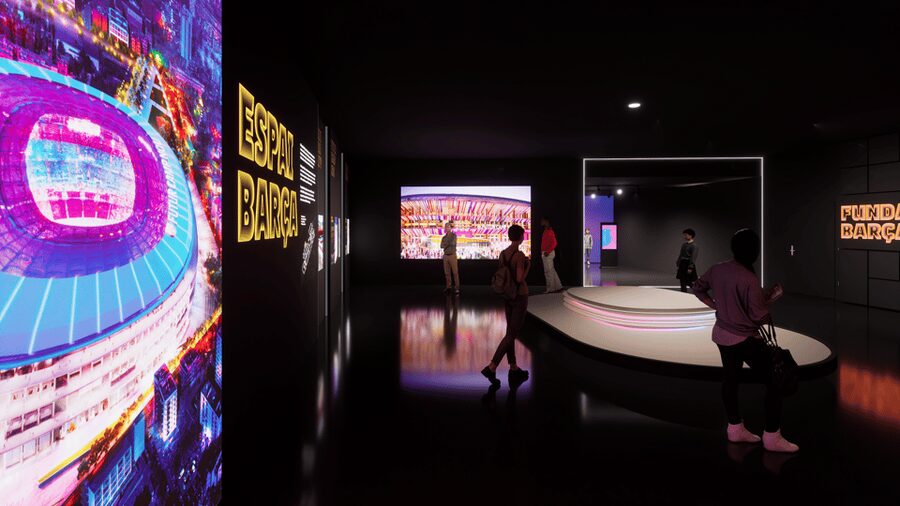
The Spotify Camp Nou Live space is the museum’s most theatrical feature. It presents a 360-degree audiovisual show designed to place you at the center of the stadium experience. It can give football fans a strong sense of match-day emotion, but it does not change the fact that the real stadium is closed during construction.
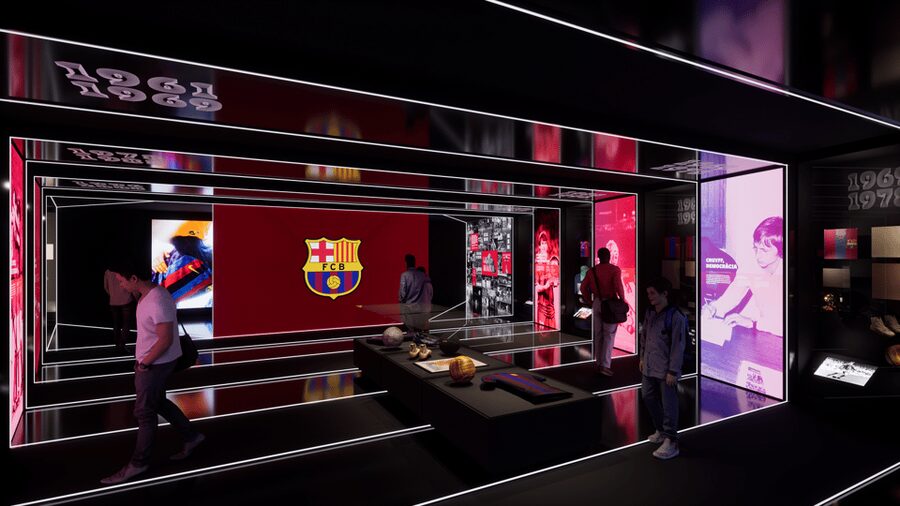
You will also see the club’s trophies and notable jerseys, along with an area devoted to Johan Cruyff. That section adds useful context because Cruyff is not merely a former player in Barcelona’s story. He is one of the figures most closely linked with the club’s playing identity and wider football culture.
The visit ends with the Espai Barça exhibition. Models and audiovisual material show the planned architectural project for the club’s future home. This is more forward-looking than nostalgic, and its appeal will depend on how interested you are in stadium design and the club’s redevelopment.
Do not expect access to Spotify Camp Nou itself. The stadium, pitch, and other closed areas are not part of the current visit. Before you go, check the museum schedule because FC Barcelona can change opening times, routes, or portions of the visit.
Comfort, audio, weather, and mobility
The double-decker coaches have air conditioning, and the sliding roof offers protection when rain arrives. The upper deck gives you the best view, but it is exposed to sun, wind, and cold. One visitor found February chilly and windy upstairs, a useful warning for anyone visiting outside summer.
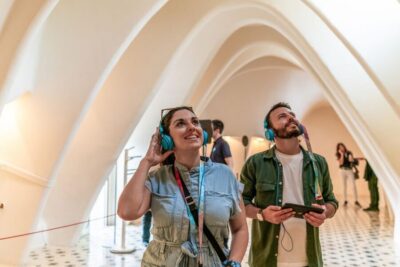
Bring your own headphones. The multilingual audio system is included, but personal headphones are required. The buses also have an audio setup for people with auditory disabilities that uses a multilingual looping system without wires. Seats with this feature are marked, and passengers who need it have priority.
There is an important limitation. Although the buses include features designed to assist people with reduced mobility, the complete activity is listed as unsuitable for people with mobility impairments and wheelchair users. If that applies to you, ask the provider for current details before booking rather than assuming the adapted bus makes every part of the experience accessible.
How I would plan the day
For a 24-hour ticket, I would collect the tickets early, ride one route for orientation, then choose no more than two major stops. A practical orange route day could combine Montjuïc and the FC Barcelona museum, followed by Sagrada Familia from the appropriate connection.
For 48 hours, I would place the football museum on the orange route day and use the green route for Park Güell, Sant Pau, Casa Batlló, and the beach. You can get more from the ticket by treating the bus as transport between clusters of sights rather than trying to visit every stop.
Use the route map and discounts booklet to decide where to pause. The discounts may reduce the cost of selected establishments, but the details depend on the current booklet, so do not count on a particular saving until you check it.
Keep some flexibility. Buses run at changing intervals, city events can alter the route, and the FC Barcelona schedule may shift. The best plan leaves room for a late bus or a longer museum visit.
Who should book this combination?
I would recommend it to first-time visitors who want a broad look at Barcelona, families who prefer simple transport, and football fans who are happy with a museum and audiovisual presentation instead of a stadium entry. It is also useful if you want Montjuïc, Park Güell, the waterfront, and Gaudí’s central buildings in one organized network.
I would think twice if you already know Barcelona well, prefer the metro, or mainly want to enter Spotify Camp Nou. The stadium closure is not a minor footnote. It changes the football portion from a stadium visit into a museum experience.
Book it if you will use the bus for at least several substantial journeys and value the included FC Barcelona admission. Skip it if your itinerary is centered on one neighborhood or if the actual stadium is your main goal. The 48-hour version is the better choice for most visitors who can spare the time, since it turns a hurried city circuit into a more relaxed way to connect Barcelona’s far-apart sights.
FAQ
How long is the Barcelona City Tour ticket valid?
You can choose a ticket valid for 24 or 48 hours. The exact starting time depends on availability.
Where do I collect the tickets?
You must exchange your voucher at the Julià Travel office in Estació del Nord, on the ground floor at platform 19. Collection is available between 9:30 AM and 5 PM on the booked date.
Can I enter Spotify Camp Nou?
No. During the current construction work, the stadium is closed. The visit includes admission to the FC Barcelona Museum Immersive Tour, but not access to Spotify Camp Nou.
Are headphones provided on the buses?
No. You need to bring your own headphones to use the multilingual audio system.
Which languages are available for the audio guide?
The audio guide is available in Spanish, Catalan, Chinese, Dutch, English, French, German, Hebrew, Hindi, Italian, Japanese, Arabic, Portuguese, and Russian.
Can I cancel for a full refund?
Yes. You can cancel up to 24 hours in advance for a full refund. A reserve now and pay later option is also available.
Recently reviewed around Barcelona
- Excursion Aigüestortes – Estany Llebreta (1/2 day)★ 5.0 · 138 reviews
- E-Bike tour in Barcelona with English Guide★ 5.0 · 128 reviews
- Wine Tasting Experience in Barcelona★ 5.0 · 172 reviews
- Barcelona Luxury Yacht Cruise – Day or Sunset, Open Bar & Snacks★ 5.0 · 154 reviews
- Montserrat: Cog-Wheel, Basilica, Black Madonna & Licor Tasting★ 4.5 · 886 reviews
- Barcelona Wax Museum Admission Ticket★ 4.5 · 237 reviews
- Barcelona: Wine Tasting and 5 Course Tapas Pairing Dinner★ 4.5 · 129 reviews
- Andorra Original History and Sightseeing Tour (Private, Pickup)★ 5.0 · 350 reviews
Barcelona Tours, compared.
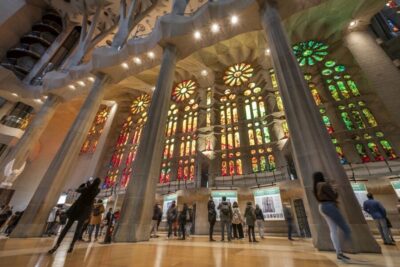
Sagrada Familia Entry Ticket with Audio Guide
Read our review →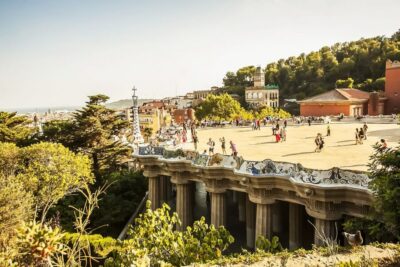

Park Guell Guided Tour with Skip The Line Entry
Read our review →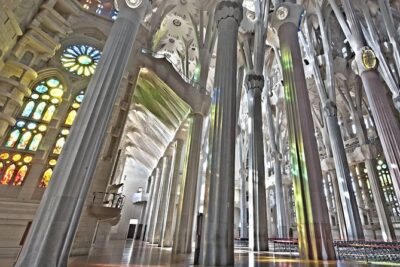
Barcelona in 1 Day: Sagrada Familia, Park Guell,Old Town & Pickup
Read our review →

Sagrada Familia Skip-the-Line Entry Ticket & Tour
Read our review →