

Reviewed · HISTORICAL TOURS
Barcelona Historical Walking Tour: Gothic Quarter and El Born
Barcelona’s oldest streets reveal themselves best on foot, and this two-hour Gothic Quarter and El Born tour gives you a useful first look at the city’s Roman, medieval, artistic, and political past. You’ll move through tight lanes and small squares that a bus simply cannot reach, from Els 4 Gats to Santa Maria del Mar.
I like the compact route and the guides’ storytelling. Juan has used an iPad to show how places looked in the past, while Jordan adds comedy and Lidia brings a lively local touch. I also like the balance between famous sights and less obvious corners, such as Plaça Sant Felip Neri and the old Jewish quarter. The main consideration is that the tour is an overview, not a museum visit, and entry to Barcelona Cathedral and Santa Maria del Mar is not included.
In This Review
- Key points to know before you book
- Starting with artists at Els 4 Gats
- A mosaic about Catalonia’s past
- Barcelona Cathedral and the story of Saint Eulalia
- Roman walls at Casa de l’Ardiaca
- The Bishop’s Bridge and its famous legend
- The quiet sorrow of Plaça Sant Felip Neri
- Through El Call, Barcelona’s old Jewish quarter
- Government and royal power in two squares
- The legend behind Plaça de l’Àngel
- Finishing at Santa Maria del Mar
- What the two-hour format really gives you
- Who will get the most from this walk
- Booking details that matter
- Should you book the Gothic Quarter and El Born walk?
- FAQ
- How long does the Barcelona Historical Walking Tour last?
- Where does the tour begin?
- Where does the tour finish?
- Is the tour offered in English?
- What is included in the tour price?
- Are admission tickets to Barcelona Cathedral and Santa Maria del Mar included?
- How large is the tour group?
- Can I cancel for a full refund?
Key points to know before you book
- Picasso and Gaudi connections: Begin at Els 4 Gats, the Art Nouveau café linked to both artists.
- Roman Barcelona under your feet: See sections of the old Barcino wall, aqueducts, and ancient street routes.
- Eleven compact stops: The route covers the Gothic Quarter and El Born without spending long stretches in one place.
- Strong guide element: Guides including Juan, Lidia, Jordan, Vanesa, Darren, Petra, and Sonia have been praised for history, humor, and family-friendly presentation.
- Small-group format: The maximum group size is 20, with group discounts available.
- Good morning option: Early tours can be cooler and less crowded, according to direct tour feedback.
Starting with artists at Els 4 Gats
The walk begins at Plaça del Vuit de Març in the Ciutat Vella, Barcelona’s Old City. From there, you head to Els 4 Gats, a historic café and restaurant with Art Nouveau details and an important place in the city’s creative story.
This was a meeting point for artists, intellectuals, and modernists. Pablo Picasso and Antoni Gaudi were among those connected with the café. You will not spend the morning studying their complete careers, but this stop gives useful context. Barcelona’s artistic world was not separated from its cafés, studios, and narrow central streets. The city’s famous modernist style grew out of places like this.
The exterior and cultural setting are the main draw. Admission is free, and the stop lasts about 10 minutes. If you are especially interested in Picasso or Gaudi, this introduction can help you recognize how closely their work was tied to Barcelona’s social life.
Guides vary, but the experience depends heavily on who leads your group. Juan has been praised for linking Spanish history with local stories and using visual material on an iPad. David has focused particularly well on Gaudi, while Petra and Craig have been described as energetic and well informed. The guide’s style matters here because the café itself is a quick stop, while the story gives it weight.
More Historical Tours in Barcelona
- Barcelona: Tapas Walking Tour with Food, Wine, and History
★ 4.8 · 4,261 reviews - Barcelona Tapas Walking Tour: Food, Wine & History
★ 4.5 · 1,928 reviews - Barcelona: 2.5-Hour Bike or E-Bike Historical Tour
★ 4.5 · 1,262 reviews
A mosaic about Catalonia’s past
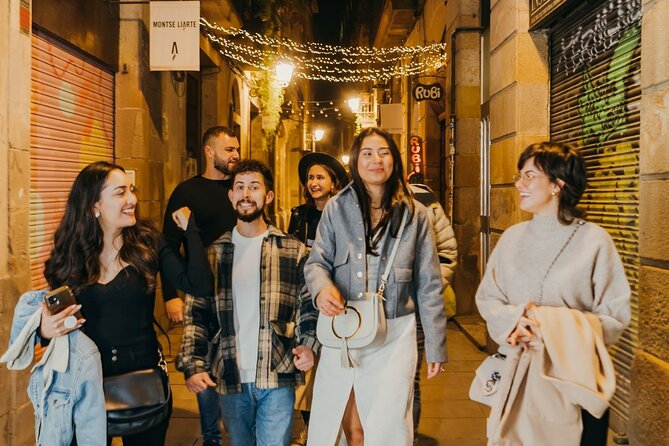
Next comes El Mon Neix En Cada Besada, a photomosaic installed in 2014. Its name refers to a kiss, and the work is connected with the Catalan defeat on September 11, 1714, during the War of the Spanish Succession.
The image offers a modern way into a difficult political and historical subject. September 11 became La Diada, Catalonia Day, and the mosaic reflects ideas of freedom and identity that remain important in Barcelona. You will not get a full political seminar in 10 minutes, but the stop helps explain why Catalan history is not just a sequence of kings and battles. It still shapes public life.
This is also a quick photo stop. It costs nothing and requires no ticket. The value comes from having a guide explain what you are looking at, rather than passing it without context.
Barcelona Cathedral and the story of Saint Eulalia
The route then reaches Barcelona Cathedral, the Gothic church at the heart of the old city. It honors Saint Eulalia, Barcelona’s patron saint, who was tortured and killed by the Romans.
The cathedral gives you a strong sense of the city’s medieval religious center. Gothic architecture can look confusing when you see it without explanation, but a guide can point out how the building fits into the surrounding quarter and the older layers beneath it.
The scheduled visit lasts about 10 minutes. Admission is not included, so you should treat this part primarily as a guided stop unless you choose to pay separately for entry. That distinction matters. If your priority is a full church visit, more time will be needed beyond the tour.
The short timing is useful for a first orientation, especially if you want to keep moving through the quarter. It is less suitable if you prefer to linger over stained glass, chapels, or architectural details.
Roman walls at Casa de l’Ardiaca
Casa de l’Ardiaca is one of the more unusual stops. The building combines Gothic and Renaissance features and incorporates the vertical face of the Roman wall and aqueducts.
Here, Barcelona’s timeline becomes easy to read. The city was not built anew each time its rulers changed. Later buildings absorbed earlier structures, and Roman remains still appear in the middle of the medieval quarter. That layering is one of the best reasons to walk rather than rely on a broad city sightseeing route.
The stop is free and lasts about 10 minutes. You may find the building more interesting once the guide explains what belongs to the Roman period and what came later. It is a good example of a place that could seem ordinary if you did not know where to look.
More Walking Tours in Barcelona
- Barcelona Tapas and Wine Experience Small-Group Walking Tour
★ 5.0 · 5,804 reviews - Barcelona: Tapas Food Crawl Walking Tour with Tastings
★ 4.9 · 1,798 reviews - Barcelona: Gothic Quarter Ghosts and Legends Walking Tour
★ 4.7 · 1,443 reviews - Barcelona Helicopter, Sailboat & Old Town Private Walking Tour
★ 5.0 · 1,395 reviews
The Bishop’s Bridge and its famous legend
Carrer de Bisbe follows part of an important route through Roman Barcino, the ancient city that occupied this area. The Neo-Gothic Pont del Bisbe crosses the street and has become one of the Gothic Quarter’s most recognizable sights.
The bridge is tied to a superstition that gives the stop a lighter, more playful mood after the cathedral and Roman remains. Your guide will explain the legend, and you can decide for yourself how much faith to place in it. Even skeptical visitors get a good story and an appealing photograph.
The bridge is a reminder that Barcelona’s old quarter is not made up only of untouched medieval buildings. Some features look old but belong to later periods. A good guide helps you separate authentic remains from later additions, which makes the entire walk more interesting.
The quiet sorrow of Plaça Sant Felip Neri
Plaça Sant Felip Neri is one of the most affecting stops on the route. Tucked among the Gothic Quarter’s lanes, the square carries scars linked to the Spanish Civil War.
The setting is small and quiet, which makes the history feel more direct. The damaged walls are not simply decorative signs of age. They point to a painful period in Barcelona’s past and give the tour a more serious turn.
You have about 10 minutes here. That is enough to hear the basic story and take in the square, though not enough for a long historical lecture. I appreciate this stop because it keeps the tour from becoming a parade of pretty façades. Barcelona’s old center also carries grief, conflict, and memory.
Through El Call, Barcelona’s old Jewish quarter
The walk continues into MUHBA El Call, the former Jewish quarter. Narrow lanes and medieval buildings make this section feel distinct from the larger squares nearby.
The area offers an introduction to Barcelona’s Jewish history, including its synagogue and local legends. Again, the tour provides a framework rather than a full museum experience. If this subject interests you, make a note of the area and return later at your own pace.
This part also shows why comfortable shoes matter. The route is not described as difficult, and one direct account calls it an easy walk, but old-city streets can be uneven and crowded. You will get more from the guide if you can look up at the buildings instead of worrying about your footing.
Government and royal power in two squares

Plaça de Sant Jaume is the political center of the old city, surrounded by important government buildings. It is a useful place to connect Barcelona’s medieval past with its modern civic identity.
The square can feel much more open than the lanes you have just left. Your guide will point out the buildings and explain their role in city life. The stop is free and lasts about 10 minutes.
From there, the route reaches Plaça del Rei, home to the Royal Palace. The square looks calm and elegant, but the guide also introduces the darker side of its past. This contrast is typical of the tour: a beautiful setting often carries a complicated story.
Plaça del Rei is particularly useful for readers who want to understand Barcelona as a seat of power, not only as an artistic destination. You see how royal authority, religion, trade, and city government all occupied the same compact area.
The legend behind Plaça de l’Àngel
Plaça de l’Àngel was once known as Wheat Square, reflecting its role in grain trading. Its current name comes from a heavenly legend.
This stop is brief, but it shows how ordinary economic activity and religious stories shaped the names on Barcelona’s map. Place names can preserve details that buildings no longer make obvious. A guide turns a passing intersection into part of the city’s memory.
The square also helps move you naturally toward El Born and the final church. The route is not a collection of disconnected sights. It follows the old center from Roman origins through medieval religious and royal power, then toward the maritime world of the Born district.
Finishing at Santa Maria del Mar
The walk ends at the Basilica de Santa Maria del Mar, one of Barcelona’s finest Catalan Gothic churches. Its scale and design reflect the importance of the city’s maritime community.
The church makes a fitting final stop because El Born grew around trade, craft, and port activity. Santa Maria del Mar is often associated with the working people and seafaring life of medieval Barcelona, which gives it a different feel from Barcelona Cathedral.
The scheduled stop lasts about 10 minutes, and admission is not included. You can admire the exterior and hear the historical explanation during the tour, then decide if you want to return for a longer interior visit. If you are planning several church visits, check your schedule before booking another paid attraction immediately afterward.
Ending here is practical, too. The meeting point and finish are both in Ciutat Vella, and the final location is near public transportation. Guides such as Tammy have also provided food and drink suggestions after the walk, while Juan has offered ideas for restaurants, bars, and further sights. Those tips can help you turn the tour into a useful first morning in Barcelona.
What the two-hour format really gives you
At roughly $30.25 per person, this is not the cheapest way to wander through the Old City, but it is a reasonable price for a guide-led introduction. You are paying for a route, historical connections, local legends, and the chance to ask questions as you go.
The tour visits 11 locations in about two hours. That works out to roughly 10 minutes at each stop, with walking between them. You should expect a brisk overview rather than long visits inside the cathedral or basilica.
I see the value in booking this near the start of your stay. You get a map in your head, learn which areas deserve a return visit, and can ask for practical recommendations. Several guides have shared food and drink suggestions, and that kind of local direction can be more useful than another generic list of attractions.
The group maximum is 20 people. That is small enough for a guide to answer questions, though it is not a private walk. Feedback has praised groups as a good size and noted that tours start on time. Still, the experience may vary with the guide and the group’s pace.
Guide quality is the biggest variable. Juan, Lidia, Jordan, Vanesa, Darren, Sonia, Petra, Jorge, Thami, Craig, Justin, Mariah, Sara, Tammy, David, and others have led tours connected with this experience. Strong descriptions focus on energy, warmth, clear explanations, humor, and the ability to keep children or teenagers engaged.
There have also been two serious problems in the available feedback: one cancellation and one case where the guide spoke too softly for the group to hear. Those appear to be exceptions beside the very high overall rating, but they are worth noting. If you cannot hear, speak up early and ask the guide to project.
Who will get the most from this walk
I would choose this tour if you want a clear first orientation to Barcelona’s oldest center. It suits first-time visitors, families, couples, and anyone who prefers stories and context over a long museum session.
It can also work for repeat visitors. One person who had been to Barcelona several times still found new historical details through the guide. That is believable because the Roman wall, Jewish quarter, Civil War marks, legends, and political squares are easy to pass without explanation.
The tour is also a good fit for families. Vanesa has been praised for working well with children, while other guides have kept teenagers engaged. Jordan’s humor and the frequent changes of scene may help younger members stay interested.
You may want something else if you need wheelchair-specific information, extensive interior access, or a private pace. The provided details say most people can participate, but they do not give a detailed accessibility assessment. The route is an easy walk for most people, yet old streets still call for sensible footwear.
Book a morning departure if you can. One direct tip describes the cooler, quieter conditions as a real advantage. Barcelona’s Old City is more pleasant when you are not trying to listen over heat and heavy foot traffic.
Booking details that matter
You receive confirmation at booking, and mobile tickets are supported. The tour is offered in English, includes a local guide, and allows group discounts.
The meeting point is Plaça del Vuit de Març, Ciutat Vella, 08002 Barcelona. The walk finishes at Basílica de Santa Maria del Mar, Plaça de Santa Maria, 1, Ciutat Vella, 08003 Barcelona.
Free cancellation is available up to 24 hours before the start time for a full refund. Changes or cancellations made less than 24 hours before the local start time are not accepted for a refund.
Should you book the Gothic Quarter and El Born walk?
Book it if you want a short, story-led introduction before exploring Barcelona on your own. The best parts are the Roman remains, the somber Plaça Sant Felip Neri, the old Jewish quarter, and the final connection between El Born and Santa Maria del Mar.
Do not book it expecting full entry visits to both major churches or a slow architectural study. At $30.25, the value comes from the guide and the route. Choose a morning time, wear comfortable shoes, and treat the walk as your city orientation. It gives you enough history to make the rest of Barcelona easier to read.
FAQ
How long does the Barcelona Historical Walking Tour last?
The tour lasts approximately two hours.
Where does the tour begin?
It begins at Plaça del Vuit de Març in Ciutat Vella, Barcelona.
Where does the tour finish?
The tour ends at Basílica de Santa Maria del Mar, Plaça de Santa Maria, 1, in Ciutat Vella.
Is the tour offered in English?
Yes. The tour is offered in English.
What is included in the tour price?
The price includes a guided walking tour, a local tour guide, city highlights, and lesser-known places along the route.
Are admission tickets to Barcelona Cathedral and Santa Maria del Mar included?
No. Admission tickets to Barcelona Cathedral and Santa Maria del Mar are not included.
How large is the tour group?
The maximum group size is 20 people. Group discounts are available.
Can I cancel for a full refund?
Yes. You can cancel at least 24 hours before the experience start time for a full refund. Cancellations or changes made less than 24 hours before the start time are not accepted for a refund.
Recently reviewed around Barcelona
- Excursion Aigüestortes – Estany Llebreta (1/2 day)★ 5.0 · 138 reviews
- E-Bike tour in Barcelona with English Guide★ 5.0 · 128 reviews
- Wine Tasting Experience in Barcelona★ 5.0 · 172 reviews
- Barcelona Luxury Yacht Cruise – Day or Sunset, Open Bar & Snacks★ 5.0 · 154 reviews
- Montserrat: Cog-Wheel, Basilica, Black Madonna & Licor Tasting★ 4.5 · 886 reviews
- Barcelona Wax Museum Admission Ticket★ 4.5 · 237 reviews
- Barcelona: Wine Tasting and 5 Course Tapas Pairing Dinner★ 4.5 · 129 reviews
- Andorra Original History and Sightseeing Tour (Private, Pickup)★ 5.0 · 350 reviews
Historical Tours, compared.
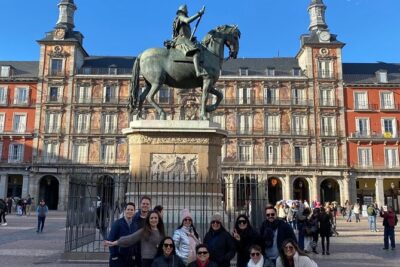
Madrid Essential: Historic Center, Plaza Mayor & Royal Palace
Read our review →
Tapas Walking Tour with Food, Wine, and History
Read our review →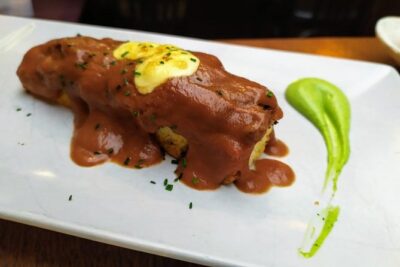
Sevilla Food Tour: Tapas, Wine, History & Traditions
Read our review →
Valencia Old Town Tour with Wine & Tapas in 11th Century Historic Monument
Read our review →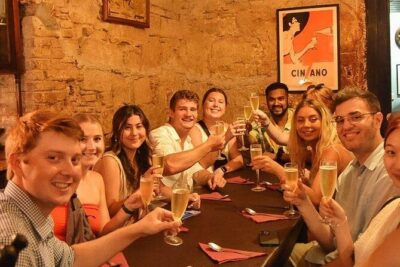
Barcelona Tapas Walking Tour: Food, Wine & History
Read our review →
Ultimate Seville Tapas, Wine & History Small Group Tour
Read our review →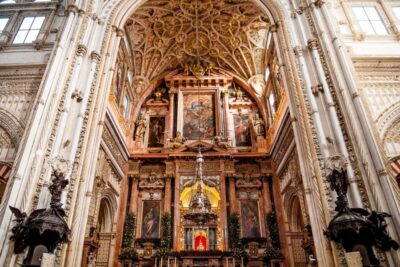
Skip-the-Line Great Mosque-Cathedral History Tour
Read our review →
Browse the lists this tour appears in