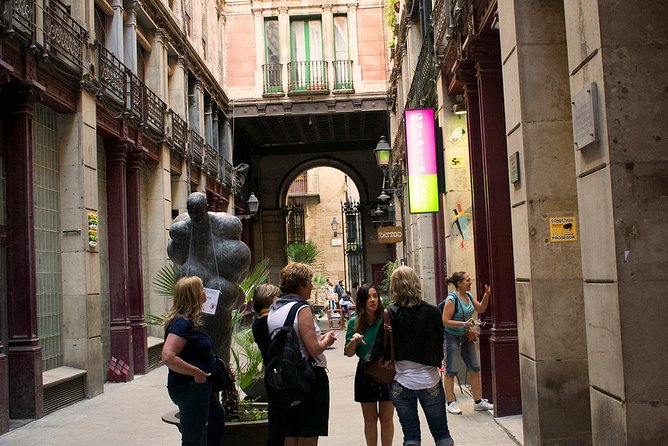
Reviewed · BARCELONA TOURS
Barcelona Gothic Quarter’s Deepest Secrets & Sangria
Barcelona’s Gothic Quarter is best understood on foot, and this tour takes you beyond the usual cathedral photo stop. In about three hours, you move from Plaça de Catalunya through Roman remains, medieval lanes, Civil War scars, art-school connections, Las Ramblas, and Barceloneta before finishing with sangria.
I like the small maximum of 15 people, which makes a narrow-street walking tour easier to manage and leaves room for questions. I also like the guide-led storytelling, especially around places such as Plaça Sant Felip Neri, the old Jewish Quarter, and the Roman walls. The main consideration is simple: you will walk a lot, and the churches listed on the route do not include admission.
In This Review
- Key points to know before booking
- Why this Gothic Quarter walk works
- Starting at Plaça de Catalunya
- Las Ramblas and Carrer Petritxol
- Churches, courtyards, and medieval Barcelona
- Roman walls and the older city beneath your feet
- The Jewish Quarter and Plaça Sant Felip Neri
- Picasso, Miró, and Gaudí connections
- Plaça George Orwell and the route toward Barceloneta
- Sangria and conversation at Port Vell
- Group size, guides, and the walking pace
- Who should book this experience
- Should you book the Gothic Quarter Secrets and Sangria walk?
- FAQ
- How long does the Barcelona Gothic Quarter tour last?
- Where does the tour begin?
- Where does the tour end?
- Is sangria included in the price?
- How many people can join the tour?
- Is the tour offered in English?
- Are admission fees for Santa Maria del Pi and Barcelona Cathedral included?
- Can I cancel for a full refund?
Key points to know before booking
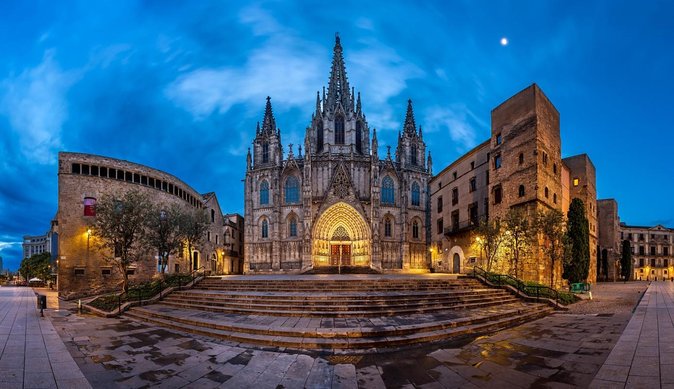
- Roman Barcelona in the old city: See ancient walls and ruins mixed into the medieval streets.
- Stories beyond the postcard sights: The route covers the Civil War, Jewish Barcelona, George Orwell, Picasso, Miró, Gaudí, and local religious traditions.
- A genuinely small group: The tour accepts no more than 15 people, and some departures may be much smaller.
- Several guide styles: Juliana, Julianna, Valentina, Sabrina, Angelina, and Daniel are praised for clear storytelling, humor, flexibility, and local advice.
- A walk that ends by the water: The route finishes at Port Vell, with sangria included.
- Best early in your stay: The central meeting point and personal recommendations can help you plan later days in Barcelona.
Why this Gothic Quarter walk works
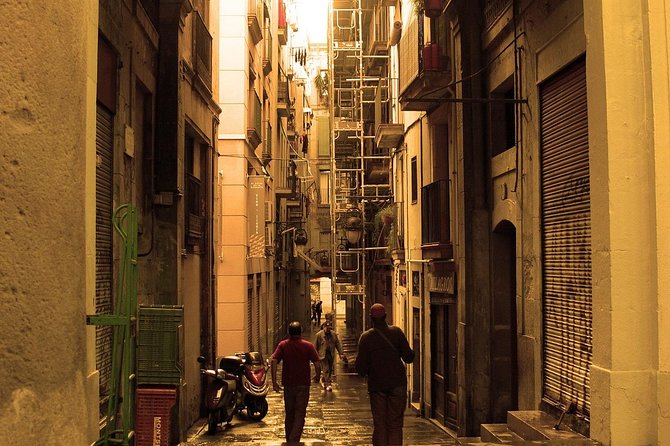
The Barri Gòtic can feel confusing even with a map. Streets twist, courtyards appear without warning, and important remains are often tucked into walls or courtyards rather than displayed in a grand monument. I like having a guide point out what you would likely pass without noticing.
This is not only a medieval architecture tour. The route moves through Barcelona’s Roman foundations, Catholic traditions, Jewish past, Civil War memory, modern art, tourism culture, and beachside life. That broad sweep gives you a useful first picture of the city.
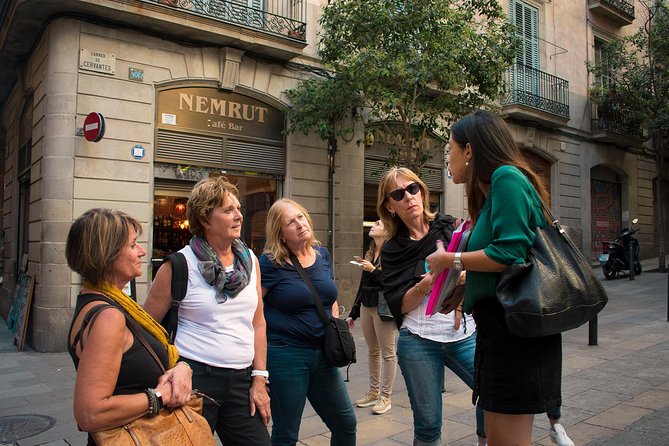
The guide is a major part of the experience. Juliana and Julianna receive especially strong praise for making political and social history easy to follow, while Valentina is noted for her passion and ability to answer questions. Sabrina helped one pair get their bearings and offered practical advice, and Daniel is described as bringing a good sense of humor to the walk.
That personal element matters here. You are not simply being led from one famous building to another. The guide can adapt the pace, answer questions, and sometimes adjust the route for a special request. The small group also means you do not spend much time waiting for a large crowd to gather.
There is one tradeoff. The name suggests a tightly focused Gothic Quarter experience, but the route reaches Barceloneta and Port Vell. That gives you a wider view of Barcelona, yet it also means some stops receive only a few minutes. You get breadth rather than a long interior visit at each major building.
Other Barcelona days travellers weigh against this one:
- Barcelona: Sagrada Familia Entry Ticket with Audio Guide
★ 4.6 · 105,312 reviews - Barcelona: Park Güell Admission Ticket
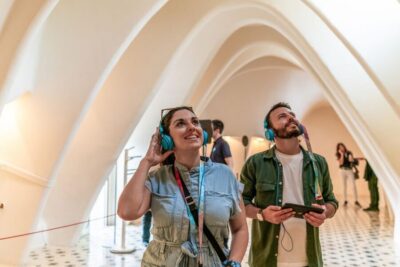
★ 4.4 · 76,534 reviews - Barcelona: Casa Batlló Entry with Self-Audioguide Tour
★ 4.7 · 25,359 reviews
Starting at Plaça de Catalunya
The tour begins at Café Zurich on Plaça de Catalunya, one of the city’s easiest central meeting points. The introduction takes about 15 minutes, giving the guide time to explain the plan and set the historical scene.
This is a practical place to begin if Barcelona is new to you. Plaça de Catalunya links the Eixample, the old city, and the top of Las Ramblas. It is also near public transportation, so reaching the meeting point is relatively straightforward.
The square itself is not the main event. Think of it as the threshold between the broad, orderly streets of the newer city and the tight lanes of Ciutat Vella. Once you leave it, the tour becomes much more intimate.
Las Ramblas and Carrer Petritxol
Las Ramblas gets about 15 minutes. This is enough to understand Barcelona’s most famous promenade without spending the whole tour in its busiest corridor.
Your guide can place the street in the larger story of the city, then lead you toward Carrer Petritxol, known as Barcelona’s sweetest street. The stop lasts about 10 minutes and adds a lighter, more local-feeling note after the crowded main avenue.
The route also includes the Boqueria Market among its sights. The supplied details do not promise a long market visit or food tasting, so treat it as a passing landmark rather than a dedicated market tour. If you want time to browse stalls and eat, plan a separate visit.
Churches, courtyards, and medieval Barcelona
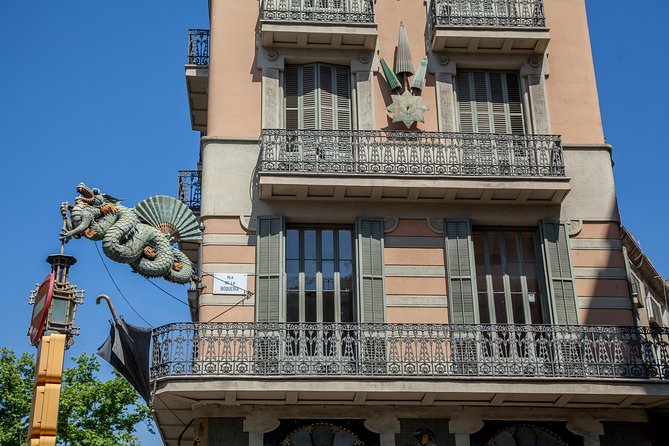
The Basilica of Santa Maria del Pi receives about five minutes, as does Barcelona Cathedral. These short stops are useful for orientation and exterior details, but they are not full church tours.
Admission to both churches is not included. If you want to enter, budget extra time and money separately, and do not expect the walking group to wait through a long visit. The tour’s value here comes from context: your guide explains why the buildings matter, then keeps the walk moving.
The Cathedral is also connected with one of the route’s memorable traditions: the 13 geese living in the church. A guide can explain the story behind them, along with the people and shrines you may later recognize if you return inside on your own.
The Archivo Histórico de la Ciudad de Barcelona appears next, with about five minutes devoted to the archive and the Crown of Aragon. It is not an archive visit in the museum sense. Instead, it helps connect the streets around you with the political power that shaped medieval Barcelona.
Plaça de Sant Jaume, the government square, is another brief but important stop. This is where Barcelona’s civic identity comes into view. The guide’s job is to explain the square’s role without burying you in dates.
A different way to spend the day, same corner of Spain:
- Barcelona: 24 or 48-Hour Hop-On Hop-Off Bus Tour
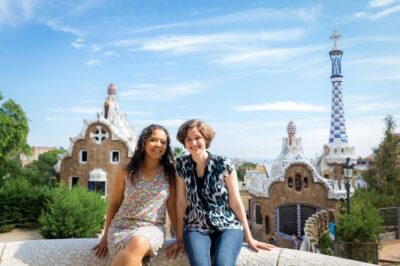
★ 4.4 · 20,872 reviews - Barcelona: Park Guell Guided Tour with Skip The Line Entry
★ 4.7 · 17,563 reviews - Barcelona in 1 Day: Sagrada Familia, Park Guell,Old Town & Pickup
★ 5.0 · 13,541 reviews - Barcelona Aquarium: Entry Ticket
★ 4.3 · 13,335 reviews
Roman walls and the older city beneath your feet

The Roman remains are one of the best reasons to take a guide. Barcelona’s ancient past is not always presented in one obvious archaeological park. Pieces of the original Roman wall and ancient ruins appear amid later buildings.
A self-guided walk can easily miss these fragments. With a guide, you can see how Roman Barcelona was absorbed into the medieval city rather than erased. That layered character is one of the strongest parts of the route.
The tour summary places ancient Roman ruins and the Roman walls among the central discoveries. The detailed timing gives only a few minutes to some individual stops, so the experience is about connecting several remains rather than studying one site at length.
If your main interest is Roman archaeology, you may want a more specialized museum or archaeological tour afterward. For a first look at how old Barcelona fits together, this walk gives you a useful start.
The Jewish Quarter and Plaça Sant Felip Neri
The old Jewish Quarter is one of the places where a guide adds real value. The narrow streets can look attractive without revealing much about the community that once lived there. The route includes the synagogue and stories about Jewish Barcelona, giving this part of the city a human and historical frame.
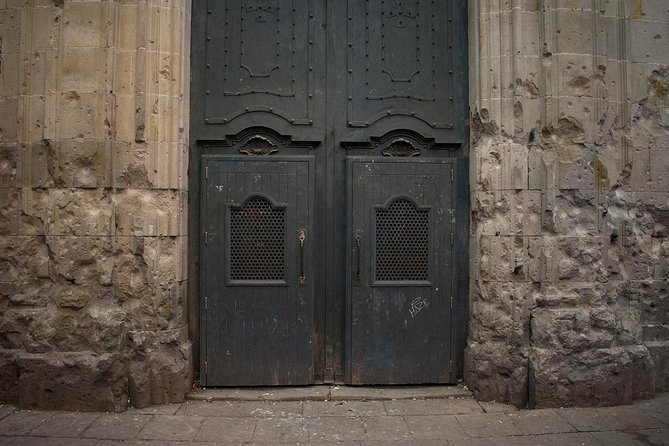
Plaça Sant Felip Neri receives about eight minutes and focuses on the Spanish Civil War. This is one of the darker stops, and it helps explain why the tour is not simply a cheerful stroll through pretty streets.
The square has an emotional weight that calls for careful explanation. The guide connects the physical setting with the conflict and its effects, giving you a more honest picture of Barcelona’s past. If you prefer only architecture and food, this section may feel serious. I consider that a strength, but it is worth knowing before you book.
The route also includes the Pailebot Santa Eulalia for about four minutes, connected in the itinerary with the tortures of Barcelona’s patron saint. Because the stop is brief, expect a quick historical note rather than a long examination of the vessel or a formal visit.
Picasso, Miró, and Gaudí connections
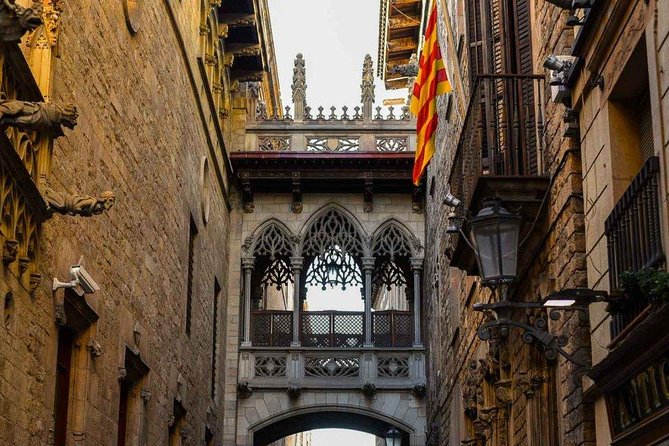
Barcelona’s art story appears in several unexpected ways. The Royal Artistic Circle of Barcelona is included as a stop connected with one of Gaudí’s first works of art. You also pass the prestigious art school where Picasso, Miró, and Dalí studied, identified in the detailed route as the Escuela de Artes Aplicadas y Oficios Artísticos.
That art-school connection is a standout detail. It turns an ordinary-looking building into part of Barcelona’s modern cultural story. One guide also pointed out actual Picasso art during the walk, an unusual detail that makes the route feel more rewarding than a standard list of monuments.
The information provided does not promise entry into the art school or a formal museum viewing. You should expect exterior interpretation and nearby discoveries. Still, this is exactly the kind of detail that is hard to find on your own, especially when the quarter is pulling your attention in ten directions.
The route also passes the place associated with Miró’s birth. Together, these stops show how the old city is linked to Barcelona’s later artistic reputation. You are not only looking backward at medieval stone. You are seeing how artists and institutions shaped the city you recognize today.
Plaça George Orwell and the route toward Barceloneta
Plaça George Orwell, often called Plaza Tripi, receives about five minutes. The stop connects George Orwell with the Spanish Civil War and adds a modern political layer to the tour.
This is a good example of the route’s wide scope. In one afternoon or evening, you move from Roman defenses and medieval churches to twentieth-century conflict and counterculture. Some people will love that range. Others may find it too much information in a short period.
From there, the route heads toward Barceloneta, where the focus shifts to Barcelona, the beach, and the port. The detailed timing gives Barceloneta five minutes, but the broader route ends at Port Vell. The walk therefore finishes with a change of mood, from enclosed old-city streets to open waterfront space.
One important practical point: the tour is called a Gothic Quarter experience, but it is also a city orientation walk. You see connections among the old town, Las Ramblas, the port, and the beach. If you want only Gothic architecture, choose a shorter specialist walk. If you want a first evening that introduces several sides of Barcelona, this wider route makes sense.
Sangria and conversation at Port Vell
Sangria is included, and the experience ends at Port Vell. This is more than a drink added to a booking page. It gives the walk a natural finish and time to ask follow-up questions after the formal route ends.
The exact setting may depend on the departure and guide, but the supplied experience information places the end at Port Vell. A detailed account describes a local eatery in the Barceloneta area, with sangria, tapas, olives, paella, and other food available. Treat those additional dishes as optional possibilities, not guaranteed inclusions. The included item is sangria.
That distinction matters when you compare prices. At $65.33 per person, you are paying for a professional English-speaking guide, a small group, roughly three hours of walking, and sangria. Food beyond the included drink is not listed as part of the price.
I think the value is strongest if you want personal interpretation and city orientation. A free group walk may cover some of the same streets, but it may not offer the same small-group setting or final drink. On the other hand, someone interested only in taking photographs of the Cathedral could spend less by walking independently.
The stop also makes this a good choice for an early evening. Several people found the walk useful at the start of a Barcelona stay because the guide offered recommendations for later meals and activities. You finish with a better sense of where the old city, port, and beach fit together.
Group size, guides, and the walking pace
The maximum group size is 15. That is small enough for a guide to hear questions and for the group to move through narrow streets without becoming a long human traffic jam.
Actual group size can be smaller. One booking had only two people, and the guide began promptly rather than canceling or turning the experience into a stiff private appointment. A small departure like that can feel more personal, though you should not book expecting a private tour every time.
The route involves substantial walking. One person specifically described walking a lot while covering many interesting places. You should wear comfortable shoes and bring water, especially in warm weather. No accessibility details beyond most people being able to participate are provided, so anyone with mobility concerns should confirm the current route before booking.
The guides are repeatedly praised for warmth, energy, humor, and clear storytelling. Juliana and Julianna appear often, with Valentina also receiving strong praise. Sabrina, Angelina, and Daniel are named as guides as well. The exact guide is not guaranteed in the information provided, but the range of names suggests a team rather than a one-guide operation.
Who should book this experience
I would choose this tour for a first or second day in Barcelona. It gives you a mental map of the old city and points out places worth returning to, including the Cathedral, Boqueria Market, churches, art connections, and waterfront.
It also suits you if you enjoy history told through stories rather than a long lecture. The route covers the Roman period, medieval religion, Jewish life, the Civil War, modern artists, and George Orwell. That range keeps the walk moving, but it also means the treatment of each subject is necessarily brief.
Families with older children may find the mix appealing. One account describes a son becoming fascinated by the political history and stories. The serious Civil War material should be explained clearly to younger participants before you book.
This is less suitable if you dislike walking, want extensive time inside monuments, or prefer a tour devoted to one period. The church admissions are not included, and the route is broad enough that several stops last only five minutes.
Confirmation arrives at booking, the tour is offered in English, and mobile tickets are supported. Free cancellation is available up to 24 hours before the start time. Changes or cancellations inside that window are not accepted, and the tour requires a minimum number of participants, so check any provider message before setting your evening plans in stone.
Should you book the Gothic Quarter Secrets and Sangria walk?
Book it if you want a lively introduction to Barcelona that combines major sights with details you might miss alone. The strongest reasons are the small group, the wide historical range, the guides’ storytelling, and the relaxed sangria finish at Port Vell.
At $65.33, it is not the cheapest way to walk through the Gothic Quarter. Its value depends on using the guide well. Ask questions, note restaurant and sightseeing suggestions, and return later to the Cathedral, market, or churches that catch your interest.
I would schedule it early in your stay, ideally when you still need help getting oriented. Skip it if you want a quiet, slow architectural study or a full interior tour of every church. For most visitors who want context, local guidance, and a pleasant first look at old Barcelona, it is a well-rounded choice.
FAQ
How long does the Barcelona Gothic Quarter tour last?
The experience lasts approximately three hours.
Where does the tour begin?
The meeting point is Café Zurich at Plaça de Catalunya, 1, Barcelona.
Where does the tour end?
The tour ends at Port Vell in the Ciutat Vella district.
Is sangria included in the price?
Yes. Sangria is included, along with the professional guide and small-group tour.
How many people can join the tour?
The maximum group size is 15 people.
Is the tour offered in English?
Yes. The experience is offered in English.
Are admission fees for Santa Maria del Pi and Barcelona Cathedral included?
No. Admission to those two churches is not included.
Can I cancel for a full refund?
Yes, if you cancel at least 24 hours before the experience begins. Cancellations or changes made less than 24 hours before the start time are not accepted for a refund.
Recently reviewed around Barcelona
- Excursion Aigüestortes – Estany Llebreta (1/2 day)★ 5.0 · 138 reviews
- E-Bike tour in Barcelona with English Guide★ 5.0 · 128 reviews
- Wine Tasting Experience in Barcelona★ 5.0 · 172 reviews
- Barcelona Luxury Yacht Cruise – Day or Sunset, Open Bar & Snacks★ 5.0 · 154 reviews
- Montserrat: Cog-Wheel, Basilica, Black Madonna & Licor Tasting★ 4.5 · 886 reviews
- Barcelona Wax Museum Admission Ticket★ 4.5 · 237 reviews
- Barcelona: Wine Tasting and 5 Course Tapas Pairing Dinner★ 4.5 · 129 reviews
- Andorra Original History and Sightseeing Tour (Private, Pickup)★ 5.0 · 350 reviews
Barcelona Tours, compared.
Sagrada Familia Entry Ticket with Audio Guide
Read our review →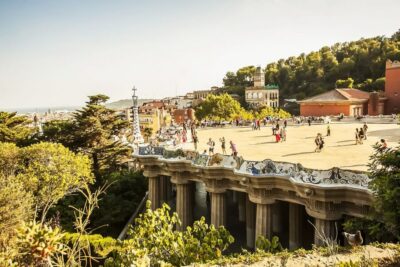
Park Guell Guided Tour with Skip The Line Entry
Read our review →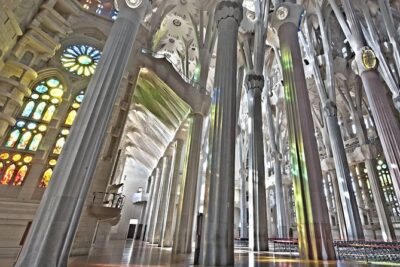
Barcelona in 1 Day: Sagrada Familia, Park Guell,Old Town & Pickup
Read our review →

Sagrada Familia Skip-the-Line Entry Ticket & Tour
Read our review →