
Reviewed · WALKING TOURS
Barcelona: Gothic Quarter Walking Tour
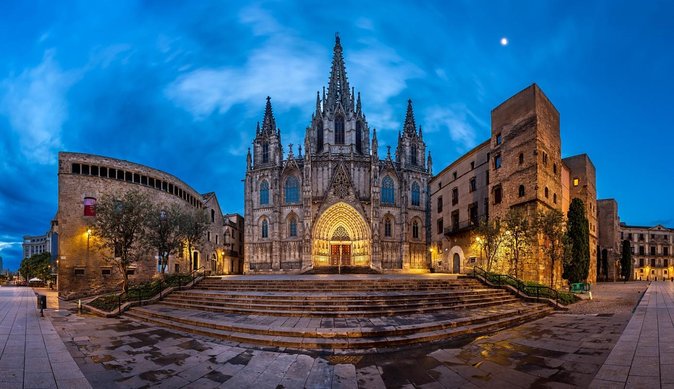
Barcelona’s old city is not a tidy history book. It is a maze of narrow lanes, grand churches, tiny squares, moved houses, old political grudges, and modern life squeezed into medieval stone. This German-language walking tour follows that story from Roman Barcelona to the early 18th century, then finishes in the Ribera Quarter near Santa Maria del Mar.
I like the relaxed pace, with time for photos and bathroom stops, and I like the practical advice folded into the history. Guides such as Johannes have added restaurant, shopping, and local-specialty tips that can help during the rest of your stay. The main consideration is that the tour lasts 3.5 hours and focuses almost entirely on exteriors, so it is not a good substitute for a museum or church interior visit.
In This Review
- Key points at a glance
- Starting at Plaça de Catalunya
- Roman water and Barcelona’s first chapters
- Narrow lanes, strange legends, and old institutions
- Political power in the city squares
- The Jewish Quarter and a lost world
- A romantic square with civil-war scars
- Cloisters, eggs, and royal fears
- Santa Maria del Mar and the Ribera Quarter
- What the German-language format adds
- Practical advice for a comfortable walk
- Who should book this Gothic Quarter walk?
- Should you book it?
- FAQ
- Where does the tour begin?
- Where does the tour finish?
- How long does the experience last?
- What language is the tour conducted in?
- Is this a private group tour?
- Are museum and church entry fees included?
- Is the tour wheelchair accessible?
- Does the tour operate in bad weather?
- What should I wear for the cloister visit?
Key points at a glance
- Roman beginnings: See how Barcelona’s earliest water systems and convalescent colony fit into the city’s later growth.
- The Jewish Quarter: Walk through the remnants of a lost world and hear how religious power shaped the old city.
- Royal and political Barcelona: Follow the Crown of Aragon, the city’s maritime rise, and the end of local political influence.
- Legends in the stone: Hear stories of dragons, saints, soldiers, kings, secret brotherhoods, and a knife-grinder’s song.
- Ribera finale: Finish near Santa Maria del Mar and the Born, where medieval trade, Bourbon vengeance, and modern city life meet.
- German and private: The group is listed as private, with a price of $212 for up to four people.
Starting at Plaça de Catalunya
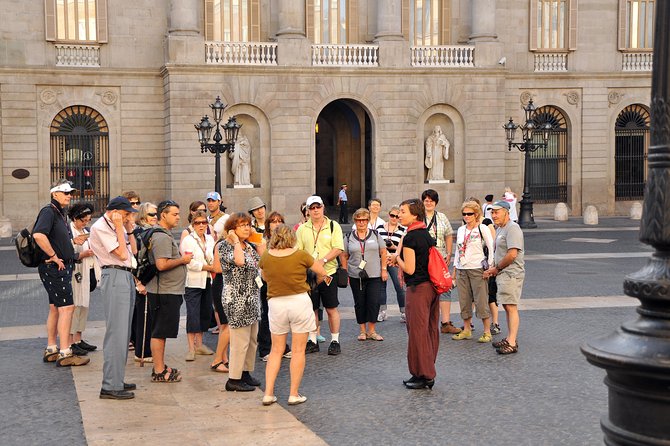
The meeting point is in front of Hotel Olivia Plaza at Plaça de Catalunya, 19. This is a practical place to begin because the square sits between modern Barcelona and the old city. You are not dropped straight into the maze. Instead, the tour begins at a clear landmark before moving into streets where the city’s layers grow thicker.
From here, expect a short orientation to Barcelona’s past and present. The story does not treat the Gothic Quarter as a frozen medieval set. Barcelona is presented as a port city that keeps changing, with old walls, new businesses, traffic, shops, and daily life sharing the same blocks.
That approach matters. If you only hear about kings and dates, the Gothic Quarter can feel like a collection of old facades. If you understand how Rome, the Crown of Aragon, religious institutions, trade, war, and tourism shaped the streets, the crooked lanes begin to make sense.
More Walking Tours in Barcelona
- Barcelona Tapas and Wine Experience Small-Group Walking Tour
★ 5.0 · 5,804 reviews - Barcelona: Tapas Walking Tour with Food, Wine, and History
★ 4.8 · 4,261 reviews - Barcelona Tapas Walking Tour: Food, Wine & History
★ 4.5 · 1,928 reviews
Roman water and Barcelona’s first chapters
The oldest part of the tour reaches back to Roman times. One topic concerns Roman luxury and flowing water for a convalescent colony. That detail gives you a more useful starting point than the usual list of Roman remains. It shows how water, health, status, and settlement helped define early Barcelona.
The tour then moves through the city’s religious and political growth. One subject asks how a holy city gained competition, while another looks at the birth of a nation through a nasty and bloody affair. The wording is colorful, but the point is serious: Barcelona’s identity was shaped by struggles over faith, territory, authority, and belonging.
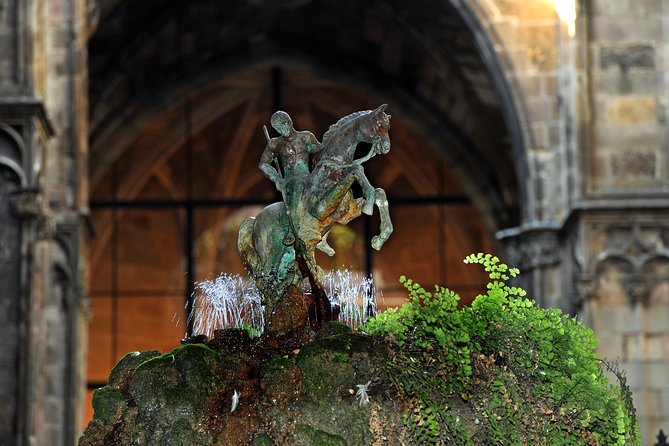
You will also hear the story of how the dragon came to Barcelona. This is one of the tour’s more playful threads. It adds local legend to the political and religious material, giving you a sense of how symbols become part of a city’s public identity.
The guide’s storytelling style is important here. This is not designed as a silent walk between monuments. The subjects jump from Roman engineering to legends and conflict, which should suit you if you prefer memorable stories to a long run of dates.
Narrow lanes, strange legends, and old institutions
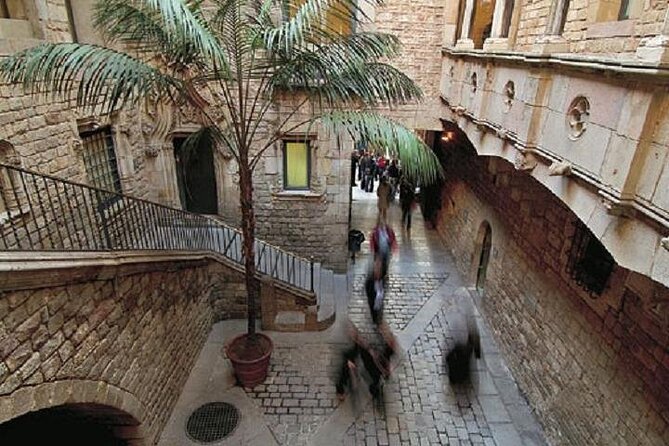
The Gothic Quarter is at its best when you leave the broad routes and enter the smaller streets and squares. The tour makes those lanes the main setting, rather than treating them as passages between famous attractions. Every turn offers a chance to connect an ordinary-looking wall or doorway with a past resident, institution, or conflict.
Several topics add a slightly eerie edge. You may hear about the young girl in the pines and the French soldier’s bayonet, along with a slightly spooky brotherhood. These stories help explain why the old city can feel romantic in one square and unsettling in the next.
The walk also looks at the Crown of Aragon, following Barcelona’s rise from a small city to a maritime force. That is one of the most useful historical sections because it connects the local streets to the wider Mediterranean world. Barcelona’s power was not only about castles and royal titles. It was also tied to ships, commerce, law, and the people who made the port work.
Expect the guide to stop often enough for explanation and photographs. The walk is described as relaxed, not a forced march. Still, three and a half hours on old-city streets can be tiring. One rating specifically described the experience as strenuous but very good, so wear comfortable shoes and do not treat the easy pace as no effort at all.
Political power in the city squares
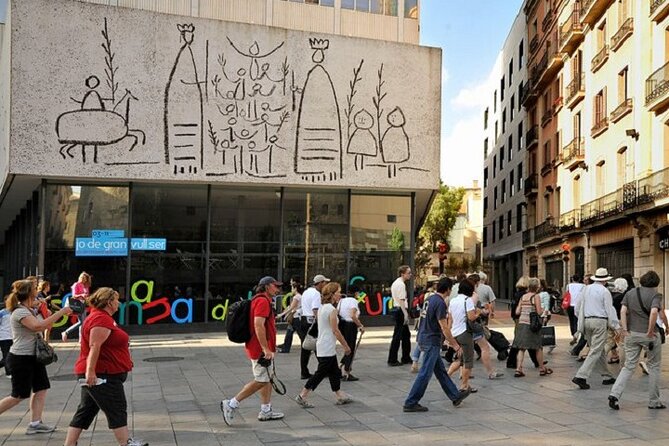
Barcelona’s public squares were places for more than pretty views. They were stages for speeches, arguments, announcements, punishment, and political decisions. The tour explores the idea behind We’re talking to you! The advice of the hundreds and the general, which points to the city’s civic institutions and the role of public voices.
You will also hear about King Martin’s death and how it marked the beginning of the end of local participation in government. This is the kind of subject that can make a confusing political timeline easier to understand. Rather than presenting Barcelona’s history as a smooth rise, the tour points to moments when local control expanded, weakened, or changed hands.
The Inquisition also enters the story, along with the hound kings and the warning that praise is nothing to play with. These themes show how religious authority and royal power could reach into ordinary life. The tone appears designed to keep heavy material moving, with vivid stories instead of a lecture full of dry terminology.
For you, the value is context. A church facade, royal building, or narrow civic square becomes easier to read when you know who had authority there and what kind of behavior was expected.
More Barcelona walks with a guide:
- Barcelona: Tapas Food Crawl Walking Tour with Tastings
★ 4.9 · 1,798 reviews - Barcelona: Gothic Quarter Ghosts and Legends Walking Tour
★ 4.7 · 1,443 reviews - Barcelona Helicopter, Sailboat & Old Town Private Walking Tour
★ 5.0 · 1,395 reviews - Barcelona: Old Town and Gothic Quarter Walking Tour
★ 4.8 · 1,393 reviews
The Jewish Quarter and a lost world
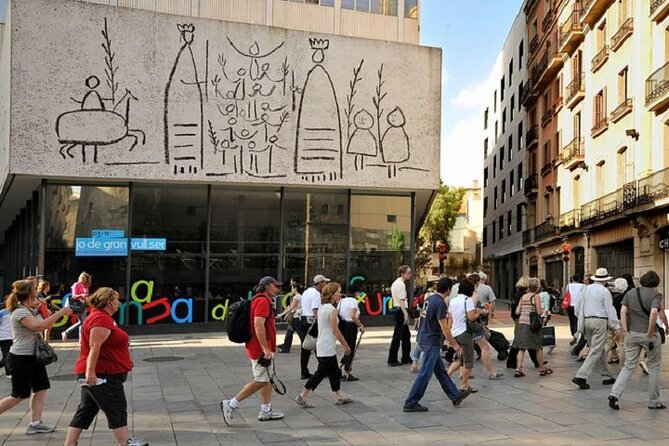
The Jewish Quarter is one of the most important parts of the walk. The focus is not simply on a surviving building or a photograph stop. It is on the remnants of a community and the traces left after that world was broken apart.
This section can be sobering. The old city’s charm should not hide the fact that religious minorities faced pressure, persecution, and exclusion. The tour connects the Jewish Quarter with the Inquisition and the wider struggle between faith and royal authority.
You will see the streets as physical evidence of lives that once filled them. That is especially useful in a quarter where the surviving clues may not always be obvious. The guide’s job is to point out what you would probably pass without noticing and explain why it matters.
The listed itinerary says there are no regular interior visits. You should therefore expect to view the Jewish Quarter from public streets and squares, not enter a museum collection or spend a long time inside preserved rooms.
A romantic square with civil-war scars
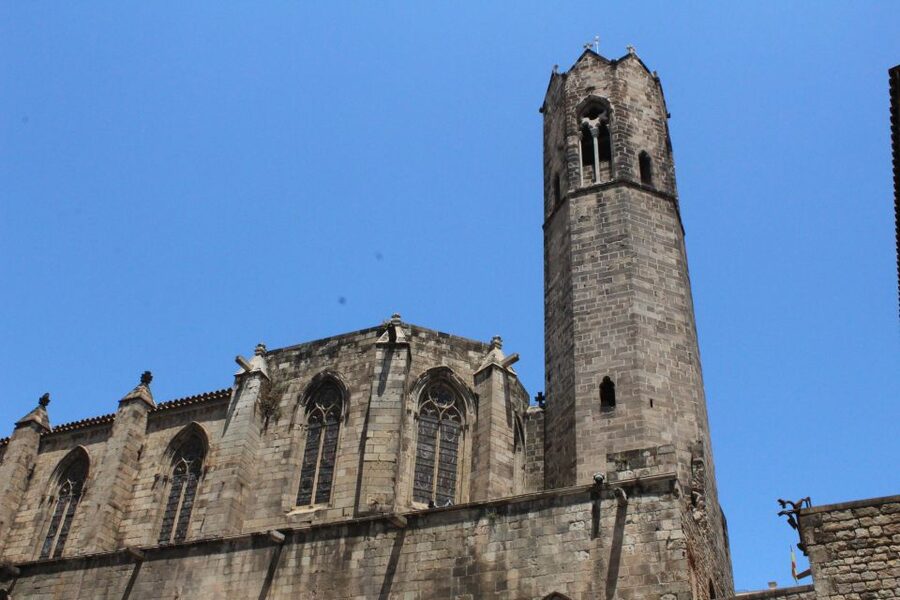
Another topic, titled My Immortal, combines a romantic place with the scars of the Spanish Civil War. This pairing captures the old city well. A square can look peaceful now and still carry memories of violence, political division, and loss.
The tour does not present Barcelona as a perfectly preserved medieval fantasy. It also shows how later events altered the city’s meaning. That balance is valuable, especially if you want more than attractive photographs.
The Gothic Quarter itself is described through the idea of a Gothic theme park, including houses moved stone by stone. This is a useful warning against taking every old-looking facade at face value. Parts of the quarter were shaped, restored, or rearranged over time, and the story of the district includes modern decisions about how the past should look.
That does not make the streets less interesting. It makes them more complicated. You can enjoy the atmosphere while also asking what is genuinely medieval, what was rebuilt, and why Barcelona chose to present its old center in this way.
Cloisters, eggs, and royal fears
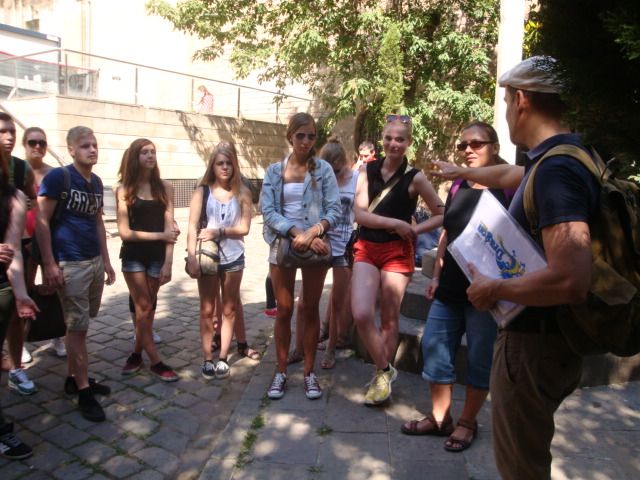
The walk includes a visit to a cloister, with a dress requirement: your clothing must cover your shoulders and reach at least to the knees. This is one of the few exceptions to the tour’s mainly exterior format, so plan ahead if you want to enter.
You will also encounter the famous egg dance, a curious local tradition that gives the tour a lighter turn. It is the sort of small custom that can make a city feel lived in, not just monumental.
The royal palace section adds another human detail. King Fernando is said to have fought his fears and did not receive Columbus at home. That story brings royal history down to a personal scale. Kings may shape borders and institutions, but they also have nerves, habits, and poor timing.
These stops also show the tour’s range. It is not only about grand events. It moves between architecture, religious practice, folklore, royal behavior, and the small details that help you remember the place.
Santa Maria del Mar and the Ribera Quarter
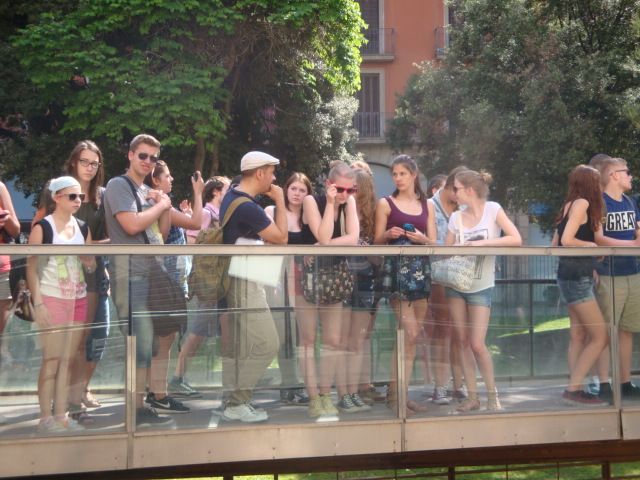
The route finishes in the Ribera Quarter at Passeig del Born, 22, near Santa Maria del Mar. This is a strong ending because the neighborhood adds a different side of Barcelona’s old city. The Gothic Quarter’s narrow lanes give way to a district closely tied to trade, craft, religion, and maritime power.
Santa Maria del Mar is described as the first collaborative project, with legends and heroes connected to it. The church’s importance in the tour is not just architectural. It represents what a community could build together and how ordinary working people can appear in the story of a grand monument.
The final topics are darker. The mulberry grave concerns the vengeance of the Bourbon kings and the head of the general. The route then reaches a half house and the song of the knife-grinder. These details leave you with Barcelona’s mix of civic pride, royal punishment, folklore, and street-level memory.
Because interior admissions are not included, you should not assume you will tour Santa Maria del Mar inside. You will admire monuments from the outside, with only a couple of exceptions. If entering the church is a priority, plan a separate visit.
What the German-language format adds
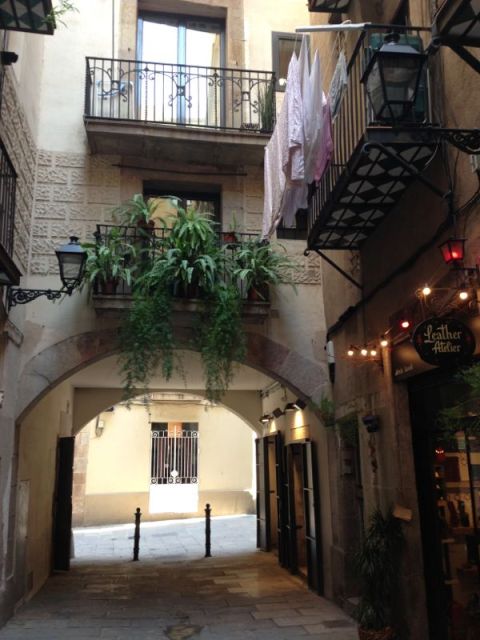
This activity is conducted in German, and that makes it especially useful if you prefer to follow complex historical material in your strongest language. The subject matter covers Roman times, medieval government, religious conflict, royal succession, the Spanish Civil War, and early modern punishment. That is a lot to absorb while walking, so language comfort matters.
The group is listed as private, with a price of $212 for up to four people. For one person, that is a high-priced walking tour. For four people sharing the cost, it works out to about $53 per person, which is more reasonable for 3.5 hours of guiding in a central neighborhood.
The private format can also make the price worthwhile if you value questions and a flexible pace. The guide can pause for photos, practical questions, and bathroom breaks rather than pushing a large group along. The available information also describes the tour as wheelchair accessible, though the old-city route includes streets and squares and should be assessed against your own mobility needs before booking.
The price does not cover interior admission fees. Think of this as a guided outdoor history walk, not a package of museum tickets.
Practical advice for a comfortable walk
Barcelona weather can change the feel of this experience quickly. The tour operates in sun, rain, wind, and strong showers, so a weather check is not enough. In summer, bring a hat, sunglasses, sunscreen, and a small bottle of water. In winter, a jacket or thin coat should be enough according to the activity information.
Wear shoes that can handle 3.5 hours of walking. The pace is relaxed, but the length of the route and the old city’s hard surfaces can still make the walk tiring.
If you want to follow every story, avoid scheduling a major activity immediately afterward. The route begins at Plaça de Catalunya and ends at Passeig del Born, so you finish in a useful part of the city, but you may want time to eat, rest, or continue exploring at your own pace.
The guide may offer practical suggestions for restaurants, shopping, and local specialties. One guest specifically praised those tips and said they were useful during the following days. Treat that as an added benefit, not the main reason to book. The real value is the historical interpretation.
Who should book this Gothic Quarter walk?
I would choose this tour if you want a broad story of Barcelona in German and prefer streets, squares, legends, and political history to a museum-heavy day. It suits couples, families, or small groups of up to four who want a private outing and are happy to pay more for that format.
It is also a good first or second-day activity. The practical tips can help you plan the rest of your stay, while the route introduces the Gothic Quarter and Ribera Quarter without requiring you to navigate their confusing streets alone.
I would be cautious if you want long interior visits, detailed architectural study, or a short sightseeing loop. The tour is almost all outdoors, and the historical range is wide. You will get many stories and connections, but not a slow, specialist examination of every building.
The 4.9 rating from 383 ratings supports the tour’s strong reputation. The most consistent strengths are the clear structure, personal attention, practical advice, and guides such as Johannes, who adapted the walk to individual needs and used extra photos to make the history easier to follow.
Should you book it?
Book it if you want Barcelona’s old center explained as a living city, not just shown as a backdrop. The combination of Roman beginnings, the Jewish Quarter, royal politics, legends, Santa Maria del Mar, and Civil War memory gives you a useful framework for exploring on your own afterward.
Skip it if your priority is entering churches and museums or keeping costs low for a solo visit. At $212, the value improves sharply when four people share the private rate. For a German-speaking group that wants a relaxed pace, thoughtful storytelling, and practical Barcelona advice, this is a well-focused way to spend an afternoon.
FAQ
Where does the tour begin?
It begins in front of Hotel Olivia Plaza at Plaça de Catalunya, 19, in Barcelona.
Where does the tour finish?
The walk finishes at Passeig del Born, 22, 08003 Barcelona, near the Ribera Quarter.
How long does the experience last?
The activity lasts 3.5 hours. The walking and sightseeing portions are listed as roughly 3.25 hours within that time.
What language is the tour conducted in?
The live tour guide speaks German.
Is this a private group tour?
Yes. The activity is listed as a private group, and the price is $212 for up to four people.
Are museum and church entry fees included?
No. Entry fees are not included, and regular interior visits are not part of the program. Monuments are mainly viewed from the outside, with a couple of exceptions.
Is the tour wheelchair accessible?
Yes. The activity is listed as wheelchair accessible.
Does the tour operate in bad weather?
Yes. It runs in sun, rain, wind, and strong showers. Bring suitable clothing and footwear for the conditions.
What should I wear for the cloister visit?
For the cloister, wear clothing that covers your shoulders and reaches at least to your knees.
Recently reviewed around Barcelona
- Excursion Aigüestortes – Estany Llebreta (1/2 day)★ 5.0 · 138 reviews
- E-Bike tour in Barcelona with English Guide★ 5.0 · 128 reviews
- Wine Tasting Experience in Barcelona★ 5.0 · 172 reviews
- Barcelona Luxury Yacht Cruise – Day or Sunset, Open Bar & Snacks★ 5.0 · 154 reviews
- Montserrat: Cog-Wheel, Basilica, Black Madonna & Licor Tasting★ 4.5 · 886 reviews
- Barcelona Wax Museum Admission Ticket★ 4.5 · 237 reviews
- Barcelona: Wine Tasting and 5 Course Tapas Pairing Dinner★ 4.5 · 129 reviews
- Andorra Original History and Sightseeing Tour (Private, Pickup)★ 5.0 · 350 reviews
Walking Tours, compared.
Barcelona Tapas and Wine Experience Small-Group Walking Tour
Read our review →
Tapas Walking Tour with Food, Wine, and History
Read our review →
Albaicín and Sacromonte Guided Sunset Walking Tour
Read our review →
Toledo Tour & Vineyard Walk with Wine Tasting from Madrid
Read our review →
Barcelona Tapas Walking Tour: Food, Wine & History
Read our review →
Madrid Old Town & Royal Palace Walking Tour Skip the Line Ticket
Read our review →
Browse the lists this tour appears in