Reviewed · BARCELONA TOURS
Barcelona & Gaudi. Regular Tour
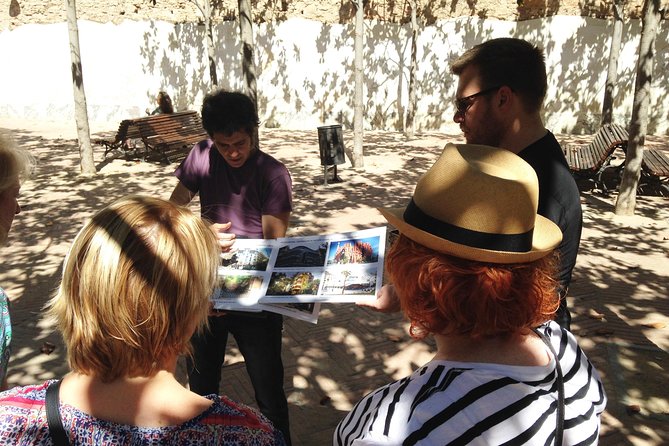
Barcelona’s Modernist buildings are easy to admire and surprisingly hard to understand. This three-hour walk gives you the story behind the curves, broken tiles, strange balconies, and bold façades, with practicing architects explaining how Gaudí and his rivals changed the city.
I like the small maximum of 20 people, which should make it easier to ask questions, and I like the social and political context. This is not just a parade of pretty façades. The main drawback is clear: you do not enter any buildings, so you will need separate tickets if you want to see interiors.
In This Review
- Key points to know before booking
- Why this Barcelona architecture walk feels different
- Casa Milà, where Gaudí makes stone look fluid
- Casa Batlló and the famous Block of Discord
- Casa Calvet and the side of Gaudí you might miss
- Casa Amatller and Casa Lleó Morera add essential contrast
- The Antoni Tàpies Foundation connects old and new
- The ideas behind the façades
- What the three-hour format means for you
- Is $54.44 a fair price?
- Who should book this walk?
- Should you book Barcelona and Gaudí?
- FAQ
- How long is the Barcelona and Gaudí tour?
- What time does the tour start?
- Where does the tour begin?
- Where does the tour end?
- Is the tour offered in English?
- Do you go inside Casa Batlló or La Pedrera?
- How many people can join the tour?
- Can I cancel for a refund?
Key points to know before booking
- Gaudí is only part of the story: You also see work by Domènech i Montaner, Puig i Cadafalch, and Antoni Tàpies.
- The route is built around the Eixample: Casa Batlló, Casa Milà, Casa Calvet, Casa Amatller, and Casa Lleó Morera all fit into one walk.
- Practicing architects lead the tour: Expect design explanations as well as history, politics, religion, and urban planning.
- Pia has earned special praise: Her warmth, humor, and command of Gaudí’s work are a major part of the experience when she leads.
- This is a three-hour walking lesson: Wear sensible shoes and prepare to listen closely rather than rush from sight to sight.
- The $54.44 price buys interpretation, not entry tickets: It makes the most sense for you if architecture and context matter more than going inside.
Why this Barcelona architecture walk feels different
Many Barcelona sightseeing walks point at Gaudí’s buildings, name the architect, and move on. This one takes a more serious route. The guide traces Gaudí’s work from social concerns toward religious devotion, ending with his role as a cathedral builder.
That idea gives the walk a useful thread. You are not simply collecting façades for photographs. You are watching an architect’s interests shift over time, while also learning how Barcelona’s intellectual and wealthy classes shaped the city around him.
The tour also places Gaudí beside his contemporaries. That matters because Barcelona’s Modernisme was not a one-man show. Domènech i Montaner and Puig i Cadafalch each brought their own ideas, symbols, and building methods to the Eixample.
I especially like that the discussion reaches beyond style. The route includes utopian socialism, positivist materialism, anarchism, the Spanish Civil War, beatification, and the changing surfaces of Modernist design. Those subjects may sound academic, but they help explain why these buildings look so unlike ordinary apartment blocks.
The guide is an architect, not just someone who has memorized dates. That distinction can change the whole experience. You might hear why a line curves, how a façade handles light, or what a decorative detail says about the owner and the period.
Other Barcelona days travellers weigh against this one:
- Barcelona: Sagrada Familia Entry Ticket with Audio Guide
★ 4.6 · 105,312 reviews - Barcelona: Park Güell Admission Ticket
★ 4.4 · 76,534 reviews - Barcelona: Casa Batlló Entry with Self-Audioguide Tour
★ 4.7 · 25,359 reviews
Casa Milà, where Gaudí makes stone look fluid
The walk begins at Casa Milà, better known as La Pedrera. Its heavy stone exterior and rolling façade can look almost soft, despite the building’s scale. Gaudí treated the front of the building less like a flat wall and more like a moving surface.
At Casa Milà, I would pay attention to the tension between structure and decoration. The building is famous for its unusual appearance, but the guide’s job is to help you see how the design works as architecture rather than as a collection of odd shapes.
The name La Pedrera means the stone quarry, a nickname that captures the public reaction to its rough exterior. You will not go inside on this walk, so the discussion focuses on what can be read from the street and on the building’s place in Gaudí’s career.
This is one reason the tour’s architect-led format has value. A casual look can leave you with the impression that Gaudí simply enjoyed making strange buildings. A better explanation shows how the strangeness relates to form, space, materials, and his larger goals.
Casa Milà is also a practical opening stop. It gives you an immediate example of Gaudí’s mature language before the route moves to buildings that use brighter color and more theatrical detail.
Casa Batlló and the famous Block of Discord
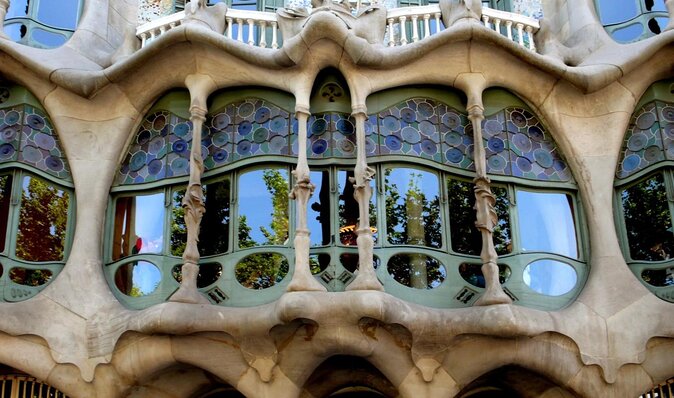
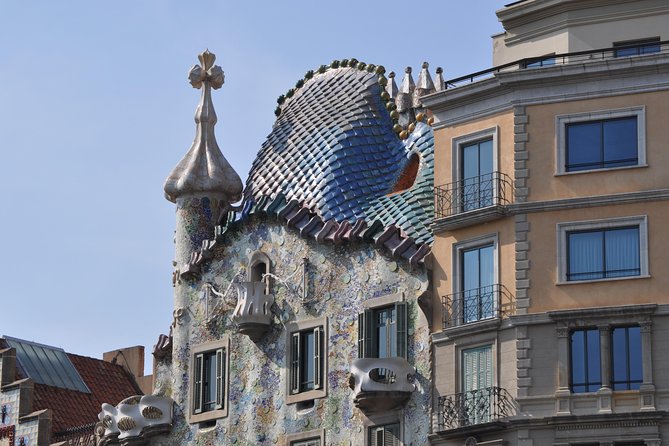
Casa Batlló is likely to be one of the most photographed stops. Its façade has a dreamlike surface, with color, curved forms, and details that invite several interpretations. The guide can help you sort visual fact from the stories that often gather around Gaudí’s work.
The building is part of the Manzana de la Discordia, or Block of Discord, where several major Modernist façades sit close together. That grouping is one of the best parts of the route because it lets you compare architects in real time.
You can look from one façade to another and see that Modernisme had no single formula. Gaudí’s Casa Batlló is theatrical and organic, while Casa Amatller by Puig i Cadafalch and Casa Lleó Morera by Domènech i Montaner offer different answers to the same urban and cultural moment.
I like this stop because comparison makes the architecture easier to understand. Instead of hearing that Barcelona had several important architects, you can see their differences within a short stretch of street.
The tradeoff is that this area can be visually crowded with pedestrians and photographers. A group of up to 20 is still fairly small, but you should expect to pause on a public sidewalk rather than receive a quiet private viewing.
Casa Calvet and the side of Gaudí you might miss
Casa Calvet shows another side of Gaudí. Compared with the more famous Casa Batlló and Casa Milà, it can look more restrained from the outside. That makes it a useful stop, since it prevents the tour from reducing Gaudí to curves, color, and fantasy.
The building also helps explain how an architect adapts his ideas to a client, a site, and local expectations. Gaudí’s work was not always a free-form experiment. He worked within the practical world of apartment buildings, wealthy owners, urban rules, and commercial needs.
The guide’s wider discussion of Barcelona’s intellectual bourgeoisie fits naturally here. These buildings were not isolated works of art. They were commissioned as part of a growing city, and their owners used architecture to express status, taste, identity, and modern thinking.
Because you remain outside, the stop works best for people who enjoy close observation of façades. If you have come mainly to see rooms, courtyards, and roof spaces, Casa Calvet will not satisfy that wish on its own.
A different way to spend the day, same corner of Spain:
- Barcelona: 24 or 48-Hour Hop-On Hop-Off Bus Tour
★ 4.4 · 20,872 reviews - Barcelona: Park Guell Guided Tour with Skip The Line Entry
★ 4.7 · 17,563 reviews - Barcelona in 1 Day: Sagrada Familia, Park Guell,Old Town & Pickup
★ 5.0 · 13,541 reviews - Barcelona Aquarium: Entry Ticket
★ 4.3 · 13,335 reviews
Casa Amatller and Casa Lleó Morera add essential contrast

Casa Amatller, by Puig i Cadafalch, is one of the stops that keeps this from becoming a Gaudí-only outing. Its design gives you a direct comparison with the neighboring buildings on the Block of Discord.
That comparison is valuable. Barcelona’s Modernisme drew from several sources, and each architect handled ornament, structure, symbolism, and historical references differently. Seeing Casa Amatller beside Casa Batlló makes that point far more clearly than a lecture in a museum.
Casa Lleó Morera, by Domènech i Montaner, adds another major name to the route. The building is also near the Antoni Tàpies Foundation, creating a useful bridge between earlier Modernist work and more recent art.
These stops are especially good for you if you want to understand Barcelona as a city of competing ideas. The architecture reflects more than personal imagination. It reflects cultural ambition, social change, business wealth, and the desire to define a modern Catalan identity.
The itinerary also includes some Eixample courtyards that are less obvious from the main streets. The exact courtyards are not specified, so you should think of this as a chance to see parts of the district that many people pass without noticing, not as a guaranteed private-access visit.
The Antoni Tàpies Foundation connects old and new
The Antoni Tàpies Foundation gives the route a change of pace. Its building is tied to Domènech i Montaner, while its purpose honors the modern artist Antoni Tàpies. This makes it a useful point for considering how Barcelona’s ideas about art and architecture continued after Gaudí’s era.
You will not be visiting the foundation as an interior museum stop on this walk. Instead, it is part of the architectural route and helps place the Modernist buildings within a longer story.
I like this inclusion because it widens the subject without losing focus. You are still looking at Barcelona’s built environment, but the route does not pretend that architecture ended with Gaudí.
The ideas behind the façades
The tour’s most unusual feature is its willingness to discuss difficult subjects. Utopian socialism and positivist materialism help explain the competing hopes of the period. Anarchism and the Spanish Civil War show that Barcelona’s buildings also belong to a city shaped by conflict and political change.
The discussion of beatification and Gaudí’s movement toward the divine gives the tour a spiritual thread. His work is often treated as whimsical, but this approach asks you to see the religious seriousness beneath the visual drama.
The phrase last great cathedral builder captures the final direction of the story. The route links Gaudí’s personal development with the Sagrada Família and the Crypt of Colony Güell, even though the listed stops on this particular walk are in the Eixample and the group does not go inside buildings.
That distinction is important. You will gain context about those larger projects, but you should not expect a visit to the Sagrada Família or the Crypt of Colony Güell during this three-hour route.
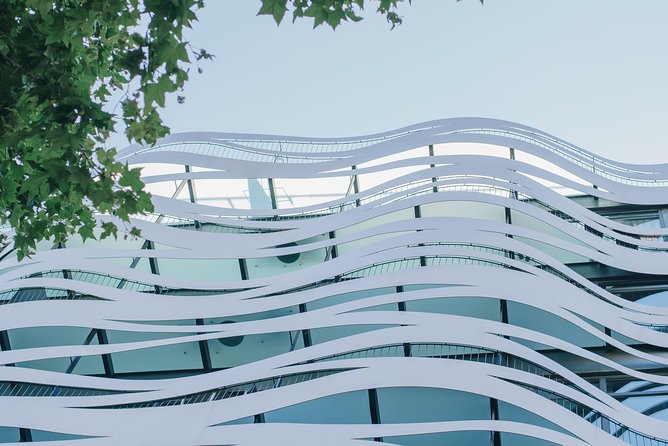
The wording around deliquescent surfaces points toward the way Modernist forms seem to melt, flow, or dissolve. A good guide can turn that unusual visual quality into something you can actually notice on the street.
What the three-hour format means for you
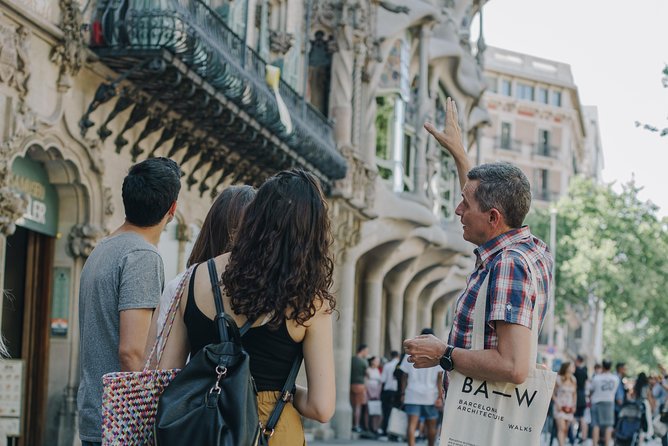
The tour starts at 10:30 in the morning at the Monument al Llibre on Gran Via de les Corts Catalanes, 634, in the Eixample. It ends back at the same meeting point, which makes it easier to plan lunch or another timed visit afterward.
Three hours is long enough to build a story, but short enough to fit into a busy Barcelona schedule. You will be walking and stopping repeatedly, so this is not a sit-down talk with occasional sightseeing.
The maximum group size is 20. That is not a private tour, but it is smaller than many city walks. If Pia is your guide, her warm manner and contagious humor should make the material easier to absorb. The strongest praise for her centers on compassion, accuracy, and an ability to connect Gaudí’s life with the larger story of Barcelona.
The tour is offered in English and includes a mobile ticket. It is near public transportation, service animals are allowed, and most people can take part. The supplied information does not give a detailed accessibility description, so you should ask the operator directly if you have specific mobility needs.
Plan around the weather. The experience requires good weather and can be moved or refunded if poor conditions force cancellation. You can cancel for a full refund up to 24 hours before the 10:30 start time, but changes or cancellations inside that window are not accepted.
Is $54.44 a fair price?
At $54.44 per person, this is not a cheap orientation walk. It is also not priced like a full museum tour with several admission tickets. The value rests in the guide’s interpretation and architectural training.
I would consider it good value if you want to understand why Barcelona’s Modernist buildings look the way they do. The guide covers several major façades, adds less obvious courtyards, and places Gaudí beside other important architects.
I would be more cautious if your priority is going inside Casa Batlló, La Pedrera, or Casa Amatller. You will need separate admission for interiors, and the tour price does not replace those tickets.
The small group helps support the cost. With no more than 20 people, you have a better chance of hearing the guide and asking a question than you would on a large city sightseeing walk.
The rating is listed as five out of five from 180 reviews, with 99 percent recommending the experience. Those figures suggest strong consistency, but the practical question is still your interest. The tour earns its price through ideas and explanation, not through access to private rooms.
Who should book this walk?
I would choose this for you if Gaudí’s buildings are high on your Barcelona list and you want more than the usual fun facts. It suits architecture students, design-minded visitors, history fans, and anyone who wants to connect art with social and political change.
It also works well early in a Barcelona stay. The Eixample route can give you a framework for later visits to the Sagrada Família, Casa Batlló, or La Pedrera. You will know what details to watch for instead of simply taking another photograph.
Families and casual sightseers can enjoy it too, especially with a lively guide such as Pia. Still, the subject matter is serious at times, and the tour may feel too talk-heavy if your ideal morning is a fast walk with only short explanations.
I would skip it if you need a fully accessible route, indoor shelter, or included entry to the buildings. The supplied details confirm that it requires good weather and takes place mainly outside.
Should you book Barcelona and Gaudí?
Book it if you want the city’s Modernist architecture explained by an architect rather than simply pointed out. The best parts are the comparison between Gaudí, Domènech i Montaner, and Puig i Cadafalch, the attention to social context, and the chance to see Casa Calvet and Eixample courtyards alongside the headline buildings.
Skip it if your main goal is interior access. For everyone else, the three-hour route offers a focused way to understand why Barcelona’s façades are not just decorative oddities. They are arguments about art, wealth, politics, religion, and the shape of modern life.
FAQ
How long is the Barcelona and Gaudí tour?
The tour lasts approximately three hours.
What time does the tour start?
It starts at 10:30 am.
Where does the tour begin?
The meeting point is the Monument al Llibre at Gran Via de les Corts Catalanes, 634, in Barcelona’s Eixample district.
Where does the tour end?
The experience ends back at the original meeting point.
Is the tour offered in English?
Yes. The tour is offered in English.
Do you go inside Casa Batlló or La Pedrera?
No. The walk does not include entry inside the buildings.
How many people can join the tour?
The maximum group size is 20 people.
Can I cancel for a refund?
Yes. You can cancel at least 24 hours before the start time for a full refund. Cancellations or changes made less than 24 hours before the start time are not refunded or accepted.
Recently reviewed around Barcelona
- Excursion Aigüestortes – Estany Llebreta (1/2 day)★ 5.0 · 138 reviews
- E-Bike tour in Barcelona with English Guide★ 5.0 · 128 reviews
- Wine Tasting Experience in Barcelona★ 5.0 · 172 reviews
- Barcelona Luxury Yacht Cruise – Day or Sunset, Open Bar & Snacks★ 5.0 · 154 reviews
- Barcelona Wax Museum Admission Ticket★ 4.5 · 237 reviews
- Barcelona: Wine Tasting and 5 Course Tapas Pairing Dinner★ 4.5 · 129 reviews
- Montserrat: Cog-Wheel, Basilica, Black Madonna & Licor Tasting★ 4.5 · 886 reviews
- Andorra Original History and Sightseeing Tour (Private, Pickup)★ 5.0 · 350 reviews
Barcelona Tours, compared.
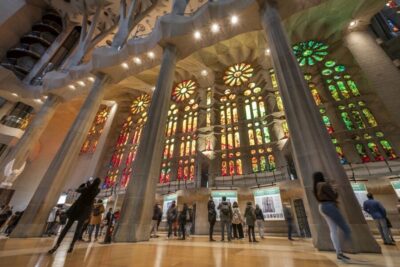
Sagrada Familia Entry Ticket with Audio Guide
Read our review →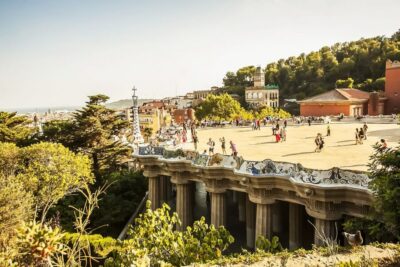
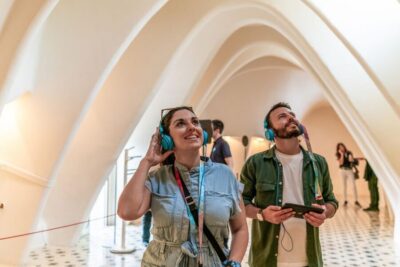
Park Guell Guided Tour with Skip The Line Entry
Read our review →
Barcelona in 1 Day: Sagrada Familia, Park Guell,Old Town & Pickup
Read our review →

Sagrada Familia Skip-the-Line Entry Ticket & Tour
Read our review →