Reviewed · TICKETS
Barcelona: Casa Batlló Be The First Entry Ticket
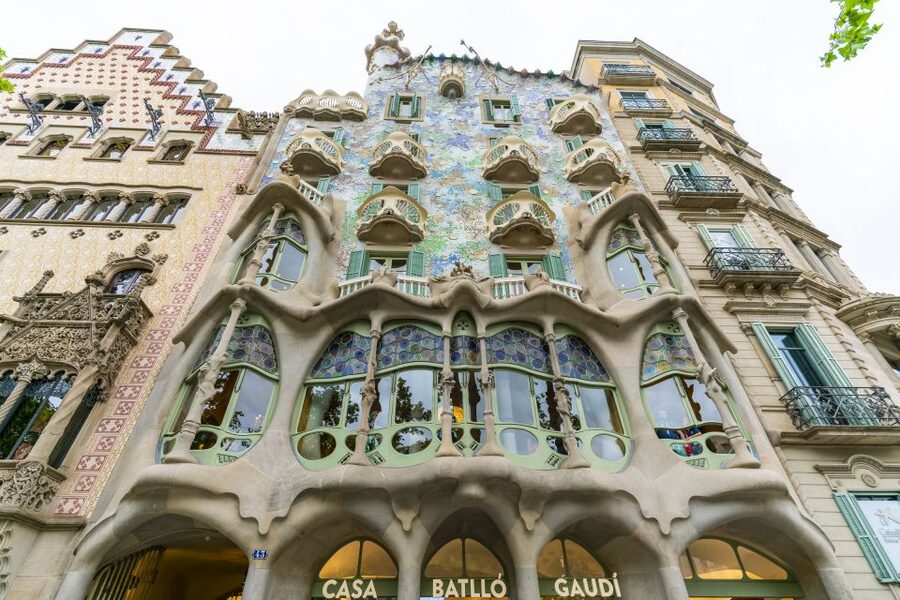
Casa Batlló is at its best before the crowds arrive. The first-entry ticket gives you a quieter route through Antoni Gaudí’s extraordinary home, with better chances to photograph its twisting balconies, colored tiles, curved ceilings, and morning light.
I like the freedom to move at my own pace, and I like the tablet’s ability to show how rooms may have looked when furnished. The Gaudí Cube is another strong point: it offers a playful digital finale, though the tablet can become awkward to carry and the cube may bother you if moving images make you nauseous.
In This Review
- Key points
- Why the 8:30 a.m. entry is worth considering
- Getting started at Casa Batlló
- The entrance and Casa Batlló’s fantastical facade
- Gaudí’s rooms, light, and organic shapes
- The original Concierge Room and the human side of the house
- The Gaudí Dome and Dani Howard’s musical atmosphere
- The Gaudí Cube and the digital finale
- Kengo Kuma’s marble staircase and newer additions
- How long to spend inside
- Accessibility and visitor support
- Who gets the most value from this ticket
- My verdict on the $53 price
- Should you book Casa Batlló Be The First Entry?
- FAQ
- What does the Casa Batlló Be The First Entry ticket include?
- Is there a live guide?
- What languages are available for the audio guide?
- How early should I visit?
- How long does the visit take?
- Is Casa Batlló wheelchair accessible?
- Can I store luggage or a stroller?
Key points
- First access matters: Arrive for the earliest time, often around 8:30 a.m., before larger groups fill the rooms.
- The tablet adds context: Audio, augmented reality, and virtual recreations help explain details that are easy to miss.
- The Gaudí Dome and Cube change the pace: These digital rooms add sound, motion, and light after the architectural tour.
- The house rewards slow looking: Curved doors, organic shapes, colored glass, and small decorative details are the real stars.
- The experience is self-guided: You receive headphones and a tablet, not a live guide.
- Allow about 90 minutes: You can move faster, but a relaxed visit gives you time for photos and the digital rooms.
Why the 8:30 a.m. entry is worth considering
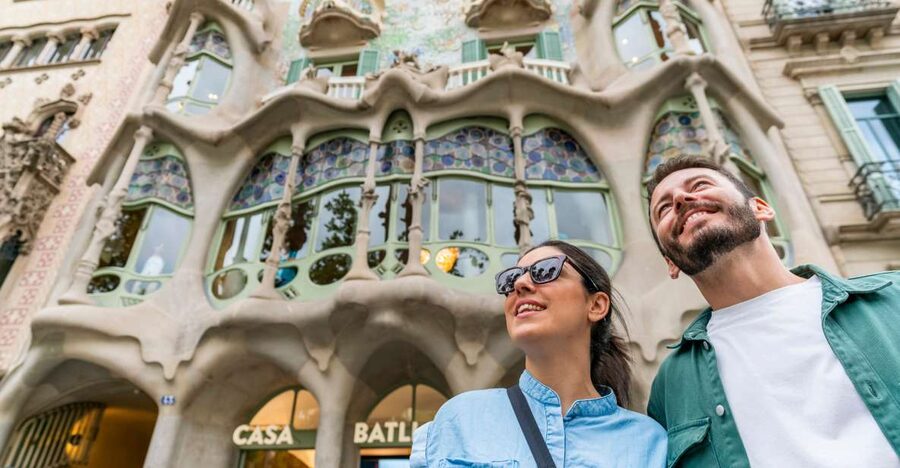
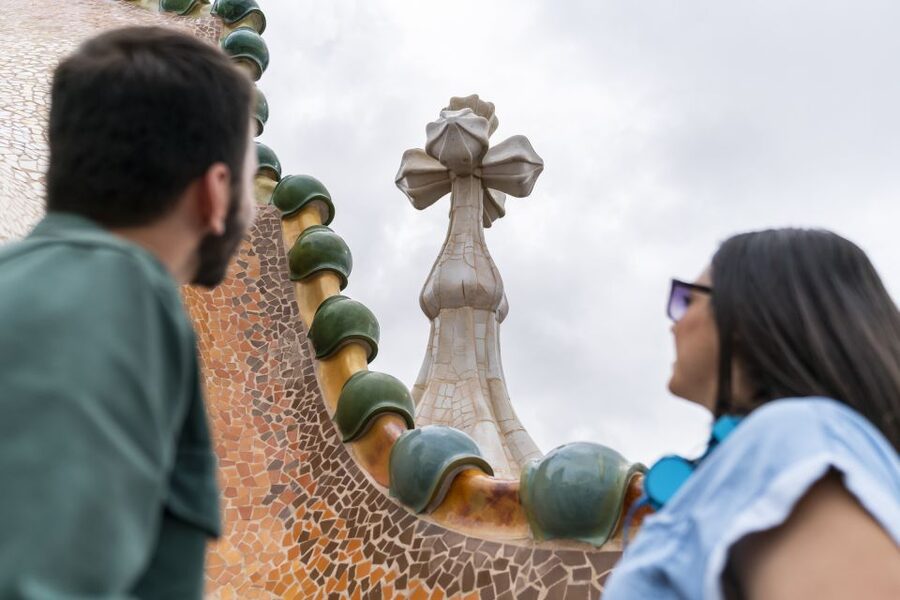
Casa Batlló sits on Passeig de Gràcia, one of Barcelona’s grand central avenues. From outside, the building already looks like a work of fantasy, with a bone-like facade, irregular windows, shimmering surfaces, and balconies that seem to wear masks. Inside, the design becomes more personal and easier to study.
The main reason to book this version is not a special lecture or a private historian. It is space and timing. The first groups enter before the day’s larger flow builds. That gives you room to stop in the main rooms, frame a photograph, and listen to the audio without being pushed along by a dense crowd.
The quiet does not last forever. A large group can arrive around 9 a.m., and the building may feel much fuller by the time you finish. I would arrive a little before your assigned time and try to be among the first people in line. That small effort can make a noticeable difference.
At $53 per person, this is not a bargain admission. You are paying a premium for the early slot, the audio guide, the virtual reality tablet, and access to the Gaudí Dome and Gaudí Cube. If you mainly want to see the facade, the price will feel high. If you care about photographs, a calmer visit, and the digital presentation, the extra cost is easier to defend.
More Barcelona trips worth a second look
- Barcelona: Sagrada Familia Entry Ticket with Audio Guide
★ 4.6 · 105,312 reviews - Barcelona: Park Güell Admission Ticket
★ 4.4 · 76,534 reviews - Barcelona Aquarium: Entry Ticket
★ 4.3 · 13,335 reviews
Getting started at Casa Batlló
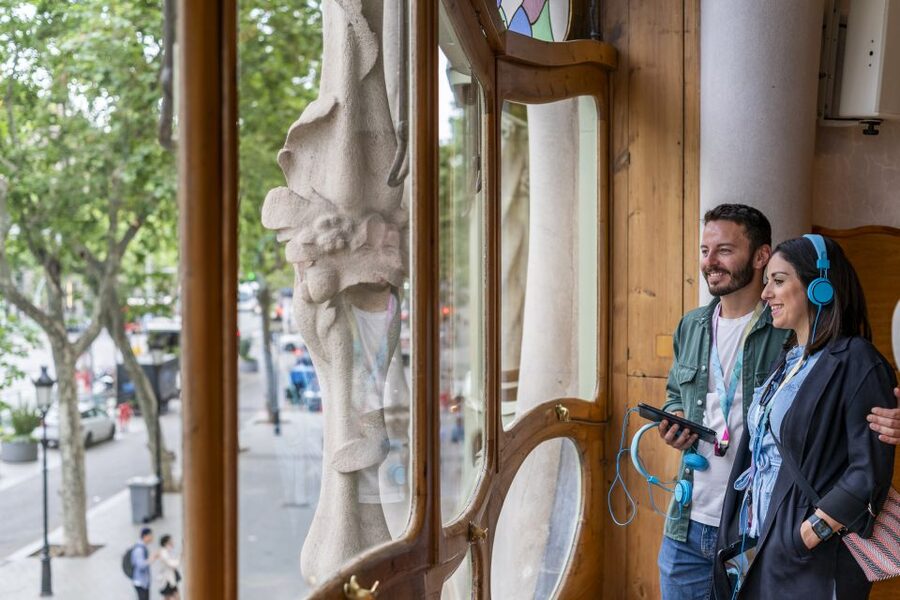
You go directly to Casa Batlló to collect your audio equipment and virtual tablet. There is no live guide waiting to lead a group, so you can begin the route once you have the devices and instructions.
The visit is well signed, which helps in a building where rooms, stairways, and viewing areas can blend into one another. You follow the marked path through the house, stopping whenever a detail catches your eye.
You receive headphones for the audio guide and a tablet that combines sound with augmented reality and machine learning features. The commentary is available in Catalan, Spanish, English, Italian, French, Chinese, Dutch, German, Japanese, Korean, Polish, Portuguese, Romanian, and Russian.
The tablet is useful, but it is also one of the few practical annoyances. You need to carry it while looking at the building, taking pictures, and moving through the rooms. Some visitors find that it gets cumbersome after a while. I would keep your camera use simple and focus first on the house itself.
The entrance and Casa Batlló’s fantastical facade
The exterior is one of the most photographed sights in Barcelona, but the interior visit explains why the building matters. Gaudí did not treat the facade as a flat wall. He shaped it with curves, color, bone-like forms, and surfaces that catch changing light.
The house is often described as magical, but the useful way to see it is as a complete design project. Gaudí worked on the structure, lighting, ventilation, furniture, windows, staircases, and decorative details as parts of one idea. The result feels less like a conventional residence and more like a carefully controlled world.
The early morning light is especially helpful in the central areas. It moves through the windows and brings out the colors and textures that can disappear when many people gather in front of them. You will still share the building with other early entrants, but the first slot offers far better conditions for clear photographs.
Some photo opportunities may involve an extra charge, including a balcony photograph cited at $14. That cost is separate from the admission, so decide in advance if a posed image is important to you. For most people, the building itself provides plenty of strong pictures without buying an additional photo.
Gaudí’s rooms, light, and organic shapes
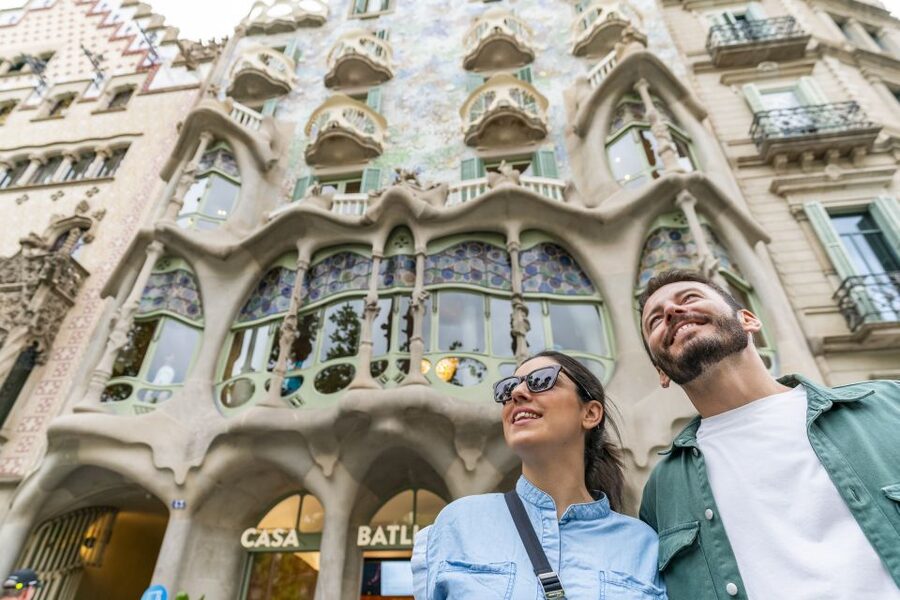
The interior is where the ticket earns its keep. You move through rooms shaped by curves rather than straight lines. Doorways, ceilings, windows, and wall surfaces seem to flow into one another.
I recommend listening to the audio in short sections, then putting the tablet down for a moment. Gaudí’s work is easy to overexplain. You need the commentary to understand the purpose behind the forms, but you also need quiet time to look at the surfaces without a screen in front of you.
The audio guide points out design choices and helps you imagine the house in use. The tablet can show virtual versions of furnishings or reveal how a room may have appeared without modern visitors standing in the way. That feature is particularly useful when a room is sparsely furnished or when the original function is not immediately clear.
The furnished areas are among the most satisfying parts of the route. They turn the building from an abstract art object into a home. You can picture people living among Gaudí’s curved furniture, unusual openings, and carefully controlled light.
Look for the small decisions rather than rushing toward the largest room. The house is full of repeated natural forms, playful color, unusual handles, and surfaces that change as you move. You may enjoy the broad architectural spectacle, but the close details explain why a slow pace matters.
A different way to spend the day, same corner of Spain:
- Barcelona: Casa Batlló Entry with Self-Audioguide Tour
★ 4.7 · 25,359 reviews - Barcelona: 24 or 48-Hour Hop-On Hop-Off Bus Tour
★ 4.4 · 20,872 reviews - Barcelona: Park Guell Guided Tour with Skip The Line Entry
★ 4.7 · 17,563 reviews - Barcelona in 1 Day: Sagrada Familia, Park Guell,Old Town & Pickup
★ 5.0 · 13,541 reviews
The original Concierge Room and the human side of the house
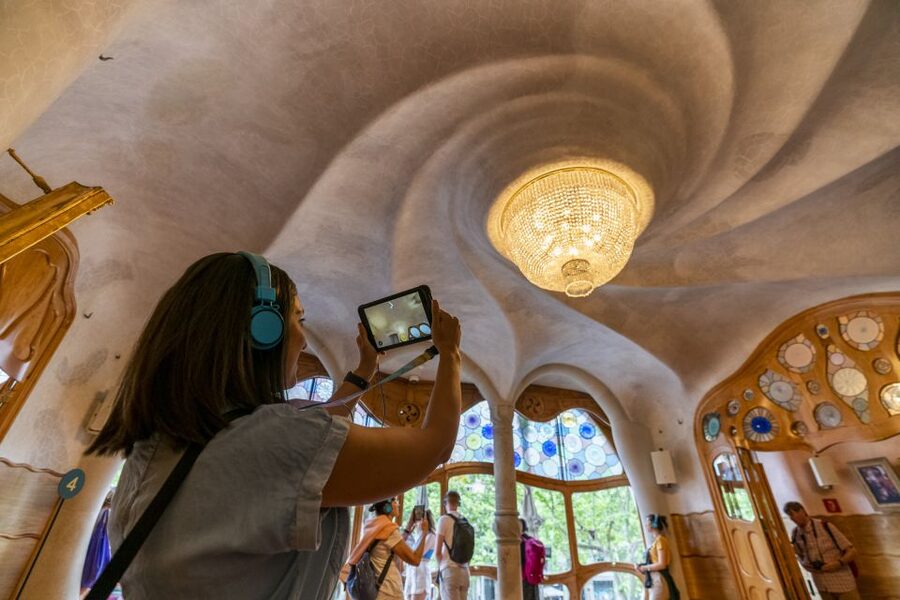
The original Concierge Room gives you a more grounded stop along the route. It helps balance the grand architectural ideas with the ordinary work of running a large home.
I appreciate this room because it makes Casa Batlló feel less like a display built only for modern audiences. It connects the elaborate design to the staff, residents, and daily routines that once made the building function.
The audio guide is useful here, especially if you want more than photographs. You can pause the track, look around, and continue when you are ready. Because this is a self-guided visit, you are not tied to a group’s walking speed or a guide’s schedule.
The early entry also helps in smaller rooms such as this. Once the building fills, it becomes harder to stand in one place and absorb the details. Entering near the front of the first group gives you a better chance to see these spaces without constant interruptions.
The Gaudí Dome and Dani Howard’s musical atmosphere

The Gaudí Dome introduces a different kind of experience. It is described as the first room with a dome made from more than a thousand screens, so it shifts the focus from physical materials to light, image, and sound.
This room is not a replacement for Gaudí’s architecture. It is an interpretation of his imagination. I found the idea useful because it gives you a sensory bridge between the real rooms and the digital presentation that follows.
The soundtrack was created by Dani Howard and performed by the Berlin Symphony Orchestra. Music plays an important role in setting the mood, and the room works best when you stop trying to photograph every second of it and simply watch the changing images.
The digital sections will not appeal equally to everyone. If you prefer original objects, quiet interiors, and historical interpretation, the screen-based rooms may feel like a detour. If you enjoy sound, moving images, and technology, they add a memorable change of pace.
The Gaudí Cube and the digital finale
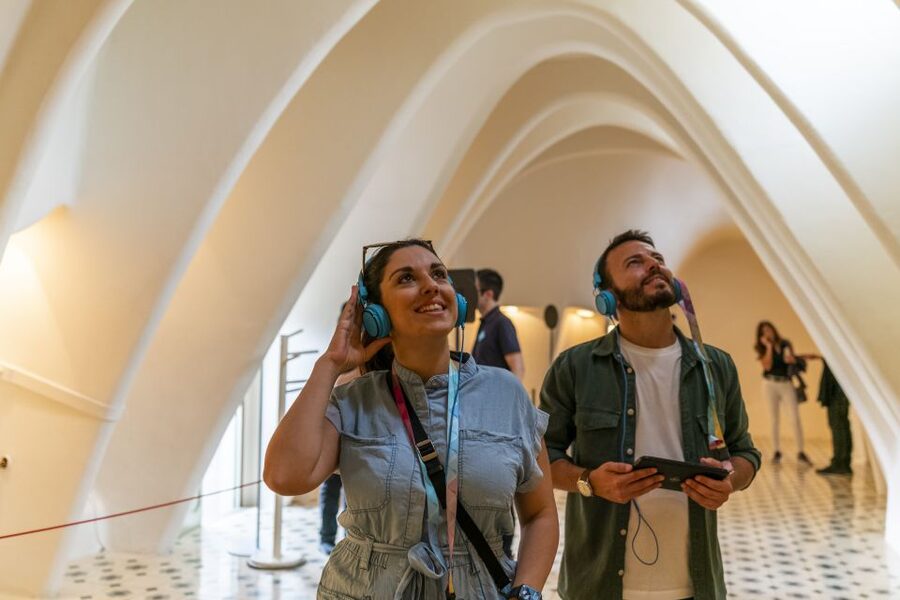
The Gaudí Cube is a six-sided LED cube, described as unique in the world. It uses projected images and sound to create a short, room-scale presentation inspired by Gaudí’s work.
I like this final section because it gives the visit a clear ending. After focusing on tiles, windows, ceilings, and furniture, you step into a visual show that turns those ideas into motion. The experience is especially effective when only a few people are inside, which is another reason to choose the first available time.
There is one practical warning. Moving visuals can make some people feel uncomfortable or nauseous. If that happens, step out or look away from the screens. You do not lose the main value of Casa Batlló by treating the cube as optional.
The tablet and headset are part of this modern presentation, but I would not let them dominate your visit. The technology is most useful when it helps you see the real structure differently. The carved forms, light wells, and rooms remain the reason to come.
Kengo Kuma’s marble staircase and newer additions
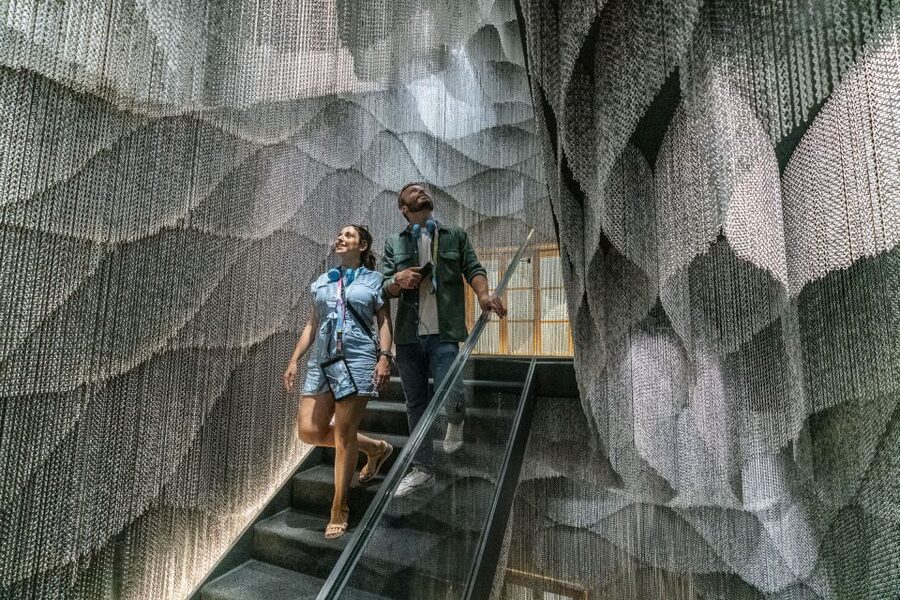
The visit also includes a newer vertical circulation core by Japanese architect Kengo Kuma. Its centerpiece is a floating ladder made from 13 tons of polished marble suspended in the air.
This addition gives you a chance to compare Gaudí’s organic design language with a more recent architectural intervention. It is a bold practical feature, not simply decoration, and it changes how you move through the building.
You will also encounter a six-sided indoor mapping presentation on a patio connected with Gaudí’s use of light. Together with the Dome and Cube, these newer features show how Casa Batlló is being presented as both a historic building and a modern cultural attraction.
That approach has a tradeoff. Some people want an old house with minimal technology. Others appreciate having the past explained through sound, images, and augmented reality. I would book this ticket if you want both the original architecture and a contemporary presentation of it.
How long to spend inside
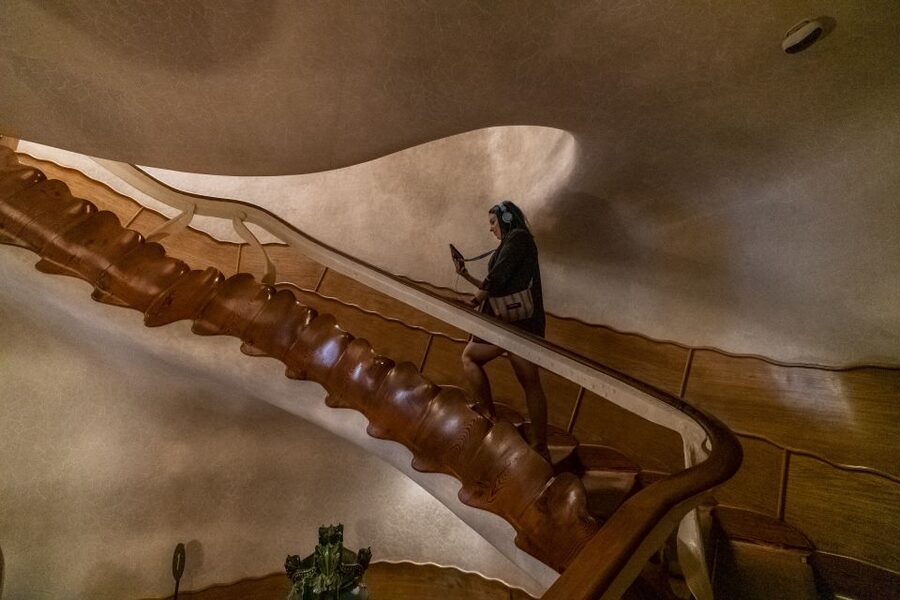
The official duration is listed as one day of validity, meaning you select an available starting time for your visit. In practical terms, most people should plan around 90 minutes to two hours if they want to listen to the audio, use the tablet, take photographs, and spend time in the digital rooms.
You can finish sooner if you move directly through the route. I would not recommend that unless your schedule is tight. Casa Batlló is a building of small discoveries, and the audio guide gives you more to notice than the facade alone suggests.
The route is clearly marked, and you can stop for pictures along the way. The early morning slot is especially helpful because you can pause without feeling that you are blocking a packed corridor.
A checkroom is available for luggage and strollers. That is useful if you are carrying more than a small day bag, although you should still allow time to store anything you do not want to carry through the rooms.
Accessibility and visitor support
Casa Batlló is wheelchair accessible. The site also has a distinctive commitment to autism inclusion, with neurodivergent people assisting visitors through its collaboration with Specialisterne.
That support is worth knowing about if someone in your party has questions about sensory needs or visitor assistance. The Gaudí Cube and other screen-based areas may be intense for some people, so consider how your group responds to light, sound, and motion before booking.
The self-guided format offers flexibility. You can listen at your own speed and spend less time with any feature that does not suit you. There is no live guide, so anyone wanting a personal historical conversation should choose a different format or prepare questions in advance.
Who gets the most value from this ticket
I would recommend the Be The First Entry ticket to photographers, architecture fans, first-time visitors to Barcelona, and anyone who dislikes crowded interiors. It is also a good fit if Casa Batlló is high on your list and you want to give it proper time rather than squeeze it into a rushed sightseeing day.
Families may appreciate the tablet and digital rooms, especially children who respond better to moving images than to long wall panels. Older visitors or anyone who prefers a quiet, slow visit will benefit from the early timing and the ability to pause the audio.
I would think twice if you dislike carrying devices, have a tight budget, or want a traditional guided tour led by a person. The admission is expensive, and some of the modern installations may feel less authentic than the original rooms.
Still, the early access solves the biggest problem at Casa Batlló: crowd pressure. By late morning, the house can feel much more crowded, and the best viewing spots become harder to claim. The premium is most defensible when you treat the quiet opening as the main feature.
My verdict on the $53 price
At $53, this is a premium Barcelona attraction. You are not paying only to enter a famous building. You are paying for an early time, the audio guide, a virtual reality tablet, the original Concierge Room, the Gaudí Dome, and the Gaudí Cube.
I consider it good value if you plan to spend 90 minutes or more inside and care about photography or architectural detail. The first entry can give you a calmer visit, which is difficult to put a price on in one of Barcelona’s busiest cultural areas.
I consider it weaker value if you are already visiting many high-priced attractions or if digital installations do not interest you. In that case, the building may still be worth seeing, but the premium package could feel excessive.
Should you book Casa Batlló Be The First Entry?
Yes, I would book it if Casa Batlló is a priority and you can manage an early start. Arrive before your time, aim to enter with the first few people, and begin slowly rather than racing toward the digital rooms.
The best reason to choose this ticket is simple: you get time to look. The technology adds useful context, but the curving rooms, morning light, original furnishings, and surprising details are what make the visit memorable.
If you want a live guide, a low-cost admission, or a purely historical house tour, choose another option. For most visitors who want photos, flexibility, and the strongest chance of seeing Gaudí’s masterpiece before it fills up, the extra cost is justified.
FAQ
What does the Casa Batlló Be The First Entry ticket include?
It includes entry to Casa Batlló, an audio guide, a virtual reality tablet, and access to the Gaudí Cube, Gaudí Dome, and original Concierge Room.
Is there a live guide?
No. The ticket provides a self-guided audio and tablet experience rather than a live guide.
What languages are available for the audio guide?
The audio guide is available in Catalan, Spanish, English, Italian, French, Chinese, Dutch, German, Japanese, Korean, Polish, Portuguese, Romanian, and Russian.
How early should I visit?
The earliest slots are commonly around 8:30 a.m. You should arrive a little before your assigned time and try to enter among the first people, since larger groups may arrive around 9 a.m.
How long does the visit take?
The ticket is valid for one day based on the selected starting time. In practical terms, allow about 90 minutes to two hours for the house, audio guide, tablet features, photographs, and digital rooms.
Is Casa Batlló wheelchair accessible?
Yes, Casa Batlló is wheelchair accessible.
Can I store luggage or a stroller?
Yes. Casa Batlló has a checkroom where you can store luggage and strollers if needed.
Recently reviewed around Barcelona
- Excursion Aigüestortes – Estany Llebreta (1/2 day)★ 5.0 · 138 reviews
- E-Bike tour in Barcelona with English Guide★ 5.0 · 128 reviews
- Wine Tasting Experience in Barcelona★ 5.0 · 172 reviews
- Barcelona Luxury Yacht Cruise – Day or Sunset, Open Bar & Snacks★ 5.0 · 154 reviews
- Montserrat: Cog-Wheel, Basilica, Black Madonna & Licor Tasting★ 4.5 · 886 reviews
- Barcelona Wax Museum Admission Ticket★ 4.5 · 237 reviews
- Barcelona: Wine Tasting and 5 Course Tapas Pairing Dinner★ 4.5 · 129 reviews
- Barcelona Gothic Quarter Walking Tour with Tapas★ 5.0 · 248 reviews
Tickets, compared.
Sagrada Familia Entry Ticket with Audio Guide
Read our review →